Interim Water Review falls short of real reform

Download PDF

River Action, alongside Surfers Against Sewage have responded to the publication of the Independent Water Commission’s interim report, welcoming signs that long-standing failures are finally being recognised and the regulators need a major overhaul – but warning that the report stops well short of real reform.

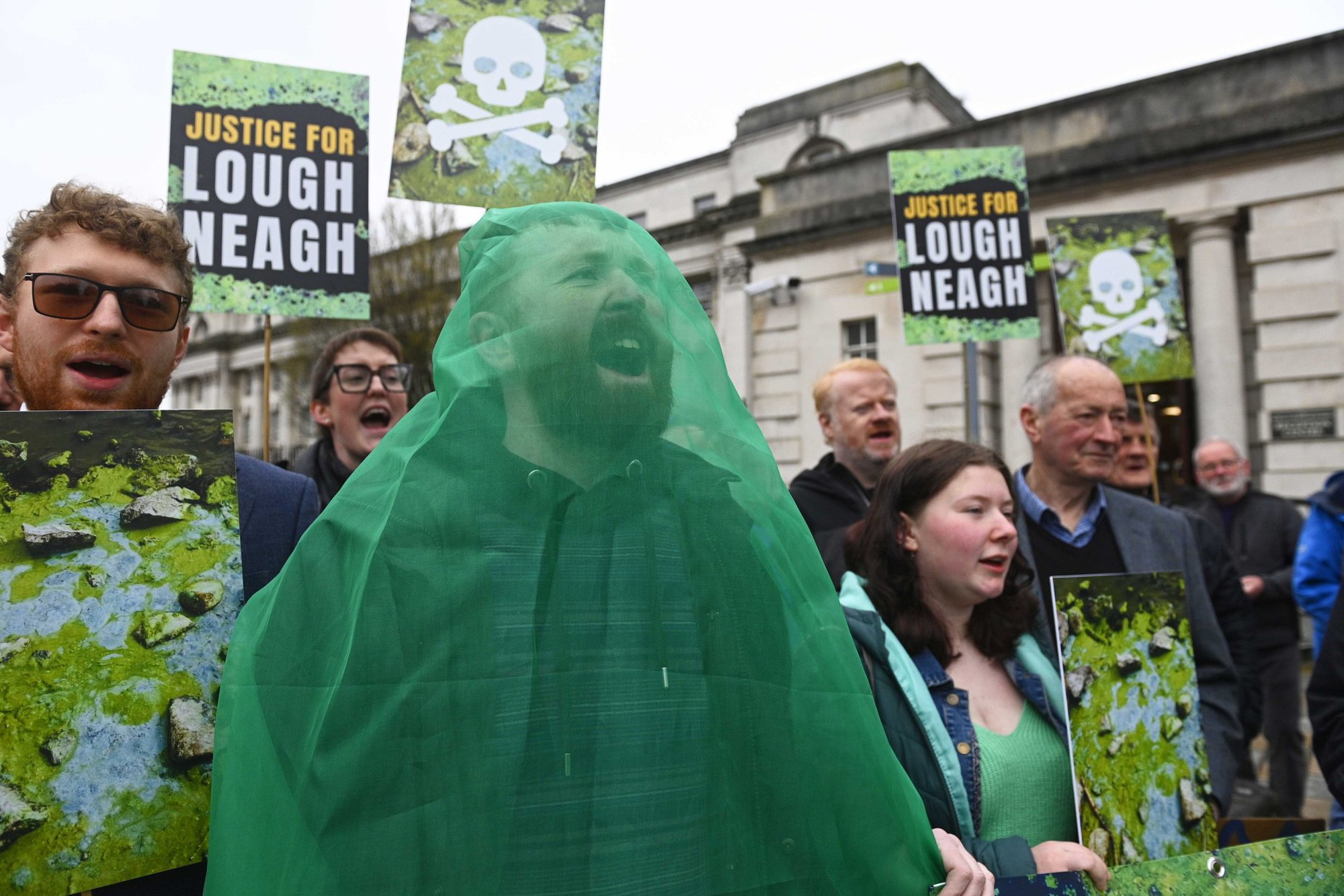
Despite a 15,000-strong March for Clean Water in London last year and surging public anger, the interim review still falls short of the Government’s manifesto commitments and speaks more about attracting investors than cleaning up pollution and serving the public.

Crucially, this report acts more as a progress report which tinkers at the edges of the problem – not the bold systemic action plan needed to end the crisis. While it contains some welcome analysis on regulatory failure, it offers few concrete solutions and avoids many of the most difficult but necessary decisions. The final report must give senior Labour figures, including Environment Secretary Steve Reed, the political capital needed to show this government is serious about fixing the water industry and cleaning up England and Wales’s polluted rivers and seas.


CEO of River Action James Wallace said, “This interim report signals some progress on regulation, but it reads more like a sales pitch to international investors and overpaid CEOs than the urgent restructuring of corrupted water companies. We ask the Commission to learn from other countries how to ensure water companies are owned, financed and operated for public benefit.

“The Government has a clear mandate to clean up our polluted waterways and deliver on its election promises. That means getting tough on polluters, using the full force of the law, reforming regulation, and ending the era of failed privatisation by prioritising people and nature over profit – not kicking the problem further downstream.

“And in the meantime, the Government shouldn’t wait: our biggest polluter Thames Water should be put in a Special Administration Regime to send a regulatory shockwave across the industry. Our water is our nation’s birth right and is not for private sale.”


CEO of Surfers Against Sewage Giles Bristow said: “The criminal behaviour, chronic lack of investment and woeful mismanagement which has led to sewage filled seas is a direct result of our profit driven system. This interim report begins to recognise this, but as yet does not spell out the need to end pollution for profit.

“The commission’s final recommendations must reshape the water industry to put public health and the environment first. Until we have this, we will continue to swim and surf in the deluge of sewage that pours into our waters whilst shareholders continue to cream of profits. The commission must make concrete recommendations to end pollution for profit otherwise it risks becoming part of the problem, not the solution.”

“The public will not stand for tinkering around the edges and the MPs that represent these angry communities know this.  We will continue to fight until we see the transformational change that is needed to end sewage pollution once and for all.”

River Action and SAS welcome the report’s recognition of:

  • Government failure to plan for long-term sewage treatment and drinking water needs
  • Weak, reactive regulation from Ofwat which allowed water companies to pile on debt and reward pollution with dividends and bonuses
  • An underfunded Environment Agency unable to monitor pollution and enforce environmental law
  • Water companies prioritising profits over people and planet, resulting in outdated infrastructure and pollution
  • Water companies poor environmental performance driven by profit hungry short term shareholders

We also support the call for stronger local and regional sewage and water planning, closer regulatory oversight of water companies, and long-term low-risk, low-return infrastructure investment.

However, the final report must go beyond diagnosis and deliver a clear plan for action. It should:

  • Restructure water companies to operate for the public good, not private profit. Where a company is failing, the Government must use powers like Special Administration Regime to intervene
  • Protect public and environmental health by securing benign sources of investment and linking performance with returns
  • Democratise decision-making with customers, environmentalists and local government balancing interests on water company boards
  • Strengthen independent regulators, cash-strapped by years of under-funding leaving them unable to prosecute polluters at scale
  • Mandate public oversight of local and regional water company planning, spending and performance, and integrate with a national urgent action plan

Next week’s Spending Review will be the first real test of whether the Government is serious. Without proper funding for enforcement agencies and the power to prosecute environmental crime, any reform risks being cosmetic.

We urge the final report to reflect Labour’s manifesto commitment to bring failing water companies into order and clean-up the mess from 15 years of privatised pollution.

“We only have one chance to get it right. The public mandate for change is overwhelming and so is the urgency. What comes next must be decisive, enforceable, and in the public interest. We urge Sir Jon Cunliffe to give us more, much more. Nothing short of a systemic overhaul of how water companies are owned, funded, operated and regulated will do.” – James Wallace, River Action CEO

Introducing River of the Month – The River Mole

Download PDF
Thank you to Nigel Bond and the River Mole River Watch for much of the content provided in this blog

Introducing River of the Month!

Every month, we’ll be spotlighting a different river, sharing its wonders, its challenges, and the incredible people fighting to protect it. First up is…

The River Mole.

The River Mole is a tributary of the River Thames in southern England. It is a waterway steeped in history, once powering dozens of mills and referenced in literature for its unusual underground flows. Today, it remains ecologically important, supporting diverse fish species such as brown trout, chub and stone loach. However, its biodiversity is under threat from persistent pollution caused by sewage, urban runoff, and agricultural practices, with most sections rated only Moderate or Poor in water quality.


Did you know?

The name ‘Mole’ likely derived from the Latin mola, meaning “mill,” reflecting the numerous mills that once operated along its course.

The river has captured the imagination of several authors and poets and features in “The Faerie Queene” by Edmund Spencer, the “Poly-Olbion” by Michael Drayton and “Wildflowers” by Robert Bloomfield.


Key Facts:

  • Length: 80 km
  • Catchment Area: 512 km²
  • Counties: 2 (West Sussex and Surrey)
  • Fish Biodiversity: High – 13 species
  • Water Quality Tests (poor/bad): 51%
  • Sewage discharges in 2024: 254
  • Sewage hours in 2024: Over 13,000 hours 
  • Ecological Status: Poor


The River Guardians

The River Mole River Watch is a community group founded in 2022 to tackle pollution in the River Mole. Frustrated by worsening water quality, locals came together to protect and restore their river, working with councils, charities, and residents.

River Mole River Watch organises protest walks like March the Mole, runs citizen science monitoring, and empowers local people to become river guardians.


Key Challenges

The Mole faces many challenges.  It is a “flashy” river, with river levels rising and falling rapidly in response to rain.  In winter in places it is prone to flood, in summer many tributaries become mere trickles and in extreme drought (e.g. 2022) the main river can run dry for several miles. 11 Thames Water sewage treatment works discharge into the Mole and tributaries, contributing a substantial proportion of the total flow particularly in summer. Storm overflows discharged untreated sewage for a total of 13,000 hours in 2024. 

Summer conditions are particularly stressful for wildlife with high concentrations of pollutants and high water temperatures. There is a large and growing population with housing developments adding load on water supply and wastewater infrastructure. The river flows under and around Gatwick Airport. The M25 runs across the catchment with the runoff from this and other major roads adding pollutant load on the river system. Domestic misconnections are a particular problem for smaller tributaries.

Much of the catchment is rural with agriculture contributing pollution from legacy phosphate, chemicals, animal sewage and soil loss.  Invasive species including floating pennywort, himalayan balsam, american mink, and red-signal crayfish are widespread. Climate change increases the stressors and also highlights the importance of the river as a natural corridor for wildlife.


Key Solutions

  1. Fix & Upgrade Wastewater Treatment – Properly maintain existing sewage facilities, increase capacity, install better filtration (tertiary treatment), and set strict discharge limits, especially for summer.
  2. Better Management of Road Runoff – Stop pollution from roads and infrastructure before it hits the river.
  3. Nature-Based Solutions – Use reedbeds to treat sewage, build sustainable drainage systems in new housing, and promote farming that protects rivers (catchment-sensitive farming).
  4. Natural Flood Management – Restore wetlands, create space for water, and slow the flow to prevent flash floods.
  5. Restore River Health – Re-meander rivers, re-seed gravel beds, remove barriers to fish, and tackle invasive species.
  6. Tackle Hidden Pollutants – From pet insecticides to sewer misconnections, more action is needed to stop hidden pollution sources.


Find out more about the River Mole River Watch

If you are in the Sussex or Surrey area and would like to help out or join the group, you can find out more here.

If you found this inspiring and would like to find out how you can protect your local river by joining or creating your own river community group, visit our River Rescue Kit.

The plight of El Cerrao – A local disaster, a European response

Download PDF
By Drew Richardson, Communities Coordinator, River Action


Our Communities Coordinator Drew was in Spain this week. Why? The pollution crisis facing UK rivers isn’t unique — it’s part of a global pattern driven by the same industrial meat giants operating across Europe. Here is the story of his visit to the Spanish town that is being overwhelmed by manure, but is now being supported through European collaboration. Enjoy!


“An Englishman, two Danes, two Bretons, two Italians, a Hungarian, a Bulgarian, and around 50 Spaniards…” it may sound like the set-up to a joke, but we weren’t walking into a bar, we were walking to a mega ‘farm’, and it was no joke!

The rural Spanish town of Urbinization El Cerrao near Valencia has a problem. More Holstein Farm next to the town has grown in to a ~1km2 intensive dairy factory. Permitted for 1000 cows it has grown to between 3000 and 4000 and without changing the land use to factory farming. It has slowly bought-out neighbouring farmers’ fields at low cost and now proposes to quintruple its size to more than double the size of the neighbouring town.

A poster on the door of the village hall showing the proposed expansion of the dairy factory which the locals are opposing. The yellow area is the current size of the farm, the red area is the proposed size, and the blue areas are the nearby local communities.

I spoke to Juanita Caballero, a local resident of the Urb. El Cerrao. She told me the town had always relied on wells for water. She used to be able to drink directly from them as a child, her neighbours would fill their pools with the water, but these things are impossible now. A literal fields’ worth of manure piled as tall as me from the intensive dairy factory (more manure than I have ever seen in my life hidden from the view of the town by a wall of hay) has been polluting the ground water. The local Town Hall is now being fined for these wells being contaminated. Drinking water has to be piped in from another town.

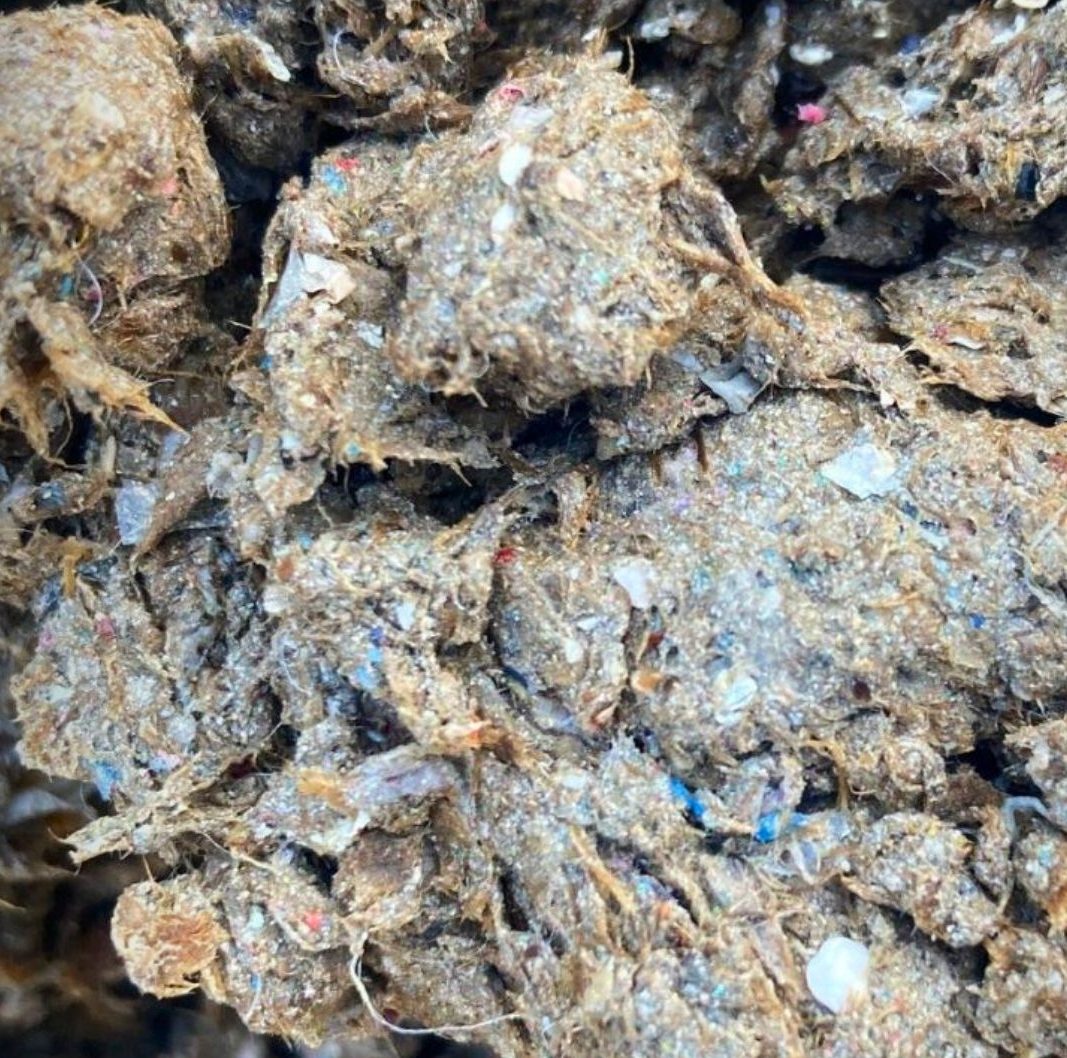
Picture of the field-wide pile of waste produced by the dairy factory.

Juanita spoke about the terrible flies, the loud machines and lorries, the inability to open their windows on hot summer nights due to the smell, a neighbour whose daughter who is receiving mental health treatment as all she can hear through the night is the screaming of calfs being separated from their mothers, a sound I was told sounds eerily human.

Video of River Action Communities Coordinator Drew Richardson speaking with Juanita Caballero, local resident and President of the local community group Asociación de El Cerrao

Uprising Community

But the residents of Urb. El Cerrao and the neighbouring urbanizations aren’t just letting this happen.

I arrived at the beautiful village hall (which had been funded by local residents). The room was full of local residents, young and old. I put in my ear-piece and heard, translated into English, the concerns of the local residents, and the passion and support from local campaigning organisations like Terres De Luttes and Friends of the Earth. There was also the support of groups like ourselves, River Action, and many others from across Europe, like the Italian Factory Farm Coalition, Danish Association Against Pig Farming, the French Resistance Against Factory Farms, Italian group Terra, Sustain from the UK and Friends of the Earth groups from Brussels, Denmark, Hungary, Northern Ireland and from different regions across Spain.

The community sharing their concerns at the Centre Social El Cerrao.

The Plight of El Camino

With banners in hand, the community walked from the town, along public rights of way, through the area of proposed expansion, to the dairy factory. The sheer scale of the sheds was hard to put into words.

On the walk I heard from local residents that they had seen rare endangered species of bird, wading in polluted groundwater upswells between the rows of orange trees whose fruit is destined to be some unsuspecting person’s snack or orange juice. Needless to say I decided against the orange juice with my breakfast this morning as I write this.

The community walking to the dairy factory.

Standing Up to Greenwashing

Along the walk a resident told me how their campaign is going. When the dairy factory had put in a planning request to quintruple the size of their factory, the local communities had presented their objections to the local Town Hall, similar to a Parish Council here in the UK. Despite their communities’ objections, the officials approved the expansion. The local communities are now objecting to the next layer of government up, the Generalitat Valenciana, similar to a city council here in the UK.

In the meantime, reports to their environmental regulator made by the communities, has resulted in inspections by the regulator. Local residents told me that the local Town Hall is now having to pay fines for their wells being polluted; that the regulator found high air pollution, ground water pollution, river pollution, including cow bones. They said that the regulator has taken the dairy factory to court and the judge has decided the case should go to Penal Court (the spanish equivalent to the UK’s criminal court).

And yet, amongst these scandals and amidst a potential criminal conviction, this supplier to Danone has become the first factory farm to gain B-Corp certification in Europe and has recently won a prize for sustainable agriculture, leaving the local residents baffled and dismayed.

Photo of the local community outside the dairy factory.

Factory Farms

I have been reluctant to use the word farm throughout this piece. For too long we have been led astray by international mega-corporations pretending to be humble farmers. But it is visits like these that remind you, we are not talking about farmers, these are factory-owners. Should these acres of concrete and sheds be considered agricultural land or brown-field sites of industrial estates? The divide between these industrial food factories and genuine farmers appears to be widening.


“Go Big or Get Out of Our Way”

Genuine Farmers are struggling. Farmers in the UK typically receive 1% of profits from common food like cheese, carrots, and bread (source: Sustain). Farmers can no longer depend on their actual output to make money, requiring subsidies to stay afloat. Supermarkets and big food-brands dictate the sale-price of farmers’ own products in line with these subsidies meaning genuine farmers are always struggling, especially in our current climate where government financial support for farmers has decreased.

Until genuine farmers can get a fair price for what they produce, the economies of scale required to be financially ‘successful’ will always skew towards unsustainable industrial scale agriculture. So it is no wonder that the struggling farmer gives up, when the mega-corp comes to their door with a deal to make all their worries go away. We spoke to farmers from the US (arguably the birthplace of industrial food factories) who summed up this state of affairs perfectly: “Go big or get out of our way”.

A photo of an informational flyer provided to the community of Urbanización El Cerrao.

In any other sector, you would expect workers to unionise, and that union to fight for fair pay. In the UK though there are seemingly few organisations with a union governance structure, and those that don’t, but purport to be unions for farmers, appear to represent the views of large industrial-scale factory businesses over those of genuine farmers, perpetuating the need for bigger farms.

As these organisations lose their members, it begs the question, will genuine farmers band together and unionise, to protect their rights from these industrial mega corporations?


An International Problem

So why are we, River Action, a UK-based charity, in Valencia?

The Stink or Swim report by Food for the Planet, Friends of the Earth and Sustain has shown the 10 factory farm corporations producing more toxic excrement than the UK’s ten largest cities, are owned by just five 5 parent companies, supplying our 10 biggest supermarkets. Two of these companies are Moy Park and Pilgrim’s Pride, owned by US meat giant JBS. Avara Foods, active along the River Wye and the Severn, are owned by US agribusiness giant Cargill. According to Ecologistas En Acción, Cargill are also one of the major providers of soy animal feed for industrial agribusinesses in Spain.

We are experiencing the same struggles in our UK communities as communities in Valencia are, and communities across Europe. These are not isolated incidents, and we are sometimes facing the same actors, who are working internationally. So why aren’t we challenging these international problems with an international response?


An International Response

Over the two days prior to the protest in El Camino two days, I was at a meeting, organised by Friends of the Earth Europe, to bring together campaigning organisations from across Europe who are also trying to challenge the pollution we all face from industrial scale agricultural practices.

Danish stickers with the slogan “Pig Factories? No Thanks”

With the help of the meetings’ wonderful translators I head stories in Europe that seemed oddly familiar to those of the Lake District, or the legal fight of Jo Bateman. The ineffectiveness of national regulators. Stories of political corruption, corporate influence, green washing, empty climate promises, false advertising, and exploited genuine farmers.

It was interesting to hear how each countries’ politicians professed that their country was the best and most environmentally-friendly for industrial agriculture. That each countries’ politicians said genuine farmers couldn’t be allowed a fair price in their country, because they wouldn’t be competitive with other European countries. Suggesting that this could be an easy-to-solve diplomatic task for politicians, rather than some unavoidable inevitability.

It was interesting for us to share the differences, but more importantly the commonalities in both the laws and the rights we all share across Europe, even post-Brexit, that can be useful tools to protect our rivers and communities, wherever we are across Europe.

This meeting was a first step to decide the next actions on how we can become a more united campaigning community. Taking an international response to an international problem.

We share just one planet; now we will begin to fight for it as one.

Drew Richardson,

Community Coordinator

From ballet box to river bank – How to get local leaders on board to rescue our rivers

Download PDF
By Erica Popplewell, Head of Communities

Last week saw 1,641 council seats across 24 local authorities up for election, along with six mayoral elections. I’m not here to talk about results but it’s fair to say there are lots of new councillors getting their heads around their new roles. As river campaigners this is an opportunity to start a conversation about what they can do to rescue our rivers.

Listening to ‘The rest is politics’ podcast with Rory Stewart and Alistair Campbell last week I was interested to hear their take on the local election results that the state of our rivers continues to be a big political issue.

How do we get the message to these new elected officials?

In short there is the direct route, talking to them ourselves and the indirect route, talking to the people they listen to such as local media, constituents or community groups. Both approaches let them know that the public and the media care and want to see action.  Using both these approaches creates a surround sound on the state of our rivers and urges action.

What help is available?

The River Rescue Kit from River Action is  an online resource designed to empower communities to take action against the growing crisis of river pollution. The section ‘Campaign for my River’ is packed with advice and resources to help local political campaigning.


The direct approach: engaging Councillors one-to-one

A letter (or email) to new and existing local councillors can be a powerful opening action to start an ongoing relationship.  We have produced guidance on writing a powerful letter within the River Rescue Kit which you can use and adapt as you see fit.  As an opening gambit, its a good idea to keep positive and passionate, reminding them of any commitments they’ve made on rivers and making sure the letter feels personal both to you (and your organisation/group if you are part of one).  Set out the nature of the issue in your area, which could be sewage pollution caused by water companies,  over abstraction in chalk stream areas, or agricultural pollution caused by intensive animal farms.

Having worked across a large range of environmental issues in my career, one thing that I find particularly powerful about working on rivers is that they are so tangible and so precious to local communities. You could invite local counsellors on a riverside walk so that you can introduce your group and talk about the issues and the solutions next to the river in question as you watch wildlife and river users enjoying the space. It never hurts to give an opportunity for a good picture for their website and social media as well!


The indirect approach: build public pressure and amplify voices 

There are lots of different ways to work to help amplify local voices so they are heard by our elected officials.  Campaigns draw attention from the media or elected officials by representing large numbers of people with a shared message, – see the River Rescue Kits guide for launching a petition or organising a demonstration.  You might even want to organise an event.  Local groups have held funerals for the river, ceremonies to bless the river, and ‘paddle outs’ with swimmers, kayakers and paddle boarders taking to the water together with placards so think outside the box. We also have a ‘I want to get media interest’ section you might find useful.

If you want to see who else is campaigning in your local area have a look on the  River Rescue Kit Community map, and add yourself so others can find you.  Working together can share the work and create a louder voice.

The elections may be over, but no matter what the results were in your local area, the real work for both new and returning Councillors starts now. Our rivers need champions in town halls and council chambers today. By reaching out to new councillors, building public momentum, and standing shoulder-to-shoulder with others who care, we can turn this political moment into a river rescue mission. Because when local voices rise together, even the most powerful tides of neglect can be turned. Let’s make sure our rivers have a future as alive and thriving as they deserve.

Severn in crisis: Why we took Shropshire Council to the High Court

Download PDF
By Emma Dearnaley, Head of Legal, River Action

Last Wednesday and Thursday, we went to court to challenge Shropshire Council’s approval of yet another huge intensive poultry unit (watch the highlights in the video below). Our aim: to stop the unsustainable spread of factory farming across the county as part of River Action’s nationwide campaign to prevent further devastating river pollution from industrial agricultural practices.


The counties of Shropshire, Herefordshire and Powys are home to more than 50 million chickens at any one time, placing huge ecological pressures on the rivers Wye and Severn. The enormous quantities of manure produced by intensive livestock farming results in significant air and water pollution due to ammonia emissions and the deposition of nitrogen and phosphorus. For years, Shropshire Council has been approving application after application, allowing the significant expansion of intensive poultry units in the Severn catchment area. And, although measures outside the planning regime regulate certain activities that are carried out at poultry units (such as the spreading of manure on farmland), they have not been able to protect designated sites from the environmental impacts of manure. As the judge noted in the recent case of NFU v Herefordshire Council (in which River Action successfully intervened), non-planning measures have “beyond any doubt… failed to protect the environment from harm”.

Put simply, there are too many chickens located in precious and protected river catchments such as the Severn – causing ecological death by thousands of tonnes of chicken manure. My colleague Drew talks more about this problem in his blog. 

The case we launched last week concerns the Council’s decision to grant permission for LJ Cooke & Son to build a unit housing 200,000 chickens in Felton Butler – right in the centre of the Severn catchment close to ecologically sensitive Ramsar sites and only 400 metres from an existing site holding nearly 500,000 birds – despite increasing concerns about the environmental impacts of this development and others like it.

We brought this legal challenge with River Action board member Dr Alison Caffyn to try to stop the new Felton Butler site. The case also has the potential to set a national precedent for how planning decisions are made by ensuring the environmental impacts of new intensive farms are properly assessed in combination with the impacts of existing ones. This is really important when the reality is that pollution extends beyond one individual agricultural development and impacts the wider area. A whole catchment approach to planning, management and enforcement is needed to address the issues facing our severely polluted rivers. This case seeks to develop the law and raise awareness to make the necessary systemic changes happen.

Dr Alison Caffyn (centre left, next to our CEO, James Wallace), River Action team and activists outside court

Before the hearing

Outside the legal process, we gathered early last Wednesday morning in front of the Cardiff Civil Justice Centre as part of River Action’s community-led demonstration – a visual representation of ‘too many chickens’ and an opportunity to bring the issues at the centre of the case to regional and national attention.

In a career first (but hopefully not last), I experienced a beautiful and moving water ceremony. A vial of water from the River Severn and the legal team were blessed in a ceremony led by Vey Straker as Lady Wye and Kim Kaos as Goddess of the Severn, with each of us choosing a word to describe a quality of the River Severn to evoke – with clarity, transparency, health, renewal and rebalance among those taken with us into the courtroom.

Water cermony performed by the ‘Lady of the Wye’ to our legal team

During the hearing 

The two-day hearing involved complex legal arguments, with the judge asking detailed questions of counsel for each of the parties involved.

The case is a significant test of the legal principles governing environmental impact assessments (and, in particular, the assessment of indirect effects as recently considered in the cases of Squire and Finch), the use of planning conditions and the Habitats Regulations in the context of intensive livestock farming.

In court, David Wolfe KC representing Alison – with the vial of Severn water carefully placed on his desk – argued that Shropshire Council had failed to lawfully assess the effects of manure being taken off-site, acted unlawfully by imposing a condition which failed to prevent the spreading of manure on land and failed to carry out a lawful assessment of the development’s environmental impacts. He argued that a holistic approach needs to be taken to properly assess the cumulative effects and ecological damage of having many poultry units across the same river catchment.

In response, Shropshire Council and LJ Cooke & Son argued that impacts are controlled by the Farming Rules for Water (the regulatory regime found to be lacking in NFU v Herefordshire) and that the condition to take manure away to be processed on third-party land was required because the proposed new development was not large enough to handle the amount of manure that would be produced.

Ricardo Gama, solicitor at Leigh Day next to our CEO, James Wallace and Head of Legal, Emma Dearnaley

After the hearing

Whichever way the judgment goes (and judicial review cases are never easy to win), this case raises urgent and national-level questions: Should planning permission be granted for new factory farms near protected sites? Can local councils rely on promises from developers without enforceable safeguards or meaningful oversight? And are current environmental rules enough to protect our rivers from the proliferation of industrial-scale agriculture?

At the heart of this case is the crucial issue of whether environmental protections are being taken seriously in planning decisions — or whether councils long-term ecological risks are being undervalued in favour of short-term agricultural expansion. The outcome of this case could influence not only the fate of the Felton Butler site in Shropshire but also planning and environmental policy across the UK.

If the decision goes in our favour, councils will have more power to protect rivers from the growing pressures of agricultural pollution. This case could set a national precedent requiring more robust scrutiny of factory farming proposals – particularly in areas where multiple intensive livestock units operate within the same river catchment. It could also compel developers to produce more robust and enforceable waste management plans – building on the recent NFU v Herefordshire Council ruling, in which the High Court provided welcome clarification that livestock manure can be legally classified and treated as waste.

Some councils, like King’s Lynn and West Norfolk, are already rejecting factory farm proposals on environmental and climate grounds. I hope that this case will further empower councils to hold agricultural polluters to account. Now is the time to raise the bar for environmental protection – not lower it.

Following the hearing, Alison returned home to Shropshire – and the blessed vial of water to its rightful place in the River Severn. A decision in this case is expected in the next few weeks.

Our beautiful River Severn

Is a River Alive? – A guest blog by Robert Macfarlane

Download PDF
By: Robert Macfarlane, British Author and Professor of Literature and Environmental Humanities

The crisis in our rivers is a crisis of imagination as well as legislation. Too many people — especially those in power — have forgotten that our fate flows with rivers and always has. Our relationship with freshwater has become privatised and monetised, such that rivers are largely perceived as resources, not as life-forces. Our duty of care for rivers, who extend such care to us, has been abrogated. Rivers named after deities — the Dee (Deva), the Shannon (Sinnan) — now struggle under burdens of nitrates, forever-chemicals and waste. We have made ghosts of gods. In parts of this septic isle, flowing freshwater has become first undrinkable, then unswimmable, then untouchable.

Mutehekau Shipu rapids, Canada – Rob Macfarlane

How has it come to this — and where do we go from here? We all now know that there has been a massive under-investment in physical infrastructure since privatisation, as water companies have asset-stripped the country’s waterways. But what we might call the ‘emotional infrastructure’ of rivers in this country has also been neglected for decades. We need urgently now to re-build good relations with rivers and streams: to speak of them with awe and love, to extend care and guardianship towards them, to hurt when they are hurting.

For rivers run through people as surely as they run through landscapes. They hydrate not only our bodies, but also our languages, songs, memories and stories. We are all part of the water cycle. Everyone lives in a watershed.

Rob writing the near-final words of the book, near the mouth of the Mutehekau Shipu in the far north-east of Canada – Photo by Wayne Chambliss

One of my favourite river poems is by the American poet Raymond Carver, written in the last years of his life, when he was dying of lung cancer after a lifetime of smoking. In those final, painful months, rivers sustained Carver. One of the poems he wrote about them was called ‘Where Water Comes Together With Other Water’. ‘It pleases me, loving rivers’, the poem ends. ‘Loving them all the way back to their source. / Loving everything that increases me.’ Yes! Healthy rivers ‘increase’ us. Rivers are givers: they enliven us.

In urban planning, ‘daylighting’ is the practice of bringing rivers back to the surface of towns and cities: unburying them from the dark tunnels in which they have been confined. Earlier this year, a long-buried section of Sheffield’s River Sheaf was disinterred in the city centre to widespread celebration: the result of a long campaign to make the river visible, restored and accessible. We must now daylight not only our buried rivers, but also buried ways of feeling about rivers.

One reason I find the work of River Action so inspiring is because it fights hard fights where they need fighting — and because it also helps more and more people fall back in love with rivers again. Heart, as well as head, is vital to River Action’s work: we know that passion is what drives action. On the immense March for Clean Water in November, the sign I saw carried more often than any other in the crowd read “Water Is Life”. The Water Blessing held in Parliament Square that day mingled the water of more than a hundred rivers, seas and streams, and openly recognising water as a sacred substance. It is easy for critics and sceptics to dismiss such things as soft, even superstitious. But I see in them the foundations of our rivers’ return to life.

River Action at the High Court in Cardiff this week, taking Shropshire council to court over the approval of another megafarm in the Severn Catchment

Earlier this year I found myself moved by the words of Lauren Abdel-Razek, River Action’s Head of Development. ‘The rivers in this land are the reason we are here’, Lauren wrote, ‘They are the reason people settled and made a home here thousands of years ago. Every family, home and institution has its roots in the rivers of this land. Rescuing the rivers is upholding values of gratitude, respect, justice, love and compassion. We like to think of ourselves as guardians of the rivers, but the fact is they are our guardians.’ I could not agree more. These are the reasons and values for which we all work as we do on behalf of rivers. As the River Action Impact Report for 2024 puts it: ‘The beautiful rivers of this land give us life. They are alive themselves. And they are suffering.’

I have spent the last five years researching and writing a book called Is A River Alive? When I began work on it I could not have foretold how decisively rivers would move to the centre of politics in Britain; nor did I fully understand how severely wounded our rivers had become. I only knew that I wanted to seek an answer to the ancient, urgent, complex question which gives the book its title. To do so, I travelled to places around the world where rivers are being imagined radically ‘otherwise’: where they are understood as beings with lives, deaths and even rights –– with transformative consequences.

Río Los Cedros in the Ecuadorian cloudforest, saved from destruction by a Rights of Nature ruling in 2021 – Rob Macfarlane

In Ecuador, I saw a cloud-forest river saved from total destruction by gold-mining thanks to a Constitutional Court ruling which recognised the ‘right to life’ of both river and forest. In Quebec, I saw the wild Magpie River defended from death by damming in a river-rights campaign pioneered by both white and Innu communities. ‘Rivers are the veins of the territory’, said one Innu activist, ‘more than just waterways or resources, they are living beings with their own spirit and agency.’ In southern India, I travelled with indefatigable young river guardians who were trying — in desperately challenging circumstances — to resurrect rivers that were biologically dead, with zero species count and zero dissolved oxygen. And I returned again and again to the beautiful, fragile chalkstream which rises as spring-water less than a mile from my home in south Cambridge, and which flows through my years and my landscape as a time-keeper, friend and lifeline.


—  Is A River Alive? by Robert Macfarlane is published by Penguin on 1 May. You can order a copy directly from a UK independent bookstore here, or find one of your nearest indies on this interactive river-map of indies.

Cluck off! River campaigners take Shropshire Council to High Court over chicken factory farm chaos

Download PDF

River campaigners are in the High Court today, taking on Shropshire Council to stop the expansion of an industrial-scale poultry unit in the River Severn catchment. The legal challenge targets a proposed 200,000-bird facility near Shrewsbury—part of what River Action describes as a “reckless and unsustainable” surge in intensive factory farming across the region.

This case has the potential to set an important precedent for local authorities across the UK, ensuring cumulative environmental impacts (i.e. the combination of multiple activities having a significant impact on the environment over time – ecological death by a thousand poultry units) of new agricultural developments on protected sites are properly assessed. Campaigners hope that this case will raise the bar on what authorities will need to consider before this and future developments are approved, stopping unlawful and harmful intensive farming developments in their tracks.


The judicial review, being heard at Cardiff Civil Justice Centre, is supported and funded by environmental charity River Action and brought by River Action’s advisory board member and local campaigner Dr Alison Caffyn.

Dr Caffyn said:


Peaceful protest outside of the Cardiff Civil Justice Centre from 8:45AM
To coincide with the hearing, campaigners gathered outside the court in a peaceful protest, joined by the Goddess of the Wye—a striking 10-foot puppet symbolising the campaign to save Britain’s rivers from pollution. Campaigners were wearing chicken masks, held ‘choked by chickens’ placards and a banner that reads ‘Factory farms are killing our rivers’. The spectacle highlighted the ecological crisis unfolding across the country’s river catchments, which they say is due to the uncontrolled growth of industrial-scale farming.


Legal case
This case is challenging the lawfulness of Shropshire Council’s grant of planning permission for another intensive poultry unit in Shropshire.

The High Court will today consider the following arguments:

  • Ground 1: The council failed to fully and lawfully assess the environmental impacts of the development and, in particular, the effects of spreading manure on land.
  • Ground 2: The council acted unlawfully by imposing a condition which failed to prevent the spreading of manure on land and so failed to address concerns that the council had itself raised about the environmental effects of the development.
  • Grounds 3 and 4: The council failed to carry out a lawful assessment before granting the permission (i) by determining the significance of some of development’s impacts by reference to thresholds, (ii) by failing to carry out a lawful in-combination (cumulative) assessment of those impacts, and (iii) by assuming incorrectly that a key form of mitigation in the form of air scrubbers would be continually operational.

Campaigners are pushing for the council’s decision to be found unlawful and quashed.


Charles Watson, Chair and Founder of River Action, said:
“Like some ghastly car crash in slow motion we’re watching the River Severn suffer the same fate as the Wye. Shropshire Council is simply rubber-stamping massive chicken factory farms without considering the potentially horrific cumulative environmental impact of stacking these industrial units up against each other. These farms are appearing  all over the river’s catchment like a septic rash, with no credible plan to sustainably manage their huge toxic emissions of chicken manure. If we don’t stop them now, it’ll be too late for yet another iconic British river.”

Ricardo Gama, solicitor at Leigh Day, the firm representing Dr Caffyn, said:
“This is an important case in establishing the approach which planning authorities need to take when determining planning applications for intensive agricultural units. Our client believes that the failure by authorities to properly look at the cumulative impacts of the industrial levels of manure and other waste which these developments produce has led to the Wye and Severn river catchments being inundated with waste.”


The tide is turning on megafarms: holding livestock polluters to account

This hearing follows last month’s landmark judgment in National Farmers Union v Herefordshire County Council, with the High Court declaring farming manure as waste with huge implications for handling manure on farms everywhere – a major win in the fight against harmful agricultural practices.

It also follows the rejection of a megafarm in Methwold, Norfolk earlier this month due to environmental concerns.

These decisions should lead to tighter regulation, better planning and improvements to river health across the country. Today’s case is the next important step in the fight to clean up the UK’s severely polluted rivers.

Megafarms, Meet the Rule of Law: Why Methwold Matters

Download PDF
By: Lily O’Mara – Climate Justice Fellow and Ruth Westcott – Campaign manager. Both from Sustain, the alliance for better food and farming.

Finally holding livestock corporations to account

The landmark rejection of the Methwold Megafarm means livestock corporations must come clean about their climate impacts. With the recent victory for Herefordshire Council and River Action’s challenge of another chicken megafarm in Shropshire coming up, is legal action finally meaning we can hold intensive livestock corporations to account?

Cheers erupted in King’s Lynn town hall on 3rd April as it was announced that the council had unanimously said no to one of the largest megafarms in Europe. The community have been fighting against the plans for nearly three years, and the planning team were unequivocal in their recommendation to Council: Reject the application or risk legal action.

When Sustain first looked into the plans in 2023, it was clear there was no assessment of the greenhouse gas emissions – a huge omission. This concern was shared with the Council. Emissions from these units don’t come just from the animals themselves, but from manure, feed, transport, processing, and everything that happens after the animals leave the site.

The application wasn’t unusual, others for intensive livestock units (ILUs) have gone through the system without serious consideration of their climate impact. Local planning authorities (normally local councils) make planning decisions based on the environmental information presented to them, and that has routinely excluded greenhouse gas emissions. Councils have essentially been left in the dark on one of the most significant impacts of these facilities. In the Methwold case, the developer was alerted to the need to include a greenhouse gas assessment, and they still refused.

We argued, alongside local residents, other civil society organisations and lawyers, that this wasn’t just an oversight, but a legal failure. The planning officers agreed. They recommended the application be refused, saying councillors couldn’t make a lawful decision without understanding the likely climate impacts. The precedent they drew on was established in the Finch case back in June 2024, in which the Supreme Court ruled that a decision to build an oil field was unlawful because it failed to consider the direct and indirect greenhouse gas emissions.


It sets a precedent in planning

This ruling is huge. It sets a precedent in planning: You can’t build a megafarm in the UK without showing and considering how it would affect the climate.

The opportunities for councils from this ruling are huge. 75% of the councils in the UK have declared a climate emergency – an amazing sign of leadership. There is also local and national policy encouraging councils to make planning decisions on climate grounds. The National Planning Policy Framework for England says that planning decisions ‘should help to: shape places in ways that contribute to radical reductions in greenhouse gas emissions’ (para 161) and that ‘The need to mitigate and adapt to climate change should also be considered in preparing and assessing planning applications, taking into account the full range of potential climate change impacts’ (para 163). Add to this that the UK’s latest carbon budget says we need to reduce livestock numbers by 39% to reach climate targets.

Intensive livestock units have colossal climate impacts. We estimated that the Methwold Megafarm alone would increase the borough’s total emissions by 6%. The bulk of these are ‘scope 3’ emissions which are indirect impacts like feed production, transport and processing. Avara Foods, one of the largest chicken agribusinesses in the UK, estimates their scope 3 accounts for 95% of total emissions. For pork giant Cranswick, it’s even higher – 96% – according to FAIRR.

As part of objecting to the Methwold Megafarm, we were also able to talk about the incredibly timely precedent set in the case brought by the National Farmers Union against Herefordshire County Council which clarified that manure from industrial agriculture should be handled as industrial waste. Referencing this case, planners in the Methwold case judged that the waste plan wasn’t comprehensive enough. They said; “The lawful application of pig slurry, pig manure and poultry litter to land requires that where they are used as a soil fertiliser to the benefit of crops, the land to which the effluent is to be applied is identified in advance and the effluent not to be ‘overspread’ based on the needs of that land.”

Looking ahead, the legal challenges are continuing. River Action has a hugely exciting judicial review hearing coming up, which will consider whether councils are required by law to take into account the pollution already being caused by livestock units in an area when deciding whether new units are permissible, particularly in already polluted catchments. The hearing is on 30th April and 1st May in Cardiff. It is hoped that this will further clarify the scrutiny that can and should be in place before ILUs are given the green light.


What can councils do now?

The two groundbreaking rulings from the last couple of months have rightly empowered councils and communities. But what’s next? Well, these aren’t unique cases and councils should look at applications that are in train. These rulings say that to be lawful they must contain:

  • A comprehensive greenhouse gas impact assessment, including direct and indirect emissions, so that climate change can be taken into account
  • If you are in an area in which river or soil pollution is an issue, the manure and slurry plan must identify where and how waste will be disposed of, demonstrating that there is a need, and won’t be overspread
  • Should the case being brought by River Action against Shropshire Council set a precedent, the cumulative environmental impact of developments must be properly considered.

To make sure applications are compliant when submitted, guidance on the above should be included in planning policy and guidance, and councils and communities that would like support can get in touch with either of us, ruth[at]sustainweb.org or lily[at]sustainweb.org

The actions of communities and councils to stand up to intensive livestock corporations is inspirational. These legal wins happened because people spoke up and councils listened, and councils recognised that they have power. They came from persistence and strategic planning – both from the community groups involved and NGOs. But we can’t rest on our laurels. If we want to keep this momentum going, campaigners must help by pushing councils to demand proper climate and waste assessments, backing communities resisting new factory farms, and making sure national planning policy reflects these new legal precedents. The tools are there now – what matters is how we use them.


River Action are currently raising funds to finance their legal future legal action. The Big Give are currently matching all donations, so all contributions will go twice as far. You can donate here.

The Water Commission’s Call for Evidence – Everything you need to know

Download PDF
By Henry Shepherd, Community Campaigns Coordinator, River Action

Dirty Water, Rising Bills — Let’s Change That

The privatisation experiment has failed. Our rivers are polluted, our bills are rising, and regulators are missing in action. Now, for the first time in decades, we have a real shot at change – but only if we seize it.

The Independent Water Commission was set up in response to mounting public pressure following campaigning from communities across the nation –  and, of course, the March for Clean Water.

The government has launched a “Call for Evidence” which seeks to gather public views on the current water industry. They want to know what you think about the current state of affairs. Think of it as a public consultation – and your chance to be heard.

If we don’t speak up, the only voices they’ll hear will be the ones profiting from the current mess.


What is the Call for Evidence? 

The Call for Evidence is a set of questions that the Commission is asking the public, NGOs, academics, and, yes – water companies. It’s wide-ranging, covering everything from regulation and pollution to ownership models, finances, and governance. And while there are 70+ questions, you don’t need to answer all of them. We’ve broken them down and created a simple guide to help you respond to the ones that matter most.


Why This Matters

This isn’t just another review. The Commission’s recommendations will be used to shape new legislation, influence government policy, and set the direction of the entire water sector – and they want to know what you think should be done.

So, this is our chance to demand real accountability – and a system that actually works, not one where:

  • Regulators consistently fail to hold polluters to account
  • Water companies are on the brink of financial collapse
  • Household bills are rising to service debt rather than fixing the problem
  • Our precious rivers are dying

We must use this pivotal moment for British rivers and come together to demand a system that prioritises people and the environment – not shareholder returns or corporate bonuses.


What Could This Achieve? 

This is our chance to push for a water system that actually works — one that puts people, nature, and public health first. That means:

  • Giving regulators the funding and teeth they need to hold polluters to account
  • Ending the era of reckless profiteering and corporate bailouts
  • Replacing private ownership with a model that works in the best interest for people and nature with community and municipal oversight

If enough of us speak out, the Commission’s final recommendations could help bring about stronger laws, tougher enforcement, and a real shift away from profit-driven water companies towards models that serve the public good.


Why Your Voice is Important

Water companies will be responding  – no doubt making the case to keep the status quo. We can’t let them be the loudest voices in the room.

Your submission doesn’t have to be long, and you can come back to it at any time. You can share your story as a wild swimmer, part-time angler, or simply someone who just wants clean rivers. Your experience, your passion, and your hopes for the future matter.

We’ve made it easy to respond. Use our no-nonsense guidance to get started.

Let’s show the Commission that the public won’t accept more of the same.


Don’t Miss the Deadline!

Deadline – 23 April

Speak in your own voice – copy-paste answers won’t count

This is our water system – not their cash machine.

Thames Water is Gaslighting the Public – Here’s the Truth

Download PDF
By Henry Shepherd, Community Campaigns Coordinator, River Action


Twisting and turning more than the Thames itself

As the boat race weekend approaches, Thames Water has gone on the offensive – not to clean up the Thames, but to spin the facts and put the public at risk.

Yesterday, we revealed that our 40+ water tests along the Boat Race course over the past month show the Thames would be classified as ‘poor water quality’ according to the Environment Agency regulations, with 29.5% of our samples exceeding safe limits for entering the water. This is despite it being the driest March in over 100 years….if they can’t keep the river clean in these conditions, how can they be trusted?

In a response statement, Thames Water attempted to cite ‘excellent’ water quality results, referencing data from a boat club in Hammersmith.

But here’s what they didn’t tell you.

That testing wasn’t done with Thames Water. The testing was carried out by our friends at Fulham Reach Boat Club and was actually funded by River Action. Thames Water conveniently cherry-picked a subset of this data, and, unbeknownst to them, we funded it!

Additionally, the data they selected came from a single weekly test at only one point along the course (4 tests in total). In contrast, our data, revealed yesterday, consisted of over 40 tests across the entire length of the Boat Race course from 10th March.

In short: Thames Water carefully curated the one stat that suited their PR and presented distorted information, putting public health at risk.

Thames Water simply cannot be trusted to tell the truth about basic water quality risks, and have once again willingly put river users’ health at risk, prioritising misleading headlines rather than fixing pipes.

The 2025 boat race course with River Action test sites

The Kew cover-up 

It gets worse.

On Tuesday, we were alerted to the possibility of a burst sewage pipe near Kew Bridge, with sewage reportedly spilling directly into the river just upstream of the Boat Race finish line.

We immediately called Thames Water’s pollution hotline to enquire about the issue, but were assured there were no problems to report. However, after investigating the site ourselves, we found Thames Water vans and huge sewage tankers stationed on the riverbank at Kew Bridge. After speaking with the crew, they confirmed the incident. At that time, it appeared that sewage was simply entering the river, just a mile upstream of the Boat Race finish line.

Thames Water’s initial denial of the problem highlights their true priorities: managing headlines, not public health. How much sewage has been allowed to flow into the river without the public being informed?

This issue is compounded by a separate sewage pipe even closer to the Boat Race finish line, downstream at Kew Transfer. The monitoring system for that pipe had been offline since January 19th, mysteriously coming back online the day we published our testing results (how convenient?) This means that no one knows how much sewage has been flowing into the river unchecked from that sewage overflow.

When people, including hundreds of junior rowers, and professional boat race crews, rely on this critical information to stay safe, it’s not just unacceptable – it’s dangerous.

Thames Water vans and sewage tankers near Kew Bridge on Tuesday

A failure of infrastructure, regulation, and honesty

With almost no rain recently, this pollution isn’t just a result of outdated infrastructure and unmonitored storm overflows. It reveals a much deeper issue: that even after treatment, final discharged waste water from sewage works is still far from safe. Treated effluent has no legal limit on E. Coli levels, so it frequently contains high levels of dangerous contaminants, including fecal matter and bacteria. The treatment process used by Thames Water, though permitted, falls far short of the standards needed to protect public health and the environment.

The real issue lies in the regulatory framework – unless a waterway has “bathing water status,” is home to a fish farm, or serves as a place of abstraction, there are no legal obligations to ensure that treated sewage is free from harmful substances. That’s why we’re campaigning for sewage treatment plants to be upgraded, better water quality monitoring, and enforceable limits on water quality – something that bathing water status would require.

But even with this, the Tideway Tunnel – which Thames Water touts as the solution – won’t protect us. The Tunnel is designed to manage storm overflows, not the continuous discharge of untreated or poorly treated sewage. It’s a temporary fix for a much deeper, systemic problem, and only reduces downstream pollution, which for half of the Boat Race course is irrelevant. The other half of the course – upstream of Hammersmith – is exposed to all the sewage pollution flowing along the Thames accumulated from the upstream catchment.

It is no surprise that all our tests taken upstream of the Tideway Tunnel show high levels of E.coli. This is the end of the Boat Race course and why we implore the Oxford and Cambridge teams not to throw their cox in the water. It is not safe.

Time for accountability

This isn’t just about rowing. This is about whether people can trust water companies to keep them safe. Thames Water has failed across the board:

  • They haven’t invested in modern monitoring systems.
  • They’ve lobbied for billions in bailouts while paying bonuses to executives.
  • They’ve allowed infrastructure to rot – and lied about it when questioned.

We believe Thames Water has forfeited its social licence to operate. It’s time to put the company into Special Administration, restructure it in the public interest, and end the cycle of pollution-for-profit.

River Action will continue exposing Thames Water’s spin  – not just this week, but every time they attempt to dodge accountability. This is your river, not theirs.

Privacy Overview

This website uses cookies so that we can provide you with the best user experience possible. Cookie information is stored in your browser and performs functions such as recognising you when you return to our website and helping our team to understand which sections of the website you find most interesting and useful.