It’s time our supermarkets expose Red Tractor’s greenwash and up their standards

Download PDF

By Charles Watson, Founder and Chairman of River Action UK

Britain’s rivers are in terrible shape, and our biggest supermarkets are up to their necks in it. For years, retailers like Tesco and Asda alongside their agribusiness suppliers have hidden behind the cosy logo of Red Tractor, telling customers their food is “farmed with care… from field to store all our standards are met”. This week the Advertising Standards Authority (ASA) called time on this charade.

The regulator has ruled that Red Tractor, the UK’s largest farm assurance scheme, misled the public by suggesting its logo guarantees strong environmental protection. It doesn’t. And today we reveal that the most recent Environment Agency data shows a staggering 19,000 breaches across 60% of Red Tractor–certified farms between January 2020 and July 2025, exposing a systemic failure behind the label’s “environmentally friendly” claims.

This isn’t a marginal issue. It goes to the heart of how our food system operates, and how some of the biggest companies in Britain shield themselves from responsibility while rivers and lakes collapse under a deluge of pollution caused by intensive agricultural practices.

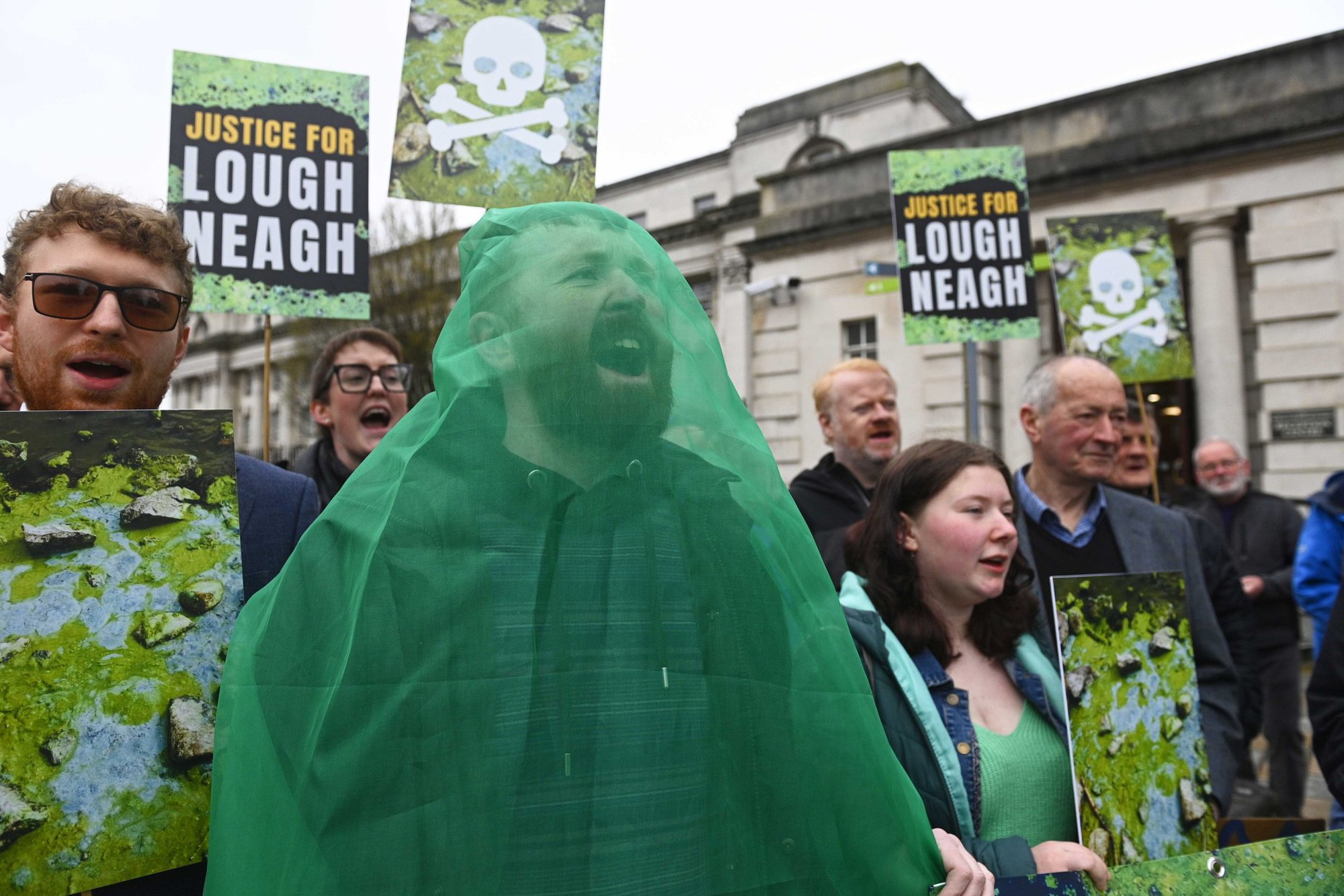
Take Tesco. Controlling nearly 30% of the supermarket sector, it is the single most powerful buyer of British farm produce. Its chicken and pork supply chains run through industrial-scale operators like Avara Foods and Moy Park. These are not quaint family farms but subsidiaries of US agribusiness giants Cargill and Pilgrim’s Pride. These companies have been linked to ecological crises such as the collapse of the River Wye and the ongoing algal disaster in Lough Neagh, the UK’s largest freshwater lake.

For years, supermarkets have pointed to the Red Tractor logo as their environmental alibi. But that line has now been shredded. In a landmark ruling, the UK’s ASA has concluded that Red Tractor’s environmental claims are misleading. This is no longer just campaigners or scientists calling the Red Tractor scheme inadequate. It is a regulator finding that Red Tractor’s advertising exaggerated and misled consumers on its environmental standards. Any retailer still brandishing that logo as a mark of environmental protection is not reassuring customers. They are engaging in greenwash.

The data is stark. Between January 2020 and July 2025, 7,353 Environment Agency inspections of Red Tractor–certified farms found 4,353 breaches — nearly 60% of farms failing environmental rules. These weren’t minor slip-ups: the violations included thousands of breaches designed to prevent slurry and fertiliser from pouring into rivers, fuelling algal blooms, killing fish, devastating ecosystems, and contaminating drinking water. In total, the inspections recorded a staggering 19,305 instances of non-compliance

This is not just a story about dirty rivers. It is about a food system where the biggest players, multinational agribusinesses and the retailers who buy from them, use weak, industry-controlled assurance schemes to insulate themselves from scrutiny. Red Tractor is not a neutral standard-setter. It is designed by the very interests it is supposed to regulate. And guess who controls it? The majority of seats on Red Tractor’s governing council are held by the UK’s various National Farming Union bodies. Yes, the farming lobby actually controls its own product quality scheme. 

Red Tractor’s defenders will say that criticising the scheme means attacking farmers. Let’s be clear, it does not. Many farmers care deeply about the land and waterways that sustain them and us all. They are being undercut by a system that rewards scale, intensification and cutting corners, while paying lip service to environmental protection.

As Martin Lines, CEO of the Nature Friendly Farming Network, has put it: “Consumers and farmers want real sustainability, not a sticker.” Farmers who are genuinely improving soils, protecting rivers and reducing chemicals see little reward for their efforts. Meanwhile, industrial producers hide behind the same Red Tractor logo. That isn’t fairness. It’s exploitation.

Supermarkets cannot claim ignorance. They have been told repeatedly about the links between their suppliers and river pollution. The Environment Agency rejected Red Tractor’s bid for “Preferred Status” precisely because it fails to meet good environmental standards. Yet retailers still rely on the logo as their shield.

This complicity matters because of their sheer market power. When supermarkets demand Red Tractor chicken, vast supply chains, from feed mills to slaughterhouses to contract farmers, are locked into a destructive model. This legitimises the industrial systems polluting our rivers. And when consumers challenge them, they point to the little tractor logo, as if that settles the matter.

The ASA ruling proves it doesn’t.

We now face a choice. Tesco, Asda, Aldi, Lidl, Morrisons and others can continue to sell food tainted with pollution, hiding behind a logo that regulators have called out as misleading on environmental performance. Or they can do the honest thing: demand genuinely high standards from suppliers, and pay farmers properly for producing food in ways that don’t wreck our rivers.

This isn’t just about protecting wildlife or river users such as this nation’s army of wild swimmers. Though that should be enough. It is also about restoring trust in our food system. Consumers deserve to know that when they buy British, they are supporting farming that safeguards our countryside, not destroy it. Farmers deserve a level playing field that rewards those who do right by the land. And companies that profit from selling us food have a duty to ensure their supply chains comply with legal standards, both under the law and broader social responsibility.

For too long, Red Tractor has allowed agribusiness and retail giants to dodge that duty. Thanks to the ASA, the greenwash is now exposed. The question is whether the supermarket giants will finally face up to reality, or whether they will cling to a broken system until public trust collapses.

Britain’s rivers cannot wait. Neither can the farmers who are trying to do the right thing. The time for excuses is over.

ASA ruling exposes Red Tractor as greenwash – River Action demands supermarkets act

Download PDF

New figures reveal staggering 19,000 breaches across 60% of inspected Red Tractor farms, exposing systemic failure behind the label’s “environmentally friendly” claims

River Action is calling on leading supermarket retailers including Tesco and Asda to stop relying on Red Tractor for environmental certification. The scheme has been exposed for serious environmental greenwashing in an Advertising Standards Authority (ASA) ruling.

Having filed the complaint in April 2023, the case is thought to be one of the longest investigations in ASA history.


ASA ruling: Red Tractor environmental claims ‘misleading’

The ASA has today upheld a complaint by River Action’s Chair and Founder, Charles Watson, ruling that Red Tractor – the UK’s largest farming assurance scheme – misled the public about its environmental standards and exaggerated the benefits of Red Tractor endorsement.

River Action challenged advertising for the Red Tractor scheme because of its concerns that environmental standards relating to pollution on Red Tractor farms were not being met – including the claim “When the Red Tractor’s there, your food’s farmed with care… from field to store all our standards are met”.

During its investigation, the ASA considered extensive evidence and arguments put forward by Red Tractor including that it was not an environmental certification mark specifically so “did not seek to replicate environmental law or even cover all aspects of pollution risks by farms”.

The ASA concluded that the evidence provided by Red Tractor to demonstrate compliance with basic legislative standards and a good environmental outcome was insufficient to substantiate the claim which “farmed with care… all our standards are met” conveyed to consumers. The advert breached BCAP Code rules 3.1, 3.2 (Misleading advertising), 3.9 (Substantiation) and 3.12 (Exaggeration).

 

Evidence of non-compliance and pollution

Red Tractor’s marketing claimed its farms take “a preventative approach to protect the environment”, citing reduced pesticide use, strict pollution controls, and rigorous soil management.

However, as part of its ASA complaint, River Action presented damning evidence – supported by Environment Agency (EA) data (2014 – 2019) – that Red Tractor farms are routinely linked to serious environmental harm:

  • Red Tractor farms were responsible for most agricultural pollution incidents in England over a five-year period.
  • 62% of the most serious pollution events (Categories 1 & 2) involved Red Tractor-certified farms.
  • Certified farms had worse compliance rates than non-certified farms (26% vs 19%).
  • In a North Devon case study (2016–2022), 87% of Red Tractor farms inspected by the EA were in breach of environmental rules.         

The EA rejected Red Tractor’s bid for “Earned Recognition” due to its failure to meet minimum environmental standards.

But more than two years on, River Action can now reveal – through Environmental Information Requests – that serious pollution and regulatory failures persist on Red Tractor–certified farms. The data covers the period January 2020 and July 2025 and reveals the following:

  • 7,353 Environment Agency officer inspections of farms claiming Red Tractor status
  • Alarmingly, 4,353 of these inspections (nearly 60%) identified at least one breach of environmental regulations.
  • A staggering 19,305 instances of non-compliance were recorded across failing Red Tractor assured farms.
  • Cattle farming accounted for just over 25% of non-compliance, with 13.2% from beef farms and 12.4% from dairy farms.
  •  1,373 follow-up inspections were required to address non-compliance.
  • Even when actions were completed by deadlines, a substantial number of farms still failed to meet environmental standards, with only 4,657 actions recorded as completed on time. 
  • This demonstrates that membership of the Red Tractor scheme does not guarantee compliance with environmental regulations.


Supermarkets: up your standards

River Action is now warning major supermarkets that by using Red Tractor to reassure customers they are buying food produced to basic environmental standards they risk complicity in misleading advertising, while pollution of the UK’s rivers continues.

Given their enormous market share and purchasing power, supermarket retailers wield significant influence over UK food supply chains and therefore have the opportunity to drive rapid action to address the environmental harm caused by the industry. 

For example, Tesco dominates the supermarket sector with nearly 30% of the market (28.1%), sourcing vast quantities of Red Tractor meat and poultry through suppliers such as Moy Park and Avara Foods.

According to a recent news report, Moy Park has been implicated in the devastating environmental catastrophe at Northern Ireland’s Lough Neagh, where recurring summer blooms of toxic blue-green algae threaten both wildlife and the health of the lake. 

Similarly, Avara Foods, owned by US agribusiness Cargill and linked to the ecological collapse of the River Wye, boasts on its corporate website: “You can trust that we do things ethically; all of our chicken is Red Tractor approved.”


Other major retailers in the frame

Tesco are not alone. River Action is also calling on Aldi, Lidl, Morrisons, Asda, and others to stop relying on Red Tractor as a mark of environmental standards and protection:

  • Asda – 11.9% market share; told Farming UK: “We continue to source all our other fresh primal chicken from UK Red Tractor Assured farms.” Its website states, “The Red Tractor badge is a standard of excellence….It’s about producing the best possible product in an environmentally friendly and sustainable manner.”  
  • Aldi – 10.9% market share; major buyer of Red Tractor products and states that…you can trust the products you buy when you see the Red Tractor logo…..Red Tractor….(covers) animal welfare, food safety, traceability and environmental protection. Food and drink bearing the Red Tractor logo has been produced responsibly to some of the most comprehensive and respected standards in the world.”
  • Morrisons – 8.4% market share; states that “100% of the fresh pork, beef, lamb, poultry, milk and cheddar cheese we sell in our stores comes from farms certified by Red Tractor, or an approved equivalent scheme, giving customers assurance on food safety, hygiene, animal welfare standards and environmental protection.”
  • Lidl – 8.1% market share;  publically state that “we work closely with Red Tractor to ensure that our British meat, poultry, fruit and veg is responsibly sourced to strict food hygiene, animal welfare and environmental standards.
  • Sainsbury’s, once a Red Tractor buyer, has already distanced itself from the scheme. In 2014, then-CEO Justin King called it “the refuge of scoundrels” and criticised it for setting a “low bar that frankly anybody could use.”


What Tesco says

Celebrating 25 years of Red Tractor, Natalie Smith, Tesco Head of Agriculture, said last month: We’re proud to support British agriculture and the thousands of farmers and producers who provide us with quality, affordable, sustainable products year-round. Certification schemes play a key role in providing reassurance for customers, and over the past 25 years, Red Tractor has established itself as a mark of quality, standing for food safety standards, animal welfare and environmental protection.

“We recognise there is still more to do, and it’s essential we continue to work in partnership with Red Tractor to improve standards, and take quick action to drive forward change, strengthening the farming industry for generations to come.”

The Tesco website proudly states, “We require the majority of our meat, dairy, fruit and vegetable products produced in the UK to meet the Red Tractor standard, or an appropriate equivalent. The Red Tractor standards ensure that the production of these products does not have an adverse impact on the environment. For example, pesticides and fertilisers must be applied and stored in ways that minimise pollution of soil and groundwater; it also provides extensive guidance on manure management.”


River Action responds

Chair and founder of River Action Charles Watson said, “Red Tractor farms are polluting the UK’s rivers, and consumers trying to make environmentally responsible choices have been misled. This ASA ruling confirms what we’ve long argued: Red Tractor’s claims aren’t just misleading – they provide cover for farms breaking the law. The time has now come for our major food retailers to lay out credible plans as to how they will move away from this busted flush of a certification scheme and support farmers whose working practices are genuinely sustainable.

“Supermarkets and their suppliers now face serious reputational risk if they hide behind Red Tractor greenwash. By selling products linked to pollution, they deceive customers, undermine trust, and fail in their duty to ensure supply chains obey the law.”


Consumers want confidence, not greenwashing

River Action says that supermarkets need to use assurance schemes that give consumers genuine confidence that the products they buy are not linked to lawbreaking or environmental harm. At present, Red Tractor fails to provide this. An assurance scheme should be meaningful. Supermarkets already have credible models in place for fresh produce, so the same rigorous standards should be applied to livestock.

River Action has written to all the major supermarkets, calling on them to:

  • Publicly acknowledge the ASA ruling and findings by informing their customers of the misleading labelling and committing to driving change both within farming and food standards and within food certification.
  • Publish a clear and transparent roadmap showing how they will certify the environmental standards of all their food produce – including eggs, poultry, dairy, and fresh produce. This roadmap should set out rigorous environmental requirements, be backed by independent inspections, and ensure full public reporting, so customers can see and trust the standards behind the food they buy.


Red Tractor’s own data shows that its logo appears on approximately £18bn worth of food sold annually, meaning this greenwash reaches deep into Britain’s shopping baskets. Jim Moseley, Red Tractor’s CEO, has also boasted that consumer trust in the scheme is tracking at 74%.

Martin Lines, CEO of the Nature Friendly Farming Network, added: “Consumers and farmers want real sustainability, not a sticker. They want confidence that the British produce they buy does not harm the environment or our rivers. 

“Supermarkets and fast-food chains hiding behind Red Tractor need to sort out their suppliers or face low consumer confidence and difficult questions about the environmental violations in their supply chains that are damaging our rivers. Farmers committed to nature-friendly practices must be properly rewarded, or the system will continue to incentivise damaging methods”

Hugh Fearnley-Whittingstall said, “As someone who will always support farmers who work positively with nature, protect the environment and feed the nation, I am deeply concerned by the ASA’s ruling exposing Red Tractor’s persistent greenwashing. For years, consumers have trusted the logo as a sign of environmentally responsible farming, yet the evidence shows widespread environmental breaches that are causing ongoing pollution all over the UK. 

“Supermarkets should not hide behind environmental certification that fails both the planet and honest producers. They have enormous influence and must use it to drive genuine progress that benefits the environment.  That means paying farmers properly for sustainable practices, supporting nature-friendly food production, and leading the way in either rigorously reforming or, if necessary,  completely dropping Red Tractor as a mark of environmental standards.

“Customers deserve more than misleading labels. They deserve assurance that their food supports farming that regenerates soils, protects wildlife, and respects the environment. It is time for supermarkets to step up, take responsibility, and make sustainability a real priority, not a fake one.”

River Action’s complaint to the ASA was prepared with the expert support of Leigh Day solicitors — Ricardo Gama, Carol Day, Julia Eriksen and Lily Hartley-Matthews — together with counsel Tom de la Mare KC and George Molyneaux of Blackstone Chambers. Their advice and representation were instrumental in securing this ruling.

Leigh Day partner Ricardo Gama, who represents River Action, said, “After a two and half year investigation, River Action is delighted that the ASA has finally ruled that Red Tractor was likely to mislead consumers when claiming that its certification scheme ensures high environmental standards. 

“The length of time of the investigation was a result of the contested nature of the case, with both River Action and Red Tractor arguing tooth and nail for their positions. This should set a precedent for other advertisers, including those in the food industry, that misinformation will not be tolerated.”


Consumers: demand better

River Action is urging the public to pressure supermarket retailers into telling their customers the truth about Red Tractor-labelled produce.

Support the campaign: Tell your supermarket to expose Red Tractor
If you shop at these supermarkets, tell them to clean up their supply chains and stop profiting from environmental harm. For more information and to find out how you can support the campaign, visit www.upyourstandards.riveractionuk.com.


Notes to Editor
The source for supermarket market share figures is a Kantar article published on 24 June 2025, which you can read here.

An assessment carried out by the Environment Agency (EA) in 2020, revealed that between 2014 – 2019 Red Tractor-assured farms were responsible for the majority of instances of agricultural pollution over a five-year period. The assessment revealed that of a total 4,064 pollution incidents RT farms were responsible for 62% of category 1 and 2 incidents and 56% of category 3 incidents. Significantly, the report concluded that RT farms were less compliant (26%) with EA inspections compared to non-RT farms (19%). As a result of this assessment, a request by Red Tractor for its assured farms to benefit from EA “Preferred Status” was denied.

When we received the data from the Environment Agency, they advised that many farms include more than one livestock or crop type. As a result, category totals may not add up precisely to the overall inspection figure.

Our research indicates that we could not find any ASA case that took longer to resolve than our complaint against Red Tractor. On its website, the ASA notes that, “A small number of our most complex cases can take six months or more to complete if, for instance, we need to appoint independent experts to help us assess evidence.”

At a webinar in April 2024, Red Tractor CEO Jim Moseley told the Tenant Farmers Association that the Red Tractor logo features on £18 billion worth of food sold each year. He also claimed that public trust in the Red Tractor scheme stands at 74% (watch from around 9 minutes 31 seconds).

ASA ruling of 15 October 2025:

  • River Action challenged a 2023 advert for Assured Food Standards’ Red Tractor Scheme because of its concerns that environmental standards relating to pollution on Red Tractor farms were not being met. 
  • The ASA considered extensive evidence and arguments put forward by Red Tractor, including its own claims that environmental protection was not its primary focus and that RT was not an environmental certification mark specifically so “did not seek to replicate environmental law or even cover all aspects of pollution risks by farms”. 
  • The ASA assessed how the notional average consumer, who was reasonably well-informed and reasonably observant and circumspect, was likely to view the ad. This included the claim “When the Red Tractor’s there, your food’s farmed with care… from field to store all our standards are met”, highlighting the use of Red Tractor labelling across all aspects of food production and farming. The ASA considered that at least some consumers would expect that, in giving assurances about high standards of farming and food production, Red Tractor’s standards would include measures to manage and mitigate environmental risk that arose through farming practices. The ASA also considered that consumers would expect that such standards incorporated compliance with or reflected at least basic legal requirements concerning food safety, animal welfare and environmental protection, and that measures were in place to help produce a high standard and quality of food (in line with the objectives of the Red Tractor scheme, which included environmental measures, as explained on Red Tractor’s website).
  • In reaching its decision, the ASA looked at Environment Agency (EA) reports and data which showed “around half of RT farms being not fully compliant” and led the EA to conclude “The evidence gathered through this project indicates that Red Tractor membership is not currently an indicator of good environmental performance”.
  • The ASA concluded that the evidence provided by Red Tractor to demonstrate compliance with basic legislative standards and a good environmental outcome was insufficient to substantiate the claim which “farmed with care… all our standards are met” conveyed to consumers. 
  • The advert therefore breached BCAP Code rules 3.1, 3.2 (Misleading advertising), 3.9 (Substantiation) and 3.12 (Exaggeration).
From Green to Clean – The Spanish community that saved their lake and what the UK can learn

Download PDF
By Drew Richardson, Communities Coordinator, River Action

The Dirty Man of Europe

The UK is unaffectionately known as the ‘Dirty Man of Europe’ when it comes to the state of our rivers. Three-quarters of rivers now pose a risk to human health, with many of our great lakes and rivers turning green with algal blooms from upstream pollution. Industrial meat production is one of the biggest culprits, driving 62% of river stretches to fail ecological health standards. But a community in Spain faced a similar crisis – and fought back. Their victory offers a blueprint for how we could save our own rivers.

The sad state of the River Wye

A Familar Problem

You may have read my blog post earlier this year, where I visited a community in Spain battling an industrial dairy factory that was threatening to become bigger than their township. I visited this community alongside representatives from across Europe. Organised by Friends of the Earth Europe, we had come together to share knowledge on how communities across the continent are fighting back against industrial pollution.

There I met campaigners from Amigos de la Tierra (Friends of the Earth Spain) and Federación de Consumidores y Usuarios – CECU (the Federation of Consumers and Users). They told me how the community of As Conchas, on the shore of a 25‑mile‑long reservoir, had already begun taking action after years of suffering from pollution caused by industrial meat factories upstream.

For years, local people had endured nauseating smells, keeping their windows shut in the Spanish heat. Further to this, they could no longer access local drinking water, as they saw their wells become contaminated by the waste seeping into the aquifer. Local communities raised their concerns with local government officials, but were told, that the water was safe to bathe in, that their wells were safe to drink from, and no action was needed. And yet, studies warned that cancer rates in the district exceed the rates found in other Galician districts.

Here I am outside the industrial dairy factory in Spain

From Citizen Science to the Courtroom

So local communities decided to take action.

They began with citizen science and found that the Lima River that empties into the reservoir contained at least 97 million dangerous cyanobacteria per litre of water and nitrate pollution levels 1000 times higher than the permitted limits.

The source? Labs attributed this pollution to manure produced by industrial meat factories that litter the river’s catchment. Still the regional government did nothing. So members of the community took their regional government to court, supported by Amigos de la Tierra, Federación de Consumidores y Usuarios – CECU, and Client Earth, for allowing the uncontrolled expansion of industrial meat factories, and inaction regarding the environmental and health impacts they were causing which breached their human rights under the Spanish Constitution and EU human rights law.

After supplying such clear evidence, the judge ruled in their favour and the regional government was ordered by the court to immediately adopt measures to end the pollution impacting the As Conchas reservoir and its community.


What This Means for the UK

This was a tremendous win, which sets a precedent across the EU. Already Portuguese politicians are taking their Environment Agency equivalent to task about downstream pollution. But how does this help us rid the blight from good old Blighty?

Well it wasn’t too long ago that we were part of the EU, so a lot of our environmental law is still in line with our European cousins’. Of course, our laws no longer have to be kept in line with EU directives, so could be liable to change, but so far so good.

Our human rights law however is still the same; we still subscribe to the European Convention on Human Rights (ECHR). These are the laws that ensure we have a right to a fair trial, a right to live, etc. Article 8 is particularly interesting; it’s the right to respect of our privacy and family life. Our private life isn’t just about a place free from surveillance, its our right to participate in society, the economy, culture, and leisure activities. It also means we have rights for the state, individuals, or businesses to not invade our home, affect our private life, or force us from our home.


A Blueprint for Action

When the people of As Conchas could no longer drink the water from their wells, participate in the culture and leisure activities that were intrinsically tied to the reservoir As Conchas was built around, when the smell invaded their home, and when the pollution invaded their bodies and was affecting their health, it became a human rights problem.

We have these same rights in the UK, and now a clear legal precedent that can help hold polluters to account in court. Imagine if we could use these to rescue our rivers. Imagine communities in the Wye, Severn, Thames, or Windermere taking their evidence of pollution to court and forcing action to happen where regulators had failed.

Swimmers, rowers, anglers, and local people, could use their citizen science to demand change, not only through protest, but with the weight of human rights laws behind them. The people of As Conchas have shown us that when local voices come together, even the dirtiest of waters can become clean. And when no one else will listen, not even the authorities, the law can be used to protect people and planet.

Campaign Win! New DEFRA guidance a win for our rivers

Download PDF

DEFRA has issued stronger guidance on Farming Rules for Water. The change means that manure can now only be spread when crops actually need it – not at times it can just run off and pollute our river. After years of campaigning and legal pressure, we welcome this significant step forward that provides stronger protection for England’s rivers from agricultural pollution.

The stream of events:

June 2022 – Manure and fertiliser overuse is killing our rivers

In 2022 WWF and ClientEarth launched a legal complaint to the UK’s environmental watchdog the Office for Environmental Protection (OEP). The complaint was related to DEFRA’s guidance with regard to the overuse of manure and fertiliser which floods our rivers with nitrates and phosphates, fuelling algal blooms that choke ecosystems and suffocate wildlife.

May 2024 – Farming practice must change

As a result of our legal challenge against the Environment Agency (EA), the High Court ruled that farming practices must change to comply with the Farming Rules for Water – a response to the EA’s failure to prevent pollution in the River Wye and other threatened waterways. As a result of this legal action, Defra committed to reviewing its guidance.

June 2025 – New Farming Rules for Water

In June 2025, DEFRA released revised statutory guidance ‘Enforcing the Farming Rules for Water’. While this was a welcome step, it fell short in two key areas:

1) Autumn manure spreading: It didn’t go far enough to clarify the rules around autumn manure spreading – a practice often linked to river pollution.

2) A lack of clarity around enforcement thresholds: I.e. How are the rules actually going to be enforced.

In particular, some farming commentators wrongly interpreted the guidance to mean that autumn spreading could still go ahead as usual. However, The High Court ruling in River Action’s legal case demonstrated that it is unlikely to be compliant with the Farming Rules for Water unless it’s in exceptional and specific circumstances. The new guidance failed to set this out.

July 2025 – Closing the loophole

To address these issues, we wrote to DEFRA to seek urgent clarification. We’re pleased to say DEFRA listened. On 16 July, DEFRA issued additional new guidance to farmers called ‘How to comply with the Farming Rules for Water’. This new guidance made it explicit that manure must only be applied when it meets crop or soil need at the time of application – a critical clarification that closes a dangerous loophole and brings guidance in line with the law.

If accompanied by robust enforcement and clear advice for farmers, this should lead to much stronger compliance and significantly reduce agricultural pollution across England’s rivers. We’re grateful to DEFRA for taking these vital steps forward to rescue our rivers. We’ll continue pushing for the protections our rivers so urgently need.

The plight of El Cerrao – A local disaster, a European response

Download PDF
By Drew Richardson, Communities Coordinator, River Action


Our Communities Coordinator Drew was in Spain this week. Why? The pollution crisis facing UK rivers isn’t unique — it’s part of a global pattern driven by the same industrial meat giants operating across Europe. Here is the story of his visit to the Spanish town that is being overwhelmed by manure, but is now being supported through European collaboration. Enjoy!


“An Englishman, two Danes, two Bretons, two Italians, a Hungarian, a Bulgarian, and around 50 Spaniards…” it may sound like the set-up to a joke, but we weren’t walking into a bar, we were walking to a mega ‘farm’, and it was no joke!

The rural Spanish town of Urbinization El Cerrao near Valencia has a problem. More Holstein Farm next to the town has grown in to a ~1km2 intensive dairy factory. Permitted for 1000 cows it has grown to between 3000 and 4000 and without changing the land use to factory farming. It has slowly bought-out neighbouring farmers’ fields at low cost and now proposes to quintruple its size to more than double the size of the neighbouring town.

A poster on the door of the village hall showing the proposed expansion of the dairy factory which the locals are opposing. The yellow area is the current size of the farm, the red area is the proposed size, and the blue areas are the nearby local communities.

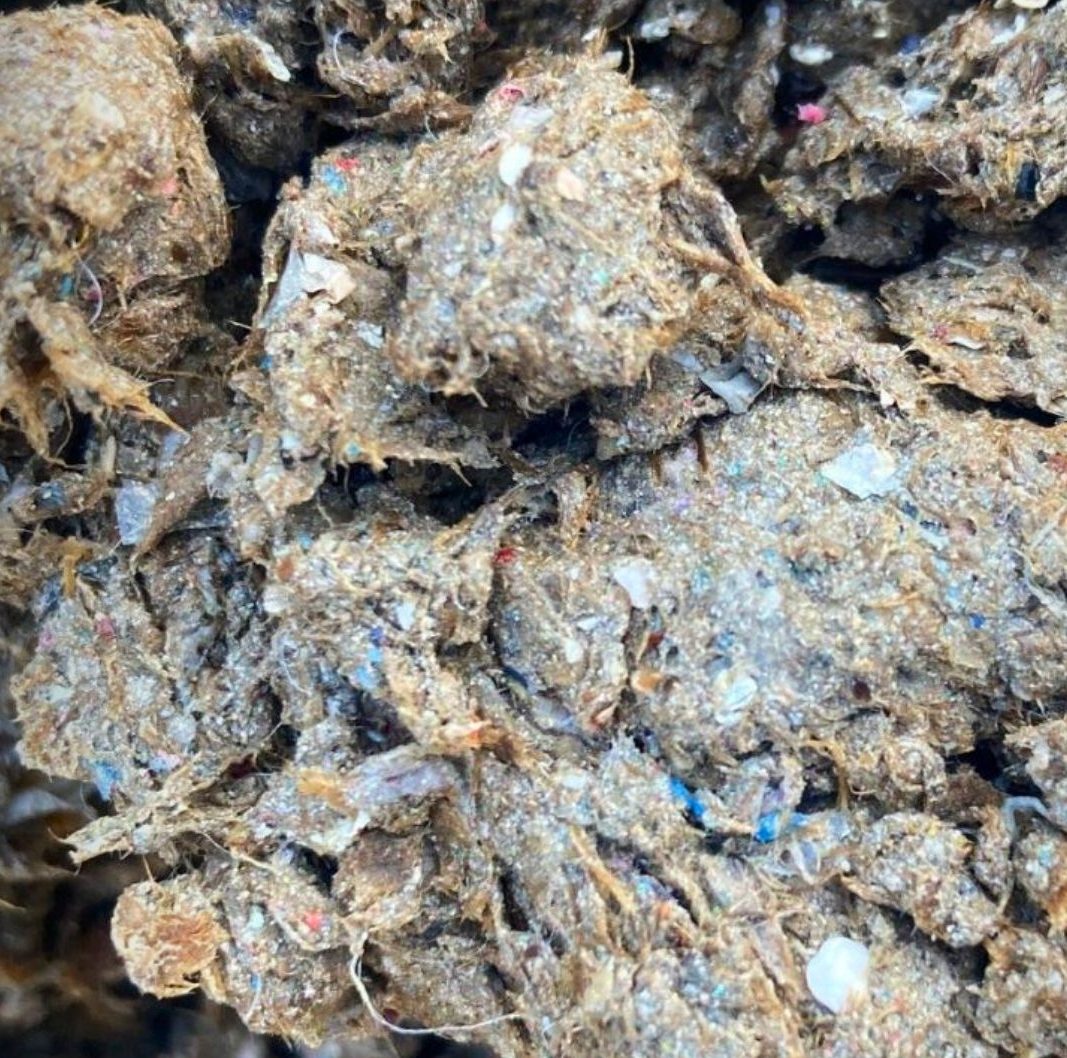
I spoke to Juanita Caballero, a local resident of the Urb. El Cerrao. She told me the town had always relied on wells for water. She used to be able to drink directly from them as a child, her neighbours would fill their pools with the water, but these things are impossible now. A literal fields’ worth of manure piled as tall as me from the intensive dairy factory (more manure than I have ever seen in my life hidden from the view of the town by a wall of hay) has been polluting the ground water. The local Town Hall is now being fined for these wells being contaminated. Drinking water has to be piped in from another town.

Picture of the field-wide pile of waste produced by the dairy factory.

Juanita spoke about the terrible flies, the loud machines and lorries, the inability to open their windows on hot summer nights due to the smell, a neighbour whose daughter who is receiving mental health treatment as all she can hear through the night is the screaming of calfs being separated from their mothers, a sound I was told sounds eerily human.

Video of River Action Communities Coordinator Drew Richardson speaking with Juanita Caballero, local resident and President of the local community group Asociación de El Cerrao

Uprising Community

But the residents of Urb. El Cerrao and the neighbouring urbanizations aren’t just letting this happen.

I arrived at the beautiful village hall (which had been funded by local residents). The room was full of local residents, young and old. I put in my ear-piece and heard, translated into English, the concerns of the local residents, and the passion and support from local campaigning organisations like Terres De Luttes and Friends of the Earth. There was also the support of groups like ourselves, River Action, and many others from across Europe, like the Italian Factory Farm Coalition, Danish Association Against Pig Farming, the French Resistance Against Factory Farms, Italian group Terra, Sustain from the UK and Friends of the Earth groups from Brussels, Denmark, Hungary, Northern Ireland and from different regions across Spain.

The community sharing their concerns at the Centre Social El Cerrao.

The Plight of El Camino

With banners in hand, the community walked from the town, along public rights of way, through the area of proposed expansion, to the dairy factory. The sheer scale of the sheds was hard to put into words.

On the walk I heard from local residents that they had seen rare endangered species of bird, wading in polluted groundwater upswells between the rows of orange trees whose fruit is destined to be some unsuspecting person’s snack or orange juice. Needless to say I decided against the orange juice with my breakfast this morning as I write this.

The community walking to the dairy factory.

Standing Up to Greenwashing

Along the walk a resident told me how their campaign is going. When the dairy factory had put in a planning request to quintruple the size of their factory, the local communities had presented their objections to the local Town Hall, similar to a Parish Council here in the UK. Despite their communities’ objections, the officials approved the expansion. The local communities are now objecting to the next layer of government up, the Generalitat Valenciana, similar to a city council here in the UK.

In the meantime, reports to their environmental regulator made by the communities, has resulted in inspections by the regulator. Local residents told me that the local Town Hall is now having to pay fines for their wells being polluted; that the regulator found high air pollution, ground water pollution, river pollution, including cow bones. They said that the regulator has taken the dairy factory to court and the judge has decided the case should go to Penal Court (the spanish equivalent to the UK’s criminal court).

And yet, amongst these scandals and amidst a potential criminal conviction, this supplier to Danone has become the first factory farm to gain B-Corp certification in Europe and has recently won a prize for sustainable agriculture, leaving the local residents baffled and dismayed.

Photo of the local community outside the dairy factory.

Factory Farms

I have been reluctant to use the word farm throughout this piece. For too long we have been led astray by international mega-corporations pretending to be humble farmers. But it is visits like these that remind you, we are not talking about farmers, these are factory-owners. Should these acres of concrete and sheds be considered agricultural land or brown-field sites of industrial estates? The divide between these industrial food factories and genuine farmers appears to be widening.


“Go Big or Get Out of Our Way”

Genuine Farmers are struggling. Farmers in the UK typically receive 1% of profits from common food like cheese, carrots, and bread (source: Sustain). Farmers can no longer depend on their actual output to make money, requiring subsidies to stay afloat. Supermarkets and big food-brands dictate the sale-price of farmers’ own products in line with these subsidies meaning genuine farmers are always struggling, especially in our current climate where government financial support for farmers has decreased.

Until genuine farmers can get a fair price for what they produce, the economies of scale required to be financially ‘successful’ will always skew towards unsustainable industrial scale agriculture. So it is no wonder that the struggling farmer gives up, when the mega-corp comes to their door with a deal to make all their worries go away. We spoke to farmers from the US (arguably the birthplace of industrial food factories) who summed up this state of affairs perfectly: “Go big or get out of our way”.

A photo of an informational flyer provided to the community of Urbanización El Cerrao.

In any other sector, you would expect workers to unionise, and that union to fight for fair pay. In the UK though there are seemingly few organisations with a union governance structure, and those that don’t, but purport to be unions for farmers, appear to represent the views of large industrial-scale factory businesses over those of genuine farmers, perpetuating the need for bigger farms.

As these organisations lose their members, it begs the question, will genuine farmers band together and unionise, to protect their rights from these industrial mega corporations?


An International Problem

So why are we, River Action, a UK-based charity, in Valencia?

The Stink or Swim report by Food for the Planet, Friends of the Earth and Sustain has shown the 10 factory farm corporations producing more toxic excrement than the UK’s ten largest cities, are owned by just five 5 parent companies, supplying our 10 biggest supermarkets. Two of these companies are Moy Park and Pilgrim’s Pride, owned by US meat giant JBS. Avara Foods, active along the River Wye and the Severn, are owned by US agribusiness giant Cargill. According to Ecologistas En Acción, Cargill are also one of the major providers of soy animal feed for industrial agribusinesses in Spain.

We are experiencing the same struggles in our UK communities as communities in Valencia are, and communities across Europe. These are not isolated incidents, and we are sometimes facing the same actors, who are working internationally. So why aren’t we challenging these international problems with an international response?


An International Response

Over the two days prior to the protest in El Camino two days, I was at a meeting, organised by Friends of the Earth Europe, to bring together campaigning organisations from across Europe who are also trying to challenge the pollution we all face from industrial scale agricultural practices.

Danish stickers with the slogan “Pig Factories? No Thanks”

With the help of the meetings’ wonderful translators I head stories in Europe that seemed oddly familiar to those of the Lake District, or the legal fight of Jo Bateman. The ineffectiveness of national regulators. Stories of political corruption, corporate influence, green washing, empty climate promises, false advertising, and exploited genuine farmers.

It was interesting to hear how each countries’ politicians professed that their country was the best and most environmentally-friendly for industrial agriculture. That each countries’ politicians said genuine farmers couldn’t be allowed a fair price in their country, because they wouldn’t be competitive with other European countries. Suggesting that this could be an easy-to-solve diplomatic task for politicians, rather than some unavoidable inevitability.

It was interesting for us to share the differences, but more importantly the commonalities in both the laws and the rights we all share across Europe, even post-Brexit, that can be useful tools to protect our rivers and communities, wherever we are across Europe.

This meeting was a first step to decide the next actions on how we can become a more united campaigning community. Taking an international response to an international problem.

We share just one planet; now we will begin to fight for it as one.

Drew Richardson,

Community Coordinator

Privacy Overview

This website uses cookies so that we can provide you with the best user experience possible. Cookie information is stored in your browser and performs functions such as recognising you when you return to our website and helping our team to understand which sections of the website you find most interesting and useful.