Fowl play: why this huge chicken farm has no place by the River Kennet

Download PDF
By Janet Coleman, River Kennet Campaigner

Seriously clucked off

As local residents lucky enough to live in Berkshire’s beautiful Kennet Valley we are seriously clucked off by the recent planning application from the landowner – the Sutton’s Estate – to locate a 32,000 bird intensive poultry unit at Bradfords Farm in a field designated AONB (National Landscape), on the edge of the floodplain just 200 metres from the River Kennet, SSSI. It beggars belief that Sir Richard Sutton Limited, a large commercial concern owning luxury hotels in London, and approximately 16,000 acres of land in UK, together with land in Ohio, US, couldn’t find somewhere more appropriate to locate their potentially polluting chicken factory.

We live very close to this site where we enjoy walking by the river and watching the abundant wildlife.  The thought that this treasured river, already under stress, will be put at further risk is completely unacceptable. Fortunately our campaign to fight off this threat to our environment and the potential damage to the River Kennet, one of only 200 chalk streams in the world, has prompted welcome and highly effective support from anglers, wildlife enthusiasts and organisations whose mission it is to care about our endangered environment. 
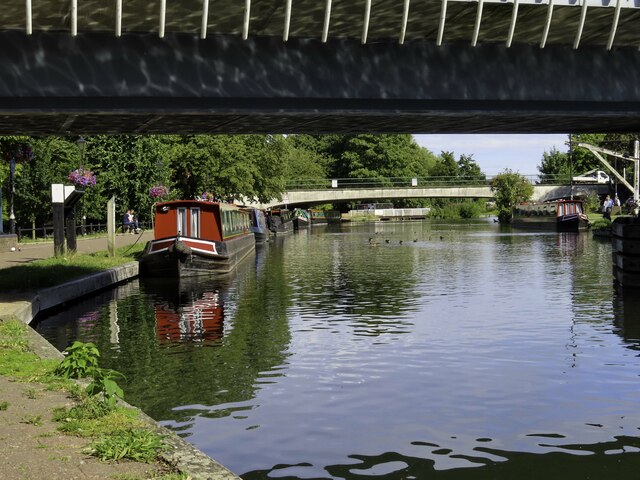
 

The River Kennet in Newbury © Steve Daniels

The game changer

Initially the objectors numbered a few dozen local residents but once we reached out to the likes of River Action and the Angling Trust the campaign really began to motor. Local angling clubs such as Newbury AA and Reading & District mobilised their members to the extent that there are now 232 formal objections. The Angling Trust made representations to both the Environment Agency and Natural England who have sent in comprehensive lists of concerns with the EA now escalating theirs to a formal objection. This, we feel, really could be a ‘game changer’.

We asked the applicants to a public meeting at which we were grateful to have the articulate support of James Wallace from River Action, Anna Forbes from Action for the River Kennel (ARK) – our local River Trust, Martin Salter (Head of Policy, Angling Trust) and various locals with knowledge of planning, avian flu and law.  It seemed to us that the applicant’s representatives were very ill prepared and unable to answer many questions. Fish Legal and Solicitors Leigh Day have also given valuable advice.


The case

Our case is simply this – 
  • We support responsible farming but this poultry unit on the proposed site would be an environmental disaster for the river.
  • Massive egg production units like this should be nowhere near any river and this applicant has plenty of environmentally more suitable land.
  • The only reasons given for the applicant selecting this field is its proximity to the farm manager’s house and convenient supply of electricity!
  • If permitted, the precedent will be set and all the other fields along the Kennet Valley owned by the applicant will have units for 32,000 chickens.  When asked this particular question the applicant’s representatives were unable to guarantee that this would be the only one.
  • The applicants have recently submitted a wholly inadequate Manure Management Plan.  They rely on their “circular farming” system which, in simple terms, means collecting waste from the unit, transporting it to another of their nearby farms for storage and then spreading it on land where they grow the grain to feed the chickens. This toxic waste has been legally classified as “industrial waste” and must be treated as such.
  • Hard evidence from the terminal decline of famous rivers such as the River Wye and Severn demonstrates that, far from being custodians of the land, many farmers cannot be trusted to look after habitats and water courses.


The LPA cannot allow this abomination

At the start of this campaign we felt everything was a struggle and that we were up against an applicant with sufficiently deep pockets that every point we raised would just be given to an expensive consultant for response. Fortunately the expensive consultant’s various reports were so inadequate that even we lay people could see there really was no justifiable reason for this poultry unit in this location, so close to the river.

Clearly the Environment Agency – rather better qualified than us to judge – found their reports more than inadequate and has formally objected in strong terms.  We are not there yet but with the EA’s support, and hopefully that of Natural England too, the local planning authority (LPA) surely cannot allow this abomination.

River Action granted permission to proceed with legal challenge against Ofwat 

Download PDF

Ofwat has forced customers to pay twice for water industry failures – and we are calling for urgent regulatory reform

We are taking water regulator Ofwat to a full court hearing, to challenge the approach Ofwat took when it set the price that water companies like United Utilities can charge their customers.

Ofwat’s approach was unlawful and, as a result of regulatory failings, the financial burden of water industry infrastructure neglect has been pushed onto customers – rather than those responsible.

The case is proceeding amid intensified calls for an overhaul of Ofwat, with growing scrutiny from the Independent Water Commission, led by Sir Jon Cunliffe, into whether the regulator is fit for purpose. We are calling for a reform of the regulator and, in particular, for Ofwat to stop water companies passing the costs of failures on to the public.


Water bill hikes – with no guarantees for the future

At the heart of the case is Ofwat’s 2024 Price Review (PR24), which approved above-inflation water bill increases, including an average annual rise of £123 per household, without guaranteeing the money will be spent on new infrastructure rather than plugging the gaps left by decades of underinvestment.

The legal challenge follows investigations by campaigners Matt Staniek and Windrush Against Sewage Pollution (WASP), which exposed chronic sewage pollution in the Lake Windermere area and regulatory failings around PR24.

While the claim focuses on the PR24 determination for United Utilities in relation to water works in and around Lake Windermere, River Action thinks it exposes fundamental failures in Ofwat’s approach – with national implications.

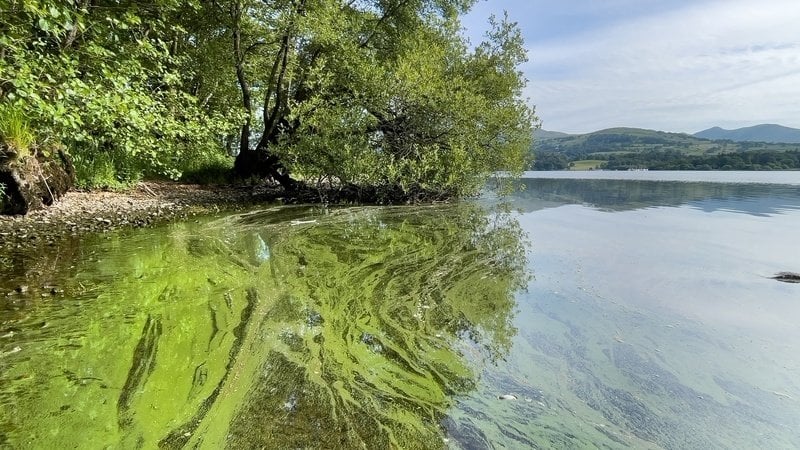
Lake Windmere, Algea blooms | Matt Staniek ©

Customers are being forced to pay twice

The regulator’s decision allows water companies, such as United Utilities, to charge customers twice: first for water bills that should have covered infrastructure maintenance and then again through new hikes aimed at fixing the same problems.

In August 2024, United Utilities was granted “enhanced funding” to upgrade sewage treatment works around Windermere. This approval came despite evidence submitted to Ofwat showing over 6,000 hours of raw sewage discharges in the lake in a single year. Ofwat ignored this data in favour of hydraulic simulation modelling, which fails to reflect on-the-ground conditions.


Legal grounds: flawed modelling, weak enforcement

Permission has been granted for all of our three grounds. Represented by law firm Leigh Day, we will argue that:

  • Ground 1: Ofwat approach to its own “not paying twice” policy was unlawful because it relied on theoretical hydraulic simulation modelling instead of the reality on the ground as seen in evidence provided to Ofwat.
  • Ground 2: Ofwat lacks a meaningful clawback mechanism if water companies misuse funds.
  • Ground 3: Ofwat failed to conduct legally adequate investigations into whether its approach is adequate.

A broken system that needs reform

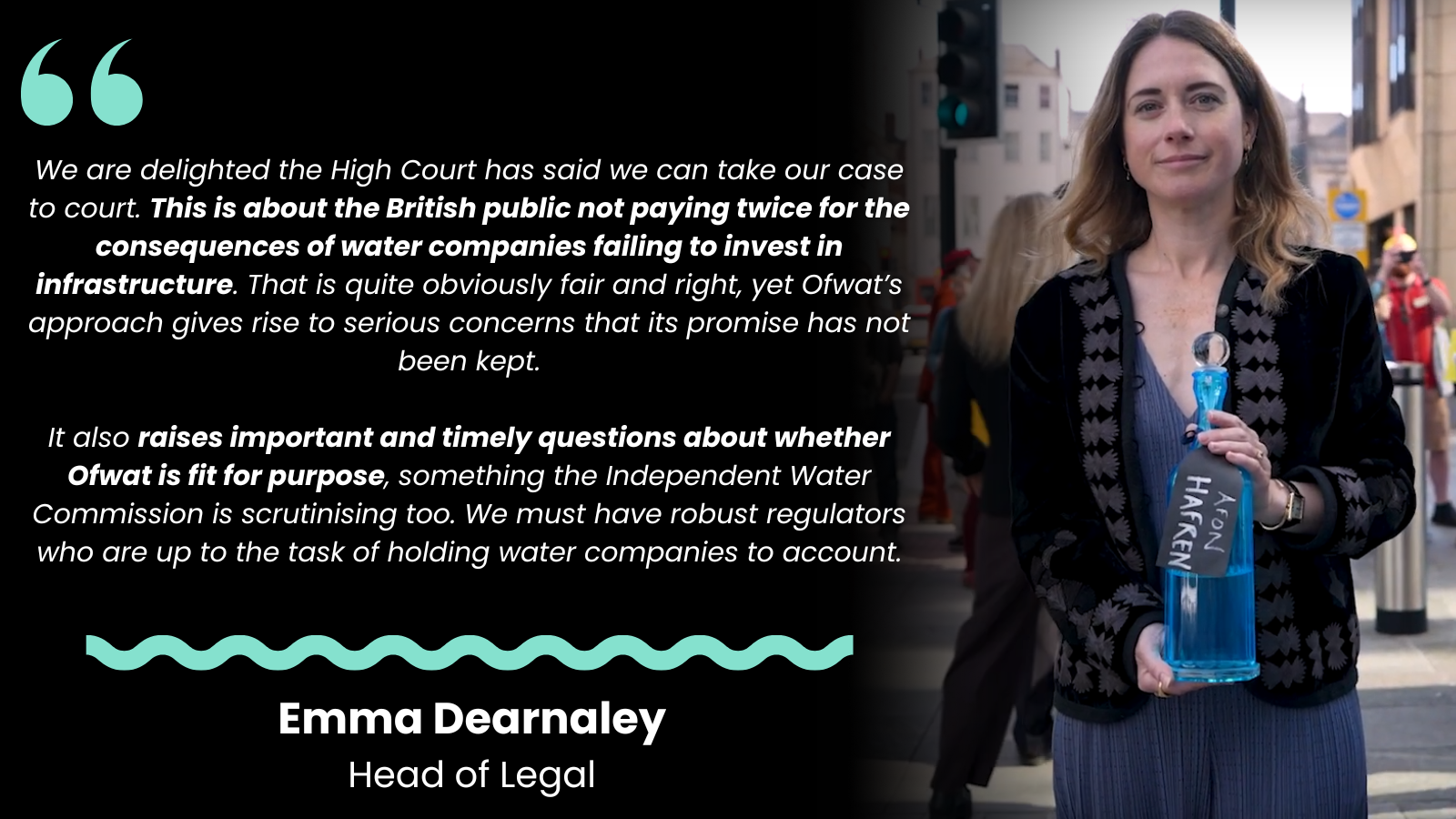
River Action’s Head of Legal Emma Dearnaley said,

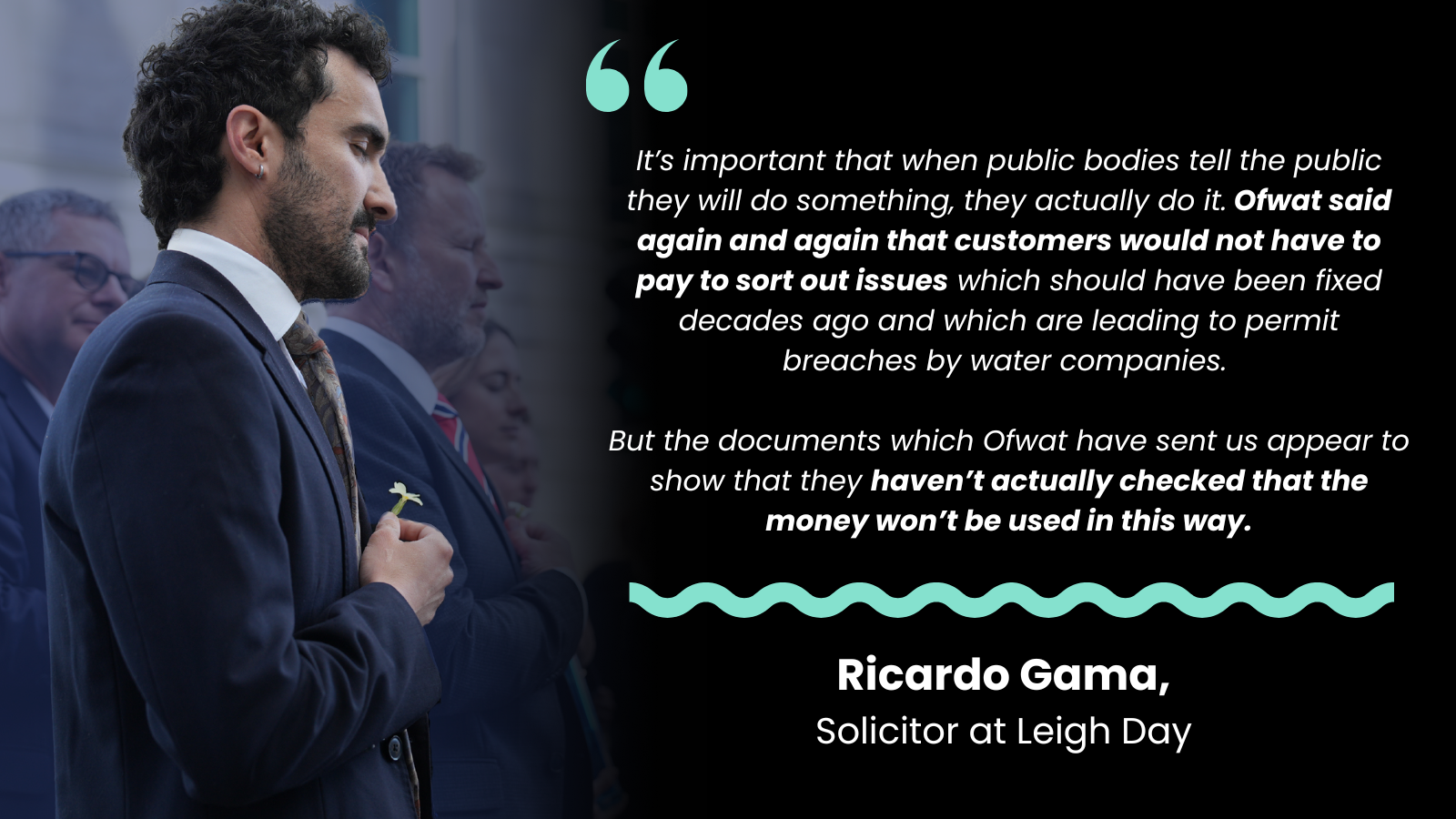
Ricardo Gama, partner at Leigh Day, added:

River Action wins landmark High Court case against Shropshire Council over industrial chicken farm chaos

Download PDF

High Court ruling sets national precedent that marks turning point for polluting factory farming in the UK

We have won a major legal victory in the High Court against Shropshire Council today, successfully overturning the approval of a 200,000-bird intensive poultry unit near Shrewsbury in the River Severn catchment. The High Court judgment marks a pivotal moment in the movement against factory farming in the UK.

The case was brought by local campaigner and River Action board member Dr Alison Caffyn, supported by River Action. The judgment quashes Shropshire Council’s planning decision and marks a major turning point in the fight against the irresponsible and harmful spread of factory farms and the protection of the UK’s iconic rivers.

This victory sends a clear message that planning authorities must:

1)  Assess the cumulative impacts of having multiple intensive agricultural developments in one river catchment before granting permission for another.

2) Consider how livestock production units dispose of the waste from treatment facilities downstream, including from anaerobic digestion plants.

The case highlights systemic failures to account for the environmental toll of having clusters of industrial-scale poultry farms in one area causing “ecological death by thousands of tonnes of chicken muck.”

It has shone a light on the problems with the planning system when it comes to agricultural developments in precious and protected environmental sites, such as the River Severn and River Wye catchments.

This case has importantly clarified the approach that local authorities across the country will need to take to properly assess the cumulative and downstream environmental impacts of any future intensive farming developments in protected areas. This will mean taking a combined approach when assessing new intensive agricultural developments instead of viewing them as being unconnected to what is already there.


A watershed moment for rivers

The judicial review focused on Shropshire Council’s failure to lawfully assess the environmental impact of the development, including the widespread and damaging practice of spreading poultry manure or digestate on surrounding land.

Key issues upheld by the court included:

  • Failure to assess cumulative impacts: The council failed to assess the total impacts of the development alongside other existing ones (including increases to chicken numbers consented through environmental permits instead of planning permissions).
    Failure to assess indirect environmental impacts: The council failed to lawfully assess the downstream impacts of the development, in particular the spreading of digestate on land.


Legal significance


The tide of megafarm pollution is turning

This judgment follows several recent challenges against industrial agriculture. In March, the High Court ruled in The National Farmers’ Union v Herefordshire Council that farming manure constitutes industrial waste in law, with significant implications for the sustainable management of manure-as-waste across the UK. Earlier this year, a proposed megafarm in Methwold, Norfolk was rejected over environmental concerns including the need to take full climate impacts into account when deciding whether to grant permission and the need to properly manage waste to prevent air and water pollution.

With the future of megafarms and our iconic rivers at a crossroads, the government now needs to drive industry-wide reform.

We hope that today’s victory will be a turning point in agricultural planning and policy, putting environmental health at the heart of decisions, stopping the spread of unsustainable megafarms and delivering proper protection for our rivers.

The grant of planning permission was quashed by the court.

Shropshire Council will not be appealing the decision.

Read the full judgment here.

Spending Review: Boost for farmers, blow for regulators

Download PDF

Spending Review: Good news for farm payments – but not for regulation as DEFRA budget reduced

We welcome the government’s commitment to significantly increase funding for Environmental Land Management Schemes (ELMS) – with the budget set to rise by 150% from £800 million in 2023/24 to £2 billion by 2028/29. This substantial investment offers a vital opportunity to support farmers in restoring nature, improving soil health, and reducing agricultural pollution in our rivers and streams. But is it enough?

In a difficult fiscal period, DEFRA needs all the support it can get to increase funding for the transition to nature-friendly farming. However, the Spending Review raises serious concerns about the Government’s ability to protect river health. DEFRA’s overall budget has been reduced by 2.3% in real terms – continuing over a decade-long decline in funding. As a result, it remains under-resourced to enforce environmental laws at scale, limiting regulators’ ability to hold polluters, including water companies, to account.

Water bill payers across the country expect their water companies to be held responsible for pollution – not rewarded for failure. Weakening the watchdogs that should be protecting the UK’s rivers and water supply is unwanted by the public.

Toxic sludge scandal: The hidden threat lurking in our fields

Download PDF
By Amy Fairman, Head of Campaigns, River Action

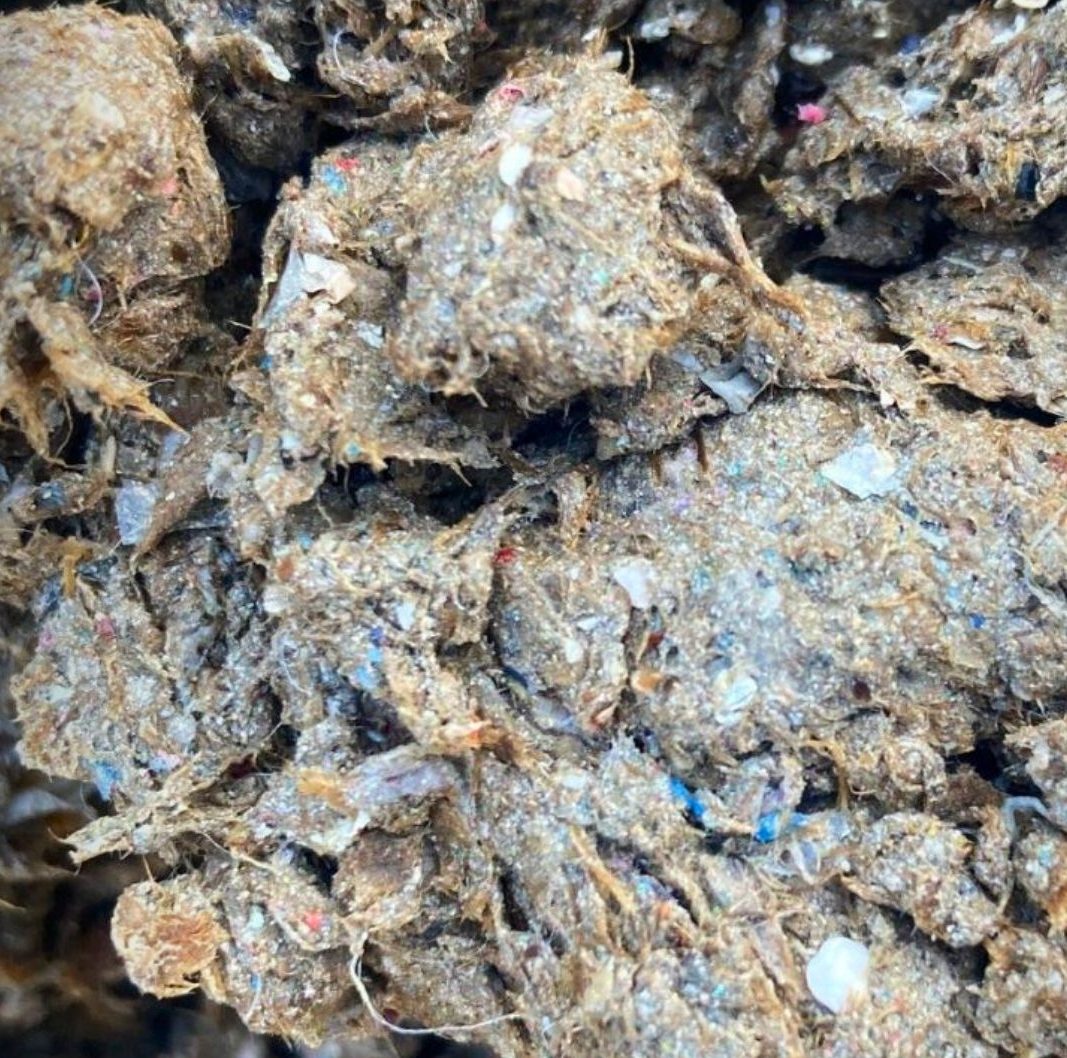
Across the UK, millions of tonnes of toxic sewage sludge is being dumped on our farmland every year. Marketed as “fertiliser,” this hazardous waste produced by water companies can contain a cocktail of microplastics, heavy metals, and dangerous “forever chemicals” that persist in the environment and accumulate over time. Shockingly, around 90% of this sewage sludge is ending up on the land that grows our food, leaching pollution into our soils and rivers.

This isn’t just a failure of transparency, it’s a ticking environmental time bomb that could even lead to soils becoming unable to support crop growth.

Thanks to our legal challenge against the Environment Agency, the Government is finally under pressure to confront this scandal head-on. And behind the scenes, water companies are panicking. A recent investigation by Unearthed has exposed their growing fears: if new regulations come into force to stop this reckless sludge spreading, they’ll be left with millions of tonnes of waste without a home.

And their plan? To make you, the public, pay for the clean-up. Again.


A broken system

Sewage sludge is the solid material left behind after wastewater is treated. It’s a necessary part of managing sewage. However, this sludge is not harmless compost. It’s laced with toxic pollutants, including PFAS (forever chemicals linked to cancer and infertility), microplastics, and heavy metals that poison the land and waterways. Yet water companies have been quietly offloading this waste onto UK farmland for decades, with little accountability and woefully inadequate oversight.

What’s worse, the water industry has not been upfront about what this sludge contains. Farmers have unknowingly spread this material across their fields, and regulators have turned a blind eye. Shockingly, the Environment Agency has axed its pledge to test sewage sludge for microplastics and ‘forever chemicals’ – an issue exposed recently by Fighting Dirty in its legal challenge.

But now the pressure is mounting for the Government to step up.


River Action’s legal push for change

Last year, we launched a legal challenge against the Environment Agency and the Government for failing to enforce the rules on sewage sludge spreading. Our case argued that the authorities were breaching their legal duties to protect human health and the environment by allowing excessive muck spreading that exceeds the immediate soil and crop nutrient needs, leading to nutrient runoff into waterways.

The result? The Government is now reviewing its enforcement guidance, a crucial step toward stopping the spread of toxic waste on our land and rivers. This could force water companies to find safer, cleaner ways to manage their sludge. But there’s a catch: if that happens, they’re already warning they’ll ask Ofwat for an emergency rise in water bills to cover the cost.

Let’s be clear: the public should not foot the bill for the water industry’s environmental negligence. We’ve already paid the price through polluted rivers, poisoned soil, and mounting ecological damage. The companies responsible must be made to clean up their own mess.

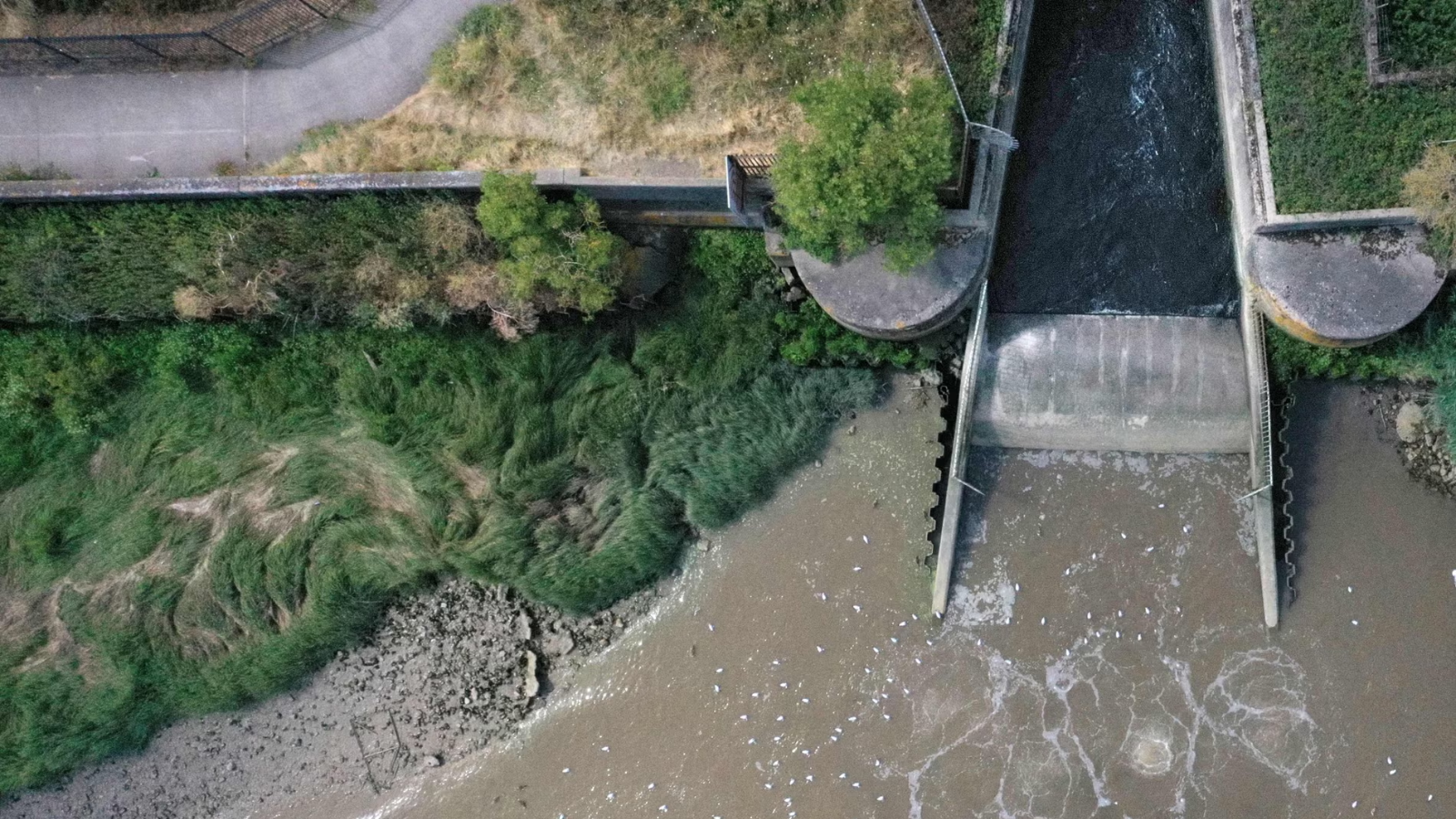
Sewage outflow into the River Thames © Getty Image

Time to act

This is a defining moment. For too long, the water industry has prioritised profit over public health and environmental protection. That must end.

Together with Greenpeace, we are calling on the new Secretary of State for Environment, Steve Reed, to take urgent action:

  • Stop the spreading of toxic sewage sludge on farmland
  • Make water companies pay the full cost of disposing of this waste safely
  • Introduce proper regulation and legal limits on the content of sludge used in agriculture

Sign the petition today and demand the Government puts an end to this toxic scandal. Let’s hold water companies accountable and ensure our land, rivers, and future are protected from pollution.

[SIGN THE PETITION]

Clean water in jeopardy: DEFRA cuts would sink Labour’s rivers, seas and lakes commitments

Download PDF

Ahead of the Government’s Spending Review, many of the UK’s most respected environmental organisations and campaigners, including the RSPB, GMB Union, The Wildlife Trusts, Good Law Project, Keep Britain Tidy, Surfers Against Sewage, WWF-UK, Wildlife and Countryside Link, British Rowing, The Rivers Trust, Hugh Fearnley-Whittingstall, Chris Packham, Robert Plant, Jim Murray, Liz Bonnin, Robert Macfarlane, and Imogen Grant, have joined forces demanding the Government increase funding to DEFRA and fully resource the regulators tasked with cleaning up Britain’s rivers, lakes, and seas.

In a letter sent to Prime Minister Sir Keir Starmer and Chancellor Rachel Reeves, the group, coordinated by River Action and in the wake of the March for Clean Water in November 2024, warns that Labour’s credibility on environmental protection is on the line. The letter follows widespread concern that any cuts to DEFRA’s budget in the Spending Review will severely undermine the Government’s ability to deliver on its clean water promises, made central to last summer’s general election campaign.

While the group acknowledges the introduction of the Water Special Measures Bill and the establishment of the Independent Water Commission led by Sir Jon Cunliffe, whose interim report was published on Tuesday this week, it stresses that without urgent and sufficient funding, these efforts risk being little more than symbolic.

The signatory organisations – including some of the UK’s largest environmental charities – represent millions of people across the country. Among them are groups that mobilised the 15,000-strong March for Clean Water in November 2024 – the largest-ever peaceful protest for clean water in British history.


 Key Facts:

  • Only 14% of rivers in England meet good ecological status.
  • In 2024, 3.6 million hours of untreated sewage was discharged into waterways across England and Wales.
  • Farm inspections remain so infrequent that each farm can expect to be checked once every 25 years.
  • Almost 50% of farms inspected in the last two years were non-compliant with environmental rules – but only 22% faced any form of enforcement.
  • The Environment Agency’s funding has been cut by 50% over the last decade, hollowing out its ability to monitor and prosecute polluters.
  • Water companies have racked up £64.4 billion in debt since privatisation and continue to pay out dividends while infrastructure fails.

The Coalition’s Core Asks:

  1. Fund the regulators – Restore and increase budgets for DEFRA, the Environment Agency, Ofwat and Natural England so they can enforce environmental law and hold polluters to account.
  2. Support nature-friendly farming – Expand and protect funding for the Environmental Land Management Schemes (ELMS) and Sustainable Farming Incentive (SFI) to enable farmers to play their part in river recovery.

Voices from Across the UK:

Growth for who?: The true cost of water pollution

Download PDF
By Henry Shepherd, Communities Coordinator, River Action

“Economic growth is the number one mission of this government” says Rachel Reeves.

Yet, as rivers fill with sewage and budgets for environmental protection are slashed, many small businesses and communities that rely on clean water are being left behind – or worse, shut down.

Across the UK, water pollution is no longer just an environmental and public health issue – it’s an economic one. Behind every brown plume, fish kill, or no-swim warning, there’s a person whose livelihood is taking a hit.

These aren’t abstract numbers or distant disasters, these are real people – watersports instructors, anglers, B&B hosts, event workers – who depend on rivers being clean, safe, and healthy. However, as the toxic cocktail of agricultural runoff, raw sewage, and chemicals continues to flood our waterways, and environmental oversight is gutted, many are finding themselves on the losing end of the government’s “growth” agenda.

“I’ve been shut down and unable to sell my product due to sewage spills upstream… I’m now effectively without a source of income”

Calvin, watercress farmer from Hampshire


The new Labour government has made no secret of its intention to turbocharge economic growth. This growth is achieved via cutting environmental budgets, and stripping regulators of the resources they need to hold polluters accountable. Those who end up winning are corporate shareholders – and the losers are small, local businesses that are being slowly drowned in polluted waterways. This has knock-on effects across entire local economies – the pint in the pub, the B&B, and the stop at the shop after your fishing trip hit local communities in ways we can’t always measure.

“Once a thriving business, I now haven’t taken on a customer in 12 months.”

Angela Jones, watersports business owner on the River Wye


It’s a bitter irony: the very communities that should be benefiting from Labour’s pursuit of ‘growth’ are being stifled by the fallout of short-term thinking and insufficient regulation. River-dependent businesses losing trade due to smell and stigma – cancelled sports events  and family holidays – river users unable to work after getting sick. Entire local economies are being dragged down by the stink of polluted rivers.

This is a symptom of a system that values profit margins over public health, investor returns over infrastructure, and “growth” over anything remotely sustainable. That’s why we’ve written to the Prime Minister and the Chancellor to urge them to end the era of cuts to Defra.

“We rely on membership subs for our Rowing club to survive … .if you don’t want to get sick, why would you pay to row on a nasty river?”

Tom, Club Captain at Durham University Rowing Club


Until water is protected like the public asset it is – not a dumping ground or a corporate cash cow – these stories will keep piling up. And so will the pollution. As the government finalises its spending plans on 11 June, we’re forced to ask:

Growth for who?

Interim Water Review falls short of real reform

Download PDF

River Action, alongside Surfers Against Sewage have responded to the publication of the Independent Water Commission’s interim report, welcoming signs that long-standing failures are finally being recognised and the regulators need a major overhaul – but warning that the report stops well short of real reform.

Despite a 15,000-strong March for Clean Water in London last year and surging public anger, the interim review still falls short of the Government’s manifesto commitments and speaks more about attracting investors than cleaning up pollution and serving the public.

Crucially, this report acts more as a progress report which tinkers at the edges of the problem – not the bold systemic action plan needed to end the crisis. While it contains some welcome analysis on regulatory failure, it offers few concrete solutions and avoids many of the most difficult but necessary decisions. The final report must give senior Labour figures, including Environment Secretary Steve Reed, the political capital needed to show this government is serious about fixing the water industry and cleaning up England and Wales’s polluted rivers and seas.


CEO of River Action James Wallace said, “This interim report signals some progress on regulation, but it reads more like a sales pitch to international investors and overpaid CEOs than the urgent restructuring of corrupted water companies. We ask the Commission to learn from other countries how to ensure water companies are owned, financed and operated for public benefit.

“The Government has a clear mandate to clean up our polluted waterways and deliver on its election promises. That means getting tough on polluters, using the full force of the law, reforming regulation, and ending the era of failed privatisation by prioritising people and nature over profit – not kicking the problem further downstream.

“And in the meantime, the Government shouldn’t wait: our biggest polluter Thames Water should be put in a Special Administration Regime to send a regulatory shockwave across the industry. Our water is our nation’s birth right and is not for private sale.”


CEO of Surfers Against Sewage Giles Bristow said: “The criminal behaviour, chronic lack of investment and woeful mismanagement which has led to sewage filled seas is a direct result of our profit driven system. This interim report begins to recognise this, but as yet does not spell out the need to end pollution for profit.

“The commission’s final recommendations must reshape the water industry to put public health and the environment first. Until we have this, we will continue to swim and surf in the deluge of sewage that pours into our waters whilst shareholders continue to cream of profits. The commission must make concrete recommendations to end pollution for profit otherwise it risks becoming part of the problem, not the solution.”

“The public will not stand for tinkering around the edges and the MPs that represent these angry communities know this.  We will continue to fight until we see the transformational change that is needed to end sewage pollution once and for all.”

River Action and SAS welcome the report’s recognition of:

  • Government failure to plan for long-term sewage treatment and drinking water needs
  • Weak, reactive regulation from Ofwat which allowed water companies to pile on debt and reward pollution with dividends and bonuses
  • An underfunded Environment Agency unable to monitor pollution and enforce environmental law
  • Water companies prioritising profits over people and planet, resulting in outdated infrastructure and pollution
  • Water companies poor environmental performance driven by profit hungry short term shareholders

We also support the call for stronger local and regional sewage and water planning, closer regulatory oversight of water companies, and long-term low-risk, low-return infrastructure investment.

However, the final report must go beyond diagnosis and deliver a clear plan for action. It should:

  • Restructure water companies to operate for the public good, not private profit. Where a company is failing, the Government must use powers like Special Administration Regime to intervene
  • Protect public and environmental health by securing benign sources of investment and linking performance with returns
  • Democratise decision-making with customers, environmentalists and local government balancing interests on water company boards
  • Strengthen independent regulators, cash-strapped by years of under-funding leaving them unable to prosecute polluters at scale
  • Mandate public oversight of local and regional water company planning, spending and performance, and integrate with a national urgent action plan

Next week’s Spending Review will be the first real test of whether the Government is serious. Without proper funding for enforcement agencies and the power to prosecute environmental crime, any reform risks being cosmetic.

We urge the final report to reflect Labour’s manifesto commitment to bring failing water companies into order and clean-up the mess from 15 years of privatised pollution.

“We only have one chance to get it right. The public mandate for change is overwhelming and so is the urgency. What comes next must be decisive, enforceable, and in the public interest. We urge Sir Jon Cunliffe to give us more, much more. Nothing short of a systemic overhaul of how water companies are owned, funded, operated and regulated will do.” – James Wallace, River Action CEO

Privacy Overview

This website uses cookies so that we can provide you with the best user experience possible. Cookie information is stored in your browser and performs functions such as recognising you when you return to our website and helping our team to understand which sections of the website you find most interesting and useful.