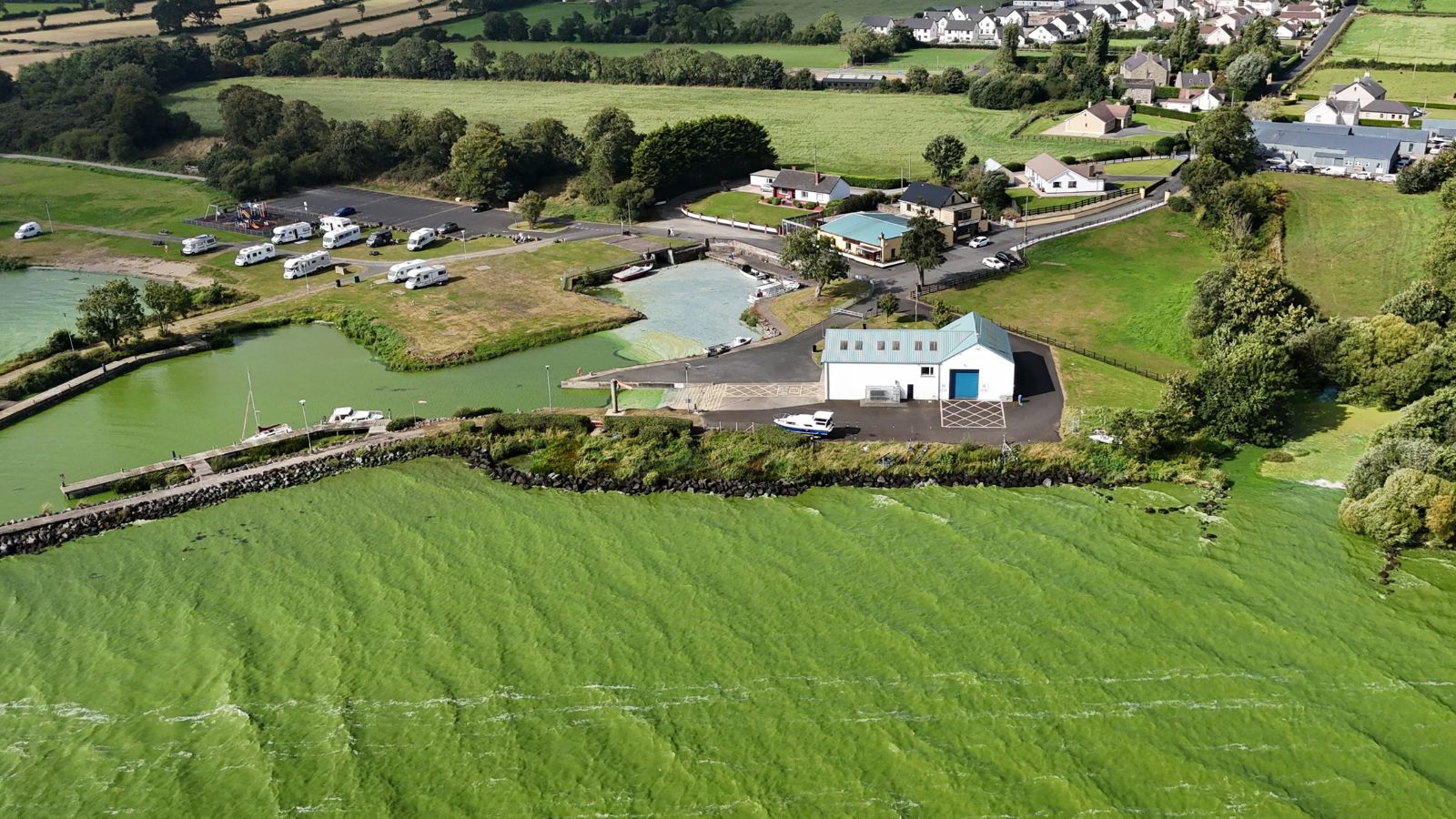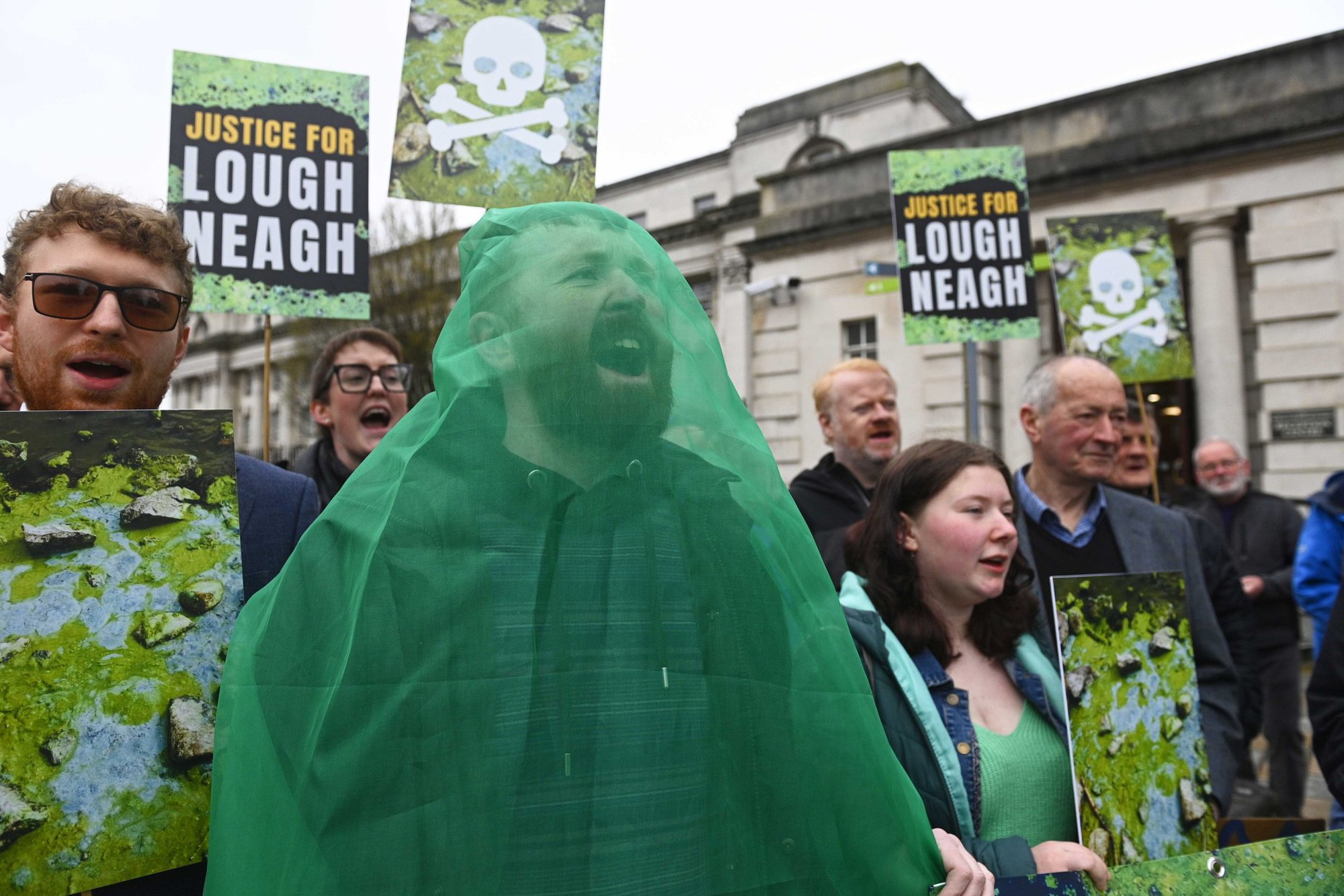

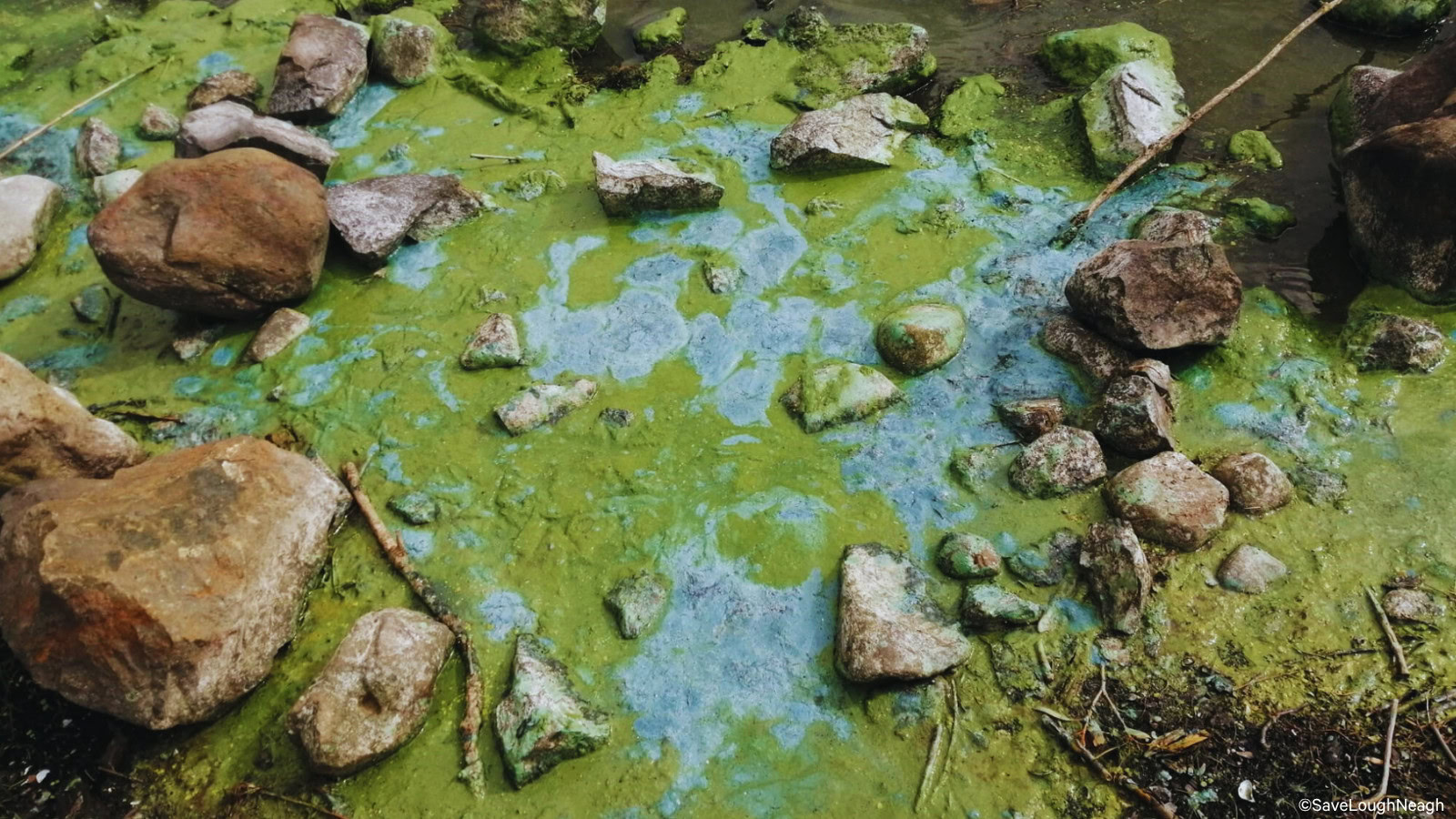

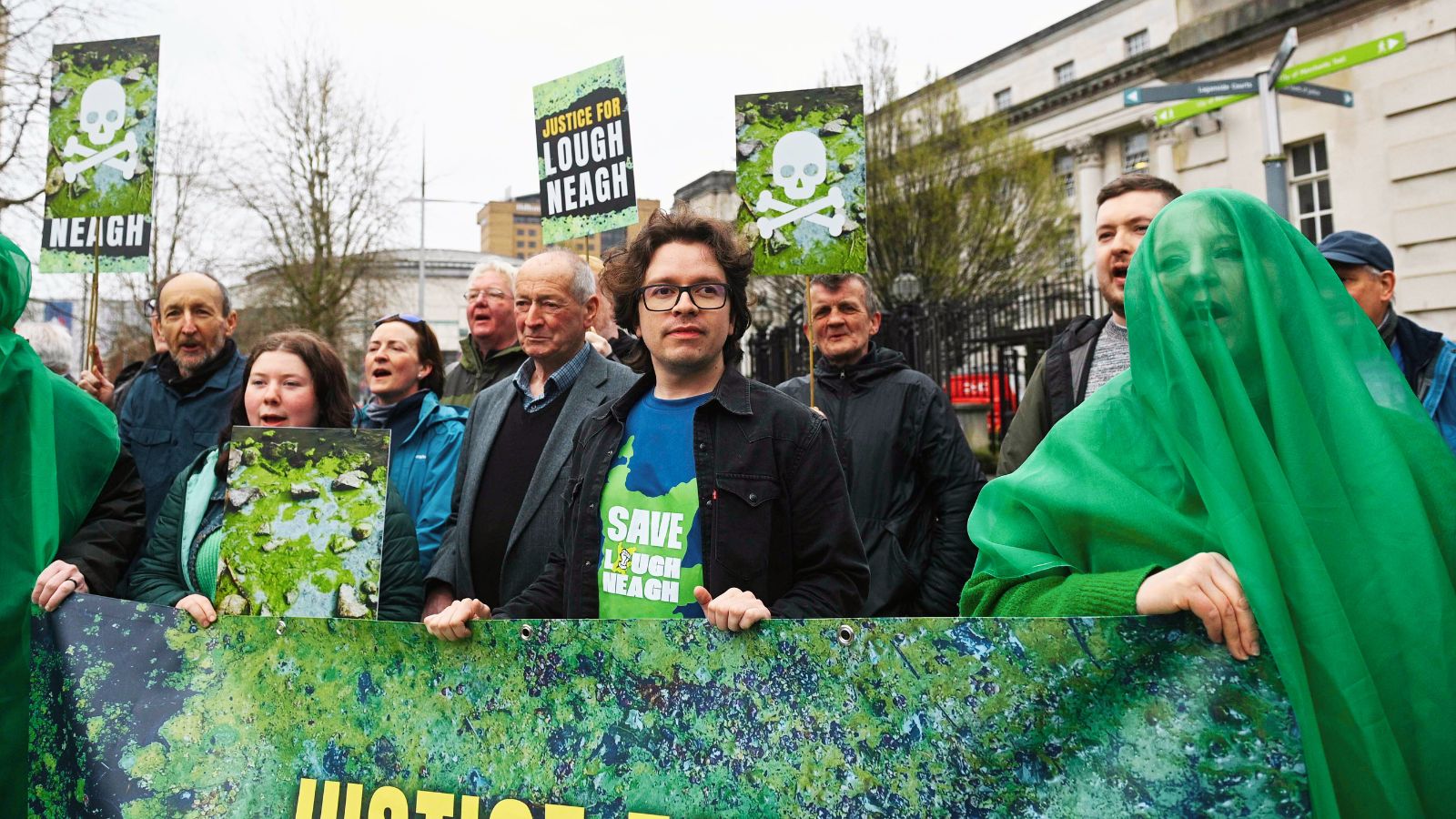
Lough Neagh, the largest freshwater lake in the British Isles, is in ecological crisis. It supplies over 40% of Northern Ireland’s drinking water and drains nearly half the country’s land, much of it intensively farmed. Yet for years, it has been choked by nutrient pollution, triggering widespread blue-green algal blooms that can be seen from space. The Lough has now reached a state of severe ecological decline, with toxic algae posing risks to wildlife, public health and local livelihoods.
Nutrients from manure, fertiliser and wastewater are washing into the Lough at unsustainable levels, fuelling algal growth and collapsing the ecosystem. Scientific assessments have found that agriculture is responsible for the majority of pollution pressures on Northern Ireland’s waterways, yet controls on nutrient use and waste management remain weak and poorly enforced. At the same time, wastewater pollution continues to add to the problem, creating a toxic cocktail that the Lough cannot recover from under current conditions.
Despite years of warnings, the response from government, regulators and industry has been inadequate. Plans to protect the Lough lack clear, enforceable measures, and existing environmental laws are not being properly applied. Instead of decisive action, authorities have relied on outdated policies and voluntary approaches while the crisis has worsened. The result is a system where pollution continues unchecked, and one of the UK’s most important water bodies is being allowed to decline in plain sight.