Berkshire factory farm plans rejected in win for river campaigners
A major win for river campaigners has been secured in Berkshire. Plans for a 32,000-bird egg production unit near Marsh Benham, close to the River Kennet, have been rejected following strong objections from local residents, environmental groups, and anglers led by Action for the River Kennet.
A major win for river campaigners has been secured in Berkshire. Plans for a 32,000-bird egg production unit near Marsh Benham, close to the River Kennet, have been rejected following strong objections from local residents, environmental groups, and anglers led by Action for the River Kennet.
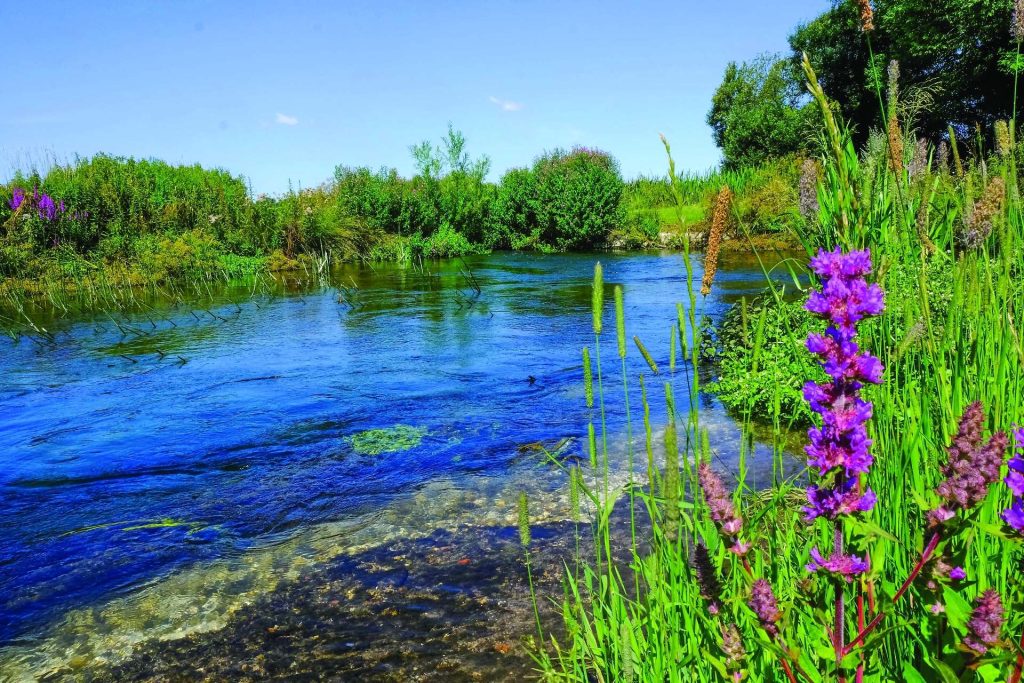
The proposed development would have been sited on the banks of one of the world’s rare chalk streams – the River Kennet, a designated Site of Special Scientific Interest.
Why was the application turned down?
The application was turned down based on the harmful effects from groundwater pollution and surface water runoff that could result from the development, particularly through increased phosphorus and nitrogen deposition. These risks had not been adequately avoided, mitigated, or compensated, with insufficient information provided to justify otherwise.
Community-led resistance
The objection was spearheaded by Action for the River Kennet (ARK) and the Angling Trust, with support from River Action. Together, they argued that the risks to the river had not been properly addressed or mitigated.
Local resident Kate Jones, who objected to the application said:
“We are a small community who have come together to fight this, and we want to encourage others that it can be done. We are incredibly pleased and relieved it has been refused. The River Kennet is safe from such developments for now, though West Berkshire Council have left the door open for SRSL to resubmit. We would also like to thank everybody who has lent their support to our campaign, including River Action.”
“I learned to swim and fish in the River Kennet. This decision sends a strong message: communities will not allow our rivers to continue to be the dumping ground for industrial-scale agriculture. The rejection of this damaging proposal is a victory for rivers, wildlife, and the united voices of concerned local residents, and further evidence that the days of factory farms wrecking our waterways may be numbered.”
The Angling Trust also objected to the application. Martin Salter, lifelong Kennet angler and Head of Policy at the Angling Trust said:
“We told the Sutton’s Estate back in March that the game is up and they should withdraw their irresponsible application to locate a polluting poultry unit on the edge of the Kennet floodplain and just a few hundred metres from a highly protected SSSI, but they didn’t listen. It’s been a long hard campaign but I’m so pleased that common sense has finally prevailed and those of us who love and cherish Berkshire’s most famous chalkstream can breathe a sigh of relief.”
Why is this important for our rivers?
We have consistently warned of the devastating impacts of intensive livestock units on the health of Britain’s rivers. Phosphorus and nitrogen pollution from such sites is a leading cause of algal blooms, oxygen depletion, and widespread ecological damage. Stopping megafarms proposals like the one on the Kennet is integral to protecting the health of our rivers.
Our CEO adds:
“This is an important step forward, we must now accelerate the transition to farming practices that support farmers to work with nature, not against it. Communities are speaking out, decision-makers are listening, and the era of industrial river-wrecking factory farms is drawing to a close.”
Fightback against factory farms: New toolkit to empower communities
As the fightback against industrial-scale factory farms that wreck our rivers gathers pace, we have launched a new Planning Toolkit. This resource is designed to empower individuals and community groups to object to developments that may threaten their local waterways. Be sure to check it out!
By Drew Richardson, Communities Coordinator, River Action
The Dirty Man of Europe
The UK is unaffectionately known as the ‘Dirty Man of Europe’ when it comes to the state of our rivers. Three-quarters of rivers now pose a risk to human health, with many of our great lakes and rivers turning green with algal blooms from upstream pollution. Industrial meat production is one of the biggest culprits, driving 62% of river stretches to fail ecological health standards. But a community in Spain faced a similar crisis – and fought back. Their victory offers a blueprint for how we could save our own rivers.
The sad state of the River Wye
A Familar Problem
You may have read my blog post earlier this year, where I visited a community in Spain battling an industrial dairy factory that was threatening to become bigger than their township. I visited this community alongside representatives from across Europe. Organised by Friends of the Earth Europe, we had come together to share knowledge on how communities across the continent are fighting back against industrial pollution.
There I met campaigners from Amigos de la Tierra (Friends of the Earth Spain) and Federación de Consumidores y Usuarios – CECU (the Federation of Consumers and Users). They told me how the community of As Conchas, on the shore of a 25‑mile‑long reservoir, had already begun taking action after years of suffering from pollution caused by industrial meat factories upstream.
For years, local people had endured nauseating smells, keeping their windows shut in the Spanish heat. Further to this, they could no longer access local drinking water, as they saw their wells become contaminated by the waste seeping into the aquifer. Local communities raised their concerns with local government officials, but were told, that the water was safe to bathe in, that their wells were safe to drink from, and no action was needed. And yet, studies warned that cancer rates in the district exceed the rates found in other Galician districts.
Here I am outside the industrial dairy factory in Spain
From Citizen Science to the Courtroom
So local communities decided to take action.
They began with citizen science and found that the Lima River that empties into the reservoir contained at least 97 million dangerous cyanobacteria per litre of water and nitrate pollution levels 1000 times higher than the permitted limits.
The source? Labs attributed this pollution to manure produced by industrial meat factories that litter the river’s catchment. Still the regional government did nothing. So members of the communitytook their regional government to court, supported by Amigos de la Tierra, Federación de Consumidores y Usuarios – CECU, and Client Earth, for allowing the uncontrolled expansion of industrial meat factories, and inaction regarding the environmental and health impacts they were causing which breached their human rights under the Spanish Constitution and EU human rights law.
After supplying such clear evidence, the judge ruled in their favour and the regional government was ordered by the court to immediately adopt measures to end the pollution impacting the As Conchas reservoir and its community.
What This Means for the UK
This was a tremendous win, which sets a precedent across the EU. Already Portuguese politicians are taking their Environment Agency equivalent to task about downstream pollution. But how does this help us rid the blight from good old Blighty?
Well it wasn’t too long ago that we were part of the EU, so a lot of our environmental law is still in line with our European cousins’. Of course, our laws no longer have to be kept in line with EU directives, so could be liable to change, but so far so good.
Our human rights law however is still the same; we still subscribe to the European Convention on Human Rights (ECHR). These are the laws that ensure we have a right to a fair trial, a right to live, etc. Article 8 is particularly interesting; it’s the right to respect of our privacy and family life. Our private life isn’t just about a place free from surveillance, its our right to participate in society, the economy, culture, and leisure activities. It also means we have rights for the state, individuals, or businesses to not invade our home, affect our private life, or force us from our home.
A Blueprint for Action
When the people of As Conchas could no longer drink the water from their wells, participate in the culture and leisure activities that were intrinsically tied to the reservoir As Conchas was built around, when the smell invaded their home, and when the pollution invaded their bodies and was affecting their health, it became a human rights problem.
We have these same rights in the UK, and now a clear legal precedent that can help hold polluters to account in court. Imagine if we could use these to rescue our rivers. Imagine communities in the Wye, Severn, Thames, or Windermere taking their evidence of pollution to court and forcing action to happen where regulators had failed.
Swimmers, rowers, anglers, and local people, could use their citizen science to demand change, not only through protest, but with the weight of human rights laws behind them. The people of As Conchas have shown us that when local voices come together, even the dirtiest of waters can become clean. And when no one else will listen, not even the authorities, the law can be used to protect people and planet.
As local residents lucky enough to live in Berkshire’s beautiful Kennet Valley we are seriously clucked off by the recent planning application from the landowner – the Sutton’s Estate – to locate a 32,000 bird intensive poultry unit at Bradfords Farm in a field designated AONB (National Landscape), on the edge of the floodplain just 200 metres from the River Kennet, SSSI. It beggars belief that Sir Richard Sutton Limited, a large commercial concern owning luxury hotels in London, and approximately 16,000 acres of land in UK, together with land in Ohio, US, couldn’t find somewhere more appropriate to locate their potentially polluting chicken factory.
We live very close to this site where we enjoy walking by the river and watching the abundant wildlife. The thought that this treasured river, already under stress, will be put at further risk is completely unacceptable. Fortunately our campaign to fight off this threat to our environment and the potential damage to the River Kennet, one of only 200 chalk streams in the world, has prompted welcome and highly effective support from anglers, wildlife enthusiasts and organisations whose mission it is to care about our endangered environment.
Initially the objectors numbered a few dozen local residents but once we reached out to the likes of River Action and the Angling Trust the campaign really began to motor. Local angling clubs such as Newbury AA and Reading & District mobilised their members to the extent that there are now 232 formal objections. The Angling Trust made representations to both the Environment Agency and Natural England who have sent in comprehensive lists of concerns with the EA now escalating theirs to a formal objection. This, we feel, really could be a ‘game changer’.
We asked the applicants to a public meeting at which we were grateful to have the articulate support of James Wallace from River Action, Anna Forbes from Action for the River Kennel(ARK) – our local River Trust, Martin Salter (Head of Policy, Angling Trust) and various locals with knowledge of planning, avian flu and law. It seemed to us that the applicant’s representatives were very ill prepared and unable to answer many questions. Fish Legal and Solicitors Leigh Day have also given valuable advice.
The case
Our case is simply this –
We support responsible farming but this poultry unit on the proposed site would be an environmental disaster for the river.
Massive egg production units like this should be nowhere near any river and this applicant has plenty of environmentally more suitable land.
The only reasons given for the applicant selecting this field is its proximity to the farm manager’s house and convenient supply of electricity!
If permitted, the precedent will be set and all the other fields along the Kennet Valley owned by the applicant will have units for 32,000 chickens. When asked this particular question the applicant’s representatives were unable to guarantee that this would be the only one.
The applicants have recently submitted a wholly inadequate Manure Management Plan. They rely on their “circular farming” system which, in simple terms, means collecting waste from the unit, transporting it to another of their nearby farms for storage and then spreading it on land where they grow the grain to feed the chickens. This toxic waste has been legally classified as “industrial waste” and must be treated as such.
Hard evidence from the terminal decline of famous rivers such as the River Wye and Severn demonstrates that, far from being custodians of the land, many farmers cannot be trusted to look after habitats and water courses.
The LPA cannot allow this abomination
At the start of this campaign we felt everything was a struggle and that we were up against an applicant with sufficiently deep pockets that every point we raised would just be given to an expensive consultant for response. Fortunately the expensive consultant’s various reports were so inadequate that even we lay people could see there really was no justifiable reason for this poultry unit in this location, so close to the river.
Clearly the Environment Agency – rather better qualified than us to judge – found their reports more than inadequate and has formally objected in strong terms. We are not there yet but with the EA’s support, and hopefully that of Natural England too, the local planning authority (LPA) surely cannot allow this abomination.
High Court ruling sets national precedent that marks turning point for polluting factory farming in the UK
We have won a major legal victory in the High Court against Shropshire Council today, successfully overturning the approval of a 200,000-bird intensive poultry unit near Shrewsbury in the River Severn catchment. The High Court judgment marks a pivotal moment in the movement against factory farming in the UK.
The case was brought by local campaigner and River Action board member Dr Alison Caffyn, supported by River Action. The judgment quashes Shropshire Council’s planning decision and marks a major turning point in the fight against the irresponsible and harmful spread of factory farms and the protection of the UK’s iconic rivers.
This victory sends a clear message that planning authorities must:
1) Assess the cumulative impacts of having multiple intensive agricultural developments in one river catchment before granting permission for another.
2) Consider how livestock production units dispose of the waste from treatment facilities downstream, including from anaerobic digestion plants.
The case highlights systemic failures to account for the environmental toll of having clusters of industrial-scale poultry farms in one area causing “ecological death by thousands of tonnes of chicken muck.”
It has shone a light on the problems with the planning system when it comes to agricultural developments in precious and protected environmental sites, such as the River Severn and River Wye catchments.
This case has importantly clarified the approach that local authorities across the country will need to take to properly assess the cumulative and downstream environmental impacts of any future intensive farming developments in protected areas. This will mean taking a combined approach when assessing new intensive agricultural developments instead of viewing them as being unconnected to what is already there.
A watershed moment for rivers
The judicial review focused on Shropshire Council’s failure to lawfully assess the environmental impact of the development, including the widespread and damaging practice of spreading poultry manure or digestate on surrounding land.
Key issues upheld by the court included:
Failure to assess cumulative impacts: The council failed to assess the total impacts of the development alongside other existing ones (including increases to chicken numbers consented through environmental permits instead of planning permissions). Failure to assess indirect environmental impacts: The council failed to lawfully assess the downstream impacts of the development, in particular the spreading of digestate on land.
Legal significance
The tide of megafarm pollution is turning
This judgment follows several recent challenges against industrial agriculture. In March, the High Court ruled in The National Farmers’ Union v Herefordshire Council that farming manure constitutes industrial waste in law, with significant implications for the sustainable management of manure-as-waste across the UK. Earlier this year, a proposed megafarm in Methwold, Norfolk was rejected over environmental concerns including the need to take full climate impacts into account when deciding whether to grant permission and the need to properly manage waste to prevent air and water pollution.
With the future of megafarms and our iconic rivers at a crossroads, the government now needs to drive industry-wide reform.
We hope that today’s victory will be a turning point in agricultural planning and policy, putting environmental health at the heart of decisions, stopping the spread of unsustainable megafarms and delivering proper protection for our rivers.
The grant of planning permission was quashed by the court.
Shropshire Council will not be appealing the decision.
By Drew Richardson, Communities Coordinator, River Action
Our Communities Coordinator Drew was in Spain this week. Why? The pollution crisis facing UK rivers isn’t unique — it’s part of a global pattern driven by the same industrial meat giants operating across Europe. Here is the story of his visit to the Spanish town that is being overwhelmed by manure, but is now being supported through European collaboration. Enjoy!
“An Englishman, two Danes, two Bretons, two Italians, a Hungarian, a Bulgarian, and around 50 Spaniards…” it may sound like the set-up to a joke, but we weren’t walking into a bar, we were walking to a mega ‘farm’, and it was no joke!
The rural Spanish town of Urbinization El Cerrao near Valencia has a problem. More Holstein Farm next to the town has grown in to a ~1km2 intensive dairy factory. Permitted for 1000 cows it has grown to between 3000 and 4000 and without changing the land use to factory farming. It has slowly bought-out neighbouring farmers’ fields at low cost and now proposes to quintruple its size to more than double the size of the neighbouring town.
A poster on the door of the village hall showing the proposed expansion of the dairy factory which the locals are opposing. The yellow area is the current size of the farm, the red area is the proposed size, and the blue areas are the nearby local communities.
I spoke to Juanita Caballero, a local resident of the Urb. El Cerrao. She told me the town had always relied on wells for water. She used to be able to drink directly from them as a child, her neighbours would fill their pools with the water, but these things are impossible now. A literal fields’ worth of manure piled as tall as me from the intensive dairy factory (more manure than I have ever seen in my life hidden from the view of the town by a wall of hay) has been polluting the ground water. The local Town Hall is now being fined for these wells being contaminated. Drinking water has to be piped in from another town.
Picture of the field-wide pile of waste produced by the dairy factory.
Juanita spoke about the terrible flies, the loud machines and lorries, the inability to open their windows on hot summer nights due to the smell, a neighbour whose daughter who is receiving mental health treatment as all she can hear through the night is the screaming of calfs being separated from their mothers, a sound I was told sounds eerily human.
Video of River Action Communities Coordinator Drew Richardson speaking with Juanita Caballero, local resident and President of the local community group Asociación de El Cerrao
Uprising Community
But the residents of Urb. El Cerrao and the neighbouring urbanizations aren’t just letting this happen.
I arrived at the beautiful village hall (which had been funded by local residents). The room was full of local residents, young and old. I put in my ear-piece and heard, translated into English, the concerns of the local residents, and the passion and support from local campaigning organisations like Terres De Luttes and Friends of the Earth. There was also the support of groups like ourselves, River Action, and many others from across Europe, like the Italian Factory Farm Coalition, Danish Association Against Pig Farming, the French Resistance Against Factory Farms, Italian group Terra, Sustain from the UK and Friends of the Earth groups from Brussels, Denmark, Hungary, Northern Ireland and from different regions across Spain.
The community sharing their concerns at the Centre Social El Cerrao.
The Plight of El Camino
With banners in hand, the community walked from the town, along public rights of way, through the area of proposed expansion, to the dairy factory. The sheer scale of the sheds was hard to put into words.
On the walk I heard from local residents that they had seen rare endangered species of bird, wading in polluted groundwater upswells between the rows of orange trees whose fruit is destined to be some unsuspecting person’s snack or orange juice. Needless to say I decided against the orange juice with my breakfast this morning as I write this.
The community walking to the dairy factory.
Standing Up to Greenwashing
Along the walk a resident told me how their campaign is going. When the dairy factory had put in a planning request to quintruple the size of their factory, the local communities had presented their objections to the local Town Hall, similar to a Parish Council here in the UK. Despite their communities’ objections, the officials approved the expansion. The local communities are now objecting to the next layer of government up, the Generalitat Valenciana, similar to a city council here in the UK.
In the meantime, reports to their environmental regulator made by the communities, has resulted in inspections by the regulator. Local residents told me that the local Town Hall is now having to pay fines for their wells being polluted; that the regulator found high air pollution, ground water pollution, river pollution, including cow bones. They said that the regulator has taken the dairy factory to court and the judge has decided the case should go to Penal Court (the spanish equivalent to the UK’s criminal court).
And yet, amongst these scandals and amidst a potential criminal conviction, this supplier to Danone has become the first factory farm to gain B-Corp certification in Europe and has recently won a prize for sustainable agriculture, leaving the local residents baffled and dismayed.
Photo of the local community outside the dairy factory.
Factory Farms
I have been reluctant to use the word farm throughout this piece. For too long we have been led astray by international mega-corporations pretending to be humble farmers. But it is visits like these that remind you, we are not talking about farmers, these are factory-owners. Should these acres of concrete and sheds be considered agricultural land or brown-field sites of industrial estates? The divide between these industrial food factories and genuine farmers appears to be widening.
“Go Big or Get Out of Our Way”
Genuine Farmers are struggling. Farmers in the UK typically receive 1% of profits from common food like cheese, carrots, and bread (source: Sustain). Farmers can no longer depend on their actual output to make money, requiring subsidies to stay afloat. Supermarkets and big food-brands dictate the sale-price of farmers’ own products in line with these subsidies meaning genuine farmers are always struggling, especially in our current climate where government financial support for farmers has decreased.
Until genuine farmers can get a fair price for what they produce, the economies of scale required to be financially ‘successful’ will always skew towards unsustainable industrial scale agriculture. So it is no wonder that the struggling farmer gives up, when the mega-corp comes to their door with a deal to make all their worries go away. We spoke to farmers from the US (arguably the birthplace of industrial food factories) who summed up this state of affairs perfectly: “Go big or get out of our way”.
A photo of an informational flyer provided to the community of Urbanización El Cerrao.
In any other sector, you would expect workers to unionise, and that union to fight for fair pay. In the UK though there are seemingly few organisations with a union governance structure, and those that don’t, but purport to be unions for farmers, appear to represent the views of large industrial-scale factory businesses over those of genuine farmers, perpetuating the need for bigger farms.
As these organisations lose their members, it begs the question, will genuine farmers band together and unionise, to protect their rights from these industrial mega corporations?
An International Problem
So why are we, River Action, a UK-based charity, in Valencia?
The Stink or Swim report by Food for the Planet, Friends of the Earth and Sustain has shown the 10 factory farm corporations producing more toxic excrement than the UK’s ten largest cities, are owned by just five 5 parent companies, supplying our 10 biggest supermarkets. Two of these companies are Moy Park and Pilgrim’s Pride, owned by US meat giant JBS. Avara Foods, active along the River Wye and the Severn, are owned by US agribusiness giant Cargill. According to Ecologistas En Acción, Cargill are also one of the major providers of soy animal feed for industrial agribusinesses in Spain.
We are experiencing the same struggles in our UK communities as communities in Valencia are, and communities across Europe. These are not isolated incidents, and we are sometimes facing the same actors, who are working internationally. So why aren’t we challenging these international problems with an international response?
An International Response
Over the two days prior to the protest in El Camino two days, I was at a meeting, organised by Friends of the Earth Europe, to bring together campaigning organisations from across Europe who are also trying to challenge the pollution we all face from industrial scale agricultural practices.
Danish stickers with the slogan “Pig Factories? No Thanks”
With the help of the meetings’ wonderful translators I head stories in Europe that seemed oddly familiar to those of the Lake District, or the legal fight of Jo Bateman. The ineffectiveness of national regulators. Stories of political corruption, corporate influence, green washing, empty climate promises, false advertising, and exploited genuine farmers.
It was interesting to hear how each countries’ politicians professed that their country was the best and most environmentally-friendly for industrial agriculture. That each countries’ politicians said genuine farmers couldn’t be allowed a fair price in their country, because they wouldn’t be competitive with other European countries. Suggesting that this could be an easy-to-solve diplomatic task for politicians, rather than some unavoidable inevitability.
It was interesting for us to share the differences, but more importantly the commonalities in both the laws and the rights we all share across Europe, even post-Brexit, that can be useful tools to protect our rivers and communities, wherever we are across Europe.
This meeting was a first step to decide the next actions on how we can become a more united campaigning community. Taking an international response to an international problem.
We share just one planet; now we will begin to fight for it as one.
By: Lily O’Mara – Climate Justice Fellow and Ruth Westcott – Campaign manager. Both from Sustain, the alliance for better food and farming.
Finally holding livestock corporations to account
The landmark rejection of the Methwold Megafarm means livestock corporations must come clean about their climate impacts. With the recent victory for Herefordshire Council and River Action’s challenge of another chicken megafarm in Shropshire coming up, is legal action finally meaning we can hold intensive livestock corporations to account?
Cheers erupted in King’s Lynn town hall on 3rd April as it was announced that the council had unanimously said no to one of the largest megafarms in Europe. The community have been fighting against the plans for nearly three years, and the planning team were unequivocal in their recommendation to Council: Reject the application or risk legal action.
When Sustain first looked into the plans in 2023, it was clear there was no assessment of the greenhouse gas emissions – a huge omission. This concern was shared with the Council. Emissions from these units don’t come just from the animals themselves, but from manure, feed, transport, processing, and everything that happens after the animals leave the site.
The application wasn’t unusual, others for intensive livestock units (ILUs) have gone through the system without serious consideration of their climate impact. Local planning authorities (normally local councils) make planning decisions based on the environmental information presented to them, and that has routinely excluded greenhouse gas emissions. Councils have essentially been left in the dark on one of the most significant impacts of these facilities. In the Methwold case, the developer was alerted to the need to include a greenhouse gas assessment, and they still refused.
We argued, alongside local residents, other civil society organisations and lawyers, that this wasn’t just an oversight, but a legal failure. The planning officers agreed. They recommended the application be refused, saying councillors couldn’t make a lawful decision without understanding the likely climate impacts. The precedent they drew on was established in the Finch case back in June 2024, in which the Supreme Court ruled that a decision to build an oil field was unlawful because it failed to consider the direct and indirect greenhouse gas emissions.
It sets a precedent in planning
This ruling is huge. It sets a precedent in planning: You can’t build a megafarm in the UK without showing and considering how it would affect the climate.
The opportunities for councils from this ruling are huge. 75% of the councils in the UK have declared a climate emergency – an amazing sign of leadership. There is also local and national policy encouraging councils to make planning decisions on climate grounds. The National Planning Policy Framework for England says that planning decisions ‘should help to: shape places in ways that contribute to radical reductions in greenhouse gas emissions’ (para 161) and that ‘The need to mitigate and adapt to climate change should also be considered in preparing and assessing planning applications, taking into account the full range of potential climate change impacts’ (para 163). Add to this that the UK’s latest carbon budget says we need to reduce livestock numbers by 39% to reach climate targets.
Intensive livestock units have colossal climate impacts. We estimated that the Methwold Megafarm alone would increase the borough’s total emissions by 6%. The bulk of these are ‘scope 3’ emissions which are indirect impacts like feed production, transport and processing. Avara Foods, one of the largest chicken agribusinesses in the UK, estimates their scope 3 accounts for 95% of total emissions. For pork giant Cranswick, it’s even higher – 96% – according to FAIRR.
As part of objecting to the Methwold Megafarm, we were also able to talk about the incredibly timely precedent set in the case brought by the National Farmers Union against Herefordshire County Council which clarified that manure from industrial agriculture should be handled as industrial waste. Referencing this case, planners in the Methwold case judged that the waste plan wasn’t comprehensive enough. They said; “The lawful application of pig slurry, pig manure and poultry litter to land requires that where they are used as a soil fertiliser to the benefit of crops, the land to which the effluent is to be applied is identified in advance and the effluent not to be ‘overspread’ based on the needs of that land.”
Looking ahead, the legal challenges are continuing. River Action has a hugely exciting judicial review hearing coming up, which will consider whether councils are required by law to take into account the pollution already being caused by livestock units in an area when deciding whether new units are permissible, particularly in already polluted catchments. The hearing is on 30th April and 1st May in Cardiff. It is hoped that this will further clarify the scrutiny that can and should be in place before ILUs are given the green light.
What can councils do now?
The two groundbreaking rulings from the last couple of months have rightly empowered councils and communities. But what’s next? Well, these aren’t unique cases and councils should look at applications that are in train. These rulings say that to be lawful they must contain:
A comprehensive greenhouse gas impact assessment, including direct and indirect emissions, so that climate change can be taken into account
If you are in an area in which river or soil pollution is an issue, the manure and slurry plan must identify where and how waste will be disposed of, demonstrating that there is a need, and won’t be overspread
Should the case being brought by River Action against Shropshire Council set a precedent, the cumulative environmental impact of developments must be properly considered.
To make sure applications are compliant when submitted, guidance on the above should be included in planning policy and guidance, and councils and communities that would like support can get in touch with either of us, ruth[at]sustainweb.org or lily[at]sustainweb.org
The actions of communities and councils to stand up to intensive livestock corporations is inspirational. These legal wins happened because people spoke up and councils listened, and councils recognised that they have power. They came from persistence and strategic planning – both from the community groups involved and NGOs. But we can’t rest on our laurels. If we want to keep this momentum going, campaigners must help by pushing councils to demand proper climate and waste assessments, backing communities resisting new factory farms, and making sure national planning policy reflects these new legal precedents. The tools are there now – what matters is how we use them.
River Action are currently raising funds to finance their legal future legal action. The Big Give are currently matching all donations, so all contributions will go twice as far. You can donate here.
A judicial review case supported and funded by campaign group River Action as part of its drive to limit the uncontrolled growth of large-scale intensive poultry production farms has been strengthened by an important High Court ruling this week.
A judge has allowed further grounds to be added to the claim brought by River Action advisory board member Dr Alison Caffyn. It is challenging Shropshire County Council’s planning permission for the construction of a large-scale intensive poultry unit.
Granting permission, the judge said that there is ‘wider interest’ in the court hearing the extra two grounds at the substantive hearing due in the coming months, and emphasised that it would be helpful to have the court’s authority on the issues raised.
The case is now set to be heard on four grounds when it is presented to the High Court at a hearing in March or April 2025.
The legal action aims to stop the spread of intensive poultry production in Shropshire and the River Severn catchment area, and is part of a nationwide campaign by River Action to prevent river pollution caused by intensive agricultural practices.
An application for the poultry production unit by developer LJ Cooke & Son was approved by Shropshire Council in May 2024 after it had initially been rejected, with the site located north-west of Shrewsbury at Felton Butler.
In July 2024, a legal challenge opposing the poultry unit was launched by Dr Caffyn, who lives in Shropshire and is a member of River Action’s advisory board.
The case argues that the decision to grant permission failed to account for the cumulative impact of the rapid and uncontrolled increase of intensive poultry units being constructed within specific river catchments. It is argued that the effect of spreading manure and the emissions from burning biomass is causing severe concentrations of river and air pollution.
Following the recent severe pollution of the neighbouring catchment of the River Wye, which is believed to be because of the expansion of intensive poultry production, the case argues that the catchment of the River Severn is now being subject to similar environmental threats.
Follow the High Court ruling, the expanded grounds being argued in the March judicial review hearing are:
A failure to assess the effects of spreading manure and the emissions from burning biomass, which as indirect effects of the development, needed to be assessed.
A failure to impose a lawful planning condition on manure processing that would mean that the development would not cause groundwater pollution.
A failure to carry out a lawful appropriate assessment as required by the Habitats Regulations to ensure that the development would not adversely affect the integrity of a designated protected habitat – an area with special status due to its natural importance.
A breach of regulation 9(3) of the Habitats Regulations, which requires the council to take steps to avoid the deterioration of protected habitats.
The first two grounds were given permission in October 2024, with permission for the third and fourth grounds being given permission at a hearing in February 2025.
The proposed poultry unit would house 200,000 birds and include four poultry rearing buildings each over 100 metres long, as well as a biomass store with boilers. It would be located 400 metres from an existing poultry site, which is thought to hold nearly 500,000 birds.
Permission for the unit was initially refused after Natural England advised that three nearby protected sites, Shrawardine Pool, Lin Can Moss and Fenmere, could be impacted by aerial pollutants.
Council officers also raised concerns over the lack of detail on how the development would handle chicken manure without an anaerobic digester – a large sealed vessel used to break down organic materials.
However, the plans for the development were approved after LJ Cooke & Son proposed exporting manure to a third party anaerobic digestion unit.
Chairman and founder of River Action, Charles Watson, said:
“Like an appalling car crash in slow motion, exactly the same set of tragic events is now unfolding in catchment of the River Severn as has happened recently in the neighbouring catchment of the River Wye. We believe the waving through of permission for ever more giant intensive poultry units by Shropshire County Council is environmentally reckless. We are determined to do whatever it takes to support this critically important legal claim to end the ecocide which we say is being perpetrated upon our most iconic rivers by uncontrolled intensive agricultural practices.”
Dr Alison Caffyn said:
“It’s really encouraging that the two extra grounds have been approved. We’re looking forward to demonstrating next month how inadequate Shropshire Council’s processes have been in granting planning permission for this industrial chicken operation. Shropshire has some really special countryside and habitats and local people need to be sure that the Council is protecting these and the River Severn catchment”
Leigh Day environment solicitor Ricardo Gama said:
“Our client is delighted that the court has allowed two further grounds to proceed to a full hearing. This means that the hearing will now encompass the detrimental impact our client says the poultry unit will have on nearby protected habitats, as well as from the negative effects of pollution from manure and burning biomass. We look forward to arguing the case in the High Court, as part of River Action’s wider campaign to protect rivers from pollution caused by intensive agricultural activity.”