Walking for Water: Inside a 100-Day Pilgrimage for River Rights

Download PDF
By Emmeline Hardisty, Founder of the Voice of Water

What is the Voices of Water Foundation (VoW)?

The Voices of Water Foundation (VoW) is a soon to be CIO focused on river system restoration and healing through advocating for, acting on behalf of, and protecting the river’s voice and rights. Following the Rights of Nature movement, we believe rivers should have a say in how they are treated, and river rights should be protected and respected. Therefore, with the river’s natural and inherent rights at the core of our ethos and focus, such as the right to be free from pollution, or the right to regeneration and restoration, we are:

1. Campaigning for a law change in the UK whereby rivers and drowned river valleys (Ria) are recognised as the ‘entities’, the life forces they truly are and granted rights, following the Universal Declaration of River Rights (UDRR).

and

2. Connecting with many to develop river guardianship projects and groups, through combining science and policy, with art and spiritual practice.

Just as the natural world works best connected, so do we. We want our guardianship projects and practice to be where both community voice and river voice can meet, be heard and understood.


How and why did I become a River campaigner?

I have made a VoW to the river, to do whatever I can to protect and act on behalf of ‘her’. 

I have had a special, personal connection to river environments since I was a little girl. Then and now, the way the river flows has always inspired me, the water through, under, around and over stone. To me, this echoes hope that there is always a way.

Fast forward to my early adolescence in 2021, nearing the end of my research master’s in marine biology, sat by the river again, I asked – “Where did it all go wrong?” A question that sparked my now almost 5-year investigative research journey into river issues, environmentally and systemically, in the UK. This led me to delve into environmental law, which then led me to the ‘words’ that I believe are a root in some of the issues – rivers being seen as ‘objects’ under law, instead of ‘entities’ with rights that give them a say in how they are treated.


Why did I go on a 100-day pilgrimage?

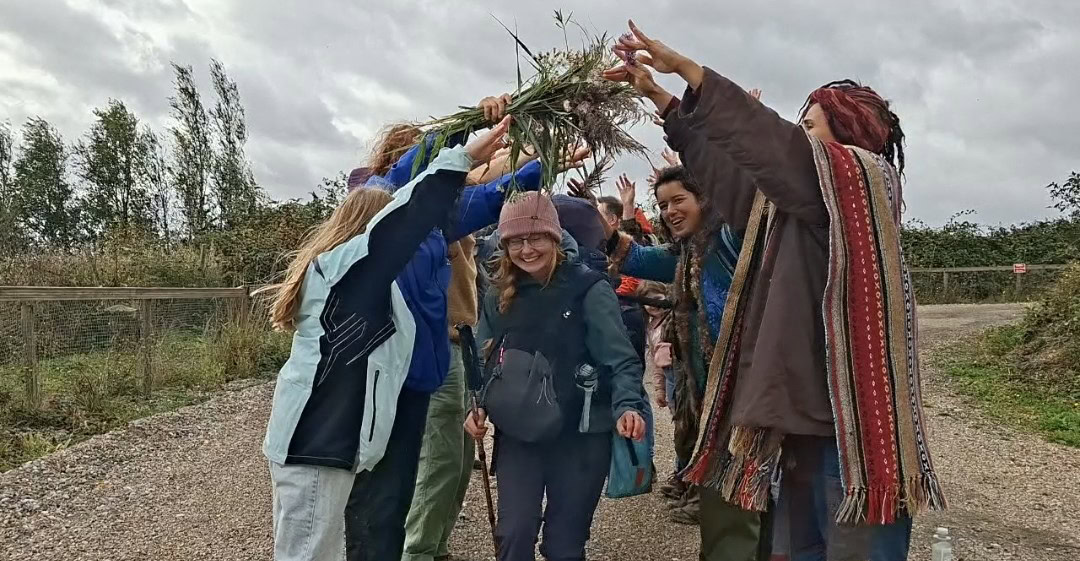
From this, I founded the Voices of Water Foundation (VoW) and launched a petitioncalling the UK Government to grant Rivers and Rias Legal Personhood (legal recognition) in England, and for a system to be created whereby River Guardians in many forms can come together to act on behalf of the rights of rivers.  To share the word about the petition and this overall movement, I embarked on a 100-day, 1000+ mile pilgrimage from Cornwall to Wales, back to and across England, ending at the mouth of the River Thames.

This was a journey for the river, I followed and met many rivers at differing points along the way – the River Camel, River Tamar, River Dart, River Exe, River Otter, River Frome, River Severn, River Neath, River Thames and many more. I posted daily updates on the VoW Instagram, through which I was able to grow a wonderful social media campaign and community, and I met so many wonderful, kind people on the quest, sharing their water stories of adventure and healing. From this, it became ever more apparent that journeying for River, water connection, this was also a journey of human connection.


What did I learn during the pilgrimage?

I truly believe a huge part of reversing the disease of disconnect is about us coming together, so many beautiful things can happen when we listen and communicate. This, I feel, can resonate and re-root beautifully in River Guardianship practice. But undoubtedly the element that shone through the brightest during my pilgrimage was the wonder of water, and this existence we get to live because of ‘her’. This I was reminded of daily, every morning waking up to my first thought/question being – “Do I have enough water for the day?”.


Why are River Rights important?

We truly cannot live without water. Therefore, it makes zero sense to me that river voice and right are not already a key part in river conservation practice and decision-making related to these precious environments and all connected to them.

I believe the Rights of Nature movement is imperative for the healing and regeneration of Mother Earth’s vital interconnected habitats, and our relationship to and with ‘her’. Based on the indigenous perspective, river rights, specifically environmental personhood, is eco-centric, whereby people – River Guardians, act on behalf of the river’s voice and rights. But giving rivers a say in how they are treated and protected is not just about developing physical acts, conservation practice and projects within/of nature guardianship; this is a paradigm shift, a re-awakening, a vital shift in perspective, reminding us of how interconnected we truly are to this Earth.

I hear the word ‘radical’ mentioned a lot in this space, but I don’t actually agree with associating river rights and guardianship with this word. Remembering that rivers, woodlands, and mountains are truly alive is not something new; it is re-awakening an ancient perspective, knowing, and understanding of the remarkable world we are all a part of.  I believe this is key to fixing the mess.


Vision for legal Guardians and Guardian groups for Rivers? 

Following a law change, granting rivers legal personhood (recognition) will give rivers legal standing. Lead guardian and guardian groups for protection and enforcement of the river’s rights could be assigned/designated to each river. However, there is a lot to consider when developing a system for River Guardianship legal protection and practice, and it would also need to be both specific and broad enough to align with every river’s collective and unique pollution issues and ecology. There are now many movements based on and leading to the formation of river guardian groups and projects in the UK, the momentum is flowing! At VoW we are trying to connect with as many as possible in the rights of nature, law, policy and conservation space and in the development of a River Guardianship, which we will be sharing a lot more about over the next year.

For now, please head over to voicesofwaterfoundation.org and sign the petition if you too believe Rivers are alive.

Plans for 32,000-bird “Megafarm” on the River Kennet Rejected

Download PDF

Berkshire factory farm plans rejected in win for river campaigners


A major win for river campaigners has been secured in Berkshire. Plans for a 32,000-bird egg production unit near Marsh Benham, close to the River Kennet, have been rejected following strong objections from local residents, environmental groups, and anglers led by Action for the River Kennet.

A major win for river campaigners has been secured in Berkshire. Plans for a 32,000-bird egg production unit near Marsh Benham, close to the River Kennet, have been rejected following strong objections from local residents, environmental groups, and anglers led by Action for the River Kennet.

The proposed development would have been sited on the banks of one of the world’s rare chalk streams – the River Kennet, a designated Site of Special Scientific Interest.


Why was the application turned down?

The application was turned down based on the harmful effects from groundwater pollution and surface water runoff that could result from the development, particularly through increased phosphorus and nitrogen deposition. These risks had not been adequately avoided, mitigated, or compensated, with insufficient information provided to justify otherwise.


Community-led resistance


The objection was spearheaded by Action for the River Kennet (ARK) and the Angling Trust, with support from River Action. Together, they argued that the risks to the river had not been properly addressed or mitigated.

Local resident Kate Jones, who objected to the application said:

“We are a small community who have come together to fight this, and we want to encourage others that it can be done. We are incredibly pleased and relieved it has been refused. The River Kennet is safe from such developments for now, though West Berkshire Council have left the door open for SRSL to resubmit. We would also like to thank everybody who has lent their support to our campaign, including River Action.”


A turning tide against factory farming


This decision follows our successful legal case against Shropshire Council, where the High Court overturned approval for a 200,000-bird intensive poultry unit near Shrewsbury in the River Severn catchment. That ruling was described as a “national precedent” and “a pivotal moment in the movement against factory farming in the UK.”

Our CEO and local resident James Wallace added:

“I learned to swim and fish in the River Kennet. This decision sends a strong message: communities will not allow our rivers to continue to be the dumping ground for industrial-scale agriculture. The rejection of this damaging proposal is a victory for rivers, wildlife, and the united voices of concerned local residents, and further evidence that the days of factory farms wrecking our waterways may be numbered.”

The Angling Trust also objected to the application. Martin Salter, lifelong Kennet angler and Head of Policy at the Angling Trust said:

“We told the Sutton’s Estate back in March that the game is up and they should withdraw their irresponsible application to locate a polluting poultry unit on the edge of the Kennet floodplain and just a few hundred metres from a highly protected SSSI, but they didn’t listen. It’s been a long hard campaign but I’m so pleased that common sense has finally prevailed and those of us who love and cherish Berkshire’s most famous chalkstream can breathe a sigh of relief.”


Why is this important for our rivers?


We have consistently warned of the devastating impacts of intensive livestock units on the health of Britain’s rivers. Phosphorus and nitrogen pollution from such sites is a leading cause of algal blooms, oxygen depletion, and widespread ecological damage. Stopping megafarms proposals like the one on the Kennet is integral to protecting the health of our rivers.

Our CEO adds:

“This is an important step forward, we must now accelerate the transition to farming practices that support farmers to work with nature, not against it. Communities are speaking out, decision-makers are listening, and the era of industrial river-wrecking factory farms is drawing to a close.”


Fightback against factory farms: New toolkit to empower communities


As the fightback against industrial-scale factory farms that wreck our rivers gathers pace, we have launched a new Planning Toolkit. This resource is designed to empower individuals and community groups to object to developments that may threaten their local waterways. Be sure to check it out!

Introducing River of the Month – The River Mole

Download PDF
Thank you to Nigel Bond and the River Mole River Watch for much of the content provided in this blog

Introducing River of the Month!

Every month, we’ll be spotlighting a different river, sharing its wonders, its challenges, and the incredible people fighting to protect it. First up is…

The River Mole.

The River Mole is a tributary of the River Thames in southern England. It is a waterway steeped in history, once powering dozens of mills and referenced in literature for its unusual underground flows. Today, it remains ecologically important, supporting diverse fish species such as brown trout, chub and stone loach. However, its biodiversity is under threat from persistent pollution caused by sewage, urban runoff, and agricultural practices, with most sections rated only Moderate or Poor in water quality.


Did you know?

The name ‘Mole’ likely derived from the Latin mola, meaning “mill,” reflecting the numerous mills that once operated along its course.

The river has captured the imagination of several authors and poets and features in “The Faerie Queene” by Edmund Spencer, the “Poly-Olbion” by Michael Drayton and “Wildflowers” by Robert Bloomfield.


Key Facts:

  • Length: 80 km
  • Catchment Area: 512 km²
  • Counties: 2 (West Sussex and Surrey)
  • Fish Biodiversity: High – 13 species
  • Water Quality Tests (poor/bad): 51%
  • Sewage discharges in 2024: 254
  • Sewage hours in 2024: Over 13,000 hours 
  • Ecological Status: Poor


The River Guardians

The River Mole River Watch is a community group founded in 2022 to tackle pollution in the River Mole. Frustrated by worsening water quality, locals came together to protect and restore their river, working with councils, charities, and residents.

River Mole River Watch organises protest walks like March the Mole, runs citizen science monitoring, and empowers local people to become river guardians.


Key Challenges

The Mole faces many challenges.  It is a “flashy” river, with river levels rising and falling rapidly in response to rain.  In winter in places it is prone to flood, in summer many tributaries become mere trickles and in extreme drought (e.g. 2022) the main river can run dry for several miles. 11 Thames Water sewage treatment works discharge into the Mole and tributaries, contributing a substantial proportion of the total flow particularly in summer. Storm overflows discharged untreated sewage for a total of 13,000 hours in 2024. 

Summer conditions are particularly stressful for wildlife with high concentrations of pollutants and high water temperatures. There is a large and growing population with housing developments adding load on water supply and wastewater infrastructure. The river flows under and around Gatwick Airport. The M25 runs across the catchment with the runoff from this and other major roads adding pollutant load on the river system. Domestic misconnections are a particular problem for smaller tributaries.

Much of the catchment is rural with agriculture contributing pollution from legacy phosphate, chemicals, animal sewage and soil loss.  Invasive species including floating pennywort, himalayan balsam, american mink, and red-signal crayfish are widespread. Climate change increases the stressors and also highlights the importance of the river as a natural corridor for wildlife.


Key Solutions

  1. Fix & Upgrade Wastewater Treatment – Properly maintain existing sewage facilities, increase capacity, install better filtration (tertiary treatment), and set strict discharge limits, especially for summer.
  2. Better Management of Road Runoff – Stop pollution from roads and infrastructure before it hits the river.
  3. Nature-Based Solutions – Use reedbeds to treat sewage, build sustainable drainage systems in new housing, and promote farming that protects rivers (catchment-sensitive farming).
  4. Natural Flood Management – Restore wetlands, create space for water, and slow the flow to prevent flash floods.
  5. Restore River Health – Re-meander rivers, re-seed gravel beds, remove barriers to fish, and tackle invasive species.
  6. Tackle Hidden Pollutants – From pet insecticides to sewer misconnections, more action is needed to stop hidden pollution sources.


Find out more about the River Mole River Watch

If you are in the Sussex or Surrey area and would like to help out or join the group, you can find out more here.

If you found this inspiring and would like to find out how you can protect your local river by joining or creating your own river community group, visit our River Rescue Kit.

From ballet box to river bank – How to get local leaders on board to rescue our rivers

Download PDF
By Erica Popplewell, Head of Communities

Last week saw 1,641 council seats across 24 local authorities up for election, along with six mayoral elections. I’m not here to talk about results but it’s fair to say there are lots of new councillors getting their heads around their new roles. As river campaigners this is an opportunity to start a conversation about what they can do to rescue our rivers.

Listening to ‘The rest is politics’ podcast with Rory Stewart and Alistair Campbell last week I was interested to hear their take on the local election results that the state of our rivers continues to be a big political issue.

How do we get the message to these new elected officials?

In short there is the direct route, talking to them ourselves and the indirect route, talking to the people they listen to such as local media, constituents or community groups. Both approaches let them know that the public and the media care and want to see action.  Using both these approaches creates a surround sound on the state of our rivers and urges action.

What help is available?

The River Rescue Kit from River Action is  an online resource designed to empower communities to take action against the growing crisis of river pollution. The section ‘Campaign for my River’ is packed with advice and resources to help local political campaigning.


The direct approach: engaging Councillors one-to-one

A letter (or email) to new and existing local councillors can be a powerful opening action to start an ongoing relationship.  We have produced guidance on writing a powerful letter within the River Rescue Kit which you can use and adapt as you see fit.  As an opening gambit, its a good idea to keep positive and passionate, reminding them of any commitments they’ve made on rivers and making sure the letter feels personal both to you (and your organisation/group if you are part of one).  Set out the nature of the issue in your area, which could be sewage pollution caused by water companies,  over abstraction in chalk stream areas, or agricultural pollution caused by intensive animal farms.

Having worked across a large range of environmental issues in my career, one thing that I find particularly powerful about working on rivers is that they are so tangible and so precious to local communities. You could invite local counsellors on a riverside walk so that you can introduce your group and talk about the issues and the solutions next to the river in question as you watch wildlife and river users enjoying the space. It never hurts to give an opportunity for a good picture for their website and social media as well!


The indirect approach: build public pressure and amplify voices 

There are lots of different ways to work to help amplify local voices so they are heard by our elected officials.  Campaigns draw attention from the media or elected officials by representing large numbers of people with a shared message, – see the River Rescue Kits guide for launching a petition or organising a demonstration.  You might even want to organise an event.  Local groups have held funerals for the river, ceremonies to bless the river, and ‘paddle outs’ with swimmers, kayakers and paddle boarders taking to the water together with placards so think outside the box. We also have a ‘I want to get media interest’ section you might find useful.

If you want to see who else is campaigning in your local area have a look on the  River Rescue Kit Community map, and add yourself so others can find you.  Working together can share the work and create a louder voice.

The elections may be over, but no matter what the results were in your local area, the real work for both new and returning Councillors starts now. Our rivers need champions in town halls and council chambers today. By reaching out to new councillors, building public momentum, and standing shoulder-to-shoulder with others who care, we can turn this political moment into a river rescue mission. Because when local voices rise together, even the most powerful tides of neglect can be turned. Let’s make sure our rivers have a future as alive and thriving as they deserve.

South Coast Residents Demand Action Against Sewage Pollution in “largest peaceful protest seen in BCP”

Download PDF

Local Residents Gather to Demand Action Against Sewage Pollution in Christchurch Harbour

On Tuesday, 25th March, over 150 concerned residents gathered outside Bournemouth, Poole, and Christchurch (BPC) Civic Centre, demanding an end to the devastating sewage pollution choking Christchurch Harbour. The crowd called for the immediate implementation of a new Harbour Protection Policy to safeguard the area’s fragile ecosystem

The demonstration followed the submission of a powerful petition signed by over 4,400 Christchurch residents, which forced BCP Council to debate the proposal. Councillor Vanessa Ricketts, also Secretary of the Christchurch Harbour & Marine Society, presented the policy at the council meeting. She stressed the need for robust mitigation measures to prevent pollution from new developments from further harming the harbour’s unique species and ecological habitats.

Ricketts highlighted the success of a similar policy in Poole Harbour, urging the council to adopt the same protections to “prevent the demise of this beautiful, natural estuary.” The council responded decisively, unanimously supporting the petition—a significant victory for the community.

Ricketts celebrated the result, stating:

“It was amazing to have the unanimous support of the council and for them to recognise the urgent need to protect Christchurch Harbour.”


Christchurch Harbour: A Natural Treasure Under Threat

Christchurch Harbour, designated a Site of Special Scientific Interest (SSSI), is an essential ecological hotspot. It connects to the River Avon Special Area of Conservation (SAC) and plays a vital role in the life cycles of several endangered fish species, including:

  • Sea Lamprey (critically endangered)

  • Atlantic Salmon

  • European Eel

The harbour also serves as a breeding and nursery ground for species such as sea bass and mullet and provides key habitats for migratory water birds.

However, despite its environmental significance, the harbour is under relentless assault from sewage pollution. In 2023 alone, Wessex Water discharged:

  • 32,577 hours of untreated sewage into the River Avon

  • 9,634 hours into the River Stour

These figures more than doubled compared to the previous year. The 2024 Environment Agency data, expected later this month, is likely to reveal even more alarming levels of pollution. Combined with agricultural run-off from the river catchments, the harbour’s water quality has rapidly deteriorated, triggering frequent algal blooms that deplete oxygen levels and suffocate wildlife.

Ricketts added:

“Thank you to everyone for your support in helping to make our rivers and harbour safe, clean, and thriving spaces for conservation, recreation, and natural beauty.”


Protest with a Splash: Community Creativity and Politeness

The demonstration was described by councillors as the “politest protest” they had ever witnessed. Protesters creatively incorporated “please” into their chants, while many turned up in water sports attire, donning wetsuits, snorkels, and Dry Robes. Residents also brought handmade banners and signs, sending a powerful yet courteous message to the council.


Experts Sound the Alarm

Charles Watson, Founder and Chair of River Action, voiced strong concerns over the ongoing sewage crisis:

“In recent years, Christchurch Harbour has become the toilet bowl of Bournemouth. Huge quantities of raw sewage are regularly discharged into the River Stour from the wastewater treatment works serving the Bournemouth area. When combined with even greater discharges from the Avon, the harbour at times resembles a literal cesspit. Urgent action is needed to protect this incredibly important area of biodiversity.”

Martin Stewart, Chair of the Christchurch Harbour & Marine Society, echoed these sentiments:

“Christchurch Harbour is a vital habitat for endangered species like Atlantic Salmon, Sea Lamprey, and European Eel. It’s also a major hub for leisure activities such as angling, sailing, kayaking, paddleboarding, wild swimming, and birdwatching. The horrendous pollution levels we’re witnessing now pose a massive threat to both nature and human health. BCP Council must urgently step up to protect this long-suffering ecosystem.”


Community Action: The Time Is Now

The resounding message from the protest is clear: the community will no longer tolerate inaction. With sewage pollution threatening both nature and public health, residents have made their voices heard. The unanimous support for the Harbour Protection Policy is a significant step, but the fight is far from over.

The people of Christchurch have spoken—and they demand clean waters, not excuses.


Dr Alison Caffyn: “We need Shropshire Council to stop allowing ever more levels of unsustainable industrial agriculture in Shropshire.”

Download PDF
Dr Alison Caffyn at the River Teme

It’s been an interesting start to 2025 as someone with my name on a current judicial review against a proposed new ‘chicken shed’ in Shropshire.….

First, both Steve Reed and Daniel Zeichner, perhaps panicked by angry farmers, say planning processes will be made easier for farm developments, so farmers can grow their businesses by putting up new ‘chicken sheds’. Then, Keir Starmer announces that judicial review (JR) rules will be amended to make it more difficult for NIMBYs to block and delay developments. Both announcements seem to be part of Starmer and Rachel Reeves’ growth agenda being pushed across all government departments.

To take the JR point first, I’m no legal expert but as I understand it you already have to prove there is a case to answer at the start of the process. It’s already a tough road to go down, with only a small proportion of cases being successful. So I’m not sure making it more difficult is necessary – maybe the announcement was just sending a pro development signal. With the case River Action and I are taking against Shropshire Council the judge agreed there was a case to answer on several grounds in our argument that Shropshire Council had inadequately assessed the environmental impacts of the proposed Intensive Poultry Unit (IPU).

It is unfortunate that citizens must take their local planning authority to court to stop more and more IPUs spreading across the landscape. But Shropshire Council has approved 64 applications for around 120 additional ‘chicken sheds’ housing over 5 million birds in the county in the last 10 years, taking the total chickens in the county to over 20 million at any one time. That’s 64 chickens per resident and maybe ten
times the amount of chicken poop than human poop.

Despite objections from local communities and businesses the Council continues to grant permissions without properly assessing the cumulative impacts of this industrial scale agriculture on air and water quality. That’s before you factor in risks such as antimicrobial resistance and bird flu. (Shropshire’s biggest IPU has had to cull two million birds in an outbreak this month.)

And that’s why it’s alarming to hear ministers suggesting government policies should support more ‘chicken sheds’ and make it easier to build them. There are many parts of the UK that are well beyond saturation point with intensive livestock farming. The River Wye catchment has proved the point and Shropshire, Lincolnshire, East Anglia, parts of Yorkshire and Northern Ireland are all on, or over, the brink of the same situation. Building more intensive livestock units will lock the UK even further into an industrial agriculture system, controlled by global multinational corporations, producing cheap but unhealthy food at the cost of nature, climate and communities.

And the crazy thing is we don’t even need more ‘chicken sheds’. The UK is already 90% self-sufficient in chicken and eggs. In fact, if we follow the advice of the Climate Change Committee and the National Food Strategy, we should be reducing meat consumption by 30%.

This type of agriculture is unsustainable and simply generates profits for supermarkets, fast food chains and global commodity giants. By all means make the planning system simpler and reduce the need for citizens to challenge planning decisions, but I would suggest doing it by developing clearer guidelines on, for example, how close IPUs can be built to neighbours, to watercourses and to other IPUs. In fact, why not introduce a moratorium on more IPUs in some areas? That would save everyone time and money!

If would be helpful if government policy focused on encouraging green growth and the types of farming that produce healthy food, boost local economies and help address our climate and nature crises.

– Dr Alison Caffyn, River Action Advisory Board member

Privacy Overview

This website uses cookies so that we can provide you with the best user experience possible. Cookie information is stored in your browser and performs functions such as recognising you when you return to our website and helping our team to understand which sections of the website you find most interesting and useful.