TIMMMBBEEERRRRRR….will the Government ever let Thames Water fall?

Download PDF
By Dr Samir Seddougui, Campaign Researcher at River Action

I have recently been wading deep into the details of our legal action against the Government for failing to have a policy for when it will place Thames Water into special administration. Every now and then I would come across the phrase ‘Project Timber’ which piqued my curiosity. What could the Government be referring to when they use ‘Project Timber’ in internal documents? Digging around the Government website and several search engines yielded scant results. So I decided to conduct my own investigation.

It turns out that for over a year now, rumours have been circulating through the corridors of power (Parliament & the press) about the Government’s codename for its plan to put Thames Water out of its misery and into a special administration regime. This mysterious plan is called Project Timber. It was developed by the previous Government and was first mentioned in Parliament in March 2024. During a Parliamentary debate on Thames Water contingency plans, Richmond Park MP Sarah Olney said “what is currently a secret is Project Timber, which I understand is a contingency plan should Thames Water be unable to operate.” 18 months later and Project Timber is still a mystery.

The first thing that needs to be asked is why is there so much secrecy around this? What is the Government trying to hide? These questions are outside of the parameters of Freedom of Information (FOI) or Environment Information Regulation (EIR) requests, so instead I requested a copy of the Project Timber document or any internal documents that reference Project Timber. Defra came back to us with a rather confusing response.

It turns out Project Timber is so secret, Defra can ‘Neither Confirm Nor Deny’ its existence. They also argued that releasing information on Project Timber would threaten international relations and national security. What is so secretive about a contingency plan for a failing water company, that this Government won’t even admit whether it exists or not. With the ‘neither confirm nor deny’ a betting person would put money on Project Timber’s existence, which then leads to the question why doesn’t Defra want to make it public? But here’s the catch: how can something simultaneously not exist and pose a security risk if disclosed? It can’t be both.

Without transparency from the Government, we are left to scratch our heads and try to speculatemake some informed guesses about what Project Timber, is and why the Government is being so secretive about it. The metaphor of a falling tree having implications for the surrounding environment is not lost on me but rather ironic, given the current environmental impact from allowing Thames Water to continue to fail and pollute our rivers. “Timber” is usually a warning, but special administration would be a positive step for the water industry, which for decades has been getting rewarded for systemic failure across all metrics.

Special administration allows for a more sustainable ownership, financing and governance model guided by public benefit, not private profits. Transparency from the Government regarding their contingency plans for Thames Water would let the public understand and properly scrutinise their (in)action so far. This is why we are appealing the Government’s ‘neither confirm nor deny’ response, due to the weight of public interest on the matter. Afterall, it is the public who are most affected by this. Timber, the material, is solid, dependable and the backbone of many structures. Unfortunately the same cannot be said about Thames Water.

River Action is now urging the Government to provide much-needed transparency on when it will act. Yes, these documents might contain market-sensitive information but Defra could redact those sections while still making contingency plans and policies public. That would allow proper scrutiny and help to rebuild public trust in the water sector.

What do you think is in Project Timber? And why do you think the Government is holding back?….

It’s time our supermarkets expose Red Tractor’s greenwash and up their standards

Download PDF

By Charles Watson, Founder and Chairman of River Action UK

Britain’s rivers are in terrible shape, and our biggest supermarkets are up to their necks in it. For years, retailers like Tesco and Asda alongside their agribusiness suppliers have hidden behind the cosy logo of Red Tractor, telling customers their food is “farmed with care… from field to store all our standards are met”. This week the Advertising Standards Authority (ASA) called time on this charade.

The regulator has ruled that Red Tractor, the UK’s largest farm assurance scheme, misled the public by suggesting its logo guarantees strong environmental protection. It doesn’t. And today we reveal that the most recent Environment Agency data shows a staggering 19,000 breaches across 60% of Red Tractor–certified farms between January 2020 and July 2025, exposing a systemic failure behind the label’s “environmentally friendly” claims.

This isn’t a marginal issue. It goes to the heart of how our food system operates, and how some of the biggest companies in Britain shield themselves from responsibility while rivers and lakes collapse under a deluge of pollution caused by intensive agricultural practices.

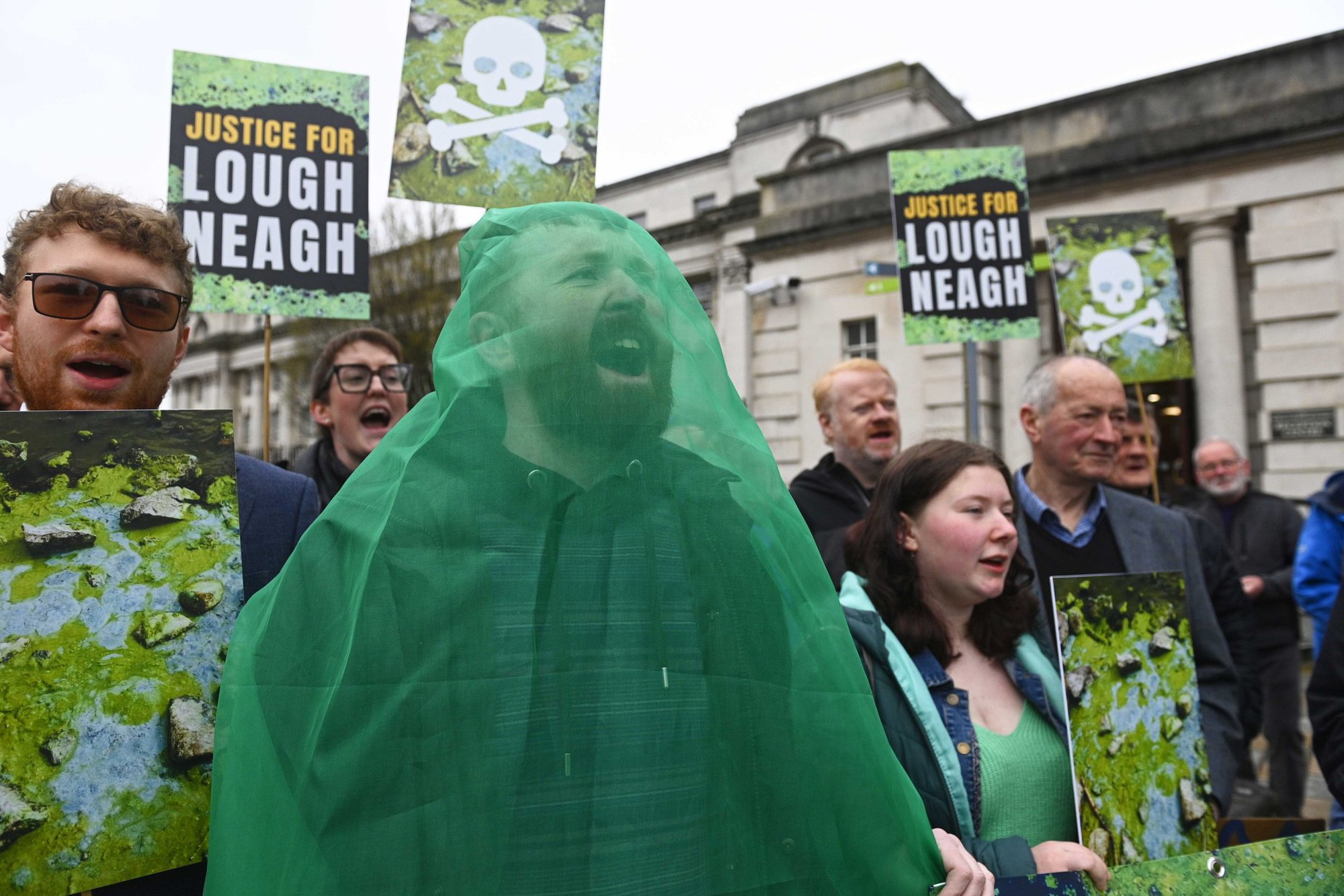
Take Tesco. Controlling nearly 30% of the supermarket sector, it is the single most powerful buyer of British farm produce. Its chicken and pork supply chains run through industrial-scale operators like Avara Foods and Moy Park. These are not quaint family farms but subsidiaries of US agribusiness giants Cargill and Pilgrim’s Pride. These companies have been linked to ecological crises such as the collapse of the River Wye and the ongoing algal disaster in Lough Neagh, the UK’s largest freshwater lake.

For years, supermarkets have pointed to the Red Tractor logo as their environmental alibi. But that line has now been shredded. In a landmark ruling, the UK’s ASA has concluded that Red Tractor’s environmental claims are misleading. This is no longer just campaigners or scientists calling the Red Tractor scheme inadequate. It is a regulator finding that Red Tractor’s advertising exaggerated and misled consumers on its environmental standards. Any retailer still brandishing that logo as a mark of environmental protection is not reassuring customers. They are engaging in greenwash.

The data is stark. Between January 2020 and July 2025, 7,353 Environment Agency inspections of Red Tractor–certified farms found 4,353 breaches — nearly 60% of farms failing environmental rules. These weren’t minor slip-ups: the violations included thousands of breaches designed to prevent slurry and fertiliser from pouring into rivers, fuelling algal blooms, killing fish, devastating ecosystems, and contaminating drinking water. In total, the inspections recorded a staggering 19,305 instances of non-compliance

This is not just a story about dirty rivers. It is about a food system where the biggest players, multinational agribusinesses and the retailers who buy from them, use weak, industry-controlled assurance schemes to insulate themselves from scrutiny. Red Tractor is not a neutral standard-setter. It is designed by the very interests it is supposed to regulate. And guess who controls it? The majority of seats on Red Tractor’s governing council are held by the UK’s various National Farming Union bodies. Yes, the farming lobby actually controls its own product quality scheme. 

Red Tractor’s defenders will say that criticising the scheme means attacking farmers. Let’s be clear, it does not. Many farmers care deeply about the land and waterways that sustain them and us all. They are being undercut by a system that rewards scale, intensification and cutting corners, while paying lip service to environmental protection.

As Martin Lines, CEO of the Nature Friendly Farming Network, has put it: “Consumers and farmers want real sustainability, not a sticker.” Farmers who are genuinely improving soils, protecting rivers and reducing chemicals see little reward for their efforts. Meanwhile, industrial producers hide behind the same Red Tractor logo. That isn’t fairness. It’s exploitation.

Supermarkets cannot claim ignorance. They have been told repeatedly about the links between their suppliers and river pollution. The Environment Agency rejected Red Tractor’s bid for “Preferred Status” precisely because it fails to meet good environmental standards. Yet retailers still rely on the logo as their shield.

This complicity matters because of their sheer market power. When supermarkets demand Red Tractor chicken, vast supply chains, from feed mills to slaughterhouses to contract farmers, are locked into a destructive model. This legitimises the industrial systems polluting our rivers. And when consumers challenge them, they point to the little tractor logo, as if that settles the matter.

The ASA ruling proves it doesn’t.

We now face a choice. Tesco, Asda, Aldi, Lidl, Morrisons and others can continue to sell food tainted with pollution, hiding behind a logo that regulators have called out as misleading on environmental performance. Or they can do the honest thing: demand genuinely high standards from suppliers, and pay farmers properly for producing food in ways that don’t wreck our rivers.

This isn’t just about protecting wildlife or river users such as this nation’s army of wild swimmers. Though that should be enough. It is also about restoring trust in our food system. Consumers deserve to know that when they buy British, they are supporting farming that safeguards our countryside, not destroy it. Farmers deserve a level playing field that rewards those who do right by the land. And companies that profit from selling us food have a duty to ensure their supply chains comply with legal standards, both under the law and broader social responsibility.

For too long, Red Tractor has allowed agribusiness and retail giants to dodge that duty. Thanks to the ASA, the greenwash is now exposed. The question is whether the supermarket giants will finally face up to reality, or whether they will cling to a broken system until public trust collapses.

Britain’s rivers cannot wait. Neither can the farmers who are trying to do the right thing. The time for excuses is over.

ASA ruling exposes Red Tractor as greenwash – River Action demands supermarkets act

Download PDF

New figures reveal staggering 19,000 breaches across 60% of inspected Red Tractor farms, exposing systemic failure behind the label’s “environmentally friendly” claims

River Action is calling on leading supermarket retailers including Tesco and Asda to stop relying on Red Tractor for environmental certification. The scheme has been exposed for serious environmental greenwashing in an Advertising Standards Authority (ASA) ruling.

Having filed the complaint in April 2023, the case is thought to be one of the longest investigations in ASA history.


ASA ruling: Red Tractor environmental claims ‘misleading’

The ASA has today upheld a complaint by River Action’s Chair and Founder, Charles Watson, ruling that Red Tractor – the UK’s largest farming assurance scheme – misled the public about its environmental standards and exaggerated the benefits of Red Tractor endorsement.

River Action challenged advertising for the Red Tractor scheme because of its concerns that environmental standards relating to pollution on Red Tractor farms were not being met – including the claim “When the Red Tractor’s there, your food’s farmed with care… from field to store all our standards are met”.

During its investigation, the ASA considered extensive evidence and arguments put forward by Red Tractor including that it was not an environmental certification mark specifically so “did not seek to replicate environmental law or even cover all aspects of pollution risks by farms”.

The ASA concluded that the evidence provided by Red Tractor to demonstrate compliance with basic legislative standards and a good environmental outcome was insufficient to substantiate the claim which “farmed with care… all our standards are met” conveyed to consumers. The advert breached BCAP Code rules 3.1, 3.2 (Misleading advertising), 3.9 (Substantiation) and 3.12 (Exaggeration).

 

Evidence of non-compliance and pollution

Red Tractor’s marketing claimed its farms take “a preventative approach to protect the environment”, citing reduced pesticide use, strict pollution controls, and rigorous soil management.

However, as part of its ASA complaint, River Action presented damning evidence – supported by Environment Agency (EA) data (2014 – 2019) – that Red Tractor farms are routinely linked to serious environmental harm:

  • Red Tractor farms were responsible for most agricultural pollution incidents in England over a five-year period.
  • 62% of the most serious pollution events (Categories 1 & 2) involved Red Tractor-certified farms.
  • Certified farms had worse compliance rates than non-certified farms (26% vs 19%).
  • In a North Devon case study (2016–2022), 87% of Red Tractor farms inspected by the EA were in breach of environmental rules.         

The EA rejected Red Tractor’s bid for “Earned Recognition” due to its failure to meet minimum environmental standards.

But more than two years on, River Action can now reveal – through Environmental Information Requests – that serious pollution and regulatory failures persist on Red Tractor–certified farms. The data covers the period January 2020 and July 2025 and reveals the following:

  • 7,353 Environment Agency officer inspections of farms claiming Red Tractor status
  • Alarmingly, 4,353 of these inspections (nearly 60%) identified at least one breach of environmental regulations.
  • A staggering 19,305 instances of non-compliance were recorded across failing Red Tractor assured farms.
  • Cattle farming accounted for just over 25% of non-compliance, with 13.2% from beef farms and 12.4% from dairy farms.
  •  1,373 follow-up inspections were required to address non-compliance.
  • Even when actions were completed by deadlines, a substantial number of farms still failed to meet environmental standards, with only 4,657 actions recorded as completed on time. 
  • This demonstrates that membership of the Red Tractor scheme does not guarantee compliance with environmental regulations.


Supermarkets: up your standards

River Action is now warning major supermarkets that by using Red Tractor to reassure customers they are buying food produced to basic environmental standards they risk complicity in misleading advertising, while pollution of the UK’s rivers continues.

Given their enormous market share and purchasing power, supermarket retailers wield significant influence over UK food supply chains and therefore have the opportunity to drive rapid action to address the environmental harm caused by the industry. 

For example, Tesco dominates the supermarket sector with nearly 30% of the market (28.1%), sourcing vast quantities of Red Tractor meat and poultry through suppliers such as Moy Park and Avara Foods.

According to a recent news report, Moy Park has been implicated in the devastating environmental catastrophe at Northern Ireland’s Lough Neagh, where recurring summer blooms of toxic blue-green algae threaten both wildlife and the health of the lake. 

Similarly, Avara Foods, owned by US agribusiness Cargill and linked to the ecological collapse of the River Wye, boasts on its corporate website: “You can trust that we do things ethically; all of our chicken is Red Tractor approved.”


Other major retailers in the frame

Tesco are not alone. River Action is also calling on Aldi, Lidl, Morrisons, Asda, and others to stop relying on Red Tractor as a mark of environmental standards and protection:

  • Asda – 11.9% market share; told Farming UK: “We continue to source all our other fresh primal chicken from UK Red Tractor Assured farms.” Its website states, “The Red Tractor badge is a standard of excellence….It’s about producing the best possible product in an environmentally friendly and sustainable manner.”  
  • Aldi – 10.9% market share; major buyer of Red Tractor products and states that…you can trust the products you buy when you see the Red Tractor logo…..Red Tractor….(covers) animal welfare, food safety, traceability and environmental protection. Food and drink bearing the Red Tractor logo has been produced responsibly to some of the most comprehensive and respected standards in the world.”
  • Morrisons – 8.4% market share; states that “100% of the fresh pork, beef, lamb, poultry, milk and cheddar cheese we sell in our stores comes from farms certified by Red Tractor, or an approved equivalent scheme, giving customers assurance on food safety, hygiene, animal welfare standards and environmental protection.”
  • Lidl – 8.1% market share;  publically state that “we work closely with Red Tractor to ensure that our British meat, poultry, fruit and veg is responsibly sourced to strict food hygiene, animal welfare and environmental standards.
  • Sainsbury’s, once a Red Tractor buyer, has already distanced itself from the scheme. In 2014, then-CEO Justin King called it “the refuge of scoundrels” and criticised it for setting a “low bar that frankly anybody could use.”


What Tesco says

Celebrating 25 years of Red Tractor, Natalie Smith, Tesco Head of Agriculture, said last month: We’re proud to support British agriculture and the thousands of farmers and producers who provide us with quality, affordable, sustainable products year-round. Certification schemes play a key role in providing reassurance for customers, and over the past 25 years, Red Tractor has established itself as a mark of quality, standing for food safety standards, animal welfare and environmental protection.

“We recognise there is still more to do, and it’s essential we continue to work in partnership with Red Tractor to improve standards, and take quick action to drive forward change, strengthening the farming industry for generations to come.”

The Tesco website proudly states, “We require the majority of our meat, dairy, fruit and vegetable products produced in the UK to meet the Red Tractor standard, or an appropriate equivalent. The Red Tractor standards ensure that the production of these products does not have an adverse impact on the environment. For example, pesticides and fertilisers must be applied and stored in ways that minimise pollution of soil and groundwater; it also provides extensive guidance on manure management.”


River Action responds

Chair and founder of River Action Charles Watson said, “Red Tractor farms are polluting the UK’s rivers, and consumers trying to make environmentally responsible choices have been misled. This ASA ruling confirms what we’ve long argued: Red Tractor’s claims aren’t just misleading – they provide cover for farms breaking the law. The time has now come for our major food retailers to lay out credible plans as to how they will move away from this busted flush of a certification scheme and support farmers whose working practices are genuinely sustainable.

“Supermarkets and their suppliers now face serious reputational risk if they hide behind Red Tractor greenwash. By selling products linked to pollution, they deceive customers, undermine trust, and fail in their duty to ensure supply chains obey the law.”


Consumers want confidence, not greenwashing

River Action says that supermarkets need to use assurance schemes that give consumers genuine confidence that the products they buy are not linked to lawbreaking or environmental harm. At present, Red Tractor fails to provide this. An assurance scheme should be meaningful. Supermarkets already have credible models in place for fresh produce, so the same rigorous standards should be applied to livestock.

River Action has written to all the major supermarkets, calling on them to:

  • Publicly acknowledge the ASA ruling and findings by informing their customers of the misleading labelling and committing to driving change both within farming and food standards and within food certification.
  • Publish a clear and transparent roadmap showing how they will certify the environmental standards of all their food produce – including eggs, poultry, dairy, and fresh produce. This roadmap should set out rigorous environmental requirements, be backed by independent inspections, and ensure full public reporting, so customers can see and trust the standards behind the food they buy.


Red Tractor’s own data shows that its logo appears on approximately £18bn worth of food sold annually, meaning this greenwash reaches deep into Britain’s shopping baskets. Jim Moseley, Red Tractor’s CEO, has also boasted that consumer trust in the scheme is tracking at 74%.

Martin Lines, CEO of the Nature Friendly Farming Network, added: “Consumers and farmers want real sustainability, not a sticker. They want confidence that the British produce they buy does not harm the environment or our rivers. 

“Supermarkets and fast-food chains hiding behind Red Tractor need to sort out their suppliers or face low consumer confidence and difficult questions about the environmental violations in their supply chains that are damaging our rivers. Farmers committed to nature-friendly practices must be properly rewarded, or the system will continue to incentivise damaging methods”

Hugh Fearnley-Whittingstall said, “As someone who will always support farmers who work positively with nature, protect the environment and feed the nation, I am deeply concerned by the ASA’s ruling exposing Red Tractor’s persistent greenwashing. For years, consumers have trusted the logo as a sign of environmentally responsible farming, yet the evidence shows widespread environmental breaches that are causing ongoing pollution all over the UK. 

“Supermarkets should not hide behind environmental certification that fails both the planet and honest producers. They have enormous influence and must use it to drive genuine progress that benefits the environment.  That means paying farmers properly for sustainable practices, supporting nature-friendly food production, and leading the way in either rigorously reforming or, if necessary,  completely dropping Red Tractor as a mark of environmental standards.

“Customers deserve more than misleading labels. They deserve assurance that their food supports farming that regenerates soils, protects wildlife, and respects the environment. It is time for supermarkets to step up, take responsibility, and make sustainability a real priority, not a fake one.”

River Action’s complaint to the ASA was prepared with the expert support of Leigh Day solicitors — Ricardo Gama, Carol Day, Julia Eriksen and Lily Hartley-Matthews — together with counsel Tom de la Mare KC and George Molyneaux of Blackstone Chambers. Their advice and representation were instrumental in securing this ruling.

Leigh Day partner Ricardo Gama, who represents River Action, said, “After a two and half year investigation, River Action is delighted that the ASA has finally ruled that Red Tractor was likely to mislead consumers when claiming that its certification scheme ensures high environmental standards. 

“The length of time of the investigation was a result of the contested nature of the case, with both River Action and Red Tractor arguing tooth and nail for their positions. This should set a precedent for other advertisers, including those in the food industry, that misinformation will not be tolerated.”


Consumers: demand better

River Action is urging the public to pressure supermarket retailers into telling their customers the truth about Red Tractor-labelled produce.

Support the campaign: Tell your supermarket to expose Red Tractor
If you shop at these supermarkets, tell them to clean up their supply chains and stop profiting from environmental harm. For more information and to find out how you can support the campaign, visit www.upyourstandards.riveractionuk.com.


Notes to Editor
The source for supermarket market share figures is a Kantar article published on 24 June 2025, which you can read here.

An assessment carried out by the Environment Agency (EA) in 2020, revealed that between 2014 – 2019 Red Tractor-assured farms were responsible for the majority of instances of agricultural pollution over a five-year period. The assessment revealed that of a total 4,064 pollution incidents RT farms were responsible for 62% of category 1 and 2 incidents and 56% of category 3 incidents. Significantly, the report concluded that RT farms were less compliant (26%) with EA inspections compared to non-RT farms (19%). As a result of this assessment, a request by Red Tractor for its assured farms to benefit from EA “Preferred Status” was denied.

When we received the data from the Environment Agency, they advised that many farms include more than one livestock or crop type. As a result, category totals may not add up precisely to the overall inspection figure.

Our research indicates that we could not find any ASA case that took longer to resolve than our complaint against Red Tractor. On its website, the ASA notes that, “A small number of our most complex cases can take six months or more to complete if, for instance, we need to appoint independent experts to help us assess evidence.”

At a webinar in April 2024, Red Tractor CEO Jim Moseley told the Tenant Farmers Association that the Red Tractor logo features on £18 billion worth of food sold each year. He also claimed that public trust in the Red Tractor scheme stands at 74% (watch from around 9 minutes 31 seconds).

ASA ruling of 15 October 2025:

  • River Action challenged a 2023 advert for Assured Food Standards’ Red Tractor Scheme because of its concerns that environmental standards relating to pollution on Red Tractor farms were not being met. 
  • The ASA considered extensive evidence and arguments put forward by Red Tractor, including its own claims that environmental protection was not its primary focus and that RT was not an environmental certification mark specifically so “did not seek to replicate environmental law or even cover all aspects of pollution risks by farms”. 
  • The ASA assessed how the notional average consumer, who was reasonably well-informed and reasonably observant and circumspect, was likely to view the ad. This included the claim “When the Red Tractor’s there, your food’s farmed with care… from field to store all our standards are met”, highlighting the use of Red Tractor labelling across all aspects of food production and farming. The ASA considered that at least some consumers would expect that, in giving assurances about high standards of farming and food production, Red Tractor’s standards would include measures to manage and mitigate environmental risk that arose through farming practices. The ASA also considered that consumers would expect that such standards incorporated compliance with or reflected at least basic legal requirements concerning food safety, animal welfare and environmental protection, and that measures were in place to help produce a high standard and quality of food (in line with the objectives of the Red Tractor scheme, which included environmental measures, as explained on Red Tractor’s website).
  • In reaching its decision, the ASA looked at Environment Agency (EA) reports and data which showed “around half of RT farms being not fully compliant” and led the EA to conclude “The evidence gathered through this project indicates that Red Tractor membership is not currently an indicator of good environmental performance”.
  • The ASA concluded that the evidence provided by Red Tractor to demonstrate compliance with basic legislative standards and a good environmental outcome was insufficient to substantiate the claim which “farmed with care… all our standards are met” conveyed to consumers. 
  • The advert therefore breached BCAP Code rules 3.1, 3.2 (Misleading advertising), 3.9 (Substantiation) and 3.12 (Exaggeration).
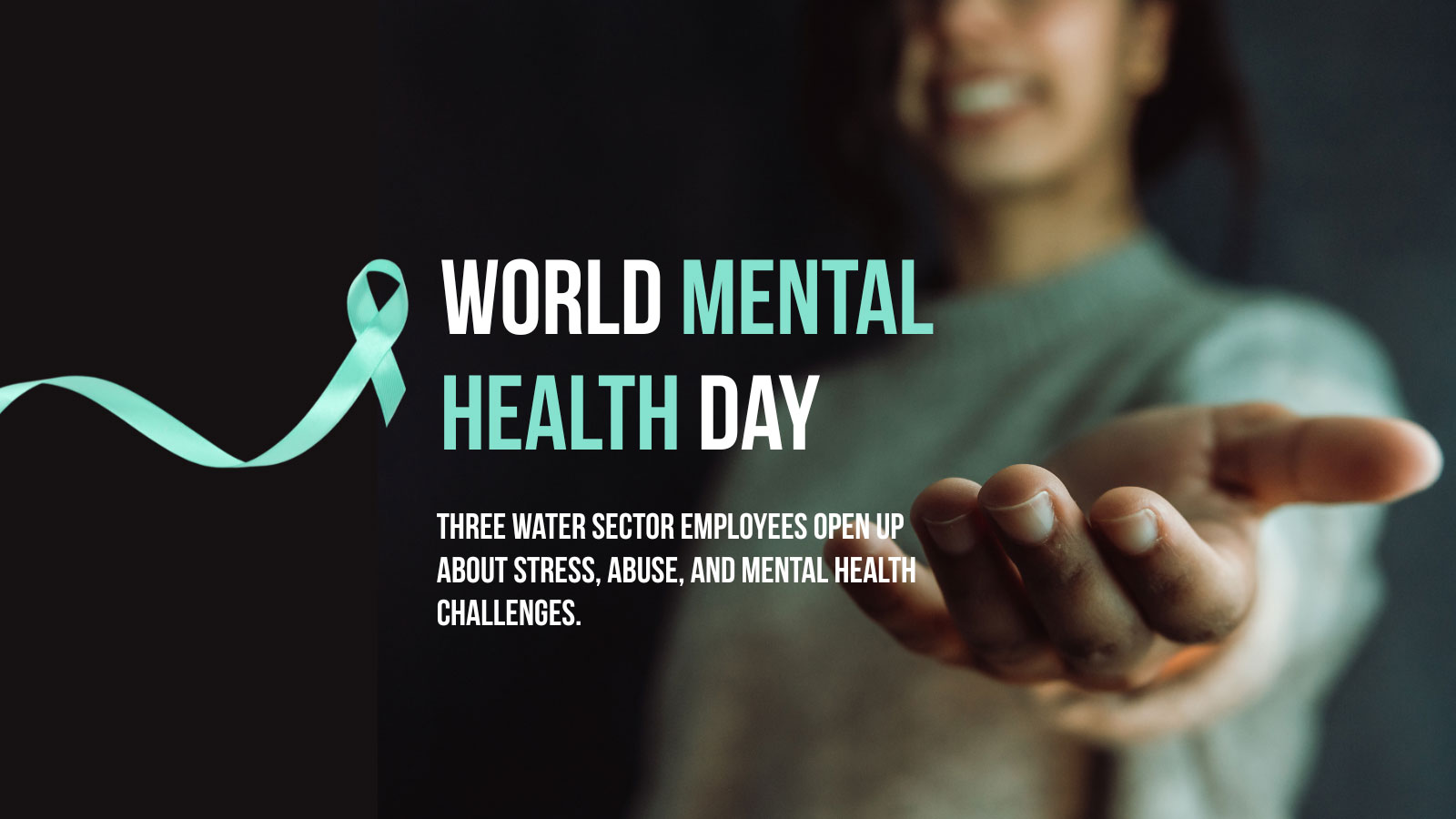
World Mental Health Day – The people behind our water

Download PDF
By James Wallace, CEO of River Action & Alex Papuca, Senior Communications Coordinator

Water should unite us all, not divide us

“Be kind, for everyone you meet is fighting a hard battle” – Plato

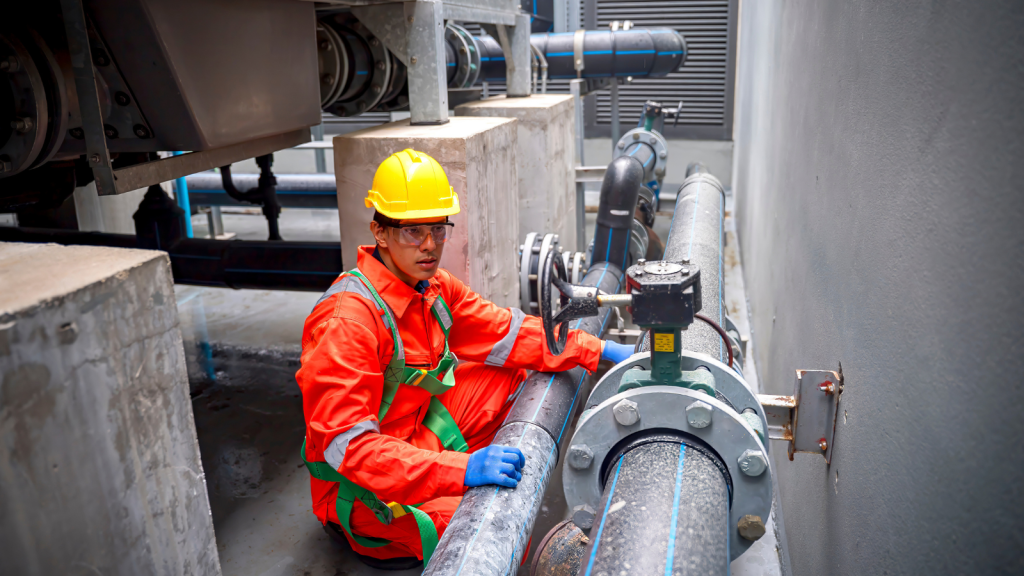
When rivers run foul or bills rise, frustration flows quickly. That anger is understandable, but too often it is directed at the wrong people through verbal and sometimes physical abuse. The engineers fixing broken pipes, the call handlers answering complaints, and the operations teams responding to pollution are not the ones making the big decisions in water companies. They are the ones trying to hold the system together.

Rather than venting our frustration at the staff trying to fix the problems, we should be focusing our concerns – peacefully – on the water company leaders, investors, regulators and the Government that are culpable. They are the ones responsible for bill increases, polluted waterways, private profiteering and failed regulation.

This World Mental Health Day, we are reminded that kindness and respect can make a world of difference. With help from Unison, the leading union in utilities, we spoke to workers within the water industry about the challenges they face, the abuse they endure, and the moments of humanity that keep them going. We found the conversations both enlightening and deeply sobering. To protect their anonymity, we have given each of the workers a pseudonym. Here is what they had to say:


Tony

Tony is an Operations Manager at Severn Trent, overseeing teams who work daily to maintain essential water and wastewater services across the Midlands. With more than two decades in the industry, Tony has seen the sector evolve through major changes in regulation, technology, and public scrutiny. He now represents staff at a time when pressures on the water industry are at an all-time high, and he’s passionate about ensuring that the voices and well-being of frontline workers are not forgotten in the debate.

Q: From your perspective in the industry, how have things changed over the years?

“In the early 2000s, there just wasn’t the same level of regulation. OFWAT wasn’t putting the right governance in place to stop problems before they happened. Back then, we had around 5,000 employees; now there are almost 12,000, and all of our wastewater operations are managed in-house. The sector has grown massively, but so have the pressures and expectations on staff.”

Q: What kind of impact has that had on employees?

“Staff are constantly getting heat from the public. There’s a lot of anger directed towards the industry, and that often falls unfairly on the people on the ground, especially the ones out there repairing infrastructure, responding to incidents, and trying to do the right thing. We’ve had members face some really frightening situations. There was an unprovoked machete attack on workers in Wolverhampton, and another case where a member of staff was stabbed with a screwdriver. Verbal abuse happens far too often.”

Q: How does it feel to be working under that level of scrutiny?

“There’s a lot of pressure right now, especially with increased regulation and public attention. People want to do the right thing, but it’s a stressful environment. We’re seeing a rise in stress-related cases among employees. The whole casework scenario has changed because of it. Many staff feel they have no voice to counter the negative narrative that’s out there.”

Q: How has this affected you personally?

“To be honest, I don’t wear a Severn Trent jacket in public anymore. I just don’t want to draw attention to myself. That says a lot about how people in the industry are feeling at the moment.”

Q: What message would you want the public to hear this World Mental Health Day?

“Please remember that the people out there fixing leaks, managing treatment works, and responding to incidents aren’t the ones making the big decisions. They’re doing their best under a lot of pressure. Kindness and understanding go a long way. The challenges the industry faces are real, but so are the people behind it.”


John

John is a Network Controller at Yorkshire Water, managing incidents and customer complaints from the front line. He’s often one of the first points of contact when something goes wrong, whether it’s a burst main, a pollution event, or a surge in bills. With public frustration growing, John shares what it’s like to work on the streets when tensions are high.

Q: What do you think the public often misunderstands about the people who work on the ground in the water industry?

“The public often misunderstands that those of us working in the field don’t make the big decisions. We’re just a small cog in a very big system. We work for the company, but we don’t own it, and we don’t have a say in how it’s run. There’s only so much we can do from our side, and we’re doing our best to fix problems as quickly as possible.”

Q: How does public anger or frustration around issues like pollution or water company performance affect you and your colleagues personally?

“It does get quite verbal. People are upset and I get that, but sometimes the anger gets directed at the wrong people. We’re the ones trying to sort out the problem, not the ones who caused it. People sometimes shout abuse during callouts, and it’s only a matter of time before someone really gets hurt. It affects people more than you might think. Colleagues take that stress home with them, and it can play on their minds.”

Q: Have you or your team ever experienced abuse or hostility from the public because of the industry’s reputation?

“Yes, and it’s increased a lot over the last year or so. What used to happen maybe once a month is now a day-to-day occurrence. Verbal abuse is the most common; sometimes it’s just frustration, but it can get very personal. We try to stay professional and move on, but it wears people down.”

Q: Are there any small acts of kindness or understanding from the public that really stay with you?

“Absolutely. When people take the time to thank us, offer a cup of tea, or just show appreciation, it means a lot. I’ve had customers bring out cake or send a kind email after we’ve sorted an issue. To be honest, I’m not here for praise; I just want to be able to do my job without suffering abuse.”

Q: If you could say one thing to members of the public who are frustrated about pollution or sewage issues, what would it be?

“I’d like people to know that we, the frontline staff, are working our hardest to fix these issues. None of us wants to see rivers polluted or communities affected. But these problems aren’t caused by the people on the ground; they’re the result of decisions made much higher up. Hold the industry accountable, but please treat those of us doing the work with respect.”


Sarah


Sarah works at United Utilities in West Cheshire, where she supports vulnerable customers and provides mental health support for staff. Her role often involves helping people in distress – whether they’re struggling to pay bills, facing water supply issues, or dealing with difficult personal circumstances. Sarah is driven by a simple motivation: “I do what I do because I want to help.”

Q: What’s your role at United Utilities, and what motivates you to do it?

“I work with vulnerable customers, helping them access support in any way we can, whether that’s through our own services or by connecting them with charities and resources like the Hub of Hope. I’ve also completed mental health first aider training, which helps me support people who are really struggling. I do what I do because I genuinely want to help people. That’s what keeps me going.”

Q: How does public anger or frustration around issues like pollution or water company performance affect you and your colleagues personally?

“There’s a lot of negative feedback at the moment. People are angry, and understandably so, but it’s tough when that anger is directed at staff. We’re trying to do our jobs and help people, but sometimes the abuse gets very personal.”

Q: Have you or your team ever experienced abuse or hostility from the public because of the industry’s reputation?

“Unfortunately, yes, and it’s getting worse. We’ve had staff receive death threats, and one colleague was told someone would kill her dog. Others have had people say horrific things like “I’m going to kill your parents.” It’s shocking, and it’s nothing like what we used to see in the past. The level of hostility has really escalated in the last few years.”

Q: If you could say one thing to someone frustrated about pollution or sewage issues, what would it be?

“We completely understand why people are upset. We see the same headlines and care about the environment too. But we’re just trying to do our jobs to the best of our ability. There’s nothing we can personally do about the big decisions, and we don’t deserve the abuse that sometimes comes our way. If you need to vent, that’s fine, just please remember there’s a person on the other end of the phone who’s trying to help you.”

Q: Are there any small acts of kindness or understanding from the public that really stay with you?
“Yes, there are always people who take the time to write in and say thank you. It doesn’t happen every day, but when it does, it makes a huge difference. It reminds you that most people out there do appreciate what we do and that the kindness far outweighs the hate.”


Please remember

Rivers are under threat, but so are the people working to protect them. On this World Mental Health Day, please remember:

  • Frontline water workers are doing their best in difficult circumstances.
  • Accountability lies with water company bosses, investors, and regulators.
  • Peaceful action is powerful. Target the system, not the staff.

Join River Action and campaigners across the nation by asking your local MP, your council, and your mayor to pressure the Government to:

  • Reform the regulators so they can hold profiteering and polluting water companies to account and invest in cleaning up our waterways.
  • End privatisation by restructuring and refinancing water companies for public benefit and environmental performance.

Please visit River Action’s River Rescue Kit for advice on how to be an effective campaigner. Together, we can make corporate and government leaders clean-up our rivers while respecting the mental well-being of frontline workers.


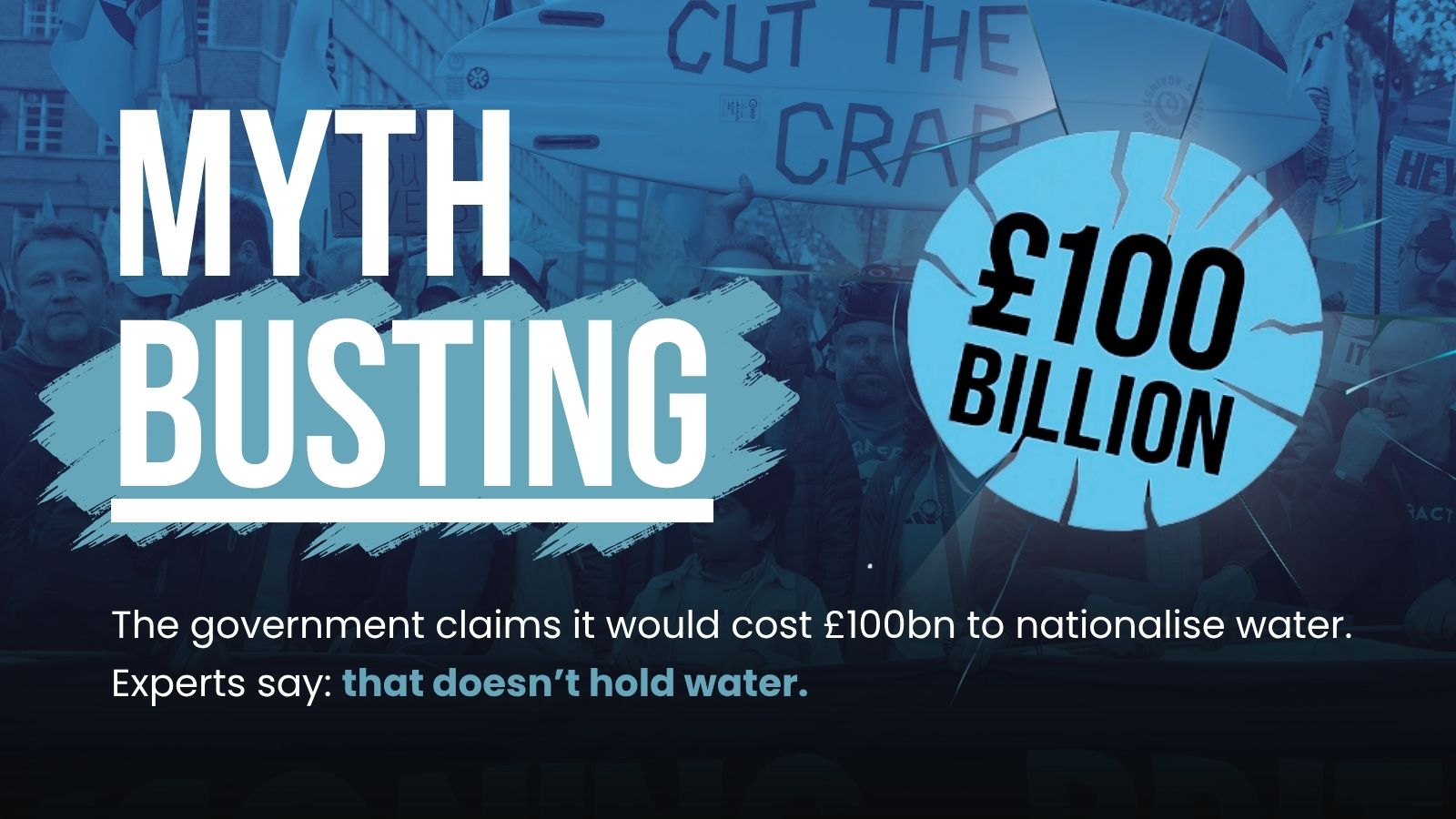
Myth Busting: Would it really cost £100 billion to bring water utilities into public ownership?

Download PDF

By Dr Samir Seddougui

Whenever the conversation turns to the cost of nationalising the water industry or even just exploring public benefit and ownership models instead of continuing with deep privatisation, the government references the scarily high figure of £90-100 billion to dampen public support. 

On 16 September, Defra released a short policy paper outlining the rationale behind its estimation that nationalising the water industry would cost approximately £100 billion. A similar number was reached in a 2018 Social Market Foundation report paid for by four water companies (Anglian Water, Severn Trent, South West Water and United Utilities). The Social Market Foundation’s estimation takes the RCV from 2018 which was estimated at £64 billion and then added premiums for acquisition, so presumably their estimation would be even higher now.

Defra based this on three assumptions that: 

  1. the value of Water Companies should be tied to their Regulatory Capital Value (RCV); 
  2. the government would absorb equity and debt; and 
  3. no discounts or premiums should apply. 


Inflated Economics? 

Let’s be clear: this isn’t rigorous economic analysis. It is a simplistic and unrealistic theory being relied on by the government to justify not taking decisive action in public and environmental interests by putting failing companies like Thames Water into a special administration regime. What it protects are investors and an unsustainable cycle of debt servicing. 

Professor Ewan McGaughey, professor of Law at King College London and co-author of the People’s Commission argues that public ownership is an inexpensive solution, contending that the true cost is closer to zero as a more accurate market valuation would account for performance and financial failures.

As Economics Professor Sir Dieter Helm puts it, Defra’s estimate is “misleading, simplistic and wrong”. In his analysis published on 22 September, Helm sets out why each of Defra’s assumptions is wrong and goes on to explain why special administration for a failing water company such as Thames Water would make sure the business continues on a sustainable basis, giving it “breathing space” before, the special administrator would “almost certainly achieve a price which is at a significant discount to the RCV” with debt holders taking a “haircut”. 

When valuing a utility company such as Thames Water, RCV is only one factor a buyer would weigh. Helm argues that a company’s failure to maintain assets and its debt levels are central to any realistic valuation. The People’s Commission notes that RCV ignores another glaring reality: water companies have extracted £83 billion in dividends to shareholders. Karol Yearwood at the University of Greenwich has described the privatised water industry as a “cash machine for investors”. Today, the biggest beneficiaries are historic shareholders and debt holders keen to cash in on the roughly £17 billion debt Thames Water has been allowed to rack up. 

Since privatisation 32 years ago, Thames Water has handed £7.2 billion pounds to shareholders, while neglecting essential upgrades leaving the public with failing pipes, sewage discharges, and degraded waterways.

Defra also glosses over Thames Water’s massive debt pile and fines including a record-breaking £123 million penalty this year for serious pollution that continues to devastate our rivers. Polluters should foot the bill, not taxpayers. Under a special administration regime, customer payments would flow to court-appointed administrators to fund the operation of essential water services, instead of being paid out to as returns to shareholders who would go to the back of the queue, making the process far less of a financial burden than Defra claims. In fact, as Helm points out, it would exceed the cost of running the business.


The cost of and case for special administration 

The Government says that special administration of Thames Water would cost the government £4 billion. This is also overblown: on Helm’s analysis, the Government should recover its costs from the sale of Thames Water which, when offered for sale, would receive bids way in excess of £4 billion. The net cost to the Treasury should be zero. 

Helm also explains why special administration is not nationalisation, as it is often misleadingly labelled or conflated as a tactic to avoid having to use it. Special administration is a regime designed specifically to deal with water company failure and it offers the most effective way out of the mess Thames Water is in.  It should not be feared but favoured.

Dieter Helm cuts through the noise: “What is needed now is for Defra to put Thames into special administration, instead of putting out simplistic and ill-thought-through “assumptions” to support an implausible, very big round number.” 

We are also pursuing a Judicial Review against DEFRA for failing to set out clear thresholds for when a company should be put into SAR. In our view, this failure breaches core public law duties and leaves rivers and communities at the mercy of failing operators. With 16 million customers, some ministers may believe Thames is too big to fail. River Action says it’s too big to be allowed to keep failing. It’s time to put customers and the environment before private profits – by putting Thames Water out of its misery and into a special administration regime. 


References

  • Becky Malby, Kate Bayliss, Frances Cleaver, Ewan McGaughey, “A fair price to the public for water nationalisation.” The Guardian. 3 August 2025. Accessed here.
  • Defra, “Nationalising the water sector: how we assessed the cost.” Policy Paper, 16 September 2025, accessed here.
  • The Social Market Foundation, “The cost of nationalising the water industry in England.” February 2018. Accessed here.
  • Dieter Helm, “The next episode in the Thames Water saga: Defra’s misleading £100 billion cost of nationalisation and flawed board vetting proposals”. 22 September 2025, accessed here.
  • Ewan McGaughey, “How to Clean Up Our Water: Why Public Ownership in Law Costs Zero”. Common Wealth, 5 June 2025, accessed here.
  • Kate Bayliss, Frances Cleaver, Becky Malby, “Defra and the £100bn”. The People’s Commission, 18 September 2025, accessed here.
  • Karol Yearwood, “The Privatised Water Industry in the UK. An ATM for investors.” University of Greenwich, September 2018, accessed here.
  • Tainted Water, “Where Your Money Goes”, Goldsmiths, University of London, 2024, accessed here.
  • Sandra Laville, Anna Leach, & Carmen Aguilar García, “In charts: how privatisation drained Thames Water’s coffers”, The Guardian, 30 June 2023, accessed here.
  • Sandra Laville, “Thames Water fails to complete 108 upgrades to ageing sewage works”, The Guardian, 10 July 2024, accessed here.
  • Environment, Food and Rural Affairs Committee, “Reforming the Water Sector”, House of Commons, 9 September 2025, accessed here.
  • Eleanor Shearer & Ewan McGaughey, “Deep Trouble: Fixing Our Broken Water System”, Common Wealth, 11 July 2024, accessed here.
  • Sarah Olney MP, “Thames Water: Contingency Plans”, House of Commons, 15 March 2024, accessed here.
  • Alex Lawson, “The fate of Thames Water hangs in the balance. So what are its options?”. The Guardian, 22 March, 2024, accessed here.
  • River Action, “River Action launches legal challenge against the Government over Thames Water failures”, 30 July 2025, accessed here.

MISSING: Policy for special administration (or is it?)

Download PDF

River Action’s legal challenge

In July, River Action launched its legal challenge over the Government’s failure to explain when it will trigger special administration for Thames Water and other failing water companies because of breaches of their performance duties.

That same month, the Independent Water Commission also recommended that a clearer policy for special administration be adopted.

Our legal challenge is simple: we say that the Environment Secretary has acted unlawfully by failing to publish a policy on when they will ask the High Court to put a water company in a special administration regime – a mechanism under existing legislation designed to enable the government to take action to deal with failing water companies.


What is special administration for water companies?

Special administration is a legal process for companies supplying essential services like water that are failing in terms of performance, finances or duties. It allows the government via an administrator to step in and take temporary control, ensuring operations keep running while offering a clean break from unsustainable debt and chronic underperformance.

Importantly, a special administration regime prioritises public interest – customer service, environmental protection and infrastructure investment – instead of existing shareholders and debt holders. By redirecting funds away from private profits and towards urgent improvements, it offers a route to restructure and refinance a water company for public benefit and long term sustainability.


 The Government’s response

The Environment Secretary has now formally responded. Remarkably, it has been claimed again that a policy setting out the circumstances in which or the criteria by reference to which the Court would be asked to put a water company into special administration does not exist. The response simply states “There is nothing for the Defendant to publish”.


Evidence that a policy exists?

The Environment Secretary has maintained this position despite clear indications that a policy exists in some form. Most strikingly, in a recent Environment, Food and Rural Affairs committee hearing, the Minister for Water and Flooding was asked about the circumstances in which a water company would meet the threshold for special administration. She read out a “whole list” of thresholds that are apparently being used to determine whether special administration should be pursued by the government. This sounds remarkably like a policy; the very thing the government insists does not exist.

The Water Minister also said that “Thames Water has not met the threshold for special administration for going into special administration” on the “formal advice” she had been given.


Why transparency matters

Why is the government so reluctant to publish a policy on when it will use the regime specifically created to deal with water company failure? How much worse does it need to get at Thames Water before the government will trigger the process? The public has a right to know what policies and plans exist to protect bill payers, our rivers and the provision of essential water services.

This goes beyond Thames Water. It matters for the whole water sector. Having a clear policy on when special administration will be triggered means it will be seen as a credible tool that strengthens regulatory discipline, incentivises better water company performance and avoids political delays. This is crucial to restore public trust and provide certainty to investors. Everyone should know the rules and then they must be followed.


What next?

Now the High Court will decide whether to grant permission for our claim to proceed to a full hearing. In the meantime, River Action will continue to push for transparency around the government’s policy and plans for special administration when water companies fail – and for leadership when it comes to Thames Water.

Privacy Overview

This website uses cookies so that we can provide you with the best user experience possible. Cookie information is stored in your browser and performs functions such as recognising you when you return to our website and helping our team to understand which sections of the website you find most interesting and useful.