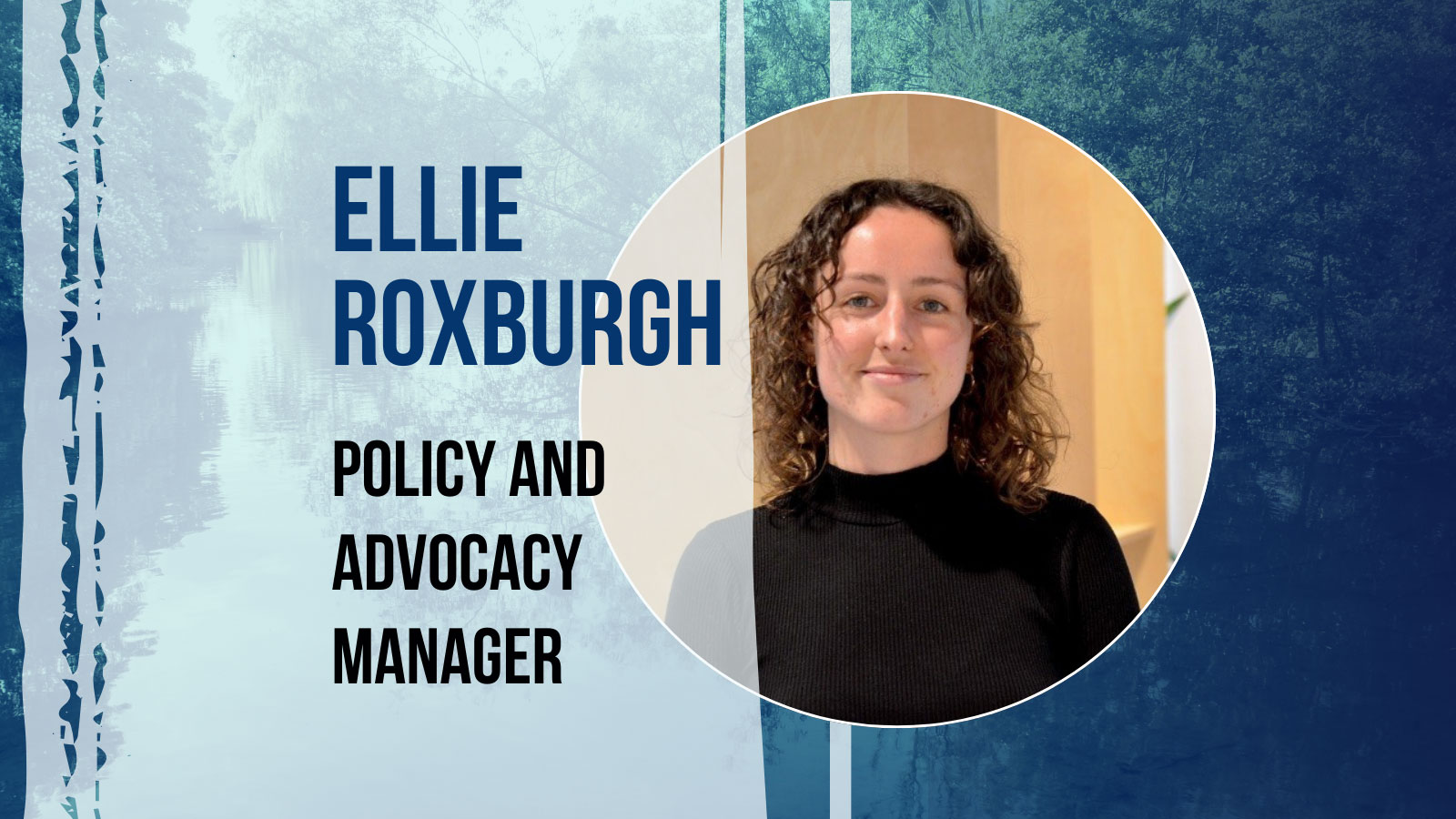
My name is Ellie, and I am the new Policy and Advocacy Manager at River Action! I am really excited to join such a dynamic and impactful organisation at such a critical time for water policy.
I have worked on environmental issues ranging from marine conservation, sustainable rice, nitrogen policy, and now rivers! This broad range of topics has equipped me with an understanding of how different sectors and practices impact water quality and the wider environment.
Q2. What first sparked your interest in protecting rivers and freshwater ecosystems?
I grew up in Kent, which is a very green environment yet we had little access to rivers for swimming. Now that I live in Bristol, I am spoiled for choice and cherish swimming in my local river throughout the summer.
Having worked previously for the Soil Association on nitrogen, I became increasingly aware of the impact of agriculture on rivers, lakes and seas. I learned about the appalling water crisis unfolding in this country, and the dirty money trail leading straight to the companies in charge of keeping our rivers running and our tap water clean.
Q3: You spent nearly three years at the Soil Association. What did your role there involve, and what did it teach you about the connection between soil health and the state of our rivers?
During my time at the Soil Association, I convened a coalition of eNGOs to advocate for greater ambition and more integrated government action on nitrogen. The group of farming, climate, health and nature organisations came together after learning about the pollution swapping risks from taking a siloed approach to nitrogen policy. We hosted the coalition at the Soil Association to ensure that farmers were always considered in any solutions that we put forward.
Nitrogen is used as a fertiliser for crops, either in synthetic form manufactured using fossil fuels, as livestock manure, or supplied through nitrogen-fixing crops like legumes. In the UK, fertiliser application rates are high, with only about half of fertilisers being taken up by the plant.
The rest is lost to the environment, either as air pollution, a greenhouse gas or leached through surface and groundwater to the rivers. Too much nitrogen in rivers leads to eutrophication, whereby the nitrogen (and phosphorus) spur growth of algae to the point that it blocks light out of the river, killing wildlife and plants under water.
Ways to reduce nitrogen leaching into rivers starts with the soil. Building soil health will mean more nitrogen is held in the soil and it won’t wash away in heavy rainfall. Applying the right fertilisers at the right time, in the right amount and in the right place will reduce losses and – importantly – massively increase farm profitability.
Q4: Tell us more about your position as secretary for the Society of Conservation Biology’s Impact Evaluation Working Group.
I am responsible for managing Volunteers and convening the Working Group. I joined the group after writing a paper on the impact of conservation organisations’ support for community governance of marine resources with the Journal (Society of Conservation Biology), and becoming interested in the use of impact evaluation in increasing effectiveness of conservation initiatives. With few resources to go round, and the biodiversity crisis deepening, it’s important that conservation projects and the communities they work with get the most bang for their buck.
Q5. Looking ahead to your new role as River Action’s Policy and Advocacy Manager, what will you be focusing on, and what can people expect to see from you in 2026?
Given my experience in agricultural water pollution, I will be steering the policy work in this direction. The government’s shown appetite to clean up England’s rivers, but so far, is falling short of any immediate impact on agricultural pollution. I see better agricultural management of nutrients as integral not only to cleaning up rivers, but also to restoring biodiversity, air quality and reducing contributions to climate change. I will be kicking off 2026 by sharing our agricultural water pollution strategy with key decision makers in government.
The other area that I see as needing more attention from the government is the issue of water scarcity. Demand for water is only going up, with much drier and heatwave-ridden summers and the sudden appearance of data centres, the government needs a plan to ensure there is enough water to go around. That must include managing water for public interest to ensure corporations cannot guzzle it all on infrastructure.
Q6. Finally, in your opinion, what is further needed/what needs to change to rescue Britain’s rivers?
Holding polluters to account, re-structuring water companies to be for public interest. There’s a really interesting example of the Eau in France, where the water company is a charity and they invested in supporting farmers in the catchment to convert to Organic farming in a bid to clean up the river before the Olympics. These farmers produce healthy and nutritious food without the use of synthetic fertilisers or pesticides, which is then supplied to schools in the local area.
Cleaning up the UK’s river crisis was a key election commitment for this government, but current efforts risk falling short by focusing too narrowly on sewage.
Despite popular claims that sewage is the leading cause of the UK river’s poor health, agriculture is the biggest culprit, affecting 45% of water bodies. This is primarily driven by nutrient and chemical pollution running off agricultural land.
Nutrient pollution from fertiliser use – particularly nitrogen and phosphorus – drives eutrophication, harming ecosystems, contaminating drinking water and damaging coastal areas.
Synthetic fertiliser and livestock manure are the two primary drivers of nutrient pollution.
Synthetic fertilisers are used to boost crop yields beyond nature’s limits, but both the production and use come at an environmental cost. In the UK, the current nitrogen use efficiency of synthetic fertilisers is 55% for crop production, meaning about half of fertilisers are lost to the environment, and this drops to 6-37% for animal products, like dairy.
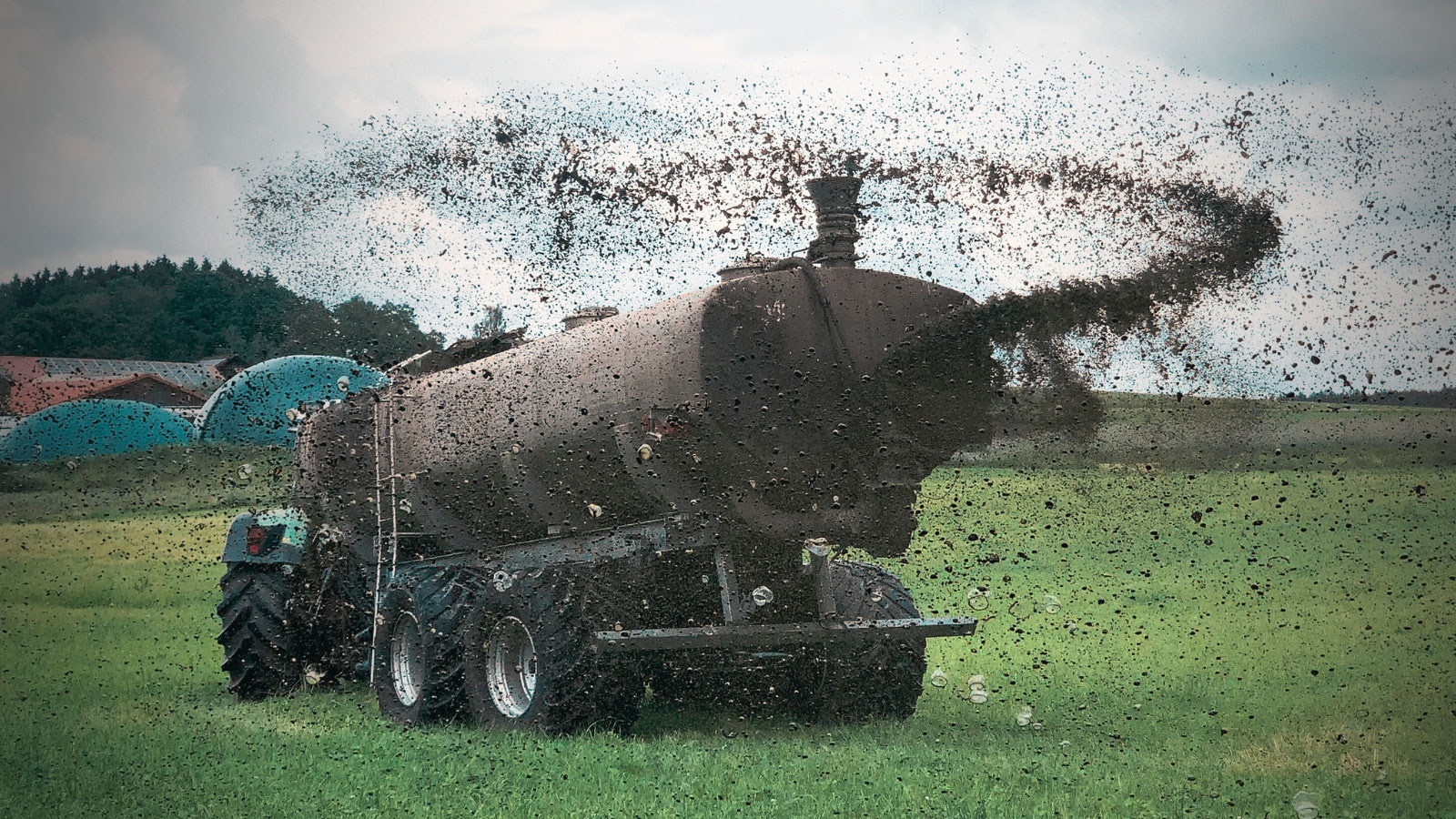
Livestock manure is a valuable nutrient resource that is recycled onto land to fertilise crops, providing an array of nutrients to soils. Its environmental impact is determined by its form, depending if animals are housed in slurry or straw based systems.
Nutrient pollution risk is directly related to the type of farming system. Industrial livestock farming systems are higher risk because animals are raised indoors – in confined spaces – and thus produce vast amounts of manure that has issues relating to storage and application. The rapid increase in industrial livestock units across England and Wales means slurry is produced in ever increasing quantities. These units rely on synthetic fertilisers to grow feed both in the UK and abroad, driving deforestation in biodiverse areas, with half of agricultural land used to grow feed for animals in these systems. High concentrations of phosphate and nitrogen in feed means the livestock manure is highly concentrated in these nutrients, and is thus a risk for environmental pollution.
There are a multitude of confounding reasons for such a large agricultural water pollution issue, including:
Poor enforcement of regulations at the mercy of reduced budgets
Piecemeal regulation with a multitude of inconsistent requirements of farmers
Ever intensifying agricultural livestock production, supported by synthetic fertilisers
Poor quality of slurry infrastructure due to financial constraints of small-scale and tenant farmers
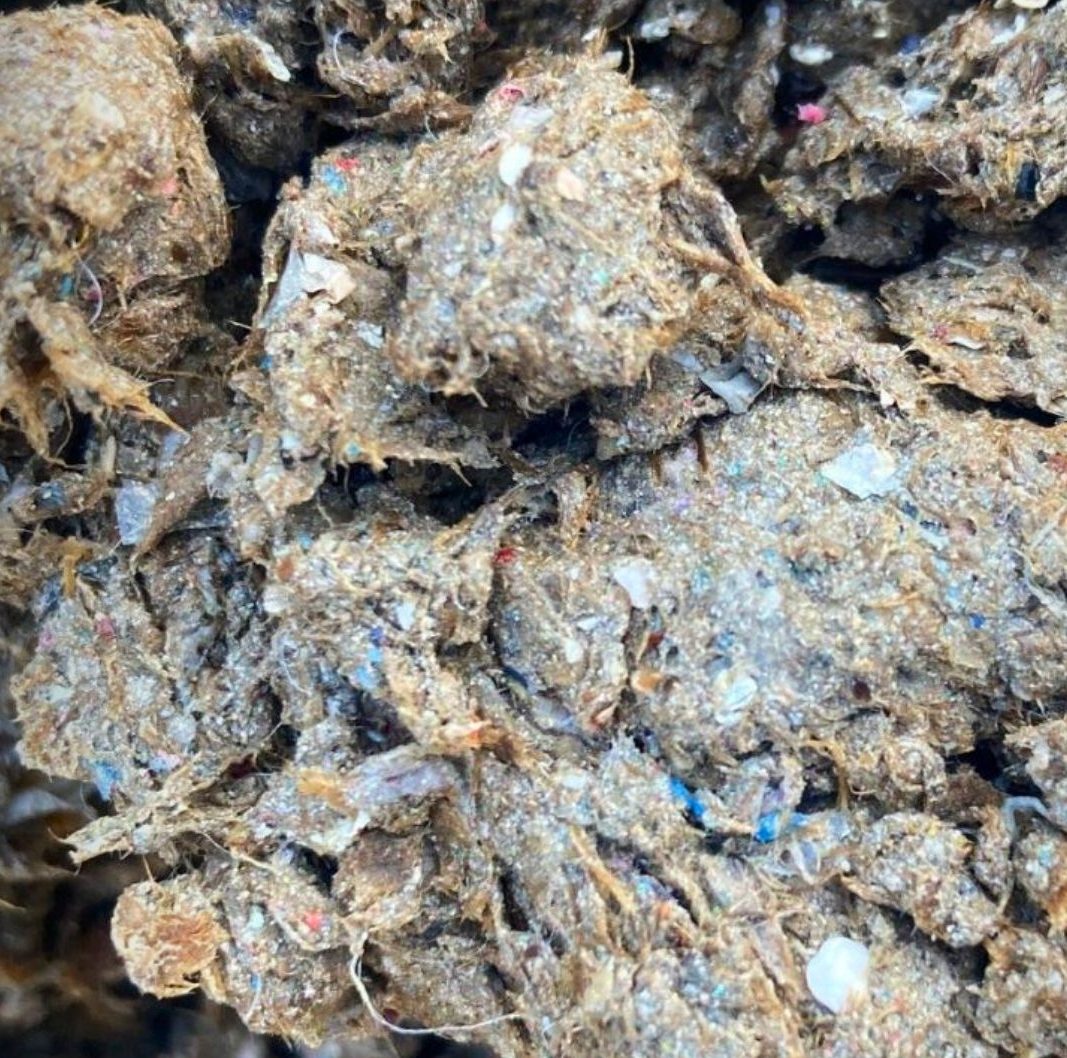
Beyond nutrient pollution, sewage sludge is a fertiliser that is unprecedented in its impact, with alarm bells being raised by NGOs over the chemical contaminants present. Sewage sludge is an emerging source of pollutants, with evidence showing contamination with PFAS, microplastics and industrial chemicals. Water companies are paid by chemical producers to take their waste, which is mixed with wastewater before farmers are given the product to use as fertiliser. Typically, farmers are unaware of the contaminants and the potential fertility impacts of continuous use of sludge on soils, with over 3.5 million tonnes of sewage sludge is spread on agricultural land every year.
Our recent survey found that 92% of people in the UK believe water companies should ensure sewage sludge on UK farmland is not contaminated; 88% support making water companies publicly report contamination levels in treated sewage sludge; 87% support increasing regulation on monitoring of treated sewage sludge.
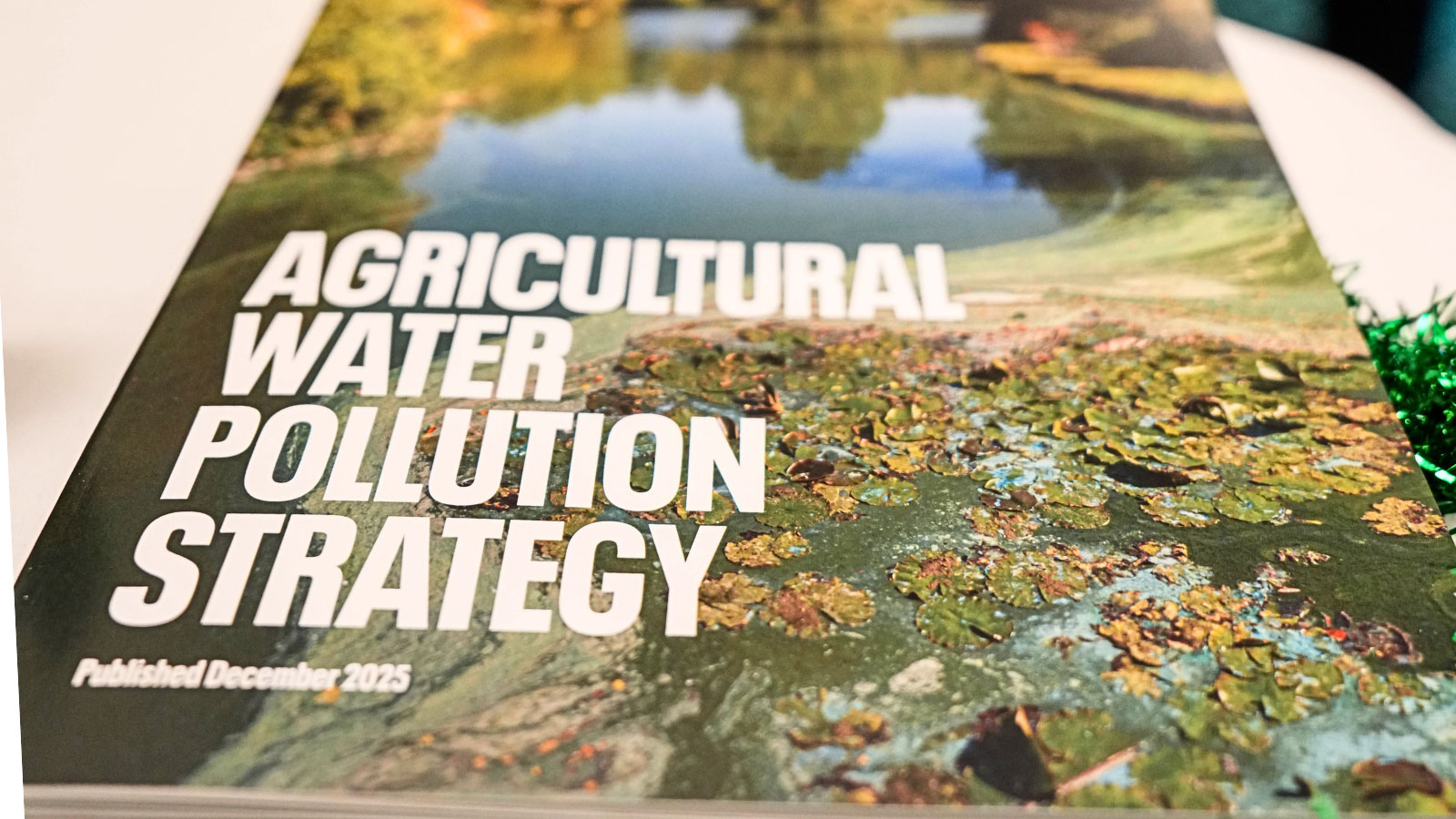
To conclude, we have put together an Agricultural Water Pollution Strategy with seven recommendations that would help the government to tackle water pollution with the same ambition that has been shown to tackling the water sector crisis:
Proper and clear enforcement of anti-pollution regulations
A well resourced and better trained Environment Agency
Appropriate funding and updated planning guidance for slurry infrastructure
Implement Sustainable Nutrient Management Plans overseen by a Defra Task Force
Lower thresholds for Environmental Permitting Regulations and extend to beef and dairy
Transition to a catchment-based approach to nutrient management, using regional water authorities
Prevent toxic sewage sludge contaminating agricultural land
The event brought together policymakers, regulators, farmers, scientists, and environmental campaigners to outline a credible, evidence-based roadmap for reducing agricultural pollution while supporting fair and sustainable farming. Speakers welcomed the strategy as a basis for concerned parties from the farming and environmental sectors to work with the government to identify a way forward. Helen called for better monitoring to assist regulators in identifying progress on farms, as well as more research into agricultural practices that work for both farmers and the environment.
A new YouGov/River Action poll reveals that three-fifths (61%) of UK respondents do not know that farmers commonly use sewage sludge from water companies, and 50% believe this practice carries risks for health and food quality.
The findings will be revealed as a petition calling for an end to the spreading of contaminated sewage sludge, signed by more than 62,800 people, is handed over outside DEFRA’s headquarters on Marsham Street, London, at 10:05am on 16 December.
The petition will be delivered to the Minister for Water and Flooding, Emma Hardy, by River Action and Greenpeace, urging immediate government action.
Water companies are selling this toxic sludge to farmers, putting rivers and human health at risk and leaving farmers concerned about the impact on their soil and water. The government must act immediately to stop contaminated sewage sludge being spread on farmland and support farmers in producing safe food while protecting our rivers.
Treated sewage sludge is sold as a cheap fertiliser, but water companies are not required to remove PFAS “forever chemicals,” microplastics, or other modern contaminants, because legislation governing sludge treatment was drafted in the 1980s — long before these pollutants existed. The sludge is now spread widely across farmland, draining into rivers already under severe pressure.
Key public findings from the YouGov survey
92% say water companies should either have a great deal of responsibility (79%) or a fair amount of responsibility (13%) when it comes to ensuring that sewage sludge that will be used on UK farmland is not contaminated.
89% say the government should have a great deal (59%) or a fair amount of responsibility (30%) when it comes to ensuring that sewage sludge that will be used on UK farmland is not contaminated
88% support requiring water companies to report publicly on levels of contamination in treated sewage sludge
87% support Increasing regulation on monitoring of treated sewage sludge for contaminants
87% support requiring water companies to conduct further treatment to remove contaminants including forever chemicals and microplastics from sewage sludge
85% support setting legal limits on levels of contaminants in treated sewage sludge spread on UK farmland
47% support banning the spread of treated sewage sludge on UK farmland
62% see a risk from using treated sewage sludge on farmland to water health, around 50% see risks to food quality and personal health
39% think water companies should find a different way of disposing of treated sewage sludge, even if this means water bills are more expensive
Findings from River Action’s farmers survey*
Alongside the national polling, River Action surveyed 105 farmers across the UK to understand how sewage sludge contamination is affecting those who buy and use it on their land. Although the sample is very modest relative to the size of the UK farming sector, the results show a striking level of awareness: 83% of respondents recognised the risk of contamination in biosolids..
Concern is widespread. Seventy-two per cent said they were worried about the impact of contaminated biosolids on water health, with almost 40% describing themselves as very or extremely worried.
A similar picture emerges for soil health, with 69% of farmers worried about the application of contaminated biosolids with 41% describing themselves as very or extremely worried.
The findings point to clear demand for stronger safeguards. Farmers expressed strong support for:
Better treatment to remove contaminants (76%)
Public reporting on contamination levels (58%)
Legal limits set on contaminants (56%)
Tighter regulation on monitoring contaminants (53%)
CEO of the Nature Friendly Farming Network Martin Lines said, “These findings show just how worried farmers are about the contamination of sewage sludge. And who can blame them? They’re already under huge pressure from supply chains chasing ever-higher profit margins, while water companies are offering cut-price or even free sludge that turns out to be contaminated.
“Farmers should not be the ones carrying the blame for a problem they didn’t create. This is a mess for the water companies and government to fix, not the people producing our food. Farmers want to do the right thing for their soil, their customers and their rivers, but they need a system that doesn’t set them up to fail.”
Farmer John Hall from County Durham said, “Water companies expect farmers to pay for the privilege of taking their waste, insisting that sewage sludge is a ‘valuable fertiliser’. In any other sector, waste producers cover the cost of safe disposal. But when the ban on dumping sludge at sea came in, water authorities and the Environment Agency simply assumed farmers would pick up the tab and take this supposedly valuable product off their hands.”
A southern Scotland farmer, who wishes to remain anonymous, told River Action, “Having used biosolids in the past, I became increasingly concerned that a natural by-product was becoming laced with household chemicals and industrial wastes, often described as forever chemicals because they break down so slowly in the soil.
“The ongoing accumulation of these substances will damage soil life, be absorbed by food crops, and eventually enter the wider water environment. These materials are more harmful than other inputs applied to the soil.”
River Action’s Head of Campaigns Amy Fairman said, “Farmers do not want to be dumping contaminated sludge on their land. Water companies are selling sludge laced with forever chemicals and microplastics, and the public is rightly concerned. Human health and our rivers are at risk, and the government must act immediately.”
Hugh Fearnley-Whittingstall added, “People are rightly worried about forever chemicals, microplastics, and other contaminants entering our rivers, soil, and food. Much of it is coming from “toxic sludge” which, astonishingly, is being given to farmers to spread on their land without telling them what’s in it. Urgent action is clearly needed from both water companies and the government to stop this pollution, support our farmers and food producers, and protect the environment.”
River Action’s Agricultural Water Pollution Strategy
River Action will launch its Agricultural Water Pollution Strategy on 17 December at the Palace of Westminster. The strategy was developed with farmers, food producers, supermarkets, and major fast-food chains to create practical solutions for sustainable farming while restoring river health.
Seven-point plan for clean rivers and fair farming:
Enforce the law properly – Create a single compliance framework requiring the Environment Agency to act when voluntary approaches fail.
Resource the regulators – Ringfence fines to fund training, farmer support, and monitoring tools like satellite imaging and citizen science data.
Fix failing slurry infrastructure – Redirect agricultural subsidy funds to urgently upgrade unsafe or outdated storage systems.
Establish regional water authorities – Create catchment-based bodies with powers to coordinate nutrient reduction and implement Water Protection Zones.
Smarter planning and data use – Integrate environmental, farm, and planning data to streamline compliance and remove barriers to essential farm upgrades.
Modernise sludge regulation – Bring sewage sludge under Environmental Permitting Regulations, with legal limits for forever chemicals, microplastics, and other contaminants.
Notes to Editors
All figures, unless otherwise stated, are from YouGov Plc. The total sample size was 2,150adults. Fieldwork was undertaken between 2-3 December 2025. The survey was carried out online. The figures have been weighted and are representative of all UK adults.
The complete YouGov poll dataset is included in full so you can see the numbers behind the headline findings.
River Action undertook its own survey of the farming community between 19th November – 10th December. The survey was carried out online and received 105 responses. The finding can be found here.
Media can download images of contaminated sewage sludge here. If used, please credit: Fighting Dirty
Members of the media are invited to attend the launch of River Action’s Agricultural Water Pollution Strategy, Hosted by Alistair Carmichael on 17 December at 1pm in Dining Room A, Palace of Westminster. Keynote address will be given by Minister Hardy. Register interest at: media@riveractionuk.com
By Emmeline Hardisty, Founder of the Voice of Water
What is the Voices of Water Foundation (VoW)?
The Voices of Water Foundation (VoW) is a soon to be CIO focused on river system restoration and healing through advocating for, acting on behalf of, and protecting the river’s voice and rights. Following the Rights of Nature movement, we believe rivers should have a say in how they are treated, and river rights should be protected and respected. Therefore, with the river’s natural and inherent rights at the core of our ethos and focus, such as the right to be free from pollution, or the right to regeneration and restoration, we are:
1. Campaigning for a law change in the UK whereby rivers and drowned river valleys (Ria) are recognised as the ‘entities’, the life forces they truly are and granted rights, following the Universal Declaration of River Rights (UDRR).
and
2. Connecting with many to develop river guardianship projects and groups, through combining science and policy, with art and spiritual practice.
Just as the natural world works best connected, so do we. We want our guardianship projects and practice to be where both community voice and river voice can meet, be heard and understood.
How and why did I become a River campaigner?
I have made a VoW to the river, to do whatever I can to protect and act on behalf of ‘her’.
I have had a special, personal connection to river environments since I was a little girl. Then and now, the way the river flows has always inspired me, the water through, under, around and over stone. To me, this echoes hope that there is always a way.
Fast forward to my early adolescence in 2021, nearing the end of my research master’s in marine biology, sat by the river again, I asked – “Where did it all go wrong?” A question that sparked my now almost 5-year investigative research journey into river issues, environmentally and systemically, in the UK. This led me to delve into environmental law, which then led me to the ‘words’ that I believe are a root in some of the issues – rivers being seen as ‘objects’ under law, instead of ‘entities’ with rights that give them a say in how they are treated.
Why did I go on a 100-day pilgrimage?
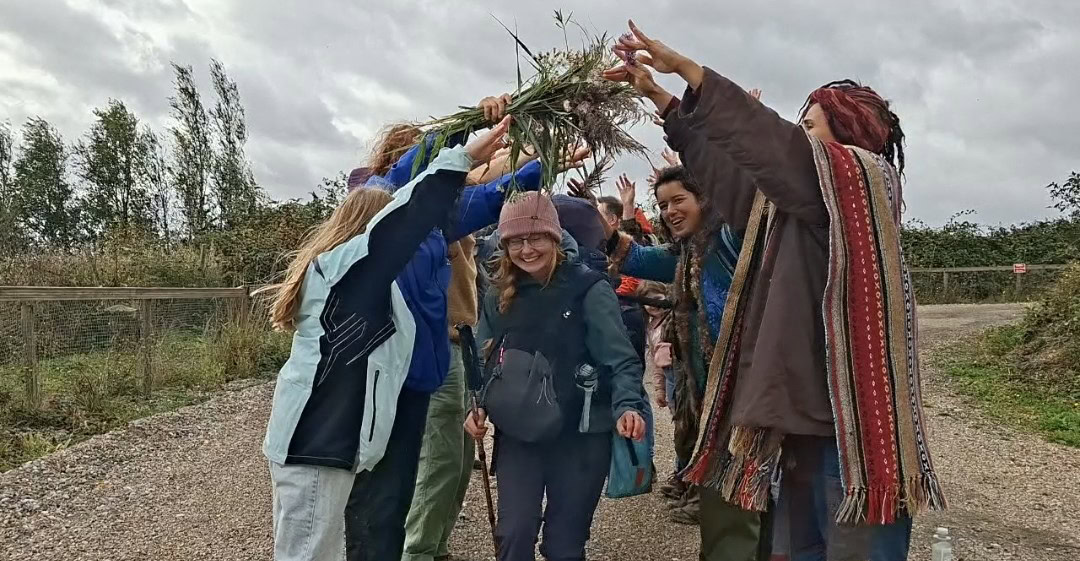
From this, I founded the Voices of Water Foundation (VoW) and launched a petition – calling the UK Government to grant Rivers and Rias Legal Personhood (legal recognition) in England, and for a system to be created whereby River Guardians in many forms can come together to act on behalf of the rights of rivers. To share the word about the petition and this overall movement, I embarked on a 100-day, 1000+ mile pilgrimage from Cornwall to Wales, back to and across England, ending at the mouth of the River Thames.
This was a journey for the river, I followed and met many rivers at differing points along the way – the River Camel, River Tamar, River Dart, River Exe, River Otter, River Frome, River Severn, River Neath, River Thames and many more. I posted daily updates on the VoW Instagram, through which I was able to grow a wonderful social media campaign and community, and I met so many wonderful, kind people on the quest, sharing their water stories of adventure and healing. From this, it became ever more apparent that journeying for River, water connection, this was also a journey of human connection.
What did I learn during the pilgrimage?
I truly believe a huge part of reversing the disease of disconnect is about us coming together, so many beautiful things can happen when we listen and communicate. This, I feel, can resonate and re-root beautifully in River Guardianship practice. But undoubtedly the element that shone through the brightest during my pilgrimage was the wonder of water, and this existence we get to live because of ‘her’. This I was reminded of daily, every morning waking up to my first thought/question being – “Do I have enough water for the day?”.
Why are River Rights important?
We truly cannot live without water. Therefore, it makes zero sense to me that river voice and right are not already a key part in river conservation practice and decision-making related to these precious environments and all connected to them.
I believe the Rights of Nature movement is imperative for the healing and regeneration of Mother Earth’s vital interconnected habitats, and our relationship to and with ‘her’. Based on the indigenous perspective, river rights, specifically environmental personhood, is eco-centric, whereby people – River Guardians, act on behalf of the river’s voice and rights. But giving rivers a say in how they are treated and protected is not just about developing physical acts, conservation practice and projects within/of nature guardianship; this is a paradigm shift, a re-awakening, a vital shift in perspective, reminding us of how interconnected we truly are to this Earth.
I hear the word ‘radical’ mentioned a lot in this space, but I don’t actually agree with associating river rights and guardianship with this word. Remembering that rivers, woodlands, and mountains are truly alive is not something new; it is re-awakening an ancient perspective, knowing, and understanding of the remarkable world we are all a part of. I believe this is key to fixing the mess.
Vision for legal Guardians and Guardian groups for Rivers?
Following a law change, granting rivers legal personhood (recognition) will give rivers legal standing. Lead guardian and guardian groups for protection and enforcement of the river’s rights could be assigned/designated to each river. However, there is a lot to consider when developing a system for River Guardianship legal protection and practice, and it would also need to be both specific and broad enough to align with every river’s collective and unique pollution issues and ecology. There are now many movements based on and leading to the formation of river guardian groups and projects in the UK, the momentum is flowing! At VoW we are trying to connect with as many as possible in the rights of nature, law, policy and conservation space and in the development of a River Guardianship, which we will be sharing a lot more about over the next year.
Thames Water knew over 90 sewage sites were failing as 13 communities and Sir Steve Redgrave launch UK’s first coordinated sewage pollution statutory nuisance action
We can today reveal, using documents submitted by Thames Water to Ofwat, that 93 sewage treatment works and water pumping stations the company promised to upgrade remain unfinished, leaving rivers across the Thames catchment exposed to continued pollution and dangerously high levels of bacteria.
With Thames Water failing to act, 13 communities from Buckinghamshire and Elmbridge to Hackney, Hammersmith & Fulham, Oxford and Richmond to Wokingham are now fighting back, sending statutory nuisance complaints to their local authorities to demand accountability and urgent action.
This marks the launch of the first coordinated statutory nuisance action of its kind, with communities uniting to ask local authorities to hold Thames Water legally accountable for the impact of sewage pollution. Rowing legend Sir Steve Redgrave and Olympic champion Imogen Grant MBE have also submitted nuisance complaints, joining residents from across the Thames. It follows a nuisance complaint brought by Matt Staniek of Save Windermere after pollution by United Utilities harmed England’s most famous lake.
Communities fighting back
With Thames Water failing to act, residents across the Thames catchment are turning to the law to challenge sewage pollution in the River Thames. communities in Buckinghamshire, Elmbridge, Hackney, Hammersmith and Fulham, Hounslow, Oxford, Richmond upon Thames, South Oxfordshire, Southwark, Vale of White Horse, Wandsworth, West Berkshire and Wokingham have today sent statutory nuisance complaint letters to their local authorities based on the sewage pollution experienced in their area, asking them to make Thames Water take decisive action to stop its sewage pollution that is causing harm along the River Thames.
River Action and these communities believe that discharges of untreated or inadequately treated sewage from infrastructure operated by Thames Water constitute a statutory nuisance under section 79 of the Environmental Protection Act 1990.
This type of complaint should trigger an investigation by the local authority to determine whether a statutory nuisance has occurred or is occurring and take reasonable steps to investigate the issues raised. If sewage is found to cause a statutory nuisance, an abatement notice — a legal order that would require Thames Water to stop causing the nuisance or face criminal prosecution – is required to be served on Thames Water by the local authority.
A statutory nuisance is an activity that unreasonably interferes with peoples’ use or enjoyment of land and is likely to cause prejudice or injury to health – for example, through noise, smells or other forms of harm. A ‘nuisance’ is described in case law as being a state of affairs which is not something “objectively a normal person would find it reasonable to have to put up with”. In this case, residents argue that sewage pollution from Thames Water’s failing sites and infrastructure has made rivers unsafe, disrupting recreation, sport, local businesses and everyday enjoyment.
Real-world examples underline the risks:
A 16-year-old rower from the Henley Rowing Club became unwell after training on the river; tests confirmed he had contracted E. coli. His illness coincided with his GCSE exams, preventing him from revising and sitting some papers.
In West Berkshire, a kayaker capsized and became unwell over the following days.
At Taggs Island, five children fell ill after playing in the River Thames near Hurst Park.
These complaints seek to hold Thames Water legally accountable for the harm and interference caused by sewage to riverside communities, recreation, business and public health.
Community member from Oxford, delivering her statutory nuisance complaint letter.
Calls for intervention
We are calling on local authorities to investigate these complaints and for the Government to apply to the High Court to put Thames Water into special administration to prioritise investment in sewage infrastructure and protect bill payers and the river that sustains our economy.
Our Head of Campaigns, Amy Fairman said:
“This action is about fixing sewage pollution in the Thames for good, not compensating people for past failings.
Each local authority must investigate these complaints and, where statutory nuisance is found to exist, issue an abatement notice and take enforcement action. Councils now have a legal duty to act.
Despite extensive evidence of performance failures and being on the brink of insolvency, the Government has not taken steps to place Thames Water into a special administration regime, a process that would allow for urgent infrastructure upgrades, put public interest ownership and governance first, and protect communities and the environment.
River Action is calling on the Secretary of State for the Environment to act now: the Government must take temporary control of Thames Water to end the era of private profiteering and stop polluting the river.”
Dirty discharges and dangerous bacteria levels
At several sites, it’s not just sewage overflows that are causing pollution but also the quality of treated effluent which also presents a direct threat to public health.
At Henley-on-Thames Treatment Works, Thames Water’s own data – obtained by River Action from Thames Water via an Environmental Information Request – shows E. coli levels in treated effluent reaching 28,000 cfu/100 ml in September 2023 – more than 30 times the safe limit for designated bathing water. This toxic cocktail is a direct threat to swimmers, rowers, anglers, and wildlife.
Newbury STW discharges into the River Kennet, within a globally rare chalk-stream catchment. The river is designated as a Special Area of Conservation and Site of Special Scientific Interest.
Over five years, the site has released almost 4,000 hours of untreated or partially treated sewage.
An upgrade was scheduled under Price Review 24 (PR24), while the linked London Road Pumping Station, due to be completed under PR19, remains unfinished.
Citizen science monitoring (22 September – 24 November 2025)
Local citizen scientist Blake Ludwig monitored E. coli levels in treated effluent at the Newbury Sewage Treatment Works and upstream sites along the River Kennet and Kennet & Avon Canal between 22 September and 24 November 2025, conducting 9 tests in total. All testing was conducted using a WHO-approved Fluidion Alert One E.Coli tester, in coordination with Planet Ocean.
Three highest readings: 2,650, 2,271, and 1,945 cfu/100ml – far above the safe swimming limit
Average E. coli level across all tests: 1,076 cfu/100ml
For an inland bathing site, the Environment Agency considers E. coli levels above 900 cfuCFU/100 mL to be poor and unsafe for swimming.
Local citizen scientist, Blake Ludwig, delivering his letter.
Citizen science monitoring (11 June 2024 – 16 September 2025)
Complementing the findings at Newbury, Citizen Scientists Buckinghamshire monitored E.coli levels in the treated effluent discharged from Little Marlow Sewage Treatment Works (Bourne End) between June 2024 and September 2025. The water quality testing groups conducted 14 tests on the final outflow.
6 out of 14 results exceeded 10,000 cfu/100ml
2 out of 14 results measured 1,000 cfu/100ml
9 out of 14 results were above 7,000 cfu/1200ml
As with the Newbury dataset, these readings sit well beyond the Environment Agency’s inland bathing-water threshold of 900 cfu/100ml, again indicating conditions that are unsafe for recreational water use.
Peaceful protest at Thames Water HQ
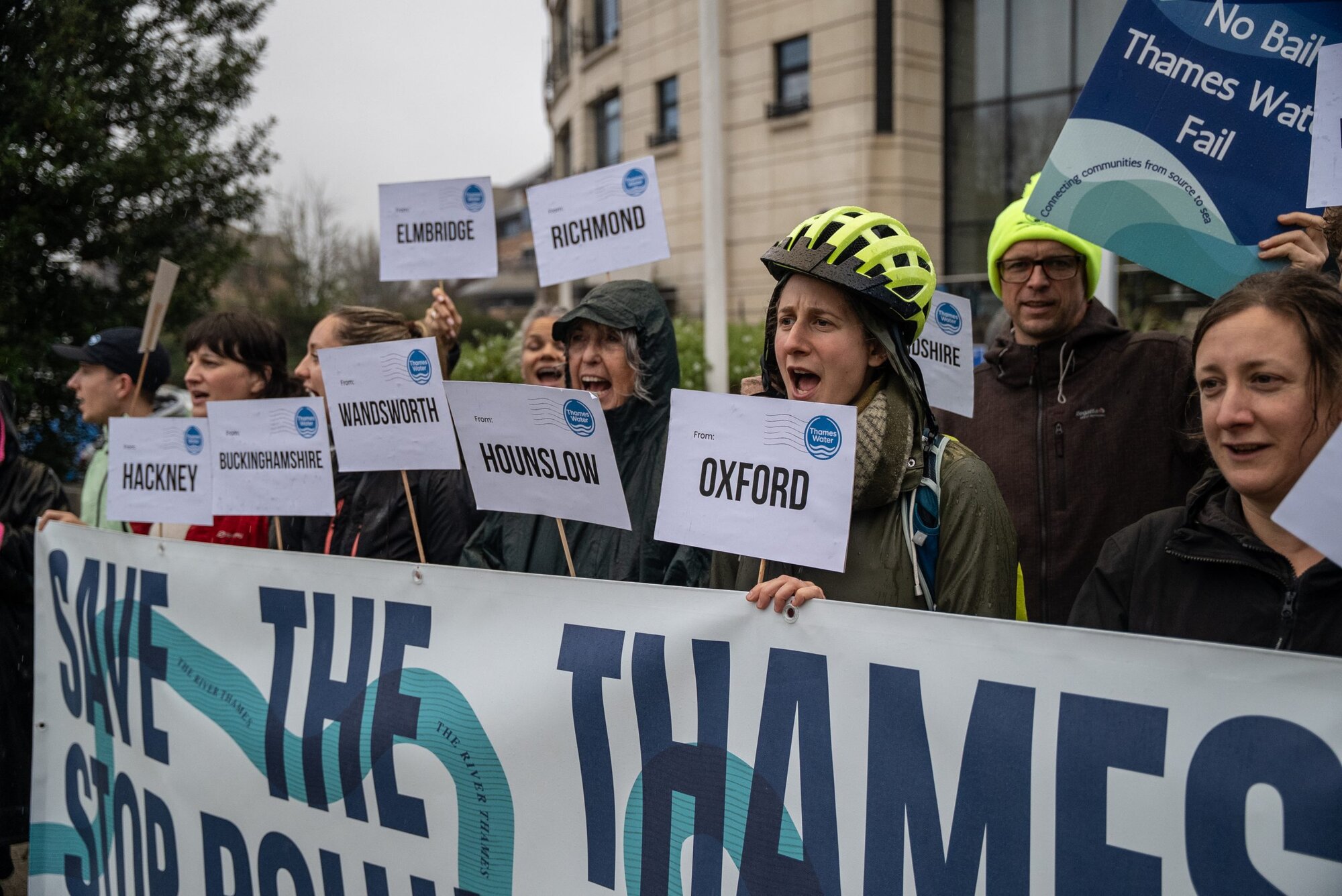
Campaigners from across the catchment staged a peaceful demonstration outside Thames Water’s headquarters, Clear Water Court in Reading. Many of those taking part were the very people who have submitted statutory nuisance complaints, and they carried placards naming the boroughs and districts involved. Groups from across the Thames basin joined the action.
Campaigners outside Thames Water’s HQ in Reading
Community groups and rowing legends join the action
Laura Reineke, founder of Friends of the Thames and a resident of Henley-on-Thames, said: “People here are fed up with living beside a river that’s being treated like an open sewer. We’ve submitted a nuisance complaint to our local authority because what Thames Water is doing is unacceptable.
“To find that treated effluent leaving their plant here has contained E. coli at levels 30 times higher than what’s safe for bathing is shocking. Local residents are angry and determined to hold this company accountable for the damage it’s causing to our river and our community.”
International rowing legend Sir Steve Redgrave said:
“As someone who has spent my life on the water, I am appalled by the pollution that Thames Water continues to allow. That’s why I’m joining River Action and communities along the River Thames in taking action to hold this company to account. Our rivers should be safe for everyone. It is unacceptable that people are being forced to fight for clean, healthy waterways.”
Olympic rowing champion Imogen Grant MBE said:
“Rivers are our lifeblood, for sport, wildlife, and community, and it’s shocking to see them poisoned by untreated sewage time and time again. I have filed a nuisance claim with Wokingham because I’ve had enough of pollution putting me and other river users at risk. I stand with River Action to hold Thames Water accountable and protect the rivers we all rely on.”
Friends of the Thames, CEO, Laura Reineke outside Thames Water’s HQ in Reading
Notes to editor
This document, submitted by Thames Water to Ofwat, outlines the 93 improvement projects the company requested permission to carry over from PR19 to PR24. For ease of use, we have extracted the relevant data and displayed it in this document.
In response, Ofwat expressed concerns about non-delivery and whether customer protection is adequate. In this document it stated, “The company does not provide sufficient and convincing evidence that the proposed investment does not overlap with base activities or was not already sufficiently funded for delivery for the period 2020-2025 (PR19). It provides no evidence that non-delivery could have been mitigated.
“This enhancement request is for £172.99m within the water price control (out of a total £1,134m claim). There is a need for Thames Water to complete the outstanding PR19 WINEP schemes by 2030. The company has provided a short business case covering the total claim, but it provides no other supplementary evidence to explain the additional requested funding for ‘Water other’ WINEP drivers. “The proposed funding covers additional investment for schemes under regulatory drivers including the Water Framework Directive (WFD), biodiversity and raw water deterioration. It also includes some capital maintenance costs to support scheme delivery. For capital maintenance, this is base expenditure rather than enhancement. For raw water deterioration, this was not an WINEP driver at PR19 for 2020-25 and should not attract additional enhancement funding under this category. “Some of the reasons for non-delivery of the total WINEP enhancement claim are stated by the company as: cost increases over 2020 to 2025; the scale of the WINEP programme; under-funding in its PR19 final determination; new framework contractors and delays due to Covid. Many of these issues impact other companies equally and are within management control.”
In this correspondence from Ofwat to Thames Water, known as an enforcement order, the regulator explains that while the company can carry over the 93 projects for which funds were already allocated, it can only access an additional £250 million to upgrade these sites, projects that should have been completed during PR19. Ofwat also fined the water company £104.5 million for failure to upgrade these sites in PR19.
To date, 13 statutory nuisance letters have been submitted to local authorities across the River Thames catchment. They are: Buckinghamshire, Elmbridge, Hackney, Hammersmith and Fulham, Hounslow, Oxford, Richmond upon Thames, South Oxfordshire, Southwark, Vale of White Horse, Wandsworth, West Berkshire and Wokingham.
The Oxford Rivers Improvement Campaign used an Environmental Information Request (EIR) to obtain data on Newbury STW. The data show that sewage spill hours rose from 482 in 2019 to 1,630 in 2024, an increase of 240%. Over five years, the site discharged almost 4,000 hours of untreated or partially treated sewage. River Action used its analysis of this data to calculate these figures. You can view the calculations here.
Download stills and footage from the peaceful protest outside Thames Water HQ here.