The Government’s Water White Paper: The Good, the Bad and the Ugly

Download PDF

Written by Ellie Roxburgh, Policy and Advocacy Manager at River Action

This Government’s focus on reforming the water sector is welcome and timely. Recent failings by South East Water and Thames Water have demonstrated that water companies are defective on multiple fronts. The public is mobilised for change and the Government must go further than minor tweaks to the status quo. The current model of profit-driven privatisation has failed, evidenced by the polluted state of our rivers, exploitative ownership models and inadequate regulatory oversight in the water sector. The water pollution caused by agricultural practices, industrial waste and road run-off must also be urgently recognised and addressed. 

The time for change is now. We need a government that is bold in ambition and willing to implement reforms fast enough to deliver the measurable improvements needed to fulfil its election promise to clean up our rivers, lakes and seas.

So, what is a White Paper?

A White Paper is a government document that precedes legislation. It sets out what to expect in the upcoming King’s Speech when the parliamentary agenda is laid down by the King. This White Paper focuses largely on the recommendations made by Sir Jon Cunliffe’s Review of the water sector in 2025. Below, we’ve set out the good, the bad and the ugly of the government’s plans for water reform.

The Good

Tough, independent regulators: For too long, water companies have gotten away unscathed with polluting our rivers. Today’s announcements put some strength into the regulator, including no-notice powers for the regulator to check security and emergency preparedness, Performance Improvement Regimes for failing water companies, and a Chief Engineer to monitor infrastructure.

The government announced a consolidation of water industry regulators into one entity, with oversight of all sectors impacting the water environment. This new regulator will have public health and environmental protection as a key objective, alongside affordable bills, financial resilience of the water sector, and robust oversight of water companies’ infrastructure. This regulator must have enough teeth to hold water companies to account with penalties that stop them polluting. We need a regulatory system that enforces the law and, to do that it must be well-financed.

Democratic decision-making: The government has committed to introducing a regional water planning function by bringing together councils, water companies, farmers and developers, with double the funding for catchment partnerships. The cross-sectoral and target-driven characteristics of the new regional water planning function are welcome. However, while it is important that these actors have a seat at the table, there needs to be an independent authority that makes decisions based on the environmental health of the catchment and the public health of customers.

These authorities need to sit above water companies and other self-interested actors. They need powers to influence local planning authorities decisions over industrial planning applications and permit decisions, based on the ecological health of the river and surrounding habitats. Regional oversight should support a tiered approach to action on water pollution, whereby the most affected areas are prioritised as the focus of rapid action and enforcement (including Scientific Sites of Scientific Interest and chalk streams). This would enable the Secretary of State to enact Water Protection Zones and a potential moratorium on industrial livestock units in areas, such as the River Wye, that are experiencing significant nutrient loading from industrial agriculture.

A long-term water strategy: We are pleased to see the Government taking a long-term view of improving the water sector. However, decisions at local and regional levels must align with and enable the delivery of a national strategy for planning, financing, governing and regulating sewage treatment, water quality and supply to ensure a joined-up approach to securing water and clean rivers, lakes and seas. Measures and targets should be put in place to deliver on commitments within the Environmental Improvement Plan and Water Framework Directive across sectors and regions, to require all actors to contribute towards achieving national targets.

Abolition of self-monitoring: The government has committed to abolishing the self-monitoring of water companies. The White Paper has set out plans for the new regulator to have a Chief Engineer to monitor infrastructure, and for water companies to proactively report on infrastructure conditions. The test will be how regularly the regulators independently test the infrastructural quality and environmental impacts of water company operations.

The Bad

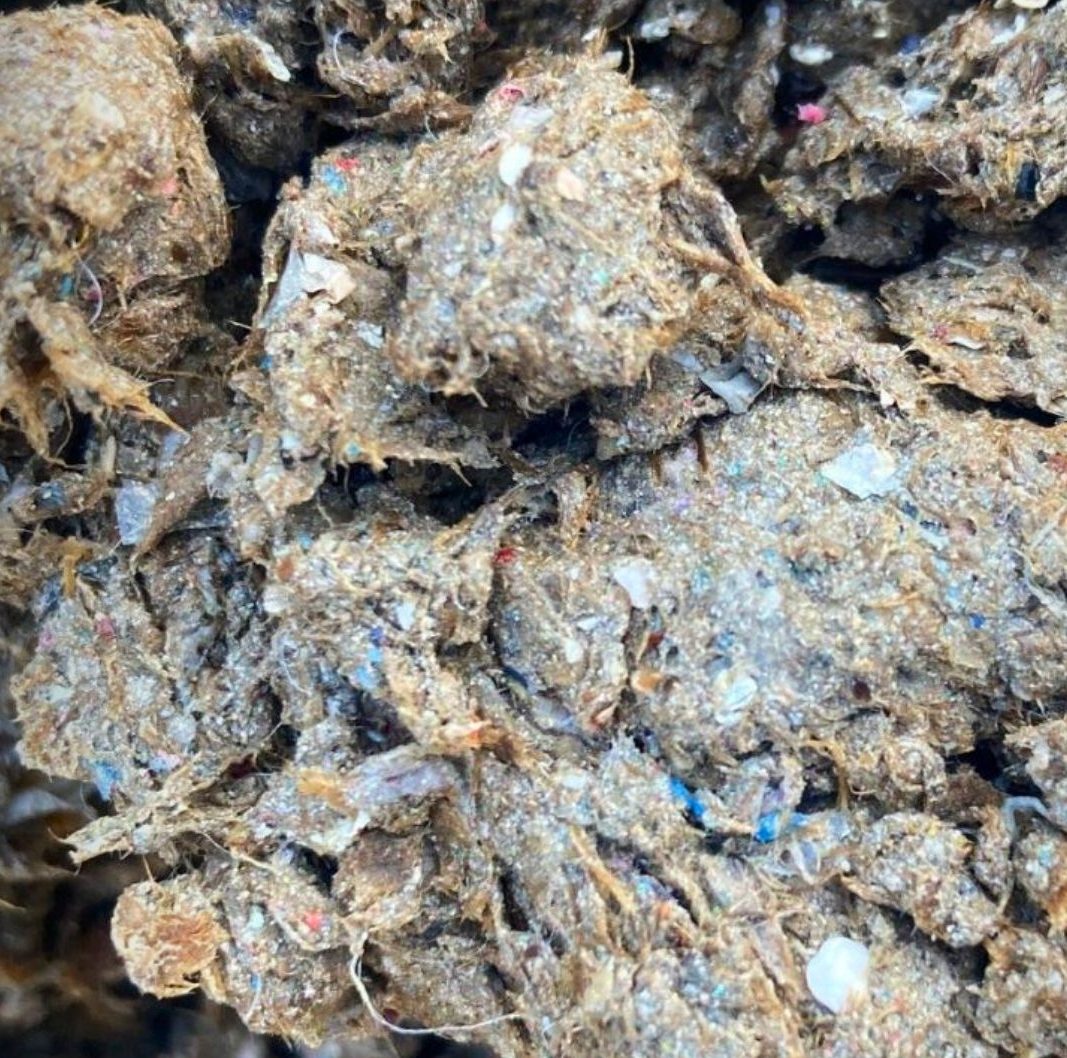
Limited scope on sewage sludge: While we welcome the Government’s commitment to consult on reforms on how sewage sludge use in agriculture is regulated and whether sludge should be included in the Environmental Permitting Regulations, meaningful action is needed that goes beyond end-of-pipe solutions. The Government should investigate whether legislation is needed to stop water companies from selling contaminated sludge to farmers, and as recommended by the Independent Water Commission, the Government must consider Extended Producer Responsibility for all of the contaminant producers across the supply chain.

Nothing new on agricultural water pollution: Agricultural water pollution is on a similar scale to water company pollution and the White Paper recognises this, estimating around 40% of river and groundwater pollution is due to agricultural practices. Yet agriculture has not had equivalent dedicated resources to identify and implement solutions to reduce environmental harm as the water sector. Consolidating agricultural water regulations is welcome, but we also need to see more funding for regulators, greater support for farmers to implement much-needed infrastructure, and a planning system that is empowered to decide when catchments have enough industrial farms. It is critical that environmental permitting is extended to industrial cattle and moves to do this must be swift.

The Ugly

Essential requirements instead of incentives: Today’s announcements start to embed public health and environmental protection in the water system with targets and objectives. Reform of the incentive framework to reward companies for delivering outcomes like public health, the environment and long-term resilience means these outcomes will continue to be seen as optional when they should be essential requirements of operating. 

Continued prioritisation of private interests: Regulation alone cannot fix a deeply privatised system that is designed to put profit first. The White Paper recognises some owners have prioritised “short-term profits over long-term resilience and the environment”. That is exactly why the ownership model must change. However, the White Paper still treats the profit-driven model as the default and focuses on constraining its worst excesses. The approach to ownership change is optional and company-led, which means it is very unlikely to happen. Most critically, the White Paper makes no commitment to a thorough, evidence-led review of alternative ownership models. We want to see a clear move toward public benefit models for water companies, not a slightly better managed private monopoly. A public benefit model would mean that water companies have legal duties to put public health and the environment first, profits and shareholder dividends are secondary, and short-term extraction is ruled out.

And what if water companies continue to fail financial and legal obligations?

New legal powers may be valuable, but the Government and regulator must use the extensive and powerful ones they already have. Performance Improvement Regimes are a step in the right direction, but the Special Administrative Regime has existed under the Water Industry Act 1991 for decades and must now be used by the Government and regulator. When a water company fails to meet its financial or legal obligations, as is unfortunately the case with more than one water company and with Thames Water being the clearest case for such an intervention. The commitment in the White Paper for water companies to establish plans for special administration is welcome, but transparency on when the regime will be triggered by the regulator and the Environment Secretary remains lacking.

Reforming the water environment requires bold and urgent action. We need to see the Government follow through on its reforms with greater ambition.
Government White Paper on Water Reform Falls Short of Real Reform

Download PDF

Today, the government has released its long-awaited Water White Paper. This White Paper sets out the Government’s response to the recommendations made by Sir Jon Cunliffe’s Review of the water sector in 2025. Although there are some welcome steps, it falls short of the ambition and enforcement needed to Rescue Britain’s Rivers.

CEO of River Action, James Wallace said:

“The publication of the Water White Paper signals the Government recognises the scale of the freshwater emergency, but lacks the urgency and bold reform to tackle it. 

“Proposals for a new water regulator, including the appointment of a Chief Engineer, alongside infrastructure ‘MOTs’ and no-notice inspections of water companies, are welcome steps, provided the regulator is truly independent, equipped with real powers and funded by The Treasury to hold polluters to account.

“However, major gaps remain. These reforms will fail unless the privatised model is confronted head-on. The crisis is the result of a system that prioritises short-term profits and shareholder payouts over people, rivers, and public health. 

“Special Administration must be the clear route to a public benefit model for water. It is the mechanism by which failing water companies can be taken out of extractive ownership and restructured so that investment serves customers and the environment, not short-term results. This requires clear, published triggers for Special Administration and a firm commitment to reform ownership and finance so that profits are secondary, long-term, and conditional on strong environmental performance and public benefit.

“We are also concerned about the emphasis on smart meters, which risks placing responsibility on households when water companies have failed for decades to invest in ageing, leaking infrastructure. Millions of litres of water are lost every day, and consumers should not be asked to pay for corporate underinvestment.

“Finally, while agricultural pollution is acknowledged, the proposals do not yet go far enough in ambition or enforcement needed to tackle this problem at source. The abomination of sewage sludge epitomises the challenge: farmers pay water companies for sludge to spread industrial ‘forever’ chemicals on the land that grows our food. The real test of these reforms will be whether they deliver a system that puts public and environmental protection ahead of corporate profiteering.”

As the government prepares its upcoming Water Reform Bill, we will continue to push for real, meaningful reform and press for tougher enforcement, stronger accountability, and a water system that works for people and nature — not lining the pockets of polluters.

Campaign update: Our legal action against Ofwat

Download PDF

We took Ofwat to court to protect customers from paying twice and our rivers from sewage pollution


This week, the High Court finished hearing our legal challenge of Ofwat’s approach to its ‘not paying twice’ policy in its latest price review (PR24). The hearing took place over three days on 4, 5 and 17 November.

River Action, working with Leigh Day and expert barristers David Wolfe KC and Nicholas Ostrowski, brought this case to address our serious concerns about Ofwat’s approach. We argued that Ofwat’s current methods could allow water companies to charge billpayers again for environmental improvement works that they have already paid for, despite its promise that customers should not pay twice. We challenged Ofwat’s failure to require water companies to demonstrate compliance with environmental regulations as part of its price control exercise, as it said it would. We also highlighted flaws and gaps in Ofwat’s “clawback” mechanism, intended to prevent double funding when water companies fail to meet their environmental obligations.

Ofwat defended its approach, arguing that it never intended to look at actual compliance by water companies as part of its price-setting process and said that this was a reasonable approach to take given its regulatory function.  Ofwat said that its clawback mechanism did not need to be explained in PR24 and that it intended to develop a more detailed framework.

During the hearing, the court considered detailed evidence on Ofwat’s PR24 process and methodologies, including exchanges between campaigner Matt Staniek of Save Windermere and Ofwat’s CEO. The court also looked at Windrush Against Sewage Pollution’s evidence of illegal sewage discharges into Lake Windermere by United Utilities, the case study at the heart of the claim.

We think that this case has uncovered significant issues with Ofwat’s regulatory approach to its ‘not paying twice’ policy, with internal documents released in response to the claim revealing gaps in Ofwat’s understanding and enforcement of water company compliance with environmental law. As well as Ofwat’s approach likely allowing some form of double funding, these shortcomings are contributing to the ongoing sewage pollution crisis.

Due to the complexity of the issues, a judgment is not expected for several weeks. We will provide a further update as soon as the judgment is handed down.

Regardless of the legal outcome, we will continue to push for regulatory reform to ensure that billpayers do not pay twice for urgently needed infrastructure improvements and that water companies are properly held to account to stop sewage polluting our rivers.

River Action takes Ofwat to High Court, accusing regulator of letting customers ‘pay twice’ for same improvements

Download PDF

We are taking Ofwat to the High Court today, arguing that the economic water regulator acted unlawfully because its approach has potentially allowed water companies to charge bill payers twice for the same infrastructure improvements that would reduce pollution of our waterways.

At the heart of the case is Ofwat’s 2024 Price Review (PR24), which approved above inflation bill increases – averaging £123 a year per household – and authorised “enhancement expenditure” for water companies to upgrade wastewater treatment works and pumping stations including to meet their legal obligations. The case uses United Utilities and Lake Windermere as a case study, but we believe the claim has uncovered issues with Ofwat’s approach across England and Wales.

Ofwat’s own policy is that customers should not pay twice for enhancement schemes.

We claim that Ofwat acted unlawfully when it implemented its policy because its approach has allowed costs to be passed to customers without ensuring the funds actually deliver promised improvements rather than merely correcting historic underinvestment. In effect, we argue that Ofwat’s approach has likely allowed for paying twice, with some households having to pay for infrastructure improvements to achieve environmental compliance, which should have been funded from historic bill payments.

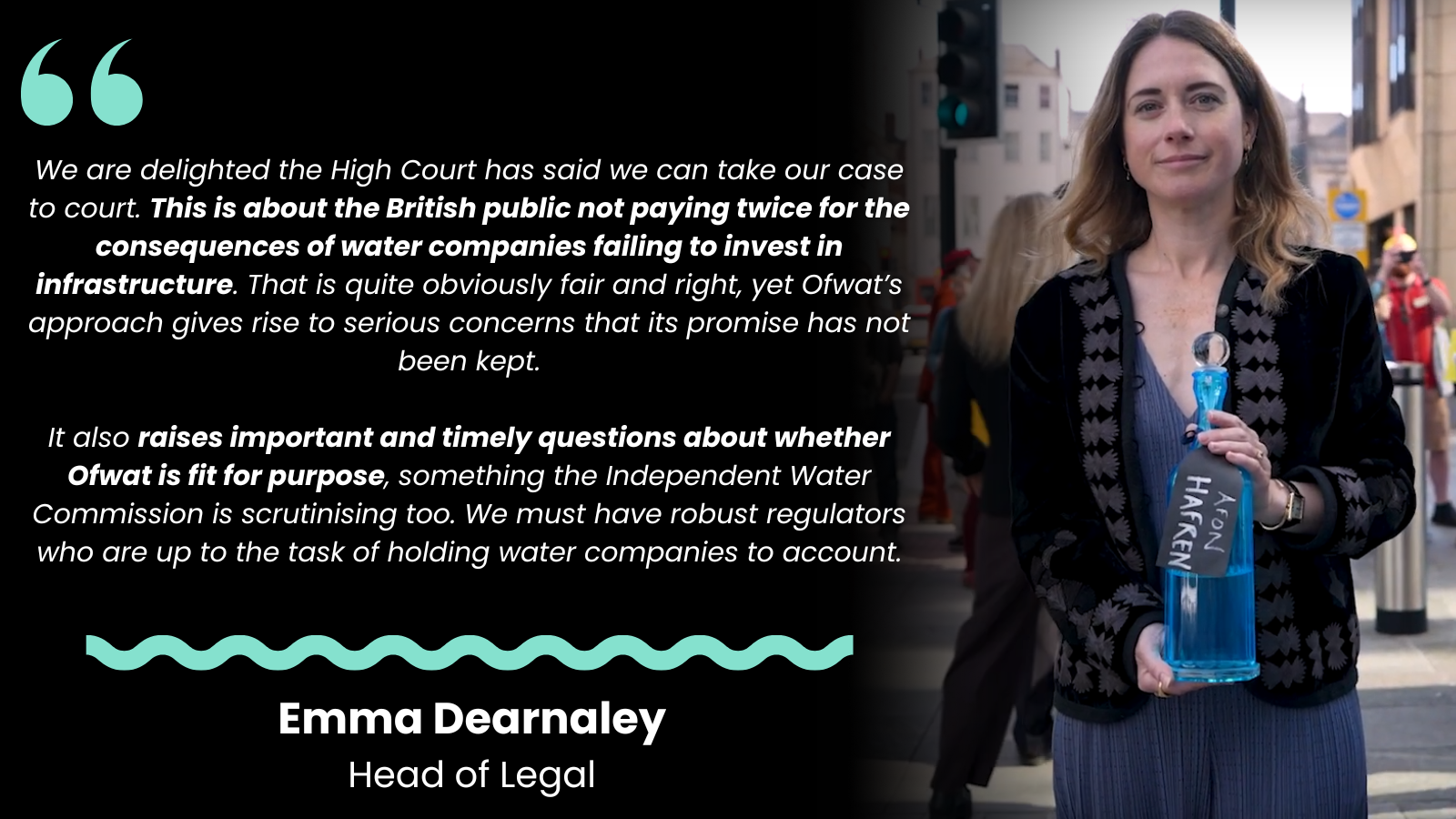
Our Head of Legal, Emma Dearnaley, said:

“It is fundamental that the public should not be made to pay twice for water companies’ past failures to invest in improvements to stop sewage pollution. But River Action is concerned that Ofwat’s approach means customers could be paying again. Meanwhile, degraded infrastructure keeps spewing pollution into rivers and lakes across the country that should have been clean decades ago. The regulator must ensure that the billions it approves results in legal compliance by water companies and that customers are charged fairly from now on. We cannot fix the sewage crisis or restore public trust until we have regulation that delivers for billpayers and the environment. ”


Legal grounds: flawed approach, weak enforcement


Represented by law firm Leigh Day, River Action will argue that:

Ground 1: Ofwat’s approach to implementing its own “not paying twice” policy was unlawful.

Ground 2: Ofwat ‘clawback’ mechanism to recover funds if water companies misuse customer money is flawed and incomplete.

Leigh Day partner Ricardo Gama, who represents River Action, said:

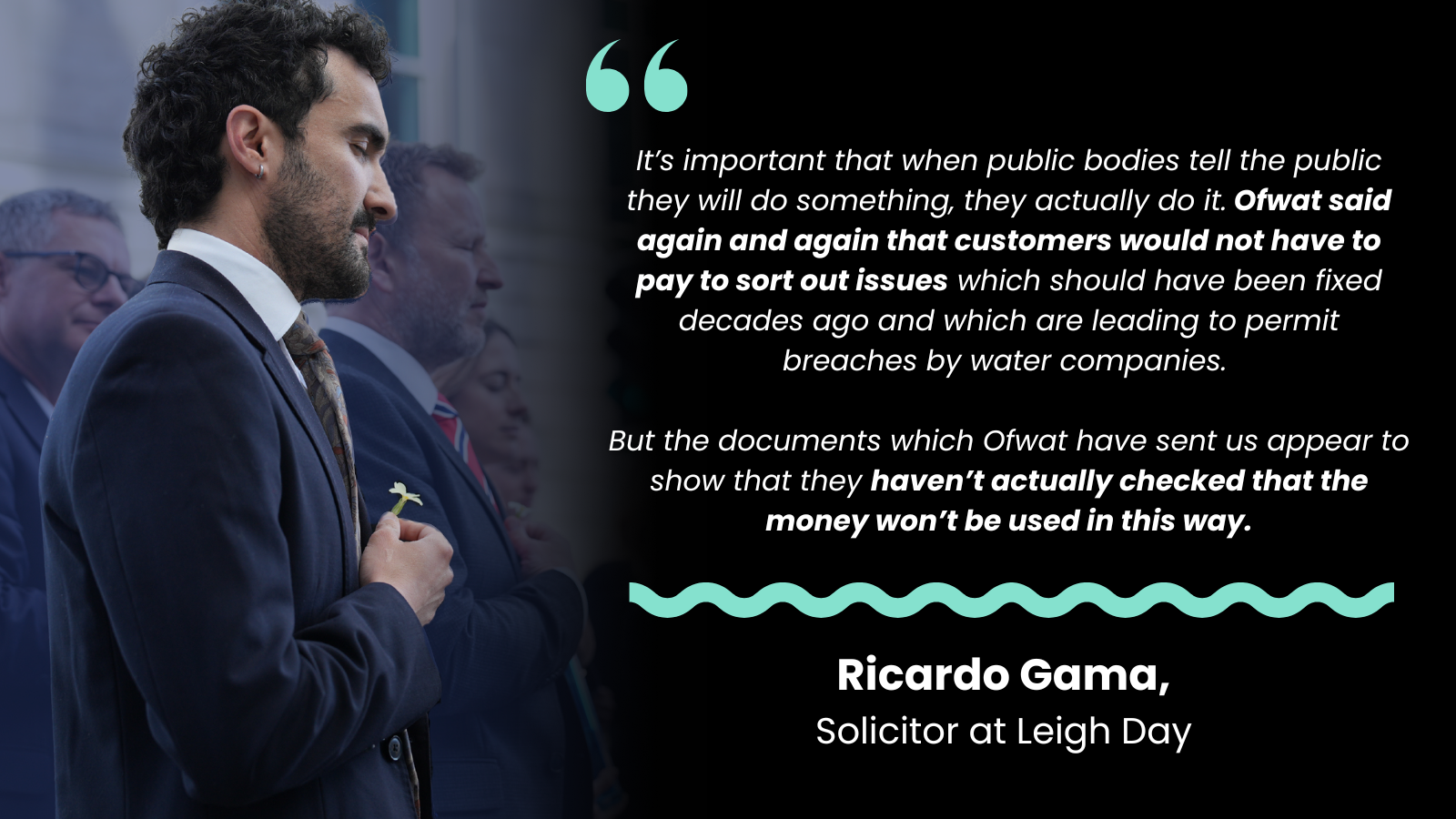
“Our client believes that this case shows that Ofwat has failed to make sure that water bills are used for infrastructure upgrades. River Action will argue that the money that could and should have been used to make essential infrastructure improvements is now gone, and customers are being asked to foot the bill for those improvements a second time over.”


A case with national implications


Although the legal challenge focuses on the PR24 determination for United Utilities and the Windermere schemes, we believe the outcome has national significance. The case aims to expose systemic failures in how Ofwat oversees compliance across the entire water industry and how it routinely signs off funding that could allow water companies to use customers’ money to rectify their own past non-compliance.


Windermere as a case study for a national problem


Lake Windermere, the “jewel in the crown” of the Lake District, has become a symbol of the crisis in England’s waterways. Despite being a designated protected site, monitoring data shows thousands of hours of sewage discharges every year from nearby treatment works and pumping stations.

Our case uses Windermere as a case study to illustrate a national problem. If such failures can happen at one of the country’s most iconic lakes, the charity argues, they are likely happening across the network of water and sewerage systems in England and Wales. Our concern with Ofwat’s approach to implementing its own ‘not paying twice’ policy extends across all of the 4,000 schemes it has approved across England and Wales.


Beyond the courtroom: a call for regulatory reform


Our legal challenge is part of its broader campaign to reform how water regulation works in the UK. We argue that Ofwat, as currently structured, has become too close to the companies it regulates and too distant from the public interest it is meant to serve.

Since the case was filed, the Independent Water Commission has also raised many of our concerns, calling for a major overhaul of the regulation of water services in England and Wales with a new single integrated regulator replacing the current fragmented system (including Ofwat) and with long-term infrastructure investment and asset health being central to making the system fit for the future.

Crucially, the outcome of this case should have profound consequences for PR29, the next five-year regulatory review.  PR29 must not repeat the same failures of PR24. A reformed, well-resourced and robust regulator – with Ofwat’s current structure and functions expected to be abolished and included in the new regulator following the Commission’s recommendations – must ensure full environmental compliance by water companies before customers are asked to pay.


Notes to editors

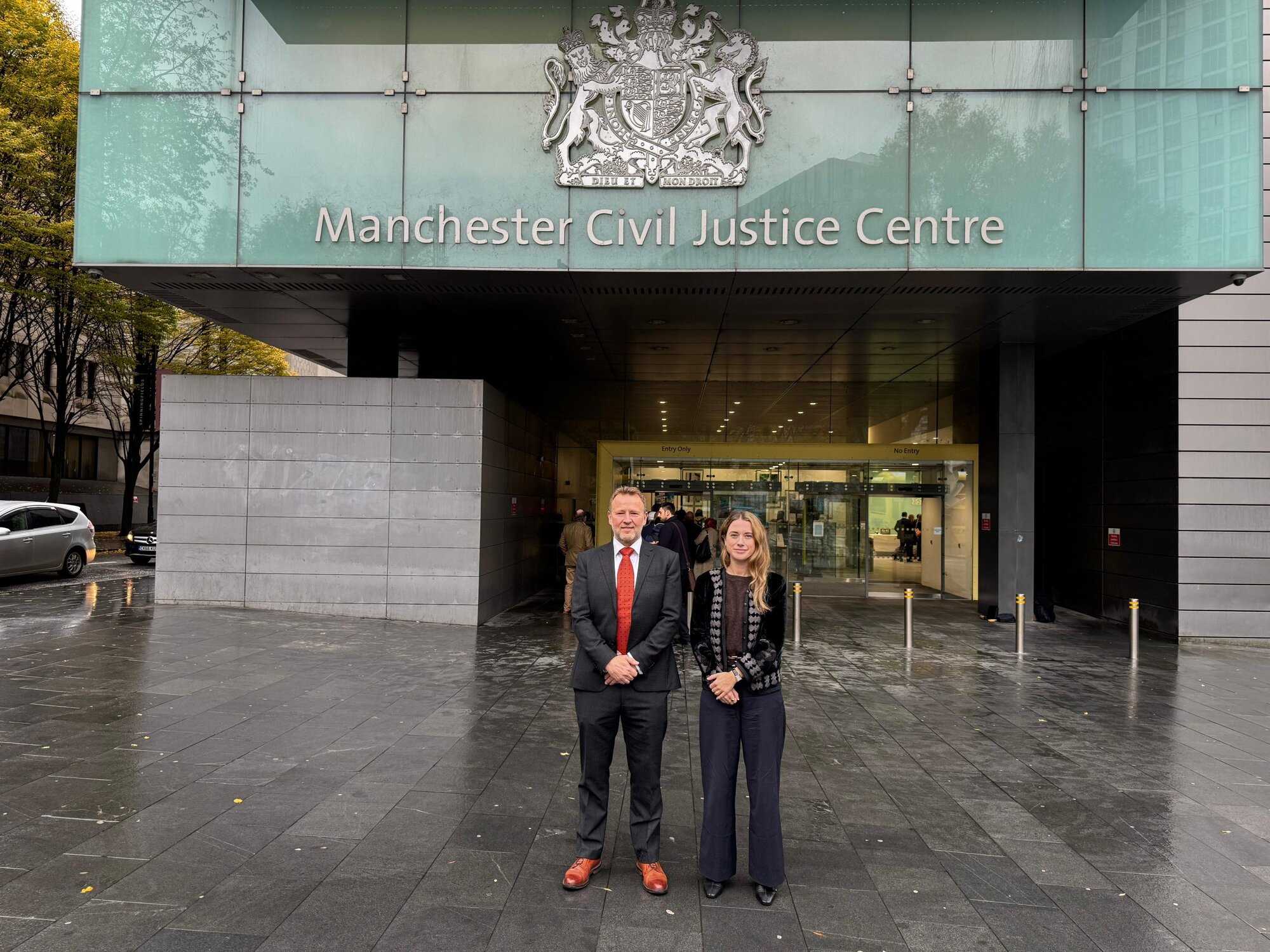
The hearing takes place at Manchester Civil Justice Centre on November 4th & 5th.
River Action is represented by law firm, Leigh Day, and barristers David Wolfe KC and Nicholas Ostrowski.

The Water Commission’s Final Report: Why It Falls Short – And What Must Come Next

Download PDF
By Amy Fairman, Head of Campaigns

At the end of July, the Independent Water Commission released it’s final report on the state of our water industry with recommendations on how the industry could be fixed. River Action, alongside Surfers Against Sewage, has analysed the recommendations against our five core principles for real reform.

Our conclusion? While the Commission makes some useful noises about reform, it ultimately ducks the bold changes needed to end sewage pollution and protect people and nature.

Here’s how the Commission performed when measured against our principles – and why government must now go much further with its upcoming White Paper.


1. Operating for Public Benefit

The Commission’s approach accepts the profit-driven privatised model of water companies as a given. Instead of rethinking this broken system, it focuses primarily on tighter regulation.

This is not enough. Decades of evidence show that shareholder-first models drain money out of the system while rivers fill with sewage. The Commission ignored credible international evidence that public benefit ownership models – like those in much of Europe – deliver lower bills, more investment, and cleaner rivers.

Without a fundamental redesign of ownership, governance, and financing, alongside regulatory reform the crisis will continue.

2. Democratic Decision-Making

The Commission’s proposal for Regional Water Authorities is a step forward, hinting at more democratic oversight. But as drafted, these bodies risk being toothless talking shops.
Real reform requires municipal-level oversight, with local authorities, communities, and environmental groups holding real power over how water companies invest, operate, and deliver. Without this, decisions will remain in the hands of profit-driven boards.

3. Protecting Public and Environmental Health

The Commission acknowledges sewage pollution is a major public health crisis – but stops short of the urgent action needed.

Taskforces and reviews won’t protect the thousands of people falling ill after using polluted rivers and seas. We need immediate legal duties for all water companies, regulators, and government to protect public and environmental health, backed by stronger permits and updated Bathing Water Regulations that safeguard everyone, year-round, from emerging pollutants like ‘forever chemicals’ and microplastics.

4. Tough, Independent Regulators 

The Commission rightly diagnoses regulatory failure. But renaming regulators without changing their powers, duties, and resources will not fix the problem.

We need a strong, independent regulator with a clear duty to protect public and environmental health – not water company profits. And where companies fail, government must use the Special Administration Regime to reset them around public benefit principles, starting with Thames Water.

5. Transparency

The Commission calls for more monitoring – which we welcome – but still clings to the discredited model of operator self-monitoring, where water companies mark their own homework.

That system has failed. Independent monitoring, citizen science, and full real-time transparency are the only way forward. People deserve to know what’s happening in their rivers and seas.


The Bottom Line

The Water Commission’s report was a once-in-a-generation opportunity to reset a failing system. Instead, it tinkers at the edges, leaving the profit-driven model intact and communities exposed to sewage, debt, and declining water quality.

Government must now go further. The upcoming White Paper must:

  • Restructure water companies to deliver public benefit, not private profit.
  • Embed democratic oversight at local and regional levels.
  • Put public and environmental health at the heart of water law and regulation.
  • Create a tough, well-funded regulator with the power to act.
  • End operator self-monitoring and deliver full transparency.

Anything less will leave us trapped in the cycle of pollution, public anger, and political failure.

You can read our full indepth analysis HERE.

River Action granted permission to proceed with legal challenge against Ofwat 

Download PDF

Ofwat has forced customers to pay twice for water industry failures – and we are calling for urgent regulatory reform

We are taking water regulator Ofwat to a full court hearing, to challenge the approach Ofwat took when it set the price that water companies like United Utilities can charge their customers.

Ofwat’s approach was unlawful and, as a result of regulatory failings, the financial burden of water industry infrastructure neglect has been pushed onto customers – rather than those responsible.

The case is proceeding amid intensified calls for an overhaul of Ofwat, with growing scrutiny from the Independent Water Commission, led by Sir Jon Cunliffe, into whether the regulator is fit for purpose. We are calling for a reform of the regulator and, in particular, for Ofwat to stop water companies passing the costs of failures on to the public.


Water bill hikes – with no guarantees for the future

At the heart of the case is Ofwat’s 2024 Price Review (PR24), which approved above-inflation water bill increases, including an average annual rise of £123 per household, without guaranteeing the money will be spent on new infrastructure rather than plugging the gaps left by decades of underinvestment.

The legal challenge follows investigations by campaigners Matt Staniek and Windrush Against Sewage Pollution (WASP), which exposed chronic sewage pollution in the Lake Windermere area and regulatory failings around PR24.

While the claim focuses on the PR24 determination for United Utilities in relation to water works in and around Lake Windermere, River Action thinks it exposes fundamental failures in Ofwat’s approach – with national implications.

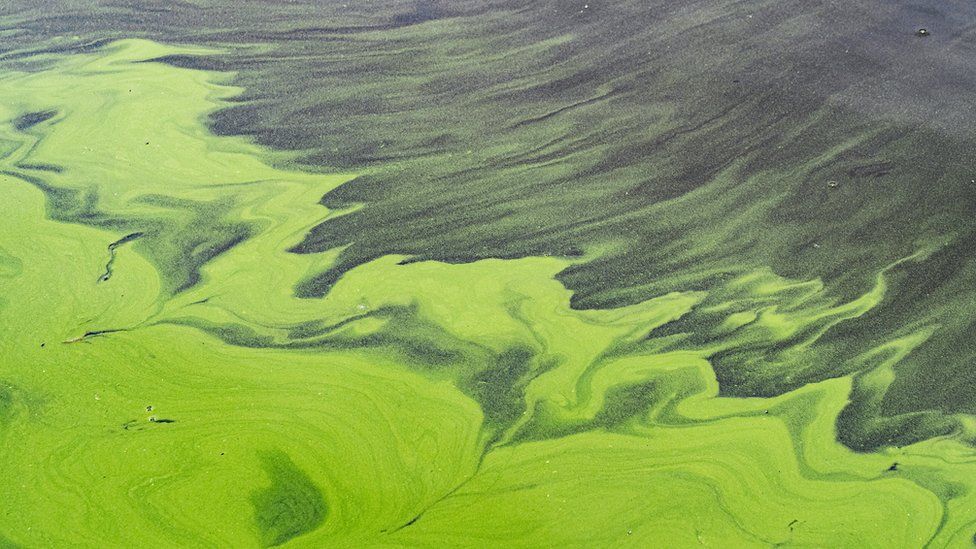
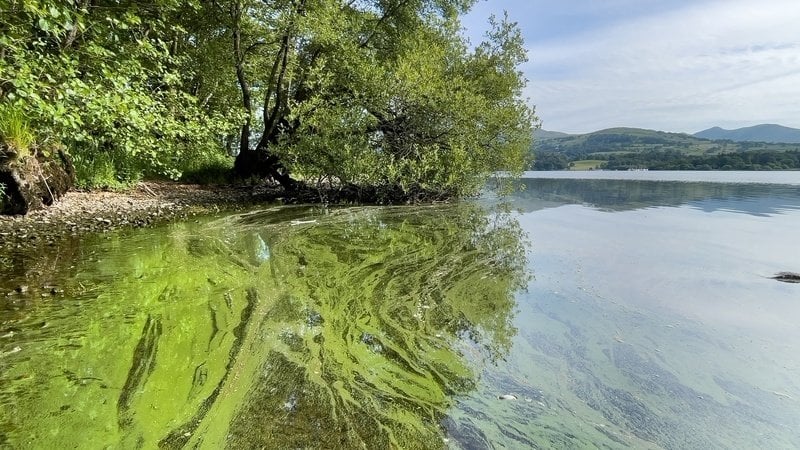
Lake Windmere, Algea blooms | Matt Staniek ©

Customers are being forced to pay twice

The regulator’s decision allows water companies, such as United Utilities, to charge customers twice: first for water bills that should have covered infrastructure maintenance and then again through new hikes aimed at fixing the same problems.

In August 2024, United Utilities was granted “enhanced funding” to upgrade sewage treatment works around Windermere. This approval came despite evidence submitted to Ofwat showing over 6,000 hours of raw sewage discharges in the lake in a single year. Ofwat ignored this data in favour of hydraulic simulation modelling, which fails to reflect on-the-ground conditions.


Legal grounds: flawed modelling, weak enforcement

Permission has been granted for all of our three grounds. Represented by law firm Leigh Day, we will argue that:

  • Ground 1: Ofwat approach to its own “not paying twice” policy was unlawful because it relied on theoretical hydraulic simulation modelling instead of the reality on the ground as seen in evidence provided to Ofwat.
  • Ground 2: Ofwat lacks a meaningful clawback mechanism if water companies misuse funds.
  • Ground 3: Ofwat failed to conduct legally adequate investigations into whether its approach is adequate.

A broken system that needs reform

River Action’s Head of Legal Emma Dearnaley said,

Ricardo Gama, partner at Leigh Day, added:

Clean water in jeopardy: DEFRA cuts would sink Labour’s rivers, seas and lakes commitments

Download PDF

Ahead of the Government’s Spending Review, many of the UK’s most respected environmental organisations and campaigners, including the RSPB, GMB Union, The Wildlife Trusts, Good Law Project, Keep Britain Tidy, Surfers Against Sewage, WWF-UK, Wildlife and Countryside Link, British Rowing, The Rivers Trust, Hugh Fearnley-Whittingstall, Chris Packham, Robert Plant, Jim Murray, Liz Bonnin, Robert Macfarlane, and Imogen Grant, have joined forces demanding the Government increase funding to DEFRA and fully resource the regulators tasked with cleaning up Britain’s rivers, lakes, and seas.

In a letter sent to Prime Minister Sir Keir Starmer and Chancellor Rachel Reeves, the group, coordinated by River Action and in the wake of the March for Clean Water in November 2024, warns that Labour’s credibility on environmental protection is on the line. The letter follows widespread concern that any cuts to DEFRA’s budget in the Spending Review will severely undermine the Government’s ability to deliver on its clean water promises, made central to last summer’s general election campaign.

While the group acknowledges the introduction of the Water Special Measures Bill and the establishment of the Independent Water Commission led by Sir Jon Cunliffe, whose interim report was published on Tuesday this week, it stresses that without urgent and sufficient funding, these efforts risk being little more than symbolic.

The signatory organisations – including some of the UK’s largest environmental charities – represent millions of people across the country. Among them are groups that mobilised the 15,000-strong March for Clean Water in November 2024 – the largest-ever peaceful protest for clean water in British history.


 Key Facts:

  • Only 14% of rivers in England meet good ecological status.
  • In 2024, 3.6 million hours of untreated sewage was discharged into waterways across England and Wales.
  • Farm inspections remain so infrequent that each farm can expect to be checked once every 25 years.
  • Almost 50% of farms inspected in the last two years were non-compliant with environmental rules – but only 22% faced any form of enforcement.
  • The Environment Agency’s funding has been cut by 50% over the last decade, hollowing out its ability to monitor and prosecute polluters.
  • Water companies have racked up £64.4 billion in debt since privatisation and continue to pay out dividends while infrastructure fails.

The Coalition’s Core Asks:

  1. Fund the regulators – Restore and increase budgets for DEFRA, the Environment Agency, Ofwat and Natural England so they can enforce environmental law and hold polluters to account.
  2. Support nature-friendly farming – Expand and protect funding for the Environmental Land Management Schemes (ELMS) and Sustainable Farming Incentive (SFI) to enable farmers to play their part in river recovery.

Voices from Across the UK:

Interim Water Review falls short of real reform

Download PDF

River Action, alongside Surfers Against Sewage have responded to the publication of the Independent Water Commission’s interim report, welcoming signs that long-standing failures are finally being recognised and the regulators need a major overhaul – but warning that the report stops well short of real reform.

Despite a 15,000-strong March for Clean Water in London last year and surging public anger, the interim review still falls short of the Government’s manifesto commitments and speaks more about attracting investors than cleaning up pollution and serving the public.

Crucially, this report acts more as a progress report which tinkers at the edges of the problem – not the bold systemic action plan needed to end the crisis. While it contains some welcome analysis on regulatory failure, it offers few concrete solutions and avoids many of the most difficult but necessary decisions. The final report must give senior Labour figures, including Environment Secretary Steve Reed, the political capital needed to show this government is serious about fixing the water industry and cleaning up England and Wales’s polluted rivers and seas.


CEO of River Action James Wallace said, “This interim report signals some progress on regulation, but it reads more like a sales pitch to international investors and overpaid CEOs than the urgent restructuring of corrupted water companies. We ask the Commission to learn from other countries how to ensure water companies are owned, financed and operated for public benefit.

“The Government has a clear mandate to clean up our polluted waterways and deliver on its election promises. That means getting tough on polluters, using the full force of the law, reforming regulation, and ending the era of failed privatisation by prioritising people and nature over profit – not kicking the problem further downstream.

“And in the meantime, the Government shouldn’t wait: our biggest polluter Thames Water should be put in a Special Administration Regime to send a regulatory shockwave across the industry. Our water is our nation’s birth right and is not for private sale.”


CEO of Surfers Against Sewage Giles Bristow said: “The criminal behaviour, chronic lack of investment and woeful mismanagement which has led to sewage filled seas is a direct result of our profit driven system. This interim report begins to recognise this, but as yet does not spell out the need to end pollution for profit.

“The commission’s final recommendations must reshape the water industry to put public health and the environment first. Until we have this, we will continue to swim and surf in the deluge of sewage that pours into our waters whilst shareholders continue to cream of profits. The commission must make concrete recommendations to end pollution for profit otherwise it risks becoming part of the problem, not the solution.”

“The public will not stand for tinkering around the edges and the MPs that represent these angry communities know this.  We will continue to fight until we see the transformational change that is needed to end sewage pollution once and for all.”

River Action and SAS welcome the report’s recognition of:

  • Government failure to plan for long-term sewage treatment and drinking water needs
  • Weak, reactive regulation from Ofwat which allowed water companies to pile on debt and reward pollution with dividends and bonuses
  • An underfunded Environment Agency unable to monitor pollution and enforce environmental law
  • Water companies prioritising profits over people and planet, resulting in outdated infrastructure and pollution
  • Water companies poor environmental performance driven by profit hungry short term shareholders

We also support the call for stronger local and regional sewage and water planning, closer regulatory oversight of water companies, and long-term low-risk, low-return infrastructure investment.

However, the final report must go beyond diagnosis and deliver a clear plan for action. It should:

  • Restructure water companies to operate for the public good, not private profit. Where a company is failing, the Government must use powers like Special Administration Regime to intervene
  • Protect public and environmental health by securing benign sources of investment and linking performance with returns
  • Democratise decision-making with customers, environmentalists and local government balancing interests on water company boards
  • Strengthen independent regulators, cash-strapped by years of under-funding leaving them unable to prosecute polluters at scale
  • Mandate public oversight of local and regional water company planning, spending and performance, and integrate with a national urgent action plan

Next week’s Spending Review will be the first real test of whether the Government is serious. Without proper funding for enforcement agencies and the power to prosecute environmental crime, any reform risks being cosmetic.

We urge the final report to reflect Labour’s manifesto commitment to bring failing water companies into order and clean-up the mess from 15 years of privatised pollution.

“We only have one chance to get it right. The public mandate for change is overwhelming and so is the urgency. What comes next must be decisive, enforceable, and in the public interest. We urge Sir Jon Cunliffe to give us more, much more. Nothing short of a systemic overhaul of how water companies are owned, funded, operated and regulated will do.” – James Wallace, River Action CEO

River Action Launches Legal Challenge Against Ofwat Over Water Bill Hikes

Download PDF

River Action has filed a landmark legal challenge against Ofwat, accusing the regulator of unlawfully allowing water companies to pass the cost of their own failures onto customers. The case comes as water bills rise by an average of £123 a year, forcing households to pay for decades of underinvestment by the water industry.

The challenge, filed with the support of Leigh Day law firm, targets Ofwat’s Price Review 2024 (PR24), which granted enhanced funding to water companies like United Utilities without sufficient safeguards to ensure the money is spent on new water and sewage projects. Instead, River Action warns that customers will be left footing the bill for past infrastructure neglect, paying twice for the same failing systems.

Lake Windmere, Algea blooms | Matt Staniek ©

Paying Twice for Polluted Water?

The legal action stems from investigations by environmental campaigners Matt Staniek and Windrush Against Sewage Pollution (WASP), which exposed severe regulatory failings.

In August 2024, United Utilities requested extra funding to upgrade treatment works and pumping stations in the Windermere area, following 6,000 hours of raw sewage discharges into the lake that year alone. Ofwat approved the request under PR24, but River Action argues that the regulator:

  • Relied on hydraulic simulation modelling rather than real-world pollution data, which failed to reflect the true environmental damage.
  • Ignored key evidence of widespread sewage discharges when assessing funding needs.
  • Lacked a clear mechanism to regain funds if companies misused the additional investment.

As a result, customers could be forced to pay twice: first through water bills that should have covered infrastructure maintenance, and again through new hikes aimed at fixing the same problems.

Lake Windermere in cleaner times | Image by Pete from Pixabay

A Call for Reform

River Action is demanding urgent regulatory reform to stop water companies from passing the cost of their mismanagement onto the public. The financial burden of repairing the UK’s crumbling water infrastructure must fall on the companies and their investors, not customers.

Emma Dearnalely, Head of Legal at River Action, said:


Holding Ofwat Accountable

River Action’s legal challenge also raises broader concerns about Ofwat’s oversight and accountability, questioning whether the regulator has the necessary powers or will to prevent water companies from profiting at the public’s expense.

Ricardo Gama, solicitor at Leigh Day, commented:


Fighting for Clean Water

River Action’s legal challenge is part of its broader mission to hold water companies and regulators accountable. The group continues to campaign for stronger enforcement, greater transparency, and a financial and governance model that prioritises people and the environment over profits.

River Action to sue Ofwat over water bill rises

Download PDF


WHAT IS OUR LEGAL CHALLENGE AGAINST OFWAT?

Our legal challenge focuses on funding allocated for wastewater treatment works and pumping stations by United Utilities in and around Lake Windermere.

The case is being taken after detailed investigations were carried out by Save Windermere and Windrush Against Sewage Pollution, which revealed significant and systemic flaws in Ofwat’s approach.

We’re taking legal action to compel Ofwat to reassess its PR24 determination for United Utilities in relation to Windermere and to encourage Ofwat to reassess other water company schemes wherever there are concerns that customers are unfairly covering the cost of past failures.


WINDERMERE: A DAMNING EXAMPLE OF REGULATORY FAILURE

United Utilities, currently under fire after evidence obtained by Save Windermere, revealed 6,000 hours of raw sewage was discharged into Windermere last year, and is a case in point. We have commenced legal action claiming Ofwat has allowed the company to divert funds meant for future projects to deal with past failures—rather than investing in vital improvements to wastewater treatment and pumping stations around the lake.


A SYSTEM RIGGED AGAINST THE PUBLIC

We believe Ofwat has acted unlawfully by approving these funds without ensuring they are spent on genuine improvements to essential infrastructure. Instead, this so-called ‘enhanced funding’ is being allowed to be used to cover up years of failure.

Effectively, Ofwat has signed off on a broken system where customers are being charged again for services they have already funded—while water companies continue to mark their own homework and pollute for profit. This scandal must be addressed. The cost of fixing the UK’s crumbling water infrastructure should fall on the companies and their investors—not on the British public.

We are calling for immediate regulatory action to ensure water companies stop passing the cost of failure onto customers—and start taking responsibility for the environmental damage they have caused.

Privacy Overview

This website uses cookies so that we can provide you with the best user experience possible. Cookie information is stored in your browser and performs functions such as recognising you when you return to our website and helping our team to understand which sections of the website you find most interesting and useful.