Cluck off! River campaigners take Shropshire Council to High Court over chicken factory farm chaos

Download PDF

River campaigners are in the High Court today, taking on Shropshire Council to stop the expansion of an industrial-scale poultry unit in the River Severn catchment. The legal challenge targets a proposed 200,000-bird facility near Shrewsbury—part of what River Action describes as a “reckless and unsustainable” surge in intensive factory farming across the region.

This case has the potential to set an important precedent for local authorities across the UK, ensuring cumulative environmental impacts (i.e. the combination of multiple activities having a significant impact on the environment over time – ecological death by a thousand poultry units) of new agricultural developments on protected sites are properly assessed. Campaigners hope that this case will raise the bar on what authorities will need to consider before this and future developments are approved, stopping unlawful and harmful intensive farming developments in their tracks.


The judicial review, being heard at Cardiff Civil Justice Centre, is supported and funded by environmental charity River Action and brought by River Action’s advisory board member and local campaigner Dr Alison Caffyn.

Dr Caffyn said:


Peaceful protest outside of the Cardiff Civil Justice Centre from 8:45AM
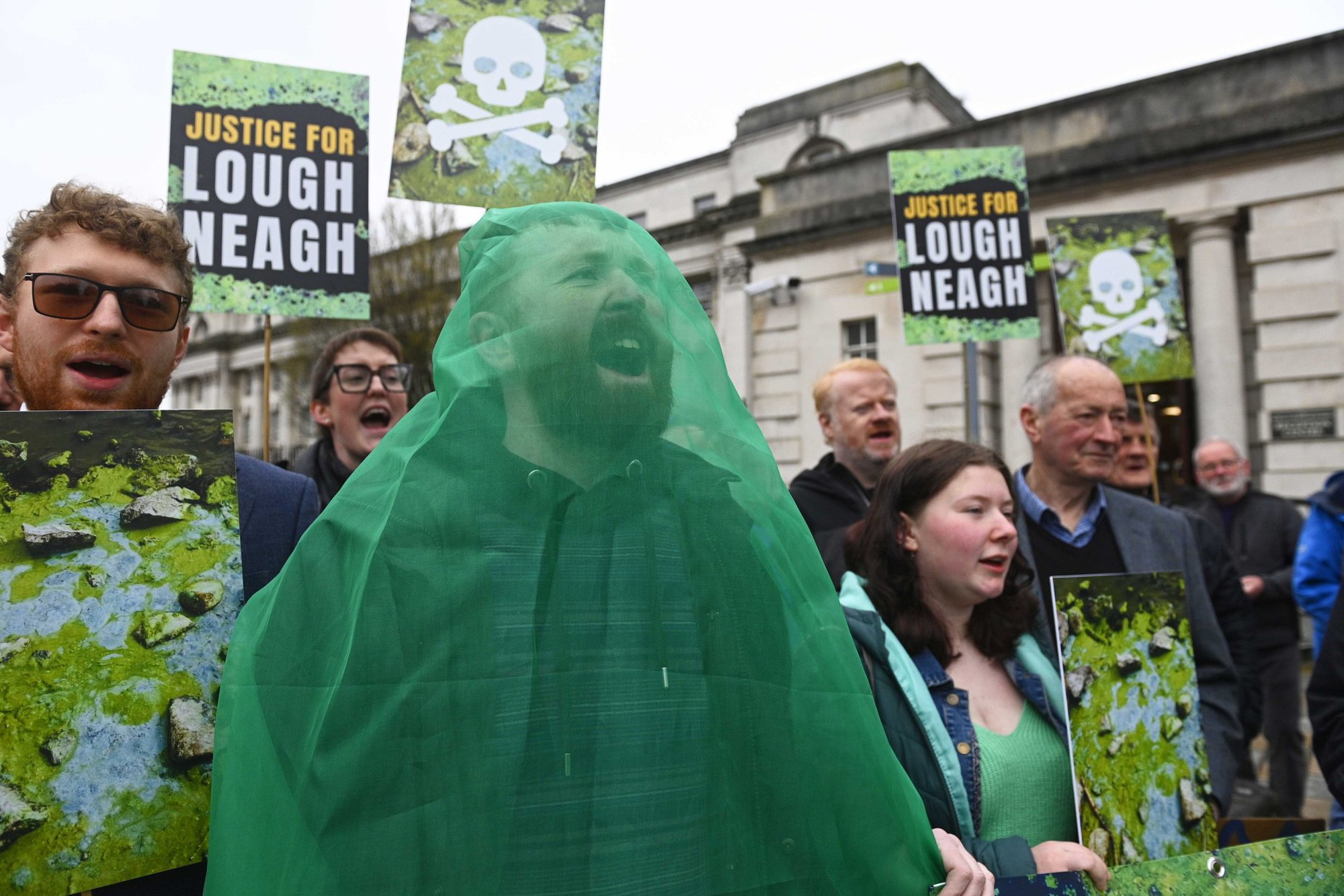
To coincide with the hearing, campaigners gathered outside the court in a peaceful protest, joined by the Goddess of the Wye—a striking 10-foot puppet symbolising the campaign to save Britain’s rivers from pollution. Campaigners were wearing chicken masks, held ‘choked by chickens’ placards and a banner that reads ‘Factory farms are killing our rivers’. The spectacle highlighted the ecological crisis unfolding across the country’s river catchments, which they say is due to the uncontrolled growth of industrial-scale farming.


Legal case
This case is challenging the lawfulness of Shropshire Council’s grant of planning permission for another intensive poultry unit in Shropshire.

The High Court will today consider the following arguments:

  • Ground 1: The council failed to fully and lawfully assess the environmental impacts of the development and, in particular, the effects of spreading manure on land.
  • Ground 2: The council acted unlawfully by imposing a condition which failed to prevent the spreading of manure on land and so failed to address concerns that the council had itself raised about the environmental effects of the development.
  • Grounds 3 and 4: The council failed to carry out a lawful assessment before granting the permission (i) by determining the significance of some of development’s impacts by reference to thresholds, (ii) by failing to carry out a lawful in-combination (cumulative) assessment of those impacts, and (iii) by assuming incorrectly that a key form of mitigation in the form of air scrubbers would be continually operational.

Campaigners are pushing for the council’s decision to be found unlawful and quashed.


Charles Watson, Chair and Founder of River Action, said:
“Like some ghastly car crash in slow motion we’re watching the River Severn suffer the same fate as the Wye. Shropshire Council is simply rubber-stamping massive chicken factory farms without considering the potentially horrific cumulative environmental impact of stacking these industrial units up against each other. These farms are appearing  all over the river’s catchment like a septic rash, with no credible plan to sustainably manage their huge toxic emissions of chicken manure. If we don’t stop them now, it’ll be too late for yet another iconic British river.”

Ricardo Gama, solicitor at Leigh Day, the firm representing Dr Caffyn, said:
“This is an important case in establishing the approach which planning authorities need to take when determining planning applications for intensive agricultural units. Our client believes that the failure by authorities to properly look at the cumulative impacts of the industrial levels of manure and other waste which these developments produce has led to the Wye and Severn river catchments being inundated with waste.”


The tide is turning on megafarms: holding livestock polluters to account

This hearing follows last month’s landmark judgment in National Farmers Union v Herefordshire County Council, with the High Court declaring farming manure as waste with huge implications for handling manure on farms everywhere – a major win in the fight against harmful agricultural practices.

It also follows the rejection of a megafarm in Methwold, Norfolk earlier this month due to environmental concerns.

These decisions should lead to tighter regulation, better planning and improvements to river health across the country. Today’s case is the next important step in the fight to clean up the UK’s severely polluted rivers.

Megafarms, Meet the Rule of Law: Why Methwold Matters

Download PDF
By: Lily O’Mara – Climate Justice Fellow and Ruth Westcott – Campaign manager. Both from Sustain, the alliance for better food and farming.

Finally holding livestock corporations to account

The landmark rejection of the Methwold Megafarm means livestock corporations must come clean about their climate impacts. With the recent victory for Herefordshire Council and River Action’s challenge of another chicken megafarm in Shropshire coming up, is legal action finally meaning we can hold intensive livestock corporations to account?

Cheers erupted in King’s Lynn town hall on 3rd April as it was announced that the council had unanimously said no to one of the largest megafarms in Europe. The community have been fighting against the plans for nearly three years, and the planning team were unequivocal in their recommendation to Council: Reject the application or risk legal action.

When Sustain first looked into the plans in 2023, it was clear there was no assessment of the greenhouse gas emissions – a huge omission. This concern was shared with the Council. Emissions from these units don’t come just from the animals themselves, but from manure, feed, transport, processing, and everything that happens after the animals leave the site.

The application wasn’t unusual, others for intensive livestock units (ILUs) have gone through the system without serious consideration of their climate impact. Local planning authorities (normally local councils) make planning decisions based on the environmental information presented to them, and that has routinely excluded greenhouse gas emissions. Councils have essentially been left in the dark on one of the most significant impacts of these facilities. In the Methwold case, the developer was alerted to the need to include a greenhouse gas assessment, and they still refused.

We argued, alongside local residents, other civil society organisations and lawyers, that this wasn’t just an oversight, but a legal failure. The planning officers agreed. They recommended the application be refused, saying councillors couldn’t make a lawful decision without understanding the likely climate impacts. The precedent they drew on was established in the Finch case back in June 2024, in which the Supreme Court ruled that a decision to build an oil field was unlawful because it failed to consider the direct and indirect greenhouse gas emissions.


It sets a precedent in planning

This ruling is huge. It sets a precedent in planning: You can’t build a megafarm in the UK without showing and considering how it would affect the climate.

The opportunities for councils from this ruling are huge. 75% of the councils in the UK have declared a climate emergency – an amazing sign of leadership. There is also local and national policy encouraging councils to make planning decisions on climate grounds. The National Planning Policy Framework for England says that planning decisions ‘should help to: shape places in ways that contribute to radical reductions in greenhouse gas emissions’ (para 161) and that ‘The need to mitigate and adapt to climate change should also be considered in preparing and assessing planning applications, taking into account the full range of potential climate change impacts’ (para 163). Add to this that the UK’s latest carbon budget says we need to reduce livestock numbers by 39% to reach climate targets.

Intensive livestock units have colossal climate impacts. We estimated that the Methwold Megafarm alone would increase the borough’s total emissions by 6%. The bulk of these are ‘scope 3’ emissions which are indirect impacts like feed production, transport and processing. Avara Foods, one of the largest chicken agribusinesses in the UK, estimates their scope 3 accounts for 95% of total emissions. For pork giant Cranswick, it’s even higher – 96% – according to FAIRR.

As part of objecting to the Methwold Megafarm, we were also able to talk about the incredibly timely precedent set in the case brought by the National Farmers Union against Herefordshire County Council which clarified that manure from industrial agriculture should be handled as industrial waste. Referencing this case, planners in the Methwold case judged that the waste plan wasn’t comprehensive enough. They said; “The lawful application of pig slurry, pig manure and poultry litter to land requires that where they are used as a soil fertiliser to the benefit of crops, the land to which the effluent is to be applied is identified in advance and the effluent not to be ‘overspread’ based on the needs of that land.”

Looking ahead, the legal challenges are continuing. River Action has a hugely exciting judicial review hearing coming up, which will consider whether councils are required by law to take into account the pollution already being caused by livestock units in an area when deciding whether new units are permissible, particularly in already polluted catchments. The hearing is on 30th April and 1st May in Cardiff. It is hoped that this will further clarify the scrutiny that can and should be in place before ILUs are given the green light.


What can councils do now?

The two groundbreaking rulings from the last couple of months have rightly empowered councils and communities. But what’s next? Well, these aren’t unique cases and councils should look at applications that are in train. These rulings say that to be lawful they must contain:

  • A comprehensive greenhouse gas impact assessment, including direct and indirect emissions, so that climate change can be taken into account
  • If you are in an area in which river or soil pollution is an issue, the manure and slurry plan must identify where and how waste will be disposed of, demonstrating that there is a need, and won’t be overspread
  • Should the case being brought by River Action against Shropshire Council set a precedent, the cumulative environmental impact of developments must be properly considered.

To make sure applications are compliant when submitted, guidance on the above should be included in planning policy and guidance, and councils and communities that would like support can get in touch with either of us, ruth[at]sustainweb.org or lily[at]sustainweb.org

The actions of communities and councils to stand up to intensive livestock corporations is inspirational. These legal wins happened because people spoke up and councils listened, and councils recognised that they have power. They came from persistence and strategic planning – both from the community groups involved and NGOs. But we can’t rest on our laurels. If we want to keep this momentum going, campaigners must help by pushing councils to demand proper climate and waste assessments, backing communities resisting new factory farms, and making sure national planning policy reflects these new legal precedents. The tools are there now – what matters is how we use them.


River Action are currently raising funds to finance their legal future legal action. The Big Give are currently matching all donations, so all contributions will go twice as far. You can donate here.

The Water Commission’s Call for Evidence – Everything you need to know

Download PDF
By Henry Shepherd, Community Campaigns Coordinator, River Action

Dirty Water, Rising Bills — Let’s Change That

The privatisation experiment has failed. Our rivers are polluted, our bills are rising, and regulators are missing in action. Now, for the first time in decades, we have a real shot at change – but only if we seize it.

The Independent Water Commission was set up in response to mounting public pressure following campaigning from communities across the nation –  and, of course, the March for Clean Water.

The government has launched a “Call for Evidence” which seeks to gather public views on the current water industry. They want to know what you think about the current state of affairs. Think of it as a public consultation – and your chance to be heard.

If we don’t speak up, the only voices they’ll hear will be the ones profiting from the current mess.


What is the Call for Evidence? 

The Call for Evidence is a set of questions that the Commission is asking the public, NGOs, academics, and, yes – water companies. It’s wide-ranging, covering everything from regulation and pollution to ownership models, finances, and governance. And while there are 70+ questions, you don’t need to answer all of them. We’ve broken them down and created a simple guide to help you respond to the ones that matter most.


Why This Matters

This isn’t just another review. The Commission’s recommendations will be used to shape new legislation, influence government policy, and set the direction of the entire water sector – and they want to know what you think should be done.

So, this is our chance to demand real accountability – and a system that actually works, not one where:

  • Regulators consistently fail to hold polluters to account
  • Water companies are on the brink of financial collapse
  • Household bills are rising to service debt rather than fixing the problem
  • Our precious rivers are dying

We must use this pivotal moment for British rivers and come together to demand a system that prioritises people and the environment – not shareholder returns or corporate bonuses.


What Could This Achieve? 

This is our chance to push for a water system that actually works — one that puts people, nature, and public health first. That means:

  • Giving regulators the funding and teeth they need to hold polluters to account
  • Ending the era of reckless profiteering and corporate bailouts
  • Replacing private ownership with a model that works in the best interest for people and nature with community and municipal oversight

If enough of us speak out, the Commission’s final recommendations could help bring about stronger laws, tougher enforcement, and a real shift away from profit-driven water companies towards models that serve the public good.


Why Your Voice is Important

Water companies will be responding  – no doubt making the case to keep the status quo. We can’t let them be the loudest voices in the room.

Your submission doesn’t have to be long, and you can come back to it at any time. You can share your story as a wild swimmer, part-time angler, or simply someone who just wants clean rivers. Your experience, your passion, and your hopes for the future matter.

We’ve made it easy to respond. Use our no-nonsense guidance to get started.

Let’s show the Commission that the public won’t accept more of the same.


Don’t Miss the Deadline!

Deadline – 23 April

Speak in your own voice – copy-paste answers won’t count

This is our water system – not their cash machine.

Thames Water is Gaslighting the Public – Here’s the Truth

Download PDF
By Henry Shepherd, Community Campaigns Coordinator, River Action


Twisting and turning more than the Thames itself

As the boat race weekend approaches, Thames Water has gone on the offensive – not to clean up the Thames, but to spin the facts and put the public at risk.

Yesterday, we revealed that our 40+ water tests along the Boat Race course over the past month show the Thames would be classified as ‘poor water quality’ according to the Environment Agency regulations, with 29.5% of our samples exceeding safe limits for entering the water. This is despite it being the driest March in over 100 years….if they can’t keep the river clean in these conditions, how can they be trusted?

In a response statement, Thames Water attempted to cite ‘excellent’ water quality results, referencing data from a boat club in Hammersmith.

But here’s what they didn’t tell you.

That testing wasn’t done with Thames Water. The testing was carried out by our friends at Fulham Reach Boat Club and was actually funded by River Action. Thames Water conveniently cherry-picked a subset of this data, and, unbeknownst to them, we funded it!

Additionally, the data they selected came from a single weekly test at only one point along the course (4 tests in total). In contrast, our data, revealed yesterday, consisted of over 40 tests across the entire length of the Boat Race course from 10th March.

In short: Thames Water carefully curated the one stat that suited their PR and presented distorted information, putting public health at risk.

Thames Water simply cannot be trusted to tell the truth about basic water quality risks, and have once again willingly put river users’ health at risk, prioritising misleading headlines rather than fixing pipes.

The 2025 boat race course with River Action test sites

The Kew cover-up 

It gets worse.

On Tuesday, we were alerted to the possibility of a burst sewage pipe near Kew Bridge, with sewage reportedly spilling directly into the river just upstream of the Boat Race finish line.

We immediately called Thames Water’s pollution hotline to enquire about the issue, but were assured there were no problems to report. However, after investigating the site ourselves, we found Thames Water vans and huge sewage tankers stationed on the riverbank at Kew Bridge. After speaking with the crew, they confirmed the incident. At that time, it appeared that sewage was simply entering the river, just a mile upstream of the Boat Race finish line.

Thames Water’s initial denial of the problem highlights their true priorities: managing headlines, not public health. How much sewage has been allowed to flow into the river without the public being informed?

This issue is compounded by a separate sewage pipe even closer to the Boat Race finish line, downstream at Kew Transfer. The monitoring system for that pipe had been offline since January 19th, mysteriously coming back online the day we published our testing results (how convenient?) This means that no one knows how much sewage has been flowing into the river unchecked from that sewage overflow.

When people, including hundreds of junior rowers, and professional boat race crews, rely on this critical information to stay safe, it’s not just unacceptable – it’s dangerous.

Thames Water vans and sewage tankers near Kew Bridge on Tuesday

A failure of infrastructure, regulation, and honesty

With almost no rain recently, this pollution isn’t just a result of outdated infrastructure and unmonitored storm overflows. It reveals a much deeper issue: that even after treatment, final discharged waste water from sewage works is still far from safe. Treated effluent has no legal limit on E. Coli levels, so it frequently contains high levels of dangerous contaminants, including fecal matter and bacteria. The treatment process used by Thames Water, though permitted, falls far short of the standards needed to protect public health and the environment.

The real issue lies in the regulatory framework – unless a waterway has “bathing water status,” is home to a fish farm, or serves as a place of abstraction, there are no legal obligations to ensure that treated sewage is free from harmful substances. That’s why we’re campaigning for sewage treatment plants to be upgraded, better water quality monitoring, and enforceable limits on water quality – something that bathing water status would require.

But even with this, the Tideway Tunnel – which Thames Water touts as the solution – won’t protect us. The Tunnel is designed to manage storm overflows, not the continuous discharge of untreated or poorly treated sewage. It’s a temporary fix for a much deeper, systemic problem, and only reduces downstream pollution, which for half of the Boat Race course is irrelevant. The other half of the course – upstream of Hammersmith – is exposed to all the sewage pollution flowing along the Thames accumulated from the upstream catchment.

It is no surprise that all our tests taken upstream of the Tideway Tunnel show high levels of E.coli. This is the end of the Boat Race course and why we implore the Oxford and Cambridge teams not to throw their cox in the water. It is not safe.

Time for accountability

This isn’t just about rowing. This is about whether people can trust water companies to keep them safe. Thames Water has failed across the board:

  • They haven’t invested in modern monitoring systems.
  • They’ve lobbied for billions in bailouts while paying bonuses to executives.
  • They’ve allowed infrastructure to rot – and lied about it when questioned.

We believe Thames Water has forfeited its social licence to operate. It’s time to put the company into Special Administration, restructure it in the public interest, and end the cycle of pollution-for-profit.

River Action will continue exposing Thames Water’s spin  – not just this week, but every time they attempt to dodge accountability. This is your river, not theirs.

“Don’t Throw the Cox In”: Sir Steve Redgrave & River Action Warn of Failed Water Quality Standards

Download PDF

River Action warns university boat race stretch fails basic water quality standards – Sir Steve Redgrave calls for urgent clean-up

As the iconic Boat Race between Oxford and Cambridge approaches this weekend, river campaigners have warned that water quality for the stretch of the River Thames set to host the event would be classified as ‘poor’ under environmental regulations if it were designated as a ‘bathing water’ site. New testing on the course from River Action raises fresh concerns about water quality, with rowing legend Sir Steve Redgrave backing calls for urgent action to clean up the river.

While wet weather often exacerbates pollution through increased sewage discharges, recent conditions tell a different story. Since River Action’s E.coli testing started on 10th March, there has been just 1 day of rain, yet the river champions found that 29.5% of samples exceeded safe limits for entering the water, almost three times the threshold for bathing waters rated ‘poor’. River Action worked alongside Fluidion and Planet Ocean to do the testing whilst using the Alert One system. Fludion further validated the results.

Campaigners highlight that treated wastewater from sewage treatment plants, which currently face no legal limits on E.coli levels, is a major but overlooked contributor to the pollution of the River Thames.

Our Senior Communities Coordinator, Chloe Peck testing for E-Coli on the River Thames

Paying Twice for Polluted Water?

Revealed: Out-of-service sewage overflow monitor on water used for the Boat Race 

Despite public outrage, the construction of the Tideway Tunnel (which won’t resolve upstream pollution), a £3bn financial bailout plan, and Thames Water executives receiving massive salaries and bonuses, the company has failed to maintain its ageing infrastructure. Regulators have also failed to hold them accountable.

Immediately upstream of the boat race finishline, the monitoring system on the combined sewage overflow pipe at Kew (Kew Transfer) has been offline since 17 January, undermining the legal requirement for all sewage outfalls to be monitored. It is not known how much this pipe may have been discharging sewage into the Thames, near to the boat race finish line.

Campaigners are now demanding that Thames Water be taken back into public hands through Special Administration, branding the failing company a ‘busted flush.’


River Action’s Head of Communities, Erica Popplewell, said:

“The Mayor of London’s vision for clean and healthy rivers is simply a pipe dream without systematic reform of the water industry and its regulators. Right now, if the stretch of the Thames used for the Boat Race were an official bathing site it would be graded poor, the lowest possible rating. The government’s own advice for such water is ‘do not swim.’ So, we strongly suggest that the winning team on Sunday think twice before throwing their cox in the Thames.”

We would also urge all rowers to follow the ‘Guidance for Rowing When Water Quality is Poor’ safety guidelines to mitigate risk.  The Boat Race should be about sporting excellence—not about worrying if you’ll get sick from being dunked – and attracting people to take up water sports as a healthy activity.

“The public demands Thames Water and regulators act now to improve sewage treatment infrastructure. Thames Water has profited from pollution for years whilst the Government have failed to enforce the law. It’s time to refinance the company without burdening bill payers and end pollution-for-profit. The decades-long water industry privatisation experiment has been a disaster. Thames Water should be put into Government hands and operated for public benefit. That process could start tomorrow with the right political will by putting Thames Water into Special Administration and restructuring the company.”

Erica Popplewell at the River Ver last month giving an interview for BBC News on how Thames Water’s sewage releases have impacted the Chalk Stream

Sir Steve Redgrave leads calls from the rowing community for action:

Leading figures, including Sir Steve Redgrave, are demanding urgent intervention to protect river users, including competitors in Sunday’s race.

“It’s a real worry that in 2025, unsafe water quality in the Thames is still a concern, Rowers, river users, and the public deserve better.”

Olympic champion rower Imogen Grant added:

“As rowers, we train on these waters every day, and the health and climate risks are deeply concerning. It’s unacceptable that we have to compete on a river with such an unavoidable threat to health”

Last month, Sir Steve Redgrave handed in a letter to Secretary of State for the Environment, addressing the need for urgent action to address the river’s pollution.

Thames Water dodging accountability

Thames Water, responsible for London’s wastewater, continues to evade responsibility.  Instead of prioritising infrastructure upgrades, the company:

  • Went to the High Court to beg for £3bn to avoid going bust, while rewarding executives with excessive bonuses.
  • Allows unchecked raw sewage discharges, despite mounting public and political pressure.
  • Fails to invest in sustainable solutions, leaving the Thames in environmental freefall.

“Thames Water is a failing company, propped up by creditors while customers pay for a crappy service—literally,” added Erica Popplewell from River Action. “We need urgent reform—this is a scandal.”

With the Water Commission, led by Sir Jon Cunliffe, underway and due to report its recommendations in the summer, campaigners demand an end to the broken privatisation model and a complete regulatory overhaul to stop the destruction of UK rivers. Watch River Action’s water commission themed animated film – ‘Water: A Story of Hope’ – narrated by Deborah Meaden.


Athlete safety at risk

Boat Race organisers are aware of water quality concerns on the Thames, making safety a priority. British Rowing, The Rivers Trust, and River Action are ensuring competitors are informed of risks.

Participants have received Guidance for Rowing When Water Quality is Poor safety guidelines.


Time to act

River Action urges policymakers, regulators, and the public to take immediate action. Thames Water must be held accountable, and tougher regulations enforced to prevent further environmental destruction.

“This isn’t just about rowing—it’s about the future of our rivers and the communities that rely on them,” says Ms Popplewell from River Action. “We cannot let water companies continue to get away with this.”

To help change the future of our waterways, you can make your voice heard by responding to the Water commission’s call to evidence. We’ve provided guidance for each question to help you get started.

River Action Launches Legal Challenge Against Ofwat Over Water Bill Hikes

Download PDF

River Action has filed a landmark legal challenge against Ofwat, accusing the regulator of unlawfully allowing water companies to pass the cost of their own failures onto customers. The case comes as water bills rise by an average of £123 a year, forcing households to pay for decades of underinvestment by the water industry.

The challenge, filed with the support of Leigh Day law firm, targets Ofwat’s Price Review 2024 (PR24), which granted enhanced funding to water companies like United Utilities without sufficient safeguards to ensure the money is spent on new water and sewage projects. Instead, River Action warns that customers will be left footing the bill for past infrastructure neglect, paying twice for the same failing systems.

Lake Windmere, Algea blooms | Matt Staniek ©

Paying Twice for Polluted Water?

The legal action stems from investigations by environmental campaigners Matt Staniek and Windrush Against Sewage Pollution (WASP), which exposed severe regulatory failings.

In August 2024, United Utilities requested extra funding to upgrade treatment works and pumping stations in the Windermere area, following 6,000 hours of raw sewage discharges into the lake that year alone. Ofwat approved the request under PR24, but River Action argues that the regulator:

  • Relied on hydraulic simulation modelling rather than real-world pollution data, which failed to reflect the true environmental damage.
  • Ignored key evidence of widespread sewage discharges when assessing funding needs.
  • Lacked a clear mechanism to regain funds if companies misused the additional investment.

As a result, customers could be forced to pay twice: first through water bills that should have covered infrastructure maintenance, and again through new hikes aimed at fixing the same problems.

Lake Windermere in cleaner times | Image by Pete from Pixabay

A Call for Reform

River Action is demanding urgent regulatory reform to stop water companies from passing the cost of their mismanagement onto the public. The financial burden of repairing the UK’s crumbling water infrastructure must fall on the companies and their investors, not customers.

Emma Dearnalely, Head of Legal at River Action, said:


Holding Ofwat Accountable

River Action’s legal challenge also raises broader concerns about Ofwat’s oversight and accountability, questioning whether the regulator has the necessary powers or will to prevent water companies from profiting at the public’s expense.

Ricardo Gama, solicitor at Leigh Day, commented:


Fighting for Clean Water

River Action’s legal challenge is part of its broader mission to hold water companies and regulators accountable. The group continues to campaign for stronger enforcement, greater transparency, and a financial and governance model that prioritises people and the environment over profits.

BREAKING: Water companies report ‘self-cleaning water’, as rivers fight back

Download PDF

   In an unexpected turn of events, water companies have announced a groundbreaking discovery: self-cleaning water. After decades of grappling with relentless pollution, rivers have decided to take matters into their own currents.

“For years, we’ve been working tirelessly to—well, mostly explain why we can’t stop sewage spills,” said Dr. Flo Waters, Thames Slaughter Chief Innovation Officer. “But now, something unbelievable is happening: our rivers are retaliating.”

Thames strikes back: sewage returned to offender

   Londoners have reported bizarre incidents along the Thames, where sewage is refusing to stay put. “My tap water turned brown mid-sip,” gasped one unfortunate water bill payer. “I don’t even live near the river.”

Other reports include showers mysteriously shutting off when users fail to recycle, toilets flushing in reverse, and entire streets of luxury flats experiencing “unexpected indoor rain”. 

“Honestly, it’s great the rivers are fighting back,” added Waters. “Because, despite our company being Europe’s largest water utility, we’re completely skint. Sure, the regulator just approved massive bill hikes, and the High Court agreed to our £3bn emergency loan but weirdly, that money never seems to reach the ‘fixing things’ department.”

River Severn & Wye snap: The great chicken manure rebellion

   Meanwhile, in rural areas, rivers like the Severn and Wye are rising up against industrial-scale chicken farms. Reports suggest massive waves of nutrient-rich sludge have been flinging themselves back onto farmland. “I woke up, and the fields around our chicken factory were mysteriously re-fertilised overnight—whether I wanted it or not,” grumbled a chicken factory manager

Eyewitnesses in the Wye Valley claim that thousands of litres of suspiciously murky water have been seen creeping upstream, seemingly trying to return to the vast chicken barns housing millions of birds that produced the mess in the first place. “It’s like the river finally snapped,” one environmentalist noted. “I saw a duck give a man the side-eye for even looking at the water funny.”


Hugh Fearnley-Whittingstall, chef and long-time campaigner for cleaner rivers, commented:

   “For years, we’ve been warning that dumping endless tonnes of chicken muck into rivers would have consequences. But did anyone listen? No. And now, the Wye has gone full exorcist, projectile vomiting waste right back where it came from. If the Government won’t hold these companies accountable, at least the rivers are showing some self-respect.”

Campaigners rejoice: “Finally, nature is doing our job”

   Environmental activists, long frustrated by Government inaction are breathing a sigh of relief. “For decades we have begged politicians to crack down on pollution but they are simply obsessed with growth at all costs and refuse to take real action to return our rivers to health,” said activist Angela J Trout. “But now? The rivers are handling it themselves. The Thames is rejecting sewage, the Wye is returning chicken muck to sender, and frankly, I wouldn’t be surprised if the Mersey starts sending legal threats to water companies.”

   With rivers across the country tackling the issue, campaigners say they finally have hope. “It’s a win-win,” Trout continued. “The environment gets cleaner, and we don’t have to sit through another meaningless consultation on ‘sustainable economic growth’ while sewage floods our rivers.”

Authorities baffled—citizens warned to treat rivers with respect

   Thames Slaughter, Untreated Utilities and other water companies remain deeply confused with executives at Untreated Utilities reportedly considering whether to charge customers extra for rivers with ‘self-cleaning’ properties.

   In the meantime, citizens are advised to be nice to their local waterways—or risk their taps running backwards, their farmland fighting back, or, worst of all, a personal visit from an extremely angry trout.

   The Secretary of State was unavailable for comment today after being ruthlessly ambushed by a rare gang of wild salmon. Eyewitness Jim Murray (The Crown, Masters of the Air) described the attack: “They were just strolling to a North London dinner party, blissfully ignoring the state of our rivers, when suddenly—bam!—the salmon leapt at them. I fear the Minister’s suit is beyond salvation.”

   How thrilling that the High Court has given Thames Slaughter the green light to slap an extra £3 billion onto Londoners’ water bills—just to service their debt! It’s only fitting that Old Father Thames has finally taken a seat at the table, right beside Thames Slaughter CEO Chris Easton at the Fleecin’ Customers Casino. After all, as Chris himself mused in that BBC doc to justify his pipe-busting salary: “Cream and shit always rise to the top.”


Privacy Overview

This website uses cookies so that we can provide you with the best user experience possible. Cookie information is stored in your browser and performs functions such as recognising you when you return to our website and helping our team to understand which sections of the website you find most interesting and useful.