
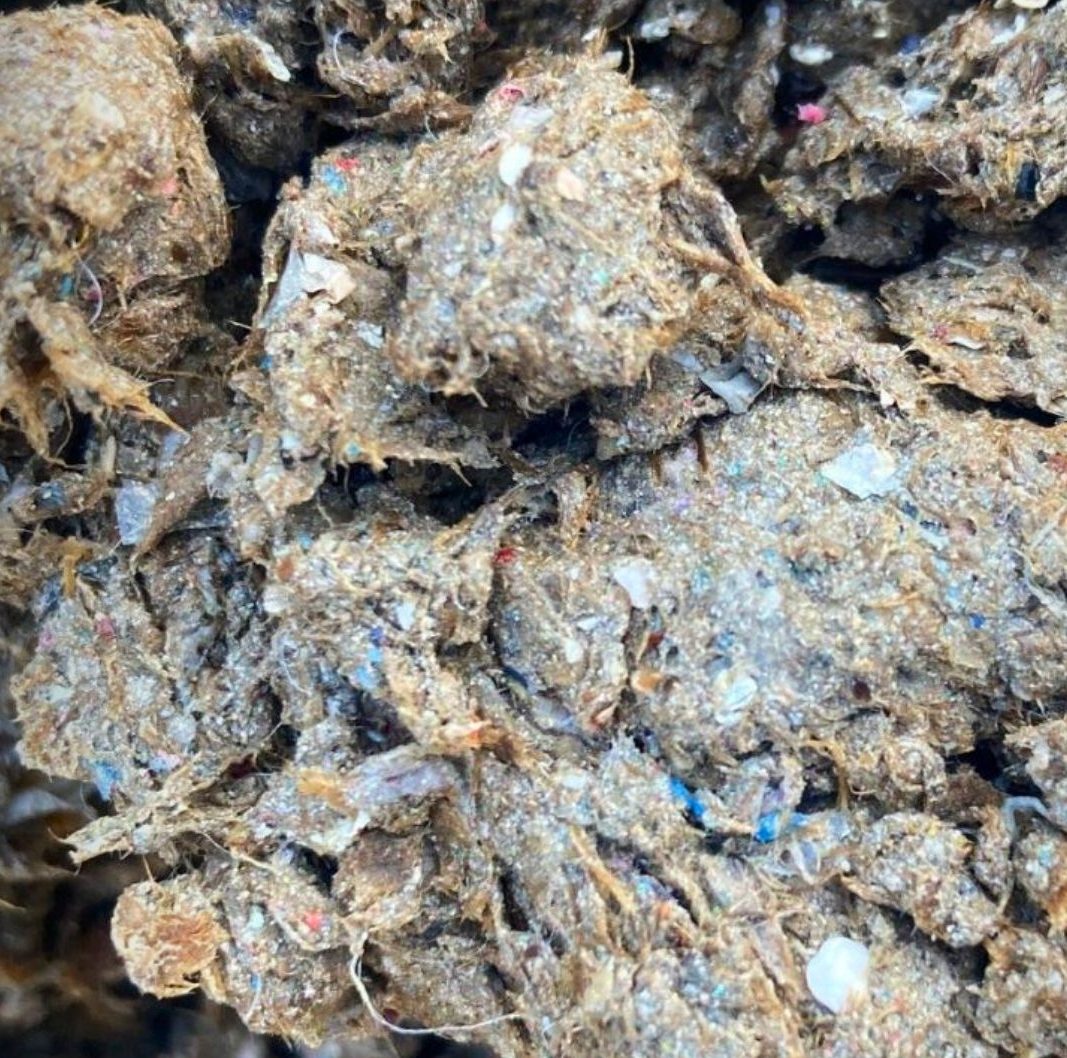
Fowl play: why this huge chicken farm has no place by the River Kennet

Download PDF
By Janet Coleman, River Kennet Campaigner

Seriously clucked off

As local residents lucky enough to live in Berkshire’s beautiful Kennet Valley we are seriously clucked off by the recent planning application from the landowner – the Sutton’s Estate – to locate a 32,000 bird intensive poultry unit at Bradfords Farm in a field designated AONB (National Landscape), on the edge of the floodplain just 200 metres from the River Kennet, SSSI. It beggars belief that Sir Richard Sutton Limited, a large commercial concern owning luxury hotels in London, and approximately 16,000 acres of land in UK, together with land in Ohio, US, couldn’t find somewhere more appropriate to locate their potentially polluting chicken factory.

We live very close to this site where we enjoy walking by the river and watching the abundant wildlife.  The thought that this treasured river, already under stress, will be put at further risk is completely unacceptable. Fortunately our campaign to fight off this threat to our environment and the potential damage to the River Kennet, one of only 200 chalk streams in the world, has prompted welcome and highly effective support from anglers, wildlife enthusiasts and organisations whose mission it is to care about our endangered environment. 
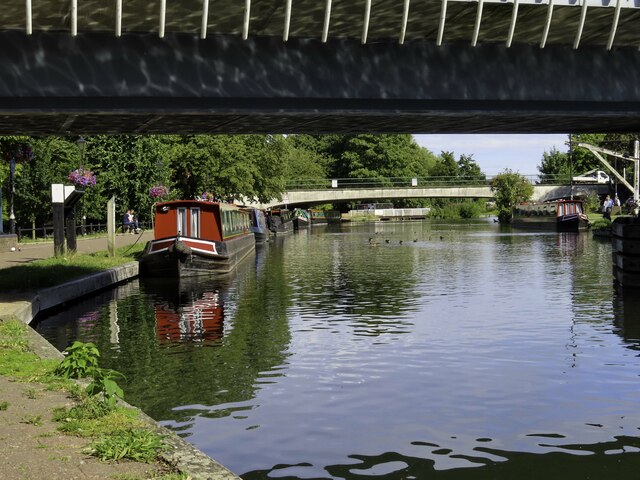
 

The River Kennet in Newbury © Steve Daniels

The game changer

Initially the objectors numbered a few dozen local residents but once we reached out to the likes of River Action and the Angling Trust the campaign really began to motor. Local angling clubs such as Newbury AA and Reading & District mobilised their members to the extent that there are now 232 formal objections. The Angling Trust made representations to both the Environment Agency and Natural England who have sent in comprehensive lists of concerns with the EA now escalating theirs to a formal objection. This, we feel, really could be a ‘game changer’.

We asked the applicants to a public meeting at which we were grateful to have the articulate support of James Wallace from River Action, Anna Forbes from Action for the River Kennel (ARK) – our local River Trust, Martin Salter (Head of Policy, Angling Trust) and various locals with knowledge of planning, avian flu and law.  It seemed to us that the applicant’s representatives were very ill prepared and unable to answer many questions. Fish Legal and Solicitors Leigh Day have also given valuable advice.


The case

Our case is simply this – 
  • We support responsible farming but this poultry unit on the proposed site would be an environmental disaster for the river.
  • Massive egg production units like this should be nowhere near any river and this applicant has plenty of environmentally more suitable land.
  • The only reasons given for the applicant selecting this field is its proximity to the farm manager’s house and convenient supply of electricity!
  • If permitted, the precedent will be set and all the other fields along the Kennet Valley owned by the applicant will have units for 32,000 chickens.  When asked this particular question the applicant’s representatives were unable to guarantee that this would be the only one.
  • The applicants have recently submitted a wholly inadequate Manure Management Plan.  They rely on their “circular farming” system which, in simple terms, means collecting waste from the unit, transporting it to another of their nearby farms for storage and then spreading it on land where they grow the grain to feed the chickens. This toxic waste has been legally classified as “industrial waste” and must be treated as such.
  • Hard evidence from the terminal decline of famous rivers such as the River Wye and Severn demonstrates that, far from being custodians of the land, many farmers cannot be trusted to look after habitats and water courses.


The LPA cannot allow this abomination

At the start of this campaign we felt everything was a struggle and that we were up against an applicant with sufficiently deep pockets that every point we raised would just be given to an expensive consultant for response. Fortunately the expensive consultant’s various reports were so inadequate that even we lay people could see there really was no justifiable reason for this poultry unit in this location, so close to the river.

Clearly the Environment Agency – rather better qualified than us to judge – found their reports more than inadequate and has formally objected in strong terms.  We are not there yet but with the EA’s support, and hopefully that of Natural England too, the local planning authority (LPA) surely cannot allow this abomination.

Severn in crisis: Why we took Shropshire Council to the High Court

Download PDF
By Emma Dearnaley, Head of Legal, River Action

Last Wednesday and Thursday, we went to court to challenge Shropshire Council’s approval of yet another huge intensive poultry unit (watch the highlights in the video below). Our aim: to stop the unsustainable spread of factory farming across the county as part of River Action’s nationwide campaign to prevent further devastating river pollution from industrial agricultural practices.


The counties of Shropshire, Herefordshire and Powys are home to more than 50 million chickens at any one time, placing huge ecological pressures on the rivers Wye and Severn. The enormous quantities of manure produced by intensive livestock farming results in significant air and water pollution due to ammonia emissions and the deposition of nitrogen and phosphorus. For years, Shropshire Council has been approving application after application, allowing the significant expansion of intensive poultry units in the Severn catchment area. And, although measures outside the planning regime regulate certain activities that are carried out at poultry units (such as the spreading of manure on farmland), they have not been able to protect designated sites from the environmental impacts of manure. As the judge noted in the recent case of NFU v Herefordshire Council (in which River Action successfully intervened), non-planning measures have “beyond any doubt… failed to protect the environment from harm”.

Put simply, there are too many chickens located in precious and protected river catchments such as the Severn – causing ecological death by thousands of tonnes of chicken manure. My colleague Drew talks more about this problem in his blog. 

The case we launched last week concerns the Council’s decision to grant permission for LJ Cooke & Son to build a unit housing 200,000 chickens in Felton Butler – right in the centre of the Severn catchment close to ecologically sensitive Ramsar sites and only 400 metres from an existing site holding nearly 500,000 birds – despite increasing concerns about the environmental impacts of this development and others like it.

We brought this legal challenge with River Action board member Dr Alison Caffyn to try to stop the new Felton Butler site. The case also has the potential to set a national precedent for how planning decisions are made by ensuring the environmental impacts of new intensive farms are properly assessed in combination with the impacts of existing ones. This is really important when the reality is that pollution extends beyond one individual agricultural development and impacts the wider area. A whole catchment approach to planning, management and enforcement is needed to address the issues facing our severely polluted rivers. This case seeks to develop the law and raise awareness to make the necessary systemic changes happen.

Dr Alison Caffyn (centre left, next to our CEO, James Wallace), River Action team and activists outside court

Before the hearing

Outside the legal process, we gathered early last Wednesday morning in front of the Cardiff Civil Justice Centre as part of River Action’s community-led demonstration – a visual representation of ‘too many chickens’ and an opportunity to bring the issues at the centre of the case to regional and national attention.

In a career first (but hopefully not last), I experienced a beautiful and moving water ceremony. A vial of water from the River Severn and the legal team were blessed in a ceremony led by Vey Straker as Lady Wye and Kim Kaos as Goddess of the Severn, with each of us choosing a word to describe a quality of the River Severn to evoke – with clarity, transparency, health, renewal and rebalance among those taken with us into the courtroom.

Water cermony performed by the ‘Lady of the Wye’ to our legal team

During the hearing 

The two-day hearing involved complex legal arguments, with the judge asking detailed questions of counsel for each of the parties involved.

The case is a significant test of the legal principles governing environmental impact assessments (and, in particular, the assessment of indirect effects as recently considered in the cases of Squire and Finch), the use of planning conditions and the Habitats Regulations in the context of intensive livestock farming.

In court, David Wolfe KC representing Alison – with the vial of Severn water carefully placed on his desk – argued that Shropshire Council had failed to lawfully assess the effects of manure being taken off-site, acted unlawfully by imposing a condition which failed to prevent the spreading of manure on land and failed to carry out a lawful assessment of the development’s environmental impacts. He argued that a holistic approach needs to be taken to properly assess the cumulative effects and ecological damage of having many poultry units across the same river catchment.

In response, Shropshire Council and LJ Cooke & Son argued that impacts are controlled by the Farming Rules for Water (the regulatory regime found to be lacking in NFU v Herefordshire) and that the condition to take manure away to be processed on third-party land was required because the proposed new development was not large enough to handle the amount of manure that would be produced.

Ricardo Gama, solicitor at Leigh Day next to our CEO, James Wallace and Head of Legal, Emma Dearnaley

After the hearing

Whichever way the judgment goes (and judicial review cases are never easy to win), this case raises urgent and national-level questions: Should planning permission be granted for new factory farms near protected sites? Can local councils rely on promises from developers without enforceable safeguards or meaningful oversight? And are current environmental rules enough to protect our rivers from the proliferation of industrial-scale agriculture?

At the heart of this case is the crucial issue of whether environmental protections are being taken seriously in planning decisions — or whether councils long-term ecological risks are being undervalued in favour of short-term agricultural expansion. The outcome of this case could influence not only the fate of the Felton Butler site in Shropshire but also planning and environmental policy across the UK.

If the decision goes in our favour, councils will have more power to protect rivers from the growing pressures of agricultural pollution. This case could set a national precedent requiring more robust scrutiny of factory farming proposals – particularly in areas where multiple intensive livestock units operate within the same river catchment. It could also compel developers to produce more robust and enforceable waste management plans – building on the recent NFU v Herefordshire Council ruling, in which the High Court provided welcome clarification that livestock manure can be legally classified and treated as waste.

Some councils, like King’s Lynn and West Norfolk, are already rejecting factory farm proposals on environmental and climate grounds. I hope that this case will further empower councils to hold agricultural polluters to account. Now is the time to raise the bar for environmental protection – not lower it.

Following the hearing, Alison returned home to Shropshire – and the blessed vial of water to its rightful place in the River Severn. A decision in this case is expected in the next few weeks.

Our beautiful River Severn
Privacy Overview

This website uses cookies so that we can provide you with the best user experience possible. Cookie information is stored in your browser and performs functions such as recognising you when you return to our website and helping our team to understand which sections of the website you find most interesting and useful.