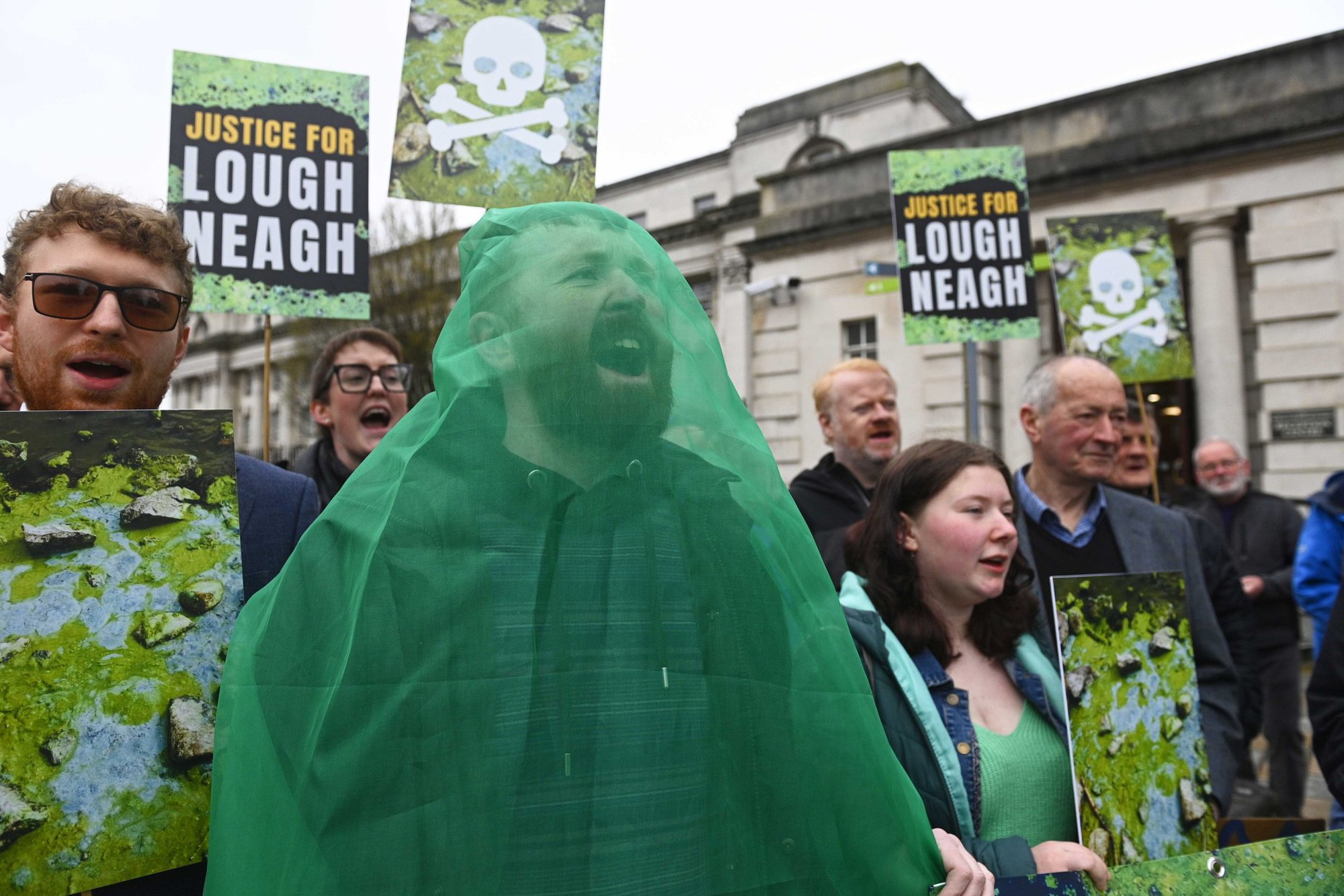
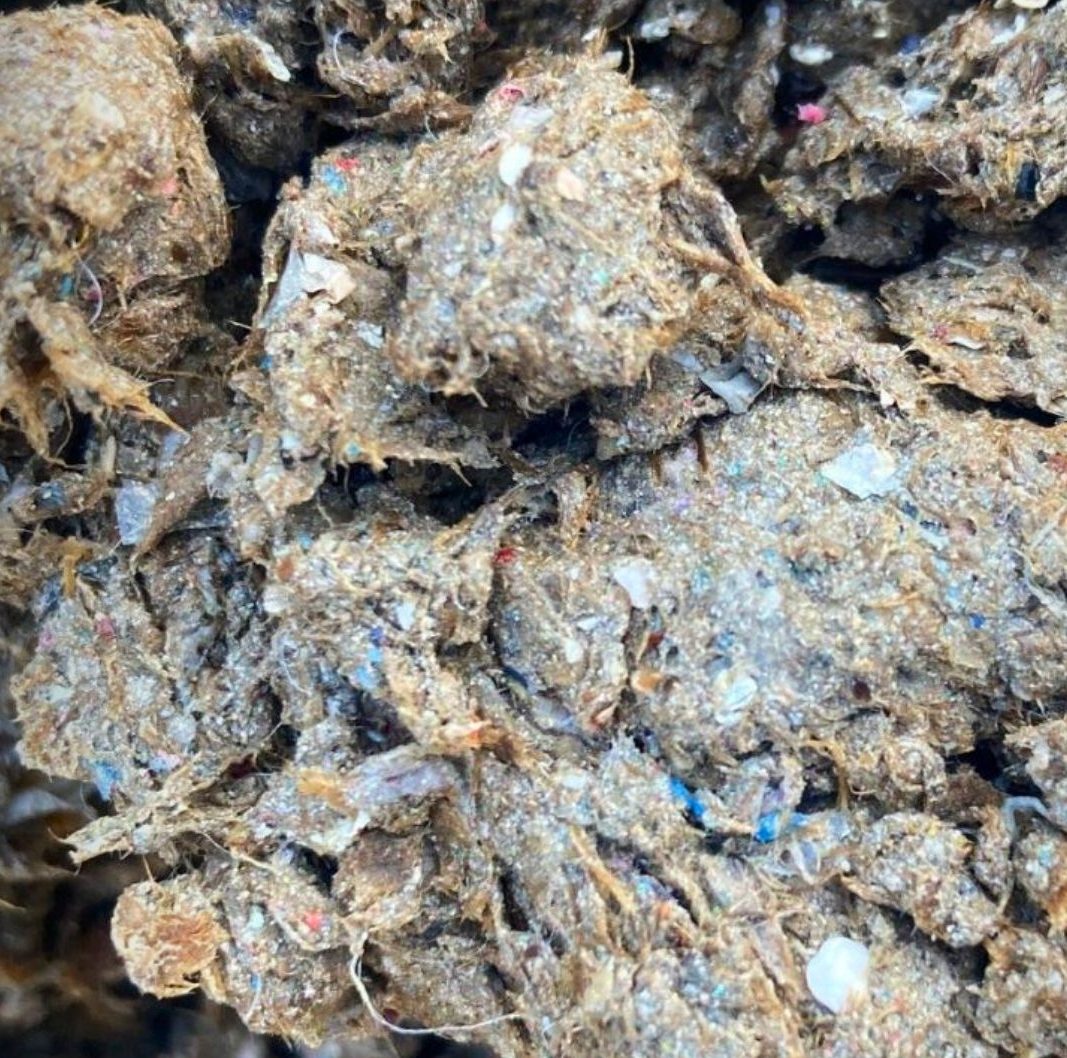
The March for Clean Water: What’s Changed a Year On?

Download PDF
By Amy Fairman, Head of Campaigns, River Action

A profound silence swept across Parliament Square as over fifteen thousand people stood still. On the giant screens, scenes of glistening waters, darting kingfishers, and emerald riverbanks shimmered into life while Robert Macfarlane’s voice carried through the air:

“Riversong is ebb and flow, flow and ebb, deep pools and shallow beds.”

It was 3 November 2024, and a wave of blue had descended upon London. From river source to seashore, people from every corner of the country came together to demand action from a newly elected government — action to rescue our dying rivers and polluted seas.

That day, the heart of Westminster became a confluence of voices and waters: Robert’s moving poem, Charles Watson’s impassioned river roll call, the symbolic mingling of over a hundred river samples, and the rallying cries of young river warriors, seasoned campaigners, union representatives, and community groups. It wasn’t just a protest — it was a movement in full flow, a moment that galvanised a nation determined to turn the tide.

I left Parliament Square that afternoon buoyed by the energy of the day — the powerful sense that years of hard work, heartbreak, and hope had finally gathered into one unstoppable current.

But one year on, what’s changed? Has the government listened? Are our rivers and seas rebounding from decades of neglect and abuse?

Author and writer of ‘Ebb and Flow’, Rob Macfarlane, alongside our CEO, James Wallace.

A Year of Scrutiny: The Independent Water Commission

Political attention on our rivers has continued to intensify. Clean water was one of the defining issues of the general election, and the new Secretary of State quickly made it a top priority.

Following the calls of many campaigners, including those who stood shoulder-to-shoulder in Parliament Square, the government launched the Independent Water Commission — a long-awaited review of the water sector.

Hope rippled across the movement. Could this be the start of the systemic overhaul we’d been fighting for — the beginning of the end for a failed privatisation experiment that had siphoned billions from public hands into private profits?

As the details emerged, optimism gave way to frustration.

The Commission’s scope was tightly ring-fenced,  to “making the current system work better”. It was forbidden from considering public ownership or alternative models — effectively excluding the kind of bold, structural reform the water industry desperately needs.

Even more concerning, agricultural pollution, which remains the single largest source of contamination in our rivers, was entirely outside its remit. This omission spoke volumes about how narrow and politically cautious the review was.

That’s not to say nothing of value emerged. The Commission made several important recommendations: reforms to a regulator long viewed as toothless; new rules to tackle toxic sewage sludge; improved transparency of water company data; and greater enforcement powers. These asks were central to the joint evidence provided by River Action and Surfers Against Sewage to the commission, as well as the response submitted by many other organisations that took part in the march for clean water.

But you can’t fix a broken system by tightening its bolts.

The privatised water model, with its vulture-like investors extracting dividends while infrastructure crumbles, remains fundamentally unfit for purpose. Bill payers are being squeezed to cover the cost of failure, while rivers bear the burden of a system designed for profit, not for people or nature.

Our call to action for the public’s submission to the Independent Water Commission, voiced by Deborah Meaden

The People’s Commission: A Blueprint for Change

While the government’s commission tinkered around the edges, others were busy reimagining the system.

The People’s Commission, a collaboration of grassroots groups, academics, and policy thinkers, have been determined to prove that another way is possible.

Drawing lessons from models in Europe and beyond, the People’s Commission laid out a roadmap for a publicly owned, democratically accountable water system. One that puts environmental protection and community well-being above shareholder returns.

Their recommendations included decentralised governance structures, citizen representation on regional water boards, ring-fenced reinvestment of profits, and clear mechanisms for environmental accountability.

The People’s Commission is a reminder that imagination is as vital as indignation. It shows what could happen if we truly placed the public interest — and the health of our rivers — at the centre of water management.


The Thames Water Saga: A Cautionary Tale

If ever there was a symbol of the failure of privatisation, it’s Thames Water.

Over the past year, its decline has become a national drama — a slow-motion car crash of mismanagement, financial engineering, and moral bankruptcy.

In the spring, investors began to pull out, with major backers like RRK retreating while new ones, such as CRK, stepped in under dubious terms. Meanwhile, news reports revealed that the company was seeking exemptions from environmental fines — arguing that such penalties would deter investors.

Let that sink in: a company responsible for repeated pollution incidents effectively asking for immunity so that it could attract more capital.

As the financial situation worsened, rumours of a government bailout swirled. Ministers insisted there would be “no blank cheques,” yet also failed to clarify when or how they might trigger special administration, the mechanism designed to temporarily control failing utilities. A  mechanism that could be used to fundamentally rethink how to restructure the company to work in the interests of people and nature, not purely boardroom shareholders.

In the absence of a clear policy, uncertainty reigned. Thames Water has continued to limp on, its debts deepening, while the rivers it was meant to protect remained choked by sewage spills.

Those who took to the streets last November are now gracing courtrooms. Windrush Against Sewage Pollution (WASP) and Charlie Maynard MP challenged the terms of the rescue package and demanded transparency. And at River Action, we are challenging Defra for their failure to have a policy in place for taking failing water companies into special administration.

Thames Water’s saga is not an anomaly; it’s a symptom. A warning of what happens when vital public goods are treated as commodities, and when regulation bends to the interests of those it’s meant to restrain.


The Regulator’s Verdict: A System Still Polluting

If anyone still needed proof that our rivers remain under attack, the latest performance reports from Ofwat and the Environment Agency delivered it in black and white.

In 2022, the water companies committed to cutting serious pollution incidents by 30 per cent. But the data now shows the opposite: serious pollution has risen by almost 30 per cent. It’s outrageous.

Let’s be clear.. After all the pledges, the speeches, and the glossy PR campaigns, the companies responsible for protecting our most precious natural resources are not just failing — they’re going backwards.

The Environment Agency described the performance of several major utilities as “unacceptable,” noting that some have slipped further behind their legal duties. Ofwat’s own report echoed the same frustration: repeated rule-breaking, inadequate investment, and a culture of denial at the top.

How can it be that in 2025, after decades of evidence and billions in profits, our water companies are still treating pollution fines as the cost of doing business?

This isn’t about a few bad actors — it’s a systemic failure. The regulators’ findings lay bare the fundamental truth that the current model is broken beyond repair. We cannot rely on the same companies that caused the crisis to be the ones who fix it.


Power to the People

If the year since the March for Clean Water has taught me anything, it’s that real change doesn’t just flow from Westminster — it springs from the ground up.

Across the country, the organisations, communities, and individuals who marched that day haven’t stopped moving. They’ve channelled the energy of that moment into ongoing, determined action.

Communities across the country are standing up to factory farms polluting our rivers. In the Wye Valley, Alison Caffyn (part of the Save the Wye community) and River Action won a landmark legal case forcing planners to assess the cumulative impact of intensive farms. In Norfolk, residents prevented new factory farm developments for failing to consider climate impacts, and in Hertfordshire, campaigners secured a ruling that manure taken off farms must be treated as waste, not dumped on land.

Individuals and local groups across the county picked up their pens to share their views on the Water Commission – over 2,000 people made use of River Actions guidance to respond, and many other communities of other organisations like Surfers Against Sewage did the same.

The Riverscape Partnership has launched its Making Space for Water initiative, calling for support for farmers and landowners to restore nature-rich river corridors.

The Women’s Institute, whose members turned out in force at the march, organised a Week of River Action — bringing thousands of women together to monitor water quality, campaign for tougher regulation, and celebrate the rivers that sustain their towns and villages.

The Angling Trust, alongside many community groups, have doubled down on the fight to protect England’s precious chalk streams, demanding that these globally rare habitats receive the same level of legal protection as rainforests.

And in an extraordinary act of citizen empowerment, the Citizens Arrest Network has continued its creative campaign of symbolic “boardroom arrests” — calling out pollution-for-profit executives and holding them to account through using the power of citizen arrests.

This is where I find hope:  in the compassionate energy of people who refuse to look away.
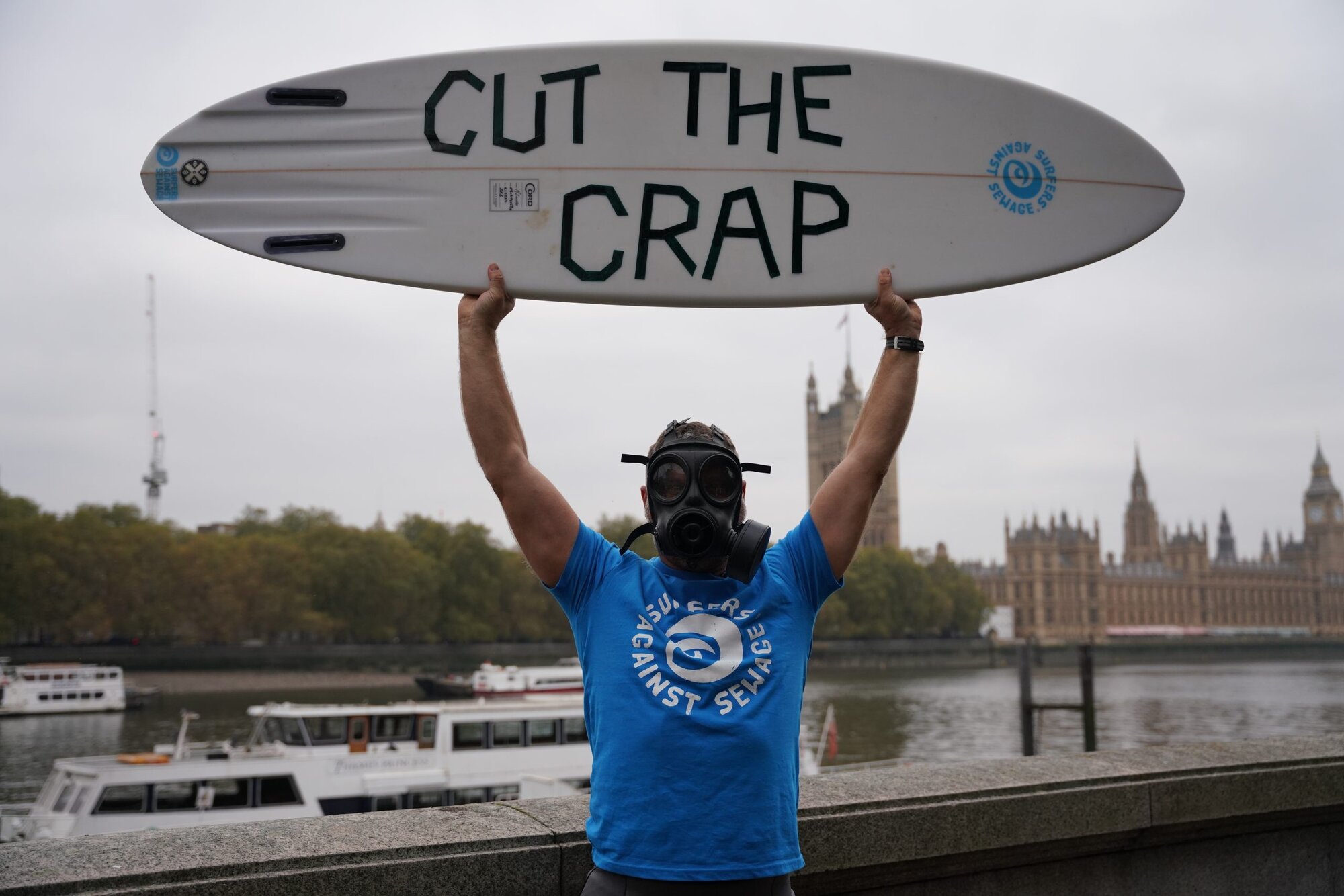
CEO of Surfers Against Sewage, Giles Bristow, at the March for Clean Water

What Needs to Happen Next

A year after that extraordinary march, we stand at a crossroads.

The government’s upcoming White Paper on Water Reform offers another opportunity to show genuine leadership. But if it merely repackages the recommendations of the Independent Water Commission, it will fail to meet the scale of the crisis affecting our rivers.

We need a framework that addresses the whole system, not just the symptoms. That means:

  • Clear timelines for bringing failing water companies back into temporary public ownership through the special administration regime, or introducing hybrid community models.
  • A 25-Year Agricultural Roadmap that tackles diffuse pollution at its source.
  • Stronger, independent regulators free from political and corporate interference.
  • And a second Water Bill, one that enshrines the right to clean water and healthy rivers in law.

Without these, the “blue wave” that filled Parliament Square will, as Chris Packham said on stage, “be back…..in brown”.
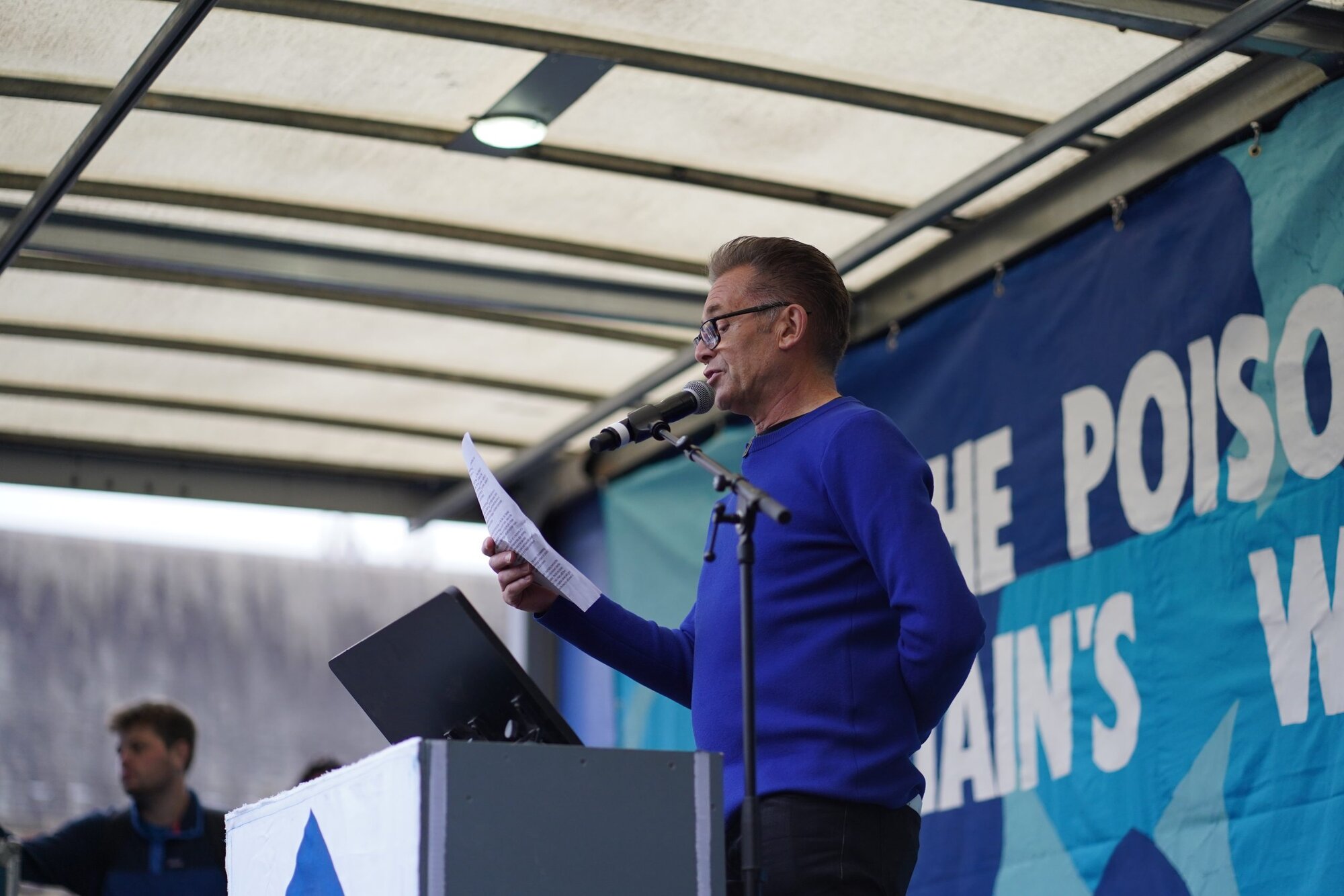
Chris Packham on stage at the March for Clean Water

A River Still Rising

As I reflect on that November day, I can still feel the rhythm of the drums echoing through Westminster, the collective heartbeat of thousands who refused to accept that our rivers should be sacrificed for profit.

One year on, that heartbeat hasn’t faded. It’s grown stronger.

Every petition signed, every water test taken, every letter written to an MP is another ripple pushing against the current of complacency.

We may not yet have turned the tide, but the direction of flow has shifted. Awareness has deepened. Accountability is rising. Along the riverbanks, people’s voices rise, demanding change.

The March for Clean Water was never meant to be a single day. It was a major moment along a journey. The galvanising of a movement of communities reclaiming the lifeblood of this country.

And as long as our rivers run — however polluted, however wounded — so too will our determination to see them restored, replenished, and free.

Because rivers are not just waterways. They are the veins of our land, the pulse of our planet, and the mirror in which we see the health of our democracy.

The tide is turning. Let’s keep it moving.

By Amy Fairman, Head of Campaigns, River Action

The Water Commission’s Final Report: Why It Falls Short – And What Must Come Next

Download PDF
By Amy Fairman, Head of Campaigns

At the end of July, the Independent Water Commission released it’s final report on the state of our water industry with recommendations on how the industry could be fixed. River Action, alongside Surfers Against Sewage, has analysed the recommendations against our five core principles for real reform.

Our conclusion? While the Commission makes some useful noises about reform, it ultimately ducks the bold changes needed to end sewage pollution and protect people and nature.

Here’s how the Commission performed when measured against our principles – and why government must now go much further with its upcoming White Paper.


1. Operating for Public Benefit

The Commission’s approach accepts the profit-driven privatised model of water companies as a given. Instead of rethinking this broken system, it focuses primarily on tighter regulation.

This is not enough. Decades of evidence show that shareholder-first models drain money out of the system while rivers fill with sewage. The Commission ignored credible international evidence that public benefit ownership models – like those in much of Europe – deliver lower bills, more investment, and cleaner rivers.

Without a fundamental redesign of ownership, governance, and financing, alongside regulatory reform the crisis will continue.

2. Democratic Decision-Making

The Commission’s proposal for Regional Water Authorities is a step forward, hinting at more democratic oversight. But as drafted, these bodies risk being toothless talking shops.

Real reform requires municipal-level oversight, with local authorities, communities, and environmental groups holding real power over how water companies invest, operate, and deliver. Without this, decisions will remain in the hands of profit-driven boards.

3. Protecting Public and Environmental Health

The Commission acknowledges sewage pollution is a major public health crisis – but stops short of the urgent action needed.

Taskforces and reviews won’t protect the thousands of people falling ill after using polluted rivers and seas. We need immediate legal duties for all water companies, regulators, and government to protect public and environmental health, backed by stronger permits and updated Bathing Water Regulations that safeguard everyone, year-round, from emerging pollutants like ‘forever chemicals’ and microplastics.

4. Tough, Independent Regulators 

The Commission rightly diagnoses regulatory failure. But renaming regulators without changing their powers, duties, and resources will not fix the problem.

We need a strong, independent regulator with a clear duty to protect public and environmental health – not water company profits. And where companies fail, government must use the Special Administration Regime to reset them around public benefit principles, starting with Thames Water.

5. Transparency

The Commission calls for more monitoring – which we welcome – but still clings to the discredited model of operator self-monitoring, where water companies mark their own homework.

That system has failed. Independent monitoring, citizen science, and full real-time transparency are the only way forward. People deserve to know what’s happening in their rivers and seas.


The Bottom Line

The Water Commission’s report was a once-in-a-generation opportunity to reset a failing system. Instead, it tinkers at the edges, leaving the profit-driven model intact and communities exposed to sewage, debt, and declining water quality.

Government must now go further. The upcoming White Paper must:

  • Restructure water companies to deliver public benefit, not private profit.
  • Embed democratic oversight at local and regional levels.
  • Put public and environmental health at the heart of water law and regulation.
  • Create a tough, well-funded regulator with the power to act.
  • End operator self-monitoring and deliver full transparency.

Anything less will leave us trapped in the cycle of pollution, public anger, and political failure.

You can read our full indepth analysis HERE.

Interim Water Review falls short of real reform

Download PDF

River Action, alongside Surfers Against Sewage have responded to the publication of the Independent Water Commission’s interim report, welcoming signs that long-standing failures are finally being recognised and the regulators need a major overhaul – but warning that the report stops well short of real reform.

Despite a 15,000-strong March for Clean Water in London last year and surging public anger, the interim review still falls short of the Government’s manifesto commitments and speaks more about attracting investors than cleaning up pollution and serving the public.

Crucially, this report acts more as a progress report which tinkers at the edges of the problem – not the bold systemic action plan needed to end the crisis. While it contains some welcome analysis on regulatory failure, it offers few concrete solutions and avoids many of the most difficult but necessary decisions. The final report must give senior Labour figures, including Environment Secretary Steve Reed, the political capital needed to show this government is serious about fixing the water industry and cleaning up England and Wales’s polluted rivers and seas.


CEO of River Action James Wallace said, “This interim report signals some progress on regulation, but it reads more like a sales pitch to international investors and overpaid CEOs than the urgent restructuring of corrupted water companies. We ask the Commission to learn from other countries how to ensure water companies are owned, financed and operated for public benefit.

“The Government has a clear mandate to clean up our polluted waterways and deliver on its election promises. That means getting tough on polluters, using the full force of the law, reforming regulation, and ending the era of failed privatisation by prioritising people and nature over profit – not kicking the problem further downstream.

“And in the meantime, the Government shouldn’t wait: our biggest polluter Thames Water should be put in a Special Administration Regime to send a regulatory shockwave across the industry. Our water is our nation’s birth right and is not for private sale.”


CEO of Surfers Against Sewage Giles Bristow said: “The criminal behaviour, chronic lack of investment and woeful mismanagement which has led to sewage filled seas is a direct result of our profit driven system. This interim report begins to recognise this, but as yet does not spell out the need to end pollution for profit.

“The commission’s final recommendations must reshape the water industry to put public health and the environment first. Until we have this, we will continue to swim and surf in the deluge of sewage that pours into our waters whilst shareholders continue to cream of profits. The commission must make concrete recommendations to end pollution for profit otherwise it risks becoming part of the problem, not the solution.”

“The public will not stand for tinkering around the edges and the MPs that represent these angry communities know this.  We will continue to fight until we see the transformational change that is needed to end sewage pollution once and for all.”

River Action and SAS welcome the report’s recognition of:

  • Government failure to plan for long-term sewage treatment and drinking water needs
  • Weak, reactive regulation from Ofwat which allowed water companies to pile on debt and reward pollution with dividends and bonuses
  • An underfunded Environment Agency unable to monitor pollution and enforce environmental law
  • Water companies prioritising profits over people and planet, resulting in outdated infrastructure and pollution
  • Water companies poor environmental performance driven by profit hungry short term shareholders

We also support the call for stronger local and regional sewage and water planning, closer regulatory oversight of water companies, and long-term low-risk, low-return infrastructure investment.

However, the final report must go beyond diagnosis and deliver a clear plan for action. It should:

  • Restructure water companies to operate for the public good, not private profit. Where a company is failing, the Government must use powers like Special Administration Regime to intervene
  • Protect public and environmental health by securing benign sources of investment and linking performance with returns
  • Democratise decision-making with customers, environmentalists and local government balancing interests on water company boards
  • Strengthen independent regulators, cash-strapped by years of under-funding leaving them unable to prosecute polluters at scale
  • Mandate public oversight of local and regional water company planning, spending and performance, and integrate with a national urgent action plan

Next week’s Spending Review will be the first real test of whether the Government is serious. Without proper funding for enforcement agencies and the power to prosecute environmental crime, any reform risks being cosmetic.

We urge the final report to reflect Labour’s manifesto commitment to bring failing water companies into order and clean-up the mess from 15 years of privatised pollution.

“We only have one chance to get it right. The public mandate for change is overwhelming and so is the urgency. What comes next must be decisive, enforceable, and in the public interest. We urge Sir Jon Cunliffe to give us more, much more. Nothing short of a systemic overhaul of how water companies are owned, funded, operated and regulated will do.” – James Wallace, River Action CEO

Historic March for Clean Water: 130+ leading nature, environmental and water sports organisations urge Keir Starmer’s Government to end water pollution 

Download PDF

London rally on Sunday 3 November to Save Britain’s polluted waterways

More than 130 of the UK’s most prominent environment, nature, fishing, water sports and community organisations, representing 10.1 million supporters, will flood the streets of central London on November 3 for the March for Clean Water. The coalition calls on Prime Minister Sir Keir Starmer to end the pollution of Britain’s rivers, lakes, and seas, or face the consequences of broken promises.

Nationwide demand for clean water

Environmental advocates, community leaders, and citizens from across the UK will march to call an end to the pollution caused by multiple sources, including water companies and intensive agriculture. Their asks of the new government  are: 

1) stop pollution for profit;

2) reform our failed environmental regulators and; 

3) enforce the laws that exist to deter and punish illegal pollution.

Marchers will wear blue, symbolising the call for clean water

Campaigners remain deeply concerned that despite multiple commitments made during the recent General Election campaign to take resolute action to address the issue, they do not go nearly far enough to address the root causes of water pollution. 

Most significantly, the measures that have been published in the Government’s planned Water (Special Measures) Bill do not address the chronic failure of regulation in recent years, whereby environmental laws and regulations have failed to be enforced by environmental protection agencies, allowing polluters to regularly break the law and poison our water bodies with impunity.

Meanwhile, while last week’s announcement by the Government of an independent Water Commission is a welcome step, it must ensure that the needs of the environment are fully considered and not sidelined by an apparent prioritisation of promoting economic growth. It must also address other major sources of pollution such as agriculture, which so far are conspicuous by their absence in the Commission’s terms of reference.

Join the fight against water pollution

Untreated sewage, agricultural runoff, and corporate negligence have pushed the UK’s rivers, seas, and lakes to ecological breaking point. The November 3 march represents a critical moment in the urgent quest for environmental justice, with families, activists, and communities demanding immediate government action to stop the rampant poisoning of Britain’s waterways.

Key speakers and performers 

The march will feature voices from across the UK, including naturalist Chris Packham, broadcaster and campaigner Carol Vorderman, Olympic rowing champion Imogen Grant, nature presenter and President of the Wildlife Trusts Liz Bonnin, bestselling author Robert Macfarlane, and actor-musician Johnny Flynn, known most recently for his role in Ripley on Netflix. 

Eleven-year-old Benjamin Fallow will address the crowd, representing the next generation’s call for urgent action on the water crisis. Alongside them stand grassroots environmental groups, anglers, swimmers, surfers, rowers, and a diverse array of clean water lovers, as well as water industry workers represented by the GMB Union (the biggest union in the water industry) disillusioned by the failure of their employers to manage the water industry responsibly.

Powerful symbols on the day

The march will feature striking visuals, including:

  • Poly the Whale, Truth About Plastic’s 7x2m sculpture made entirely from plastic waste collected from rivers and oceans, will be on display. Weighing 130kgs – the estimated amount of plastic that pollutes the ocean every second – Poly is a powerful reminder of the growing plastic crisis.
  • A 3m tall Goddess of the River Wye, evoking the spirit of the iconic river and the ecosystems at risk.
  • At least 40 Extinction Rebellion drummers will energise and the inspire marchers. Participants are also invited to bring to London samples of water from their rivers, lakes and beaches – which will all be combined into a single vessel before being symbolically returned to the River Thames at the end of the march on the outgoing tide.


Voices of protest

Leading voices from the coalition urge the government to act:

Broadcaster and campaigner Carol Vorderman said, I’m 63 and have never been on a protest before. This is my first ever march. That is how much the disgraceful privatised abuse of our water system matters to me. I can’t wait to add my voice to thousands on the day and share Carol’s Poolution by Numbers!”


Comedian and angler Paul Whitehouse, star of BBC’s hit-show Gone Fishing with Bob Mortimer, said
, “Who likes dirty rivers? Not I. Lots of people love to use the rivers, waterways, and they’re under threat from agricultural pollution and from the water companies. So, there is a march taking place on Sunday, third of November – come and join.”

Star of The Crown on Netflix, Jim Murray, actor and activist angler, said, “The endangered Atlantic salmon is the pulse of our rivers and oceans, we must save the UK’s ‘black rhino’ from extinction.”

British businesswoman and star of Dragon’s Den Deborah Meaden said, “As a business leader deeply committed to sustainable investing and a passionate advocate for nature, it is clear that we must protect our precious waterways from pollution. No business should be allowed to profit at the expense of our rivers, seas, and lakes. It’s time for our elected leaders to take decisive action and restore our waterways to full health.”

Comedian Joe Lycett who made a television documentary about the terrible state of the UK’s sewage network (Channel 4’s Joe Lycett v Sewage) said, “Our rivers and seas are still, literally, shit. I fully support this brilliant campaign.”

Beccy Speight, RSPB chief executive, said: “The strength of public feeling is crystal clear, unlike our polluted rivers and waterways. An urgent, comprehensive and properly resourced response is long overdue.”

Hilary McGrady, Director General of the National Trust said, “Water is life. It’s fundamental to our health, our happiness, our heritage. But our rivers and waterways are in crisis.  The public are outraged and want to see solutions.”

“Now’s the time for all leaders across all industries – from business to agriculture and of course politics – to step up their game and prove we can turn the tide on our polluted water. Sunday’s march is a crucial moment for change.”

Melissa Green, CEO of the National Federation of Women’s Institutes said: “The Women’s Institute proudly stands with the March for Clean Water, and WI members will be travelling from across the country to join forces on Sunday 3 November.

“We are a movement of women long known and respected for challenging the status quo and fighting for justice time and again. We are no strangers to campaigning to clean and protect our waterways – and the March for Clean Water is another chance to show our strength. We must ensure this opportunity is not wasted. Now is the time for bold, urgent action from the Government to deliver lasting solutions, and clean up our waters for people, wildlife and the environment.”

Richard Benwell, CEO of Wildlife and Countryside Link, said: “Polluted rivers are wounds in our landscape. They ought to be the lifeblood of UK ecosystems, nourishing communities and wildlife. Instead, they channel sewage, agricultural runoff and toxic chemicals through the countryside and cities to the sea. Healing rivers restores nature and builds a stronger society. That’s why so many people are gathering in support of tough action to make polluters pay, to stop pollution from every source, and to demand the urgent investment needed to clean up UK waters.”

Jamie Cook, CEO of Angling Trust said, “For over 75 years anglers have fought against pollution, this government must finally end the water pollution crisis before it’s too late.”

Hugo Tagholm, ocean activist and Executive Director of Oceana UK said, “Water companies have mismanaged their way to creating one of the greatest environmental stinks the UK has ever suffered. The sewage scandal has destroyed rivers, beaches, wildlife & livelihoods. Why give them a stay of execution with a review of the industry? Why not enforce the law in place to hold them to account, right now?” 

Andy Prendergast, GMB National Secretary, said, “Water privatisation has been a disaster for everyone; sewage dumped in our beautiful waterways, billions of gallons lost to leaks every day and zero investment. Meanwhile fat cat directors and shareholders trouser millions of pounds. Water workers and bill payers are marching together to demand better.”

Giles Bristow, chief executive, Surfers Against Sewage said, “We’re marching because we’re sick of surfing in shit, it’s that simple. No more cover-ups, no more excuses, no more delays, we are here to reclaim our rivers, lakes and seas from the profiteering fat cats of the water industry and to demand an end to sewage pollution, for good. Keir Starmer, the pollution that stains the dirty money of the industry is a stain on the government too – we demand radical reform and you must deliver.”

Charles Watson, Chair of River Action, the organiser of the March for Clean Water, celebrated the diverse and inclusive nature of the March. He said, “This movement is unlike anything we’ve seen before. Families, communities, and organisations from across the UK are rising in outrage at the state of our rivers, lakes and seas. The Government’s first 100 days in power are up. The time for excuses is over. We’re here to hold the government accountable to the election promises previously made and make sure they deliver on them to clean up our long-suffering waterways for once and for all.”

This is not just a protest – it’s a movement

The March for Clean Water is a call to action for millions of people who care about the future of Britain’s waters. Join us on Sunday 3 November, wear blue, flood the streets and make your voice heard.

NOTES TO EDITOR

The March for Clean Water will be a legal, peaceful, family-friendly and inclusive demonstration. On Sunday 3 November, we will muster at Albert Embankment from 1100, and start marching at 1145. The rally will start in Parliament Square at 1330 and is due to finish by 1500.

More than 130 organisations have pledged their support for the march including the National Trust, RSPB, Wildlife Trusts, Women’s Institute, Extinction Rebellion, WWF, GMB Union, Greenpeace, Angling Trust, Rivers Trust, Wildfish, British Rowing, Good Law Project, Ilkley River Action Group, Save Windermere, Activist Anglers, Save the Wye Coalition and Henley Mermaids. 

River Action is an environmental charity on a mission to rescue Britain’s rivers from the deluge of pollution that has left the majority of our waterways in a severely degraded ecological condition. Our campaigns to date have focussed on tackling the severe environmental crises created by both sewage and agricultural pollution.

Estimated number of supporters per organisation in the March for Clean Water coalition:

  • Bat Conservation Trust: 5,600
  • Blue Tits: 100,000
  • British Scuba: 28,000
  • Butterfly Conservation: 40,000
  • Clean Water Alliance: 450,000
  • CPRE: 40,000
  • Friends of the Earth UK: 250,000
  • Freshwater Biological Association: 1,200
  • GMB Union: 560,000
  • Greenpeace UK: 184,000
  • Green Alliance: Approx. 126
  • Mammal Society: 2,000
  • National Trust: 5,400,000
  • Plantlife: 17,000
  • Rewilding Britain: 900
  • RSPB: 1,200,000
  • Surfers Against Sewage: 150,000
  • Soil Association: 75,000
  • Sustain: 5,000
  • Wildlife Trusts: 870,000
  • Women’s Institute: 180,000
  • Woodland Trust: 500,000
  • WWF UK: 100,000

Total supporters: 10,158,826

Up to their necks in it: River Action unveils provocative ‘Pooster’ to expose water companies profiting while poisoning our water

Download PDF
https://www.youtube.com/watch?v=hhRYklit9xE

River Action reveals extent of Thames Water discharges

“Up to their necks in it” –  River Action’s campaigns manager Amy Fairman  

March for Clean Water, Sunday 3rd November

With public outrage at an all-time high, River Action’s billboard exposes the urgent need for reform in the water industry.

Download a hi-res ‘Pooster’ image here.

ENDS

Milestone achieved: 100th organisation signs up for the March for Clean Water in London on November 3rd

Download PDF

In a powerful show of public outrage over the state of the UK’s waterways, convenors of the March for Clean Water have announced that the 100th organisation has officially pledged to join the rally, set for Sunday 3rd November in central London.

Mental Health Swims, the coalition’s 100th member, joins a diverse array of organisations – both large and small – from across the UK. Other organisations to recently sign up to join the March include smaller groups like The Blue Tits, The Marine Conservation Society, Friends of the Earth, East Kent Climate Action, the Outdoor Swimming Society, alongside larger organisations such as the National Trust, Greenpeace, RSPB, British Rowing and Wildlife Trusts. 

Charles Watson, River Action’s chair and founder and co-convenor of the march, said, “This landmark achievement highlights the immense momentum, public anger, and frustration fuelling the march. Environmental charities, anglers, wild swimmers, members of the legal profession and high-profile campaigners such as Chris Packham, Paul Whitehouse, Jo Brand and Liz Bonnin are coming together to amplify the urgent call for action from Sir Keir Starmer’s government to put an end to the poisoning of our rivers, seas and lakes.”

Comedian Joe Lycett who made a television documentary about the terrible state of the UK’s sewage network (Channel 4’s Joe Lycett v Sewage) said, “Our rivers and seas are still, literally, shit. I fully support this brilliant campaign.”

Rachel Ashe (MBE), Managing Director & Founder of Mental Health Swims, said, “Mental Health Swims is proud to be part of the coalition for the March for Clean Water. Due to the water quality issues throughout the UK, we are having to cancel some of our mental health peer support swim groups to ensure that participants and volunteers do not get sick. It’s really disheartening for our volunteers and participants who have worked hard to build a support group in their local community that comes together over a love of outdoor swimming. We want to see the new government taking action to address the water pollution crisis.”

The March for Clean Water promises to be a vibrant, family-friendly demonstration that sends a clear message: the public will no longer tolerate politicians who talk tough on water pollution but fail to take meaningful action against human sewage and agricultural runoff in our rivers, seas, and lakes. Visit: marchforcleanwater.org

ENDS

Notes to editors
Last week the March for Clean Water was rescheduled for Sunday 3rd November after the announcement of a far-right rally outside Downing Street on 26th October and the calling of left-wing counter protests.

The March for Clean Water will be a legal, peaceful, family-friendly and inclusive demonstration. Timings will be confirmed in the run up to the event.

To date, 100 organisations have pledged their support for the march including the National Trust, RSPB, Wildlife Trusts, Extinction Rebellion, Greenpeace, Angling Trust, Wildfish, British Rowing, Good Law Project, Ilkley River Action Group, Activist Anglers, Save the Wye Coalition and Henley Mermaids.

River Action is an environmental charity on a mission to rescue Britain’s rivers from the deluge of pollution that has left the majority of our waterways in a severely degraded ecological condition. Our campaigns to date have focussed on tackling the severe environmental crises created by both sewage and agricultural pollution.

**CHANGE OF DATE** MARCH FOR CLEAN WATER NOW SUNDAY 3RD NOVEMBER

Download PDF

Melissa Green, CEO of the National Federation of Women’s Institutes said: “The Women’s Institute proudly stands with the March for Clean Water, and WI members will be travelling from across the country to join forces on Sunday 3rd November.

 “We invite all our members who want to see decisive action to resolve the water crisis once and for all, to march alongside us. While we’re encouraged by the government’s response to our calls for a comprehensive review of the water system, we must ensure this opportunity is not wasted. Now is the time for bold, urgent action to deliver lasting solutions.”

Patrick Begg, Outdoors & Natural Resources Director at the National Trust said: “We are disappointed that the date of the march was forced to change, but remain fully supportive of this march which is now on Sunday 3rd November.

Water is our most precious commodity, and we play fast and loose with it at our peril.  Yet only 14 percent of rivers across England are in good ecological health, and severe droughts and floods have become more commonplace. Urgent action is needed. 

We urge the government to adopt a comprehensive source-to-sea water management strategy. This includes tackling pollution at its origin, whether from agriculture, industry or from sewage outflows. But is also means restoring peat bogs, creating more space for water in our landscapes, and reducing water waste – without which we won’t succeed in making our rivers healthier for both nature and people, or resilient in the face of a changing climate.”

Visit: marchforcleanwater.org

ENDS

Notes to editors
The March for Clean Water is on Sunday 3rd November. It will be a legal, peaceful, family-friendly and inclusive demonstration. Timings will be confirmed in the run up to the event.

River Action is an environmental charity on a mission to rescue Britain’s rivers from the deluge of pollution that has left the majority of our waterways in a severely degraded ecological condition. Our campaigns to date have focussed on tackling the severe environmental crises created by both sewage and agricultural pollution.

Feargal Sharkey leads a call for clean water and invites outraged public to join him on November 3rd. Stephen Fry narrates film to get “Britain’s waters off life support”

Download PDF
Feargal Sharkey outside Cardiff’s Civil Justice Centre supporting a landmark legal case pursued by River Action against the Environment Agency and DEFRA. © PA Media/ River Action UK.

This must include:

  • a plan to address the continuous illegal dumping of raw sewage by the water companies;
  • a full set of solutions to end all other major sources of water pollution;
  • the reform of our failed regulatory system, including Ofwat and the Environment Agency, so the law can be effectively enforced against polluters

Quote from River Campaigner Feargal Sharkey:

Quote from Chair and Founder of River Action, Charles Watson:

Background to the UK’s water pollution crisis can be found in this hard-hitting short film narrated by Stephen Fry. 

For more information about attending the March for Clean Water visit marchforcleanwater.org 

ENDS

For media interviews call Ian at River Action on 07377 547 362 or email media@riveractionuk.com

Notes to editors
The March for Clean Water is on Sunday 3rd November. It will be a legal, peaceful, family-friendly and inclusive demonstration to send a simple message to the newly elected Labour Government: it is your job to end the poisoning of our rivers, lakes and seas. The march is planned to assemble at a central London location and will end at Parliament Square. Timings will be confirmed in the run up to the event.

River Action is an environmental charity on a mission to rescue Britain’s rivers from the deluge of pollution that has left the majority of our waterways in a severely degraded ecological condition. Our campaigns to date have focussed on tackling the severe environmental crises created by both sewage and agricultural pollution. 

Privacy Overview

This website uses cookies so that we can provide you with the best user experience possible. Cookie information is stored in your browser and performs functions such as recognising you when you return to our website and helping our team to understand which sections of the website you find most interesting and useful.