Natural Resources Wales Must Prevent Pollution – Not Pass the Buck as the Wye and Severn Decline

By Emma Dearnaley, River Action’s Head of Legal

Across Wales, rivers that should be a source of pride – places for connection, wildlife and local identity – are in visible decline. 

In recent years, much of the public debate has focused on sewage discharges, storm overflows and Victorian infrastructure doing 21st-century damage. That remains an important focus. But if we are serious about restoring our rivers, another very significant source of pollution must be understood and addressed with an equivalent amount of resolve: nutrient pollution linked to intensive livestock production and, in Wales especially, the waste generated by industrial-scale poultry units. 

This is not about farmers trying to do the right thing in challenging circumstances. It is about whether the regulatory system governing intensive agricultural operations is working as Parliament intended and whether regulators are using the powers they have to prevent harm before it occurs. 

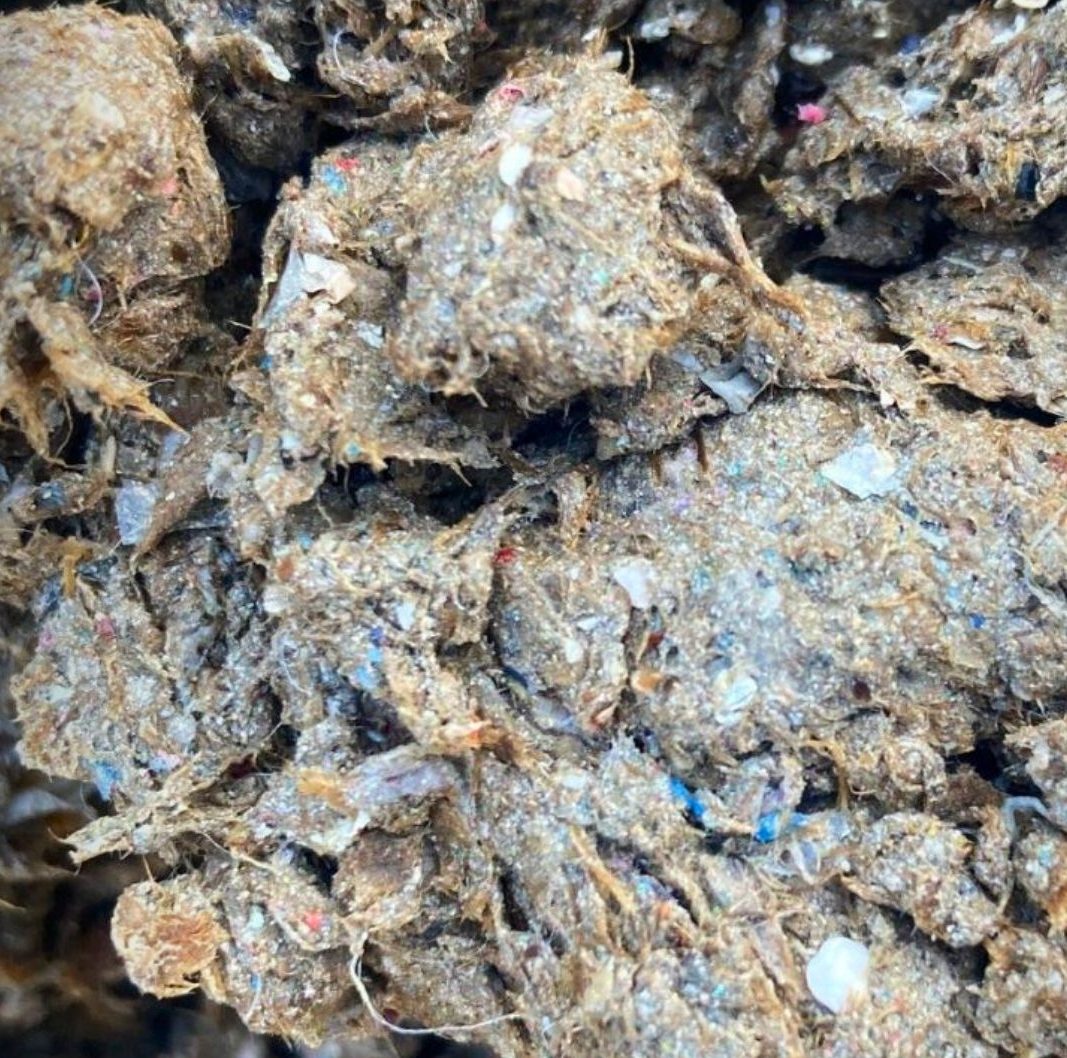
Pollution from intensive poultry production does not usually appear as a dramatic brown slick after heavy rain. Instead, it spreads more quietly. Vast quantities of chicken manure, rich in phosphorus and nitrogen, are being spread on land or exported and spread on other land that in some catchments is already saturated with nutrients. From there, rainfall can wash those excess nutrients into nearby streams and rivers, fuelling algal blooms that choke oxygen from the water, damage wildlife and smother riverbeds. By the time the ecological harm becomes visible, the pollution has already taken hold. 

‘Diffuse’ agricultural pollution comes from widespread activities across a catchment, making it harder to pinpoint and regulate than obvious point-source pollution such as a sewage discharge or a chemical spill. But complexity is not an excuse for inaction: it requires coordinated, consistent, catchment-wide management, not regulatory blind spots. 

That is why River Action has launched a judicial review challenging Natural Resources Wales (NRW)’s decision to approve permit variations allowing three intensive poultry units in Powys to expand. The issue is not whether intensive poultry farming should exist. It is whether Wales’ environmental regulator is properly doing its job by using the legal powers it has to prevent pollution linked to those operations. 

In approving the permit variations, NRW proceeded on the basis that it had no legal power under the Environmental Permitting Regulations 2016 to regulate manure once it leaves the boundary of a permitted poultry unit. On that view, the environmental impacts of manure exported off-site fall outside the permitting regime and are instead matters for the planning system, but without NRW first being satisfied that effective and enforceable pollution controls would in fact be secured elsewhere.

In effect, NRW treated the boundary of the site as the boundary of its regulatory responsibility. Rivers, inconveniently, do not respect such lines.

Manure from intensive poultry farming is a major source of nutrient pollution affecting Welsh rivers, including the Wye and the Severn. This is not theoretical harm. Both rivers are already under severe ecological pressure from excess nutrients, causing declining water quality and damaged habitats.

Environmental permitting exists precisely to prevent unacceptable pollution before it happens. Parliament entrusted NRW, as Wales’ environmental regulator, with assessing whether permitted activities are likely to cause pollution and with imposing conditions to control and stop it. River Action’s case argues that NRW has taken an extraordinarily narrow view of its own powers and misdirected itself in law by excluding the potential off-site impacts of manure from its permitting decisions on the basis it has no legal power to address them. We say that approach is unlawful. The Environmental Permitting Regulations do not stop at the farm gate. If waste arises from a permitted activity and is likely to cause pollution wherever it ends up, NRW as the regulator must assess and, wherever necessary, control those impacts. That is both logical and, we say, what the law requires. Recent court judgments do not say otherwise, despite NRW’s insistence that its hands are tied.

What makes this more troubling is that NRW’s counterpart in England, the Environment Agency, accepts that it must consider and prevent water pollution through the permitting process including impacts that may occur beyond the site boundary. There is no rational basis for Wales’ regulator to do less, especially when making decisions in sensitive and protected catchments on the Welsh border. Environmental protection should not weaken when you cross Offa’s Dyke.

If NRW’s position is allowed to stand, the consequences extend far beyond these three poultry units in Powys. It risks creating a significant regulatory gap, allowing industrial-scale agricultural operations to expand in vulnerable catchments without effective oversight of one of their most environmentally damaging consequences.

This case is not about attributing blame after the damage is done. It is about prevention. Once excess nutrients enter a river system, they are extremely difficult and costly to remove. Rivers such as the Wye cannot be restored while pollution continues upstream without effective regulatory control. 

NRW exists to prevent environmental harm, not to assume that someone else will deal with it. Passing the buck to the planning system on a mistaken understanding of legal powers, without securing robust safeguards elsewhere, won’t wash.  

Wales rightly aspires to environmental leadership. It has strong and progressive environmental frameworks and internationally important rivers. But laws only matter if they are used and followed. 

River Action’s case asks the court to clarify a simple and fundamental point: to confirm that environmental regulation in Wales means what it says, NRW’s interpretation of its powers was wrong, and that pollution prevention does not end at a conveniently drawn boundary line. Our rivers cannot afford another lost decade of buck-passing. If we are serious about protecting and restoring them, we must ensure that those tasked with safeguarding them are equipped – and required – to use their powers in full.

Fowl play: why this huge chicken farm has no place by the River Kennet

By Janet Coleman, River Kennet Campaigner

Seriously clucked off

As local residents lucky enough to live in Berkshire’s beautiful Kennet Valley we are seriously clucked off by the recent planning application from the landowner – the Sutton’s Estate – to locate a 32,000 bird intensive poultry unit at Bradfords Farm in a field designated AONB (National Landscape), on the edge of the floodplain just 200 metres from the River Kennet, SSSI. It beggars belief that Sir Richard Sutton Limited, a large commercial concern owning luxury hotels in London, and approximately 16,000 acres of land in UK, together with land in Ohio, US, couldn’t find somewhere more appropriate to locate their potentially polluting chicken factory.

We live very close to this site where we enjoy walking by the river and watching the abundant wildlife.  The thought that this treasured river, already under stress, will be put at further risk is completely unacceptable. Fortunately our campaign to fight off this threat to our environment and the potential damage to the River Kennet, one of only 200 chalk streams in the world, has prompted welcome and highly effective support from anglers, wildlife enthusiasts and organisations whose mission it is to care about our endangered environment. 


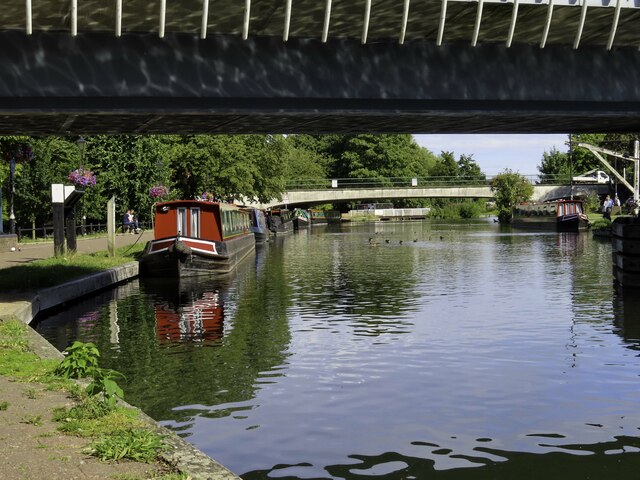
The River Kennet in Newbury © Steve Daniels

The game changer

Initially the objectors numbered a few dozen local residents but once we reached out to the likes of River Action and the Angling Trust the campaign really began to motor. Local angling clubs such as Newbury AA and Reading & District mobilised their members to the extent that there are now 232 formal objections. The Angling Trust made representations to both the Environment Agency and Natural England who have sent in comprehensive lists of concerns with the EA now escalating theirs to a formal objection. This, we feel, really could be a ‘game changer’.

We asked the applicants to a public meeting at which we were grateful to have the articulate support of James Wallace from River Action, Anna Forbes from Action for the River Kennel (ARK) – our local River Trust, Martin Salter (Head of Policy, Angling Trust) and various locals with knowledge of planning, avian flu and law.  It seemed to us that the applicant’s representatives were very ill prepared and unable to answer many questions. Fish Legal and Solicitors Leigh Day have also given valuable advice.


The case

Our case is simply this – 
  • We support responsible farming but this poultry unit on the proposed site would be an environmental disaster for the river.
  • Massive egg production units like this should be nowhere near any river and this applicant has plenty of environmentally more suitable land.
  • The only reasons given for the applicant selecting this field is its proximity to the farm manager’s house and convenient supply of electricity!
  • If permitted, the precedent will be set and all the other fields along the Kennet Valley owned by the applicant will have units for 32,000 chickens.  When asked this particular question the applicant’s representatives were unable to guarantee that this would be the only one.
  • The applicants have recently submitted a wholly inadequate Manure Management Plan.  They rely on their “circular farming” system which, in simple terms, means collecting waste from the unit, transporting it to another of their nearby farms for storage and then spreading it on land where they grow the grain to feed the chickens. This toxic waste has been legally classified as “industrial waste” and must be treated as such.
  • Hard evidence from the terminal decline of famous rivers such as the River Wye and Severn demonstrates that, far from being custodians of the land, many farmers cannot be trusted to look after habitats and water courses.


The LPA cannot allow this abomination

At the start of this campaign we felt everything was a struggle and that we were up against an applicant with sufficiently deep pockets that every point we raised would just be given to an expensive consultant for response. Fortunately the expensive consultant’s various reports were so inadequate that even we lay people could see there really was no justifiable reason for this poultry unit in this location, so close to the river.

Clearly the Environment Agency – rather better qualified than us to judge – found their reports more than inadequate and has formally objected in strong terms.  We are not there yet but with the EA’s support, and hopefully that of Natural England too, the local planning authority (LPA) surely cannot allow this abomination.

Cluck off! River campaigners take Shropshire Council to High Court over chicken factory farm chaos

River campaigners are in the High Court today, taking on Shropshire Council to stop the expansion of an industrial-scale poultry unit in the River Severn catchment. The legal challenge targets a proposed 200,000-bird facility near Shrewsbury—part of what River Action describes as a “reckless and unsustainable” surge in intensive factory farming across the region.

This case has the potential to set an important precedent for local authorities across the UK, ensuring cumulative environmental impacts (i.e. the combination of multiple activities having a significant impact on the environment over time – ecological death by a thousand poultry units) of new agricultural developments on protected sites are properly assessed. Campaigners hope that this case will raise the bar on what authorities will need to consider before this and future developments are approved, stopping unlawful and harmful intensive farming developments in their tracks.


The judicial review, being heard at Cardiff Civil Justice Centre, is supported and funded by environmental charity River Action and brought by River Action’s advisory board member and local campaigner Dr Alison Caffyn.

Dr Caffyn said:


Peaceful protest outside of the Cardiff Civil Justice Centre from 8:45AM
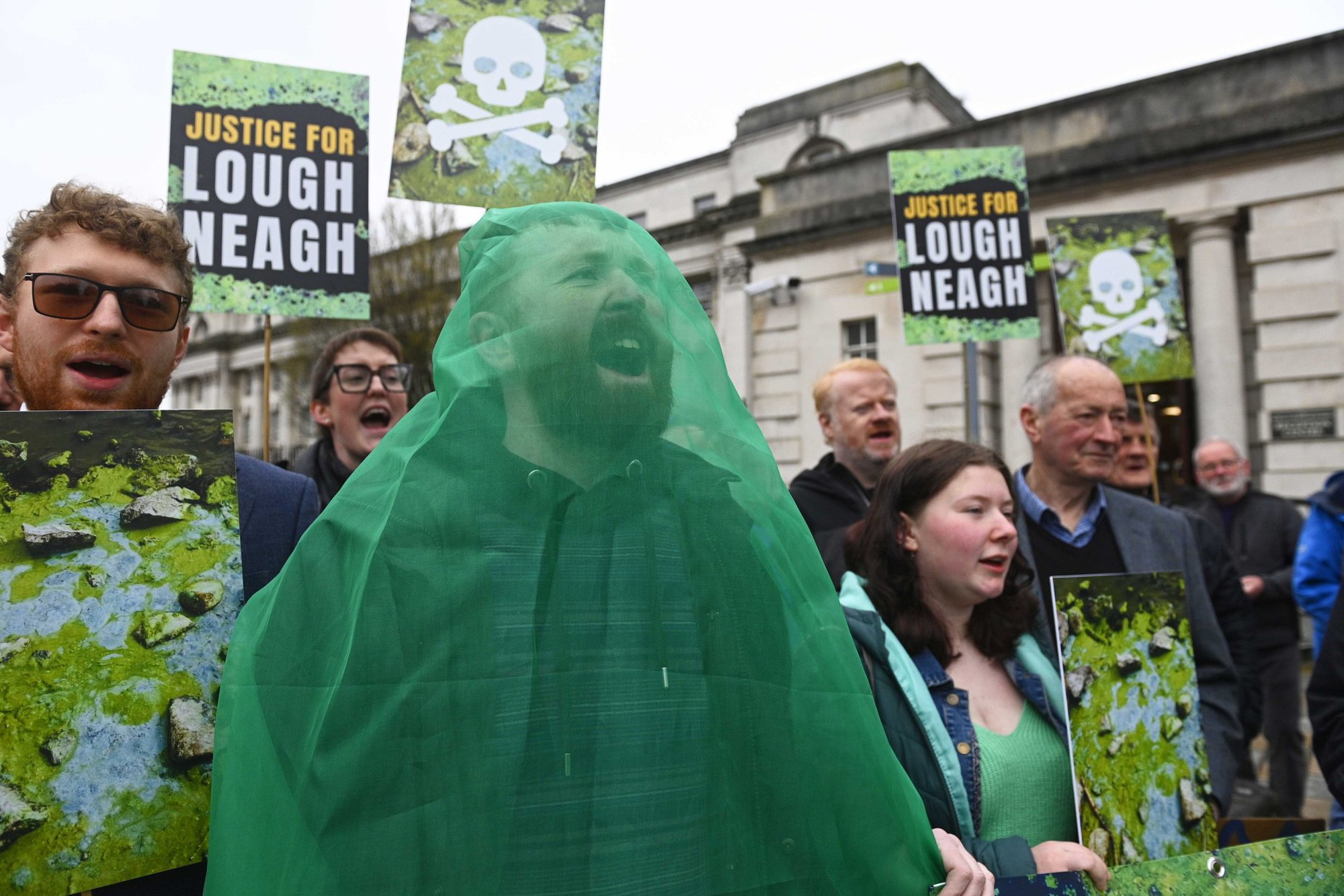
To coincide with the hearing, campaigners gathered outside the court in a peaceful protest, joined by the Goddess of the Wye—a striking 10-foot puppet symbolising the campaign to save Britain’s rivers from pollution. Campaigners were wearing chicken masks, held ‘choked by chickens’ placards and a banner that reads ‘Factory farms are killing our rivers’. The spectacle highlighted the ecological crisis unfolding across the country’s river catchments, which they say is due to the uncontrolled growth of industrial-scale farming.


Legal case
This case is challenging the lawfulness of Shropshire Council’s grant of planning permission for another intensive poultry unit in Shropshire.

The High Court will today consider the following arguments:

  • Ground 1: The council failed to fully and lawfully assess the environmental impacts of the development and, in particular, the effects of spreading manure on land.
  • Ground 2: The council acted unlawfully by imposing a condition which failed to prevent the spreading of manure on land and so failed to address concerns that the council had itself raised about the environmental effects of the development.
  • Grounds 3 and 4: The council failed to carry out a lawful assessment before granting the permission (i) by determining the significance of some of development’s impacts by reference to thresholds, (ii) by failing to carry out a lawful in-combination (cumulative) assessment of those impacts, and (iii) by assuming incorrectly that a key form of mitigation in the form of air scrubbers would be continually operational.

Campaigners are pushing for the council’s decision to be found unlawful and quashed.


Charles Watson, Chair and Founder of River Action, said:
“Like some ghastly car crash in slow motion we’re watching the River Severn suffer the same fate as the Wye. Shropshire Council is simply rubber-stamping massive chicken factory farms without considering the potentially horrific cumulative environmental impact of stacking these industrial units up against each other. These farms are appearing  all over the river’s catchment like a septic rash, with no credible plan to sustainably manage their huge toxic emissions of chicken manure. If we don’t stop them now, it’ll be too late for yet another iconic British river.”

Ricardo Gama, solicitor at Leigh Day, the firm representing Dr Caffyn, said:
“This is an important case in establishing the approach which planning authorities need to take when determining planning applications for intensive agricultural units. Our client believes that the failure by authorities to properly look at the cumulative impacts of the industrial levels of manure and other waste which these developments produce has led to the Wye and Severn river catchments being inundated with waste.”


The tide is turning on megafarms: holding livestock polluters to account

This hearing follows last month’s landmark judgment in National Farmers Union v Herefordshire County Council, with the High Court declaring farming manure as waste with huge implications for handling manure on farms everywhere – a major win in the fight against harmful agricultural practices.

It also follows the rejection of a megafarm in Methwold, Norfolk earlier this month due to environmental concerns.

These decisions should lead to tighter regulation, better planning and improvements to river health across the country. Today’s case is the next important step in the fight to clean up the UK’s severely polluted rivers.

Privacy Overview

This website uses cookies so that we can provide you with the best user experience possible. Cookie information is stored in your browser and performs functions such as recognising you when you return to our website and helping our team to understand which sections of the website you find most interesting and useful.