The “Make a Nuisance” Campaign: Using the Law to Speak Up for Our Rivers

Download PDF
By Chloe Peck, Senior Engagement Coordinator at River Action


When River speaks, what does River say?

When River is harmed, how does a body of water make its cries heard?

And when we step in to speak for River, through our human legal systems, whose voice do we really use?

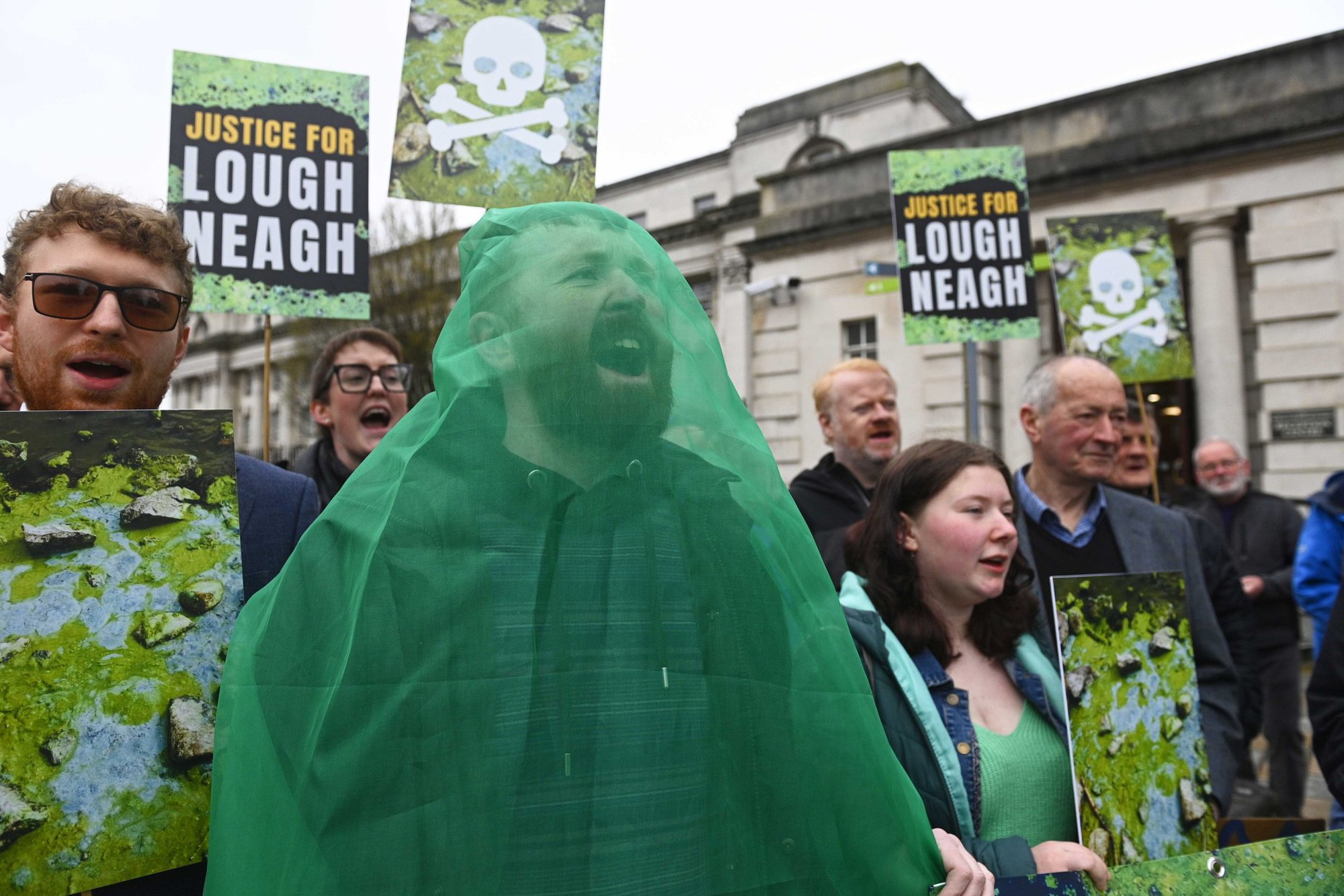
At River Action, we recently helped amplify a cry for the river through the launch of the ‘Make A Nuisance’ campaign.  The campaign creates a way to speak through the law. Working alongside Friends of the Thames and 15 people from 13 different areas across the Thames catchment, we supported local residents to submit Statutory Nuisance complaints about Thames Water to their local authority. The aim of the campaign is to create a collective noise, which further holds Thames Water to account by enabling community members to take direct action using a powerful legal tool. 

Statutory nuisance law is a long standing area of UK law which requires local councils to investigate harms from pollution or noise. If the pollution is found to be causing a problem, the council enforces the polluter, Thames Water, to seize and desist the action, sewage pollution, through Abatement Notices.

In order to ensure the letters were rooted in real life experiences of pollution, the participants were responsible for gathering stories and data to evidence their complaints. This included photos of sewage smears on rowing boats, data from nutrient and pathogen tests, and testimonies from local people who had become sick from swimming. This was complimented by compelling evidence on failing sewage treatment works gathered by River Action’s Campaigns Analyst  Dr Samir Seddougui. Their letters were accompanied by an attachment outlining the relevant legal procedures, prepared by our Head of Legal, Emma Dearnaley, alongside lawyers from Leigh Day. 

Using statutory nuisance as a campaigning tool is powerful, as it uses the law to allow local people to have their voice heard. This is useful where previously the community’s lived experience of the sewage crisis has been dismissed and sidelined. The campaign challenges this by forcing responsibility back into a system where regulation repeatedly stalls and accountability slips. The process creates formal records, duties, and pressure. It is slow, procedural, and intentional — not a protest stunt – however, it has the potential to make substantial change.

Statutory nuisance as a form of protest offers a unique way to demand action, however, when used to speak for nature, we must consider its limits. Statutory nuisance is unapologetically human-centred. The law exists to protect residents from activities that interfere with their health, comfort, or enjoyment of their home or local environment, and it places a duty on local councils to investigate and act when such interference occurs. It fundamentally is concerned with human’s experience of the environment, not the environment’s own experience. The river has no legal standing without humans.

This is not to say this is the perception across the world. The Whanganui river is often cited in nature writing as an example of a river with legal personhood. The river was granted personhood in 2017 after 140 years of negotiations fought by the Māori group of Whanganui, who consider the river as their ancestor. With personhood status, if the Whanganui river is harmed, the law recognises this as a harm to the Maori group. The group and the river are one connected being. In the UK, we do not have the same recognitions in place; in legal standing what harms nature does not harm us. Lawfully, we are not one and the same with the world around us.

Despite these legal limitations, the people who wrote nuisance complaints are deeply connected to the Thames and its tributaries. They are rowers, swimmers, house boat dwellers, kayakers, and citizen scientists. They rely on the river for community, exercise, business, as well as spiritual and mental wellbeing. And despite its limitations, the campaign is genuinely exciting, as a community-led action, with people taking initiative to use law as something real; not a distant inaccessible tool, but something that propels momentum and possibility for change. 

This connection is reflected in the experience of campaigner Blake Ludwig, who took part in the Make A Nuisance campaign on the River Kennet:

“We have to see that water isn’t simply a dead material for us to use at our leisure, or as a waste receptacle… Through collecting evidence and building a nuisance complaint, I’ve come to understand how invisible pollution can be — and how only long-term relationship, observation and care allow us to really see what’s happening to our rivers.”

What the system of nuisance complaints tells us is that we live in a climate which recognises people and nature as separate. We have not retained the historic kinship between human and nature which the Maori people have. In our social system a person is legible through documents, numbers, and certificates. Personhood is administrative. Within this system, the river’s voice is only heard when it passes through us. So we therefore have a duty to nature to ensure that nature’s voice is heard.

And how do we do that authentically? By knowing a river as we might know a family member, and caring for it as we would a friend. And all the while recognising that a river is not human at all. A river is a living system with its own rhythms, flow, and resilience, deserving of respect not because it resembles us, but because it exists in its own right.

When I talk about sewage pollution, I am often asked by wild swimmers if they should stop their beloved sport. The answer is no. Not because the dangers aren’t present, they are, but because connection matters. By spending time and interacting with the river, we are able to create a deep and intimate relationship with the river. 

The power of the Make a Nuisance campaign has come from people who live entwined, not separate, from the river. So the work, for now, is slow, careful and continuous. Keep swimming, keep connecting, keep being with the river. Speak to the river, and the river may well speak through you.

The Government’s Water White Paper: The Good, the Bad and the Ugly

Download PDF

Written by Ellie Roxburgh, Policy and Advocacy Manager at River Action

This Government’s focus on reforming the water sector is welcome and timely. Recent failings by South East Water and Thames Water have demonstrated that water companies are defective on multiple fronts. The public is mobilised for change and the Government must go further than minor tweaks to the status quo. The current model of profit-driven privatisation has failed, evidenced by the polluted state of our rivers, exploitative ownership models and inadequate regulatory oversight in the water sector. The water pollution caused by agricultural practices, industrial waste and road run-off must also be urgently recognised and addressed. 

The time for change is now. We need a government that is bold in ambition and willing to implement reforms fast enough to deliver the measurable improvements needed to fulfil its election promise to clean up our rivers, lakes and seas.

So, what is a White Paper?

A White Paper is a government document that precedes legislation. It sets out what to expect in the upcoming King’s Speech when the parliamentary agenda is laid down by the King. This White Paper focuses largely on the recommendations made by Sir Jon Cunliffe’s Review of the water sector in 2025. Below, we’ve set out the good, the bad and the ugly of the government’s plans for water reform.

The Good

Tough, independent regulators: For too long, water companies have gotten away unscathed with polluting our rivers. Today’s announcements put some strength into the regulator, including no-notice powers for the regulator to check security and emergency preparedness, Performance Improvement Regimes for failing water companies, and a Chief Engineer to monitor infrastructure.

The government announced a consolidation of water industry regulators into one entity, with oversight of all sectors impacting the water environment. This new regulator will have public health and environmental protection as a key objective, alongside affordable bills, financial resilience of the water sector, and robust oversight of water companies’ infrastructure. This regulator must have enough teeth to hold water companies to account with penalties that stop them polluting. We need a regulatory system that enforces the law and, to do that it must be well-financed.

Democratic decision-making: The government has committed to introducing a regional water planning function by bringing together councils, water companies, farmers and developers, with double the funding for catchment partnerships. The cross-sectoral and target-driven characteristics of the new regional water planning function are welcome. However, while it is important that these actors have a seat at the table, there needs to be an independent authority that makes decisions based on the environmental health of the catchment and the public health of customers.

These authorities need to sit above water companies and other self-interested actors. They need powers to influence local planning authorities decisions over industrial planning applications and permit decisions, based on the ecological health of the river and surrounding habitats. Regional oversight should support a tiered approach to action on water pollution, whereby the most affected areas are prioritised as the focus of rapid action and enforcement (including Scientific Sites of Scientific Interest and chalk streams). This would enable the Secretary of State to enact Water Protection Zones and a potential moratorium on industrial livestock units in areas, such as the River Wye, that are experiencing significant nutrient loading from industrial agriculture.

A long-term water strategy: We are pleased to see the Government taking a long-term view of improving the water sector. However, decisions at local and regional levels must align with and enable the delivery of a national strategy for planning, financing, governing and regulating sewage treatment, water quality and supply to ensure a joined-up approach to securing water and clean rivers, lakes and seas. Measures and targets should be put in place to deliver on commitments within the Environmental Improvement Plan and Water Framework Directive across sectors and regions, to require all actors to contribute towards achieving national targets.

Abolition of self-monitoring: The government has committed to abolishing the self-monitoring of water companies. The White Paper has set out plans for the new regulator to have a Chief Engineer to monitor infrastructure, and for water companies to proactively report on infrastructure conditions. The test will be how regularly the regulators independently test the infrastructural quality and environmental impacts of water company operations.

The Bad

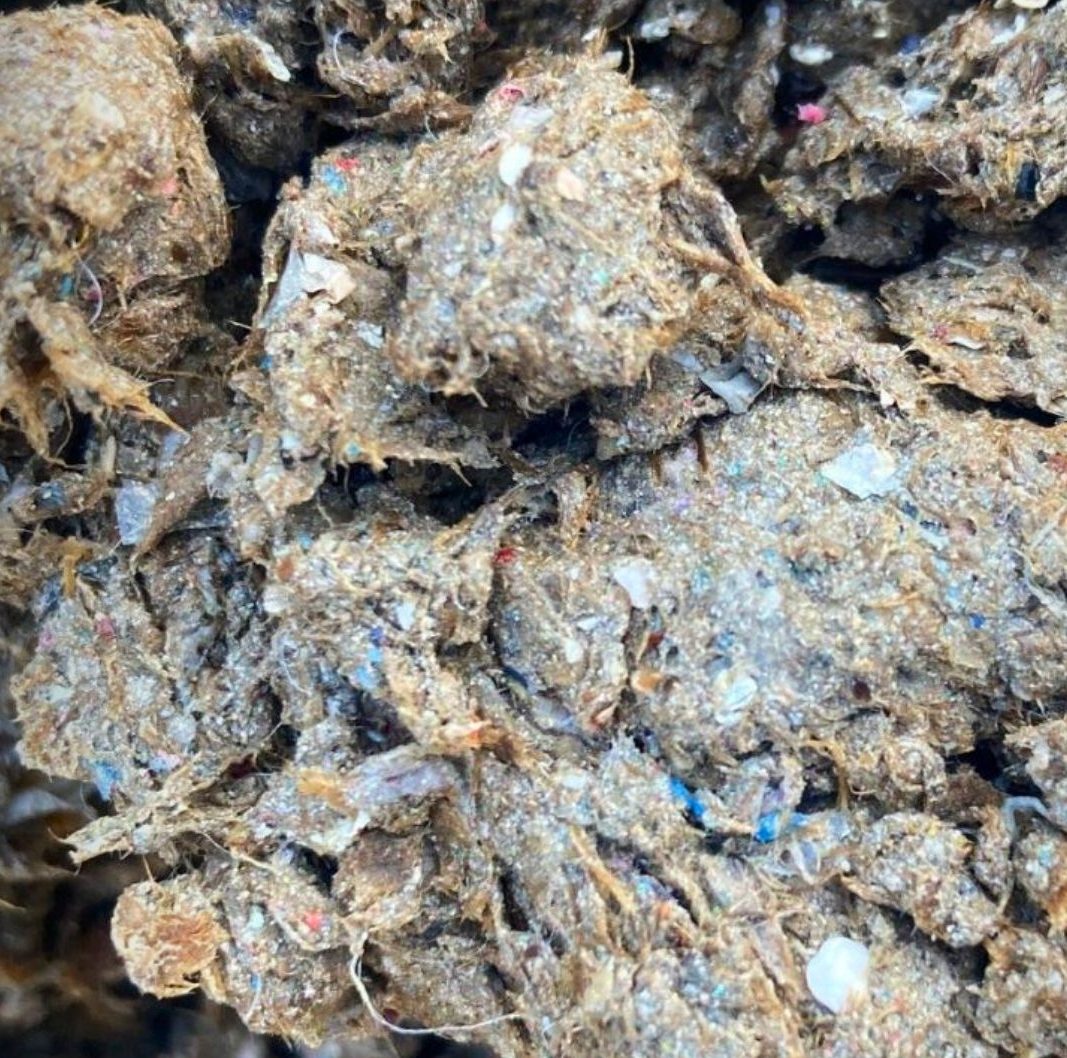
Limited scope on sewage sludge: While we welcome the Government’s commitment to consult on reforms on how sewage sludge use in agriculture is regulated and whether sludge should be included in the Environmental Permitting Regulations, meaningful action is needed that goes beyond end-of-pipe solutions. The Government should investigate whether legislation is needed to stop water companies from selling contaminated sludge to farmers, and as recommended by the Independent Water Commission, the Government must consider Extended Producer Responsibility for all of the contaminant producers across the supply chain.

Nothing new on agricultural water pollution: Agricultural water pollution is on a similar scale to water company pollution and the White Paper recognises this, estimating around 40% of river and groundwater pollution is due to agricultural practices. Yet agriculture has not had equivalent dedicated resources to identify and implement solutions to reduce environmental harm as the water sector. Consolidating agricultural water regulations is welcome, but we also need to see more funding for regulators, greater support for farmers to implement much-needed infrastructure, and a planning system that is empowered to decide when catchments have enough industrial farms. It is critical that environmental permitting is extended to industrial cattle and moves to do this must be swift.

The Ugly

Essential requirements instead of incentives: Today’s announcements start to embed public health and environmental protection in the water system with targets and objectives. Reform of the incentive framework to reward companies for delivering outcomes like public health, the environment and long-term resilience means these outcomes will continue to be seen as optional when they should be essential requirements of operating. 

Continued prioritisation of private interests: Regulation alone cannot fix a deeply privatised system that is designed to put profit first. The White Paper recognises some owners have prioritised “short-term profits over long-term resilience and the environment”. That is exactly why the ownership model must change. However, the White Paper still treats the profit-driven model as the default and focuses on constraining its worst excesses. The approach to ownership change is optional and company-led, which means it is very unlikely to happen. Most critically, the White Paper makes no commitment to a thorough, evidence-led review of alternative ownership models. We want to see a clear move toward public benefit models for water companies, not a slightly better managed private monopoly. A public benefit model would mean that water companies have legal duties to put public health and the environment first, profits and shareholder dividends are secondary, and short-term extraction is ruled out.

And what if water companies continue to fail financial and legal obligations?

New legal powers may be valuable, but the Government and regulator must use the extensive and powerful ones they already have. Performance Improvement Regimes are a step in the right direction, but the Special Administrative Regime has existed under the Water Industry Act 1991 for decades and must now be used by the Government and regulator. When a water company fails to meet its financial or legal obligations, as is unfortunately the case with more than one water company and with Thames Water being the clearest case for such an intervention. The commitment in the White Paper for water companies to establish plans for special administration is welcome, but transparency on when the regime will be triggered by the regulator and the Environment Secretary remains lacking.

Reforming the water environment requires bold and urgent action. We need to see the Government follow through on its reforms with greater ambition.

Government White Paper on Water Reform Falls Short of Real Reform

Download PDF

Today, the government has released its long-awaited Water White Paper. This White Paper sets out the Government’s response to the recommendations made by Sir Jon Cunliffe’s Review of the water sector in 2025. Although there are some welcome steps, it falls short of the ambition and enforcement needed to Rescue Britain’s Rivers.

CEO of River Action, James Wallace said:

“The publication of the Water White Paper signals the Government recognises the scale of the freshwater emergency, but lacks the urgency and bold reform to tackle it. 

“Proposals for a new water regulator, including the appointment of a Chief Engineer, alongside infrastructure ‘MOTs’ and no-notice inspections of water companies, are welcome steps, provided the regulator is truly independent, equipped with real powers and funded by The Treasury to hold polluters to account.

“However, major gaps remain. These reforms will fail unless the privatised model is confronted head-on. The crisis is the result of a system that prioritises short-term profits and shareholder payouts over people, rivers, and public health. 

“Special Administration must be the clear route to a public benefit model for water. It is the mechanism by which failing water companies can be taken out of extractive ownership and restructured so that investment serves customers and the environment, not short-term results. This requires clear, published triggers for Special Administration and a firm commitment to reform ownership and finance so that profits are secondary, long-term, and conditional on strong environmental performance and public benefit.

“We are also concerned about the emphasis on smart meters, which risks placing responsibility on households when water companies have failed for decades to invest in ageing, leaking infrastructure. Millions of litres of water are lost every day, and consumers should not be asked to pay for corporate underinvestment.

“Finally, while agricultural pollution is acknowledged, the proposals do not yet go far enough in ambition or enforcement needed to tackle this problem at source. The abomination of sewage sludge epitomises the challenge: farmers pay water companies for sludge to spread industrial ‘forever’ chemicals on the land that grows our food. The real test of these reforms will be whether they deliver a system that puts public and environmental protection ahead of corporate profiteering.”

As the government prepares its upcoming Water Reform Bill, we will continue to push for real, meaningful reform and press for tougher enforcement, stronger accountability, and a water system that works for people and nature — not lining the pockets of polluters.

Meet Christian Fuller, River Action’s new Legal Coordinator

Download PDF

Q1. Tell us about yourself

Hi, I’m Christian, and I’ve recently joined River Action as Legal Coordinator.

I grew up in Conwy, where the Eryri National Park was a constant part of my life. Those early experiences shaped my relationship with nature: not something to dominate, but something we live alongside and have responsibilities towards.

Before joining River Action, I worked across environmental law, political monitoring, and campaigning, most recently at Greenpeace International in Amsterdam. Alongside this, I’ve been involved in political and environmental campaigning through SERA, Labour’s environment campaign. I’ve just moved back to the UK, and I’m really excited to be putting my skills to use protecting rivers and supporting the communities that depend on them.

Q2. What first sparked your interest in protecting rivers and freshwater ecosystems?

I am lucky to have spent a lot of time kayaking and swimming in rivers and lakes. As I got older, seeing those same rivers increasingly affected by pollution, sewage discharges, the climate crisis and ecological decline made the crisis feel both urgent and personal. Historically, geographically, and politically, rivers are meeting points in the British Isles. Rivers are the places where the climate and biodiversity crisis, corporate exploitation and weak enforcement meet, but they are also the space where we can come together to write something new.

Q3. You have just spent 6 months at Greenpeace International. Can you describe the work you did there, the campaigns you were involved with, and what you learned from that experience?

After completing a Masters in International Environmental Law at Utrecht University, I joined the Greenpeace International Legal Unit in Amsterdam for a six-month internship. What stayed with me most was seeing how powerful the law can be when it’s used alongside campaigning and political pressure. I supported strategic litigation across several campaigns: challenging unlawful deep-sea mining in areas beyond national jurisdiction; pursuing accountability for forced labour at sea in corporate supply chains; and using European law to resist a multi-million-dollar SLAPP suit brought by a US oil company against Greenpeace. I was also lucky enough to attend the International Court of Justice’s historic Advisory Opinion on Climate Change and to scope future climate litigation to build on 2025’s historic legal victories.

Q4. You serve as an executive committee member at the Socialist Environment and Resources Association (SERA). Could you tell us more about that role, what the organisation does, and how that experience shaped your approach to environmental advocacy?

SERA is Labour’s environment and climate organisation, working to strengthen ambition across the movement by connecting grassroots members, trade unions, NGOs and parliamentarians, and putting climate, nature and environmental justice at the centre of political power. As an executive committee member, I contribute to strategy, governance, fundraising and campaign development. I also founded and led Our Earth in 2050, a youth-led initiative amplifying young people’s voices within Labour’s environmental agenda – defining its purpose, securing resources, coordinating volunteers and building partnerships. This experience has shaped my approach to environmental advocacy by highlighting the importance of coalition-building, clear strategy, and political judgement – an approach I now bring to my work at River Action, where legal accountability, community mobilisation, and political engagement are combined to protect rivers and the communities that depend on them.

Q5. Looking ahead to your new role as River Action’s Legal Coordinator, what will you be focusing on, and what can people expect to see from you in 2026?

My role focuses on using the law as a lever for change. That includes supporting River Action’s strategic litigation, producing legal research and briefings, monitoring legal and policy developments, and working closely with colleagues and communities to ensure legal action feeds into wider campaigns.

A key part of the role is helping connect legal expertise with grassroots action – ensuring communities have the tools, information, and confidence to challenge pollution and hold decision-makers to account.

I’m particularly excited to contribute to legal strategies that are scalable and catalytic, such as catchment-based approaches that stops pollution at source, strengthens enforcement, and supports community-led action. There’s huge potential to use the law creatively and collaboratively, and I’m looking forward to helping develop that work.

Q6. Finally, in your opinion, what needs to change to rescue Britain’s rivers?

We need to move from a system that tolerates pollution and decline to one that actively prevents it. That means deliberate decision-making, stronger enforcement, real consequences for polluters, and communities having access to information, tools, and legal leverage. It also means recognising rivers as living systems that deserve protection in the public interest.

We have to shift legal and governance systems, move the markets, and empower communities. I’m excited to join River Action, whose approach, combining law, campaigning, and community action, gives me a lot of hope.

Construction Site Pollution: The Silent Threat Smothering Our Rivers

Download PDF
By Simon Hunter, CEO – Bristol Avon Rivers Trust

A Hidden Crisis With Very Visible Harm

If you’ve ever stood beside a river and watched it flow clear and vibrant, you’ll know the feeling of peace and connection that our waterways bring. Now imagine that same river turned murky and lifeless, its gravel beds choked with silt, its life below the surface silenced. This is not a distant problem – it’s happening right here in the Bristol Avon catchment, and it’s largely preventable.

Pollution from construction sites might not make the headlines like oil spills or chemical disasters, but make no mistake: it’s a silent killer of river health. Every time heavy rainfall washes sediment, concrete washout, fuels, lubricants, and other contaminants off poorly managed sites and into watercourses, our rivers suffer.

This isn’t just about aesthetics. Fine sediment literally smothers river beds, filling the gaps between gravels that invertebrates and fish eggs need to survive. It alters channel shape, reduces habitat diversity, and disrupts the very processes that keep rivers healthy. What’s more, with climate change driving more intense storms, the volume of runoff and potential for damage is increasing.

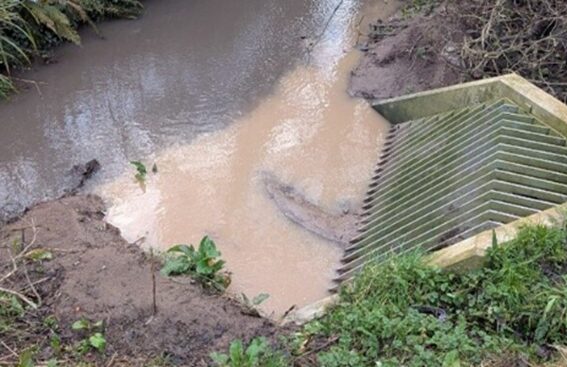
One of several outfalls within 100m, discharging from construction sites in North West Bristol in November 2025.

Communities Give Everything – Only to See It Washed Away

Across the Bristol Avon catchment, community groups pour heart and soul into river restoration. They clear invasive plants, remove rubbish, monitor water quality, and plant trees to stabilise banks. But when sediment-laden runoff from nearby development buries the habitats, they’re working to improve, it’s not just disheartening – it’s counterproductive.

We’ve seen this again and again: volunteers offer thousands of hours of effort, only to have their work undermined by pollution that should have been prevented at source.

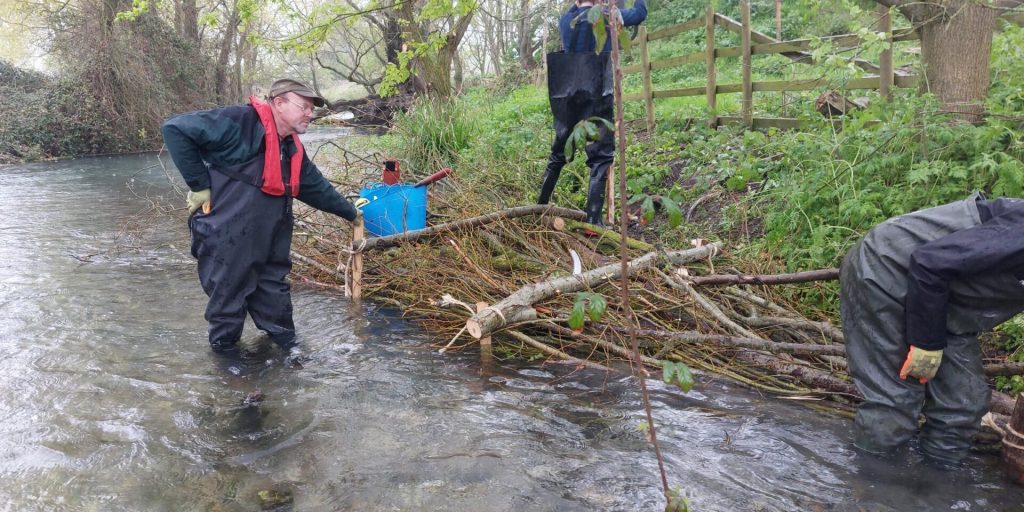
River restoration volunteers in the Bristol catchment

Houses, Infrastructure – Yes. But Not at Nature’s Expense

We agree that new homes, schools, roads, and other infrastructure are necessary. Growth and development are part of a thriving society. But it’s not a choice between development and healthy rivers – we can deliver both. With proper planning, investment in pollution control measures, and rigorous enforcement, it’s entirely possible to build responsibly while maintaining thriving freshwater ecosystems.

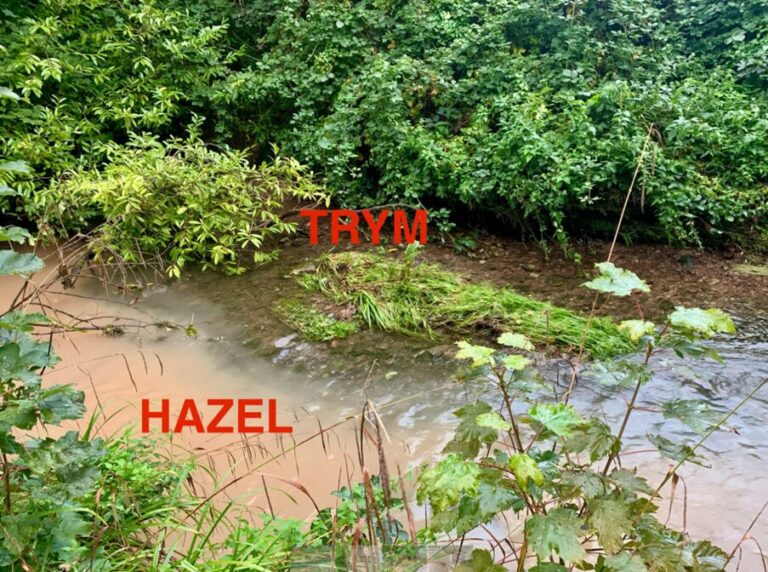
The point at which the Hazel Brook joins with the River Trym at Combe Dingle. Notice the colouration of the Hazel Brook – summer 2025. Credit: Trout in the Trym.

The Problem Isn’t Ignorance – It’s a Failure to Act

The tools and guidance to prevent pollution on construction sites already exist. Best practice measures like sediment traps, wheel wash stations, appropriate stockpile management, and controlled drainage are well understood. What’s missing is consistent implementation and enforcement. When developers cut corners, or when regulators fail to act decisively, it’s our rivers that pay the price – and that cost isn’t abstract. It shows up in lost biodiversity, diminished recreation opportunities, and weakened climate resilience.

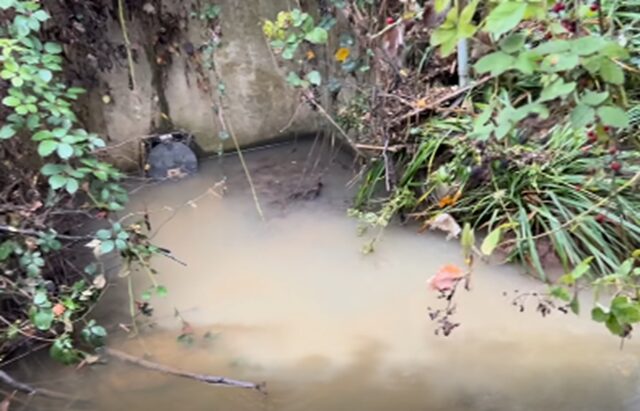
Another outfall discharging from a construction site. Credit: Peter Coleman-Smith (Trout in the Trym), November 2025

We Can and Must Do Better

At Bristol Avon Rivers Trust, we believe that healthy rivers are non-negotiable. They’re essential to climate adaptation, community wellbeing, and the natural capital that supports life in our region. Our rivers should not be collateral damage to development.

Here’s what needs to happen:

  • Developers must embed pollution prevention into day-to-day site practice, not as an afterthought but as standard operating procedure.
  • Regulators must act swiftly and transparently when prevention fails, applying the polluter pays principle without delay.
  • Communities and charities should be supported, not left to pick up the pieces after harm has occurred.

A Call to Action

Our rivers deserve more than well-meaning words. They deserve meaningful protection and robust action. The solutions are not beyond us – what’s needed is the collective will to implement them. Development and nature don’t have to be at odds. With commitment, collaboration, and accountability, we can secure thriving rivers alongside vibrant communities.

If you care about clean water, thriving wildlife, safe spaces for recreation, and resilient landscapes in a changing climate, then this issue matters. Let’s stop pollution at the source. Let’s defend our rivers before it’s too late.

Privacy Overview

This website uses cookies so that we can provide you with the best user experience possible. Cookie information is stored in your browser and performs functions such as recognising you when you return to our website and helping our team to understand which sections of the website you find most interesting and useful.