“Flood the streets for Lough Neagh”: major march on May 17 as toxic algae returns for fourth year
Civil Rights leader Bernadette McAliskey, fishermen, swimmers and campaigners to address protest marking 40 years since historic anti-mining march
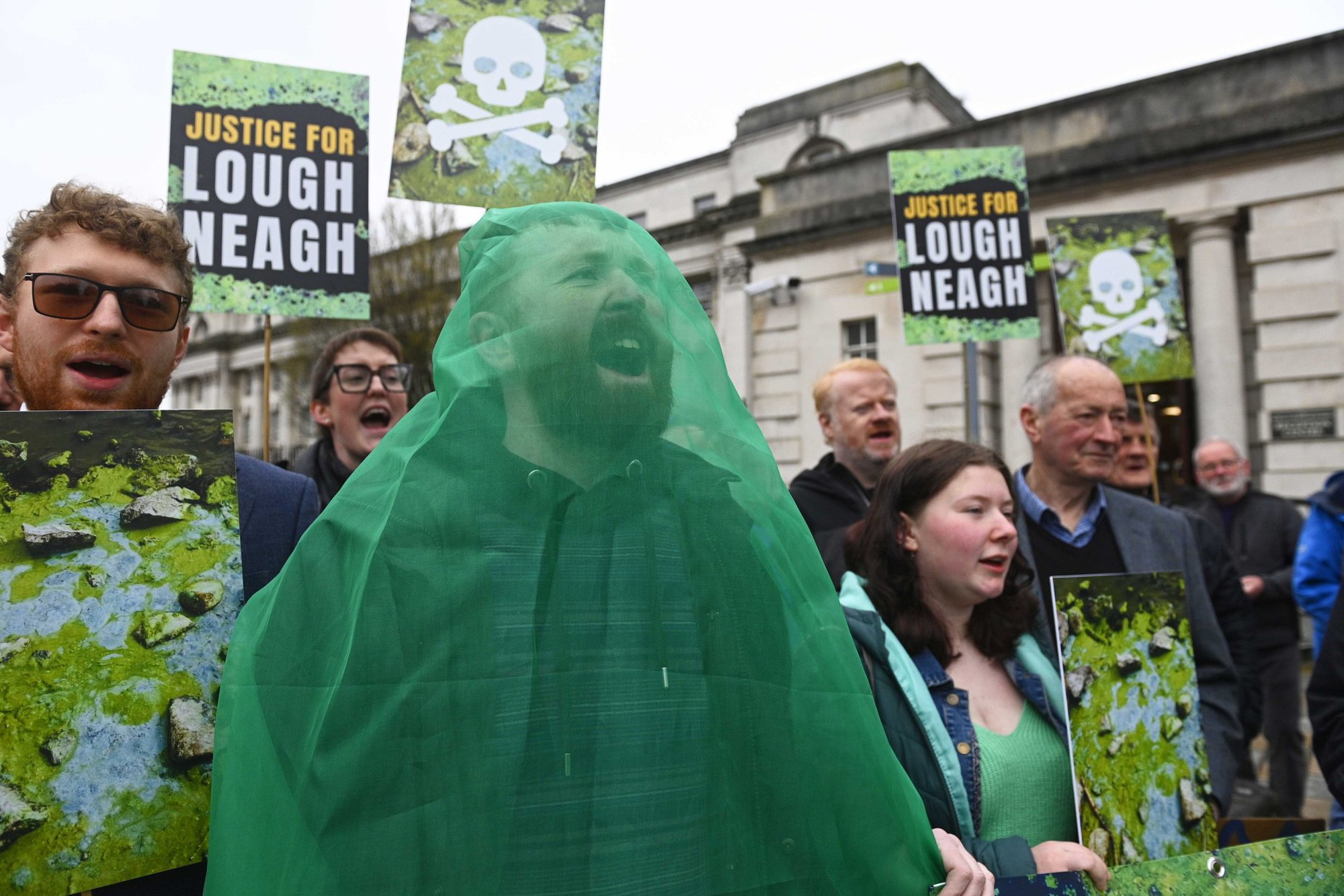
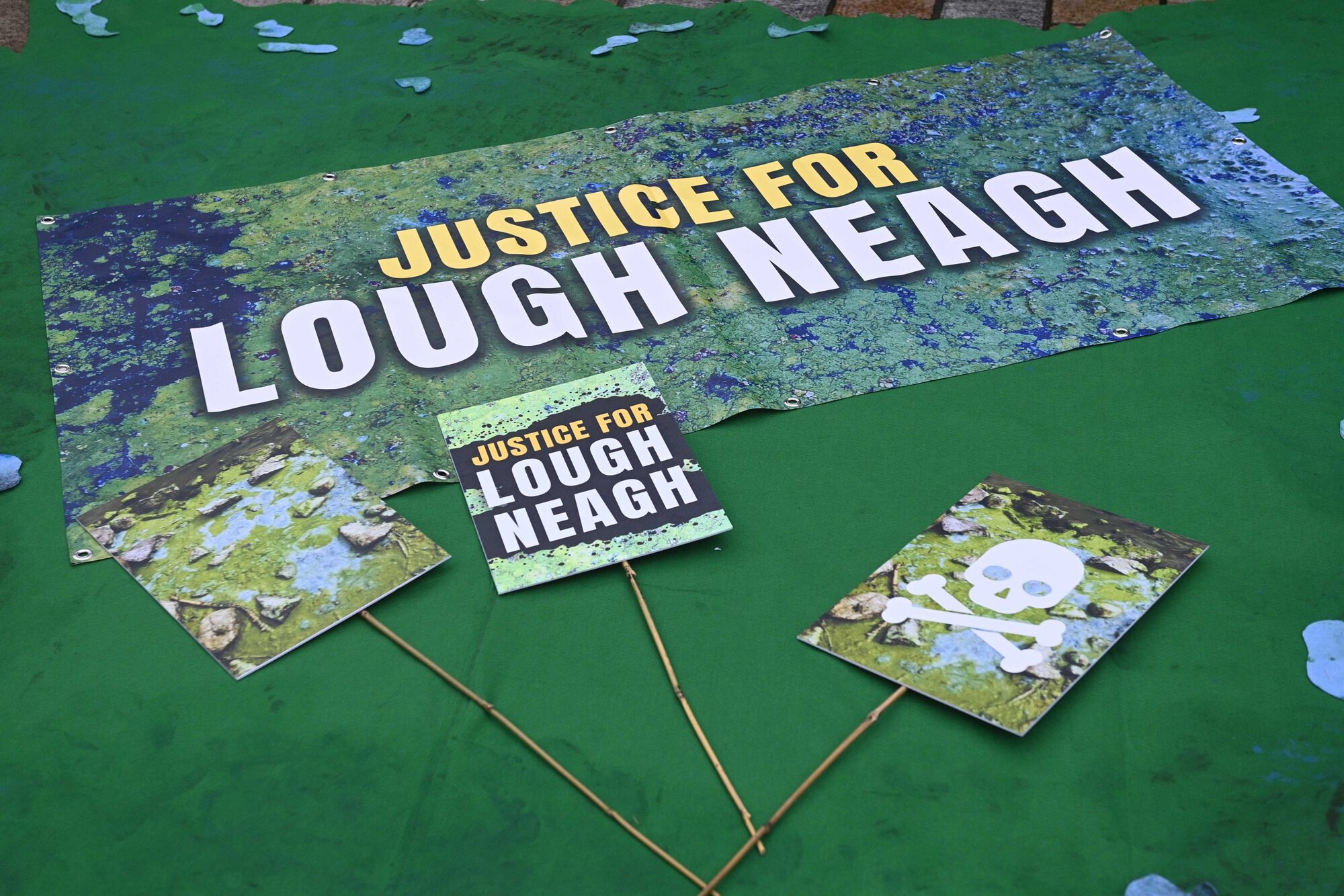
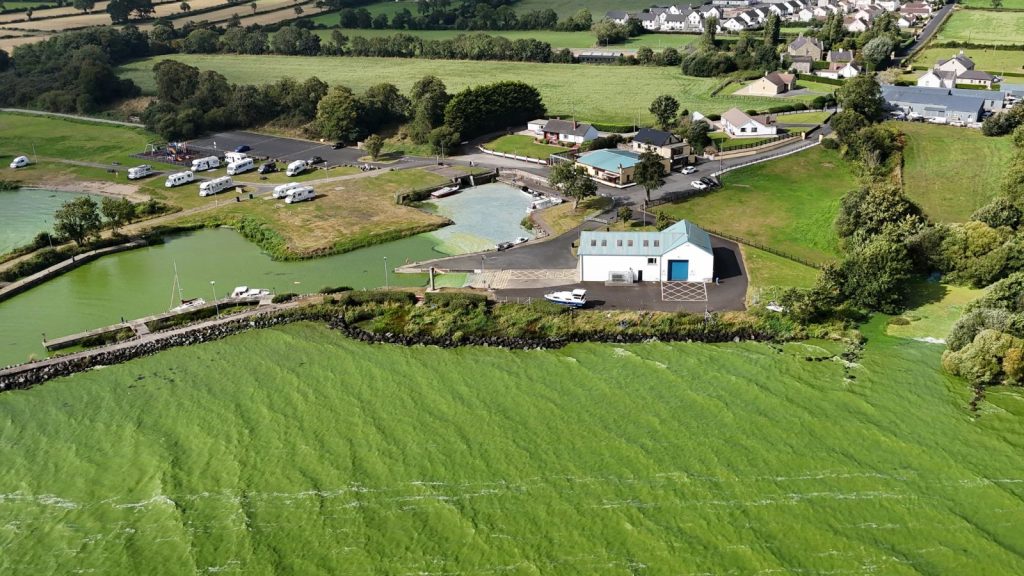
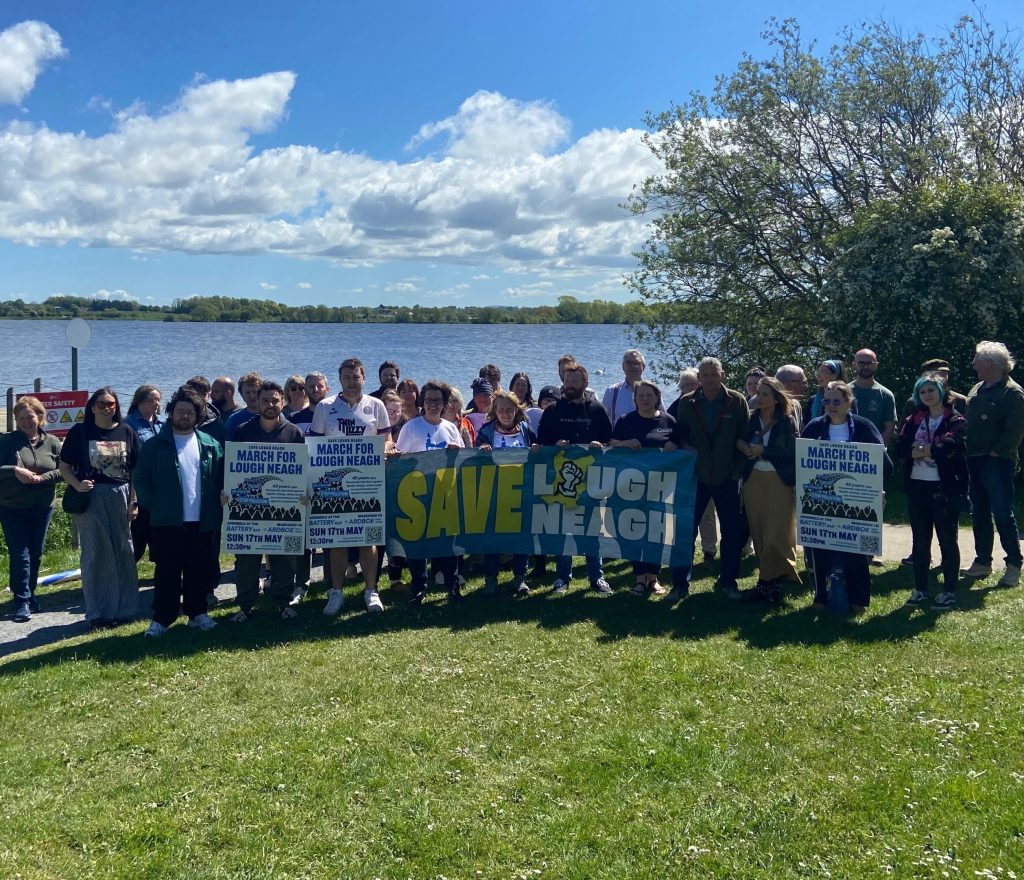
As toxic blue-green algae begins returning to Lough Neagh for a fourth consecutive year, people across Ireland are being urged to “flood the streets” on Sunday May 17 for a major March for Lough Neagh demanding urgent environmental action and accountability from Stormont.
The march, organised by Save Lough Neagh, will leave the Battery Bar in Co. Tyrone at 12:30pm and proceed to Ardboe High Cross on the shores of Lough Neagh, retracing the route of the historic 1986 anti-lignite mining protest where thousands mobilised to oppose the exploitation of the lough.
Speakers announced for the rally include local fishermen, swimmers, environmental activists and campaigners. Civil Rights leader Bernadette McAliskey who is also speaking at the rally has said:
“I’d encourage people to come along for the march to save Lough Neagh. This year marks forty years since the Lignite mining march, and a little over fifty years since the People’s Democracy march of 1969. A great deal has happened over those decades, but the issues facing our communities and waterways are still with us.”
These marches were never just about one moment in time. They were about ordinary people standing together and refusing to be ignored. That spirit still matters today. If communities don’t stand up for themselves, nobody else will do it for them. Hopefully, we can keep this going for the long term. See you on the march this Sunday.”
The protest comes amid mounting public anger over the ecological collapse of the UK and Ireland’s largest freshwater lake, with biodiversity decline, sewage pollution, fish deaths and recurring toxic algal blooms devastating the ecosystem and threatening public health.
Signs of toxic algae were already reported around parts of the lough in February 2026, earlier than in previous years, raising fears that this summer could see another severe outbreak.
The march also comes as Lough Neagh fisherman Declan Conlon takes legal action against the Department of Agriculture, Environment and Rural Affairs (DAERA), arguing that authorities have failed in their legal duty to protect the lough from nutrient pollution.
Conlon, whose family has fished on Lough Neagh for generations, described to the High Court how toxic algae and ecological decline have devastated both the ecosystem and traditional ways of life around the lough.
The Save Lough Neagh campaign says the crisis is the result of political failure, industrial agriculture, underinvestment in wastewater infrastructure, continued sand dredging and a regulatory system that has prioritised private profit over environmental protection.
The campaign is also reiterating its opposition to the proposed Moy Park-linked industrial factory farm outside Magherafelt currently under planning consideration in Mid Ulster Council, which campaigners say would further intensify nutrient pollution in the lough catchment.
The march has been endorsed by a wide range of environmental, social and political organisations, including River Action UK and Friends of the Earth Northern Ireland, as well as organisers involved in the original 1986 lignite protests.
Earlier this year, wildlife broadcaster and environmental campaigner Chris Packham backed the mobilisation, describing the situation at Lough Neagh as “a national scandal”. He commented:
“The destruction of Lough Neagh is a national scandal unfolding in plain sight. One of these islands’ most important freshwater ecosystems is being sacrificed because governments and regulators have failed to act with the urgency this crisis demands.
Toxic algae, collapsing biodiversity and sewage pollution are not inevitable, they are the consequences of political choices. People marching on May 17 are standing up not only for Lough Neagh, but for every community’s right to clean water and a healthy environment.”
Lough Neagh campaigners at Save Lough Neagh’s film festival and conference last weekend.
Enough is Enough
Pádraig Mac Niocaill, a spokesperson for Save Lough Neagh, said:
“Forty years ago, communities here stood against extraction in the form of lignite mining. Today we face another form of exploitation and environmental destruction, and once again ordinary people are being forced to defend our lough. Stormont has failed Lough Neagh by putting private interests and industrial growth ahead of clean water, biodiversity and public health. Toxic algae is returning year after year while political leaders continue to delay meaningful action.
“The Earl of Shaftesbury continues to profit from sand dredging while the ecosystem collapses around us. Meanwhile, the parties that backed the disastrous Going for Growth agri-policy continue subsidising major polluters while NI Water infrastructure crumbles and untreated sewage enters the lough. Enough is enough. On May 17 we are calling on people across the country to flood the streets for Lough Neagh and demand a future where people, wildlife and clean water come before profit.”
Mary O’Hagan, Lough Neagh swimmer, said:
“Even though winter has barely ended, we are already seeing signs of algae returning around the lough. Communities are frightened about what this summer could bring.
“We are asking everyone to join us on May 17 and send a clear message that we will not accept the destruction of Lough Neagh as normal. This is about our environment, our health and future generations.”
Declan Coney, Lough Neagh fisherman, said:
“I was at the first lignite protest in 1986 when thousands of people marched to defend this lough from exploitation. Forty years later, we find ourselves fighting again, only now the crisis is even more urgent.
“My family has fished these waters for generations, but what we are witnessing now is devastation. Wildlife is disappearing, the ecosystem is collapsing and fishing communities are being pushed to the brink.
“It should never have come to the point where fishermen have to go to court to force government departments to protect the lough. Talk is cheap. We need action now.”