
The Government’s Water White Paper: The Good, the Bad and the Ugly

Download PDF

Written by Ellie Roxburgh, Policy and Advocacy Manager at River Action

This Government’s focus on reforming the water sector is welcome and timely. Recent failings by South East Water and Thames Water have demonstrated that water companies are defective on multiple fronts. The public is mobilised for change and the Government must go further than minor tweaks to the status quo. The current model of profit-driven privatisation has failed, evidenced by the polluted state of our rivers, exploitative ownership models and inadequate regulatory oversight in the water sector. The water pollution caused by agricultural practices, industrial waste and road run-off must also be urgently recognised and addressed. 

The time for change is now. We need a government that is bold in ambition and willing to implement reforms fast enough to deliver the measurable improvements needed to fulfil its election promise to clean up our rivers, lakes and seas.

So, what is a White Paper?

A White Paper is a government document that precedes legislation. It sets out what to expect in the upcoming King’s Speech when the parliamentary agenda is laid down by the King. This White Paper focuses largely on the recommendations made by Sir Jon Cunliffe’s Review of the water sector in 2025. Below, we’ve set out the good, the bad and the ugly of the government’s plans for water reform.

The Good

Tough, independent regulators: For too long, water companies have gotten away unscathed with polluting our rivers. Today’s announcements put some strength into the regulator, including no-notice powers for the regulator to check security and emergency preparedness, Performance Improvement Regimes for failing water companies, and a Chief Engineer to monitor infrastructure.

The government announced a consolidation of water industry regulators into one entity, with oversight of all sectors impacting the water environment. This new regulator will have public health and environmental protection as a key objective, alongside affordable bills, financial resilience of the water sector, and robust oversight of water companies’ infrastructure. This regulator must have enough teeth to hold water companies to account with penalties that stop them polluting. We need a regulatory system that enforces the law and, to do that it must be well-financed.

Democratic decision-making: The government has committed to introducing a regional water planning function by bringing together councils, water companies, farmers and developers, with double the funding for catchment partnerships. The cross-sectoral and target-driven characteristics of the new regional water planning function are welcome. However, while it is important that these actors have a seat at the table, there needs to be an independent authority that makes decisions based on the environmental health of the catchment and the public health of customers.

These authorities need to sit above water companies and other self-interested actors. They need powers to influence local planning authorities decisions over industrial planning applications and permit decisions, based on the ecological health of the river and surrounding habitats. Regional oversight should support a tiered approach to action on water pollution, whereby the most affected areas are prioritised as the focus of rapid action and enforcement (including Scientific Sites of Scientific Interest and chalk streams). This would enable the Secretary of State to enact Water Protection Zones and a potential moratorium on industrial livestock units in areas, such as the River Wye, that are experiencing significant nutrient loading from industrial agriculture.

A long-term water strategy: We are pleased to see the Government taking a long-term view of improving the water sector. However, decisions at local and regional levels must align with and enable the delivery of a national strategy for planning, financing, governing and regulating sewage treatment, water quality and supply to ensure a joined-up approach to securing water and clean rivers, lakes and seas. Measures and targets should be put in place to deliver on commitments within the Environmental Improvement Plan and Water Framework Directive across sectors and regions, to require all actors to contribute towards achieving national targets.

Abolition of self-monitoring: The government has committed to abolishing the self-monitoring of water companies. The White Paper has set out plans for the new regulator to have a Chief Engineer to monitor infrastructure, and for water companies to proactively report on infrastructure conditions. The test will be how regularly the regulators independently test the infrastructural quality and environmental impacts of water company operations.

The Bad

Limited scope on sewage sludge: While we welcome the Government’s commitment to consult on reforms on how sewage sludge use in agriculture is regulated and whether sludge should be included in the Environmental Permitting Regulations, meaningful action is needed that goes beyond end-of-pipe solutions. The Government should investigate whether legislation is needed to stop water companies from selling contaminated sludge to farmers, and as recommended by the Independent Water Commission, the Government must consider Extended Producer Responsibility for all of the contaminant producers across the supply chain.

Nothing new on agricultural water pollution: Agricultural water pollution is on a similar scale to water company pollution and the White Paper recognises this, estimating around 40% of river and groundwater pollution is due to agricultural practices. Yet agriculture has not had equivalent dedicated resources to identify and implement solutions to reduce environmental harm as the water sector. Consolidating agricultural water regulations is welcome, but we also need to see more funding for regulators, greater support for farmers to implement much-needed infrastructure, and a planning system that is empowered to decide when catchments have enough industrial farms. It is critical that environmental permitting is extended to industrial cattle and moves to do this must be swift.

The Ugly

Essential requirements instead of incentives: Today’s announcements start to embed public health and environmental protection in the water system with targets and objectives. Reform of the incentive framework to reward companies for delivering outcomes like public health, the environment and long-term resilience means these outcomes will continue to be seen as optional when they should be essential requirements of operating. 

Continued prioritisation of private interests: Regulation alone cannot fix a deeply privatised system that is designed to put profit first. The White Paper recognises some owners have prioritised “short-term profits over long-term resilience and the environment”. That is exactly why the ownership model must change. However, the White Paper still treats the profit-driven model as the default and focuses on constraining its worst excesses. The approach to ownership change is optional and company-led, which means it is very unlikely to happen. Most critically, the White Paper makes no commitment to a thorough, evidence-led review of alternative ownership models. We want to see a clear move toward public benefit models for water companies, not a slightly better managed private monopoly. A public benefit model would mean that water companies have legal duties to put public health and the environment first, profits and shareholder dividends are secondary, and short-term extraction is ruled out.

And what if water companies continue to fail financial and legal obligations?

New legal powers may be valuable, but the Government and regulator must use the extensive and powerful ones they already have. Performance Improvement Regimes are a step in the right direction, but the Special Administrative Regime has existed under the Water Industry Act 1991 for decades and must now be used by the Government and regulator. When a water company fails to meet its financial or legal obligations, as is unfortunately the case with more than one water company and with Thames Water being the clearest case for such an intervention. The commitment in the White Paper for water companies to establish plans for special administration is welcome, but transparency on when the regime will be triggered by the regulator and the Environment Secretary remains lacking.

Reforming the water environment requires bold and urgent action. We need to see the Government follow through on its reforms with greater ambition.
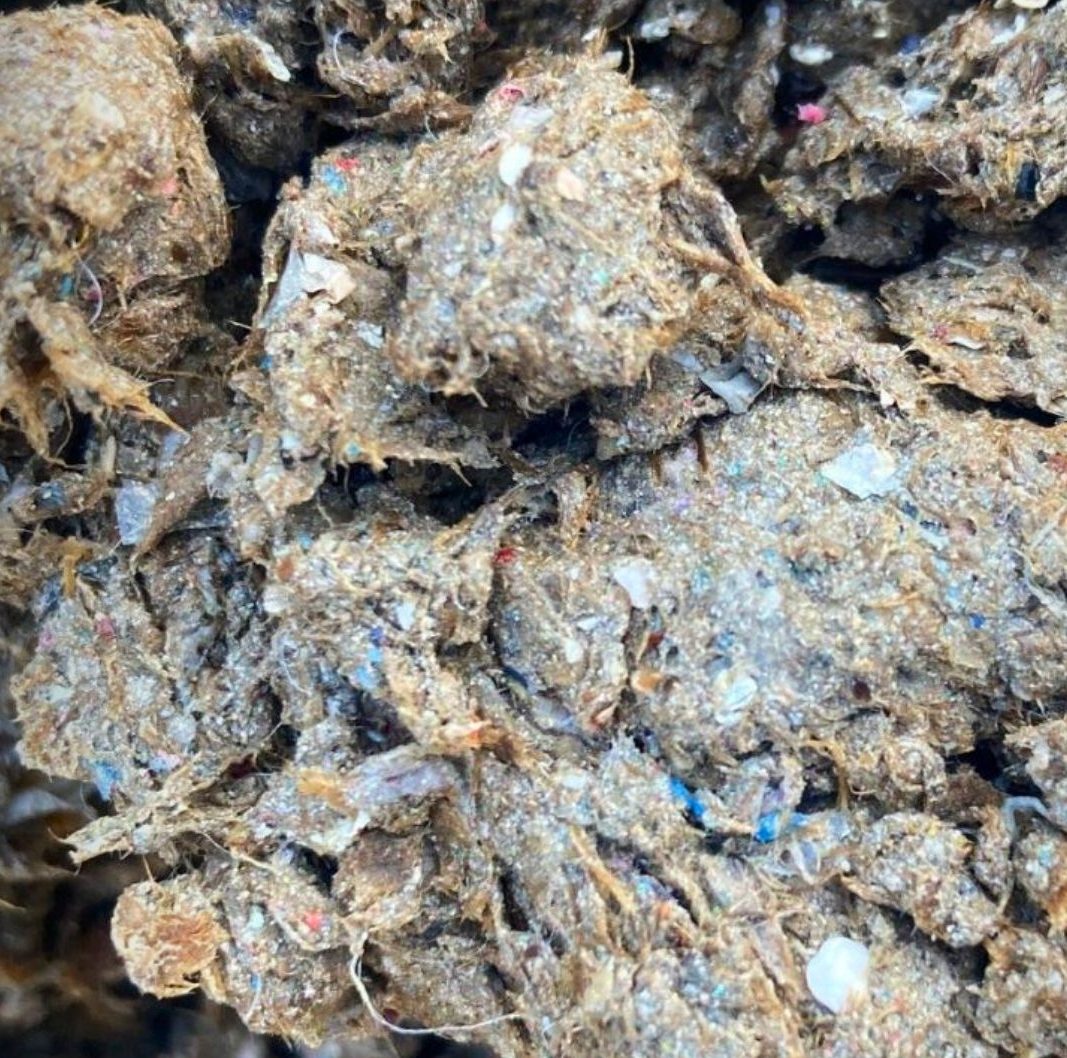
92% of people in the UK say water companies must ensure sewage sludge on UK farmland is not contaminated.

Download PDF

A new YouGov/River Action poll reveals that three-fifths (61%) of UK respondents do not know that farmers commonly use sewage sludge from water companies, and 50% believe this practice carries risks for health and food quality.

The findings will be revealed as a petition calling for an end to the spreading of contaminated sewage sludge, signed by more than  62,800 people, is handed over outside DEFRA’s headquarters on Marsham Street, London, at 10:05am on 16 December.

The petition will be delivered to the Minister for Water and Flooding, Emma Hardy, by River Action and Greenpeace, urging immediate government action.

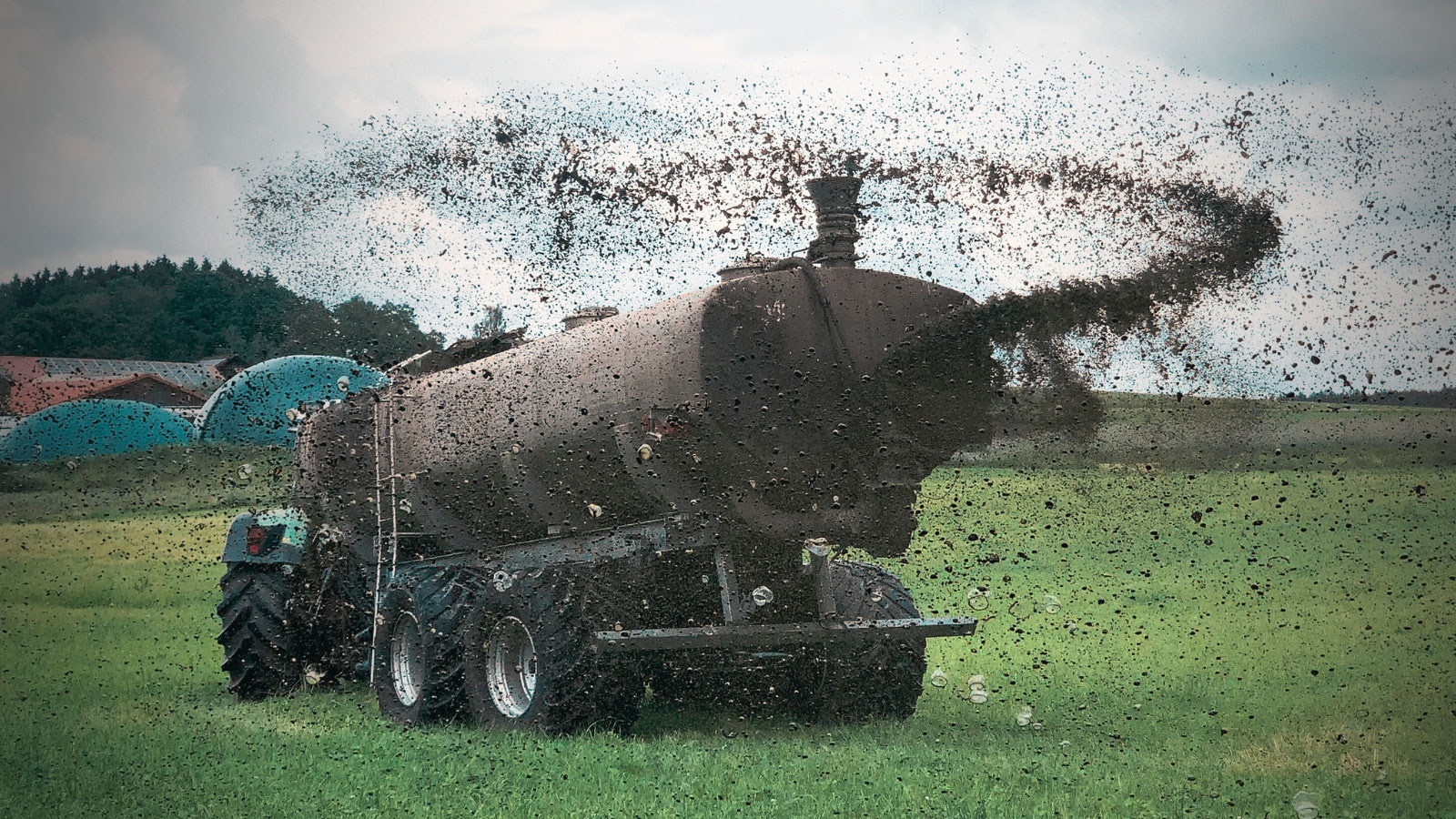
Water companies are selling this toxic sludge to farmers, putting rivers and human health at risk and leaving farmers concerned about the impact on their soil and water. The government must act immediately to stop contaminated sewage sludge being spread on farmland and support farmers in producing safe food while protecting our rivers.

Treated sewage sludge is sold as a cheap fertiliser, but water companies are not required to remove PFAS “forever chemicals,” microplastics, or other modern contaminants, because legislation governing sludge treatment was drafted in the 1980s — long before these pollutants existed. The sludge is now spread widely across farmland, draining into rivers already under severe pressure.


Key public findings from the YouGov survey


  • 92% say water companies should either have a great deal of responsibility (79%) or a fair amount of responsibility (13%) when it comes to ensuring that sewage sludge that will be used on UK farmland is not contaminated.     
  • 89% say the government should have a great deal (59%) or a fair amount of responsibility (30%) when it comes to ensuring that sewage sludge that will be used on UK farmland is not contaminated 
  • 88% support requiring water companies to report publicly on levels of contamination in treated sewage sludge
  • 87% support Increasing regulation on monitoring of treated sewage sludge for contaminants
  • 87% support requiring water companies to conduct further treatment to remove contaminants including forever chemicals and microplastics from sewage sludge
  • 85% support setting legal limits on levels of contaminants in treated sewage sludge spread on UK farmland
  • 47% support banning the spread of treated sewage sludge on UK farmland
  • 62% see a risk from using treated sewage sludge on farmland to water health, around 50% see risks to food quality and personal health
  • 39% think water companies should find a different way of disposing of treated sewage sludge, even if this means water bills are more expensive


Findings from River Action’s farmers survey*


Alongside the national polling, River Action surveyed 105 farmers across the UK to understand how sewage sludge contamination is affecting those who buy and use it on their land.

Although the sample is very modest relative to the size of the UK farming sector,  the results show a striking level of awareness: 83% of respondents recognised the risk of  contamination in biosolids.. 

Concern is widespread. Seventy-two per cent said they were worried about the impact of contaminated biosolids on water health, with almost 40% describing themselves as very or extremely worried.

A similar picture emerges for soil health, with 69% of farmers worried about the application of contaminated biosolids with 41%  describing themselves as very or extremely worried. 

The findings point to clear demand for stronger safeguards.  Farmers expressed strong support for:

  • Better treatment to remove contaminants (76%) 
  • Public reporting on contamination levels (58%)
  • Legal limits set on contaminants (56%) 
  • Tighter regulation on monitoring contaminants  (53%)


CEO of the Nature Friendly Farming Network Martin Lines said, “These findings show just how worried farmers are about the contamination of sewage sludge. And who can blame them? They’re already under huge pressure from supply chains chasing ever-higher profit margins, while water companies are offering cut-price or even free sludge that turns out to be contaminated. 

“Farmers should not be the ones carrying the blame for a problem they didn’t create. This is a mess for the water companies and government to fix, not the people producing our food. Farmers want to do the right thing for their soil, their customers and their rivers, but they need a system that doesn’t set them up to fail.”

Farmer John Hall from County Durham said, “Water companies expect farmers to pay for the privilege of taking their waste, insisting that sewage sludge is a ‘valuable fertiliser’. In any other sector, waste producers cover the cost of safe disposal. But when the ban on dumping sludge at sea came in, water authorities and the Environment Agency simply assumed farmers would pick up the tab and take this supposedly valuable product off their hands.”

A southern Scotland farmer, who wishes to remain anonymous, told River Action, “Having used biosolids in the past, I became increasingly concerned that a natural by-product was becoming laced with household chemicals and industrial wastes, often described as forever chemicals because they break down so slowly in the soil.

“The ongoing accumulation of these substances will damage soil life, be absorbed by food crops, and eventually enter the wider water environment. These materials are more harmful than other inputs applied to the soil.” 

River Action’s Head of Campaigns Amy Fairman said, “Farmers do not want to be dumping contaminated sludge on their land. Water companies are selling sludge laced with forever chemicals and microplastics, and the public is rightly concerned. Human health and our rivers are at risk, and the government must act immediately.”

Hugh Fearnley-Whittingstall added, “People are rightly worried about forever chemicals, microplastics, and other contaminants entering our rivers, soil, and food. Much of it is coming from “toxic sludge” which, astonishingly, is being given to farmers to spread on their land without telling them what’s in it.  Urgent action is clearly needed from both water companies and the government to stop this pollution, support our farmers and food producers, and protect the environment.”


River Action’s Agricultural Water Pollution Strategy


River Action will launch its Agricultural Water Pollution Strategy on 17 December at the Palace of Westminster. The strategy was developed with farmers, food producers, supermarkets, and major fast-food chains to create practical solutions for sustainable farming while restoring river health.

Seven-point plan for clean rivers and fair farming:

  1. Enforce the law properly – Create a single compliance framework requiring the Environment Agency to act when voluntary approaches fail.
  2. Resource the regulators – Ringfence fines to fund training, farmer support, and monitoring tools like satellite imaging and citizen science data.
  3. Fix failing slurry infrastructure – Redirect agricultural subsidy funds to urgently upgrade unsafe or outdated storage systems.
  4. Mandate sustainable nutrient management plans – Prevent over-concentration of intensive livestock farms, improve manure handling, and expand circular-economy manure trading schemes.
  5. Establish regional water authorities – Create catchment-based bodies with powers to coordinate nutrient reduction and implement Water Protection Zones.
  6. Smarter planning and data use – Integrate environmental, farm, and planning data to streamline compliance and remove barriers to essential farm upgrades.
  7. Modernise sludge regulation – Bring sewage sludge under Environmental Permitting Regulations, with legal limits for forever chemicals, microplastics, and other contaminants.


Notes to Editors

  • All figures, unless otherwise stated, are from YouGov Plc. The total sample size was 2,150 adults. Fieldwork was undertaken between 2-3 December 2025. The survey was carried out online. The figures have been weighted and are representative of all UK adults. 
  • The complete YouGov poll dataset is included in full so you can see the numbers behind the headline findings.
  • River Action undertook its own survey of the farming community between 19th November – 10th December. The survey was carried out online and received 105 responses. The finding can be found here.
  • Media can download images of contaminated sewage sludge here. If used, please credit: Fighting Dirty
  • Members of the media are invited to attend the launch of River Action’s Agricultural Water Pollution Strategy, Hosted by Alistair Carmichael on 17 December at 1pm in Dining Room A, Palace of Westminster. Keynote address will be given by Minister Hardy. Register interest at: media@riveractionuk.com

River Action to sue Ofwat over water bill rises

Download PDF


WHAT IS OUR LEGAL CHALLENGE AGAINST OFWAT?

Our legal challenge focuses on funding allocated for wastewater treatment works and pumping stations by United Utilities in and around Lake Windermere.

The case is being taken after detailed investigations were carried out by Save Windermere and Windrush Against Sewage Pollution, which revealed significant and systemic flaws in Ofwat’s approach.

We’re taking legal action to compel Ofwat to reassess its PR24 determination for United Utilities in relation to Windermere and to encourage Ofwat to reassess other water company schemes wherever there are concerns that customers are unfairly covering the cost of past failures.


WINDERMERE: A DAMNING EXAMPLE OF REGULATORY FAILURE

United Utilities, currently under fire after evidence obtained by Save Windermere, revealed 6,000 hours of raw sewage was discharged into Windermere last year, and is a case in point. We have commenced legal action claiming Ofwat has allowed the company to divert funds meant for future projects to deal with past failures—rather than investing in vital improvements to wastewater treatment and pumping stations around the lake.


A SYSTEM RIGGED AGAINST THE PUBLIC

We believe Ofwat has acted unlawfully by approving these funds without ensuring they are spent on genuine improvements to essential infrastructure. Instead, this so-called ‘enhanced funding’ is being allowed to be used to cover up years of failure.

Effectively, Ofwat has signed off on a broken system where customers are being charged again for services they have already funded—while water companies continue to mark their own homework and pollute for profit. This scandal must be addressed. The cost of fixing the UK’s crumbling water infrastructure should fall on the companies and their investors—not on the British public.

We are calling for immediate regulatory action to ensure water companies stop passing the cost of failure onto customers—and start taking responsibility for the environmental damage they have caused.

STATEMENT: River Action’s response to OFWAT £168m fines on polluting water companies

Download PDF

ENDS

For media interviews call Ian at River Action on 07377 547 362 or email media@riveractionuk.com

Thames Water: raw sewage dumped in the River Thames more than 1,900 hours in 2024 so far

Download PDF

Black Samphire: Stephen Fry lends voice to new folk horror film exec-produced by River Action exploring the perils of water pollution – released to mark World Water Day

Thames Water has pumped human waste into the Greater London area of the River Thames for a staggering 1,914 hours since the start of 2024 – equivalent to 79 days.

The damning finding, using publicly available data from Thames Water, is revealed by River Action in the run up to World Water Day (March 22) and the London premiere of a short folk horror film, Black Samphire, it has executive-produced exploring the perils of water pollution.

The data from 40 sites between Kingston and the mouth of the river in the east, shows that storm overflows managed by Thames Water, which is threatened by financial collapse and a possible taxpayer bailout, are almost constantly discharging untreated raw sewage into the river system.

CEO of River Action James Wallace said, “Nearly all our rivers have been polluted by water companies which, since privatisation over 30 years ago when all their debt was wiped, have adopted vulture-like business models. This has led to money from honest water bill payers ending up lining the pockets of investors with multi-billion-pound dividends and interest from debt. The water companies chose this instead of fixing their leaky pipes, investing in new sewage systems and reservoirs.

“Alongside pollution from greedy agri-business this has led to today’s freshwater emergency. We now face the spectre of ecological collapse on the nation’s rivers, loss of biodiversity and rather than thriving wildlife and pristine bathing water sites, a cesspool of stinking waterways.”

Black Samphire explores the perils of water pollution

River Action has exec-produced Black Samphire, premiering at the Brixton Ritzy Cinema on Thursday 21st March at 7.30pm. A panel discussion will follow with special guests including river campaigner Feargal Sharkey and Baroness Jones of Moulescoombe.

Black Samphire is a short film exploring the horror of water pollution through an innovative folk-horror narrative. It is a cautionary tale which examines the perils of toxic pollution entering our waterways and the consequences of ignoring the signs. By supporting the first film about river pollution to use the horror genre, River Action hopes to raise awareness of the collapse of the UK’s rivers and wildlife by reaching new audiences and showing viewers that this catastrophe is real and affects us all. 

“The real-life horror show of our polluted waterways is mirrored in Black Samphire, starring Stephen Fry, Cathy Wippell and Ishtar Currie-Wilson who cinema-goers will soon see in the new Omen prequel,” adds River Action’s CEO James Wallace.

In the film, enveloped by the dark hues and eerie sounds of a ghostly marshland, a couple find themselves drawn to the strange black samphire whose tasty leaves are tinged by the effluent of a local sewage pipe. 

A subtle, unsettling tale of insidious creeping horror unfolds; screaming darkly to an audience forewarned by folklore, and public outcry across the media of failing water companies, greedy multi-national agri-business and captured environmental regulators. While one character, Mari battles with an impatient boss (voiced by Stephen Fry), Isla retreats from reality towards an ending of unwitting violence upon the love that sustains her.

Cathy Wippell wrote and stars as Mari in Black Samphire. She said, “I am a keen open water swimmer and nowadays instead of just launching into the water, there are questions of hygiene and health to consider. That is one of the horrible things about pollution; it makes people distrust the environment they themselves are destroying.”

Noting how much she enjoyed working on Black Samphire, actor Ishtar Currie-Wilson who plays Isla said, “I think that horror has always been the leading genre in making significant and accessible cultural commentary and with our current climate crisis there has never been a more important time to bring these stories to the big screen. I would expect to see a lot more environmentally focused films within the years to come.” 

Feargal Sharkey, vocal river activist and Vice Chair of River Action, sums up the call to action, “We have been ripped off for too long. It is time for urgent regulatory reform and polluting industries to clean up their mess. We must end river pollution now.”

For interviews call Ian Woolverton on 07377 547 362 or email media@riveractionuk.com

Privacy Overview

This website uses cookies so that we can provide you with the best user experience possible. Cookie information is stored in your browser and performs functions such as recognising you when you return to our website and helping our team to understand which sections of the website you find most interesting and useful.