Campaign update: Our legal action against Ofwat

We took Ofwat to court to protect customers from paying twice and our rivers from sewage pollution


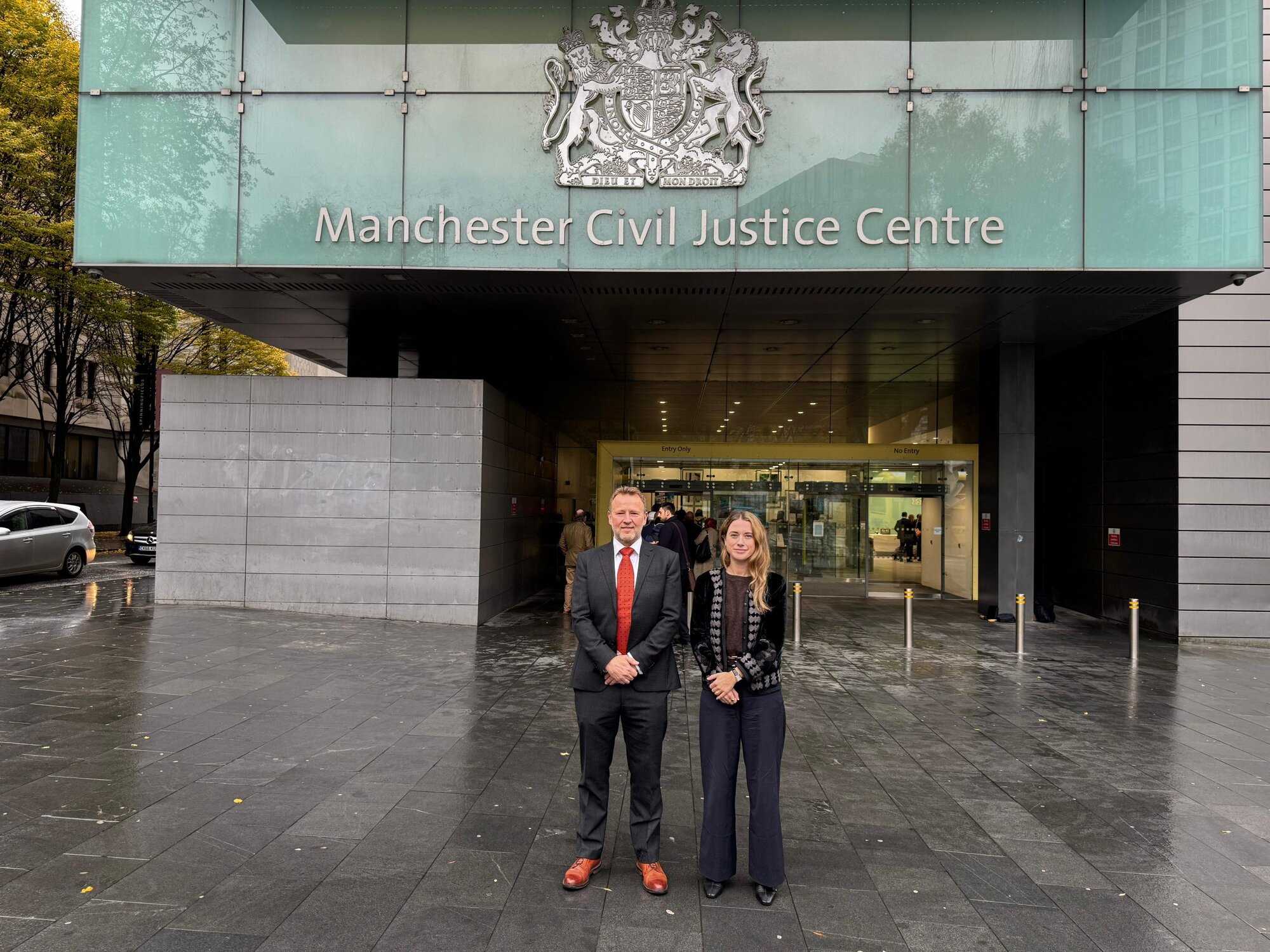
This week, the High Court finished hearing our legal challenge of Ofwat’s approach to its ‘not paying twice’ policy in its latest price review (PR24). The hearing took place over three days on 4, 5 and 17 November.

River Action, working with Leigh Day and expert barristers David Wolfe KC and Nicholas Ostrowski, brought this case to address our serious concerns about Ofwat’s approach. We argued that Ofwat’s current methods could allow water companies to charge billpayers again for environmental improvement works that they have already paid for, despite its promise that customers should not pay twice. We challenged Ofwat’s failure to require water companies to demonstrate compliance with environmental regulations as part of its price control exercise, as it said it would. We also highlighted flaws and gaps in Ofwat’s “clawback” mechanism, intended to prevent double funding when water companies fail to meet their environmental obligations.

Ofwat defended its approach, arguing that it never intended to look at actual compliance by water companies as part of its price-setting process and said that this was a reasonable approach to take given its regulatory function.  Ofwat said that its clawback mechanism did not need to be explained in PR24 and that it intended to develop a more detailed framework.

During the hearing, the court considered detailed evidence on Ofwat’s PR24 process and methodologies, including exchanges between campaigner Matt Staniek of Save Windermere and Ofwat’s CEO. The court also looked at Windrush Against Sewage Pollution’s evidence of illegal sewage discharges into Lake Windermere by United Utilities, the case study at the heart of the claim.

We think that this case has uncovered significant issues with Ofwat’s regulatory approach to its ‘not paying twice’ policy, with internal documents released in response to the claim revealing gaps in Ofwat’s understanding and enforcement of water company compliance with environmental law. As well as Ofwat’s approach likely allowing some form of double funding, these shortcomings are contributing to the ongoing sewage pollution crisis.

Due to the complexity of the issues, a judgment is not expected for several weeks. We will provide a further update as soon as the judgment is handed down.

Regardless of the legal outcome, we will continue to push for regulatory reform to ensure that billpayers do not pay twice for urgently needed infrastructure improvements and that water companies are properly held to account to stop sewage polluting our rivers.

MISSING: Policy for special administration (or is it?)

River Action’s legal challenge

In July, River Action launched its legal challenge over the Government’s failure to explain when it will trigger special administration for Thames Water and other failing water companies because of breaches of their performance duties.

That same month, the Independent Water Commission also recommended that a clearer policy for special administration be adopted.

Our legal challenge is simple: we say that the Environment Secretary has acted unlawfully by failing to publish a policy on when they will ask the High Court to put a water company in a special administration regime – a mechanism under existing legislation designed to enable the government to take action to deal with failing water companies.


What is special administration for water companies?

Special administration is a legal process for companies supplying essential services like water that are failing in terms of performance, finances or duties. It allows the government via an administrator to step in and take temporary control, ensuring operations keep running while offering a clean break from unsustainable debt and chronic underperformance.

Importantly, a special administration regime prioritises public interest – customer service, environmental protection and infrastructure investment – instead of existing shareholders and debt holders. By redirecting funds away from private profits and towards urgent improvements, it offers a route to restructure and refinance a water company for public benefit and long term sustainability.


 The Government’s response

The Environment Secretary has now formally responded. Remarkably, it has been claimed again that a policy setting out the circumstances in which or the criteria by reference to which the Court would be asked to put a water company into special administration does not exist. The response simply states “There is nothing for the Defendant to publish”.


Evidence that a policy exists?

The Environment Secretary has maintained this position despite clear indications that a policy exists in some form. Most strikingly, in a recent Environment, Food and Rural Affairs committee hearing, the Minister for Water and Flooding was asked about the circumstances in which a water company would meet the threshold for special administration. She read out a “whole list” of thresholds that are apparently being used to determine whether special administration should be pursued by the government. This sounds remarkably like a policy; the very thing the government insists does not exist.

The Water Minister also said that “Thames Water has not met the threshold for special administration for going into special administration” on the “formal advice” she had been given.


Why transparency matters

Why is the government so reluctant to publish a policy on when it will use the regime specifically created to deal with water company failure? How much worse does it need to get at Thames Water before the government will trigger the process? The public has a right to know what policies and plans exist to protect bill payers, our rivers and the provision of essential water services.

This goes beyond Thames Water. It matters for the whole water sector. Having a clear policy on when special administration will be triggered means it will be seen as a credible tool that strengthens regulatory discipline, incentivises better water company performance and avoids political delays. This is crucial to restore public trust and provide certainty to investors. Everyone should know the rules and then they must be followed.


What next?

Now the High Court will decide whether to grant permission for our claim to proceed to a full hearing. In the meantime, River Action will continue to push for transparency around the government’s policy and plans for special administration when water companies fail – and for leadership when it comes to Thames Water.

River Action to sue Ofwat over water bill rises


WHAT IS OUR LEGAL CHALLENGE AGAINST OFWAT?

Our legal challenge focuses on funding allocated for wastewater treatment works and pumping stations by United Utilities in and around Lake Windermere.

The case is being taken after detailed investigations were carried out by Save Windermere and Windrush Against Sewage Pollution, which revealed significant and systemic flaws in Ofwat’s approach.

We’re taking legal action to compel Ofwat to reassess its PR24 determination for United Utilities in relation to Windermere and to encourage Ofwat to reassess other water company schemes wherever there are concerns that customers are unfairly covering the cost of past failures.


WINDERMERE: A DAMNING EXAMPLE OF REGULATORY FAILURE

United Utilities, currently under fire after evidence obtained by Save Windermere, revealed 6,000 hours of raw sewage was discharged into Windermere last year, and is a case in point. We have commenced legal action claiming Ofwat has allowed the company to divert funds meant for future projects to deal with past failures—rather than investing in vital improvements to wastewater treatment and pumping stations around the lake.


A SYSTEM RIGGED AGAINST THE PUBLIC

We believe Ofwat has acted unlawfully by approving these funds without ensuring they are spent on genuine improvements to essential infrastructure. Instead, this so-called ‘enhanced funding’ is being allowed to be used to cover up years of failure.

Effectively, Ofwat has signed off on a broken system where customers are being charged again for services they have already funded—while water companies continue to mark their own homework and pollute for profit. This scandal must be addressed. The cost of fixing the UK’s crumbling water infrastructure should fall on the companies and their investors—not on the British public.

We are calling for immediate regulatory action to ensure water companies stop passing the cost of failure onto customers—and start taking responsibility for the environmental damage they have caused.

Campaign group to appeal legal challenge against the Environment Agency & prepares for further legal action to protect the Wye

River Action is appealing a High Court decision over pollution in the River Wye.

The campaign group has applied to appeal the recent Judgment passed down by Justice Dove which concluded that the Environment Agency’s approach to enforcement in relation to the River Wye Special Area of Conservation (SAC) was not unlawful.

Chair and founder of River Action Charles Watson said, “We remain deeply concerned that insufficient regulatory action is being taken to protect the River Wye from wide-spread pollution caused by unsustainable intensive agricultural practices. Because of this, one of the most highly protected rivers in the UK faces ecological collapse. We will therefore continue our legal fight to save the River Wye.”

River Action is taking the following six actions:

  1. Appeal of Judgment on Ground 3 of River Action’s recent Judicial Review hearing
  2. Establish an independent audit process of all on-going EA enforcement activity within the Wye catchment in relation to the application of the Farming Rules for Water
  3. Investigate widespread environmental non-compliance within the Wye’s free-range egg industry
  4. Investigate the EA’s alarmingly low response and attendance levels of pollution incidents
  5. Challenge the current DEFRA guidance with regard to enforcement of the Farming Rules for Water
  6. Call for the transparent publication by the EA of all information relating to pollution incidents and the consequential enforcement of environmental regulations, to mirror real time data now published by water companies regarding sewage spills

RIVER ACTION RESPONSE TO JUDICIAL REVIEW JUDGMENT AND PROPOSED NEXT STEPS

On May 24 2024, the Hon Mr Justice Dove handed down his judgment in River Action’s recent claim for Judicial Review against the Environment Agency.

The Judgment contained a number of significant wins for River Action. These included the acknowledgement by the judge of the undisputed severe levels of pollution caused by excessive levels of phosphorus in the waters of the River Wye and the recognition that farming practices must change. Going forwards, farmers will be limited in the amount of manure they can spread in the autumn and winter when the danger of polluting the river is at its highest.

The judgment calls into question the status of the current guidance issued by DEFRA to the EA regarding the enforcement of Rule 4(1)(a) of the Farming Rules for Water. Finally, the judge unequivocally dismissed the NFU’s intervention in the Judicial Review proceedings that Rule 4(1)(a) could be interpreted to routinely allow applications of manure in the autumn for use by the crop the following spring.

However, the judge dismissed the claim for judicial review on the basis that changes to key enforcement documents made by the EA during the course of the proceedings subsequently brought it into compliance with the law. The judge recognised that these changes were only made as a result of River Action’s legal claim.

Notwithstanding the above, River Action remains deeply concerned that insufficient regulatory action is being taken to protect the River Wye from the various severe pollution threats it currently faces and accordingly it is taking the following actions:

1. Appeal of Judgment on Ground 3 of the Judicial Review. River Action has applied to the High Court to appeal the Judge’s conclusion that the EA’s approach to enforcement in relation to the River Wye Special Area of Conservation (SAC) was lawful. In the landmark case of Harris v EA (2022), Mr Justice Johnson concluded that the EA had failed to discharge its duty under the Habitats Regulations 2017 because it was the only enforcement agency with the power to review water abstraction licences (water abstraction being a factor in the unfavourable status of the Broads SAC). River Action argued that the same principle applied to the Wye, because while there are a range of enforcement agencies addressing multiple threats to the SAC, only the EA can address the enforcement of the Farming Rules For Water. The judge disagreed, holding there are numerous potential sources capable of contributing to the phosphorus pollution in the Wye and that action is required not only under the 2018 Regulations, but also under other regulatory regimes.

2. Establish independent audit process of on-going EA enforcement activity in relation to the Farming Rules for Water. Mr Justice Dove accepted the EA’s evidence and acknowledged that “the defendant is working on a broad range of initiatives, including targeted farm inspections….”. River Action remains concerned that enforcement action is not being pursued with the urgency and application required to address the severe pollution of the river. Accordingly, River Action intends to establish a process to audit independently all EA enforcement activity of

the Farming Rules for Water in the Wye catchment. Under the Environmental Information Regulations (EIRs) 2004, River Action has requested details of:

  • All recent farm inspections undertaken by the EA;
  • Details of all identified breaches of the Farming Rules for Water;
  • The actions (if any) the EA has taken in response to each specific breach; and copies of Inspection Reports and documentation relating to any enforcement actions.

Going forward, River Action’s intends to request this information on a rolling, three-monthly basis.

3. Investigate widespread environmental non-compliance of the free range egg and poultry industry. In November 2023, a series of EIR responses received by River Action revealed widespread non-compliance with Slurry, Silage and Agricultural Fuel Oil (SSAFO) and Environmental Permitting Regulations (EPR) by a significant number of free range egg and poultry farms in the Wye catchment. Arising from extensive correspondence over a period of two years between the Wye and Usk Foundation and the EA, these revelations implied systemic non-compliance across the egg and poultry producing industry, implying another major potential source of river pollution. To investigate what action the EA has taken in the light of these revelations, River Action has accordingly requested information under the EIRs 2004 on:

  • The number of inspections of egg farms in the River Wye catchment over the last three years;
  • The number of enforcement notices issued to egg farms under SSAFO and EPR regulations.
  • Details of all enforcement actions/prosecutions that have subsequently taken place.

4. Investigate response and attendance levels of pollution incidents. River Action has reason to believe that the response and attendance levels by the EA to pollution incidents on the River Wye are insufficient given the severe pollution of the river and the fact that the status of the river isn’t improving. Accordingly, River Action has requested the following information under the EIRs:

  • Any written EA policy of responding to reported pollution incidents;
  • The number of pollution incidents reported within the Wye catchment;
  • The number of such incidents which were attended and investigated;
  • The subsequent action (if any) taken against polluters.

5. Pending action to challenge the current DEFRA guidance with regard to enforcement of the Farming Rules for Water. Given the questionable status of the current guidance issued by DEFRA to the EA regarding the enforcement of Rule 4(1)(a) of the Farming Rules for Water, River Action intends immediately after the General Election to request that the Secretary of State for DEFRA repeals this guidance to clarify that the environmentally damaging practice of spreading excess manures in autumn/winter months is a breach of the Rules.

6. Call for immediate availability of all information relating to enforcement of environmental regulations. In the context of the above, River Action is mindful that the Chief Executive of the EA recently raised public concerns about the burden on EA staff of responding to FOIA 2000/EIR 2004 requests. The relevant environmental regulations are long established (SSAFO since 2010, EPR since 2016 and the Farming Rules for Water since 2018) and there is a positive duty on public bodies to progressively make information about the state of the environment and their enforcement activities publicly available under the EIRs 2004. If this information was freely and publicly available, the EA would not have to respond to ad hoc requests. River Action is accordingly requesting that by the end of 2024, all environmental information relating to the enforcement of the above regulations should be proactively and transparently disseminated via an appropriate digital portal.

It is understood that the Chief Executive of the EA is well aware of the benefits of such an approach given that it was recently reported in the Guardian newspaper that “An Environment Agency spokesperson said: ‘Philip is completely committed to the highest standards of transparency, as he repeatedly stressed at the River Summit. He wants to make more EA data readily available, and we are already looking at how this can be achieved…”.

The public availability of such critical environmental information already has precedent following the recent legal requirement for water companies to publish real time data relating to sewage spills.

7. Further legal action under consideration. River action is currently reviewing a number of further opportunities with regards to taking legal action where evidence is apparent of regulatory bodies failing to fulfil their statutory duties to enforce the law.

ENDS

For interviews call Ian Woolverton on 07377 547 362 or email media@riveractionuk.com

NOTES TO EDITORS

River Action is on a mission to rescue Britain’s rivers by raising awareness of the crisis facing our rivers, and the failure of Government funded environmental agencies to make water companies invest in their polluting infrastructure and to prosecute illegal business practices that cause river pollution.

Privacy Overview

This website uses cookies so that we can provide you with the best user experience possible. Cookie information is stored in your browser and performs functions such as recognising you when you return to our website and helping our team to understand which sections of the website you find most interesting and useful.