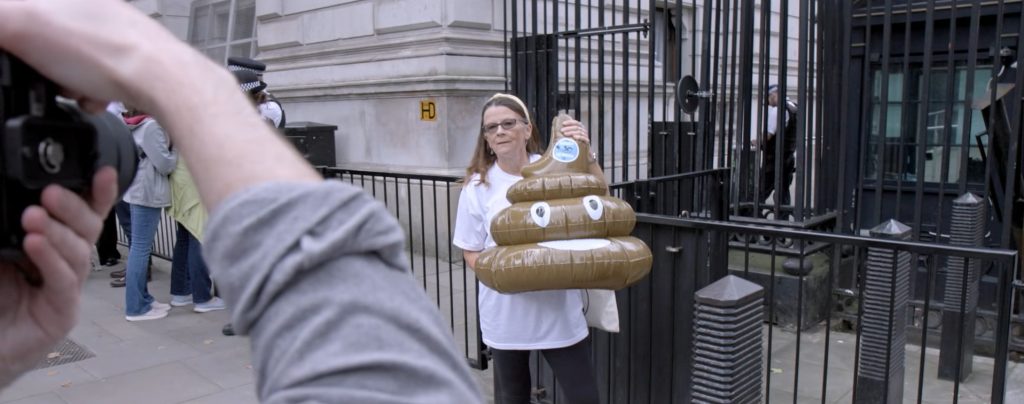
Today the High Court has handed down its decision on the lawfulness of Ofwat’s approach to its policy that water company customers should ‘not pay twice’ for sewer overflow upgrades to achieve environmental compliance and reduce pollution of our waterways. Although River Action’s claim was dismissed, the case has resulted in important clarity and should result in a better regulatory approach.
Ofwat is responsible for regulating water companies and controls what they can charge customers through its five-year price reviews, with Ofwat’s Price Review 24 (PR24) exercise setting charges for the sixteen largest water companies from 2025-2030. Following investigations into water company compliance after widespread sewage discharges were revealed in 2021, Ofwat promised that customers would not pay twice for environmental improvement works that had previously been funded and should already have been delivered.
Last year, River Action took forward this case because investigatory work by Save Windermere and Windrush Against Sewage Pollution identified potential systemic failures in how Ofwat oversees compliance across the entire water industry and how it routinely signs off funding that could allow water companies to use customers’ money to rectify their own past non-compliance. As well as ensuring customers do not pay twice, the key issue from River Action’s perspective is the significant long-term failures of water and sewerage companies to upgrade storm overflows, sewage treatment works and pumping stations to comply with environmental law because the sewage pollution that results from those infrastructure failures is causing harm to our rivers and lakes.
Internal documents that only emerged as a result of this litigation revealed significant confusion at Ofwat, indicating Ofwat may have failed to follow its ‘not paying twice’ policy because, as it admitted privately but not publicly, “some historical investment programmes now appear to fall short of what should have been required to comply”. Those documents showed that Ofwat did not know whether there was full compliance and whether customers would ultimately pay twice in some instances because Ofwat had failed to look at Urban Waste Water Treatment Regulations (UWWTR) compliance as well as environmental permit compliance. This is a major mistake that, unless monitored closely in the future, could result in billions of pounds of investment being spent on environmental improvements that should already have been delivered.
At the hearing, River Action argued that Ofwat’s approach was flawed and unlawful because:
Ground 1: Ofwat’s approach to implementing its ‘not paying twice’ policy was unreasonable because to actually show that customers would not pay twice (1) water companies needed to demonstrate current compliance (namely the reality on the ground, not simply assuming or modelling compliance) and (2) water companies needed to demonstrate customers would not pay twice for improvements that should have already happened. Essentially, our complaint was that Ofwat had publicly said that companies would have to demonstrate compliance but then dropped that requirement without explaining why.
Ground 2: Ofwat’s ‘clawback’ mechanism is flawed and incomplete because it is limited to double funding of permit compliance and does not deal with double funding of UWWTR compliance, despite Ofwat’s internal documents revealing both are required. This means it falls short of operating to ensure that customers will not pay twice.
The High Court has today ruled that Ofwat’s approach was lawful because Ofwat’s evidence provided a ‘sufficient logical basis’ for its approach. In reaching its decision, the Court said that Ofwat has ‘significant latitude’ when looking at the legality of its decisions relating to price controls and compliance because of its role and responsibilities as a regulator.
But the Court did not fully grapple with River Action’s case, focusing on whether Ofwat’s use of modelling data was in line with its ‘not paying twice’ policy but not addressing our key argument that Ofwat’s policy also requires companies to actually show permit compliance. The Court has also not addressed the regulatory gap that exists between Ofwat and the Environment Agency when looking at permit compliance.
There was a positive outcome on the issue of the ‘clawback’ mechanism (intended to prevent double funding when water companies cannot provide evidence of promised improvements towards the end of a price review period). At the hearing, it became clear that Ofwat has yet to settle the rules that will decide whether any clawback should occur, meaning this argument was found by the Court to be ‘premature’. This was a welcome clarification and leaves the issue open so that the clawback mechanism can be fixed and used by Ofwat to make sure customers do not pay twice.
Essentially, in dismissing River Action’s claim, the Court has said that it thinks Ofwat’s approach is good enough because in theory Ofwat might be able to ‘clawback’ money that is spent in breach of Ofwat’s ‘not paying twice’ policy.
That does not mean the water regulator should not do better. It can and it must.
Our legal challenge has shone a light on problems with Ofwat’s regulatory approach and highlighted the urgent need for reform. Going forward, the regulator must not allow customers to pay twice by ensuring that water companies comply with both permit compliance and compliance under the UWWTR. Ofwat must also settle the clawback mechanism so that it works in relation to both permit schemes and UWWTR schemes.
While we waited for judgment, in December 2025, the Office for Environmental Protection (OEP) published notices and reports finding that Ofwat, the Environment Agency and Defra failed to properly enforce the law relating to sewage discharges from combined sewer overflows. The OEP’s findings show that Ofwat did not understand for decades that it had a duty to enforce environmental compliance under the Water Industry Act and the UWWTR, only recognising in June 2022 it had this important enforcement function in addition to ensuring assets comply with their permits. This supports our case that Ofwat has not required full compliance in past price reviews and was trying to play catch-up in PR24, while claiming publicly that it only needed to look at permit compliance despite knowing that was only part of the picture.
This judgment and the OEP’s findings are timely as, following the recommendations of the Independent Water Commission, this Government now looks to overhaul the water sector including by creating a new integrated regulator to replace Ofwat and bring together economic, environmental and water quality regulation. The Independent Water Commission also made recommendations relevant to regulatory gaps in holding water companies to account for the delivery of infrastructure projects and customers not paying twice.
Whatever form the future regulator takes, its approach on this fundamental issue should be clear, transparent and fully compliant. Customers must not compensate water companies for poor performance by paying twice for improvements that have not been delivered. And the regulator must hold water companies fully accountable by enforcing all relevant laws.
We will not be appealing the decision. Our focus now is on continuing to push for the major regulatory reform needed to ensure real oversight and enforcement, so water companies are properly held to account and sewage pollution is stopped for good.
Tag: Sewage pollution
Sir Steve Redgrave calls on the Government to clean up the Thames, ahead of Schools’ Head of the River Race
As nearly 3,000 young rowers gather for the Schools’ Head of the River Race, all-time Olympic rowing champion Sir Steve Redgrave calls for urgent action to clean up the River Thames. In a letter to Secretary of State for the Environment Steve Reed, Sir Redgrave stresses the need for urgent action to address the river’s pollution.
The letter was delivered to Defra, as schools from across the country gather to take part in the UK’s largest processional rowing race for school-aged participants.
The action is being coordinated by environmental charity River Action, which is leading efforts to protect the river from severe pollution caused by sewage discharges. In the letter, Sir Steve Redgrave calls on the Secretary of State to:
- End pollution for profit by water companies and take firm action to ensure Thames Water cleans up its infrastructure.
- Give environmental regulators the power and tools to do their job so polluters are held to account.
Sir Steve Redgrave said, “This is not just about rowing. It’s about all river users’ public health. It’s about our environment. It’s about the future of one of the world’s most iconic rivers. We won’t sit quietly while this catastrophe continues.”
River campaigners urge rower safety on poor quality water
In response to growing concerns over water quality across Britain’s rivers , British Rowing, River Action, and The Rivers Trust have developed official guidelines to help rowers minimise the risk of illness due to exposure to polluted water.
The ‘Guidance on rowing when water quality is poor’ advises rowers to cover cuts, grazes, and blisters with waterproof dressings, avoid swallowing river water, wear suitable footwear when launching or recovering boats, and thoroughly clean all equipment after use.
Sir Steve Redgrave emphasised the importance of taking protective measures:
“The Schools’ Head of the River Race is a fantastic event, but rowers need to be aware of the serious health risks posed by polluted water. By following these safety guidelines, we can help minimise the risk, but this situation is completely unacceptable. We need urgent action to stop sewage discharges and protect the health of everyone using our rivers.”
Erica Popplewell, River Action’s Head of Communities, added:
“We are thrilled that so many young people are getting out on the water, but their health must not be put at risk. We urge every rower, coach, and participating school to follow our guidance to stay safe. But guidance alone is not enough—we need the Government to take decisive action to clean up the UK’s polluted rivers, and Thames Water must be stopped from polluting for profit.”
Water quality testing
Water quality testing conducted by River Action last year on the stretch of the Thames used for the Boat Race between the Universities of Oxford and Cambridge (also used for the Schools’ Head of the River Race) revealed dangerously high levels of E.coli bacteria caused by sewage pollution.
Tests using a World Health Organization-verified E.coli analyser recorded contamination levels up to ten times higher than the Environment Agency’s threshold for ‘poor’ designated bathing waters—where the Government advises against swimming.
Furthermore, River Action can reveal that in the last 6 months, Thames Water allowed 133 hours of human sewage to enter the section of the Thames used for the Schools Head of the River Race.
River Action continues to call for immediate intervention, including placing Thames Water into special administration, to prevent further environmental damage and protect river users.
Thames Water’s £3bn bailout signals urgent need for Government action on failing water companies

STATEMENT:
Responding to the Court of Appeal’s decision to uphold Thames Water’s £3bn rescue plan River Action’s CEO said:
“This decision is a disaster for Thames Water bill payers and the environment. Customers will now have to pay the price for the failing water company with about a third of their increased water bills paying for massive interest payments while our rivers remain choked with sewage.”
“Instead of allowing this interim plan to cause further financial and environmental damage, the Government must urgently seize the opportunity to place Thames Water into Special Administration before even more investor-centric restructuring plans are rolled out later this year. The current privatised system is a failed experiment, putting financial interests ahead of the needs of consumers and the health of our environment. Maintaining the status quo will only perpetuate this corporate takeover of the lifeblood of our economy and land. The government can and should step in now.
“The onus is now on the independent Water Commission to propose a viable alternative financial and governance model for the water industry that puts people and the planet first. This is not just about managing a crisis; it’s about fixing a broken system that has allowed private companies to profit at the expense of public well-being.”
ENDS
For media enquiries, contact Amy Fairman at media@riveractionuk.com
River Action to sue Ofwat over water bill rises
River Action is to take legal action against Ofwat, the water regulator, accusing it of unlawfully making customers pay for decades of neglect by the water industry.
A legal claim will be filed this month, arguing that bill rises for customers that have been approved by Ofwat could be used to fix infrastructure failures that should have been addressed years ago.
We’re calling for immediate regulatory action to ensure water companies stop passing the cost of failure onto customers – and start taking responsibility for the environmental damage they have caused.
WHAT IS OUR LEGAL CHALLENGE AGAINST OFWAT?
Our legal challenge focuses on funding allocated for wastewater treatment works and pumping stations by United Utilities in and around Lake Windermere.
The case is being taken after detailed investigations were carried out by Save Windermere and Windrush Against Sewage Pollution, which revealed significant and systemic flaws in Ofwat’s approach.
We’re taking legal action to compel Ofwat to reassess its PR24 determination for United Utilities in relation to Windermere and to encourage Ofwat to reassess other water company schemes wherever there are concerns that customers are unfairly covering the cost of past failures.
WINDERMERE: A DAMNING EXAMPLE OF REGULATORY FAILURE
United Utilities, currently under fire after evidence obtained by Save Windermere, revealed 6,000 hours of raw sewage was discharged into Windermere last year, and is a case in point. We have commenced legal action claiming Ofwat has allowed the company to divert funds meant for future projects to deal with past failures—rather than investing in vital improvements to wastewater treatment and pumping stations around the lake.
A SYSTEM RIGGED AGAINST THE PUBLIC
We believe Ofwat has acted unlawfully by approving these funds without ensuring they are spent on genuine improvements to essential infrastructure. Instead, this so-called ‘enhanced funding’ is being allowed to be used to cover up years of failure.
Effectively, Ofwat has signed off on a broken system where customers are being charged again for services they have already funded—while water companies continue to mark their own homework and pollute for profit. This scandal must be addressed. The cost of fixing the UK’s crumbling water infrastructure should fall on the companies and their investors—not on the British public.
We are calling for immediate regulatory action to ensure water companies stop passing the cost of failure onto customers—and start taking responsibility for the environmental damage they have caused.
Up to their necks in it: River Action unveils provocative ‘Pooster’ to expose water companies profiting while poisoning our water
Revealed: A new billboard made of £50 notes, stained brown with sewage waste, symbolises the dirty profits of water companies, while separately exposing that Thames Water has dumped sewage into the Thames for 7,002 hours since January 2024.
Today, River Action, organising the November 3rd March for Clean Water, is launching a bold new advertising billboard in central London that highlights the shocking reality of water companies making billions while polluting the UK’s rivers, lakes, and seas.
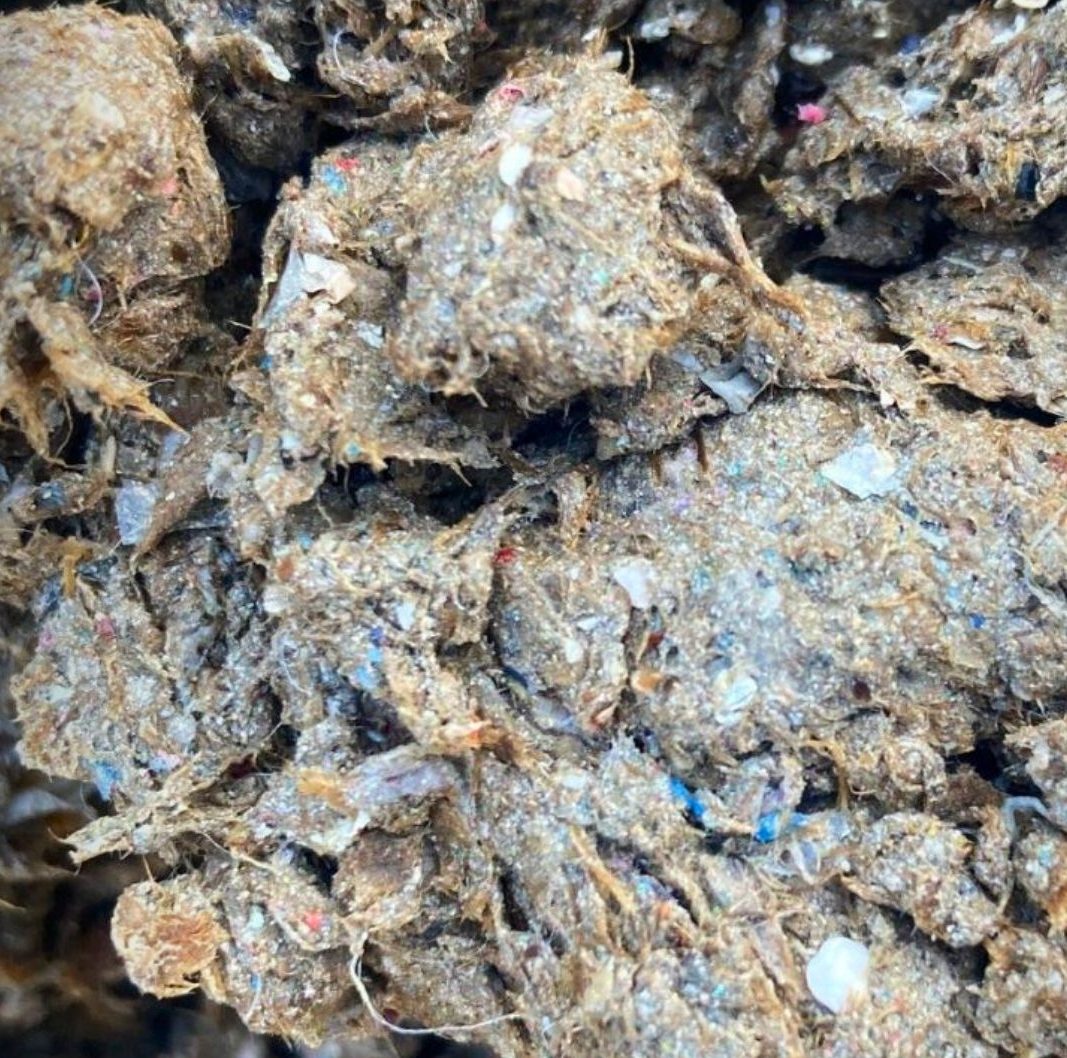
Dubbed the ‘Pooster,’ the 48 sheet (3m high x 6m wide) billboard, is constructed from fake £50 notes, stained brown with sterilised manure and mixed with water from polluted beaches, rivers and streams across the UK, symbolising the dirtied profits that water companies continue to make at the expense of our environment. The ‘Pooster’ displays a bold caption: “This money is stained with crap, just like water company profits’.
This striking visual dirty protest comes as part of River Action’s wider campaign against water pollution and will be officially launched with a crowd of wild swimmers fed up with dirty money making water dirty at 10am on Monday 21 October ahead of the March for Clean Water, set to take place in central London on November 3rd. The billboard displayed at the junction of Harleyford Road and South Lambeth Road close to Vauxhall Station is a high-traffic area of central London to draw maximum attention to the issue.
The ‘Pooster’ exposes the uncomfortable truth: despite dividend payouts to shareholders totalling £72.9 billion over the last 33 years and excessive levels of executive pay and bonuses, water companies across the UK are failing to protect our waterways.
River Action reveals extent of Thames Water discharges
Today River Action can reveal that since January 1 2024, Thames Water, the ‘pooster’ child of the nation’s broken water and sewage system, alone has discharged at least 7,002 hours of untreated human sewage into the River Thames, equal to 291 days. A large number of these discharges are believed to have been unlawful. The shocking findings from River Action’s research come at a time when Thames Water is facing financial collapse having paid out billions to shareholders and unknown amounts of interest on its escalating debts since privatisation – at the expense of future-proofing its crumbling infrastructure.
Meanwhile, as river users and wildlife suffer the consequences of poisoned water, Thames Water has continued to award failure with CEO compensation packages reaching up to £1.71 million last year alone.
“Up to their necks in it” – River Action’s campaigns manager Amy Fairman
Head of Campaigns at River Action Amy Fairman said, “Water companies like Thames Water are up to their necks in it, treating our rivers, seas and lakes like open sewers. Meanwhile they squander bill payers cash with impunity, splashing it on shareholder dividends, bonuses for their bosses and paying huge levels of interest on their junk-rated debt.
“Our ‘Pooster’ drives home the point: the financial gains they make are filthy money. It’s time for change. The UK public is fed up with sewage-drenched waterways and our campaign demands urgent reform.”
Laura Reineke from the Henley Mermaids is attending the Pooster launch with her fellow wild swimmers, in bathing costumes and hats. She said, “Our beautiful river Thames is being used as an open sewer, the epically mismanaged monopoly that is Thames Water is in charge of our precious blue space. This has to change! We are fed up with swimming in poo. Freshwater species are declining at a rate of five times that of species that live on land, our biodiversity needs rescuing. Our river is visibly poorly, choking in chemical’s and suffocating in poo. This assault on our wildlife and our health has to stop, water should be run for the benefit of humans and the wildlife that calls it home.”
March for Clean Water, Sunday 3rd November
With public outrage at an all-time high, River Action’s billboard exposes the urgent need for reform in the water industry.
The campaign builds momentum ahead of the March for Clean Water, where thousands of people, alongside more than 100 organisations as diverse as the Women’s Institute, Extinction Rebellion and the National Trust, will demand action from the government against water polluters. Marchers are encouraged to wear blue, symbolising their fight for clean water.
River Action and a coalition of 100s of campaign groups want to see the robust enforcement of existing environmental laws with hefty fines for illegal pollution, the end of pollution for profit with no more excessive shareholder dividends and executive pay and the resourcing and reforming the environmental regulators so they can do their job, putting public benefit before facilitating private greed.
Download a hi-res ‘Pooster’ image here.
ENDS
Notes to editor
Global, Media & Entertainment Group provided the billboard space and creative agency Uncharted developed the creative concept.
For safety reasons, unlike the carelessness of the water companies, the ‘Pooster’ was made using sterilised waste diluted with water collected from rivers, beaches, and streams across the UK.
The source for the figure of 7,002 hours of discharges by Thames Water (taken from Faringdon in Oxfordshire to Dartford in Kent) so far in 2024 was calculated on 15/10/2024 using this: https://www.sewagemap.co.uk/
The source for the £72.9 billion in dividends is here: https://gala.gre.ac.uk/id/eprint/47165/
The source for the figure on CEO compensation at Thames Water is here: https://www.thameswater.co.uk/media-library/home/about-us/investors/our-results/2024-reports/thames-water-annual-report-2023-24.pdf
River Action is an environmental charity on a mission to rescue Britain’s rivers from the deluge of pollution that has left the majority of our waterways in a severely degraded ecological condition. Our campaigns to date have focussed on tackling the severe environmental crises created by both sewage and agricultural pollution.
The March for Clean Water will be a legal, peaceful, family-friendly and inclusive demonstration. On Sunday 3rd November, we will muster at Albert Embankment from 1100, and start marching at 1145. The rally will start in Parliament Square at 1330 and is due to finish by 1500.
To date, more than 100 organisations have pledged their support for the march including the National Trust, Women’s Institute, RSPB, Wildlife Trusts, Extinction Rebellion, Greenpeace, Angling Trust, Wildfish, British Rowing, Good Law Project, Clean Ilkley River Group, Activist Anglers, Save the Wye Coalition and Henley Mermaids.
STATEMENT: River Action’s response to OFWAT £168m fines on polluting water companies
Responding to massive enforcement penalties imposed by Ofwat on three water companies Thames Water, Yorkshire Water and Northumbrian Water totalling £168 million, Chair and Founder of River Action Charles Watson said, “Last year sewage was discharged across England, Northern Ireland, Scotland and Wales more than 596,666 times. That’s over 1,600 times a day – and with many of these discharges being illegal, this situation is completely unacceptable.
“Thankfully the water regulator, for so long toothless, is finally waking up to the scale of the public’s outrage and we are starting to see some meaningful penalties being imposed upon the worst offenders. However, remember that the water industry was able to find more than £1.4 billion to hand out to their shareholders in dividends last year, which gives context to these fines. Until the ability of these polluting companies to hand out so much cash is severely curtailed, pollution will continue to be a highly profitable activity with inadequate incentives for the water companies to fix their creaking infrastructure and stop filling our rivers with raw sewage.
ENDS
For media interviews call Ian at River Action on 07377 547 362 or email media@riveractionuk.com
River campaigners contest Thames Water claims River Action was ‘alarmist’ about water quality, and call on them to clean up their pollution
Campaigners have contested the public claims by Thames Water that River Action was ‘alarmist’ when it revealed the stretch of the Thames used for the Henley Royal Regatta was unsafe.
The call comes in an open letter to the CEO of Thames Water Chris Weston signed by British Rowing, a member of the House of Lords, the Mayor of Henley and river champions Feargal Sharkey and Steve Backshall.
Rather than being alarmist, River Action believes that Thames Water is polluting all the time because they don’t remove harmful bacteria from treated water before it enters the river, which is known as tertiary or quaternary treatment.
In late June, River Action revealed alarmingly high levels of E.coli on the Thames used for the Regatta, the world’s biggest international rowing event in the calendar; and a part of the river used for swimming events involving thousands of competitors risking their health. This followed a month of testing by the Henley and Marlow River Action Group in the lead up to the world-famous rowing competition. The testing involved a World Health Organization verified E.coli device, as used by the Olympic team in France to assess water quality on the River Seine. The UK Centre for Ecology and Hydrology said the data was “probably accurate.”
But in an interview with BBC television on June 28, Thames Water said in a statement read out by a reporter, “We need honest and balanced debate that recognises the range of factors impacting river health, rather than an alarmist approach that tries to apportion blame in a misguided way.”
Misleading claims by Thames Water on BBC Radio Berkshire
In the lead up to the Regatta, Thames Water conducted its own water quality testing, going on to give an interview to BBC Radio Berkshire on June 25. During the interview, a Thames Water spokesperson said, “Under dry conditions, we’re seeing some pretty good water quality.”
However, what the spokesperson failed to tell the listener is that the testing did not take place on the Henley Mile used for the Regatta. It took place at Hambledon Lock and Marsh Lock, some distance away from the racecourse. River Action’s testing was conducted on the racecourse at Fawley Meadows, where the effluent from the Henley Sewage Treatment Works enters the river.
In another twist, inspecting the water quality data from Thames Water cited in the BBC Radio interview, it can be revealed that on 4 occasions they detected E.coli levels considered by the Environment Agency to be unsafe to swim – demolishing claims put forward by Thames Water that they were “seeing some pretty good water quality.”For 12 days between 27th June and 9th July River Action’s citizen scientists tested at Fawley Meadows before, during and after the Henley Royal Regatta. Every single test was above safe levels of E.coli, on average 4,396CFU which is over 4 times worse than Environment Agency limits of 900CFU. If this was a designated bathing site it would come with a health warning: Advice Against Bathing.
In the open letter, the signatories ask Thames Water to:
- Correct the record on water quality so that river users are aware that Thames Water testing in Henley did not take place on the Regatta racecourse, but at sites some distance from it
- Properly invest in infrastructure improvements, specifically at Henley Sewage Treatment Works and Wargrave Sewage Treatment Works by implementing tertiary/quaternary treatment to remove harmful bacteria and viruses
- Take responsibility for Thames Water’s role in the degradation of the River Thames catchment, and acknowledge that farming in Henley could be a cause given the lack of any meaningful concentrations of intensive agriculture in the locality, and clear evidence of sewage-related bacteria in the river.
CEO of River Action James Wallace said, “Our testing was rigorous, robust, used WHO verified technology, was independently approved, and published on several websites. For Thames Water to call us alarmist is a joke. We should all be alarmed and concerned that their creaking wastewater treatment plant at Henley is causing a risk to the health of the river and river users. They should focus on getting their business in order rather than trying to discredit citizen scientists for calling out dangerously high levels of E.coli on the Thames.”
The Mayor of Henley Rory Hunt, said, “I was shocked when in a recent meeting with river stakeholders Thames Water’s representative stated that the river had never been in better condition. This simply isn’t true and this is shown by the testing, and for Thames Water to state this beggars belief.
“Thames Water is the primary cause of pollution in the Thames and has failed in both its moral and legal duties. As a result of sewage pollution my constituents are facing disruption to their livelihoods and more seriously many of them have become unwell due to the pollution in the river. The pollution is also having a very damaging impact on the ecosystem and wildlife in our rivers, and if this is not tackled with urgency the damage could be irreversible. This is a serious public health and environmental issue and Thames Water should be ashamed that for years they have prioritised private profit over the public good.
“I am proud that Henley Town Council, and subsequently Witney Town Council and Oxfordshire County Council have passed motions of no confidence in Thames Water and hopefully many more councils will follow suit. The people of this county have clearly had enough and I am pleased to be working with River Action to address this issue.”
River Action writes to the Secretary of State for the Environment
As revealed in last week’s King’s Speech, the newly elected Government will
introduce a Water Bill to improve water quality by putting failing water companies under tough special measures by strengthening the water regulators.
With this in mind, River Action has shared the open letter to Thames Water with the Secretary of State for the Environment, Steve Reed MP.
“The Secretary of State for the Environment has said he will prioritise water quality, so we hope that addressing our concerns with Thames Water’s record on river pollution is seen as an excellent opportunity for him to show leadership and give the environmental regulators sufficient resources and powers to sort this mess out. The Environment Agency’s Environmental Performance Assessment published on Tuesday for 2023 shows Thames Water only reported 76% of pollution incidents, proving yet again they can not be trusted, not least because the record shows they were the worst polluting water company in England with 14 serious pollution incidents,” added CEO of River Action James Wallace.
Notes to editor
In the interests of transparency and to encourage openness about data collated on the UK’s rivers, River Action published the findings of its water quality testing at Fawley Meadows, Henley-on-Thames. The verified results are published here and on another site by the River Thames Water Quality Testing Group here. For ease of use, you can also download the report here.
This map illustrates where River Action tested on the Regatta racecourse, versus the testing done by Thames Water some distance from it. Here is a link to the Thames Water testing at Hambledon Lock and Marsh Lock, some distance from the racecourse. Use this graphic to understand their data and why, using the Environment Agency definition of bathing water status graded poor (when water quality is poor, the EA advice is not to swim), to understand why it was misleading for the Thames Water spokesperson on BBC Radio Berkshire to claim they were seeing “some pretty good water quality.”
Listen to Thames Water on BBC Radio Berkshire here. View their statement calling River Action alarmist on BBC South Today report.
ENDS
For media interviews call Ian at River Action on 07377 547 362 or email media@riveractionuk.com
Households punished for failure of greedy water companies to upgrade crumbling infrastructure, filling rivers with human sewage
Responding to the Ofwat announcement that household water bills are set to rise, CEO of River Action James Wallace said, “These bill hikes punish households struggling with the cost-of-living crisis for the abject failure of greedy water companies to invest in their crumbling infrastructure and reduce record sewage spills. For decades the industry has put profit before the environment, rewarding its shareholders with billions in dividends, and in the process filling our rivers with human sewage.
“We face climate breakdown resulting in more intense weather events that put pressure on treatment plants and storm overflows, overwhelmed when it rains. The water companies have realised they’re in a mess of their making and have successfully appealed to Ofwat to approve increases in water bills to climate proof their infrastructure. It begs the question, what have they been doing all these decades and what exactly are households paying their water bills for, apart from lining the pockets of fat-cat CEOs trousering massive bonuses and seeing huge dividends flow to shareholders? Remember, this is an industry that spews millions of litres of sewage into rivers and wastes 3 billion litres of water a day.
“We must fix this national embarrassment of systemic sewage pollution which has caused environmental carnage to our rivers. To do this, rather than hiking customer bills and getting the public to pay for the failure of the water companies, Ofwat should direct their shareholders to urgently invest in fixing their leaky infrastructure.
“Failing water companies should be put into special administration and refinanced to remove the opaque investment structures that have protected shareholders rather than bill payers, communities, and the environment. This process must begin now. We are in a freshwater emergency.
“The newly elected Labour Government has set out cleaning up our rivers as a priority and the manifesto committed to put failing water companies under special measures. The government has the political and public mandate behind it to push forward with ambitious measures that can hit water companies with the full force of the law, prioritising cleaning up our rivers, securing freshwater and restoring nature. Ofwat and the Environment Agency must be resourced properly to clean up the mess of the last two decades of strategic deregulation and austerity.
“But we also need wholesale reform of Ofwat to ensure that people and the environment are prioritised over investors; and of the Environment Agency to ensure increased water quality monitoring and more meaningful fines of polluters. To date, Ofwat has allowed our water companies to be asset stripped by the financial engineering of their investors to the extent the country’s sewage infrastructure is failing due to woeful under-investment, and the Environment Agency has allowed this to happen with impunity.”
ENDS
For media interviews call Ian at River Action on 07377 547 362 or email media@riveractionuk.com