

By Amy Fairman, Head of Campaigns, River Action
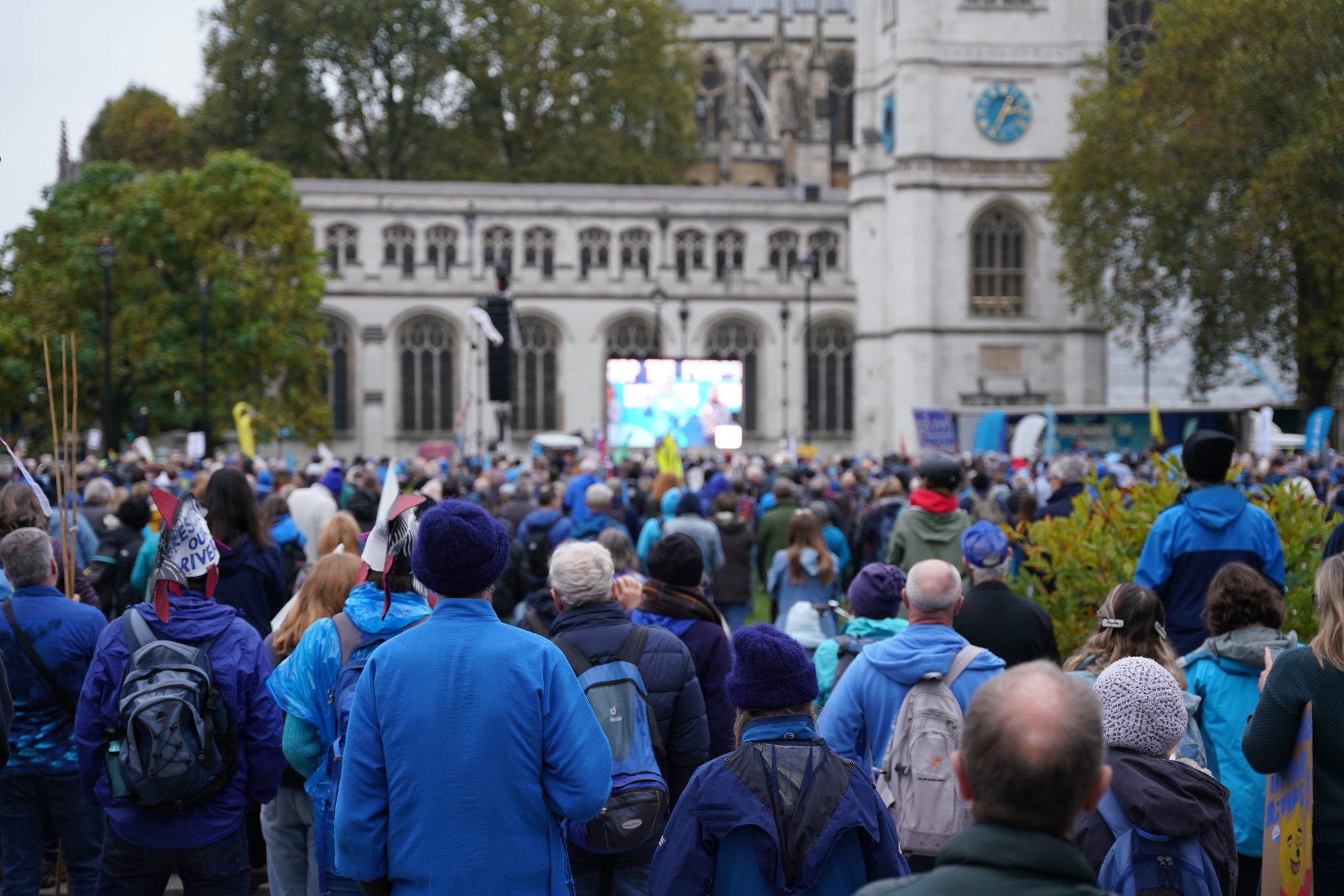
A profound silence swept across Parliament Square as over fifteen thousand people stood still. On the giant screens, scenes of glistening waters, darting kingfishers, and emerald riverbanks shimmered into life while Robert Macfarlane’s voice carried through the air:
“Riversong is ebb and flow, flow and ebb, deep pools and shallow beds.”
It was 3 November 2024, and a wave of blue had descended upon London. From river source to seashore, people from every corner of the country came together to demand action from a newly elected government — action to rescue our dying rivers and polluted seas.
That day, the heart of Westminster became a confluence of voices and waters: Robert’s moving poem, Charles Watson’s impassioned river roll call, the symbolic mingling of over a hundred river samples, and the rallying cries of young river warriors, seasoned campaigners, union representatives, and community groups. It wasn’t just a protest — it was a movement in full flow, a moment that galvanised a nation determined to turn the tide.
I left Parliament Square that afternoon buoyed by the energy of the day — the powerful sense that years of hard work, heartbreak, and hope had finally gathered into one unstoppable current.
But one year on, what’s changed? Has the government listened? Are our rivers and seas rebounding from decades of neglect and abuse?

A Year of Scrutiny: The Independent Water Commission
Political attention on our rivers has continued to intensify. Clean water was one of the defining issues of the general election, and the new Secretary of State quickly made it a top priority.
Following the calls of many campaigners, including those who stood shoulder-to-shoulder in Parliament Square, the government launched the Independent Water Commission — a long-awaited review of the water sector.
Hope rippled across the movement. Could this be the start of the systemic overhaul we’d been fighting for — the beginning of the end for a failed privatisation experiment that had siphoned billions from public hands into private profits?
As the details emerged, optimism gave way to frustration.
The Commission’s scope was tightly ring-fenced, to “making the current system work better”. It was forbidden from considering public ownership or alternative models — effectively excluding the kind of bold, structural reform the water industry desperately needs.
Even more concerning, agricultural pollution, which remains the single largest source of contamination in our rivers, was entirely outside its remit. This omission spoke volumes about how narrow and politically cautious the review was.
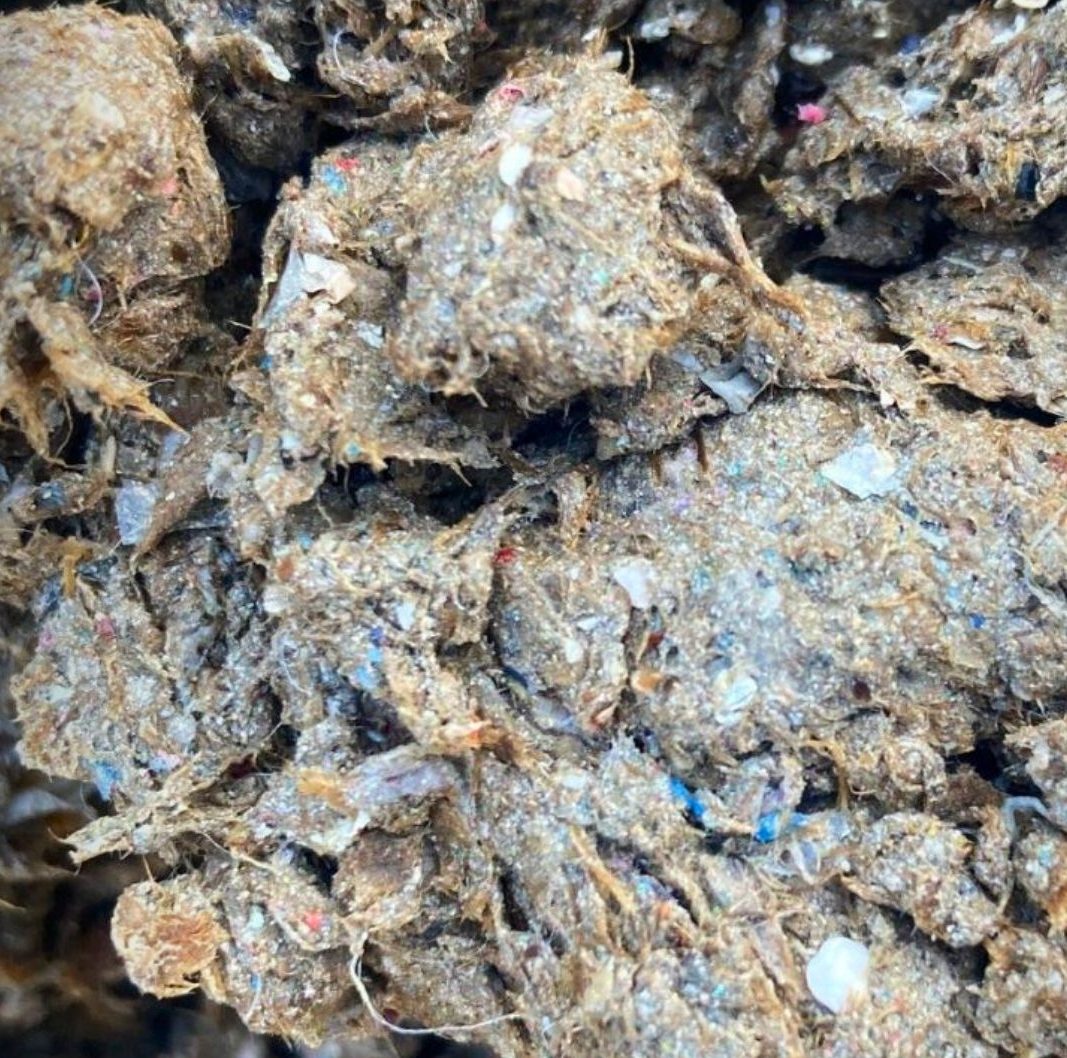
That’s not to say nothing of value emerged. The Commission made several important recommendations: reforms to a regulator long viewed as toothless; new rules to tackle toxic sewage sludge; improved transparency of water company data; and greater enforcement powers. These asks were central to the joint evidence provided by River Action and Surfers Against Sewage to the commission, as well as the response submitted by many other organisations that took part in the march for clean water.
But you can’t fix a broken system by tightening its bolts.
The privatised water model, with its vulture-like investors extracting dividends while infrastructure crumbles, remains fundamentally unfit for purpose. Bill payers are being squeezed to cover the cost of failure, while rivers bear the burden of a system designed for profit, not for people or nature.
Our call to action for the public’s submission to the Independent Water Commission, voiced by Deborah Meaden
The People’s Commission: A Blueprint for Change
While the government’s commission tinkered around the edges, others were busy reimagining the system.
The People’s Commission, a collaboration of grassroots groups, academics, and policy thinkers, have been determined to prove that another way is possible.
Drawing lessons from models in Europe and beyond, the People’s Commission laid out a roadmap for a publicly owned, democratically accountable water system. One that puts environmental protection and community well-being above shareholder returns.
Their recommendations included decentralised governance structures, citizen representation on regional water boards, ring-fenced reinvestment of profits, and clear mechanisms for environmental accountability.
The People’s Commission is a reminder that imagination is as vital as indignation. It shows what could happen if we truly placed the public interest — and the health of our rivers — at the centre of water management.
The Thames Water Saga: A Cautionary Tale
If ever there was a symbol of the failure of privatisation, it’s Thames Water.
Over the past year, its decline has become a national drama — a slow-motion car crash of mismanagement, financial engineering, and moral bankruptcy.
In the spring, investors began to pull out, with major backers like RRK retreating while new ones, such as CRK, stepped in under dubious terms. Meanwhile, news reports revealed that the company was seeking exemptions from environmental fines — arguing that such penalties would deter investors.
Let that sink in: a company responsible for repeated pollution incidents effectively asking for immunity so that it could attract more capital.
As the financial situation worsened, rumours of a government bailout swirled. Ministers insisted there would be “no blank cheques,” yet also failed to clarify when or how they might trigger special administration, the mechanism designed to temporarily control failing utilities. A mechanism that could be used to fundamentally rethink how to restructure the company to work in the interests of people and nature, not purely boardroom shareholders.
In the absence of a clear policy, uncertainty reigned. Thames Water has continued to limp on, its debts deepening, while the rivers it was meant to protect remained choked by sewage spills.
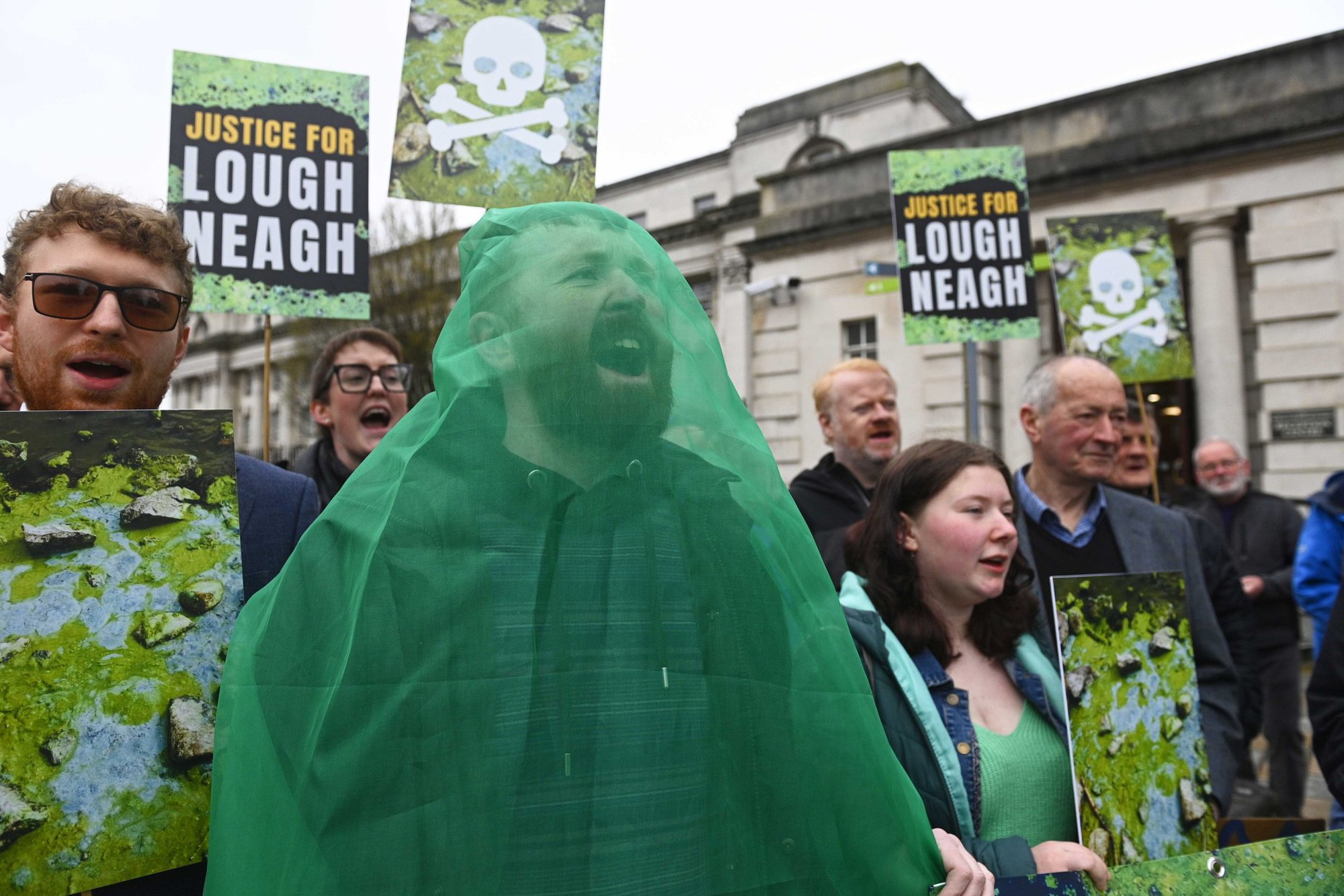
Those who took to the streets last November are now gracing courtrooms. Windrush Against Sewage Pollution (WASP) and Charlie Maynard MP challenged the terms of the rescue package and demanded transparency. And at River Action, we are challenging Defra for their failure to have a policy in place for taking failing water companies into special administration.
Thames Water’s saga is not an anomaly; it’s a symptom. A warning of what happens when vital public goods are treated as commodities, and when regulation bends to the interests of those it’s meant to restrain.
The Regulator’s Verdict: A System Still Polluting
If anyone still needed proof that our rivers remain under attack, the latest performance reports from Ofwat and the Environment Agency delivered it in black and white.
In 2022, the water companies committed to cutting serious pollution incidents by 30 per cent. But the data now shows the opposite: serious pollution has risen by almost 30 per cent. It’s outrageous.
Let’s be clear.. After all the pledges, the speeches, and the glossy PR campaigns, the companies responsible for protecting our most precious natural resources are not just failing — they’re going backwards.
The Environment Agency described the performance of several major utilities as “unacceptable,” noting that some have slipped further behind their legal duties. Ofwat’s own report echoed the same frustration: repeated rule-breaking, inadequate investment, and a culture of denial at the top.
How can it be that in 2025, after decades of evidence and billions in profits, our water companies are still treating pollution fines as the cost of doing business?
This isn’t about a few bad actors — it’s a systemic failure. The regulators’ findings lay bare the fundamental truth that the current model is broken beyond repair. We cannot rely on the same companies that caused the crisis to be the ones who fix it.
Power to the People
If the year since the March for Clean Water has taught me anything, it’s that real change doesn’t just flow from Westminster — it springs from the ground up.
Across the country, the organisations, communities, and individuals who marched that day haven’t stopped moving. They’ve channelled the energy of that moment into ongoing, determined action.
Communities across the country are standing up to factory farms polluting our rivers. In the Wye Valley, Alison Caffyn (part of the Save the Wye community) and River Action won a landmark legal case forcing planners to assess the cumulative impact of intensive farms. In Norfolk, residents prevented new factory farm developments for failing to consider climate impacts, and in Hertfordshire, campaigners secured a ruling that manure taken off farms must be treated as waste, not dumped on land.
Individuals and local groups across the county picked up their pens to share their views on the Water Commission – over 2,000 people made use of River Actions guidance to respond, and many other communities of other organisations like Surfers Against Sewage did the same.
The Riverscape Partnership has launched its Making Space for Water initiative, calling for support for farmers and landowners to restore nature-rich river corridors.
The Women’s Institute, whose members turned out in force at the march, organised a Week of River Action — bringing thousands of women together to monitor water quality, campaign for tougher regulation, and celebrate the rivers that sustain their towns and villages.
The Angling Trust, alongside many community groups, have doubled down on the fight to protect England’s precious chalk streams, demanding that these globally rare habitats receive the same level of legal protection as rainforests.
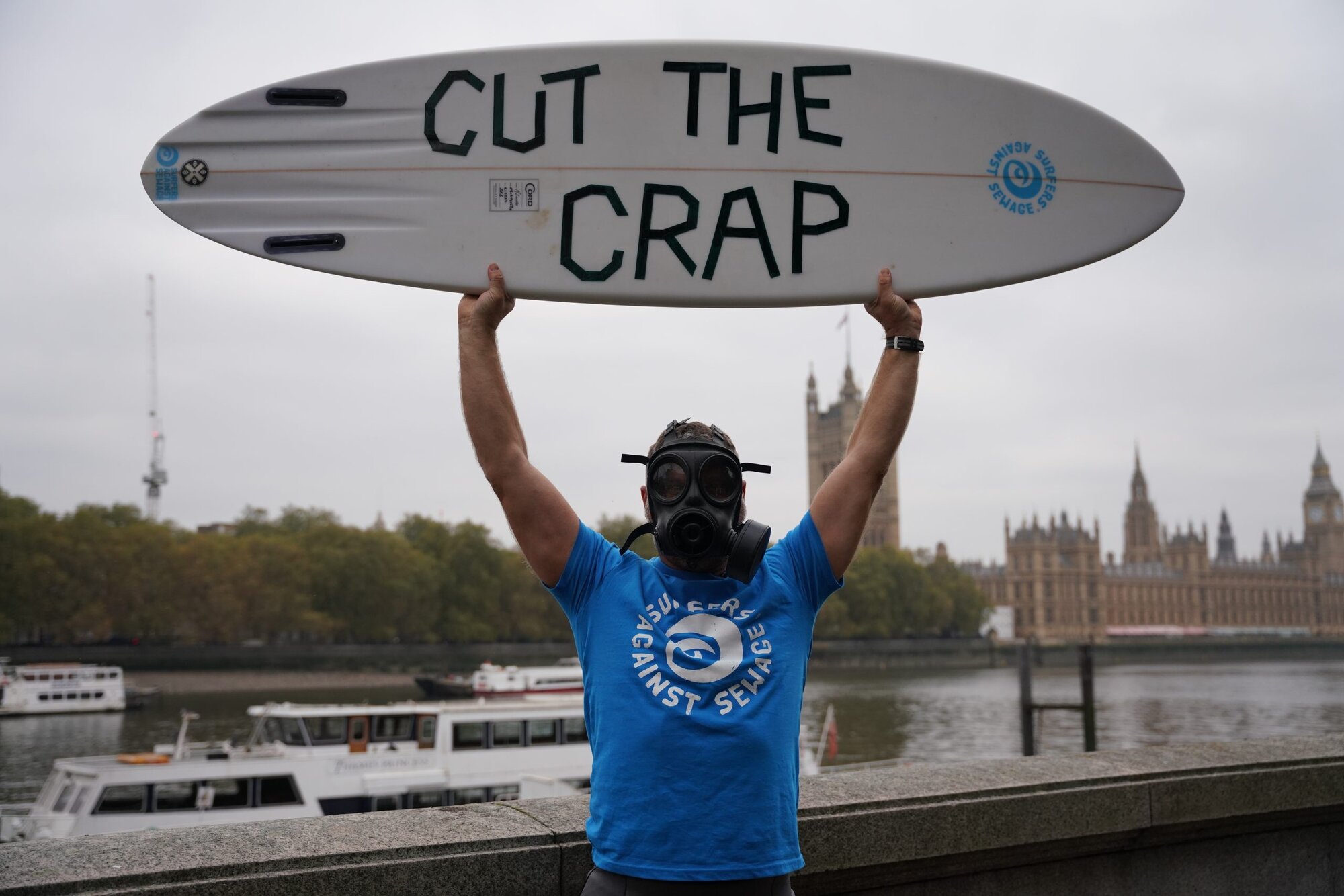
And in an extraordinary act of citizen empowerment, the Citizens Arrest Network has continued its creative campaign of symbolic “boardroom arrests” — calling out pollution-for-profit executives and holding them to account through using the power of citizen arrests.
This is where I find hope: in the compassionate energy of people who refuse to look away.
What Needs to Happen Next
A year after that extraordinary march, we stand at a crossroads.
The government’s upcoming White Paper on Water Reform offers another opportunity to show genuine leadership. But if it merely repackages the recommendations of the Independent Water Commission, it will fail to meet the scale of the crisis affecting our rivers.
We need a framework that addresses the whole system, not just the symptoms. That means:
- Clear timelines for bringing failing water companies back into temporary public ownership through the special administration regime, or introducing hybrid community models.
- A 25-Year Agricultural Roadmap that tackles diffuse pollution at its source.
- Stronger, independent regulators free from political and corporate interference.
- And a second Water Bill, one that enshrines the right to clean water and healthy rivers in law.
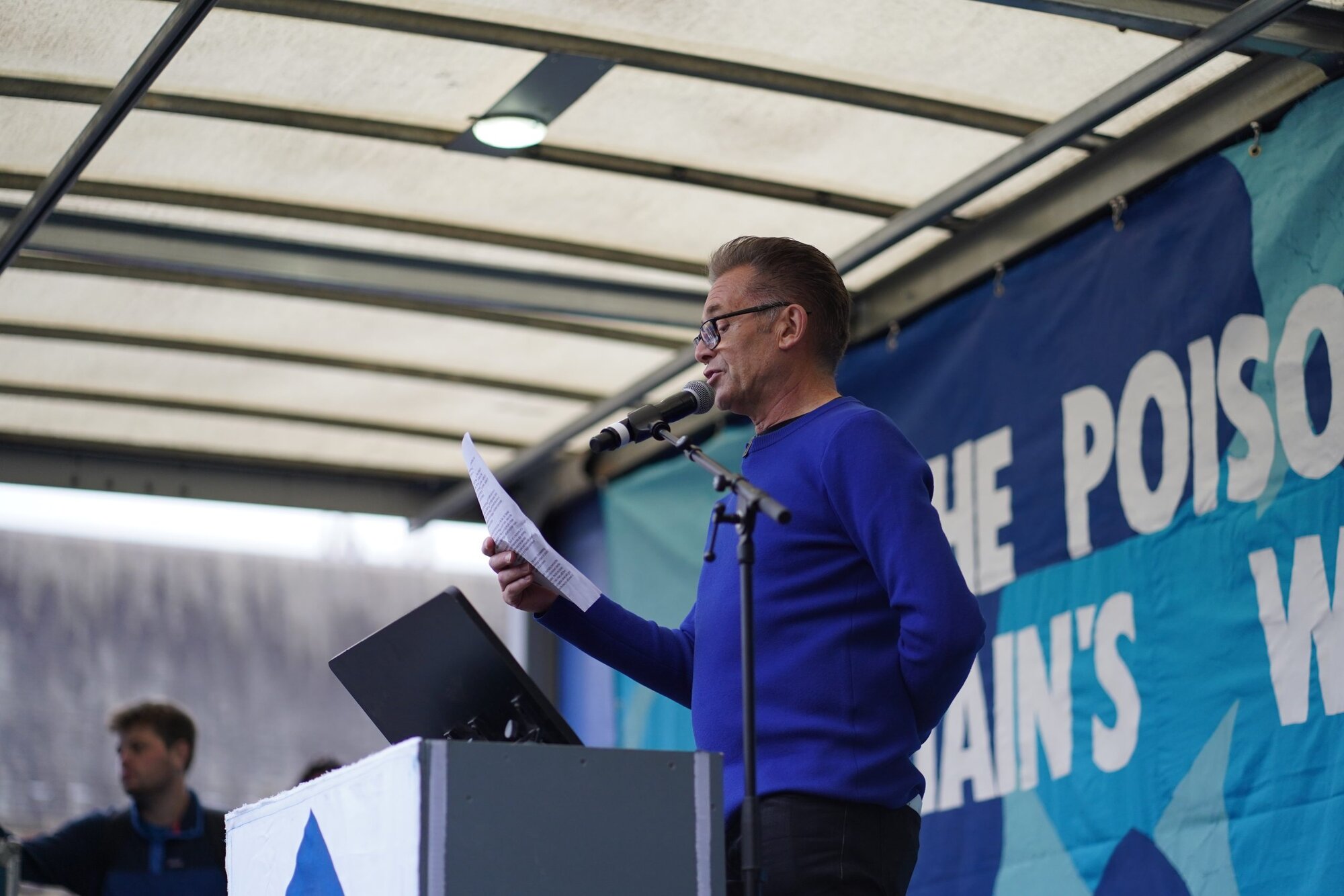
Without these, the “blue wave” that filled Parliament Square will, as Chris Packham said on stage, “be back…..in brown”.
A River Still Rising
As I reflect on that November day, I can still feel the rhythm of the drums echoing through Westminster, the collective heartbeat of thousands who refused to accept that our rivers should be sacrificed for profit.
One year on, that heartbeat hasn’t faded. It’s grown stronger.
Every petition signed, every water test taken, every letter written to an MP is another ripple pushing against the current of complacency.
We may not yet have turned the tide, but the direction of flow has shifted. Awareness has deepened. Accountability is rising. Along the riverbanks, people’s voices rise, demanding change.
The March for Clean Water was never meant to be a single day. It was a major moment along a journey. The galvanising of a movement of communities reclaiming the lifeblood of this country.
And as long as our rivers run — however polluted, however wounded — so too will our determination to see them restored, replenished, and free.
Because rivers are not just waterways. They are the veins of our land, the pulse of our planet, and the mirror in which we see the health of our democracy.
The tide is turning. Let’s keep it moving.