Meet Christian Fuller, River Action’s new Legal Coordinator

Q1. Tell us about yourself

Hi, I’m Christian, and I’ve recently joined River Action as Legal Coordinator.

I grew up in Conwy, where the Eryri National Park was a constant part of my life. Those early experiences shaped my relationship with nature: not something to dominate, but something we live alongside and have responsibilities towards.

Before joining River Action, I worked across environmental law, political monitoring, and campaigning, most recently at Greenpeace International in Amsterdam. Alongside this, I’ve been involved in political and environmental campaigning through SERA, Labour’s environment campaign. I’ve just moved back to the UK, and I’m really excited to be putting my skills to use protecting rivers and supporting the communities that depend on them.

Q2. What first sparked your interest in protecting rivers and freshwater ecosystems?

I am lucky to have spent a lot of time kayaking and swimming in rivers and lakes. As I got older, seeing those same rivers increasingly affected by pollution, sewage discharges, the climate crisis and ecological decline made the crisis feel both urgent and personal. Historically, geographically, and politically, rivers are meeting points in the British Isles. Rivers are the places where the climate and biodiversity crisis, corporate exploitation and weak enforcement meet, but they are also the space where we can come together to write something new.

Q3. You have just spent 6 months at Greenpeace International. Can you describe the work you did there, the campaigns you were involved with, and what you learned from that experience?

After completing a Masters in International Environmental Law at Utrecht University, I joined the Greenpeace International Legal Unit in Amsterdam for a six-month internship. What stayed with me most was seeing how powerful the law can be when it’s used alongside campaigning and political pressure. I supported strategic litigation across several campaigns: challenging unlawful deep-sea mining in areas beyond national jurisdiction; pursuing accountability for forced labour at sea in corporate supply chains; and using European law to resist a multi-million-dollar SLAPP suit brought by a US oil company against Greenpeace. I was also lucky enough to attend the International Court of Justice’s historic Advisory Opinion on Climate Change and to scope future climate litigation to build on 2025’s historic legal victories.

Q4. You serve as an executive committee member at the Socialist Environment and Resources Association (SERA). Could you tell us more about that role, what the organisation does, and how that experience shaped your approach to environmental advocacy?

SERA is Labour’s environment and climate organisation, working to strengthen ambition across the movement by connecting grassroots members, trade unions, NGOs and parliamentarians, and putting climate, nature and environmental justice at the centre of political power. As an executive committee member, I contribute to strategy, governance, fundraising and campaign development. I also founded and led Our Earth in 2050, a youth-led initiative amplifying young people’s voices within Labour’s environmental agenda – defining its purpose, securing resources, coordinating volunteers and building partnerships. This experience has shaped my approach to environmental advocacy by highlighting the importance of coalition-building, clear strategy, and political judgement – an approach I now bring to my work at River Action, where legal accountability, community mobilisation, and political engagement are combined to protect rivers and the communities that depend on them.

Q5. Looking ahead to your new role as River Action’s Legal Coordinator, what will you be focusing on, and what can people expect to see from you in 2026?

My role focuses on using the law as a lever for change. That includes supporting River Action’s strategic litigation, producing legal research and briefings, monitoring legal and policy developments, and working closely with colleagues and communities to ensure legal action feeds into wider campaigns.

A key part of the role is helping connect legal expertise with grassroots action – ensuring communities have the tools, information, and confidence to challenge pollution and hold decision-makers to account.

I’m particularly excited to contribute to legal strategies that are scalable and catalytic, such as catchment-based approaches that stops pollution at source, strengthens enforcement, and supports community-led action. There’s huge potential to use the law creatively and collaboratively, and I’m looking forward to helping develop that work.

Q6. Finally, in your opinion, what needs to change to rescue Britain’s rivers?

We need to move from a system that tolerates pollution and decline to one that actively prevents it. That means deliberate decision-making, stronger enforcement, real consequences for polluters, and communities having access to information, tools, and legal leverage. It also means recognising rivers as living systems that deserve protection in the public interest.

We have to shift legal and governance systems, move the markets, and empower communities. I’m excited to join River Action, whose approach, combining law, campaigning, and community action, gives me a lot of hope.
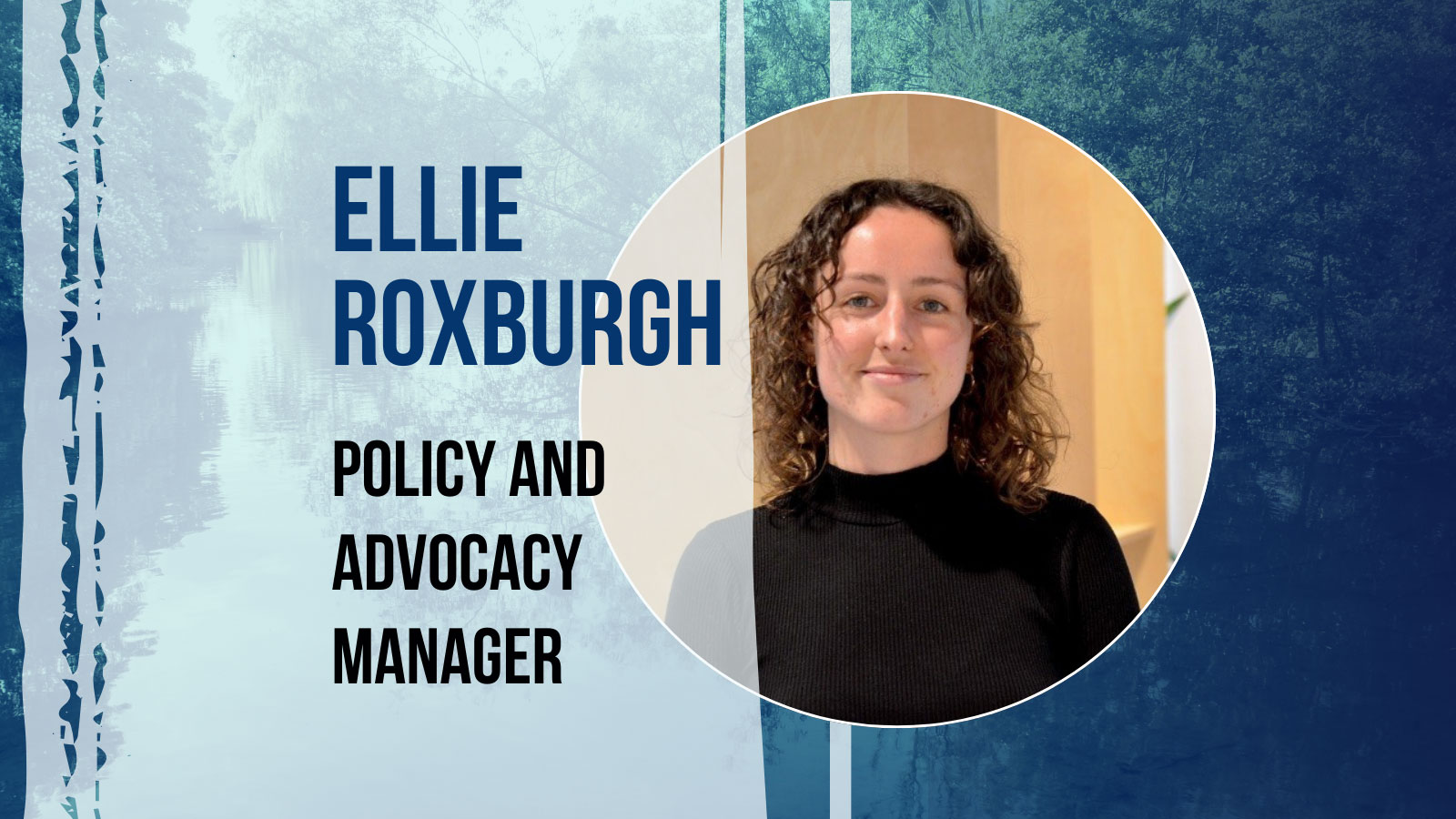
Meet Ellie Roxburgh, River Action’s new Policy and Advocacy Manager

Q1. Tell us about yourself

My name is Ellie, and I am the new Policy and Advocacy Manager at River Action! I am really excited to join such a dynamic and impactful organisation at such a critical time for water policy.

I have worked on environmental issues ranging from marine conservation, sustainable rice, nitrogen policy, and now rivers! This broad range of topics has equipped me with an understanding of how different sectors and practices impact water quality and the wider environment.

Q2.  What first sparked your interest in protecting rivers and freshwater ecosystems?

I grew up in Kent, which is a very green environment yet we had little access to rivers for swimming. Now that I live in Bristol, I am spoiled for choice and cherish swimming in my local river throughout the summer.

Having worked previously for the Soil Association on nitrogen, I became increasingly aware of the impact of agriculture on rivers, lakes and seas. I learned about the appalling water crisis unfolding in this country, and the dirty money trail leading straight to the companies in charge of keeping our rivers running and our tap water clean.

Q3:  You spent nearly three years at the Soil Association. What did your role there involve, and what did it teach you about the connection between soil health and the state of our rivers?  

During my time at the Soil Association, I convened a coalition of eNGOs to advocate for greater ambition and more integrated government action on nitrogen. The group of farming, climate, health and nature organisations came together after learning about the pollution swapping risks from taking a siloed approach to nitrogen policy. We hosted the coalition at the Soil Association to ensure that farmers were always considered in any solutions that we put forward.

Nitrogen is used as a fertiliser for crops, either in synthetic form manufactured using fossil fuels, as livestock manure, or supplied through nitrogen-fixing crops like legumes. In the UK, fertiliser application rates are high, with only about half of fertilisers being taken up by the plant.

The rest is lost to the environment, either as air pollution, a greenhouse gas or leached through surface and groundwater to the rivers. Too much nitrogen in rivers leads to eutrophication, whereby the nitrogen (and phosphorus) spur growth of algae to the point that it blocks light out of the river, killing wildlife and plants under water.

Ways to reduce nitrogen leaching into rivers starts with the soil. Building soil health will mean more nitrogen is held in the soil and it won’t wash away in heavy rainfall. Applying the right fertilisers at the right time, in the right amount and in the right place will reduce losses and – importantly – massively increase farm profitability.

Q4:  Tell us more about your position as secretary for the Society of Conservation Biology’s Impact Evaluation Working Group.

I am responsible for managing Volunteers and convening the Working Group. I joined the group after writing a paper on the impact of conservation organisations’ support for community governance of marine resources with the Journal (Society of Conservation Biology), and becoming interested in the use of impact evaluation in increasing effectiveness of conservation initiatives. With few resources to go round, and the biodiversity crisis deepening, it’s important that conservation projects and the communities they work with get the most bang for their buck.

Q5.  Looking ahead to your new role as River Action’s Policy and Advocacy Manager, what will you be focusing on, and what can people expect to see from you in 2026?

Given my experience in agricultural water pollution, I will be steering the policy work in this direction. The government’s shown appetite to clean up England’s rivers, but so far, is falling short of any immediate impact on agricultural pollution. I see better agricultural management of nutrients as integral not only to cleaning up rivers, but also to restoring biodiversity, air quality and reducing contributions to climate change. I will be kicking off 2026 by sharing our agricultural water pollution strategy with key decision makers in government.

The other area that I see as needing more attention from the government is the issue of water scarcity. Demand for water is only going up, with much drier and heatwave-ridden summers and the sudden appearance of data centres, the government needs a plan to ensure there is enough water to go around. That must include managing water for public interest to ensure corporations cannot guzzle it all on infrastructure.

Q6. Finally, in your opinion, what is further needed/what needs to change to rescue Britain’s rivers?

Holding polluters to account, re-structuring water companies to be for public interest. There’s a really interesting example of the Eau in France, where the water company is a charity and they invested in supporting farmers in the catchment to convert to Organic farming in a bid to clean up the river before the Olympics. These farmers produce healthy and nutritious food without the use of synthetic fertilisers or pesticides, which is then supplied to schools in the local area.

Meet Tim Birch, River Action’s Policy and Advocacy Manager!

Q1. Tell us about yourself

I live in West Wales and love walking the Pembrokeshire Coastal path watching wildlife such as grey seals, choughs and dolphins which we are fortunate to have on our doorstep. I grew up in the Peak District and spent many happy hours as a child bird watching amongst the hills and dales of Derbyshire. I can still remember how excited I got when I saw my first Dipper and Kingfisher on our local river so my connection with rivers goes back a long way. I love watching live music, particularly Irish folk and classical music, and enjoy playing the piano when i can.

Q2. How did you become interested in river protection?

When I finished at the University of Sheffield a group of us became particularly concerned about the state of rivers in South Yorkshire – particularly the Don and the Rother. They were heavily polluted by industry and sewage discharges. We decided to look into what was going on. As we began to examine the pollution registers for these discharges it became clear to us that companies were regularly breaching their discharge licences and little was being done by the regulatory bodies – so not much has changed there !

We decided to make a short film about what we found out and we established a local rivers campaign group called the Clean Rivers Campaign. This rapidly got local and national coverage and had a big impact. I’ll never forget when we got a Radio 4 crew who came up to interview us on a small boat on the River Rother which was one of the most polluted rivers in the UK at the time.

Q3. You have over 30 years of expertise in advocacy, biodiversity policy, and environmental campaigning at some of the most impactful UK environmental charities such as Greenpeace UK and Greenpeace International, the RSPB and the Wildlife Trusts. What have you enjoyed most about this kind of work and what have been its biggest challenges? 

I have worked at both the local, national and international level during my career in the nature conservation and environmental sector. I  have worked around the world on some of the biggest environmental issues that we face such as tropical rainforest destruction of the Amazon and in Indonesia and toxic pollution of our oceans.

These campaigns have brought me face to face with appalling environmental destruction. However, what i have always found most rewarding, when faced with such destruction, is having the chance to work with such a diverse mix of people and cultures who all share the same values about the need to protect and restore our amazing planet. That gives you an incredible amount of hope and drive to continue and never give up.

Q4. Tell us more about your position as a trustee of Tir Natur (a rewilding NGO in Wales), and your passion for rewilding.

I recently was asked to join the board of Tir Natur and have been delighted to join the first Welsh rewilding organisation. Tir Natur was set up to bring rewilding to Wales and to look for opportunities to showcase rewilding at scale in Wales. Wales has been slow to get on board with rewilding and I see Tir Natur as vital to help address this. Rewilding brings exciting new opportunities to both protect and restore nature and to also support and sustain local communities.

I have visited many rewilding sites in the UK and overseas and I have been both astonished and inspired to see how quickly nature can recover if it is given the freedom and space to do so. Rewilding is critical if we want to address the nature crisis in the UK and in Wales. The time has come to help our rivers become wilder across the UK!

Q5. Tell us about your new position as River Action’s Policy and Advocacy Manager, What can we expect to see from your role in 2025?

I am absolutely delighted to be joining River Action. I have been so impressed at the huge positive impact River Action has had as it rescue’s Britain’s rivers. It is clear that there is massive public support to clean up and restore our rivers and River Action has played a key role in bringing the plight of Britain’s rivers to the attention of the public. My role will be to help increase the advocacy impact of River Action with politicians, regulators, local authorities and business not only in England but across the devolved nations starting with Wales.

I will be helping to ensure that the incredible work of local community groups fighting for their rivers makes a significant political impact. I will also be helping to continue to develop our policy work so that we can advocate for the most river friendly policies.

Q6. Finally, in your opinion, what is further needed/what needs to change to rescue Britain’s rivers?

We need a real sense of urgency to rescue our rivers. For too long our rivers have become forgotten backwaters – that is changing particularly because of the work of River Action but we need to do more and we need to act fast. We need to continue to increase public awareness about the plight of our rivers and put forward the solutions to the problems our rivers face at all levels. More communities taking more action on their local rivers is vital to help create the pressure for change.

We need to continue to expose polluting practices and hold those polluters to account. The people supposed to be protecting our rivers need to step up and when necessary enforce the law – far too many river polluters are getting away with damaging our rivers and this has to stop.

We need to bring the market into the frame and that means supermarkets who are selling products that pollute our rivers during their production – this needs to change and fast and supermarkets need to help bring about that change. Our rivers are the living arteries running the length and breadth of our country – its so inspiring to be part of a movement helping to breathe life back into our rivers.

Meet Alex Papuca, River Action’s Senior Digital Communication’s Coordinator!

Q1. Tell us about yourself

Hi, I’m Alex and I’m thrilled to join River Action as the Senior Digital Communications Coordinator.

I’m from the Bristol area, and grew up on the River Avon and Boyd, spending much of my childhood swimming, picnicking and jumping from bridges and rope swings that no 10 year-old should’ve probably been using. I love our waterways and if I was ever on I’m a Celeb, my ‘happy place’ would be floating along the river in my kayak, with fish below me, birds above me and woodland to my sides.

Q2. How did you become interested in river protection?

As a keen kayaker, I spend a lot of time paddling our beautiful rivers, and I have seen firsthand the transformation from thriving ecosystems to polluted and degraded waterways. I vividly remember paddling the Wye a few years ago and being shocked at the changes to the river since I last paddled it. The water was much murkier and the river weed had disappeared at an alarming rate, it felt like a friend was dying in front of my eyes.

That sparked a determination to take action, I began to research the reasons for the Wye’s ecological collapse and discovered that River Action had recently been set up and was actively campaigning for the Wye. I have been a great admirer of River Action ever since,  keenly participating in the March for Clean Water last year and joining my local River Trust.

Q3. You have nearly 10 years experience working in sales and marketing.   What have you enjoyed most about this kind of work and what have been its biggest challenges? 

Within my sales and marketing roles, I love being able to use my creativity and problem solving skills to find innovative solutions. I enjoy building real, meaningful relationships with people from varying backgrounds. I have spent time working in Spain, Laos, China and Vietnam, which has given me an amazing opportunity to meet people from all walks of life and to see how strategies and solutions differ from place to place and from company to company.

In terms of challenges, sales is a world in which rejection can be common and disheartening. I maintain that the best sales person is honest, open and resilient, something I’ve tried to take with me in all parts of life. In terms of marketing, navigating the ever-evolving digital landscape. Algorithms change, audience behaviours shift, and attention spans get shorter. Staying ahead requires creativity, adaptability, and a deep understanding of what truly resonates with people.

Q4.  Outside of work, you also volunteer as a ‘Water Guardian’  for the River Avon.  Tell us more about your experience.

As a Water Guardian, I help monitor and report pollution on the River Avon, feeding into a wider network of citizen scientists and campaigners fighting to protect our waterways. It’s a small but vital role, ensuring that pollution incidents don’t go unnoticed and gathering data that can be used to hold polluters to account.

We’ve also done some very cool trips such as a demonstration of how sniffer dogs are now being trained to smell dangerous chemicals that can be found in sewage, so that sewage leaks can be identified and dealt with more quickly. It also gives me a great excuse to visit my stretch of the Avon more regularly, so I would definitely recommend volunteering for those interested!

Q5. Tell us about your new position as River Action’s Senior Digital Communications Coordinator?  What can we expect to see from your role in 2025?

My role is all about amplifying River Action’s campaigns and engaging more people in the fight to save our rivers. In 2025, expect to see bold, creative digital campaigns that not only inform but inspire action, whether through compelling content, community-driven initiatives, or innovative storytelling.

I’ll also be focused on analysing and developing River Action’s analytics, strengthening our supporter and key influencer engagement, and visiting community campaigns to capture the amazing efforts of people around the country. It’s an exciting time, and I’m eager to help drive real change this year.

Q6. Finally, in your opinion, what is further needed/what needs to change to rescue Britain’s rivers?

We need stronger enforcement against polluters, proper funding for regulatory bodies, and a shift in public and political will. Right now, too many industries are allowed to degrade our rivers with little consequence. Holding them accountable and pushing for systemic change is crucial.

At the same time, grassroots action is powerful. The more people who stand up for their local rivers, whether by monitoring pollution, pressuring decision-makers, or supporting organisations like River Action, the harder it becomes for those in power to ignore the crisis. A combination of policy enforcement, legal action, and public mobilisation is what will turn the tide.

Privacy Overview

This website uses cookies so that we can provide you with the best user experience possible. Cookie information is stored in your browser and performs functions such as recognising you when you return to our website and helping our team to understand which sections of the website you find most interesting and useful.