Ofwat ‘acted unlawfully’—forcing customers to pay twice for failures, say campaigners

Download PDF

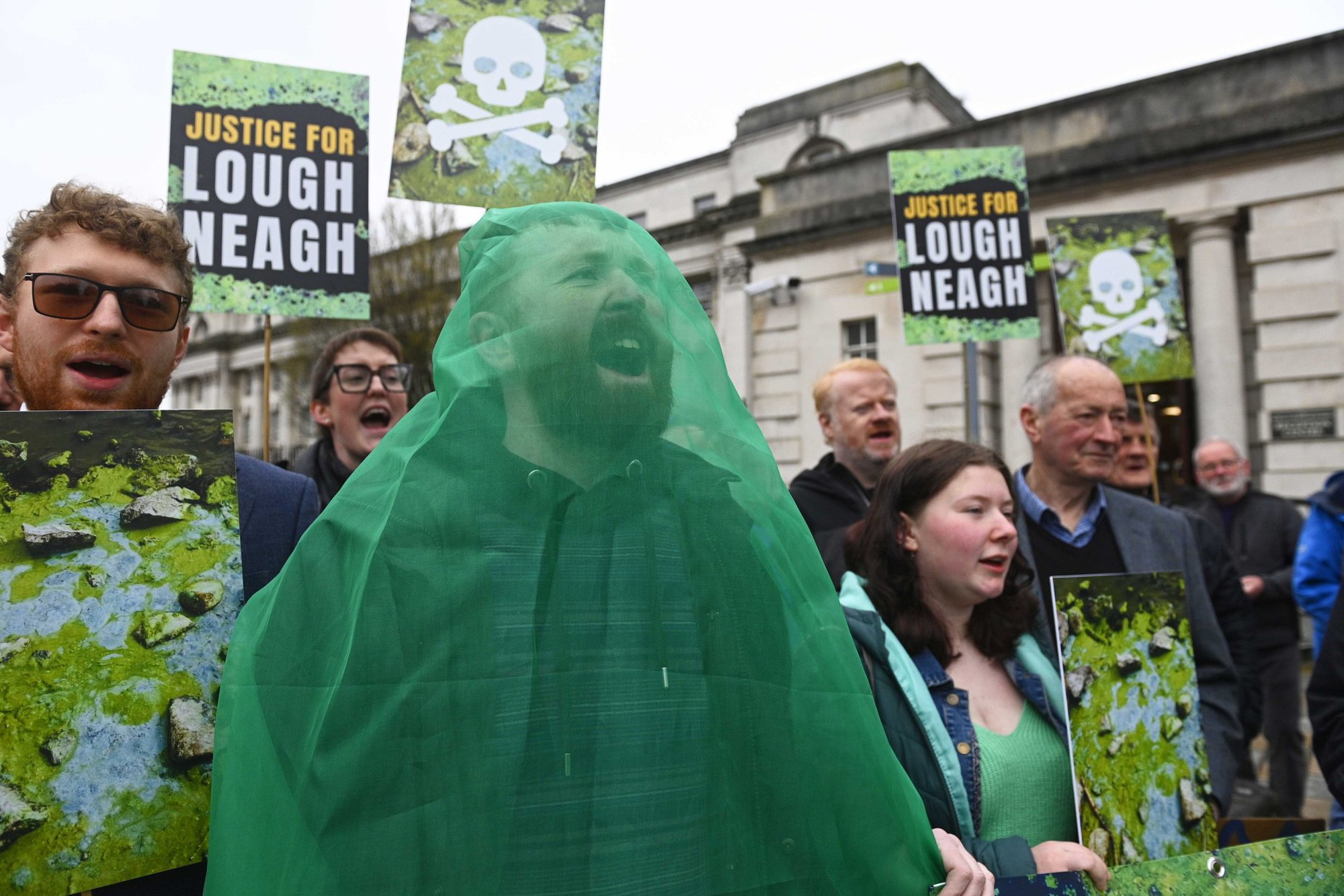
Environmental group River Action has accused Ofwat of acting unlawfully by using recent, significant bill hikes to cover past infrastructure failures—forcing customers, rather than investors, to foot the bill for decades of neglect. This is despite Ofwat having committed to put in steps to prevent customers paying twice.

Instead of funding essential new water and sewage projects, these price rises—approved in last year’s Ofwat price review—could be being misused to fix long-standing issues that should have been addressed years ago. This means there is nothing to stop customers from being charged twice to clean up an environmental disaster in the nation’s rivers, seas and lakes caused by chronic underinvestment in Britain’s water infrastructure.

River Action’s legal challenge against Ofwat

River Action has taken the first step in a legal challenge against Ofwat, on the basis it acted unlawfully in its Price Review 2024 (PR24) determination for United Utilities. The challenge focuses on funding allocated for wastewater treatment works and pumping stations in and around Lake Windermere.

River Action argues that Ofwat unlawfully approved ‘enhanced funding’ from customers without a mechanism to ensure the money will be used solely to improve sewerage services; rather than bring services into compliance when that should have already happened under past schemes. This means there is nothing to stop customers paying twice for services that have not yet been delivered.

This follows detailed investigations by campaign groups Save Windermere and Windrush Against Sewage Pollution, which exposed significant and systemic flaws in Ofwat’s approach.

River Action is taking legal action to compel Ofwat to reassess its PR24 determination for United Utilities in relation to Windermere and to encourage Ofwat to reassess other water company schemes wherever there are concerns that customers are unfairly covering the cost of past failures. However, River Action is not calling for PR24 to be overturned or for investment levels to be reduced, recognising the urgency and importance of increased investment in Windermere and elsewhere.

Windermere: A damning example of regulatory failure

United Utilities, currently under fire after evidence obtained by the campaign group Save Windermere, revealed 6,000 hours of raw sewage was discharged into Windermere last year, and is a case in point. River Action has commenced legal action claiming Ofwat has allowed the company to divert funds meant for future projects to deal with past failures—rather than investing in vital improvements to wastewater treatment and pumping stations around the lake.

Campaigners warn that millions of pounds intended for infrastructure upgrades may be used to patch up outdated and crumbling water and waste systems—exacerbating the pollution crisis in England’s largest and best-known lake.

A system rigged against the public

River Action believes this problem extends far beyond a single water company. Under PR24 (Price Review 2024), Ofwat has likely permitted other firms to operate in a similar way—leaving billpayers to pick up the tab for failings that should have been fixed with previous funding.

Emma Dearnaley, Head of Legal at River Action, said:

“We believe Ofwat has acted unlawfully by approving these funds without ensuring they are spent on genuine improvements to essential infrastructure. Instead, this so-called ‘enhanced funding’ is being allowed to be used to cover up years of failure.

“Effectively, Ofwat has signed off on a broken system where customers are being charged again for services they have already funded—while water companies continue to mark their own homework and pollute for profit.

“This scandal must be addressed. The cost of fixing the UK’s crumbling water infrastructure should fall on the companies and their investors—not on the British public.”

Leigh Day solicitor Ricardo Gama said:

“Ofwat has said again and again in public that it won’t let price rises be spent on fixing historic issues which are leading water companies to breach their permits. They’ve said in black and white terms that customers won’t be expected to pay twice. But in documents seen by River Action it looks like Ofwat hasn’t done its homework in checking whether the money it’s letting United Utilities take from customers will actually be used for that purpose. River Action believes that this is reflective of a broader lack of due diligence by Ofwat over the decades, which has led to money not being spent on infrastructure improvements and instead being diverted to investors’ pockets.”

River Action is calling for immediate regulatory action to ensure water companies stop passing the cost of failure onto customers—and start taking responsibility for the environmental damage they have caused.

ENDS

Dr Alison Caffyn: “Chicken farm… or factory?”

Download PDF

I have had to address this question twice in the last week. Both times I was chatting with people from conservation charities in Shropshire about the environmental impacts of intensive poultry operations locally. Both times the individual expressed sympathy with chicken farmers – along these lines: “It’s been so difficult for family farms in the last few years; what with low farm gate prices, huge shifts in support mechanisms and challenging climate changes. One has to symphathise if they feel their only option is to put up a chicken shed or two.” Each time I have tried to rebalance their perceptions of a typical ‘chicken farm’ in this area.

Firstly, it is true, there are some operations which fit the above description, particularly on and over the Welsh border. Small, one shed, free range egg units with, commonly, 16,000 birds operating in upland landscapes, diversifying from unprofitable sheep or cattle businesses. There are even some older chicken operations producing a few thousand organic and free range birds for the local market – but these are few and far between. The vast majority of intensive poultry units have capacity for 30-90,000 hens or many hundreds of thousands of broiler (meat) chickens.

When I interviewed farmers and land agents in Shropshire and Herefordshire for my research we discussed farmers’ motivations for going into poultry. I even developed a typology. The five ‘types’ included the ‘desperation factor’ described above. But there were also: older, large, well-established broiler operations – some dating back to the start of the industry in the 1960s and some still owned by the chicken processing company (Cargill). There were many large farms which diversified into poultry in order to support other farm enterprises. There were several large estates developing poultry as a new venture (for tenants) and finally, a few cases where investors had made speculative land purchases in order to set up a new poultry operation.

Some older sites have been expanded in stages over the decades with some IPUs now having 10-16 ‘sheds’ and up to a million birds. I was told the average return on investment (of about £500,000 per shed at the time) was ten years. Sooner, if the site installed biomass boilers and the like to receive generous Renewable Heat Incentive payments. Some IPUs were making substantial annual profits.

I’ve done a bit of number crunching to check my facts. The average size of all 150 odd IPUs in Shropshire is 131,000 birds. Broiler units are larger on average, housing around 200,000 birds per four sheds. Egg units are generally smaller averaging 83,000 hens – but that includes both several units with only around 4,000 birds and one large egg operation with nearly 2 million.

I have walked close to or through many IPUs in Shropshire and Herefordshire and spent more hours than I care to admit poring over satellite imagery of all the others. Most don’t look or sound or feel or smell like a farm. The brooding 100m long sheds, the acres of concrete, sickly reek and eerie stillness are not what you would expect on most farms. The operation is overseen on the site manager’s laptop or phone. There is a periodic rattle of feed being pumped along automatic feeding tubes. There will be someone who walks through each shed once a day to pick up the dead birds. Until, after six weeks, the lorries arrive to take the birds away to the processing factory.

You get the picture. And that picture is more factory than farm. An agricultural factory, in a rural location. But not a farm. And, indeed, many farmers say exactly this themselves.

We need to take this growing diversity of agricultural operations into account when addressing the impacts of the industry. No one want to accuse all farmers of environmental harm. Many are doing amazing, progressive things to transition towards more sustainable farming systems. Only a small percentage of farms locally have intensive livestock operations, but their environmental impacts far outweigh those that do not. But out of date perceptions and misplaced sympathy are not helpful – although they are often promoted by farming lobbyists.

Dr Alison Caffyn – River Action Advisory Board member

Emma Dearnaley joins River Action

Download PDF

We’re delighted to introduce Emma Dearnaley, our new Head of Legal at River Action. In our latest blog, we get to know more about Emma and the role that she will play to help rescue Britain’s rivers.

  Q1. Tell us about yourself

  Hello – I’m Emma.

I knew from pretty early on that I wanted to be a lawyer and, although I’ve now had a range of jobs, using the law has been the thread that has run through them all. I’ve charted my own course through roles in commercial and civil litigation at a global law firm, law enforcement, government policy and non-profits – before settling in environmental campaigning.

I decided to leave conventional City law in 2018 having become increasingly curious about the law’s societal role (and my own, as a lawyer) and frustrated by its lack of accessibility to those without power or deep pockets. A period of exploring roles acting in the public interest then followed. It was during my time at Good Law Project that I received a loud wake up call that made me realise I wanted to use my skills, experience and energy to find solutions to the interconnected climate, environmental and nature crises.

Alongside my day job, I am a trustee of two social justice charities – Cranstoun and Music of Life – who I support in their missions to, broadly put, empower people to make positive changes in their lives.

I am a pragmatic optimist driven by the need and opportunity to take action to protect and restore our rivers and environment, for us and for future generations. I believe nothing is more essential than this.

Q2. You were previously the Legal Director at Good Law Project (GLP).  Tell us more about the role and your biggest highlights leading its legal work.

  GLP is a campaign organisation that uses the law to hold power to account, protect the environment and uphold the rights of people and communities. As its Legal Director, I was responsible for developing and leading its strategic litigation and other legal work and I was part of its senior management team.

It was a fantastic role that provided a full immersion in legal campaigning – by which I mean the use of legal tools and processes to achieve change as part of a campaign strategy – and gave me the chance to work on many different issues of importance. GLP is probably best known for its work exposing the government’s ‘VIP lane’ for Covid-19 personal protective equipment contracts and Partygate, but it was the climate and environmental work that I was most drawn to and I proactively grew this strand of work.

The first case I developed was what became a judicial review against Defra’s Storm Overflows Discharge Reduction Plan and GLP’s ‘Clean Waters’ campaign. As well as pushing for Defra’s plan to be improved (which it was as a result of one of our arguments), we looked to use the litigation to revive an English legal principle called the public trust doctrine that says the state has a duty to safeguard vital natural resources including rivers and hold them in trust for the public. That argument didn’t succeed in this case – we always knew it was very ambitious – but it may yet be used to protect water, as well as resources such as air, in cases that are to come – with its recognition in some US states giving cause for optimism. Beyond the legal outcomes, this campaign raised public awareness and – together with the work of other groups like River Action – helped to push the sewage pollution scandal up the political agenda.

I am also really proud to have worked with Friends of the Earth and ClientEarth to bring legal challenges that resulted in a High Court ruling that the government’s Carbon Budget Delivery Plan was inadequate. This significant win secured greater transparency, accountability and ambition, with the government required to revise its plans to include more robust measures to meet emission targets.

A major highlight came at the end of my time at GLP when the Supreme Court gave its landmark ruling in the Manchester Ship Canal v United Utilities case – in which GLP supported the Environmental Law Foundation to intervene and evidence the systemic nature of United Utilities’ failures – that ended the impunity of water companies for the damage they cause through sewage discharges. This judgment means that people and communities can now use private law nuisance and trespass actions to hold polluting water companies to account – and it is heartening to see claims being formulated off the back of this judgment and the law continuing to develop to provide clear avenues for challenge and protections for rivers and communities.

It was a joy and education throughout my time at GLP to meet so many inspiring people across the social justice, climate and environmental movements. It was through participating in a water strategy group that I first met Charles and James at River Action and started working with them, impressed by their focused and generous approach to environmental campaigning.

  Q3. Tell us about your new position as River Action’s first Head of Legal.  What can we expect to see from your role in 2025?

There is huge potential to use the law together with other forms of influence to move the dial on rivers in 2025 and beyond, especially with the newly formed Water Commission, public awareness at an all-time high, multiple routes of challenge available, and great opportunities for collective and community action across the country.

In my role, I expect to work with government to strengthen laws and policy. I expect to push organisations and companies to stop their polluting and environmentally damaging practices. And I also expect to take legal action to enforce the law or to make sure that others do, while recognising that you don’t need to bring or win every legal case in order to make people think harder about the decisions they make and what they choose to do.

  Q6. Finally, in your opinion, what is further needed/what needs to change to rescue Britain’s rivers?

Rescuing the UK’s rivers is a big and complicated challenge that requires a big and committed ecosystem of actors. Collaboration will be key.

It will require government, agricultural producers, industry, supply chain participants and water companies to make systemic changes and for them to be held to account by regulators and civil society. It is essential that the government sets ambitious policy and that regulators are effective after decades of inaction and underfunding. There are plenty of water and environmental laws that exist already and they would be good laws if they were adhered to and enforced. Now more than ever it is vital that we hold feet to the fire over failures and push for sustainable solutions to be identified and implemented.

Ultimately I think the power to deliver change comes from political and corporate will. But there is plenty that can be done to influence and apply pressure – and I’m excited to be at an organisation that is able to do that using a full toolbox, including by using the law and litigation when necessary.

Privacy Overview

This website uses cookies so that we can provide you with the best user experience possible. Cookie information is stored in your browser and performs functions such as recognising you when you return to our website and helping our team to understand which sections of the website you find most interesting and useful.