When Labour published its election manifesto, a resounding cheer went up from River Action and many other groups campaigning to clean up our horrendously polluted rivers. We were delighted to see nature restoration and the need to improve water quality being acknowledged as priorities for the new government. We were also encouraged to see some tough talk around getting to grips with the disaster of our failing water industry and its equally poor regulator, OFWAT.
However, despite plenty of catchy soundbites designed to capitalise on the escalating public anger, these manifesto pledges were worryingly short on detail. There was no mention of the urgent need to tackle other sources of pollution, such as agricultural and road run-off – both massive issues for our waterways. There was no insight offered as to how the commitment for tougher regulation and water quality monitoring would be funded given the cash-strapped state of our water regulators.
The General Election came and our rivers spoke out loud and clear. Of the five true-blue safe seats of the catchment of the River Wye (one of the UK’s most polluted rivers), only one was retained by the Conservatives – with all successful candidates having signed up to radical action to clean up the river.
Meanwhile, across the country other once unassailable Tory seats were lost where river pollution was at the heart of the winning campaigns. Amongst these was Henley, the ultra-safe seat of former Tory Prime Ministers, where a resounding Lib Dem win put the severe pollution of the River Thames front and centre. Former Environment Ministers Terese Coffey and Mark Spencer, on whose watch the pollution of rivers continued unchecked, both lost their seats.
When Labour published its election manifesto, a resounding cheer went up from River Action and many other groups campaigning to clean up our horrendously polluted rivers. We were delighted to see nature restoration and the need to improve water quality being acknowledged as priorities for the new government. We were also encouraged to see some tough talk around getting to grips with the disaster of our failing water industry and its equally poor regulator, OFWAT.
However, despite plenty of catchy soundbites designed to capitalise on the escalating public anger, these manifesto pledges were worryingly short on detail. There was no mention of the urgent need to tackle other sources of pollution, such as agricultural and road run-off – both massive issues for our waterways. There was no insight offered as to how the commitment for tougher regulation and water quality monitoring would be funded given the cash-strapped state of our water regulators.
The General Election came and our rivers spoke out loud and clear. Of the five true-blue safe seats of the catchment of the River Wye (one of the UK’s most polluted rivers), only one was retained by the Conservatives – with all successful candidates having signed up to radical action to clean up the river.
Meanwhile, across the country other once unassailable Tory seats were lost where river pollution was at the heart of the winning campaigns. Amongst these was Henley, the ultra-safe seat of former Tory Prime Ministers, where a resounding Lib Dem win put the severe pollution of the River Thames front and centre. Former Environment Ministers Terese Coffey and Mark Spencer, on whose watch the pollution of rivers continued unchecked, both lost their seats.
So with a new seemingly river-friendly government in power last month, we all found ourselves sitting on the edge of our seats to see if these commitments were for real. Lo and behold a Water (Special Measures) Bill was duly announced as part of the Government’s legislative programme in the King’s Speech.
However, on scrutiny of its detail, all we could muster this time was a slightly muted cheer. Its main contents included powers to ban the payment of bonuses to water company CEOs (isn’t that what happened somewhat ineffectively to bankers after the financial crisis?); regulations to make water company bosses face personal criminal liability for breaking laws on water quality (but aren’t company directors already subject to criminal sanction if their businesses act unlawfully?); requiring water companies to install real-time monitors at every sewage outlet (although didn’t the last government announce last year that all of England’s storm overflows are now electronically monitored?); and, finally, the new powers to bring “automatic and severe” fines for water company transgressions.
Whilst the last point is excellent news, the key issue here is how will this be enforced?
The severely cash-strapped Environment Agency simply does not have the capacity to execute a tougher enforcement regime – and no commitments were made to provide any extra cash to the EA. Above all, the most striking thing about these commitments, is what was absent. For example, there was no mention of tackling the biggest polluter of our rivers, intensive agriculture. Of course, the King’s Speech only summarises planned legislation and His Majesty had a busy day with a further 39 prospective Bills to announce.
The devil will be in the detail and, until we see the first draft of the Water Bill, it’s unreasonable to be too critical. What is certain, however, is that if Keir Starmer honestly thinks that stopping the payment of bonuses to water company CEOs is enough to remedy the appalling state of our rivers, then he has another thing coming.
The Water Bill must offer definitive reform of the failed regulatory system which allowed the pollution of our rivers to happen in the first place. This will require significant funding to repair and re-empower bodies like the Environment Agency. It also can’t just hang its hat on catchy sound bites to exploit public anger over sewage discharges
With latest figures from the EA showing agriculture to be the biggest polluter of our rivers, the blight of diffuse agricultural pollution must also be addressed.
We know the Government has a lot on its plate, not least the recent chaos on our streets, but ministers must not take their eye off the ball on key issues like the nation’s water.
Come the next election, the electorate of the Wye Valley, where the boom in intensive poultry farming has been the prime cause of the severe pollution of the river, will once more be totally unforgiving if their elected politicians renege on their many promises to save one of our most iconic rivers. And they are the tip of a very large iceberg of voters angry at the decline of our rivers and beaches and dereliction of water firms.
Charles Watson, Founder and Chairman of River Action UK
Responding to massive enforcement penalties imposed by Ofwat on three water companies Thames Water, Yorkshire Water and Northumbrian Water totalling £168 million, Chair and Founder of River Action Charles Watson said, “Last year sewage was discharged across England, Northern Ireland, Scotland and Wales more than 596,666 times. That’s over 1,600 times a day – and with many of these discharges being illegal, this situation is completely unacceptable.
“Thankfully the water regulator, for so long toothless, is finally waking up to the scale of the public’s outrage and we are starting to see some meaningful penalties being imposed upon the worst offenders. However, remember that the water industry was able to find more than £1.4 billion to hand out to their shareholders in dividends last year, which gives context to these fines. Until the ability of these polluting companies to hand out so much cash is severely curtailed, pollution will continue to be a highly profitable activity with inadequate incentives for the water companies to fix their creaking infrastructure and stop filling our rivers with raw sewage.
ENDS
For media interviews call Ian at River Action on 07377 547 362 or email media@riveractionuk.com
Campaigners have contested the public claims by Thames Water that River Action was ‘alarmist’ when it revealed the stretch of the Thames used for the Henley Royal Regatta was unsafe.
The call comes in an open letter to the CEO of Thames Water Chris Weston signed by British Rowing, a member of the House of Lords, the Mayor of Henley and river champions Feargal Sharkey and Steve Backshall.
Rather than being alarmist, River Action believes that Thames Water is polluting all the time because they don’t remove harmful bacteria from treated water before it enters the river, which is known as tertiary or quaternary treatment.
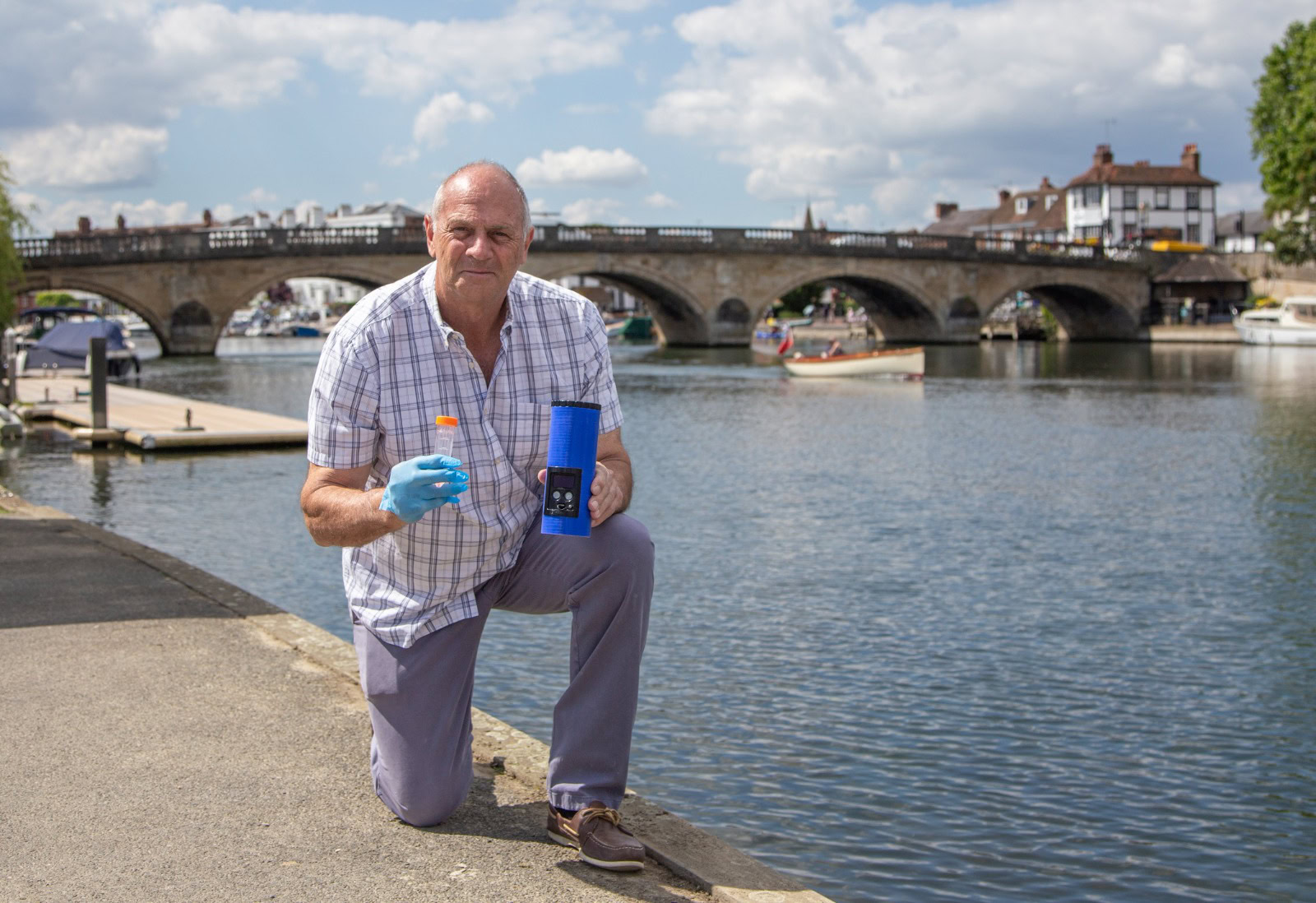
In late June, River Action revealed alarmingly high levels of E.coli on the Thames used for the Regatta, the world’s biggest international rowing event in the calendar; and a part of the river used for swimming events involving thousands of competitors risking their health. This followed a month of testing by the Henley and Marlow River Action Group in the lead up to the world-famous rowing competition. The testing involved a World Health Organization verified E.coli device, as used by the Olympic team in France to assess water quality on the River Seine. The UK Centre for Ecology and Hydrology said the data was “probably accurate.”
But in an interview with BBC television on June 28, Thames Water said in a statement read out by a reporter, “We need honest and balanced debate that recognises the range of factors impacting river health, rather than an alarmist approach that tries to apportion blame in a misguided way.”
Misleading claims by Thames Water on BBC Radio Berkshire
In the lead up to the Regatta, Thames Water conducted its own water quality testing, going on to give an interview to BBC Radio Berkshire on June 25. During the interview, a Thames Water spokesperson said, “Under dry conditions, we’re seeing some pretty good water quality.”
However, what the spokesperson failed to tell the listener is that the testing did not take place on the Henley Mile used for the Regatta. It took place at Hambledon Lock and Marsh Lock, some distance away from the racecourse. River Action’s testing was conducted on the racecourse at Fawley Meadows, where the effluent from the Henley Sewage Treatment Works enters the river.
In another twist, inspecting the water quality data from Thames Water cited in the BBC Radio interview, it can be revealed that on 4 occasions they detected E.coli levels considered by the Environment Agency to be unsafe to swim – demolishing claims put forward by Thames Water that they were “seeing some pretty good water quality.”For 12 days between 27th June and 9th July River Action’s citizen scientists tested at Fawley Meadows before, during and after the Henley Royal Regatta. Every single test was above safe levels of E.coli, on average 4,396CFU which is over 4 times worse than Environment Agency limits of 900CFU. If this was a designated bathing site it would come with a health warning: Advice Against Bathing.
In the open letter, the signatories ask Thames Water to:
Correct the record on water quality so that river users are aware that Thames Water testing in Henley did not take place on the Regatta racecourse, but at sites some distance from it
Properly invest in infrastructure improvements, specifically at Henley Sewage Treatment Works and Wargrave Sewage Treatment Works by implementing tertiary/quaternary treatment to remove harmful bacteria and viruses
Take responsibility for Thames Water’s role in the degradation of the River Thames catchment, and acknowledge that farming in Henley could be a cause given the lack of any meaningful concentrations of intensive agriculture in the locality, and clear evidence of sewage-related bacteria in the river.
CEO of River Action James Wallace said, “Our testing was rigorous, robust, used WHO verified technology, was independently approved, and published on several websites. For Thames Water to call us alarmist is a joke. We should all be alarmed and concerned that their creaking wastewater treatment plant at Henley is causing a risk to the health of the river and river users. They should focus on getting their business in order rather than trying to discredit citizen scientists for calling out dangerously high levels of E.coli on the Thames.”
The Mayor of Henley Rory Hunt, said, “I was shocked when in a recent meeting with river stakeholders Thames Water’s representative stated that the river had never been in better condition. This simply isn’t true and this is shown by the testing, and for Thames Water to state this beggars belief.
“Thames Water is the primary cause of pollution in the Thames and has failed in both its moral and legal duties. As a result of sewage pollution my constituents are facing disruption to their livelihoods and more seriously many of them have become unwell due to the pollution in the river. The pollution is also having a very damaging impact on the ecosystem and wildlife in our rivers, and if this is not tackled with urgency the damage could be irreversible. This is a serious public health and environmental issue and Thames Water should be ashamed that for years they have prioritised private profit over the public good.
“I am proud that Henley Town Council, and subsequently Witney Town Council and Oxfordshire County Council have passed motions of no confidence in Thames Water and hopefully many more councils will follow suit. The people of this county have clearly had enough and I am pleased to be working with River Action to address this issue.”
River Action writes to the Secretary of State for the Environment
As revealed in last week’s King’s Speech, the newly elected Government will
introduce a Water Bill to improve water quality by putting failing water companies under tough special measures by strengthening the water regulators.
With this in mind, River Action has shared the open letter to Thames Water with the Secretary of State for the Environment, Steve Reed MP.
“The Secretary of State for the Environment has said he will prioritise water quality, so we hope that addressing our concerns with Thames Water’s record on river pollution is seen as an excellent opportunity for him to show leadership and give the environmental regulators sufficient resources and powers to sort this mess out. The Environment Agency’s Environmental Performance Assessment published on Tuesday for 2023 shows Thames Water only reported 76% of pollution incidents, proving yet again they can not be trusted, not least because the record shows they were the worst polluting water company in England with 14 serious pollution incidents,” added CEO of River Action James Wallace.
Notes to editor
In the interests of transparency and to encourage openness about data collated on the UK’s rivers, River Action published the findings of its water quality testing at Fawley Meadows, Henley-on-Thames. The verified results are published here and on another site by the River Thames Water Quality Testing Group here. For ease of use, you can also download the report here.
This map illustrates where River Action tested on the Regatta racecourse, versus the testing done by Thames Water some distance from it. Here is a link to the Thames Water testing at Hambledon Lock and Marsh Lock, some distance from the racecourse. Use this graphic to understand their data and why, using the Environment Agency definition of bathing water status graded poor (when water quality is poor, the EA advice is not to swim), to understand why it was misleading for the Thames Water spokesperson on BBC Radio Berkshire to claim they were seeing “some pretty good water quality.”
Listen to Thames Water on BBC Radio Berkshire here. View their statement calling River Action alarmist on BBC South Today report.
ENDS
For media interviews call Ian at River Action on 07377 547 362 or email media@riveractionuk.com
We are writing to contest the public claims made by Thames Water that River Action is being alarmist in publishing E.coli test samples taken from the river at Henley-on-Thames on the Henley Royal Regatta course, and to ask Thames Water to urgently improve wastewater treatment to protect the health and livelihoods of Henley residents, businesses, visitors and athletes.
We are facing a freshwater emergency and companies like yours are failing to address it with the urgency that is required. This sense of urgency is shared by reputable organisations like the BBC, Financial Times and The Times and by communities across your catchment.
Dismissing River Action’s comments as alarmist diminishes the work of citizen scientists, such as the Henley and Marlow River Action Group, who devote significant time and costs to conducting testing to monitor the quality of the River Thames, and who have had regular meetings with your colleagues.
We understand you believe there to be a discrepancy between ours and your datasets. Our data is scientifically evidenced and is being used to inform the public of the health risks posed by the ongoing pollution caused by Thames Water:
Thames Water’s own data shows the definite presence of E.coli and other bacteria in the final effluent from Henley Sewage Treatment Works. This was further confirmed to us in meetings with your colleagues (e.g. on the 20th June) and their confirmation there is no tertiary or quaternary treatment of final effluent, meaning bacteria and viruses are released into the Thames everyday, not just in storm overflow events. Please see the annex for further detail on our findings.
The Centre for Ecology and Hydrology considers both datasets to be correct. The Thames Water samples were taken further from the source of pollution and therefore are more dilute; ours were at the point source and therefore higher.
Thames Water’s press statement suggested other sources of pollution (such as agriculture) could be responsible and that the water quality. This was misleading to the public and failed to take the responsibility and duty of care demonstrated by your colleagues in meetings with us. The combination of Thames Water and River Action results clearly show E.coli levels increase to unsafe levels along the Regatta course as the river passes Henley STW outflows.
Both the Henley Royal Regatta and the famous Oxbridge boat race have been marred by pollution and illness. Earlier this year, the Oxford’s men’s team cited high levels of E.coli in the river causing illness in their team which they say played a part in their defeat. Our data was released ahead of the Regatta to avoid any further illness and iconic international events being marred by pollution stories. However, despite being aware of our results this year, Thames Water told the organisers and competitors of the Regatta that the quality of the water was mostly good.
We the signatories of this letter representing the NGO and sporting communities, call on you urgently to:
Properly invest in infrastructure improvements, specifically at Henley Sewage Treatment Works and Wargrave Sewage Treatment Works by implementing tertiary/quaternary treatment to remove harmful bacteria and viruses.
Take responsibility for Thames Water’s role in the degradation of the River Thames catchment. We are the first to recognise that agriculture is a prominent polluter, but in the case of Henley, your claims that farming could be a cause are not founded given the lack of any meaningful concentrations of intensive agriculture in the locality, and clear evidence of sewage-related bacteria in the river.
Correct the record on water quality. On June 25th your spokesperson told Kirsten O’Brien on BBC Radio Berkshire that most samples met the threshold for ‘good’ status, apart from two days in May and June after rain where elevated readings were taken after rain. However, this omits any testing at Fawley meadows – at the very centre of the Henley racecourse – where the effluent from the Henley Sewage Treatment Works enters the river and where the actual Henley Regatta takes place. This is where our research found alarmingly high levels of E.coli bacteria. Your organisation was made aware of these findings before the event and did not show a duty of care to visitors and competitors.
We believe that rather than resisting the public’s demands for accountability, honesty and transparency, Thames Water should take a valuable step towards rebuilding trust by acknowledging your role in the demise of the river, and what you plan to do to resolve it. We would welcome the opportunity to help the community achieve this, and urge you to take responsibility and show the necessary leadership.
Please provide an urgent response to our requests. We would happily meet to discuss the actions you plan to take to address this unacceptable situation.
Yours sincerely,
James Wallace – River Action CEO
Charles Watson – River Action Founder and Chair
Co-signed by:
Angling Trust
British Rowing
Councillor Rory Hunt – Mayor of Henley on Thames
Feargal Sharkey
Steve Backshall
Dave Wallace – Henley and Marlow River Action Group
Freddie Van Mierlo – Liberal Democrat MP for Henley & Thame
Greener Henley
Henley Mermaids
River and Rowing Museum
Great Britain Outrigger
Lord John Randall
Royal Yachting Association
Surfers Against Sewage
Swim England
Annex.
Test results
On each of 12 occasions between 27th June and 9th July – before, during and after the Regatta – our results (select Fawley Meadows) showed very high levels of E.coli in the river water at Fawley Meadows, where the final effluent empties from Thames Water Henley Sewage Treatment Works into the River Thames via a series of streams/ditches.
With results ranging from 1680CFU to 8001CFU (per 100ml), we have demonstrated that every day we tested was much higher than the Environment Agency standard for poor water quality at 900CFU, regardless of whether it rained.
When combined with Thames Water’s lower test results upstream at Marsh Lock and downstream at Hambledon Lock, this proves beyond reasonable doubt that the STW discharges E.coli and other bacteria in its final effluent.
Thames Water’s staff have stated in meetings with River Action, and others including the Mayor of Henley and Town Councillors, that Henley STW does not have tertiary/quaternary treatment and so discharges bacteria in final effluent as a norm each day.
This has been confirmed through sight of your data showing final effluent with high levels of E.coli issued from Henley STW outflow into the streams/ditches that lead into the River Thames along the Regatta course. This is the reason why levels of E.coli increase after Marsh lock as the river passes the Henley STW, and with further distance and dilution why Hambledon Lock measures are lower downstream.
Your staff recognised that your permit does not require you to have tertiary/quaternary treatment, however your organisational press statements ignore this key fact and imply other sources of pollution are likely.
ENDS
For media interviews call Ian at River Action on 07377 547 362 or email media@riveractionuk.com
We’re delighted to introduce Henry Shepherd, our new Communities Coordinator, who will be joining Chloe and Erica in our growing Communities Team at River Action. In our latest blog, we get to know more about Henry and the role that he will play to help rescue Britain’s rivers.
Q1. Tell us about yourself
I’m a young, passionate environmentalist and advocate for protecting the natural world upon which my and my generation’s future depends on. I’ve grown up in-and-around nature, and even in my time I have witnessed its dramatic decline.
I’m desperate to protect and restore what little we have left, especially in the UK – not just because we rely upon it every day, but for its intrinsic value and beauty too. This has spurred my interest in the politics of environmental issues.
Most likely as a result of my appreciation of the natural world, I am a keen traveller, always looking to visit new places and have new experiences. Apart from that, I enjoy a good country walk, love a bit of reggae, and still can’t beat a kick-about with my mates at the park.
Q2. How did you become interested in river protection?
From the canals in Birmingham where I went to University, to the Loch’s in the Highlands where I was born, I’ve always been around water. Every train journey, country walk, or road trip, we cross paths with our waterways. They are the veins of our environment running across the land. Their prolific pollution has infuriated me ever since I’ve known. How could we allow such short-sighted carelessness to take place, and even worse, allow people to profit from it?
Turning this frustration and sense of injustice into hope can be hard in a sector in which many feel hopeless. Rivers, however, are a great example of how we really can make a difference. They are woven into so many aspects of our society and economy, uniting a wide range of stakeholders and presenting countless opportunities to play a part in working together towards a solution.
So, whilst their desperate need for a voice was enough to motivate me, the potential for our rivers to set the standard for what people who care about the planet can achieve together also inspired me.
Q3. Tell us about your new role as Communities Coordinator at River Action…what can we expect to see from your role in 2024?
I am excited to be publishing and delivering the River Rescue Kit website, which aims to empower and encourage people from all walks of life to get involved in addressing the dire state of our rivers.
As part of this, I will support and work alongside communities and campaigners to ensure that the new government understands that river pollution is an issue that the public cares about, and one that requires immediate and serious action.
I’m also looking forward to coordinating campaigns at a grassroots level, as part of the Thames Campaign, and I’m keen to establish more community connections in Northern Ireland, North England, and in my homeland, Scotland.
Q4. Finally, in your opinion, what is further needed/what needs to change to rescue Britain’s rivers?
Firstly, for me, it’s an attitudinal shift that is required across certain sectors to one that sees our waterways not as resources to be exploited, but as essential infrastructure underpinning our society, food systems, economy, and our little remaining, wonderful wildlife.
We also need stricter regulation, enforcement of the law, and increased funding – all across the agricultural sector, water sector, and the Environment Agency. This necessitates that precedents be set and lines be drawn by our government and courts to make it clear that the current state of play is not sustainable, and must, and can, change.
To achieve this, we have to continue to use our voices to speak up for our rivers and demand that those in positions of power use their privilege to push for this issue to be addressed as a matter of urgency.
Responding to the King’s Speech and the Government’s plans to introduce a Water Bill to improve water quality by putting failing water companies under tough special measures by strengthening the water regulators, CEO of River Action James Wallace said, “We are pleased that river campaigners have been listened to and welcome the news that the Government will put in place a bill to improve water quality by holding water companies accountable by strengthening the water regulators, including the Environment Agency and Ofwat, the latter considered by many to be a captured regulator.
“Cleaning up the UK’s rivers was a Labour manifesto promise so now we wait to see what extra powers, funding and resources the regulators will be given to put failing water companies under special measures, to ban bonuses for polluting water company bosses; and to use the full force of the law to bring criminal charges against persistent polluters who put profit before the health of rivers and river users.
On plans to stimulate economic growth through planning reform and mandatory housing targets, CEO of River Action James Wallace said,
“It remains to be seen how the Government will balance the need for sustainable new homes and healthy rivers. The two are not mutually exclusive.
“The current outdated and underfunded wastewater infrastructure system cannot cope with a nationwide homebuilding program without rapid investment to reduce the risks of putting more sewage into our already dirty rivers. After decades of chronic under investment, the wastewater system buckles when it rains, leading to the release of raw sewage into rivers and the sea, ostensibly to protect properties from overloaded sewers during heavy storm events. In reality, the system can’t even cope with a light rain shower. Therefore, alongside home building with rainwater and grey water reuse, we need legally binding measures and effective planning interventions put in place to protect our rivers from pollution. This means, at a minimum, expanding the capacity of wastewater treatment works and implementing sustainable drainage systems (SUDS) in new sustainable housing developments.”
ENDS
For interviews call Ian at River Action on 07377 547 362.
A legal challenge to Shropshire Council over its decision to give planning permission for a major intensive poultry unit aims to halt the further spread of industrial scale chicken farming both in the county and the wider catchment of the River Severn.
The application for judicial review was initiated and is funded by environmental campaigning group River Action which is waging a legal fight to fully enforce regulations to prevent pollution by intensive agricultural practices in the River Wye catchment area.
River Action says the Wye catchment area has been devastated by the failure to enforce anti-pollution regulations and it is determined to help prevent similar ecological damage to the neighbouring catchment of the River Severn.
The claimant, Dr Alison Caffyn, who lives in Shropshire and is a member of River Action’s advisory board, is represented by the environment team at law firm Leigh Day. She is challenging Shropshire Council over its decision in May 2024 to give planning permission for an application by LJ Cooke & Son for a poultry production unit that will include four poultry rearing buildings, each over 100m long, and a biomass store with boilers at North Farm, Felton Butler, Montford Bridge, Shropshire. The unit would house 230,000 birds, just 400m from an existing poultry site which is believed to house nearly half a million birds.
Permission was initially refused after Natural England advised that three protected sites, Shrawardine Pool, Lin Can Moss and Fenemere, could “be sensitive to impacts for aerial pollutants” and council officers said the plan did not detail proposals for handling chicken manure without an anaerobic digester.
However the plan was approved after LJ Cooke proposed exporting manure to a third party anaerobic digestion unit so that the digestate could be spread on farmland.
Critical objections to the application raised by Dr Caffyn and other local residents were disregarded. These included both the fact that the processing of manure at an off-site anaerobic digestion unit would not cut nitrate and phosphate groundwater pollution as the digestate would still be spread on farmland and that the Hencott Pool and Fenemere protected sites were both in “unfavourable condition” and the development should only be permitted if the “imperative reasons of overriding public interest test” could be satisfied.
Dr Caffyn has applied for judicial review on the grounds that there was:
A failure to assess the effects of spreading manure and the emissions from burning biomass, which as indirect effects of the development, needed to be assessed
A failure to impose a lawful planning condition on manure processing that would mean that the development would not cause groundwater pollution
A failure to carry out a lawful appropriate assessment as required by the Habitats Regulations to ensure that the development would not adversely affect the integrity of a designated protected site
A breach of regulation 9(3) of the Habitats Regulations, which requires the council to take steps to avoid the deterioration of habitats at protected sites
“We simply cannot allow the creation of more of these giant clusters of polluting poultry units.”
Dr Alison Caffyn
She points out that LJ Cooke used data from 2019-2021 to establish background ammonia levels, even though numerous applications for new or varied permits for poultry installations had been granted since 2020 which would enable approximately one million birds to be housed at any time in northern Shropshire.
Alison Caffyn said:
“I am delighted to have the opportunity, supported by River Action, to challenge this attempt to impose yet another massive factory farm upon the beautiful Shropshire countryside. Enough is enough. We simply cannot allow the creation of more of these giant clusters of polluting poultry units. There are already well over 20 million chickens in Shropshire, we don’t need more. Before we know it, the River Severn will soon be suffering the same pollution load as the neighbouring Wye – all because of these misguided and ill-informed planning decisions by Shropshire Council.”
Charles Watson, chair of River Action, said:
“One of the prime causes of the severe pollution of the River Wye was that when granting planning permission for the recent unprecedented proliferation of intensive factory farming units, the local county councils in Herefordshire and Powys never once considered the cumulative pollution impact that so much animal waste would have on the river catchment. Each application was treated as an individual event, with no thought being given to the fact that one of the most concentrated areas of intensive poultry production in Europe was springing up at the very heart of one of the most environmentally protected river catchments in the country.
“Like an appalling car crash in slow motion, exactly the same set of tragic events is now unfolding a few miles away in the neighbouring catchment of the River Severn. Shropshire County Council is waving through the planning system more and more huge intensive poultry unit applications, with no due consideration being given of their cumulative environmental impact and, by their own admission, are not even keeping any record of the number of intensive poultry units now operating across the region.
“River Action is determined to prevent a re-run of the environmental scandal of the Wye taking place across yet another one of the UK’s iconic rivers – hence why we have instigated and are actively supporting this critical legal action.”
Commenting further Alison Caffyn added, “I am delighted to have the opportunity, supported by River Action, to challenge this attempt to impose yet another massive factory farm upon the beautiful Shropshire countryside. Enough is enough. We simply cannot allow the creation of more of these giant clusters of polluting poultry units.
There are already well over 20 million chickens in Shropshire, we don’t need more. Before we know it, the River Severn will soon be suffering the same pollution load as the neighbouring Wye – all because of these misguided and ill-informed planning decisions by Shropshire Council.
Leigh Day environment team solicitor Ricardo Gama, added:
“So far, the approach that we’ve seen adopted has allowed industrial concentrations of poultry and livestock to be produced in highly protected countryside locations. Our client hopes that her claim for judicial review will set a precedent for local authorities across the country determining planning applications for similar developments which will cumulatively have severe impacts on protected sites. She believes that there needs to be a complete rethink of this approach.”
ENDS
For media interviews call Ian at River Action on 07377 547 362 or email media@riveractionuk.com
NOTES FOR EDITORS
Leigh Day represents River Action is its public law action and also represents people bringing a civil claim for nuisance against Avara Foods Ltd, Freemans of Newent and Cargill Ltd arising from damage allegedly caused by chicken pollution in the Wye catchment area.
Responding to the Ofwat announcement that household water bills are set to rise, CEO of River Action James Wallace said, “These bill hikes punish households struggling with the cost-of-living crisis for the abject failure of greedy water companies to invest in their crumbling infrastructure and reduce record sewage spills. For decades the industry has put profit before the environment, rewarding its shareholders with billions in dividends, and in the process filling our rivers with human sewage.
“We face climate breakdown resulting in more intense weather events that put pressure on treatment plants and storm overflows, overwhelmed when it rains. The water companies have realised they’re in a mess of their making and have successfully appealed to Ofwat to approve increases in water bills to climate proof their infrastructure. It begs the question, what have they been doing all these decades and what exactly are households paying their water bills for, apart from lining the pockets of fat-cat CEOs trousering massive bonuses and seeing huge dividends flow to shareholders? Remember, this is an industry that spews millions of litres of sewage into rivers and wastes 3 billion litres of water a day.
“We must fix this national embarrassment of systemic sewage pollution which has caused environmental carnage to our rivers. To do this, rather than hiking customer bills and getting the public to pay for the failure of the water companies, Ofwat should direct their shareholders to urgently invest in fixing their leaky infrastructure.
“Failing water companies should be put into special administration and refinanced to remove the opaque investment structures that have protected shareholders rather than bill payers, communities, and the environment. This process must begin now. We are in a freshwater emergency.
“The newly elected Labour Government has set out cleaning up our rivers as a priority and the manifesto committed to put failing water companies under special measures. The government has the political and public mandate behind it to push forward with ambitious measures that can hit water companies with the full force of the law, prioritising cleaning up our rivers, securing freshwater and restoring nature. Ofwat and the Environment Agency must be resourced properly to clean up the mess of the last two decades of strategic deregulation and austerity.
“But we also need wholesale reform of Ofwat to ensure that people and the environment are prioritised over investors; and of the Environment Agency to ensure increased water quality monitoring and more meaningful fines of polluters. To date, Ofwat has allowed our water companies to be asset stripped by the financial engineering of their investors to the extent the country’s sewage infrastructure is failing due to woeful under-investment, and the Environment Agency has allowed this to happen with impunity.”
ENDS
For media interviews call Ian at River Action on 07377 547 362 or email media@riveractionuk.com
Water quality testing by River Action citizen scientists has revealed alarmingly high levels of E.coli bacteria from sewage pollution along the River Thames used for next week’s Henley Royal Regatta – with qualifying races today involving approximately 4,000 rowers.
With the General Election next week, River Action want urgent action from politicians on the UK’s water pollution emergency. The campaign group calls on whichever party forms the next government to adopt its five-point plan to save the UK’s rivers, including prosecuting the polluters, and properly resourcing and reforming the environmental regulators which have allowed the desecration of rivers like the Thames for more than a decade.
The regular testing on the Thames – near Fawley Meadows where the effluent from the Henley sewage treatment works enters the river – by the Henley and Marlow River Action group started on the 23rd May and continues until 7th July, the last day of the Regatta. Using a Fluidion World Health Organization verified E.Coli analyser, and results analysed by Earthwatch, the tests revealed levels of E.coli up to 25,000 CFU (colony forming units) per 100ml. This is more than 27 times higher than what the Environment Agency grades designated bathing waters as poor, the bottom of four categories. When bathing water is graded ‘poor’ the Government’s advice is against bathing. The testing locations suggest that the source of pollution is from Thames Water discharging treated effluent containing bacteria, and untreated sewage directly into the river and its tributaries.
Safety guidelines issued by Henley Royal Regatta
As part of its ongoing commitment to ensure the safety and well-being of participants of the Henley Royal Regatta, the event organisers have included the latest ‘Guidance on rowing when water quality is poor’ to all rowers entering the competition. The guidance was written by British Rowing, River Action and The Rivers Trusts, with the aim of minimising the risk of illness due to proximity to polluted water.
Included are helpful tips on the importance of covering cuts, grazes, and blisters with waterproof dressings, taking care not to swallow river water that splashes close to the mouth, wearing suitable footwear when launching or recovering a boat, and cleaning all equipment thoroughly.
CEO of River Action James Wallace said, “It is shocking that we have had to issue health advice to the competitors of the Henley Royal Regatta. Thank goodness the organisers are showing a duty of care to the rowers by issuing guidance that will help to keep competitors safe. Clearly, rower and river user health is a priority. We applaud them for their actions and hope everyone competing in the Regatta stays healthy. As we saw at the recent university Boat Race in London on the River Thames, there is a risk that rowers can become unwell from waterborne pathogens which not only affects their race but puts their health and sport at risk.”
Mr Wallace blamed the river pollution on Thames Water. “The river pollution is most likely the fault of Thames Water. On behalf of rowers and Thames communities, we demand that they stop this deluge of raw sewage, which threatens river users with serious sickness and the river’s biodiversity. This is a health emergency. The new government must get a grip of the water pollution crisis and ensure that water companies, including Thames Water, invest urgently in upgrading wastewater treatment plants and fix their leaky infrastructure before someone becomes seriously ill, or worse.
“Rivers should come with a health warning. Citizens are doing the job of regulators and industry because there is insufficient testing – even at international sporting venues – and no duty of care shown by the Environment Agency or the Department of Health and Social Care. During this election week we urge the public to vote for clean rivers.”
Responding to the results of water quality testing on the River Thames at Henley, Sir Steve Redgrave, the most successful male rower in Olympic history and Chair of the Committee of Management for Henley Royal Regatta said, “Today’s findings provide a stark reminder of the impact that sewage pollution is having on our rivers. Henley Royal Regatta supports the research undertaken by River Action, which highlights the essential work that needs to be done to improve the cleanliness of our waterways for all to enjoy. Our rowers train daily all around the country. Our waterways are vitally important to our competitors racing, but also to all those athletes training on a daily basis nationwide. Our top priority has been, and always will be, the safeguarding of our competitors. This year, as part of the documentation provided to all entrants competing in the Regatta, everyone is being given the latest guidance from British Rowing on how to protect themselves.”
Citizen Scientist Dave Wallace from Henley and Marlow River Action Group who conducted the testing said, “The river in Henley is internationally famous and has one of the highest levels of recreational and sporting uses of any stretches on the Thames. It is so badly polluted by dangerous levels of E.coli and other pathogens primarily from sewage, as shown by our testing which can be harmful to people’s health. We need action now to clean up the river. We cannot wait!”
Naturalist and television presenter Steve Backshall said, “The continual release of pollutants into the Thames is causing havoc for wildlife and people alike. Events like Henley that have been running for 185 years are at risk, all because of inaction from failing water companies. The British public deserve better. In an election month it’s worth knowing only the Greens and Lib Dem’s are really running with fixing this public disgrace as a part of their manifestos.”
Clean rivers campaigner Feargal Sharkey said, “The Government has allowed Thames Water to accrue £15 billion in debt rather than invest in maintaining and upgrading their sewage infrastructure. This failing corporation and frequent polluter needs to be put into special administration and refinanced without a public bail out, with the new government assuring its 15 million customers they will not pay the price of decades of deregulation and profiteering.”
This General Election River Action asks all candidates to save our rivers through 5 asks:
1. SEWAGE – Significant reform of OFWAT’s failed regulation of the water industry with increased testing, fines, and investment.
2. AGRICULTURE – Clamping down on pollution through strengthened regulation of intensive livestock and dairy farming and increasing support for sustainable farming practices.
3. PUBLIC HEALTH – Ensuring the Environment Agency properly monitors our rivers and publishes transparent data and guidance about when it is safe to use rivers.
4. WATER SCARCITY – Building more reservoirs and fixing leaks so we do not run out of water.
5. ENFORCEMENT – Properly funding environmental protection agencies instructing them to take firmer action against polluters including by increasing sanctions.
“As voters make up their minds on who should lead the country, we encourage everyone to consider supporting a party that takes on the water polluters and demands reform of our environmental regulators and restructuring failing water companies. Everyone should be able to enjoy our rivers and seas without risking their health,” said the CEO of River Action James Wallace.
Hustings tonight at the Henley River and Rowing Museum
Tonight at 1800, at the Henley River and Rowing Museum, a General Election hustings takes place where candidates from the constituency of Henley and Thame will provide voters with the opportunity to understand how they would address water pollution on the River Thames and how their parties will solve the crisis nationally. Attending:
Caroline Newton, Conservative (confirmed)
Jo Robb, Greens (confirmed)
Nanda Manley-Browne, Labour (confirmed)
Freddie van Mierlo, Liberal Democrats (confirmed)
The hustings are preceded by short talks on water pollution and solutions with River Action, British Rowing, Earthwatch and citizen scientists.
ENDS
For media interviews call Ian at River Action on 07377 547 362 or email media@riveractionuk.com
NOTES TO EDITORS
River Action
In the interests of transparency and to encourage openness about data collated on the UK’s rivers, River Action has published the findings of its water quality testing at Fawley Meadows, Henley-on-Thames. The results, verified by Earthwatch, can be found on their website here and on another site by the River Thames Water Quality Testing Group here. For ease of use, you can also download the Earthwatch report website here.
On 23rd May 2024, the Henley and Marlow River Action Group commenced regular water quality testing on the Thames used for the Henley Royal Regatta. Testing continues until 7th July, the last day of the Regatta. Test results between 23rd May and 25th June indicate a mean, from 27 tests, of 1,213 E.coli colony forming units (CFU) per 100ml of water. This excludes our highest recorded spike (19th June) so far which reached 25,000 CFU, more than 27 times the acceptable limit. This reading was verified as a “good” reading by Fluidion, but we have chosen to remove it. The second highest reading reached 8,001 on 16th June. Of the measurements taken in Fawley Meadows, 47% were above 900 cfu/100 mL; meaning that they do not meet the threshold for sufficient water quality based on DEFRA’s Inland bathing water standards. To meet bathing water quality standards, this level should be below 900 CFU per 100ml to meet the lowest water quality deemed safe for swimming. By comparison, the Environment Agency conducts between 3 and 20 water quality tests at official bathing water sites between May and September to decide the status. According to the Environment Agency, an inland water registering 900 CFU or greater is unsafe to swim.
There will always be slight variations in the readings depending on the water quality testing lab or kit used. In our case we have used a Fluidion World Health Organization verified E.coli analyser with the results verified by Earthwatch. This coliform incubator – the Alert One – is used by the Olympic team in France to check water quality on the River Seine. It is regarded as highly accurate and reliable and is being used increasingly across Europe and the UK.
We have conducted our testing over the last month very near the Henley sewage treatment works whose final effluent – and untreated discharges – pass Fawley Court and enter the Thames at Fawley Meadow on the Henley Mile used for the Regatta. Thames Water test upstream of the Henley Mile at Marsh Lock and downstream at Hambledon Lock. They told us they test at those sites because they are easier to reach. We have asked them to test at the Fawley Meadows location, too.
Recordings are bound to be much higher near the sewage treatment works than 2km upstream or 5km downstream when the sewage discharge and final effluent are more dilute. We believe this is why their readings are so vastly different to ours and why, on one occasion, we recorded a reading of 8,000 and another of 25,0000 colony forming units (CFUs) per 100ml, which is more than 27 times higher than what the Environment Agency grades designated bathing waters as poor, the bottom of four categories. When bathing water is graded ‘poor’ at 900 CFUs, the Government’s advice is against bathing. The testing locations suggest that the source of pollution is from Thames Water discharging final effluent which is not treated for bacteria and untreated sewage directly into the river and its tributaries. There is very little intensive agriculture anywhere near Henley so the likelihood of farming elevating E.coli levels is low.
There is no legal requirement to remove bacteria from treated final effluent. This is known as tertiary treatment. We have asked Thames Water to invest in tertiary treatment at Henley STW and upstream at Wargrave or anywhere else that could be endangering the water quality of Henley-on-Thames.
The E.coli bacterium is found in faeces and can survive in the environment. It can cause a range of infections including urinary tract infection, cystitis (infection of the bladder), and intestinal infection, stomach cramps, bloody diarrhoea, and vomiting. In the worst of cases, some strains of E.coli can lead to life-threatening sepsis (blood poisoning) requiring urgent medical attention.
River Action conducts citizen science on waterways to determine whether there are pathogens present harmful to the health of humans and wildlife. We are on a mission to rescue Britain’s rivers by raising awareness of the crisis facing our rivers, and the failure of Government funded environmental agencies to make water companies invest in their polluting infrastructure and to prosecute illegal business practices that cause river pollution.
Henley Royal Regatta
Henley Royal Regatta, founded in 1839, is the best-known rowing regatta in the world, renowned for its match-racing. It is one of the highlights of the summer sporting and social calendar in the UK, as well as the rowing calendar internationally. Nearly 400 races are staged at the Regatta, featuring Olympians and emerging stars from around the world.
For enquiries on any of the above, please email press@hrr.co.uk
‘When the world ends, someone will have daubed on a wall somewhere “It was the water, stupid” in a parody of Bill Clinton’s famous campaign reminder to his team to remain focused on what matters most.
As an angler I’ve lived all my life in, on or beside water. The rivers, oceans, lakes and ponds that have been my obsession for more than half a century are dying before our eyes. Either sucked dry by our relentless demand for more of this most precious natural resource or engulfed in a tidal wave of sewage and slurry, often both. Short sighted stupidity has been the hallmark of national water policy since before the Industrial Revolution. The current situation is little short of alarming:
Only 14% of our water bodies are now in good ecological condition.
In 2023 a total of 579,581 sewage spills recorded from storm overflows in
England and Wales for a total duration of 4.6 million hours.
Wastewater infrastructure replacement rate for pipes and main sewers is runnin at 0.05% of the network per annum – 10 times longer than the European average – meaning sewers with a 100-year life expectancy are meant to last for 2,000 years.
Environment Agency numbers show that in just the last year at least 120,000 fis were killed in sewage-related pollution incidents – the true figure will likely have been much higher.
The Atlantic salmon is now officially classified as an endangered species in the UK.
With a general election just a week away the condition of our rivers and waterways is higher up the political agenda than it has ever been. This follows years of relentless pressure from energised campaign groups such as Surfers Against Sewage, Angling Trust & Fish Legal, The Rivers Trust, Wildfish, River Action and many angling and local groups across the country, ably supported by celebrity angling activists like Feargal Sharkey, James Murray and Paul Whitehouse. Whilst it’s pleasing for campaigners like me to see our chosen cause front and centre of political debate, what is less encouraging is the failure of all political parties to acknowledge the depth and scale of the problem or to apply any serious thinking as to what needs to be done.
Last year over 579,000 sewage spills were recorded from storm overflows in England and Wales
Soundbites won’t fix our rivers and seas, but here’s 12 things that will make a difference if we elect a government with the guts to do what’s necessary.
1) Recognise that there is no such thing as cheap water
My local water company, Thames Water, provides my three-bedroomed, semi-detached house in Reading with clean, drinkable water for a little over £1 a day. Absurdly, I can also use this heavily-treated liquid to water my garden, wash my car, and to flush my toilet. Speaking of which, my bodily waste is also taken away and allegedly treated before being discharged as effluent back into the same river system from which it came. That same pound will scarcely buy a bottle of water in a supermarket, or a glass of the stuff with added bubbles in a restaurant, yet people regularly hand over wads of cash without a second thought for both, even though what comes out of their taps costs almost nothing.
Water for almost nothing is no basis on which to build public policy about a basic resource on which all life depends, human, animal, bird or fish. Water needs to become as political in Britain as it is in other countries where living conditions are far harsher. Look behind many of the conflicts and tensions in the world today and what do you find? Conflict over water. Too much of it, causing sea levels to rise as we fail to heed the warnings of climate change and more of the earth’s surface becomes uninhabitable. Too little of it, as warming temperatures turn once productive regions into searing dust bowls, causing millions of our fellow human beings to begin a giant migration in search of livable land.
2) Tackle the investment backlog
In 2021, my organisation jointly published a report looking at the sheer scale of the investment backlog facing the water industry. Called ‘Time to Fix the Broken Water Sector’, it exposed the ticking timebomb at the heart of the UK’s wastewater infrastructure that threatens the health of almost every river and stream in the land. The key finding were:
A £10 billion investment funding gap over the last 10 years.
The declining condition of rivers and streams due to increased sewage spills every year.
The absurd expectation of a 2,000-year lifetime for sewage pipes and other infrastructure.
Failure to build any new reservoirs in the south-east since 1976 despite a 3 million population increase and huge projected growth in house building.
Lack of investment in water supply has seen excessive groundwater abstraction drying up some chalk streams altogether and damaging many other rivers.
The impossibility of delivering commitments in the Government’s own 25 Year
Environment Plan and our legal obligation under the Water Framework Directive.
Failure of both the Government and OFWAT to heed the promises in the 2011 water white paper, or indeed the warnings from the National Infrastructure
Commission and the National Audit Office, about the pressing need for investment in water and sewerage systems to address the challenges of climate change and population growth.
The prospect of severe drought events causing parts of southern England to run out of water within 20 years.
The consequences of failing to invest in water infrastructure that will cost more in the long term – £40 billion versus £21 billion, and thousands of jobs.
Much of this sorry state was triggered by the politicians’ wish to kick the can down the road rather than face up to the looming water crisis. And behind all of this has been the thoroughly useless regulator OFWAT whose former Chief Executive and previous water industry fat cat, Johnson Cox, promised in 2017 – ‘a decade of declining water bills.’ He did this at a time when OFWAT had neither the engineering nor environmental expertise to make these judgements, unless, of course, you didn’t give a fig for the environmental consequences. As a result, the price limits were set so low that under-investment was inevitable, making a bad situation worse.
It is patently absurd to have two regulators allegedly overseeing the water industry. You can’t separate the consequences of economic regulation (OFWAT) from the impacts on the water environment (Environment Agency). The consequences of the OFWAT investment roadblock are plain to see. Here are a few examples:
OFWAT directly cut planned investment in PR19 (between 2020-24) by £6.7 billion (or £1.34bn each year). They even boasted about the size of investment they had prohibited water companies from making.
OFWAT held down bills below inflation for over a decade, removing around £11 billion from investment that should have been ring-fenced for improvements.
Allowing bills to increase with inflation over the last decade would have provided more for investment, which could have been ring-fenced for the most urgent projects. This would have been the equivalent of sufficient funding for up to half a dozen reservoirs or meeting overflow targets five years earlier.
OFWAT decisions overturned. Four companies successfully appealed their PR19 decisions to the Competitions and Markets Authority (CMA) who ruled as follows to:
Restore £7 million for Yorkshire Water to cut overflow spills, deliver wastewater upgrades, and the protection of tens of thousands of properties in Hull against flooding.
Restore £18.3 million for Northumbrian Water to prevent 365,000 properties in
Essex being cut off for a potentially extended period.
Protect £40 million investment in strategic water interconnection by Anglian Water, rejecting Ofwat’s decision that would have reduced the capacity of the interconnection pipes.
Restore £ 5 million for Anglian to increase its sludge capacity to minimise the operational resilience risk around their ability to deal with increased volumes.
OFWAT has clearly shown not to be fit for purpose. It should be abolished in favour of a publicly accountable single water regulator alongside a complete reform of the management and rebuilding of the UK’s water resources to deliver clean and plentiful water and wastewater infrastructure fit to meet the challenges of climate change and a growing population, without further damaging the environment.
4) Accept that underfunding leads to failure and underperformance
OFWAT’s rejection of necessary investment has directly caused problems. For example:
The whole industry was denied sufficient funding for leakage improvements over more than a decade.
They refused almost all of five English and Welsh companies’ climate resilience proposals to fund wastewater capacity upgrades, cutting the budget from £403 million to £16.4 million. This stopped £387 million of investment that would have allowed a half-decade head start on the storm overflows programme while also reducing sewer flooding.
Given the scale of both the environmental and economic challenge posed by a failing water sector with a crumbling infrastructure, the next government has little choice but to introduce primary legislation to abolish the two regulator model and overhaul the entire regulatory oversight of the industry to put environmental needs front and centre in a complete sector reset.
5) End the casino economy in the water industry
When water was privatised in 1989, the new companies were able to acquire public assets that were completely debt free. Thirty-five years later, companies like Thames Water are now a staggering £15 billion in debt and teetering on the brink of bankruptcy. A succession of private owners levered this debt mountain to strip out more than £7 billion in dividends to shareholders whilst paying eye-watering bonuses to top executives as a perverse reward for presiding over operational failure and turning a blind eye to financial sharp practice. Vampire owners like Macquarie should never have been allowed to mortgage their company’s balance sheets to fund excessive dividends. OFWAT could and should have prevented it.
Every piece of this scandal took place right under the nose of OFWAT, whose senior directors see no contradiction in taking highly paid jobs in the same companies they are supposed to be regulating only the month before.
The next government needs a new Water Industry Act to either create entirely new community interest entities to operate the water infrastructure or, at the very least, to correct the gaping loopholes in the current legislation that allow public assets and vital public resource to be traded like Bitcoin irrespective of the looming threats to both the economy and the environment.
6) Give the Environment Agency the power and the resources to do its job
The EA has been systematically hollowed out by a 57% cutback in its resources since 2010 turning from the bulldog it should be into the ineffective lapdog it’s now become. Enforcement rarely occurs and when it does it can take years to bring polluters to court. Only a minority of reported fish kills will even trigger a visit from Agency staff who are now simply spread too thin to be effective.
The organisation has suffered from poor leadership and is massively risk averse at a time when environmental stakeholders and the public at large are looking to it to take tough action in defence of our rivers and waterways. The Environment Agency is now under new leadership. The next government must give them the resources to do the job, and make it clear it must hold polluters to account, and ensure the protecting the environment is its first, last, and only priority.
Only a minority of reported fish kills trigger a visit from Environment Agency staff
7) Treat water as national infrastructure priority
Part of any new deal for water must involve getting serious about planning and building control. It must treat water as a national infrastructure priority. It’s crazy that planning for capital projects is squeezed into a five-year time frame. Something the nuclear industry, for example, would consider laughable. Reservoirs take years to plan, years to build and a long time to fill. We need long term investment planning if we are to be in anyway serious about resolving the challenges posed by declining water quality, climate change and population growth.
Here are some much needed reforms the new Environment Secretary should bring in immediately:
The National Infrastructure Commission should be instructed to set out the funding needed to:
Adapt to climate change
Restore infrastructure to a decent standard (e.g. by setting a target to
Match European average replacement rates by 2030)
Eliminate ecological harm
Eliminate all serious pollution incidents.
OFWAT (or its successor) should be required to deliver consent to match that level of funding or explain to Parliament why it hasn’t.
The new government should replace the clunky and little heeded Strategic Policy Statement for Water – currently the only way ministers can seek to influence the ‘independent’ regulator – with an Outcomes Direction to force them to take decisions in line with the priorities above.
While a new Water Act is necessary in the next Parliament these immediate measures would not require legislation. The current Water Industry Act just says that government should provide high-level guidance to the regulator. The problem is that it doesn’t.
8) New legislation to reduce abstraction and improve water security
With 85% of the world’s chalkstreams located in England, our stewardship of these precious assets is little short of shameful. These globally recognised, iconic ecosystems should be exemplars of a pristine aquatic environment. Instead, some are now used as open sewers and others are sucked dry through over abstraction. The Hertfordshire chalkstreams such as the Rib, Beane, and Ver have been reduced to a shadow of their former selves and now are often completely dewatered in stretches that were once home to a thriving population of brown trout and coarse fish. Water companies like Affinity find it easier and cheaper to suck the chalk aquifers dry rather than invest in the storage of winter rainfall.
A basic tenet of any water policy must be to collect surplus in times of plenty to guard against economic and environmental damage in times of scarcity. A new Water Act must enshrine this principle into law.
It should also do the following:
Streamline the planning process for water resources projects so that small projects, including nature-based solutions, that interlink are approved as one project.
Amend Development Consent Order legislation so that non-potable water schemes are eligible. This is crucial for speeding up delivery of water transfers in and between regions.
Set a clear target for drought resilience standards as legal minimums (currently they are advisory).
Reform building regulations to ensure proper water efficient homes (including appliance labelling and minimum efficiency standards).
End the developers automatic right to connect into the local sewerage system if it lacks sufficient capacity to treat the effluent to standard. Force developers to pay for local upgrades required by their proposals.
A reduction in abstraction is vital to stop rivers running dry.
9) Re-use wastewater
The UK is well behind other countries in using wastewater sensibly. For example, in Spain it’s a requirement to use treated wastewater on golf courses rather than abstracting fresh drinking water from the public supply.
We need to quickly follow what is already happening in Europe by using treated wastewater for agricultural irrigation and businesses. This would reduce demand and abstraction and could make a significant difference to river health thereby improving the environment for invertebrates and fish.
10) Overhaul the Environmental Permitting Regime
If having a combined rainwater and foul water sewerage system complete with storm overflows delivers ‘pollution by design’ the anomalies in the current permitting system create ‘pollution by permission’. The whole system needs a complete overhaul focusing on the health of the rivers and seas rather than treating them as dumping grounds of last resort when the system fails or trigger points are reached.
A particularly absurd anomaly sees water companies measured on what they keep in the pipe not what spills out of it. And the counting of storm overflow spills makes little sense as currently a five-minute spill is counted the same as one that lasts 12 hours. We need to move to assessed volumetric measures. It’s the volume of shit that needs counting, not the length of time a pipe might be dribbling. It is also ridiculous that pipes at the same sewage treatment site are individually permitted rather than permitting all the combined output with an incentive to maximise the treated flow.
11) Worry more about major system failure
The headline figures on sewage pollution are primarily around storm overflows, but just wait until the rising mains start crumbling as is already happening in the Thames Water region. That’s when we get total wipe out – when a problem becomes an environmental catastrophe. By 2050, in many of our water companies a majority of their rising mains will be over 100 years old and well past their sell by dates. In a few cases we are still relying on the brilliance of Victorian engineers to keep untreated sewage out of the rivers. This is clearly not sustainable.
Of course, storm discharges are unacceptable, they are horrible and stink, but do a lot less damage than a fractured rising main sewer. Investment priorities need to be focused on reducing the most harm and this should include getting ammonia and phosphorus levels down in small streams in dry weather where the harm caused to fish and invertebrates is acute.
12) Embrace citizen science and involve stakeholders in the management of rivers
Anglers and local river groups invest millions of hours of volunteer time every year into the maintenance and improvement of water environments by clearing litter, restoring habitats and monitoring and fighting pollution. They see what is happening and are often ‘the canaries in the coal mine’. Currently the EA does nothing about discharges from septic tanks or from the growing army of live-aboard boaters. Local intelligence can help plug these gaps.
In 2022, in response to record levels of sewage discharges and the continued failure of the Environment Agency to properly monitor the threats to our rivers, the Angling Trust established a national Water Quality Monitoring Network of citizen volunteers to collect and analyse water samples in their areas. It has now engaged over 784 anglers from 278 clubs operating on 202 rivers across 68 catchments collecting around 5,600 individual samples. The results are alarming with 44% of samples exceeding recommended phosphate and nitrate levels, 200 incidents of algae blooms and 300 pollution incidents observed.
Citizen science clearly has a big role to play as we need much better data to make proper decisions but currently the EA won’t accept their results. This is absurd and we need the government to intervene and ensure a role for citizen volunteers alongside an accreditation scheme with independent verification.
Our Water Quality Monitoring Network shows citizen science has a big role to play in river management
Summary
The privatisation of our water industry has been a disaster and I doubt if any of the politicians likely to be in the hot seats in DEFRA have any real comprehension of the extent and scale of the problems they are about to inherit. But let’s not get too starry eyed about the record of the sector in public ownership for there really was no ‘golden era’ when the rivers flowed bright and clear and the taps kept running. In the 1950’s the tidal Thames in London was declared ‘biologically dead’ and further upstream around Staines, where I grew up, there were signs advising us not to bathe in its polluted waters.
There are now many rivers and streams that have been brought back from the brink primarily thanks to European legislation like the Urban Wastewater Treatment Directive, as well as tougher domestic controls. But rules and regulation require properly funded and empowered regulators with a clear sense of purpose that put the environment first. They also require an industry that is accountable and an infrastructure that it fit for purpose rather than the ‘creaking and leaking’ timebomb that is about to land on the desk of the new Secretary of State for the Environment.
By all means, play around with different ownership models that deliver proper accountability for this most vital of our public assets. But please, please don’t forget to fix the pipes.