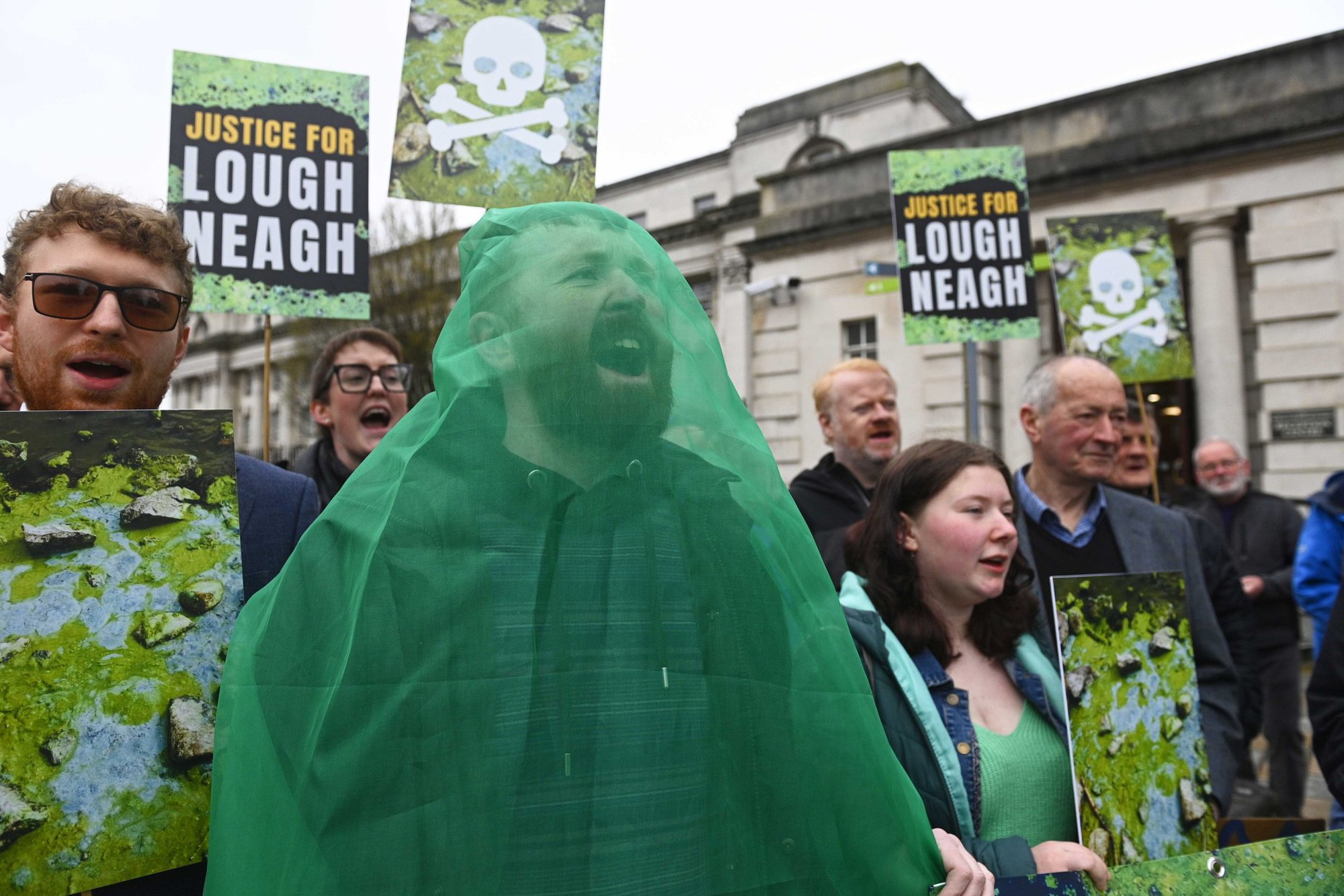
River campaigners contest Thames Water claims River Action was ‘alarmist’ about water quality, and call on them to clean up their pollution

Download PDF

Campaigners have contested the public claims by Thames Water that River Action was ‘alarmist’ when it revealed the stretch of the Thames used for the Henley Royal Regatta was unsafe. 

The call comes in an open letter to the CEO of Thames Water Chris Weston signed by British Rowing, a member of the House of Lords, the Mayor of Henley and river champions Feargal Sharkey and Steve Backshall.

Rather than being alarmist, River Action believes that Thames Water is polluting all the time because they don’t remove harmful bacteria from treated water before it enters the river, which is known as tertiary or quaternary treatment.

In late June, River Action revealed alarmingly high levels of E.coli on the Thames used for the Regatta, the world’s biggest international rowing event in the calendar; and a part of the river used for swimming events involving thousands of competitors risking their health. This followed a month of testing by the Henley and Marlow River Action Group in the lead up to the world-famous rowing competition. The testing involved a World Health Organization verified E.coli device, as used by the Olympic team in France to assess water quality on the River Seine. The UK Centre for Ecology and Hydrology said the data was “probably accurate.”

But in an interview with BBC television on June 28, Thames Water said in a statement read out by a reporter, “We need honest and balanced debate that recognises the range of factors impacting river health, rather than an alarmist approach that tries to apportion blame in a misguided way.”

Misleading claims by Thames Water on BBC Radio Berkshire

In the lead up to the Regatta, Thames Water conducted its own water quality testing, going on to give an interview to BBC Radio Berkshire on June 25.  During the interview, a Thames Water spokesperson said, “Under dry conditions, we’re seeing some pretty good water quality.”

However, what the spokesperson failed to tell the listener is that the testing did not take place on the Henley Mile used for the Regatta. It took place at Hambledon Lock and Marsh Lock, some distance away from the racecourse. River Action’s testing was conducted on the racecourse at Fawley Meadows, where the effluent from the Henley Sewage Treatment Works enters the river.

In another twist, inspecting the water quality data from Thames Water cited in the BBC Radio interview, it can be revealed that on 4 occasions they detected E.coli levels considered by the Environment Agency to be unsafe to swim – demolishing claims put forward by Thames Water that they were “seeing some pretty good water quality.”For 12 days between 27th June and 9th July River Action’s citizen scientists tested at Fawley Meadows before, during and after the Henley Royal Regatta. Every single test was above safe levels of E.coli, on average 4,396CFU which is over 4 times worse than Environment Agency limits of 900CFU. If this was a designated bathing site it would come with a health warning: Advice Against Bathing.

In the open letter, the signatories ask Thames Water to:

  • Correct the record on water quality so that river users are aware that Thames Water testing in Henley did not take place on the Regatta racecourse, but at sites some distance from it
  • Properly invest in infrastructure improvements, specifically at Henley Sewage Treatment Works and Wargrave Sewage Treatment Works by implementing tertiary/quaternary treatment to remove harmful bacteria and viruses
  • Take responsibility for Thames Water’s role in the degradation of the River Thames catchment, and acknowledge that farming in Henley could be a cause given the lack of any meaningful concentrations of intensive agriculture in the locality, and clear evidence of sewage-related bacteria in the river.

CEO of River Action James Wallace said, “Our testing was rigorous, robust, used WHO verified technology, was independently approved, and published on several websites.  For Thames Water to call us alarmist is a joke.  We should all be alarmed and concerned that their creaking wastewater treatment plant at Henley is causing a risk to the health of the river and river users. They should focus on getting their business in order rather than trying to discredit citizen scientists for calling out dangerously high levels of E.coli on the Thames.”

The Mayor of Henley Rory Hunt, said, “I was shocked when in a recent meeting with river stakeholders Thames Water’s representative stated that the river had never been in better condition. This simply isn’t true and this is shown by the testing, and for Thames Water to state this beggars belief. 

“Thames Water is the primary cause of pollution in the Thames and has failed in both its moral and legal duties. As a result of sewage pollution my constituents are facing disruption to their livelihoods and more seriously many of them have become unwell due to the pollution in the river. The pollution is also having a very damaging impact on the ecosystem and wildlife in our rivers, and if this is not tackled with urgency the damage could be irreversible. This is a serious public health and environmental issue and Thames Water should be ashamed that for years they have prioritised private profit over the public good. 

“I am proud that Henley Town Council, and subsequently Witney Town Council and Oxfordshire County Council have passed motions of no confidence in Thames Water and hopefully many more councils will follow suit. The people of this county have clearly had enough and I am pleased to be working with River Action to address this issue.”

River Action writes to the Secretary of State for the Environment

As revealed in last week’s King’s Speech, the newly elected Government will

introduce a Water Bill to improve water quality by putting failing water companies under tough special measures by strengthening the water regulators. 

With this in mind, River Action has shared the open letter to Thames Water with the Secretary of State for the Environment, Steve Reed MP. 

“The Secretary of State for the Environment has said he will prioritise water quality, so we hope that addressing our concerns with Thames Water’s record on river pollution is seen as an excellent opportunity for him to show leadership and give the environmental regulators sufficient resources and powers to sort this mess out. The Environment Agency’s Environmental Performance Assessment published on Tuesday for 2023 shows Thames Water only reported 76% of pollution incidents, proving yet again they can not be trusted, not least because the record shows they were the worst polluting water company in England with 14 serious pollution incidents,” added CEO of River Action James Wallace.

Notes to editor

In the interests of transparency and to encourage openness about data collated on the UK’s rivers, River Action published the findings of its water quality testing at Fawley Meadows, Henley-on-Thames. The verified results are published here and on another site by the River Thames Water Quality Testing Group here. For ease of use, you can also download the report here.

This map illustrates where River Action tested on the Regatta racecourse, versus the testing done by Thames Water some distance from it. Here is a link to the Thames Water testing at Hambledon Lock and Marsh Lock, some distance from the racecourse. Use this graphic to understand their data and why, using the Environment Agency definition of bathing water status graded poor (when water quality is poor, the EA advice is not to swim),  to understand why it was misleading for the Thames Water spokesperson on BBC Radio Berkshire to claim they were seeing “some pretty good water quality.”

Listen to Thames Water on BBC Radio Berkshire here.  View their statement calling River Action alarmist on BBC South Today report.

ENDS

For media interviews call Ian at River Action on 07377 547 362 or email media@riveractionuk.com

River Action’s open letter to Thames Water

Download PDF

Dear Chris Weston, 

WITHOUT PREJUDICE

We are writing to contest the public claims made by Thames Water that River Action is being alarmist in publishing E.coli test samples taken from the river at Henley-on-Thames on the Henley Royal Regatta course, and to ask Thames Water to urgently improve wastewater treatment to protect the health and livelihoods of Henley residents, businesses, visitors and athletes.

We are facing a freshwater emergency and companies like yours are failing to address it with the urgency that is required. This sense of urgency is shared by reputable organisations like the BBC, Financial Times and The Times and by communities across your catchment.

Dismissing River Action’s comments as alarmist diminishes the work of citizen scientists, such as the Henley and Marlow River Action Group, who devote significant time and costs to conducting testing to monitor the quality of the River Thames, and who have had regular meetings with your colleagues.

We understand you believe there to be a discrepancy between ours and your datasets. Our data is scientifically evidenced and is being used to inform the public of the health risks posed by the ongoing pollution caused by Thames Water:

  • River Action’s data is collected using a Fluidon World Health Organization verified E.Coli analyser – the same equipment used for the Olympics in France. Our results are available to the public and you can find our datasets here and here.
  • Thames Water’s own data shows the definite presence of E.coli and other bacteria in the final effluent from Henley Sewage Treatment Works. This was further confirmed to us in meetings with your colleagues (e.g. on the 20th June) and their confirmation there is no tertiary or quaternary treatment of final effluent, meaning bacteria and viruses are released into the Thames everyday, not just in storm overflow events. Please see the annex for further detail on our findings.
  • The Centre for Ecology and Hydrology considers both datasets to be correct. The Thames Water samples were taken further from the source of pollution and therefore are more dilute; ours were at the point source and therefore higher.
  • Thames Water’s press statement suggested other sources of pollution (such as agriculture) could be responsible and that the water quality. This was misleading to the public and failed to take the responsibility and duty of care demonstrated by your colleagues in meetings with us. The combination of Thames Water and River Action results clearly show E.coli levels increase to unsafe levels along the Regatta course as the river passes Henley STW outflows.

Both the Henley Royal Regatta and the famous Oxbridge boat race have been marred by pollution and illness. Earlier this year, the Oxford’s men’s team cited high levels of E.coli in the river causing illness in their team which they say played a part in their defeat. Our data was released ahead of the Regatta to avoid any further illness and iconic international events being marred by pollution stories. However, despite being aware of our results this year, Thames Water told the organisers and competitors of the Regatta that the quality of the water was mostly good.

We the signatories of this letter representing the NGO and sporting communities, call on you urgently to:

  • Properly invest in infrastructure improvements, specifically at Henley Sewage Treatment Works and Wargrave Sewage Treatment Works by implementing tertiary/quaternary treatment to remove harmful bacteria and viruses.
  • Take responsibility for Thames Water’s role in the degradation of the River Thames catchment. We are the first to recognise that agriculture is a prominent polluter, but in the case of Henley, your claims that farming could be a cause are not founded given the lack of any meaningful concentrations of intensive agriculture in the locality, and clear evidence of sewage-related bacteria in the river.
  • Correct the record on water quality. On June 25th your spokesperson told Kirsten O’Brien on BBC Radio Berkshire that most samples met the threshold for ‘good’ status, apart from two days in May and June after rain where elevated readings were taken after rain. However, this omits any testing at Fawley meadows – at the very centre of the Henley racecourse – where the effluent from the Henley Sewage Treatment Works enters the river and where the actual Henley Regatta takes place. This is where our research found alarmingly high levels of E.coli bacteria. Your organisation was made aware of these findings before the event and did not show a duty of care to visitors and competitors.

We believe that rather than resisting the public’s demands for accountability, honesty and transparency, Thames Water should take a valuable step towards rebuilding trust by acknowledging your role in the demise of the river, and what you plan to do to resolve it. We would welcome the opportunity to help the community achieve this, and urge you to take responsibility and show the necessary leadership.

Please provide an urgent response to our requests. We would happily meet to discuss the actions you plan to take to address this unacceptable situation.

Yours sincerely,

James Wallace – River Action CEO

Charles Watson – River Action Founder and Chair 

Co-signed by:

Angling Trust

British Rowing

Councillor Rory Hunt – Mayor of Henley on Thames 

Feargal Sharkey

Steve Backshall

Dave Wallace – Henley and Marlow River Action Group

Freddie Van Mierlo – Liberal Democrat MP for Henley & Thame

Greener Henley

Henley Mermaids

River and Rowing Museum

Great Britain Outrigger

Lord John Randall

Royal Yachting Association 

Surfers Against Sewage

Swim England

Annex.

Test results

  • On each of 12 occasions between 27th June and 9th July – before, during and after the Regatta – our results (select Fawley Meadows) showed very high levels of E.coli in the river water at Fawley Meadows, where the final effluent empties from Thames Water Henley Sewage Treatment Works into the River Thames via a series of streams/ditches.
  • With results ranging from 1680CFU to 8001CFU (per 100ml), we have demonstrated that every day we tested was much higher than the Environment Agency standard for poor water quality at 900CFU, regardless of whether it rained.
  • When combined with Thames Water’s lower test results upstream at Marsh Lock and downstream at Hambledon Lock, this proves beyond reasonable doubt that the STW discharges E.coli and other bacteria in its final effluent. 
  • Thames Water’s staff have stated in meetings with River Action, and others including the Mayor of Henley and Town Councillors, that Henley STW does not have tertiary/quaternary treatment and so discharges bacteria in final effluent as a norm each day.
  • This has been confirmed through sight of your data showing final effluent with high levels of E.coli issued from Henley STW outflow into the streams/ditches that lead into the River Thames along the Regatta course. This is the reason why levels of E.coli increase after Marsh lock as the river passes the Henley STW, and with further distance and dilution why Hambledon Lock measures are lower downstream.
  • Your staff recognised that your permit does not require you to have tertiary/quaternary treatment, however your organisational press statements ignore this key fact and imply other sources of pollution are likely.

ENDS

For media interviews call Ian at River Action on 07377 547 362 or email media@riveractionuk.com

Privacy Overview

This website uses cookies so that we can provide you with the best user experience possible. Cookie information is stored in your browser and performs functions such as recognising you when you return to our website and helping our team to understand which sections of the website you find most interesting and useful.