STATEMENT: River Action’s response to the Wye Action Plan announced by the Government (12/04/24)

Responding to the Wye River Action Plan announced today by the Government, Chair and Founder of River Action Charles Watson said:

“The announcement of DEFRA’s long-overdue Wye Action plan, has to be welcomed in part. In particular, there is finally a clear acknowledgment of the causes responsible for the ecological collapse of the river and the role played by intensive agricultural and the poultry industry specifically. Notwithstanding the scandal of how this tragic situation was ever allowed to happen in the first place – and in particular how one of Europe’s largest concentrations of intensive poultry production could have ever conceivably been allowed to have been established in such a highly protected and ecologically sensitive river catchment – certain specific undertakings, such as the provision of more subsidy for wider river buffers can only be good news for the river.

However, our major disappointment is that while we were promised a year ago by the Secretary of State for DEFRA an “action plan” to save the Wye, we have instead been given today just an undertaking for “the development of a 5-10 year Catchment Plan” and that other proposed actions are similarly vague and lack definitive timelines, such amending Environmental Permitting Regulations on manure use being “subject to consultation”. There is also a thundering silence on critically important actions such as banning new intensive livestock production units and reducing the permitting thresholds for poultry units to ensure the widely polluting free range egg producers are brought into the permitting regime. The absence also of any new funding for the regulatory agencies – or commitment to be tougher on non-compliance means that the current ineffective advisory approach to regulation remains unchanged.

There is therefore a really disappointing lack of urgency in today’s announcement and given the failure of the existing Wye Nutrient Management Board over many years to fulfil its promise to develop a similar set of promises around implementing an effective Catchment Plan, I can’t help feeling that we have been here before.”

ENDS

For interviews call Ian Woolverton on 07377 547 362 or email media@riveractionuk.com

River Action launches legal crowdfunder to save the River Wye

River Action has been granted consent to pursue a legal challenge against the Environment Agency over its failure to enforce critical agricultural pollution regulations called the Farming Rules for Water

We will argue that by failing to prevent the spread of excessive levels of manure across agricultural land in the Wye river catchment, the EA has acted unlawfully by not enforcing existing rules for farmers. We are convinced that had these regulations been properly enforced, much of the horrific pollution along the River Wye could have been avoided. 


Today, we have launched a crowdfunder to help with the costs of our legal challenge. If you can, please share far and wide. Thank you for your support 💚.


River Action calls on Environment Minister to reveal promised plans to save the River Wye from ecological collapse

River Action has written to the newly appointed Secretary of State for Environment, Food & Rural Affairs seeking urgent clarification on when DEFRA will publish its promised emergency plan to save the River Wye from ecological collapse.

Minister Steve Barclay’s predecessor, Thérèse Coffey, undertook to publish an action plan by the end autumn this year. But with days to go before the start of winter, there are growing concerns that the plan will fail to materialise, leaving the Wye facing an existential crisis with no effective mitigation strategy in place.

Founder and Chairman of River Action UK Charles Watson says, “We have written to Steve Barclay, our seventh Environment Minister in seven years, seeking urgent clarification of the whereabouts of the Government’s plan to act regarding the ecological collapse of the River Wye. 

“His predecessor promised the plan by autumn this year, meaning Mr Barclay has just two weeks to make good this commitment. It would be appalling if such a critically important environmental policy action was to disappear between the cracks of DEFRA’s never-ending game of musical chairs.

“DEFRA must act now. With Natural England now having recently downgraded the environmental status of the river to “unfavourable-declining”, the situation on the Wye has reached a state of emergency, with little time left to save the river from comprehensive ecological collapse.”

Intensive poultry industry a major cause of the Wye crisis

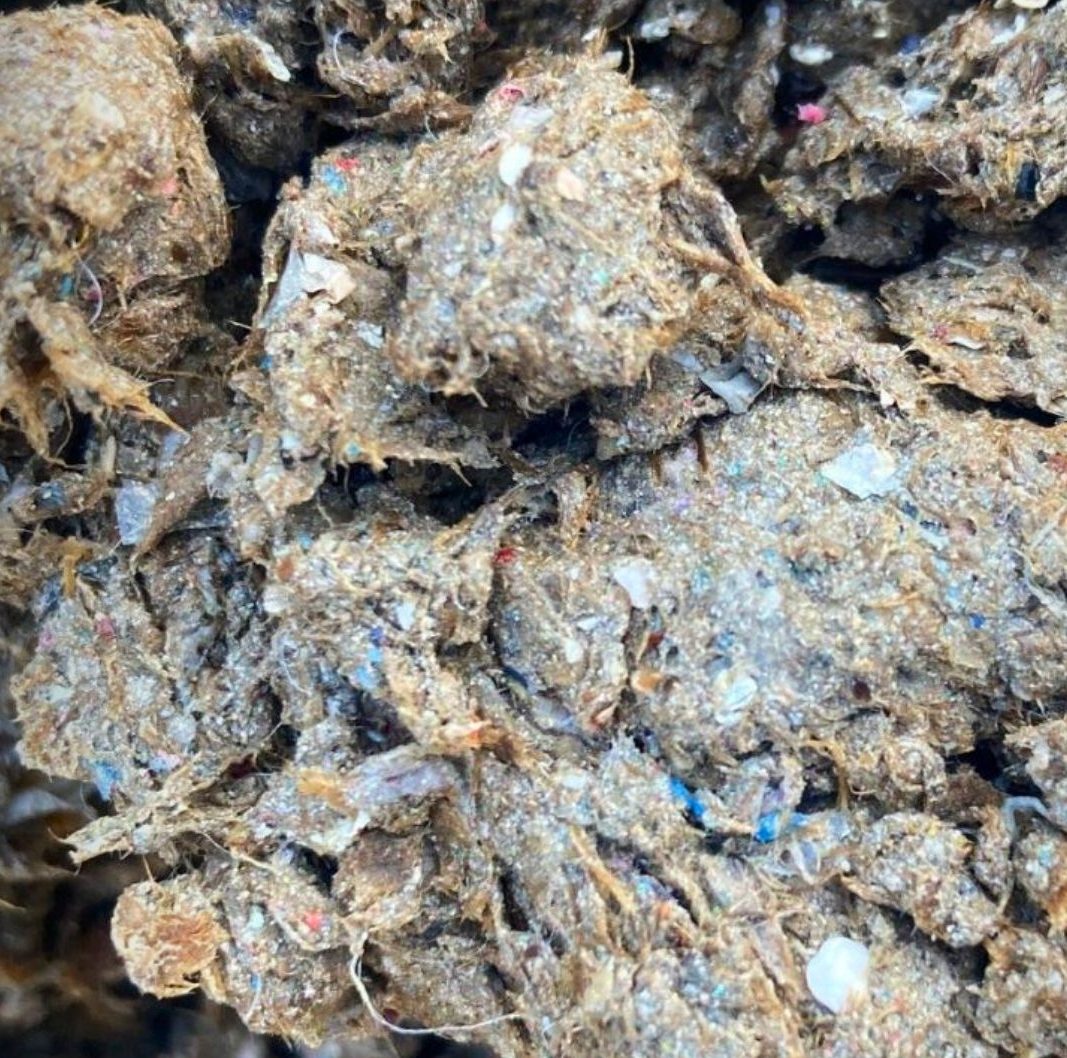
Industrialised chicken production throughout the Wye region has now been established as one of the principal causes of the severe pollution of the river. Urgent and immediate action is now needed to end the destructive application of chicken manure across the soils of the river catchment, from where it constantly leaches into the watercourse.

Mr Watson says, “The soils of the Wye are now significantly oversaturated with phosphorus, a prime source of which originates from the continual spreading of the manure originating from the 25 million chickens that are intensively reared across the catchment. The run off of these nutrients, often exacerbated by unsustainable agricultural practices such as winter maize cropping, is the prime cause of the devastating algal blooms that are now witnessed along the length of the river system during the summer months.

“This severe ecological collapse of the iconic River Wye is one of the great environmental scandals of our times.

“The sickening and avoidable tragedy is that this situation could have been seriously mitigated had the Environment Agency properly enforced existing environmental regulations to prevent the excess application of animal waste on land that was already oversaturated with nutrients.”

High Court legal challenge against the Environment Agency

On 28th February 2024, River Action’s Judicial Review hearing will be heard in the High Court in Cardiff, where it will claim that both The Environment Agency and DEFRA have acted unlawfully in failing to adequately protect the River Wye from agricultural pollution.  

Noble Foods left with its pants down after Avara Food commitments.

ACTION AT LAST?

Last week we saw possibly the first tangible action being taken by a polluter to save the River Wye. Avara Foods, the regions largest poultry producer confirmed to it’s farming partners in the region that poultry manure from its supply chain will no longer be sold as fertiliser within the Wye catchment. This is a significant step forward in campaign to Save the Wye and is thanks to the considerable and consistent pressure put on polluting producers by local and national campaign groups, including River Action. BUT, we have questions for Avara on its plans:

Where will the manure go instead? It’s vital that we don’t simply see the pollution problem passed onto other catchments.

What will Avara do to clean up its sh*t? It’s great to see that Avara might not be contributing the the further destruction of the River Wye, but what’s it going to do to clean up the mess already caused. The Wye is on the brink of collapse and needs urgent action to undo the damage already caused.

NOBLE FOODS CAUGHT WITH ITS PANTS DOWN

And now we’ve seen an admission of guilt from the top polluter of the Wye, it leaves other large scale producers caught squarely with their pants down, continuing to defecate into one of the UK’s most loved rivers. So we’ve written to the CEO of the UK’s largest egg producer, Noble Food demanding urgent clarification of what actions it is taking to mitigate pollution emissions from its supply chain in the catchment of the River Wye.

We’ve asked Noble Foods to:

  • Clarify what comparable mitigation plan is Noble Foods implementing across its supply chain to that announced by Avara Foods and by when will this plan be implemented.
  • Explain what on-going environmental assurance standards Noble Foods will be demanding of its supply chain.
  • Publish the assessments and recommendations made by the Wye and Usk Foundation, following the statement on Noble Foods’ website that the Wye and Usk Foundation has been engaged to “assess our supply farms and put mitigation measures in place that reduce the impact of farming on the water environment such as limiting phosphate run-off”.

It is now imperative that other major poultry suppliers active in the Wye Region, starting with Noble Foods, follow Avara’s lead and clarify their own plans to end the pollution blight that their business practices have inflicted on what is one of the UK’s most iconic and ecologically important rivers.

Charles Watson, River Actions Founder and Chair says:

“Given that even the largest poultry producer in the Wye Catchment is now openly admitting to the role the intensive poultry industry has played in the severe pollution of this magnificent river, it seems extraordinary that Noble Foods (the region’s second largest poultry-based agri-business) has yet to publish any credible plan to remove its chicken litter from the Wye Catchment. Also, Noble Foods faces even greater environmental responsibilities given that, as a free-range egg producer, the need to mitigate nutrient run-off from the open ranges of its supplier farms poses an even greater environmental challenge than those faced by the broiler sheds that comprise Avara’s supply chain. Nothing but the full disclosure that we have demanded in our letter to Noble Foods will suffice”

River Wye catchment area landowners, businesses and clubs may have legal claim for damages against chicken producers for pollution

Law firm Leigh Day is investigating the potential for Wye Valley residents to sue chicken producers whose farming on an industrial scale is polluting the River Wye.

It is believed that people whose property lies within the River Wye catchment area have a good prospect of bringing a civil claim against companies involved in the production of poultry in the area.

The River Wye catchment crosses Powys and Herefordshire and has been at the forefront of the expansion of the chicken industry in the UK and researchers estimate the area houses 20 million or more birds at any one time, often in very large poultry units. The largest poultry processor is Avara, which reportedly processes two million birds a week in its Hereford plants alone.

Other producers supplied by chicken rearing operations in the Wye Catchment area include Noble Foods.

It is alleged that the high intensity farming is badly affecting the water quality of the River Wye to which landowners and others have a right under common law.

A separate legal claim against the Environment Agency, citing its failure to enforce the rules governing the amount of organic manure and artificial fertiliser that can be spread on agricultural land from which water runs off and leaches into the River Wye has been issued in the High Court.

Landowners, businesses, wildlife organisations and clubs such as swimming, angling and water sports organisations may have the right to use the watercourse and the right to receive water in its natural state without undue interference in its quality or quantity.

The civil claim is likely to allege that poultry producers generating significant quantities of phosphorous-rich manure which leach into the soil and into the river are, among other things, raising phosphorous levels which cause algal blooms which in turn cause biodiversity loss. The entitlement to clean free-flowing water courses means the landowners would have, among other potential claims, a nuisance claim against the chicken producers.

The civil claim is being investigated by a team led by Leigh Day partner Oliver Holland.

The deterioration in the state of the River Wye has been well documented and resulted in the public law claim that was issued this week. That claim explained that:

The Wye was designated a Special Area of Conservation (SAC) to protect the river’s once-famous extensive Ranunculus river weed beds. However over 90 per cent of the river’s Ranunculus has now been lost, smothered by the algal blooms which means the river is not meeting the SAC conservation status specified by the Habitats Directive. In June 2020, a thick algal bloom extended for over 140 miles, almost the entire length of the river.

  • The Wye was designated a Special Area of Conservation (SAC) to protect the river’s once-famous extensive Ranunculus river weed beds. However over 90 per cent of the river’s Ranunculus has now been lost, smothered by the algal blooms which means the river is not meeting the SAC conservation status specified by the Habitats Directive. In June 2020, a thick algal bloom extended for over 140 miles, almost the entire length of the river.
  • A study published in May 2022 by the University of Lancaster, Re-focusing Phosphorus use in the Wye Catchment (RePhoKUs Study) concluded that 60-70 per cent of the river’s total phosphorus load now comes from agriculture and an excess load of 3,000 tonnes of phosphorus is still being added to the river catchment area each year. This excess is accumulating at a rate equivalent to 17kg of phosphorus per hectare when the national average is 7kg per hectare.

Landowners who may be able to join the potential civil claim against large-scale chicken producers may have previously enjoyed abundant quality fishing and bathing in the stretch of the River Wye that their land borders.

It is likely that they will have experienced a severe loss of that amenity.

River Action is supporting the civil legal claim. Chairman and founder Charles Watson said:

“In addition to the failure of our environmental protection agencies to protect the Wye from the impact of agricultural pollution, the causes of the collapse of the river go much further. It is our belief that a number of major agricultural processing companies, who have profited hugely from the rapid growth of intensive poultry production, should have been more than aware of the environmental damage their supply chains have inflicted on the river.” 

Leigh Day partner Oliver Holland said:

“The pollution of the River Wye has reached such an extent that some predict it will suffer irreversible harm within a couple of years. Local businesses, landowners, wildlife groups and sports organisations all recognise the decline of this special natural environment. The work of dedicated researchers and conservationists has revealed the acute harm caused to the river, and as a result, to those who live in its catchment. We believe poultry producers have a case to answer for their role in bringing this deplorable situation about. We urge all those who think they may have been impacted by this urgent issue to contact us.”

Anyone who thinks they might have been affected in the way described can contact Nicholas Smith at Leigh Day on nsmith@leighday.co.uk or call 020 7650 1200.

How far will she go to save the Wye? Angela Jones, The Wild Woman of the Wye


At River Action, we are lucky to work closely with many other inspiring environmental NGOs, community groups, and individuals in our fight to save our rivers.
In this blog, we talk to Angela Jones, aka, The Wild Woman of the Wye. Angela has a close and passionate connection with the river – describing the Wye as “the arteries that run through my veins”. A day hardly passes when she is not working tirelessly to save the river from the horrendous pollution onslaught it is facing.  


Firstly, tell us about yourself and your connection with the River Wye

I have spent the past 30 years of my life at one with nature – day by night – in, on and by the water. While some people might describe me as eccentric, the truth of the matter is that I am happy with the basics of life. In other words, I am not materialistic – I don’t have the internet – which can certainly make running a business challenging! But I am happy with my life, my connection with nature and will not stop fighting to protect it. I spend 5-6 hours on the river every single day. And, through my love for the river, I see myself as its guardian. So I must and will always protect it.


How long have you been wild swimming?

I have swum in rivers for decades – and it has become a huge part of my life and who I am. It is interesting that what was once an unusual hobby, has now become a fashionable sport. Many people are now enjoying being out in nature and reaping the many benefits that wild swimming has to offer. 


Tell us about your business…

After having often been asked for advice over the years about wild swimming, I decided to set up my business – Angela Jones Swim Wild. Through the business, I share my lifelong passion – taking small groups out on the water and stripping them back to basics. It is truly wonderful to see them light up as they come to connect and lose themselves in nature and find peace in themselves. I am all about caring and sharing – so I also support local charities, and do talks at schools and universities to raise awareness. And, I have also recently written a book about my life, the River Wye and wild swimming – of which proceeds support local charities. 


What changes have you seen on the Wye in recent years?

Having spent so many years in and on the river, I have got to know it inside out. That is to say, I know how it tastes, how it looks, what the texture is like. Additionally I have witnessed the beauty of aquatic life above and below the river surface. For example the river bed, the salmon pools, the impressive boulders, and so much more. 


I started noticing gradual change roughly ten years ago – but about five years ago, things started getting significantly worse. The river started to taste different and the reflection and clarity changed. It looked muddier and the wildlife started struggling. From where my children and I used to once watch the magical flow of water with the blanket of water-crowfoot and the play of insects in the river – this all disappeared. Then, the rocks and pebbles lost their colour and became coated in a browny-green slime and I couldn’t see to the bottom of the salmon pools or smell their distinct smell. And then the algal blooms appeared and the fish started struggling to get oxygen and breathe.  It broke my heart when this all started happening – as I knew the whole ecosystem was beginning to shut down. 


How has river pollution affected wild swimming and your business?

At first I was told to keep quiet about the deterioration of the river – in case it ruined tourism. Now, I have had to adapt.  I have to test every section that I take people swimming in and often have to relocate because of pollution. If this is the case, I take people to a nearby lake where I teach and introduce them to wild swimming and wildlife.


In fact, 90% of what I do is for the environment and protecting it. The other 10% is business – taking people swimming, kayaking, etc.


On the rare occasions I take my clients to the river, I have to test the pollution levels of the waters before using them. Further, to prevent too much impact on nature, I only take small groups to the river and ask them to not to wear products on their skin which could harm the river. I very much have to gauge my visits to the river on a day by day basis.


What needs to change in order to save our UK rivers?

It’s simple, we need change and now! 

  • The increase in poultry farming needs to stop.
  • Fines need to be assigned to those farmers  and water companies causing damage.
  • The Environment Agency needs to do a better job at monitoring pollution and the government needs to take control through legislation and policy.  
  • Farmers need to be encouraged to change their farming practices – such as disposing chicken manure responsibly, rather than dumping it on the fields – from where it just gets washed into the river by rainfall.
  • More transparency and less lying about facts and figures is needed – The Wye is in crisis. 
  • We need to unite and link voices as together, our voices become stronger. 


How far will you go to save the river?

I will literally do whatever it takes to stop this beautiful river from dying. For example, I am refusing to pay my water bills until Welsh Water stops discharging raw sewage into the Wye. And, on four occasions now I have had to fight off the debt collection agencies who they have sent to try and enter my property to reclaim payment.


What’s next for Angela Jones?

River Action is supporting Angela on her next campaign in raising awareness about the desperate state of the River Wye. Watch out for her swimming down a river near you towing a large eggbox and toilet in protest of the environmental devastation caused by the intensive poultry business and water companies that continue to pollute our rivers….

Privacy Overview

This website uses cookies so that we can provide you with the best user experience possible. Cookie information is stored in your browser and performs functions such as recognising you when you return to our website and helping our team to understand which sections of the website you find most interesting and useful.