Why we took the government to court

Download PDF

By Charles Watson, chairman and founder of River Action.

Having spent a 25 year career in the crisis management end of the public relations industry, I recall counselling clients repeatedly that litigation was never something to take on lightly and the risks, almost without exception, will always outweigh the rewards.

And then, on 4 February this year, I found myself sitting as a litigant in Cardiff Crown Court, as our King’s Counsel rose to his feet to open River Action’s judicial hearing case against the Environment Agency and the Department for Environment, Food and Rural Affairs (Defra).

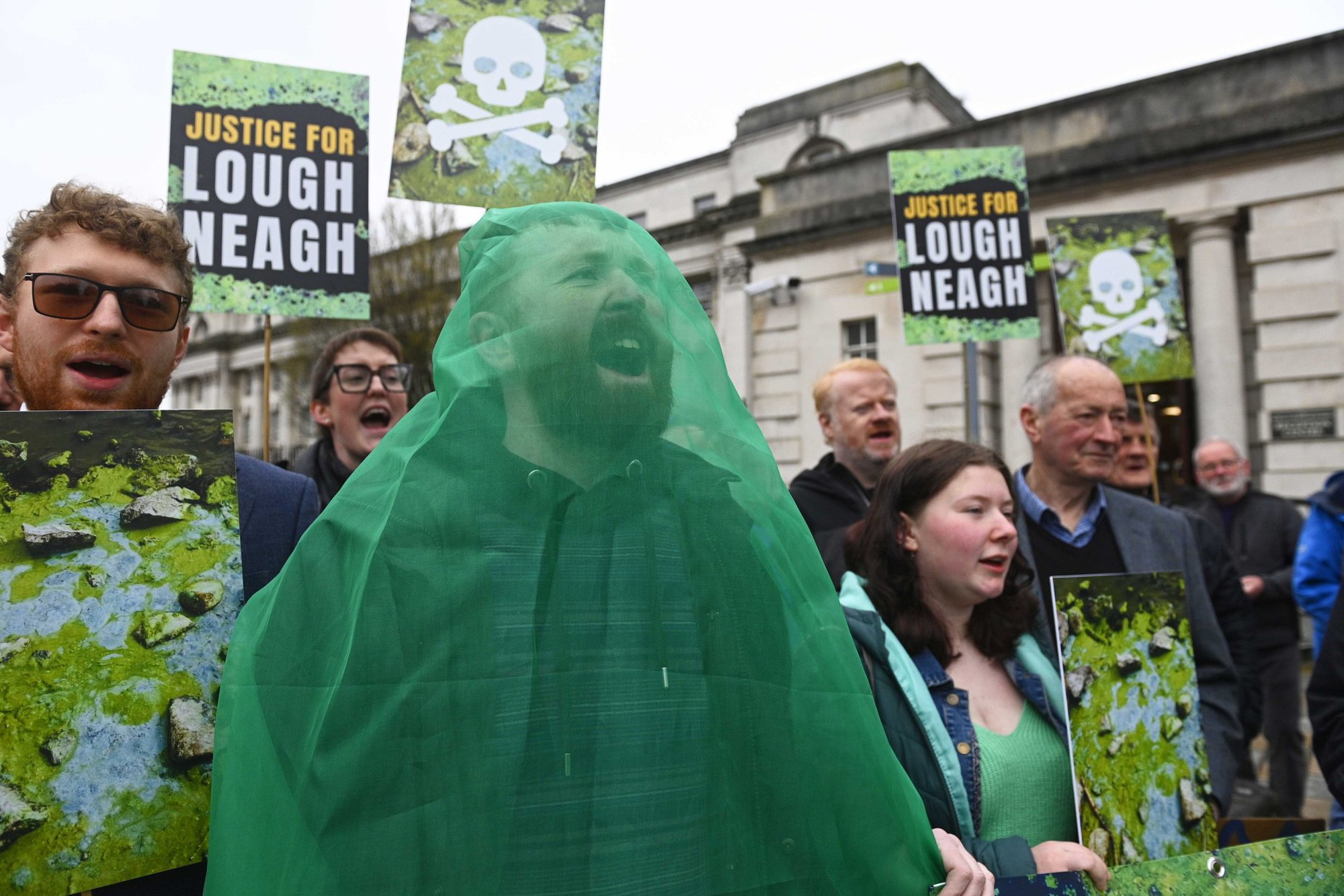
A clue to why I had ignored my own better judgment lay in a beautiful glass vial of water that was sitting beside me in the court room. It had been drawn the previous day from the River Wye and was presented to me as I entered the courthouse by members of some of the Wye community groups who had (very noisily) joined us that day outside the courthouse to demonstrate their solidarity.

Once well protected, the river is now almost dead

Often cited as one of our most loved rivers, the Wye rises high up in the Welsh mountain hinterland before flowing majestically through the English-Welsh borderlands to its mouth in the Severn Estuary. Our fourth longest river’s unique beauty and biodiversity has been recognised over the years by the award of some of the highest possible levels of environmental protection, such as its Special Area of Conservation status and the designation of swathes of its valley as Areas of Outstanding Natural Beauty.

But, devastatingly, within the space of less than a decade this magnificent river has become the UK’s Ground Zero of river pollution. One major cause has been the uncontrolled growth of the UK’s largest concentration of intensive poultry production, which has resulted in unsustainable quantities of toxic animal waste leaching into the river, causing untold ecological damage. Ninety five per cent of the Wye’s famous water crowfoot river weed has disappeared, snuffed out by putrid green algal blooms. Last summer, Natural England downgraded the river’s status to a level just one notch up from being pronounced dead.

It was for the Wye that we had gone to court.

To me, our legal case was incredibly simple. The environmental regulations that were there to protect the river had simply never been enforced by the very statutory bodies that were tasked to do so.

Failure to enforce farming rules has been catastrophic

The core of these regulations originated in 2018, when our then Environment Minister Michael Gove introduced the Farming Rules for Water. However, immediately on introduction, their non-enforcement farce began. Highly effective lobbying from the NFU ensured farmers were initially exempt from the new regulations, however Michael Gove’s predecessor at Defra Liz Truss, had already slammed the nails into the coffin of effective agricultural regulation by virtually closing down farm inspections, thus eliminating all means of future enforcement, with agricultural regulation shifting to an almost exclusively ‘advisory’ basis.

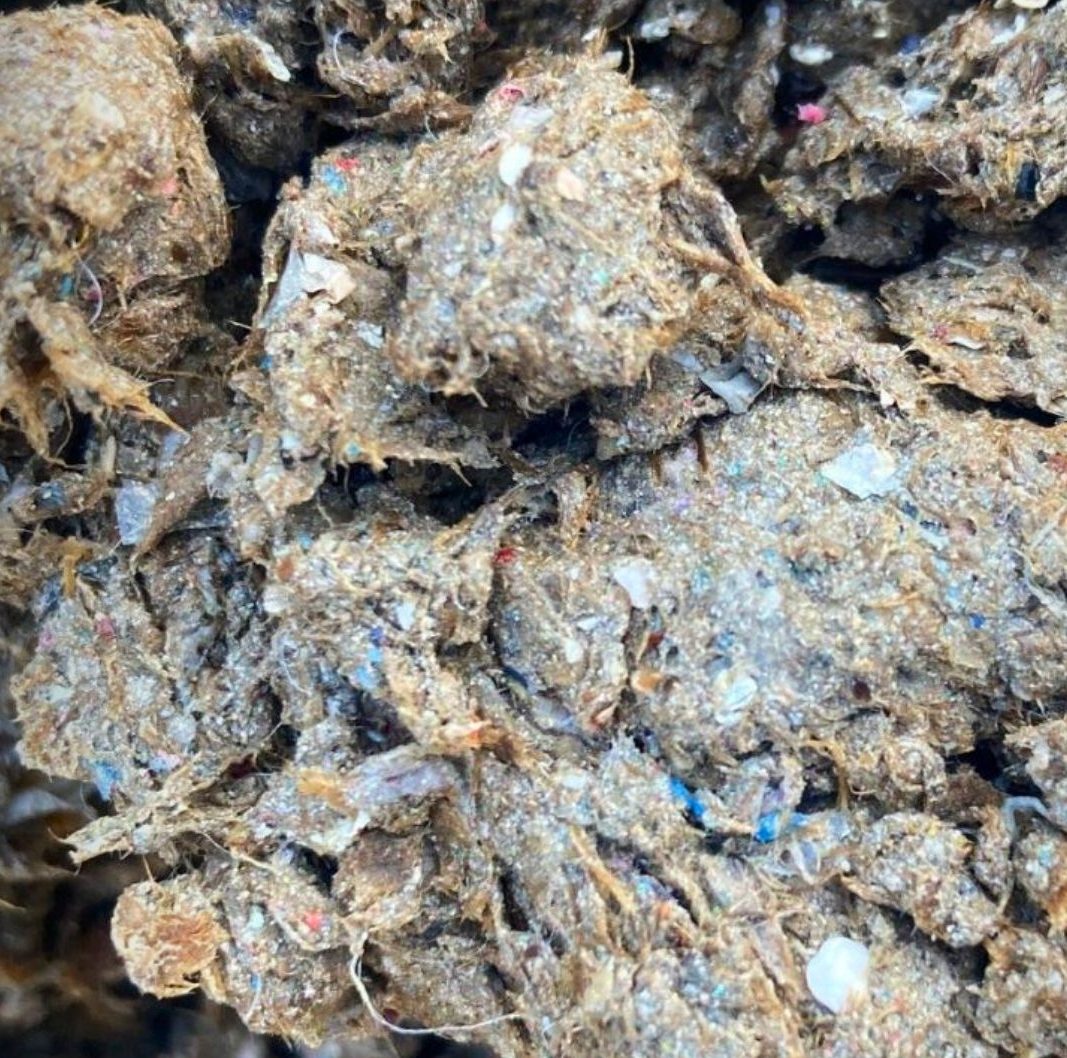
The net effect of this approach on rivers like the Wye has been nothing short of catastrophic. Every six weeks, when the sheds containing the catchment’s 25 million chickens are ‘harvested’, huge quantities of highly potent manure are shovelled out and spread (for convenient disposal) across the fields of the catchment. As a result, the soils of the Wye Valley have progressively become saturated with totally unsustainable levels of phosphorus. And the rest is history.

In our view, had the Farming Rules for Water been properly enforced, none of this could have happened. Indeed, the most important of these regulations (Rule 1 a) states clearly that: “Application of organic manures… to cultivated land must be planned in advance to meet soil and crop nutrient needs and not exceed these levels”.

However, guidance issued by Defra to the Environment Agency (thanks to another NFU lobbying coup) specifically exempts farmers from having to follow this critical rule, thus creating another gaping loophole in the protections the Wye so desperately needed.

Major victories were won in court

It was to challenge this terrible state of affairs that River Action went to court, with the case being heard in February in Cardiff. Here, our brilliant legal team squared up against the combined legal teams of the Environment Agency, Defra and the NFU (the latter having gatecrashed the proceedings at the last minute as an ‘intervener’).

Although, when judgment was passed down four months later and the judge ruled against us, it was apparent that River Action had won some major victories.

First, the judgment fully acknowledged that, due to the Wye’s severe levels of pollution, farming practices must change. Second, the legal status of the infamous guidance issued by Defra to the Environment Agency, was called into question, with the judgment that spreading manure in the autumn and winter should be limited, when the danger of polluting the river is at its highest, with the NFU’s intervention being unequivocally dismissed.

Finally, the judge made it clear that the overall basis of his dismissal of our claim was because changes to key enforcement policies made by the Environment Agency, during the course of River Action’s proceedings, subsequently brought it into compliance with the law, and that these changes were only made by the agency as a result of our claim.

Notwithstanding the above, we have immediately moved to appeal the judgment and continue the fight for the river. Given that the Environment Agency’s new enforcement policies apparently now bring it into line with the law, River Action will make it our business to audit the new approach, with Freedom of Information requests being dispatched on a rolling three monthly basis to enable us to monitor inspection and enforcement activities. Let’s see if the agency really has turned over a new leaf.

The new government should repeal the flawed guidance

Finally, following the judge’s questioning of the legal basis of Defra’s guidance to the Environment Agency, after the general election, the new Defra secretary of state will find, at the top of his or her in tray, our demands that this now discredited guidance is immediately repealed, or back to court we will go.

The turbid, slime-filled condition of the River Wye can only remind us how far we still have to go before the river stands a chance of being restored to its former glory. But, perhaps, by defying the odds (and all better judgment), we hope our travails through the courts might just have made a little bit of a difference in starting to reverse the repeated injustices that have been allowed to be inflicted upon this once magnificent river.

END POO-LUTION: My Journey as a University Activist for Norwich’s Rivers

Download PDF

By Rebecca Hardy, Aged 20, 3rd year Student at the University of East Anglia

“As our world slips into an ecological crisis, I feel implored to fight for my future [. . .] and water is a vital part of it”: Young voices call for change.

Download PDF

In the spotlight: The River Cree Hatchery & Habitat Trust SCIO

Download PDF

At River Action, we want to highlight the amazing work of communities up and down the country. Here we take a look at River Cree Hatchery & Habitat Trust SCIO (RCHHT) a community-led conservation project initiated by local people who have a passion to improve the health of their river.

THE STORY

In March 2010, members of Newton Stewart Angling Association commenced the hatchery and habitat project in response to the decline in the numbers of Atlantic salmon in The River Cree and its tributaries.

By October 2010 the hatchery facility was operational and in the first season some 65000 salmon fry were raised in the hatchery and returned to the river.

In 2011 a charitable trust, The River Cree Hatchery and Habitat Trust, was formed to take over the running of the project and shortly thereafter a full-time Hatchery Coordinator was employed to oversee the running of the operation.  Over the next few years the project steadily increased the scope of its activities, including:

  • Up to 190,000 salmon fry were reared in the hatchery each year and stocked into the Cree catchment.
  • Electro-fishing skills were honed in order to assist with broodstock capture and to monitor fish numbers, including stocked fry
  • A programme of extensive habitat improvements was commenced, including removing barriers to migration, controlling Invasive Non Native Species, cutting back self-seeded Sitka on the banks of spawning burns and re-planting with native broadleaf trees.
  • An education programme, initially involving four local primary schools, was developed. 
  • A training programme was developed to enable employment and training opportunities to be offered to local unemployed youngsters.
  • Volunteering opportunities were offered for up to forty local people each year. Fish husbandry techniques were developed to improve the quality of the salmon fry being reared. Stocking of a limited number of fin-clipped fry was commenced to assist in identifying hatchery-reared adult salmon

In February 2023 the operation was transferred to River Cree Hatchery & Habitat Trust SCIO, which continues to deliver and develop all the above activities.

To deliver this extensive programme of activities it is important that the Trust trains a team of volunteers with the necessary skills to run the hatchery and con-duct the habitat restoration work. The Trustees would very much appreciate any assistance you feel you could offer to promote the further development of River Cree Hatchery & Habitat Trust SCIO. For further information on future developments please contact: Murdo Crosbie (Co-ordinator) Tel: 01671 403722/ 07798653740; email to: mcrosbie7@aol.com.

A Global Outlook with a Local Focus: the UK River Summit 2024

Download PDF

Baroness Jenny Jones joins River Action

Download PDF

We are delighted to welcome Baroness Jenny Jones to River Action’s Advisory Board! In our latest blog, we find out more about Jenny’s life, professional experience, and what drives her to help rescue Britain’s rivers.

Q1. Tell us about yourself

I’m a Green. That influences the way I live and my work, both inside and outside the House of Lords, whether doing media or pottering on my allotment. I also believe in fairness, which is hard to achieve, but necessary for a society that works for all.

I grew up on a working class council estate on the edge of Brighton. Later I became an archaeologist as a mature student and worked for ten years in various countries, mostly in the Middle East.

And then, I became a politician. I won three elections to the London Assembly, I was Deputy Mayor of London 2003, and I’ve also been a local councillor, so I know the importance of representing people and getting things done. 

Q2. What first sparked your interest in river protection?

My experience abroad made me very aware that clean water, along with clean air, are basics for human health and Nature. The London Assembly did lots of work trying to get Thames Water to deal with things like leaking pipes and investing in the future, but my personal focus was on cleaning up London’s air. I worked with professors who described how they didn’t trust DEFRA with anything they did on either pollution in water or air. In the 1980s, they ended up taking their own samples of coastal sea water to provide to the European Commission that our water quality was poor. I found it shocking that our environmental enforcement agencies are so complicit in the poor state of water and air, but all my experiences as a politician reinforced that view. 

In the House of Lords, it became an issue that I would invest a lot of time and energy addressing when the Environment Bill began to make its way through Parliament. Others raised the issue of the pollution of specific rivers, chalk streams and parts of our coastline, and it resonated with my Green principles but also with my concern for human and Nature’s wellbeing.

Once I was involved, in spite of sewage and agricultural run off being such awful issues, I found a wonderful cross section of society joining together to battle with water companies, farms and the Govt. Good people. And often great fun to campaign with.

Q3. You have had many prominent roles in politics, including Deputy Mayor of London, Deputy Chair of the London Assembly’s Police and Crime Committee, Green Councillor for Southwark Council and Chair of the Green Party of England and Wales. Over the years, what are the biggest changes that you have seen in UK politics over the issue of water quality and what do politicians need to prioritise to clean up our rivers?

The rise of public understanding of the pollution of our waterways in a very short time has been phenomenal. It’s now something that people talk about on the tube! Obviously celebrities really help to get the message across and very visible eg Feargal, Chris Packham. They make it understandable, the problems and the possible solutions.

On cleaning up our rivers, there has to be more Govt support for local groups to access good advice on their specific pollution. There has to be help to farmers, to limit their polluting run off and change practices. But most of all, we must invest in our sewage and water systems. We must fund the regulators properly, give them real power to force changes, and instead of fines, which the companies happily pay, we take shares in the companies. When they fail, as they inevitably will, we can take the bankrupt water companies back into public ownership.

Q4. You were appointed to the House of Lords in November 2013.  Tell us more about your role and the changes that you would like to see happen in politics to improve water quality? 

Explaining my role would take ages!

The Green Party has few platforms, so when I speak in the HoL, I try to speak in clear language so that people outside the Westminster bubble can make sense of our arcane practices. Of course I use the HoL to make a fuss about legislation and its environmental impacts, but also to get Green messages across to the public, who might otherwise not hear our wonderful policies and ideas. People used to ask me why I was speaking in a debate on, say, policing or health, and I had to explain that there is always a green angle, to every topic, that needs to be considered. It might be human rights, or how and where our food is grown, or democratic issues about our unfair voting system. There’s always a green angle …

Q5. And finally, In your opinion, what needs to change to rescue Britain’s rivers?

We have to be tough on all polluters and make them pay for the clean up, not taxpayers. But crucially, not allow pollution in the first place.

Oxford College rowers honour River Action in boat naming ceremony

Download PDF

Rowers at a University of Oxford college have named a boat in honour of River Action, whose mission is to save the UK’s rivers from pollution.

The women’s eights first team rowers at Linacre College named their boat ‘River Action’ to honour the campaign group’s work drawing global attention to water pollution on the River Thames believed to be caused by Thames Water.

In the run up to the historic Gemini Boat Race between the Universities of Oxford and Cambridge, water quality experts from River Action, in partnership with Fulham Reach Boat Club, conducted E.coli tests on the stretch of the Thames used for the race.

Using a World Health Organization verified E.Coli analyser, the tests revealed levels of E.coli up to 10 times higher than what the Environment Agency considers acceptable for designated bathing waters graded poor, the bottom of four categories.  When bathing water is graded ‘poor’ the Government’s advice is against bathing. The testing locations suggest that the source of pollution was from Thames Water discharging sewage directly into the River Thames and its tributaries.

Principal of Linacre College, Dr Nick Leimu-Brown said, “The River Thames is part of the identity and daily life of our university, and we are horrified that its polluted waters are now such a risk to wildlife and public health.”

Linacre Boat Club President, Sydney Rose said, “Linacre Boat Club is proud to support the vision of River Action UK to preserve the health of this cherished historic waterway and the people who gather around it.”

CEO of River Action James Wallace said, “It is humbling that the women’s first team eights at Linacre College have honoured River Acton, naming their boat after us. It is a privilege to lead a team of committed campaigners drawing attention to the pollution crisis on our rivers caused, in part, by the water companies allowing tens of thousands of hours of sewage to enter our rivers every year. The damage this does to human health, to river health is incalculable.

“Rowers spend so much of their time on rivers, and they know better than most, because many of them are getting sick, the awful state of our waterways.  Too many of the UK’s rivers are contaminated with sewage because the water companies have, since privatisation 30 years ago, failed to upgrade their infrastructure, favouring instead to reward shareholders with multi-billion-pound dividends.

“We have had enough of this corporate greed and putting polluters’ interests before the interests of the environment.  Together with the rowing community, including all the rowers at Linacre College, we are standing up for river health, placing the polluters on notice that we will hold you accountable.  We have the same message for the government which fails to enforce environmental laws that are there to protect rivers.”

For interviews call Ian Woolverton on 07377 547 362 or email media@riveractionuk.com

Notes to editor
In response to the UK’s river pollution crisis and recognising that rowers spend a huge amount of their daily lives either on or by the water, British Rowing, River Action, and The Rivers Trust developed a set of guidelines for rowing on poor quality water. 

‘Guidance on rowing when water quality is poor’ has been written to minimise the risk of contracting illness due to proximity to polluted water. Included are helpful tips on the importance of covering cuts, grazes, and blisters with waterproof dressings, taking care not to swallow river water that splashes close to the mouth, wearing suitable footwear when launching or recovering a boat, and cleaning all equipment thoroughly. The new guidance has been issued to rowing clubs across the country.

River Action is on a mission to rescue Britain’s rivers by raising awareness of pollution and water shortages and applying pressure on industrial and agricultural producers, water companies, and others. The group brings awareness to the crisis facing our rivers, and the failure of Government funded environmental agencies to address this. To learn more about River Action: www.riveractionuk.com.

Baroness Kate Parminter joins River Action

Download PDF

We are thrilled to welcome Baroness Kate Parminter , former chair of the House of Lords’ Environment and Climate Change Committee, to River Action’s Advisory Board! In our latest blog, we find out more about Kate’s life, professional experience, and what drives her to want to help rescue Britain’s rivers.

Tell us about yourself

I am a Liberal Democrat member of the House of Lords.  I have had the privilege over the years to have had a number of platforms – the House of Lords, as a local councillor and a chief executive of an environmental organisation (CPRE) – to campaign for the environment.

What first sparked your interest in river protection? 

 Living near and walking alongside the River Wey in Surrey I know how important waterways are to health and well-being.  It was a particular joy last summer for me to paddle board along the river with my daughter.  But the Wey is struggling in terms of its river health with high levels of phosphates recorded.  It needs us to protect it.

What has driven you to Join the River Action Advisory Board?

Helping local communities protect and have a say in the future of their local environment has always been important to me. It’s one of the reasons I became a local councillor in my early ‘20s. RA has empowering communities as part of their mission, so it’s a good fit.  Also they are at the ‘edgier’ end of the campaigning line, so it’s good for someone at the more establishment end in the Lords to mix it up a bit!

You sit in the House of Lords on the Liberal Democrat benches and you were the Chair of the Lords Select Committee on the Environment and Climate Change from April 2021-January 2024.  What are the biggest changes that you have seen in UK politics over the issue of water quality and what do politicians need to prioritise to clean up our rivers?

Since lockdown there has been a massive increase in people’s awareness of and commitment to their local environment.  We’ve had groups like Surfers Against Sewage campaigning for for years, but now so many people in communities up and down the country want to protect their waterways and it’s had a knock on impact on media coverage and political interest. However, The political interest tends to focus on sewage in our waterways and the management of water companies.  That is welcome but it’s only one issue that needs political focus if we are to effectively protect our waterways and turn around the loss of biodiversity in the UK.

And finally, In your opinion, what needs to change to rescue Britain’s rivers?

We’ve had decades of treating rivers as dumps.  We need the Government to turn the tap  on all the levers they have to protect waterway from contamination and ensure families, businesses and farmers all take account of how they use water and reduce the dumping of chemicals and pollutants into waterways. We need a new Government to do that!

*APRIL FOOLS* Capital Water urged to clear debt with £200 million find of Roman coins

Download PDF

Europe’s largest water utility Capital Water, threatened with imminent financial collapse and a taxpayer bailout, has revealed a startling find of rare Roman coins worth more than £200 million. Campaigners have urged the sewage and water behemoth to use the treasure to pay a whopping debt about to be called in by creditors, but our nation’s biggest polluter has different plans.

The hoard of hundreds of Roman gold coins dating from 293AD depicting the Emperor Allectus were discovered during the construction of a long-delayed upgrade to a sewage treatment plant. For weeks, broken pipes spewed raw sewage down renowned ‘Smelly Ally’ in the town and local river. Only after loud calls to clean up the mess from angered community activists did Capital Water fix the problem, and strike gold.

James Wallace, CEO of River Action and former archaeologist said, “The last Allectus coin sold for over £500,000 so Capital Water will be literally minted by this discovery. Allectus, the infamous ‘Brexit Emperor’ tried to take Britannia out of the Roman empire only to perish in battle three years later. Let’s hope Capital Water’s leadership team avoids a similar fate, by serving the customers they have rinsed for decades and restoring the rivers they have trashed. Based on past track record, the question on everyone’s lips is “will they pay off their debts or run for their Cayman Islands tax haven?”  

CEO of Capital Water Sir Richard Head who was appointed in January 2024 – the company’s third CEO in as many years and reputed acolyte of Neptune the water god, said, “Apart from inventing hygienic sewage and water systems, what did the Romans ever do for us? Now my daily sacrifice of bill payers on the altar of financial engineering has finally paid off. As I’ve reported to our high priests – international shareholders – it just goes to show that pollution profits. Our balance sheet is leakier than our creaking infrastructure, so the unexpected windfall is a total bonus, for me personally.”

It is believed Capital Water are tossing up between donating part of the coin hoard to the British Museum or building a ‘shiny new HQ with gold taps’ (subject to planning ‘favours’). A Government source suggested they give some of the wedge to the much beleaguered Department for Underperforming Miss-managed Public Services (DUMPS)

because HM Treasury can’t afford to give billionaire tax breaks and be expected to regulate polluters.

Chalkstream Herald gave river campaigner Feargal Sharkey the final words, “Capital Water is one flush away from disappearing down its own dirty drain. Sir Dick is off his rocker thinking he can do a runner with our national treasure. But aided and abetted by the Department for DUMPS, he’ll probably dodge the floaters.”

ENDS

Nick Woolgrove joins River Action

Download PDF

We are delighted to welcome Nick Woolgrove as our new Campaigns Analyst to the River Action team. In our latest blog, we get to know more about Nick and the role that he will play to help rescue Britain’s rivers.

Q1. Tell us about yourself

Hello, very excited to join River Action as the new Campaigns Analyst! I’m originally from Sussex and I have travelled a fair bit for work, but finally settled in beautiful Cornwall as my home. I’m a devoted advocate of everything nature and at my happiest when wild camping, swimming, and walking. I also play folk music.

Q2. How did you become interested in river protection?

I was brought up in Sussex and spent a lot of time walking and swimming in the outdoors. I was well aware from an early age that our local rivers and coastal areas were ‘toxic’. I’ve since spent many years living in Cornwall where I’m a frequent swimmer and all too aware of the horrific discharges into our waterways – it’s daily check of the SAS map to see if we can even swim at our local beaches in Falmouth!

I grieve the increasing loss of the natural world. If trees are the lungs of the earth, then waterways are the veins and arteries; home to immensely important habitats and providers of essential ecosystem services without which our society simply could not function. More than this, rivers are things of wonder and beauty. They inspire us to create, to travel, to play, as they meander their ancient ways through the ever-changing landscape. It is shameful how rivers have been abused and neglected by successive governments, companies, and regulators who appear unable to comprehend their true value and importance. I’m proud to now work for a campaign organisation who are committed to providing powerful new voice for rivers which has been so long overdue.

Q3. You have a wealth of experience working in research. What have you enjoyed most about your work and what have been its biggest challenges?

My career so far has really been motivated by working on projects which try and make a difference. My PhD is reflective of a deep curiosity around local and national policy decisions associated with the environment, specifically to bring a better understanding of how nature recovery can also lead to more prosperous local communities. The joy of research is transforming abstract data into meaningful narratives which connect with people and bring about real change. Transitioning from academia to campaigning is incredibly exciting, though perhaps the greatest challenge is the pace at which newly released data needs to be turned around into a compelling story that engages a wide audience.

Q4. Tell us about your new role as Campaigns Analyst at River Action…what can we expect to see from your role in 2024?

My role in River Action is to provide the strong and compelling data driven evidence to support our campaigns and communications. In particular, this involves analysing emerging government and industry data, pollution statistics, legal cases, policy papers, and FOIs to build a nuanced picture of the challenge and ensure our outputs are robust and evidence-based. A particular focus moving forward is interpreting often complex emerging data in the most engaging way for the general public and media.

Q5. Finally, in your opinion, what is further needed/what needs to change to rescue Britain’s rivers?

We need regulators who regulate. Empowered communities. Farmers who are financially supported to deliver sustainable change to their practices. Industries who consider nature recovery an unnegotiable cornerstone of their business models. Water companies to start taking serious social and financial responsibility. And a government who recognises the disastrous state of our rivers and is committed to immediate action and investment. So, not much . . .

Privacy Overview

This website uses cookies so that we can provide you with the best user experience possible. Cookie information is stored in your browser and performs functions such as recognising you when you return to our website and helping our team to understand which sections of the website you find most interesting and useful.