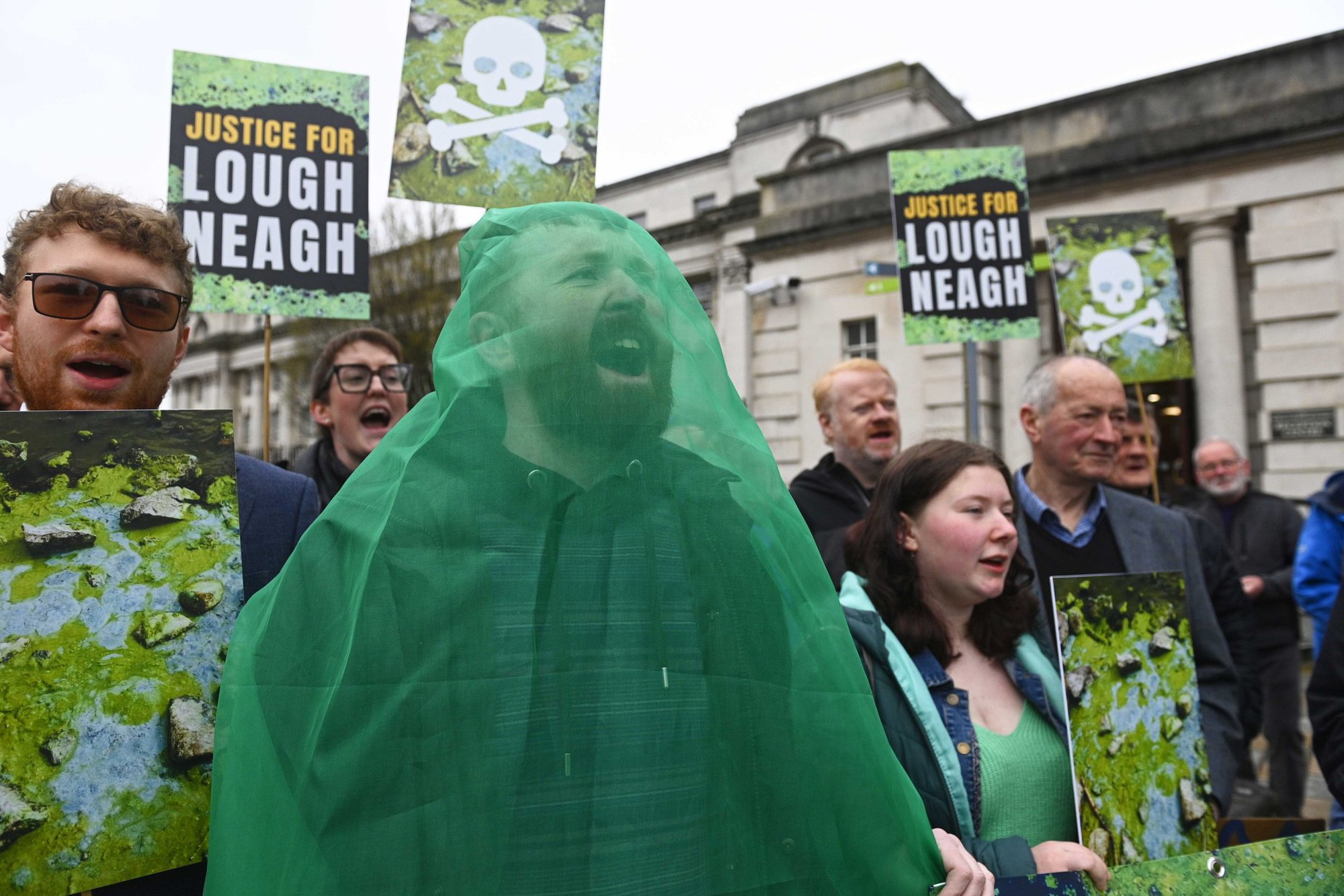
WI passes new campaign: ‘Clean Rivers for People and Wildlife’

Last week, our CEO James Wallace was kindly invited to the Women’s Institute annual meeting in Cardiff, to discuss the rapid degradation of our rivers from pollution and how we can all stimulate change to rescue Britain’s rivers.

There was an incredible outcome, with the WI’s new campaign Clean Rivers for People and Wildlife passing with a 84% majority!

The new campaign will encourage members to make and support applications to create bathing waters in rivers across England and Wales as a way to drive the cleanup of our precious rivers.

How you can get involved

  1. Find out more information about how to apply for inland bathing water by using the Surfers Against Sewage’s ‘Wild Water’ website.
  2. The website contains a useful nine-step guide that provides guidance about applying for designated bathing water. You can also access the Surfers Against Sewage community bathing waters toolkit here.

Expert Speaker for Clean Rivers for People and Wildlife Bathing Water Resolution

By James Wallace, 25th May 2023


Introduction

Thank you for welcoming me; I am privileged to have the opportunity to speak with you today on behalf of rivers and their communities.

Until very recently I had the most amazing woman in my life. After a 9 year journey with cancer, Becca danced to the stars in February. To me, she defined love as the sun illustrates horizons: constant, pure, wise, kind, selfless, hopeful. One of her greatest joys was swimming, kayaking and walking Britain’s rivers.

I promised her that I would commit my work to securing a healthy future for our two teenage daughters, Flora and Annabelle, who are set to inherit a deeply troubled planet. Having set up various environmental organisations, River Action is my chosen home for now, a small campaigning charity with a broad smile and sharp teeth, ready to be bared when necessary.

Afterall, what is more important to EVERYONE than abundant supplies of fresh, clean water?

However, there is a national freshwater emergency

Human-induced pollution and over-abstraction, climate breakdown, collapse of ecosystems, wildlife extinctions and infectious diseases are getting worse.

Britain is the most nature-depleted nation in Europe; all our rivers are chemically polluted and only 14% are in good ecological condition.

The degradation of rivers from pollution is a national disgrace – sewage and agriculture equally share most of the blame.

Last year sewage was spilled 300,000 times across our 200,000km of waterways. Let that sink in for a moment. 1.7 million hours of sewage spilling into YOUR rivers.

Last week’s apology from the water industry was welcome, but we need to see much more than belated words: where are the legally-binding plans commitments to clean up their act, and why should bill payers foot the bill after syphoning off £72 billion from us in 10 years?

We must apply just as much pressure to intensive agriculture. 26,000 tonnes of phosphate nutrients run into England’s rivers annually, causing poisonous algal blooms that snuff out life through lack of oxygen and light.

The River Wye is a couple of years away from effective ecocide due to the manure from 24 million chickens raised in Intensive Poultry Units in Wales and England.

But despite the widespread evidence of pollution, court action against river polluters in England fell from 234 in 2002 to just 3 in 2020. My charity, River Action, is so outraged that we are taking the Environment Agency to court for failing to enforce the Farming Rules for Water not once in five years.

Pollution impacts every aspect of our lives: our livelihoods – tourism, angling, fisheries, farming, development, industry, the economy – our food and water security, and our health with e.coli causing serious infections to swimmers, rowers, even dogs.

So what’s the solution?

Pressuring the Government to designate bathing waters will force them to monitor pollution, and enforce the law, hold polluters to account and ensure they clean up their act, whether they are water companies, farmers or chemical manufacturers, while improving downstream coastal water status too.

Designated bathing sites are widespread across Europe; they should be the norm in Britain, not the exception – why shouldn’t every river and freshwater body with public access have bathing water status?

In these ecologically troubled times, we need to reconnect people with nature, especially the rivers that are our life support system.

Swimming is more natural to us than walking. We came from the water and it quenches our thirst. Swimming is our birthright, and freshwater is our greatest public asset, but it is tragically undervalued and abused.

If the WI members can galvanise communities and apply for bathing water designation across the country, you can stimulate a movement that will be hard for the Government to ignore.

You will help pressure the adoption of a legal and financial framework for success – funded regulators, pollution monitoring and binding targets for industry. Water companies will have to invest in storm overflows and fix leaks; farmers will invest in slurry storage and trade manure as a fertile resource. Support from the Government will incentivise change through farm payments for natural solutions and tax incentives for technology.

The WI will help pressure the creation of a robust framework behind the bathing waters regime and make sure it no longer pays to pollute.

What are the challenges?

There are many: the Government is being opaque about the criteria for bathing water applications and does not explain why applications are rejected.

Most are turned down – I suspect because the Environment Agency lost 70% of its funding from Defra for water regulation over the past decade and can’t afford to monitor bathing water sites and enforce the law.

There is help at hand from organisations like River Action – we champion communities to rescue Britain’s rivers from industrial pollution and government deregulation with practical and systemic ways of galvanising support and solving problems together.

We mustn’t be put off by the huge costs of fixing the water and sewage infrastructure and storm overflows – an estimated £56 billion – or be too narrowly focused on human health. By applying for bathing water status it will put pressure on the Government and all industries, spreading good practice up and down stream across agriculture and the food industry as well as water companies.

We must treat nutrients as resources not waste – spraying phosphate-laden manure into west country rivers while farms in the east import chemical fertilisers from Europe is financial and ecological insanity.

Likewise investment in natural solutions such as river buffers and restoring wetlands will change our rivers into a national nature recovery network, breathing life back into the landscape.

How can WI bathing water applications succeed?

We must prove the evidence base and need, demonstrate the causes of pollution and the perpetrators, the breadth and volume of river users as engaged stakeholders and with it the community demand for bathing water status.

We must smother Defra with data – evidence of user surveys between 15th May-30th Sept (on 20 days including 10 on weekends or bank holidays showing adult swimmers, children paddling, other users), provide information about facilities on site (access, loos, changing, parking, lifeguards, first aid and er… cake shops) and evidence of a consultation with all imaginable stakeholder groups.

But do not be afraid – the list is designed to obfuscate the applicant while satisfying every type of policy wonk’s fettish for paperwork – but persist and the bureaucrats will wilt under your stubborn proficiency.

We must collaborate – work with local authorities, landowners, water companies, schools, conservationists and recreational river users to build consensus and show the willingness of all community stakeholders to clean up our rivers.

Then we must make some noise – drum up local support through the media, gather signatures, harness respected members of the community and roll-out a celebrity advocate – Feargal Sharkey couldn’t be here today but as a slightly younger punk who is equally committed to our rivers, I can assure you there are people like him willing to lend their voices to your essential mission.

I believe WI members are key: you are doers, you make good things happen and you are well connected and integrated in your communities, playing a vital role locally, bringing people together with aplomb and a sprinkling of WI magic.

Get out there and roll-up your sleeves, be it water testing, organising events and protests or writing letters and calling a journalist. Unleash the energy and dynamism of the mighty WI!

Then when you submit your application, wait, noisily, and pray that while Defra considers whether you have dotted every i and used the right colour pen… and while they consult with national bodies including government agencies, NFU, CLA and NGOs – that the swell of support for your individual and collective applications is overwhelming.

There is no other national movement like the WI – this could be the largest collective river action, ever.

And finally, what can WI members do beyond applying for the right to swim?

Demand change through your voting – support River Action’s Charter for Rivers which asks for healthy rivers for people and nature by 2030. With a general election just around the corner, put rivers at the top of your priorities. Ask potential candidates – whichever their political persuasion – if they will commit to rivers in their manifestos, and what they will do locally.

WI members have influenced behaviour changes and consumer habits for years including pioneering Fairtrade and lower carbon footprints. To your list of sustainable food choices, consider removing £4 chickens from your shopping list. Do we really need cheap meat everyday?

In conclusion:

Together locally and nationally the WI can pressure and support industry and government to protect and restore our rivers for the sake of your children and grandchildren. I will be helping in the name of Becca, Flora and Annabelle.

Let’s see a flood of dozens of applications for bathing water status across the country. Your collective strength could swing regulatory reform, investment decisions, industry practices, elections even.

Imagine what a united WI could achieve with a campaign across all river catchments and communities. Even if many aren’t approved, the ensuing public outrage will send ripples through the corridors and boardrooms of power.

I invite you to support the resolution for bathing water; we face an existential freshwater emergency; the good ship Britannia risks sinking and it’s time to swim for our lives!

Finance Manager joins River Action

We are thrilled to welcome Bic Jones as our Finance Manager at River Action!  In our latest blog, we get to know more about Bic and the role that she will play to help rescue Britain’s rivers.

Tell us about yourself…

I am originally from Vietnam and I have been living in North Wales just over 10 years now. I feel incredibly lucky to live in North Wales as it is such amazing place with beautiful mountains and beaches. I love gardening, growing flowers and vegetables. I get such joy and satisfaction when seeing their blossoms, fruits and the insects enjoying the flowers.

My life has changed a lot since coming here. Previously I lived in the capital of Vietnam where it’s very busy, noisy, and crowded. But I was very lucky to spend my childhood in the rural countryside where I was able to explore nature, spending time in the rice paddies, sweetcorn fields, building dens in the jungles and even seeing a snake in my house after a flood (that bit I don’t miss at all). You don’t see the children in the big cities doing that anymore and where agricultural land is rapidly turning into commercial buildings and more houses.

Coming to North Wales has given me the opportunity to be close to nature again, to be able to see the colour changes of the season, smelling the wildflowers and hearing the buzz noises form the bees.

What inspired you to join the River Action team and mission?

I have always had a close relationship with nature. I remember spending hours and hours playing in the rivers, watching the small fish swimming, playing water boat races until slowly I notice the rivers where I lived were no longer clear. The water was duller and duller, and I want my clean and clear rivers back. The pollution in the river is not just an UK issue but it is a global issue. I want to be a part of protecting and restoring our clean freshwater rivers.

You have worked for the North Wales Wildlife Trusts. Tell us about your work in the conservation sector – what experience will you be bringing to River Action?

Spending 5 years working at the North Wales Wildlife Trust has really shaped who I am, and where I want to be. I was incredibly lucky to work with amazing colleagues who are so passionate about wildlife and conversation work. Back then, I managed the finances for over 30 ongoing conversation and education projects at the Trust. I believe I can transfer my knowledge and skills from a well establish wildlife charity to River Action, a newly established charity, helping to shape and grow.

You spend some of your time at Kick It Out. Can you tell us about that. What have you learned about ethics, equality and diversity in the workplace?

My work at Kick It Out has helped me gain a greater understanding of discrimination issues, not only in football but in society in large. I have learnt a great deal about ethics, equality and diversity in the workplace. At Kick It Out we work with and recruit people from different backgrounds, genders and religion and treat all our staff equally regardless of their age, gender etc. We regularly discuss and organise staff training seminars on different diversity issues (sexism, antisemitism etc) to help raise our awareness and understanding of them better and how to tackle and address them. I can bring this understanding to River Action to help raise awareness of diversity and equality in the workplace.

Tell us about your new role as River Actions Finance Manager… What do you hope to achieve?

I am responsible for managing finance and operations at River Action. It is a very varied and dynamic role as my work will help to support to all staff at River Action, ensuring our financial systems and finances are in good shape and all internal policies are up to date.

You live in Wales which is where River Action ran its first campaign along the River Wye! Do you have a personal connection with rivers and wildlife and do you have a favourite Welsh River?

Spending my childhood near a river had built a strong connection between me and rivers. I am so lucky to live in North Wales where there are so many beautiful rivers nearby. We often spend our weekend family trip to go for a walk or cycle ride along the river. My favourite is Afon Goch, the one where it goes over the beautiful Aber Falls. However, there are so many to choose from in Snowdonia! and preserving them and other rivers is of great importance

‘RESCUE BRITAIN’S RIVERS’ Petition

Sign our new petition to Rescue Our Rivers and help a babble of voices become a mighty wave

The alarm has been sounded and thousands of people have responded – this is a freshwater emergency. A babble of concerned voices is fast becoming a mighty wave – and now you can add yours.

We have launched a new petition to Rescue our Rivers. We’re calling on Government and all political parties to adopt the simple, positive solutions set out in the Charter for Rivers to restore rivers to health for people and nature by 2030.

We’re very proud of the impact the Charter for Rivers has had since its launch last month (April 23). The Charter is backed by more than 50 influential organisations including environmental charities, community groups and sporting bodies, including the National Trust, WWF, the Soil Association, the Wildlife Trusts, the Rivers Trust, Save the Wye, the Angling Trust, British Canoeing, Swim England and British Rowing – as well as by individuals including Deborah Meaden, Iolo Williams, Megan McCubbin and Mya-Rose Craig. 
These steps include ending sewage pollution, stopping agriculture from polluting our rivers, preventing harmful chemicals at source and inspecting polluters in order to uphold the law. Solutions are possible. They require action, not just words, from political leaders of all parties and from the businesses that are responsible – directly or indirectly – for river pollution. 
We need to keep up the momentum to get this real change. That’s why this petition is so important. It calls on Government and political leaders to adopt the principles of the Charter and commit to restoring our rivers and freshwaters to health by 2030. The petition ensures that this Charter won’t be forgotten about or slip off the news and political agenda. It will show that hundreds of thousands of people want to see the principles of the Charter adopted by those who have the power to make the change.
And let’s not forget why this is so desperately needed – the UK’s rivers are in serious trouble. They are not fit to swim or play in, our wildlife is fast disappearing and freshwater is becoming more scarce in the face of the climate emergency. Sadly:
  • In 2022 alone, raw sewage was discharged into waterways over 300,000 times
  • 40% of river quality targets are not met because of failures caused by agriculture and land management
  • Extreme climate change-related weather conditions are worsening the situation, with more intense storms increasing sewage overflows and agricultural runoff and drier, hotter summers leading to an increase of life-smothering algal blooms
  • Water availability is decreasing, with the Environment Agency warning that water demand will exceed supply in England within 25 years. 
  • Our rivers are no longer suitable homes for wildlife: over 10% of UK freshwater species are threatened with extinction and two-thirds are in decline. 

So please join us, make your voice heard and show your support for the Rescue Our Rivers petition. Together, our ripples will be amplified – and the strength of feeling around river health will become an unstoppable wave.

Healthy rivers are an influential voting issue for almost half of British Public

The results of a recent national consumer survey, commissioned by River Action, show a surge of public concern over the dire state of Britain’s rivers and waterways. 

Findings reveal that 94% of the British public support the drive for healthy rivers by 2030, and almost half saying that their voting decision will be influenced if healthy rivers are a top priority in a political party’s manifesto.

Whether it is action against the threats of agricultural, sewage or chemical pollution, the survey’s results demonstrate that restoring Britain’s rivers back to health is gearing up to be a major voting issue in the run-up to next week’s local elections and the next general election likely to be next year. 

Public concern over water quality has risen dramatically in recent years. As more data on sewage discharges has become available, awareness has grown on the severity of the crisis. The UK Government is now facing significant public concern over the toxic state of Britain’s waterways with the results of the survey showing that only 6% of the public are satisfied that the Government has done a good job of enforcing the law to protect rivers. 

In response to increasing public concern, River Action has published its ‘Charter for Rivers’, which calls for all political parties to commit to restore our rivers to health for people and nature by 2030. 

The Charter sets out ten key actions to achieve this target focused on the range of pollutants choking our rivers including stopping agricultural pollution reaching rivers and stopping chemical pollution at source. It sets out a need for the Government to ensure water companies invest urgently in sewage infrastructure, a call backed by 74% of the public. In the last three years, raw sewage was discharged into our waterways over one million times from a water industry that has suffered from chronic under-investment over the last two and a half decades

Following the 70% cut to environmental protection budgets in the last decade alone, the Charter calls for the Government and all political parties to commit to ensuring that environmental regulators are sufficiently funded and resourced to 

monitor river quality, regularly inspect likely polluters and actively enforce regulations against polluting industries. The survey results show that two thirds of the British public now support greater funding for environmental regulators.

Supported by almost 50 environmental organisations and campaigners, including Deborah Meaden, Feargal Sharkey, Iolo Williams, National Trust, The Rivers Trust, Soil Association, Nature Friendly Farming Network and Wildlife & Countryside Link, the Charter sets out clear actions that any UK Government would need to address in order to rescue Britain’s rivers. 

James Wallace, CEO at River Action says: “The public’s eyes have been opened to the catastrophic pollution of our waterways permitted by the Government’s austerity-driven defunding of environmental protection. This new data demonstrates the depth of feeling through communities across the nation. People are worried about water security and risks to their health and livelihoods. They want to see binding well-overdue commitments to uphold the law and invest in our shared future. River Action’s Charter sends a clear message to all politicians and parties that upcoming elections could be won and lost over this national scandal. Our economy and society cannot function without clean and abundant water and healthy ecosystems.” 

Richard Benwell CEO at Wildlife & Countryside Link says: “Toxic chemicals, agricultural run-off, over-use, and habitat destruction all make UK rivers inhospitable for wildlife and water users, even before you add the outrage of water company pollution. To halt the decline of nature by 2030, none of these can continue. The Charter is a message to decision-makers that the future of our freshwaters means change on every front. Sewage pollution is just the tip of the fatberg.” 

Helen Browning at The Soil Association says: “There’s clearly public appetite for action to improve the health of our rivers and waterways. River Action’s Charter outlines the headline areas where this action should be targeted. In agriculture, efforts to enforce environmental regulations should be married with greater support for farmers to adopt nature-friendly approaches. Investment in better slurry management could reap immediate rewards, as could an overall reduction in agrochemical use. In the longer run, a societal shift towards less and better meat, away from geographically concentrated intensive livestock production, could take pressure off the land and provide our rivers with a chance to recover.”

River Action Issues Complaints to Advertising Standards Agency in response to Red Tractor’s Misleading Marketing Claims

Following legal advice, River Action has filed three complaints to the Advertising Standards Authority (ASA), after a strong body of evidence suggests that Red Tractor’s advertising, website and YouTube content is misleading consumers about the environmental standards with which its assurance scheme purports to guarantee compliance.

Red Tractor, the UK’s biggest farm and food assurance scheme, advertises its standards with promotional materials that suggest its assurance standards will ensure a high degree of environmental protection claiming that their farms take: “a preventative approach to protect the environment, and animal health and welfare. That means minimising the use of pesticides and herbicides, and other plant protection products so that they are only applied when necessary. We also require farms to have stringent pollution and soil management strategies”.

However, there is strong evidence that many Red Tractor-assured farms do not meet high levels of environmental protection and in many cases do not even comply with legal minimum standards.

An assessment carried out by the Environment Agency (EA) in 2020, revealed that Red Tractor Assured farms were responsible for the majority of instances of agricultural pollution over a five-year period.

The assessment revealed that of a total 4,064 pollution incidents, RT farms were responsible for 62% of category 1 and 2 incidents and 56% of category 3 incidents. Significantly, the Report concluded that RT farms were less compliant (26%) with EA inspections compared to non-RT farms (19%). As a result of this assessment, a request by Red Tractor for its assured farms to benefit from EA “Preferred Status” was denied.

This conclusion is consistent with those of a previous EA report of a case study carried out by the EA between 2016 and 2022 in North Devon. The EA found that, of the 101 farms visited, 87% were non-compliant with environmental regulations despite all being Red Tractor members.

In the context of this growing body of evidence of poor environmental performance by Red Tractor Assured farms, River Action believes that the claims on Red Tractor’s website, YouTube channel and most recent TV advert are misleading to consumers and that, Red Tractor membership is “not a signifier of good performance”.

Commenting on Red Tractor’s certification scheme, Charles Watson, Chairman of River Action said:

“Intensive agriculture is one of the single biggest polluters of our rivers – particularly in the major livestock sectors such as dairy and poultry production. The products of these polluting industries cram the shelves of all our supermarkets and in many cases they carry the logo of the Red Tractor certification scheme, which claims to endorse good environmental standards. A growing body of evidence is now building which clearly shows that many Red Tractor farms are in fact actively in breach of environmental regulations and are leading the pollution of our rivers. We are resolved to call out this greenwashing, which appears to be happening on an industrial scale similar to that of the agricultural mal-practice that hides behind it.”

Ricardo Gama from Leigh Day, the law firm advising River Action, added

“The ASA code has specific rules for environmental claims in promotional materials, to stem a tide of greenwashing as advertisers try to convince the public that their goods and services aren’t contributing to the environmental crisis. The problem with Red Tractor is that they claim to enforce strict environmental standards, but that simply doesn’t appear to tally with the findings of the Environment Agency, including that Red Tractor farms were more likely to be non-compliant with inspections than non-Red Tractor farms. This is a pressing issue, as the Red Tractor mark appears to be masking agriculture’s role as one of Britain’s most environmentally destructive industries.”

Senior Communities Coordinator joins River Action

We are absolutely delighted to welcome Lis Gibbs as our Senior Communities Coordinator at River Action!  In our latest blog, we get to know more about Lis and the role that she will play to help rescue Britain’s rivers.

Tell us about yourself…

I fear I’m your standard grey-haired, middle-aged lady cliche – I’m interested in anything and everything to do with the natural world; I like baking and I love outdoor swimming. I’m generally mild-mannered but occasionally outraged and I express myself mainly through tee-shirt slogans. Oh yes, and OF COURSE I’ve got a dog. (I recommend a dog to anyone who’s got a teenager: that way, someone is always pleased to see you in the mornings).

Why do you love rivers and what’s drawn you to wanting to protect them?

I love being in or near water. My home town – landlocked Leicester – means sea swims are 100 miles away, so if you want to swim outdoors, it’s going to be in a river or a lake. In common with many other city-dwellers, the pandemic demonstrated to me just how vital urban waterways are – they’re the lifeblood of our cities, providing essential corridors for wildlife and huge value for people’s mental and physical wellbeing. With all the benefits that rivers bring us, why on earth wouldn’t you want to protect them? 

To the huge amusement of my running club, I recently fell in a rather grim section of my local canal while out on a group run (too busy talking, as usual). I can therefore confirm that being covered in foul-smelling brown sludge is not pleasant and I want to do something about it! (Also, it took three people to haul me out from the concrete-encased side. It wasn’t big on dignity).

You’re involved in a local campaign called Saving Saffron Brook. Can you tell us about that and how you came to be involved?

Saving Saffron Brook is a great project and I’ve been lucky enough to be involved in promoting it through my previous job as a press officer at Leicester City Council, as well as in my free time with the Leicester Environmental Volunteers. 

It’s a partnership project between the local council and Trent Rivers Trust, community groups and others, and it’s got two main aims – to improve natural wildlife habitats along the brook, and to engage local people so that they can help to protect it and benefit from it. As well as working with local schools and wildlife groups, setting up citizen science projects like otter monitoring and rewilding sections along the banks, the SSB project has included work to plant trees and create new grasslands to support the brook, helping to demonstrate how wider ‘natural solutions’ restoration work can benefit rivers – everything is connected!

On joining River Action, it’s been really interesting to learn more about the different challenges that face different catchments. Saving Saffron Brook is all about rewilding a ruthlessly urbanised watercourse which is quite different from (for example) the large-scale agricultural pollution facing the Wye. I’m really looking forward to exploring the varied issues that face our rivers up and down the country. I think what projects like Saving Saffron Brook demonstrate is that wherever you live, there will be a body of water somewhere near you that needs your help!

You’ve worked for local authorities for a number of years to effect change at a local level. What have you enjoyed most about this kind of work? 

I’ve had the chance to be involved in so many different things, so I think probably the variation is what I’ve loved the most – I was involved in everything from the discovery of King Richard III in a car park in Leicester to the city’s response to the coronavirus pandemic, where we held the dubious title of first UK city to go into local lockdown. It was a tough time! 

I also got the chance to help publicise some really quite transformative local projects. The city mayor in Leicester, Peter Soulsby, is determined to get the city’s waterways cleaned up, redeveloped and better used; he’s also a big advocate of active travel, so it’s been great to see the number of dedicated bike lanes and pedestrianised public areas that have sprung up across the city. 

What’s also great about Leicester is its diversity, which means I’ve worked with people from loads of different backgrounds and communities – that feels so completely normal in Leicester that you don’t really notice it!  So it was great to work with so many really committed, knowledgeable and dedicated people from all walks of life who are determined to make the city a better place to live for everyone. I hope now I can take some of that can-do attitude, expertise and experience in bringing lots of different people together to help River Action create positive change all across the UK.

Tell us about your new role as RA senior communities coordinator… What can we expect to see from your role in 2023?

I’m so excited to be taking on this role! I want to help support communities so that together, we can rescue Britain’s rivers from this crisis – whether that’s by helping existing grassroots organisations to increase their reach and impact, or by mobilising new groups to set up and start saving their local waterway. My first job is going to be creating a comprehensive, easy-to-use toolkit of resources for groups to use, with information on how to get publicity, how to lobby locally, and how to monitor and collect vital information. There are so many committed, knowledgeable, caring people out there who are giving up their own time to save our rivers because they care so passionately for this cause. I have huge respect for that, and I can’t wait to meet them and help amplify their work!  

In your opinion, what is further needed/what needs to change in order to rescue Britain’s rivers?

This feels like a tipping point, doesn’t it? In order to effect real change we’ve got to keep up the pressure on Government to act, particularly in increasing funding to woefully under-resourced enforcement agencies so that we can actually stop people making profit from pollution, which is disgraceful. Ultimately that pressure comes from one place – people. I’m a huge believer in people power and I know what people can do when they want change. We need to apply pressure from all angles – legally, evidentially, through the media, the ballot box AND crucially through the actions of people up and down the country who just want a safe, clean stretch of water to enjoy. Together, I totally believe we can do this. Power to the people!

New Campaigns Coordinator joins River Action

Following the news of River Action’s expansion, we are delighted to welcome Harri Rose as our new Campaigns Coordinator. In our latest blog, we get an insight into her life, interests, and the role that she will play to help rescue Britain’s rivers.

Tell us about yourself…

I grew up in West Wales and had a pretty idyllic countryside childhood. I’m part of the last generation of kids that remembered life pre-internet and its introduction. My Dad worked in agriculture, selling farming machinery in my family’s business, and so I’ve always been aware of the price of milk and where our food comes from. As a teenager, me and my friends would bunk off school to build bonfires on the beaches. I feel incredibly privileged to have these memories and to have had the appreciation for nature early on before it was filled with the grief and climate anxiety I have now around the degradation of our ecosystems. 

My whole family is political and my Mum was a big CND campaigner, it’s her influence on me that has made me a campaigner. I’ve wanted to make a positive difference in the world ever since I went to my first protest (against the Iraq war). I studied International Development at Uni and after graduating, I went into the charity sector where I spent almost a decade working in London as a fundraiser and campaigner. I had four very happy years at Fairtrade in their Campaigns team. 

Like many people, during the pandemic I had time to think about what I wanted my life to look like. At the time, I was volunteering in a small market garden in Frome called Vallis Veg, which is on a farm owned by Chris Smaje, the author of A Small Farm Future. I loved having my hands in the soil and the experience had a profound impact on me. The Head Grower, Ellis, taught me how precarious the foundation of the whole food system is and about corporate control over  UK seeds – a problem I had naively associated purely with those in the Global South. I had secured  a place to study for an MA in Food Anthropology at Exeter University, and for my dissertation I focused on the UK Seed Sovereignty Network. Some issues I feel strongly about are land worker’s rights, the right to roam, and  helping people understand that humans *are* part of nature, not separate from it. 

How did you become involved/interested in river protection?

In 2018, I joined Extinction Rebellion and was one of the founding members of Southampton’s local group. I thought I knew how bad the climate crisis  was but I had my eyes opened and I couldn’t believe that everyone wasn’t up in arms at the impending crisis. This was when my campaigning began to shift to focus on environmental and human rights issues. Rivers specifically came into focus for me in 2020 when I was living in Frome. Frome is in a gorgeous area which has a lot of wild swimming spots. During the hot summer, my housemate and I found a beautiful river bank and started to go regularly. My partner, who had an Environmental Science background was reluctant to join us because of his knowledge of water pollution and that’s when I started to learn more about how bad the state of the UK rivers are. Once I learned the facts I also didn’t want to go in, and that made me very sad and also angry. It also made me fear for the health of the local kids I saw jumping in and playing by the waters and my nieces who love playing in the sea. When I was a child, me and brother both had kayaks and we would paddle down the river Teifi while my parents walked alongside on the path. I don’t think I’d allow my kids to do the same in the river’s current state.  

Tell us about the campaign work you’ve done before. What’s been your favourite campaign you’ve worked on?

I’ve dressed up as a Fairtrade banana more times than I can remember! However, every campaign where I got to meet a Fairtrade farmer were the best ones. Before you start your day you’ve likely eaten or drunk something grown by a smallholder farmer somewhere in the Global South. Someone who rarely gets thought about because their produce is so every day. Seeing school children, or community groups, asking questions to Yana, a female coffee farmer from Sumatra or Patrick, a Kenyan tea farmer, you can tell that it’s having a profound impact on those people. People think that Fairtrade is accomplished now because they see the Fairtrade Mark in shops but sadly, only a small fraction of trade is fair. I also organised Extinction Rebellion Southampton’s Declaration Day where we did a huge banner drop over the 1st floor of the local shopping centre above the main space below. It was right at the start of the campaign when no one had heard of XR, it was an exciting time.

You are also Co-Director of Anti Diet Riot Club. Tell us about that!

Yes, I’ve had a whole accidental career in body positivity and social justice. Anti Diet Riot Club is a social enterprise (Community Interest Community) run by myself and Becky Young. It is a rebellious community that comes together to counter diet culture, fatphobia and the injustices of weight stigma. There’s a huge correlation between dieting and eating disorders as well as weight and social determinants of health, like poverty on food choices for example. Unfortunately, the messaging around weight is rarely that nuanced with most emphasis being around personal responsibility and fatphobia affects many marginalised folks. The beauty standard is a racist, ableist, fatphobic, heteronormative means of oppression that keeps millions of people distracted and unhappy unnecessarily, and sadly, it’s impacting children younger and younger. 

I have a personal disordered history of dieting throughout my teens and twenties that impacted my mental health. (Being a teenager in the 90s with ‘heroin chic’ was incredibly rough for body esteem!) There’s now tons of research showing that dieting negatively impacts mental health and diets simply doesn’t work as they promise. The vast majority of people dieting will regain the weight (or more) within 3 to 5 years due to the hormonal, metabolic and neurological changes that are a product of restriction. What’s needed is a weight inclusive holistic view of health. 

Anti Diet Riot Club runs events both on and offline from art workshops to talks and joyful movement classes. We also put on the first body positive festival in the UK. We have a global online community and crowdfunded £17,000 to build a mobile ‘riot bus’. Just imagine what change could be done in the world with all the collective energy people put into trying to hit an arbitrary number on a scale. Although Anti Diet Riot Club is no longer my main focus in life, its mission is still something very dear to my heart. I do it for my younger self and all the young people needing someone to fight their corner. 

Tell us about your new role as RA campaigns coordinator… What can we expect to see from your role in 2023?

I’m very inspired and excited about the work we have coming up in 2023 and my role as Campaign Coordinator. I’ll be working closely with Amy to create campaigns that continue to put pressure on the government to clean up our rivers. With elections coming up, I’ll be supporting the policy and advocacy side of the organisation to ensure that rivers are high up on the political agenda. I’m particularly looking forward to the launch of the Charter for Rivers as well as developing a campaign specifically for the South West, which is where I live. Expect locally supported, data driven campaigns with the fun, playful and creative flare expected from River Action

In your opinion, what is further needed/what needs to change in order to rescue Britain’s rivers?

It gives me a lot of fire in my belly to see the growing call from the public to rescue Britain’s rivers. We need to continue to build pressure at grassroot level to force the government to take meaningful action. We need better governance with better legislation, massively improved infrastructure and evidence based environmental policy that shifts focus onto river recovery and away from profit motivation. There is a lot of work to do if we’re to save the freshwater ecosystem on which we all rely. However, I would describe myself as a belligerent optimist. If we have active hope that includes collaborative action, then we still have a chance. Even in the face of such adversity, there’s still so much worth fighting for.

River Action to initiate Advertising Standards Authority complaint into Red Tractor Assurance scheme following damning environmental report

This week, following a damning report by the Environment Agency exposed by The Times, we are seeking legal advice on making a  complaint to the Advertising Standards Authority (ASA) against Red Tractor, the UK’s biggest farm and food assurance scheme. The report revealed that the majority of agricultural pollution incidents in England were carried out by RTA farms. Yet Red Tractor claims that products bearing its logo are “responsibly sourced“. So we are investigating if the scheme fails to comply with advertising standards.

As the UK’s biggest farm and food assurance scheme, which certifies about 50,000 farmers nationwide, Red Tractor claims that “The Red Tractor logo is only found on British food and drink products that have been certified to rigorous standards from farms to pack. Our logo means that the food you buy has been responsibly sourced”.  However, EA’s findings reveal an alarming scale of non compliance with environmental regulations and polluting practices on Red Tractor Assured (RTA) farms. 

The report is based on data from 2014-2019, 3,000 EA farm inspections and over 4,000 agricultural pollution incidents. It reveals that RTA farms accounted for 62% of Category 1 & 2 pollution incidents (the most severe incidents) and 56% of Category 3 pollution incidents. In the case of the dairy industry, which accounted for just under half of all pollution incidents, RTA farms accounted for 74% of Category 1 & 2 incidents and 66% of Category 3 incidents, with slurry being the single largest cause of pollution. RTA farms were also revealed to be less compliant with environmental regulations (26%) than non RTA farms (19%).

The findings of the report are also corroborated by other recent EA Reports, including an inspection of over 100 dairy farms in North Devon in 2022, which revealed that two-thirds of the farms inspected were causing river pollution, and virtually all of these were RTA farms.

In light of this shocking report, we’ve has instructed our lawyers Leigh Day to investigate whether the environmental claims made by Red Tractor are compliant with the Advertising Standards Authority Code, and whether the environmental claims made on Red Tractor’s website are legal and honest. Given Red Tractor’s statement that “All of the major British supermarkets use Red Tractor standards as part of their food sourcing and supplier specification”, we’ve also written to the CEO’s of the UK’s five biggest supermarket retailers to seek clarification of the extent RTA is used in the environmental certification and procurement policies of their UK-sourced product ranges:

River Action’s letter to the CEO’s of the UK’s four biggest supermarket retailers

Commenting on the EA’s report, Charles Watson, Chairman of River Action said:  “These extraordinary findings by the Environment Agency confirm that the Red Tractor logo is essentially a certification of poor environmental performance. With every single river in the country polluted beyond its legal limits and agricultural pollution being a major cause of this environmental calamity, the fact that so many farms are causing pollution under the Red Tractor logo is a monumental scandal.” 

Leigh Day solicitor Ricardo Gama added :“The evidence gathered by the Environment Agency appears to undermine the reliability of the Red Tractor scheme and bring into question whether its claims about environmental standards are honest and truthful, as required by the ASA Code, or amount to greenwashing. We are investigating this further with River Action.”

BREAKING: Feargal Sharkey appointed as new Chair of Ofwat *April Fools*

Once the biggest thorn in Ofwat’s side, Feargal Sharkey’s new appointment as Chairman of England and Wales’ water regulator has sent waves of panic through the nation’s water companies.

Avid followers of the UK’s water sector will be familiar with the longstanding feud between Feargal and his slippery adversary, Ofwat. The industry has been left shocked with many environmental organisations delighted, and slightly amused as Feargal takes on the lead role of an organisation that he has so vocally criticised.

We’ve been catching up with Feargal today, who explains that “It was an offer that I simply could not refuse. This is the perfect opportunity to flip this dysfunctional system on its head and turn it into a regulator that actually regulates. I would be a fool not to accept”.

Ofwat has become increasingly concerned by the mounting negative public opinion of the industry it regulates, recognising the need for a radical structural rethink. 

With discharges of raw sewage into rivers happening in plain sight, and shocking data delivered daily, a source within Ofwat admitted that “we are up the creek without a loo roll”.  Ofwat hope that Feargal will not only be able to paddle them out of their mess, but captain them into calmer, and much cleaner, waters.

Today’s news was widely welcomed by environmental campaign groups. James Wallace, CEO of River Action said: “Feargal’s appointment will flush the waste from the system, bringing a new wave of ambition that will see Ofwat focus on protecting people and the planet rather than  profiteering polluters. He will address the freshwater emergency with the urgency it deserves rather than pussyfoot around government ministers’ endless game of poo-sticks.”

Raw sewage dumped into english rivers over 800 times a day, data reveals

Recently released data from the Environmental Agency shows the disgraceful performance of the nation’s water companies.  

Raw sewage was dumped into rivers 824 times a day in 2022 – despite the fact most of the country was in drought for prolonged periods of the year.

Water companies say they have to discharge sewage into waterways when drains are overwhelmed by weather events such as heavy rainfall. However, recently released data from the Environment Agency (EA) reveals there were just over 300,000 sewage spills in 2022, which was a record dry year.

While the data shows a 19% reduction in the number of sewage spills – down from 372,533 in 2021 to 301,091 spills in 2022 – the EA highlights that it was still more than would have been expected as last year was so dry.  

Rather than invest in updating their sewage system and securing clean water supplies, water companies have instead continued to dole out a combined total of £1bn to shareholders. These are the same companies that have continually failed to upgrade the UK’s outdated sewage infrastructure. 

So how are  these polluters allowed to get away with this outrageous degradation of our rivers?

One reason has to be the fact that over the last 10 years, the EA’s funding has been slashed by 70%, crippling their ability to investigate and leaving water companies free to pollute with impunity. 

With almost 5,000 hours of sewage being discharged into waterways every single day, it’s time for the government actually hold the industry to account, properly funds our environmental regulators, and penalises severely those who break the law Without transparent monitoring and meaningful fitness, profiteering water companies will continue to put public health and water security at risk. 

Privacy Overview

This website uses cookies so that we can provide you with the best user experience possible. Cookie information is stored in your browser and performs functions such as recognising you when you return to our website and helping our team to understand which sections of the website you find most interesting and useful.