World Water Day 2023: The State of English Chalk Streams

On this World Water Day, we want to focus our attention on the importance of chalk streams and advocate for the sustainable management of these unique and vulnerable freshwater resources.

Chalk streams are a quintessential part of the English landscape and are home to an incredibly special array of fauna and flora. These rivers are also a crucial freshwater resource, providing millions of people in the UK with water. However, over-abstraction, abuse, and climate change is placing huge pressure on these unique and vulnerable ecosystems.  

What are chalk streams and how are they under threat?

Chalk streams are some of the planet’s rarest habitats and 85% of them are found in Southern and Eastern England. Chalk streams in their natural condition are home to a profusion of wildlife.  Botanically they are the most biodiverse of all English rivers.  For invertebrates, fish, birds and mammals, they offer a vast range of habitats. 

However, chalk streams are under immense pressure. There are a host of reasons why our chalk streams are at risk.  This includes pollution, a decline in native species, development and population growth in the South East of England, and the fact that we simply waste too much water.

The most pressing of all is the low flows and chronic over-abstraction. We have become dependent on chalk streams for water supply and, in recent years, we have simply not had enough rain to support the level of abstraction still taking place.  Our chalk streams are, quite simply, dying from a lack of water. 

Abstraction

First of all, chalk streams are being drained of water by companies trying to meet the nation’s increasing thirst. This process began in the 1970s as more and more homes were being built and fitted out with dishwashers, showers, washing machines and other domestic appliances. These devices have helped to cause a 70% increase in household water use in the UK and, as a result, abstraction rates have soared across the country. This has only been exacerbated by the lack of investment water companies have put into water storage infrastructure. No new reservoirs have been built for decades, so now water companies are taking more and more water out of rivers as a result, particularly in drought conditions when rivers are at their most vulnerable.   

Agricultural irrigation also has a large impact on chalk streams. More than 1,000 agri-businesses depend on irrigation to produce fruit and vegetables for the nation’s wholesalers, supermarkets, and food service sectors.  However, irrigation water use is concentrated in the months and years when resources are most constrained. As a result, in some dry summers, irrigation of food crops can be the largest abstractor in some chalk streams.

Climate Change

Abstraction is not the only problem.  There is also the impact of global warming, which is triggering more and more heatwaves that in turn are helping to dry out streams and rivers.

Whilst we typically associate water security as an issue for drier climates, hotter drier summers and less predictable rainfall has led to increased drought risk and possible water shortages in the UK.  

This threat is now becoming a major concern after the Met Office warned recently that over the next five years, there is now a 40% chance that global temperatures will reach 1.5°C above pre-industrial levels, the upper limit that climate scientists want to set for the warming of our planet.

In recent years, rising numbers of heatwaves have led to increasing numbers of chalk streams being drained dry in many places: some have stopped flowing in the headwaters or dried up in low rainfall years. Some have stopped flowing at all. Most have been reduced to shadows of what they once were.

 Conclusion

There is no doubt that we are on the verge of a water shortage crisis in the UK, which is already impacting our chalk streams and other rivers. With growing pressure from climate change, population growth and pollution, ensuring no further deterioration will be challenging without a step change in management. 

At River Action, we want to see greater protection for these iconic and globally important rivers. Government, regulators and water companies must collectively acknowledge the conservation value of the chalk streams if we are to make considerable progress towards protecting these precious habitats for wildlife and for future generations.

River Wye catchment area landowners, businesses and clubs may have legal claim for damages against chicken producers for pollution

Law firm Leigh Day is investigating the potential for Wye Valley residents to sue chicken producers whose farming on an industrial scale is polluting the River Wye.

It is believed that people whose property lies within the River Wye catchment area have a good prospect of bringing a civil claim against companies involved in the production of poultry in the area.

The River Wye catchment crosses Powys and Herefordshire and has been at the forefront of the expansion of the chicken industry in the UK and researchers estimate the area houses 20 million or more birds at any one time, often in very large poultry units. The largest poultry processor is Avara, which reportedly processes two million birds a week in its Hereford plants alone.

Other producers supplied by chicken rearing operations in the Wye Catchment area include Noble Foods.

It is alleged that the high intensity farming is badly affecting the water quality of the River Wye to which landowners and others have a right under common law.

A separate legal claim against the Environment Agency, citing its failure to enforce the rules governing the amount of organic manure and artificial fertiliser that can be spread on agricultural land from which water runs off and leaches into the River Wye has been issued in the High Court.

Landowners, businesses, wildlife organisations and clubs such as swimming, angling and water sports organisations may have the right to use the watercourse and the right to receive water in its natural state without undue interference in its quality or quantity.

The civil claim is likely to allege that poultry producers generating significant quantities of phosphorous-rich manure which leach into the soil and into the river are, among other things, raising phosphorous levels which cause algal blooms which in turn cause biodiversity loss. The entitlement to clean free-flowing water courses means the landowners would have, among other potential claims, a nuisance claim against the chicken producers.

The civil claim is being investigated by a team led by Leigh Day partner Oliver Holland.

The deterioration in the state of the River Wye has been well documented and resulted in the public law claim that was issued this week. That claim explained that:

The Wye was designated a Special Area of Conservation (SAC) to protect the river’s once-famous extensive Ranunculus river weed beds. However over 90 per cent of the river’s Ranunculus has now been lost, smothered by the algal blooms which means the river is not meeting the SAC conservation status specified by the Habitats Directive. In June 2020, a thick algal bloom extended for over 140 miles, almost the entire length of the river.

  • The Wye was designated a Special Area of Conservation (SAC) to protect the river’s once-famous extensive Ranunculus river weed beds. However over 90 per cent of the river’s Ranunculus has now been lost, smothered by the algal blooms which means the river is not meeting the SAC conservation status specified by the Habitats Directive. In June 2020, a thick algal bloom extended for over 140 miles, almost the entire length of the river.
  • A study published in May 2022 by the University of Lancaster, Re-focusing Phosphorus use in the Wye Catchment (RePhoKUs Study) concluded that 60-70 per cent of the river’s total phosphorus load now comes from agriculture and an excess load of 3,000 tonnes of phosphorus is still being added to the river catchment area each year. This excess is accumulating at a rate equivalent to 17kg of phosphorus per hectare when the national average is 7kg per hectare.

Landowners who may be able to join the potential civil claim against large-scale chicken producers may have previously enjoyed abundant quality fishing and bathing in the stretch of the River Wye that their land borders.

It is likely that they will have experienced a severe loss of that amenity.

River Action is supporting the civil legal claim. Chairman and founder Charles Watson said:

“In addition to the failure of our environmental protection agencies to protect the Wye from the impact of agricultural pollution, the causes of the collapse of the river go much further. It is our belief that a number of major agricultural processing companies, who have profited hugely from the rapid growth of intensive poultry production, should have been more than aware of the environmental damage their supply chains have inflicted on the river.” 

Leigh Day partner Oliver Holland said:

“The pollution of the River Wye has reached such an extent that some predict it will suffer irreversible harm within a couple of years. Local businesses, landowners, wildlife groups and sports organisations all recognise the decline of this special natural environment. The work of dedicated researchers and conservationists has revealed the acute harm caused to the river, and as a result, to those who live in its catchment. We believe poultry producers have a case to answer for their role in bringing this deplorable situation about. We urge all those who think they may have been impacted by this urgent issue to contact us.”

Anyone who thinks they might have been affected in the way described can contact Nicholas Smith at Leigh Day on nsmith@leighday.co.uk or call 020 7650 1200.

River Action challenges Environment Agency for failing to protect rivers from agricultural pollution

[ld_highlight]

● River Action applies for judicial review against the Environment Agency (EA) for failing to apply the Farming Rules for Water on the River Wye
● River Action believes that consequently the EA is failing to protect the River Wye from phosphorus pollution, which is causing algal blooms that have led to the loss of 90% of the river’s famous and protected Ranunculus bed
● 60-70% per cent of total phosphorus load on the River Wye now comes from agriculture
● Phosphorus on the River Wye is accumulating at a rate equivalent to 17kg per hectare compared to the national average of just 7kg per hectare.

River Action, a charity campaigning to stop pollution across UK rivers, has today issued a legal claim in the High Court against the Environment Agency (EA) for failing to prevent the spreading of excess organic manure.

The charity claims that the EA is complicit in allowing destructive levels of nutrients to leach into the River Wye causing significant widespread ecological damage to the river.

In applying for a judicial review, River Action accuse the EA of failing to apply the Farming Rules for Water (FRfW), that prohibit applications of “organic manure or manufactured fertiliser” to farmland in a way that would raise nutrient levels above what is “needed by the crop and the soil”.

Statutory guidance from the Department of Environment Food and Rural Affairs (DEFRA) states that land managers should plan to avoid applying organic manures that raise the Soil Phosphorus Index above target levels for soil and crop on land over a crop rotation, unless they can demonstrate that:

  • It is not reasonably practicable to do so.
  • They have taken all appropriate reasonable precautions to help mitigate the risk of diffuse agricultural pollution.

However, as crop rotation can take place over several years, this approach fails to protect the River Wye from phosphorus pollution. The Environment Agency is slavishly following the statutory DEFRA guidance at the expense of enforcing the Farming Rules for Water.

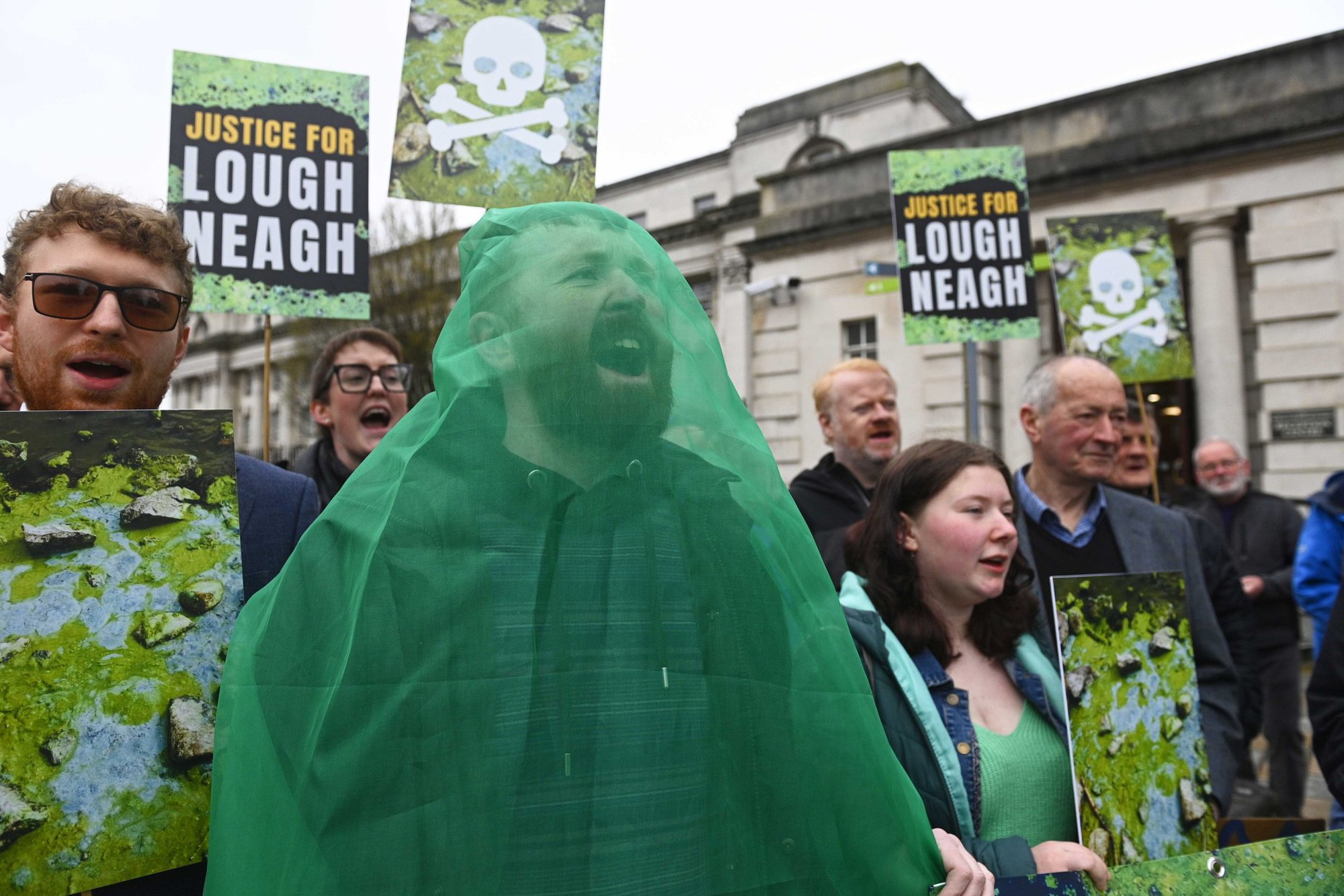
In addition, the EA is not applying the rules in a way that fulfils the Habitats Directive, and therefore is also in breach of the Habitats Regulations. The River Wye catchment is inundated with poultry units, with over 20 million chickens being reared for meat and eggs at any one time, equating to around 25% of total UK poultry production. The rapid growth in the region’s intensive poultry industry over the last decade has resulted in huge volumes of manure being spread on agricultural land. This has led to substantial surplus of phosphorus in the soils of the river catchment. These contaminants subsequently leach into the river, resulting in prolonged algal blooms that turn the river an opaque green, suffocating plants and wildlife.

The Wye was designated a Special Area of Conservation (SAC) to protect the river’s once-famous extensive Ranunculus river weed beds. However over 90% of the river’s Ranunculus has now been lost, smothered by the algal blooms. Consequently, the river is not meeting the SAC conservation status specified by the Habitats Directive. In June 2020, an unprecedented thick algal bloom extended for over 140 miles, almost the entire length of the river.

A study published in May 2022 by the University of Lancaster, Re-focusing Phosphorus use in the Wye Catchment (RePhoKUs Study) concluded that 60-70% of the river’s total phosphorus load now comes from agriculture. An excess load of 3,000 tonnes of phosphorus is still being added to the river catchment area each year. This is accumulating at a rate equivalent to 17kg of phosphorus per hectare compared to a national average of just 7kg per hectare.

Charles Watson Chairman and Founder of River Action said:

 “The severe ecological collapse of the iconic River Wye is one of the great environmental scandals of our times. The sickening tragedy is that this could have been seriously mitigated had the Environment Agency enforced existing environmental regulations to prevent the excess application of animal waste on land that was already oversaturated with nutrients. The irony is that the same government that introduced these regulations is giving the EA

explicit guidance not to enforce them. This unlawful conduct of the EA has to stop now.”

River Action is represented by Leigh Day environment team solicitor Ricardo Gama, who said:

“The Farming Rules for Water were introduced in 2018 specifically to deal with the issue of agricultural pollution in rivers like the Wye but from documents we’ve seen it’s clear that the Environment Agency is choosing to apply the rules in a way that is inconsistent with their own interpretation of how the rules are supposed to work. This means that manure–essentially an industrial waste product from meat and dairy production – is allowed to flow into our waterways with impunity. Our client hopes this claim will force the EA to reassess their approach and start applying the rules properly.”

For enquiries, comment or further information, please contact:

RIVER ACTION:
• Amy Slack, Campaigns Manager: email: amy@riveractionuk.com, Tel:
07878607319
• Molly Allen, Communications Coordinato: molly@riveractionuk.com,
Tel:07599416773

Leigh Day:
Pressoffice@leighday.co.uk

Notes to Editors
1. The Farming Rules for Water is the colloquial term used for the Reduction and Prevention
of Agricultural Diffuse Pollution (England) Regulations 2018
2. River Action claim the EA is in breach of regulation 9(3) of The Conservation of Habitats and Species Regulations 2017

International Women’s Day 2023: Women at the heart of the plight to Rescue Britain’s Rivers

On International Women’s Day, we’re celebrating some of the women who are playing a critical role in fighting the destruction of our rivers and pushing for change that prioritises our precious waterways and wildlife and people over profit and greed.

Angela Jones: Wild Woman of the Wye

Angela Jones – known as the ‘Wild Woman of the Wye’ – is an outdoor adventurer, wild swim specialist and kayaking guide who has a deep connection with the River Wye – one of Britain’s longest and most famous rivers.  

Angela plays a critical role in raising awareness of the declining state of the Wye, tirelessly gathering data and information on the river’s deteriorating condition to hold those to account who continue to pollute and exploit it.

In 2021, Angela bought a coffin, marked it with the words “Death of the Wye”, and towed it down stretches of the Wye to bring attention to the dire state of the river. And last summer, she entered the waters of the Wye towing a large model egg box to highlight the horrific impact that phosphates from intensive poultry units littered along the catchment are having on the Wye’s delicate ecosystem.   

Angela has also appeared on BBC ONE’s Panorama programme about how pollution is killing our waterways; she helped both George Monbiot with his film Rivercide and the BBC with their documentary: “Our Troubled Rivers”, and we will soon see her and the Wye appearing on BBC’s Countryfile.

Find out more about Angela’s exceptional work here.

Rachel Salvidge and Leana Hosea: Watershed Investigations

Rachael Salvidge and Leana Holsea are the founders of Watershed Investigations, – independent, not-for-profit investigative journalism that partners with national and international media to shine light on all aspects of the water crisis. 

Since its launch in 2022, Rachael and Leana have played a key role in uncovering high-impact stories in the UK and abroad.  They focus on evidence-based stories that “hold the powerful to account, uncover abuses, illuminate overlooked stories and champion solutions”.  

A recent example includes their investigation that revealed a terrifying scale of ‘forever chemical’ pollution in UK waterways.  It launched on the front page of the Guardian on the 27th February and included seven extraordinary stories that stretched over three days.

Becky Malby: Ilkley Clean River Group

Becky Malby is the co-founder of the Ilkley Clean River Group – a campaign set up three years ago by residents who were shocked at the way the River Warfe was being treated as an open sewer.

As a group, they were successful at getting the first ever Bathing Water designation on a UK river in 2020. This ensured Environmental Agency are testing of the quality of the river Warfe, instillation of signage so that the public knows how polluted the river is, and placed increasing pressure on the regulators and water company to do their duty to clean up the river.

Becky has been a driving force for exposing the failure of the water industry and regulator at both a local and national level. Her work with the Ilkley Clean Rivers group has resulted in huge investments from Yorkshire Water in upgrading sewerage works around Ilkley. 

Find out more about the Clean Ilkley Rivers Group here.

Morgan Schofield, Patricia Ronanand Jennie Hewitt: The ‘3 Wyes Women’

In August 2020, Jennie, Morgan and Patricia kayaked and walked the length of the river Wye,nearly 250 km in length, to raise awareness of the river’s depleted ecosystem and the biodiversity that is under threat.

They chronicled their trip on social media, and their campaign was followed closely by our founder, Charles Watson. It was their tales of degradation that prompted Charles to launch River Action in February 2021. 

Today they continue to raise awareness and are all involved in regularly monitoring the river’s condition.

You can read more about the brilliant 3 Wyes Women here

Amy Slack: Campaigns Manager at River Action

Last, but certainly not least, is our very own Campaigns Manager, Amy Slack.

Amy has worked in the environmental sector for over 15 years, and in that time has become a leading voice for better water quality.

As Head of Campaigns & Policy at Surfers Against Sewage, Amy played a key role exposing the true extent of the UK’s sewage scandal – calling out polluters on their destructive habits, demanding urgent government action, and leading SAS’s public protests.    

Having recently joined the River Action team Amy’s knowledge and experience will play an integral part in our mission to rescue Brittons rivers, helping ensure that clean rivers are at the top of every politician, voter, business leader and consumer’s priorities. 

Find out more about the role Amy will play in rescuing Britain’s rivers here.

RIVER ACTION’S ‘PLAN TO SAVE THE WYE’ CAMPAIGN: ONE YEAR ON

It has been exactly one year since we successfully launched a campaign calling for urgent action to save the River Wye from irreversible damage caused by agricultural pollution.  Twelve months on, we reflect on some of the highlights of our campaign thus far.

This week marks exactly one year since the successful launch of our campaign to save the River Wye – targeting polluting industries whose dramatic proliferation across the Wye catchment is now recognised as one of the prime causes of the desperate recent environmental collapse of the river. Working closely with other NGOs, activists and local communities, we have achieved significant progress in building public and political awareness of this environmental scandal. Here are some of our highlights:

River Action was the first to expose the intensive poultry industry supply chain and force major producers to admit culpability

We engaged positively with farming and food industry businesses, including Noble Foods, Avara Foods and Tesco, to inform and influence change in industrial practices. This effort has led to Avara Foods, which has 120 supplying farms within the River Wye catchment, admitting culpability for their part in polluting the River Wye.

River Action led a coalition of 20 NGOs from the Wye valley in support of our plan

We led a coalition of 20 NGOs, activists and environmental leaders from the Wye valley to call on Government officials – including then Environment Minister Rebecca Pow – to pursue the implementation of our plan.

River Action raised over £34,000 for Citizen Science projects

Thanks to our supporters, we were delighted to have raised over £34k for the Wye valley’s  citizen scientists. These funds secured the procurement of river pollution testing equipment for hundreds of volunteers across the Wye catchment to gather evidence of agricultural pollution.

We have also been able to fund Radnorshire Wildlife Trust to hire an analyst to collate and analyse the data compiled by various citizen scientist groups across the Wye catchment.

River Action Supported Local Activists

River Action is fast becoming the go-to charity for local activists as we help them mobilise in the most efficient and impactful way.

For the past twelve months we have been supporting Angela Jones, the ‘Wild Woman of the Wye’, on her campaign in raising awareness about the desperate state of the River Wye:

  • We provided Angela with a PR plan to launch her summer 2022 campaign that included press release and social media guidance
  • We provided Angela with legal advice via our partners the Environmental Law Foundation to protect her from potential litigation from polluters that she was openly targeting.
  • We provided Angela with funding to procure creative assets including a giant floating ‘Crappy Egg’ egg carton that was integral to the campaign

What’s next?

Working closely with other NGOs and activists we have achieved significant progress in building public and political awareness of this environmental scandal. But action is still not happening fast enough. And some of the biggest poo-luters are yet to take responsibility. 

With the cause of the problem established, it is now critical that the plan is adopted in full by all those responsible  as a matter of the utmost urgency.  We are continuing to call out those who fail to take action and are campaigning for the implementation of specific solutions that are urgently needed to save this iconic British river from irreparable damage.

New Campaigns Manager joins River Action

We are absolutely delighted to welcome Amy Slack as our Campaigns Manager at River Action.  In our latest blog, we get an insight into her life, interests, and the role that she will play to help rescue Britain’s rivers.

Tell us about yourself…

Hello! I’m Amy! I’m a Bristolian who’s now living in beautiful Cornwall. I’m super lucky to live within walking distance of the ocean. I love to swim in the sea (yes, I’m one of those mad people who will take a plunge in the sea in the depth of winter!). Living in Cornwall it’s obligatory to surf which I do pretty badly but I love it – there is nothing quite like the feeling of catching and riding that perfect wave! My partner Geoff is also in the process of renovating his small 16ft boat which we are hoping we’ll finally get in the water this spring after 2 years of restoration work!, so I’m hoping we’ll be exploring the waterways around Falmouth by boat in 2023! I’m also a super keen cyclist so I can often be found riding around the backroads or on bikepacking adventures.

How did you become interested in ocean/ river protection?

I’ve always been a bit of a waterbaby from holidays in Devon and Cornwall as a child to becoming a sailing instructor in my twenties. I hold the ocean in awe. From the towering underwater kelp forests and carpets of seagrass to the sticky rockpool anemones and glistening blue waves, our watery worlds are inspiringly beautiful. But it’s been blindingly obvious to me all my life that we are fast destroying the natural world around us. Growing up in the 90’s, the impacts of climate change were only just entering public consciousness and the more I learnt and understood what we were doing to our planet, the more I wanted to try and change the direction in which we are headed. I studied my masters degree at the amazing Centre for Alternative Technology with guest lecturers like the inspirational George Monbiot, signed all the petitions I came across, went on massive climate marches in London and donated to charities when I could, all of which fueled my determination to work in the environmental sector. From working for the Isles of Scilly Area of Natural Beauty Team (AONB), local authority recycling and environmental services, independent environment consultancies and environmental NGO’s, my whole working life has been about protecting and restoring our natural world. But it’s seeing the dire state of rivers and oceans around the world that I’ve found so shocking – and this is so often ignored by the mainstream. From plastic pollution smothering shorelines in the Philippines to the brown sewage sludge clogging chalk streams in east England, it’s these experiences that have driven me to campaign for the protection and restoration of rivers and seas.  

You used to work at Surfers Against Sewage as Head of Campaigns & Policy … Tell us about the charity and your work there?

SAS started out in the 90’s as a single issue grassroots campaign group. A small group of surfers in Cornwall were tired of getting sick from sewage when they went surfing. The UK was known as ‘the dirty man of Europe’ with abysmal sewerage infrastructure which meant that sewage was unashamedly being pumped straight into rivers and seas. It was pretty common to encounter ‘floaters’ when heading out for a surf or swim. The original maverick SAS campaigners took to the streets in their wetsuits and gas masks brandishing their surfboards demanding change. They highlighted the shocking state of UK waterways and exposed polluting industries, even becoming shareholders in some water companies at one point to force change from the inside. Their actions contributed to EU legislation that led to huge changes in water treatment and the state of our coastal waterways. 

But now we are facing a second wave of sewage pollution. Over 90% of sewage outflows pump sewage directly into rivers with 86% of rivers failing to meet ‘good ecological status’ and spiraling further and further into decline. And we are still getting just as sick from sewage now as we did in the 90’s. Rivers are the blue arteries of the country feeding directly into the ocean. The health of the ocean depends on healthy rivers. Today, SAS is about more than surfers and more than sewage, campaigning for a thriving ocean and thriving people. But sewage pollution and water quality are a core part of its DNA and the charity continues to be one of the leading voices driving action to clean up rivers and seas.

I’ve had the immense privilege of building and leading the Campaigns & Policy team at SAS for the last four years. I’ve overseen public campaigns and political advocacy on water quality, plastic pollution, ocean & climate and ocean recovery. I’ve organised protests and mass paddle-outs, held plastic polluters to account through the citizen science brand audit, co-ordinated impactful campaign films, led public stunts, directed and written campaign reports (most notably the four annual water quality reports), supported MP’s in drafting legislation and bills, hosted parliamentary events to influence policy, and driven the development of the Safer Seas & Rivers Service for the last four years. I’m particularly proud to have worked with colleagues at other organisations as part of the #EndSewagePollution coalition that has been responsible for driving the huge public, political and media awareness of the sewage pollution scandal over the last year and driving amendments in the Environment Act. It’s been an honor to be able to work with an amazing team to have so much impact, particularly considering it’s still quite a small organisation of around 30 people.

Tell us about your new role as RA campaigns manager.  What can we expect to see from your role in 2023?

I’ve been on the Advisory Board for the last year so have got to know Charles and James well and supported various campaigns so I’m super excited to be joining the River Action team. Our rivers are in such a dire state that we have to act fast if we have any hope of reversing their decline. I’ll be working closely with Charles and James to set out our political advocacy strategy, defining our calls on government and industry, particularly in the run up to the local and general elections. We’ll continue to call out polluters and expose the supply chains complicit in the destruction of rivers. We’ll be digging deep into the specific issues faced at river catchment level and supporting community groups to gather evidence and also hold polluters to account for destruction of local environments. Our campaigns will reflect the urgency in which we need to act and we have ambitious plans. I’ll be looking to grow the campaigns team to help drive our impact so keep your eyes peeled! 

You can expect us to be collaborative, straight talking, audacious and ambitious sprinkled with a little fun and humour.  

In your opinion, what needs to change in order to rescue Britain’s rivers?

I would be lying if I didn’t say that we need a huge amount to change across all parts of society, business and government. But over the last few years, it’s become increasingly apparent that change is driven from grassroots communities. It’s ordinary people doing extraordinary things that’s forcing the government and industry to act to reverse their damaging impact on the environment. We need to empower local communities to enable them to drive change, to feel able to make a difference. When we rise up together we have enormous power and impact. That’s what we hope to support at River Action – to enable and support communities by give people the tools and knowledge they need to create change fast.

New Communications Coordinator joins River Action

Following the news of River Action’s expansion, we are pleased to welcome Molly Allen as our new Communications Coordinator. In our latest blog, we get an insight into her life, interests, and the role that she will play to help rescue Britain’s rivers.

Tell us about yourself…

I have always had a deep fascination with the natural world – especially for the wild and most remote places. I grew up in south Devon, where I spent most of my time feeding this curiosity through literature, art, and watching (many!) wildlife documentaries.  I studied English at the University of Exeter and, during my second year, I was offered a job to work as a guide for an expedition organisation in British Columbia, Canada.  Since then, I have been primarily working in the expedition sector, leading tours and projects across Iceland and western Canada.  

Last year, I moved back to the UK, where I currently split my time between London and Devon. When not inside, you will usually find me trail running, hiking or kayaking (quite badly!). 

How did you become interested in river protection?

I’m fascinated by rivers. They’re dynamic and mysterious, and they’re home to an incredible array of wildlife. 

When first stepping into the environmental sector, I was surprised by how little attention our freshwater environments get compared to other habitats, such as tropical forests or coral reefs.  I think what freshwater conservation needs now is for the level of support to be brought into line with what you’ve got for tigers, pandas, orangutans and all the other species and habitats that get most of the attention, and I believe that River Action will play a key part in this. I am very excited to be part of the team, and I look forward to playing an active part in protecting and restoring our rivers for the benefit of communities and wildlife.

Tell us about your new role as Communications Coordinator

In a nutshell, I am responsible for planning and coordinating the communications of River Action’s campaigns.  It is a varied role, which I love, and it includes responsibilities that range from empowering local communities to protect their rivers to advocating for change in national policy and industry practice.  Our campaigns will reflect the urgency with which we need to act and we have ambitious plans. So watch this space!

In your opinion, what needs to change in order to rescue Britain’s rivers?

Our rivers are arguably our most important natural features. Not only are their fragile ecosystems home to hundreds of species of flora and fauna, but they have also been crucial for the growth of our towns and cities and provide fresh water for drinking and farming.  To put it simply, without our rivers, we simply could not survive.  Yet, the state of our rivers and waterways is disgraceful.  In order to enable change, we need everyone to understand that protecting these freshwater habitats and their wildlife is ultimately in their own interest too.

Furthermore, with regulators for rivers in the UK hugely underfunded and understaffed, citizen science’s roles in local communities are fundamental to our campaigns. They are our ‘eyes on the water’, able to see and report both great and subtle changes to the overall environment.  There is a real need for local communities to hold polluting industries and failed government regulators to account and clean up their mess. We are focusing on empowering local communities by giving them the knowledge and tools that will enable them to collect detailed information about our waterways and drive the change that our rivers so desperately need. 

River Action welcomes new Campaigns Manager

Following the recent news of River Action expansion, we are pleased to welcome onboard our new team member Amy Slack as Campaigns Manager. Amy’s appointment strengthens our team considerably as we endeavour to rescue more rivers.

As Campaigns Manager, Amy will be working closely with James Wallace, CEO, Charles Watson, Founder, and the broader team. Her expertise and experience in campaigning will provide valuable insights as she leads the development and delivery of River Actions campaigns. With Amy’s guidance, we will make greater strides in rescuing more of Britain’s rivers through targeting river polluting industries and increasing pressure on the UK Government.

Amy joins us from Surfers Against Sewage (SAS) where she led the Campaigns & Policy team for four years – working alongside other activists and campaigners. At SAS, Amy played a key and varied role – from exposing the extent of the sewage scandal, holding polluters to account, demanding urgent government action, and leading SAS’s public actions, protests and paddle outs!      

Amy Slack, River Action Campaigns Manager says:

“I’m super excited to be joining the inspiring River Action Team as Campaigns Manager. Having been part of the River Action Advisory Board for the last year, it’s been an honour to have supported the organisation’s growth, providing advice and guidance where I can. Now, I look forward to helping the team to #stopriverpollution for good.”


James Wallace, River Action CEO says:

“When we drafted the new Campaigns Manager job description we had one person in mind: Amy Slack. Imagine our surprise when she applied! Just as she has proven with Surfers Against Sewage, Amy will bring unique insight to River Action’s urgent mission, helping ensure that clean rivers are at the top of every politician, voter, business leader and consumer’s priorities. There is nothing more important than water security, and we are blessed to have Amy join our team of positive disruptors.”


Generous funders back our mission to rescue Britain’s rivers

Over the course of the past months, River Action has seen some exciting changes as we have been scaling our campaigns and preparing for more impact in 2023. We couldn’t have done it without the support of our generous funders and everyone who has supported our work to rescue Britain’s rivers.


So as we say goodbye to 2022, we would like to say a massive thank you to:


Also, a big thank you to Canwood Gallery, and the hundreds of generous individuals who have donated via our website and crowdfunders:

  • We launched a citizen science crowdfunder in January to support the valuable work of Radnorshire Wildlife Trust volunteers
  • In April we launched our creative campaign fundraiser which was supported by a generous anonymous donor. The funds raised are being used to fund our impactful and powerful video animations which will be released in the new year. More news on the way soon…


This funding will both ensure the costs of our expanded team are fully covered for the next 2-3 years, as well as building funds for us to support communities and their campaigns. 
River Action assures all our supporters that we will never accept funding from polluters, and that we are putting every penny to good use as we work towards rescuing Britain’s rivers.
We look forward to updating you on our progress in the new year! 
Privacy Overview

This website uses cookies so that we can provide you with the best user experience possible. Cookie information is stored in your browser and performs functions such as recognising you when you return to our website and helping our team to understand which sections of the website you find most interesting and useful.