River Action raises over £50k for creative campaign

Our latest fundraising efforts have come to an end and with your support – and that of the matchfinding from our generous donor – we have smashed our target!


Total raised by our recent Crowfunder campaign is over £50k!


We launched this fundraiser for Earth Day 2022 – a day to ‘invest in our planet’. So, all funds raised will go towards developing our future creative campaigns to put pressure on the government and regulators to protect our rivers from the pollution caused by profit-focussed corporations and widespread agricultural malpractice. 

We are hugely grateful to all our supporters for getting us beyond our target. Thank you for your support!

Charles Watson, Founder and Chairman of River Action said:

We are looking forward to working on and launching our creative campaign to apply the necessary pressure on the government and bring greater public attention to the reality behind our disastrously polluted rivers – and what action is needed to save them. The truth of the matter is that the government is simply not doing enough – and this has to change.”


Watch this space for further news and updates…

The scandal of Britain’s polluted rivers

By Charles Watson, Founder and Chairman, River Action.

As appeared in Weatherbys Hamilton bi-annual newsletter – The Specialist.


On January 5th the House of Commons Environmental Audit Committee published its long-awaited report on Water Quality in Rivers. Over the previous twelve months this cross-party group of MPs had been taking evidence from a wide range of scientific, agricultural, corporate and environmental organisations, including my own campaigning group River Action.

The report’s findings were shocking. It’s 137 pages chronicle a devastating account of how in recent years our rivers have been allowed to sink into a scandalous state of environmental degradation. To quote from its executive summary:


” A ‘chemical cocktail’ of sewage, agricultural waste, and plastic is polluting the waters of many of the country’s rivers. Water companies appear to be dumping untreated or partially treated sewage in rivers on a regular basis… Farm slurry and fertiliser run off is choking rivers with damaging algal blooms… Not a single river in England has received a clean bill of health. “

House of Commons Environmental Audit Committee report

How could this have happened?

I remember when much younger our watercourses were making a major ecological comeback. Great British rivers such as the Thames, Clyde and Tyne were showing huge progress in recovering from over a century of industrial abuse. For example, some might remember the momentous occasion in the 1980s when salmon were recorded finally returning to the Thames after an absence of 150 years.

However, in the last decade things have taken a horrendous turn for the worse. One of the direct consequences of the financial crisis of 2008 was the subsequent decade of austerity. The huge government debt incurred in saving our banking system was largely paid off by severe cuts to public services. Whether Health, Education or Defence, few government departments escaped the axe and one of the most significant casualties was Environmental Protection. Since 2011, the budget of England’s Environment Agency (EA) was cut by 75%, with similar cuts taking place in its equivalent statutory agencies in the devolved nations. As a direct consequence, environmental protection began to collapse. Essential services such as water quality monitoring were seriously scaled back. Meanwhile, the EA was also instructed by Government to re-direct much of its funding to the growing issue of flood defence. The biggest casualty of these cuts was enforcement. Prosecutions of polluters during this period collapsed by 95%, with the Agency simply not having the resources to take on major offenders in the courts.

So, polluters, be they under-invested water companies or cash-constrained farmers, had been able to save significant costs themselves by bypassing environmental regulations and discharging waste into rivers or onto the land, secure in the knowledge that they could do so with impunity.

The resulting statistics make dire reading. Data released on the 31st March this year showed that raw sewage was discharged into rivers and coastal areas for more than 2.7 million hours on more than 370,000 occasions throughout 2021, with many other discharges not being monitored. And only 14% of England’s rivers are officially considered now to be in “good” ecological health. Nowhere has the collapse of environmental protection been more harrowing than the story of the iconic River Wye. Britain’s fourth biggest watercourse is probably one of the most “protected” rivers in Europe. From its source in the Welsh mountains to its mouth in the Severn Estuary it flows through National Parks, Special Areas of Conservation, Areas of Outstanding Natural Beauty and Sites of Special Scientific Interest. But tragically over the last five years this magnificent river has spiralled downwards into an advanced state of ecological collapse.


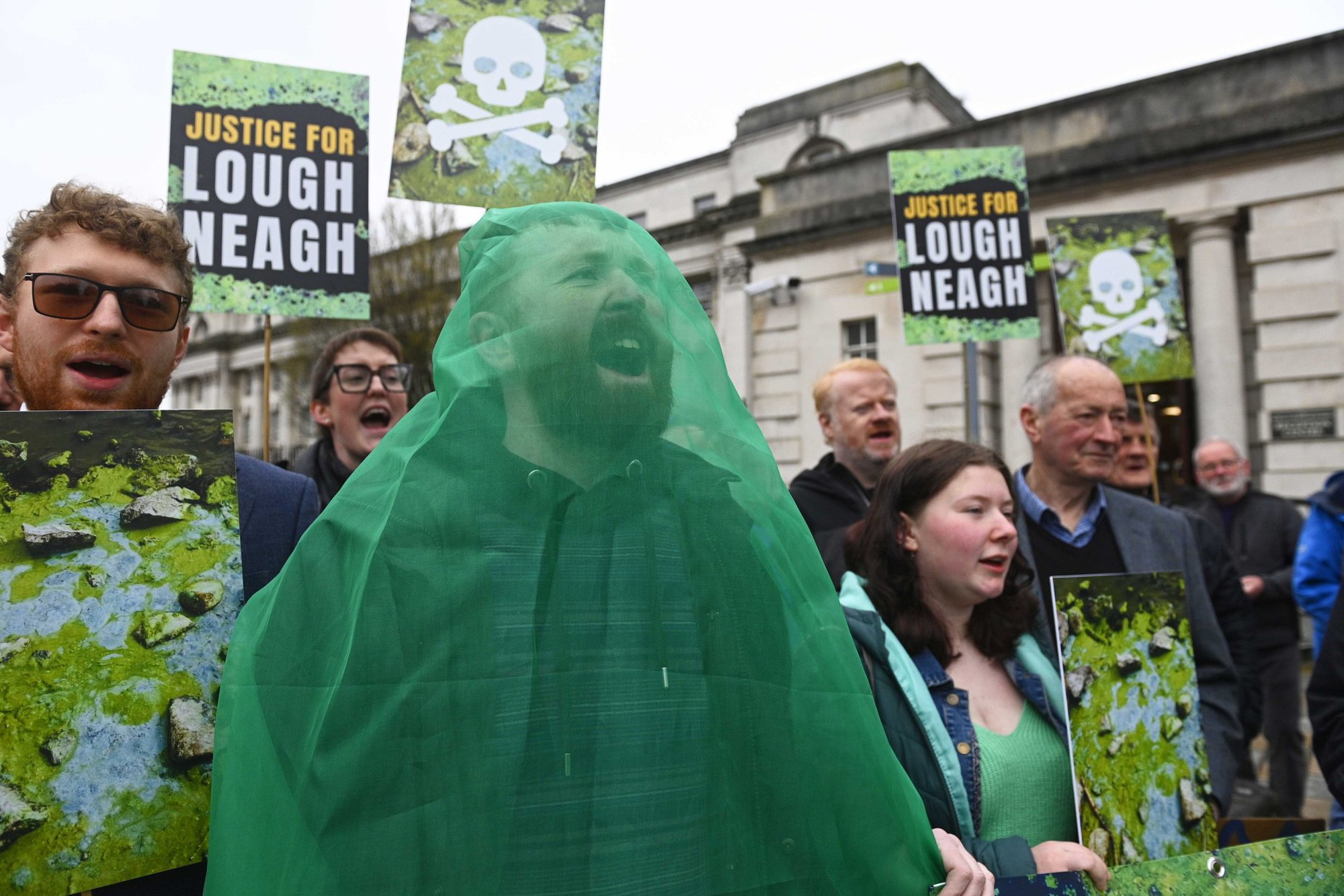
Over the last three summers, the unthinkable happened. The Wye’s clear flowing water turned a noxious green following repeated and unprecedented algal blooms. Its pristine gravel beds, the spawning ground for England’s premier salmon river, became caked in thick algal slime. Meanwhile, the famous abundant ranunculus weed beds, which are so important to the river’s ecosystem, all but disappeared having been smothered from sunlight by this putrid opaque water.

The prime cause of this catastrophe can be found in the huge industrial sheds which have appeared across the river’s catchment over the last few years and which now house over 20 million intensively reared chickens.

Let’s not kid ourselves. This form of intensive agriculture is not farming. It is industrial manufacturing. Most of the chicken meat sold in fast food restaurants or from supermarket shelves is the output of a highly industrialised process which starts with the pumping of phosphate-rich animal feed into huge sheds containing up to 300,000 birds. Never seeing the light of day, they are fattened up for 3-4 months before slaughter, after which the manure they have produced is largely dumped onto surrounding agricultural land.

Chicken excrement contains four times the nutrient levels of that of humans, cows or pigs – and recent research by the University of Lancaster has concluded that the soils of the Wye Valley now contain three times average national phosphate levels. So, with the land unable to absorb this huge surplus of nutrients, they have nowhere to go when it rains other than down into the river, wreaking untold damage as they fuel the deadly algal blooms.

The fightback against the pollution crisis facing our rivers is however starting to build real momentum up and down the country. Volunteer citizen science groups have stepped in to fill the void left by our failing statutory agencies to conduct the essential evidence of monitoring of pollution levels. Meanwhile campaigners in every shape and form have mobilised. From local “friends” groups who have formed to protect a given river, to the repurposing of existing environmental organisations such as the Wildlife Trust Movement. Angling, rowing and kayaking clubs have become environmental campaigning bodies. As has the country’s booming wild swimming movement.

Into this dynamic community River Action was launched last February shortly after I had just stepped out of a 25-year career in the worlds of public relations, digital communications and advertising. Having just seen for myself the appalling state of the River Wye – unrecognisable from that pristine river I had fished in my 20s – I was resolved to repurpose skills originally learnt at the sharp end of the corporate sector into the world of environmental campaigning.

In our first year we have directly taken on the major agribusinesses whose toxic supply chains are a prime source of the problem. In February we published our “Plan to Save the Wye”. Strongly endorsed by dozens of other environmental NGOs, we are calling for urgent mitigations to be implemented, such as the export of the hundreds of thousands of tonnes of the Wye Valley’s chicken manure to those parts of the country, such as East Anglia, that actually import huge quantities of synthetically manufactured phosphate-based fertilisers. With fertiliser prices having rocketed due to the Ukrainian situation, this is the ultimate no-brainer.

In the months ahead we plan to take on the fundamental task of persuading our lawmakers to re-fund and re-empower environmental protection. If you care about the fate of our rivers, get involved! Join a local environmental group or become a volunteer citizen scientist – or make a donation to a campaigning body like River Action to help us escalate the reach and depth of our campaigning to save our precious rivers. It would be an unforgivable tragedy if an iconic British river such as the Wye has to be sacrificed before the government finally sits up and does something about the greatest environmental scandal of our time.


Download the article here – as appeared in Weatherbys Hamilton bi-annual newsletter, The Specialist.

Citizen Science: The power of the people for the protection of our planet

The recent emergence of the citizen science movement has impressed and inspired us all. Communities across the country have united to help fight for what matters most. Moreover, fight for what needs protecting most. Most relevant for the work of  River Action, volunteers have been dedicating their time to fighting the crisis of  river pollution. And this is why we wanted to help support them which led to our recent crowdfunder. In February 2022, we raised over £34k to support a number of volunteer groups working specifically in the Wye Valley. In this blog, we will bring some light to citizen scientists and highlight the important work they are doing. 

Who are these environmental superheroes? 

This is a good question. The reality is that citizen scientists could be you, me, from kids at school to their grandparents. In other words, hundreds of ordinary people from all walks of life can become an environmental hero. Further, citizen scientists participate on a voluntary basis – dedicating their spare time to this vital work. All for the love of collaboration, nature, and making a difference in the world.

Why the recent emergence?

Recent years have seen the near collapse of effective government-backed environmental law enforcement. This has been due to statutory environmental protection agencies budget cuts by government, both in Westminster and in the Devolved Nations. For example, England’s Environment Agency’s (EA) funding has been reduced in the last decade by 75% – leading to meaningful water quality monitoring almost ceasing. Consequently, and as part of this huge national scandal, citizen scientists have stepped in to do the job of the statutory environmental protection agencies. And becoming the eyes and ears for campaigning organisations such as River Action.  

And what do they do…?

Citizen scientists are the front-line fighters in the battle to reverse the environmental collapse of our rivers. Specifically the work they have been able to do in testing the levels of damaging nutrients in rivers. For example, nitrates and phosphates originating from sewage discharges and bad agricultural practices. As a result, providing concrete evidence to enable campaigners to identify polluters and seek the remedies needed to save our rivers.

What have citizen scientists been able to discover?

The research of citizen scientists is fundamental for providing organisations, such as River Action, with critical data to support  our campaigning to save the River Wye. The River Wye is one of the most ‘protected’ rivers in Europe. Special Areas of Conservation, Areas of Outstanding Natural Beauty and National Parks line its banks from source to mouth. However, the EA’s and Natural Resources Wales’ record of identifying and remedying the river’s chronic pollution hasn’t been sufficient. 

Largely through the work of the citizen scientists have been able to better understand the full and horrific extent of phosphate pollution in the River Wye. In recent  years, the run off from manure from tens of millions of chickens from the region’s booming intensive poultry industry has wreaked untold damage to the ecology of this iconic British river.

How  will the funds raised by River Action be used?

Thanks to our supporters, we were delighted to have raised over £34k for the Wye valley’s  citizen scientists. These funds will secure the procurement of river pollution testing equipment for hundreds of volunteers. And, this should last for the rest of this year. Furthermore, we have also been able to fund Radnorshire Wildlife Trust to hire an analyst to administer the initiative. They will also collate and analyse the data compiled by various citizen scientist groups across the Wye catchment.

In brief, we owe a lot to the amazing citizen scientists of the world. Their tireless work has been a huge asset to  our ability to campaign against river pollution. 


Are you inspired? Why not join their ranks and become a Citizen Scientist yourself? 

River Action raises £34,000 for Wye Valley citizen scientists

River Action announces today the completion of its crowdfunding campaign to secure funding for citizen science groups across the Wye catchment. A total of £34,000 was raised, which significantly exceeded the initial target of £20,000, with over 230 individual donors contributing.

The funds will secure the procurement of vital river pollution testing equipment for hundreds of volunteers for the rest of this year. Radnorshire Wildlife Trust will also use the funds to hire an analyst to administer the initiative and to assist in the collation and analysis of the data compiled by various citizen scientist groups across the catchment.

According to the recent report from the House of Commons Environmental Audit Committee, “a chemical cocktail of sewage, agricultural waste, plastic and chemicals is polluting rivers. Only 14% of all the rivers in England can currently claim to have good ecological status”. A similar situation prevails in Wales with research published by Natural Resources Wales showing that over 60% of the River Wye is failing to meet pollution targets. Volunteer citizen scientists state they are able to research and monitor the river more frequently and with wider coverage than regulator agencies. Campaigners say environmental regulators are not giving a full and timely account of the decline due to the budget cuts these agencies have seen over the past decade.

The Wye catchment citizen science groups who will benefit from the fundraising include:


Charles Watson, Chairman of River Action said:

“Without our volunteer citizen scientists, we would have no means of quantifying the appalling levels of pollution that are impacting our rivers. Every day they are fighting against the daily abuse our rivers face, stepping into the gap left by our defunded statutory environmental protection agencies, whose monitoring and testing capabilities seem to have largely collapsed. We hope this will be the first of many acts of support from River Action for the UK’s Citizen Science movement”.

James Hitchcock CEO of the Radnorshire Wildlife Trust said: 

“We are delighted that River Action’s crowdfunder has been so successful.  Radnorshire Wildlife Trust has supported the inspiring efforts of citizen scientist groups in the Wye catchment since their creation. Their rapid growth has highlighted just how much the condition of our rivers matters to local people. Only through their good, regular data, spread across the catchment, can we guide landowner advice, enforcement and practical solutions to improve the state of our rivers – such as the creation of riparian buffer strips and woodland”. 

Tom Tibbits, Chair of Friends of the Upper Wye (FOUW) said:

“Friends of the Upper Wye has blossomed in 18 months from a group of concerned citizens to the catchment’s leading volunteer network with over one hundred test sites being monitored regularly. This extraordinarily successful crowdfunder will enable us to expand our outreach by 50% to 150 sites and the newly funded  administrative support for our volunteers will be game-changing. We are so grateful for all the support FOUW has received from all its partners in achieving so much in such a short time, in particular Radnorshire Wildlife Trust and River Action.”

Christine Hugh-Jones of the Campaign for Rural Wales (Brecon and Radnorshire) and the Friends of the Lugg said: 

“We are just thrilled by River Action’s hugely successful crowdfunding appeal which exceeded our wildest dreams. Now we can re-equip and expand our local citizen scientist volunteers for our unique collaborative project covering the whole Wye catchment.  A special thank you to every generous donor!”

River Action launches its Plan to Save the Wye

River Action launches an urgent public call for a new ‘Plan To Save The Wye’.

The very recent rapid ecological collapse of the Wye and its tributaries has been widely linked to the rapid growth of the intensive poultry industry across the river catchment. It is estimated that in the last five years the number of chickens being reared in intensive livestock production units in the Wye catchment has doubled to over 20 million birds.

According to evidence submitted to the House of Commons Environmental Audit Committee (EAC) by Lancaster University’s RePhoKUs Unit, this has resulted in the Wye’s soils now carrying an unacceptable surplus 60% higher than the national average phosphate (P) levels. The prime cause of this was cited to be the hundreds of thousands of tons of chicken manure that is spread each year across the catchment, adding to the existing burden of manure already produced by sheep and cattle. With much of the resulting nutrients  ultimately running off into watercourses, the EAC concluded in its report on Water Quality in Rivers (published on January 13th) that “Intensive livestock and poultry farming appears to be putting enormous pressure on particular catchments, such as those feeding the river Wye”.  The river’s recent nutrient fed-annual algal blooms are now estimated to have killed 95% of the rivers previously abundant water-crowfoot vegetation.

Today’s call from River Action states that in order to save the river and its tributaries from irreversible environmental damage caused by these intensive agricultural practices, a mandatory catchment-wide Nutrient Management Plan must be implemented with immediate effect.

River Action states that the new plan must be enforced on a catchment-wide basis with the Environment Agency and Natural Resources Wales working in close cross-border collaboration and that, as a minimum, the key actions of the plan must comprise:

  1. A planning moratorium on the construction of new (or expansion of existing) intensive livestock production units (poultry, pigs and Bovine), and on the construction of any new anaerobic digestors (ADs) unless their digestate outputs are nutrient-neutral.
  2. A requirement for all Intensive Poultry Units (IPUs) within the Wye catchment to have approved by the end of 2022 a Manure Management Plan (MMP), to be fully implemented by the end of 2023, whereby all chicken litter is exported out of the catchment to those locations in the UK which have P deficits, and thus currently rely on imported synthetic phosphate fertilisers.
  3. A requirement for all free-range egg producing IPUs to have a Nutrient Runoff Mitigation Plan (NRMP) approved by the end of 2022, to be implemented by the end of 2023, whereby water courses are protected from nutrient run-off from chicken ranges by nature-based solutions.
  4. A significant reduction in ‘number of bird’ thresholds for IPUs coming within the permitting jurisdictions of the EA and NRW to be implemented over the next five years on a progressive sliding scale, thus bringing medium and smaller sized IPUs within the scope of environmental regulations.
  5. A requirement for all watercourses within the Wye catchment to be protected by continuous river buffers of a minimum of 10 metres, providing a nature-based separation zone between all agricultural activities and running water.
  6. The allocation of additional funding by the UK and Welsh Governments to the Environment Agency and Natural Resources Wales to a) conduct inspections of all IPUs and ADs to ensure MMPs and NRMPs are approved and implement, and b) conduct an annual audit to ensure they are adhering to the provisions of their respective MMPs and NRMPs.
  7. Any non-compliance to result in the closure of the IPU or AD in question until compliance is demonstrated and reapproval obtained.

Today’s announcement follows extensive campaigning by River Action since its February 2021 launch for two of the UK’s leading egg and chicken meat producers – Noble Foods and Avara Foods – to take action to reduce the contribution of their supply chains to the pollution of the River Wye. The campaign still awaits clear commitments from both companies. River Action also recently launched a crowdfunder which has raised over £22,000 to support vital citizen science monitoring of pollution on the Wye and its tributaries.

Additionally, River Action has drawn attention on numerous occasions to the complete collapse of environmental protection right across the UK, and its contribution to the continuing pollution scandal. A petition launched by the group in June 2021, calling for a doubling of the environmental protection budgets of the Environment Agency and Natural Resources Wales, has attracted over 55,000 signatures.


Charles Watson, Founder and Chairman of River Action said:

“ The River Wye is one of Great Britain’s most iconic rivers. The speed and scale of its environmental collapse is a national scandal, as highlighted in the recent Environmental Audit Committee’s report, and one which is indicative of this country’s total neglect of our freshwater environments. With many now fearing the river has just a few years left before it is irreparably damaged, it is time for all parties to accept that urgent action is needed. While the initiatives of a number of local farmers to reduce phosphate emissions are to be applauded, only a comprehensive catchment-wide plan, backed by uncompromising regulatory enforcement will save the river. ”

James Hitchcock, CEO, Radnorshire Wildlife Trust said:

Despite the fact that even the major poultry producers are now openly accepting their contribution to the pollution of the Wye, there is still no joined-up plan to solve the issues. There is now no time left for further endless talks about voluntary, consensus-led self-regulation. The wildlife of the River Wye is slipping away. A catchment-wide plan involving scientists, land managers, industry leaders and conservationists, and managed by better resourced Welsh and English environmental protection agencies is the only way to save our river. ”

Feargal Sharkey, River Action Advisory Board member  said:

“ I wholeheartedly commend the plan being launched today by River Action. This critically important initiative must be implemented with immediate effect – no ifs, no buts. Quite frankly, it’s a scandal that the actions being put forward today were not implemented by the EA and Natural Resources Wales when the nutrient crisis of the river first manifested itself. ”


Read more about the campaign here…

River Action 2021 Impact Report

Following the completion of River Action’s first year of campaigning, we publish our first Impact Report.

The document assesses River Action’s work during 2021 – both specifically regarding its campaigns relating to the pollution of the River Wye and the re-funding of the UK’s environmental protection agencies. And, more generally with regard to River Action’s contribution to the broader debate on River Pollution in the UK.

Please download the report to find out more:

River Action Impact Report 2021

River Action Live: Ruth Chambers joins Marina Gibson

Senior Parliamentary Affairs Associate, Ruth Chambers joins Marina Gibson in our latest Instagram Live.

“Keep up the pressure because it is the next stage that really matters…it is the implementation stage that is critical.” Ruth Chambers.

Recent months has seen tireless campaigning and powerful unity in the fight to end sewage pollution. That is to say, pressure to place a further legal duty on water companies to end their unacceptable levels of sewage pollution.

In this InstaLive, River Action’s Advisory member, Ruth Chambers, offers expert insights and explanation on the pingpong that took place in Parliament during discussions of amendment to the Environment Bill. In addition Ruth explains, how this all started, what changes have been made and, what is expected and needed moving forward.

Check out the Live to hear for yourself!


Join us for River Action’s next Instagram Live – @RiverActionUK


PAST EVENTS:

23rd September 2021 – George Monbiot, award-winning writer and journalist

12th August 2021 – Amy Slack, Head of Campaigns & Policy at Surfers Against Sewage

21st July 2021- Ashley Smith, Founder of Windrush Against Sewage Pollution 

18th June 2021 – Feargal Sharkey, Environmental Campaigner

11th May 2021 – Charles Watson, Chairman and Founder, River Action UK 

A First Ray of Hope for the Wye?

For the first time, one of the major poultry producers admits to “being part of the problem”


On the 27th of September the Wye Nutrient Management Board convened for one of its regular sessions. Created to try and find a common solution to the horrendous phosphate pollution crisis which has  the River Wye in recent years, the Board includes representatives from: the river catchment’s County Councils; the farming community; Natural England, the Environment Agency & Natural Resources Wales; the construction industry; the Wye & Usk Foundation and many of the NGOs across the catchment who have been campaigning to save the river. The latter includes the Radnorshire and Hereford Wildlife Trusts, The Campaign for the Protection of Rural Wales and the Friends of the Upper Wye.

These meetings (taking place on Zoom over the last 18 months) have been described by their many critics as talking shops, which tend to go over the same old agenda month in, month out. Indeed, the lack of any progress by the Nutrient Management Board in agreeing any positive way forward has been seen by some as almost scandalous as, with another summer of algal blooms having passed by, the state of the river only deteriorates further.

Then on Monday 27th something potentially significant happened. John Reed, Head of Agriculture at Avara Foods, was asked to address the Board. Avara, a £1.2 billion agri-business, is one of the UK’s leading poultry suppliers and supplies poultry products to all the major UK supermarkets and restaurant chains from its Hereford processing plant (the biggest employer in the county).

Avara has been subject to considerable criticism (including from River Action) for its role in the river pollution crisis. Almost 14 million of the 20 million chickens which are believed to be produced across the Wye river catchment are directly controlled by Avara’s supply chain. Whilst they are reared in sheds which have concrete standings, historically the huge quantities of manure these birds produce (estimated by Avara to be c.150,000 tons per year) get spread across the land of the catchment. Recent work carried out by the University of Lancaster is indicating an unquestionable over-saturation of phosphates in the soils of the Wye Valley – which in turn will inevitably run off into the river. Together with the big free range egg producers such as Noble Foods there is a growing body of evidence that these major poultry producers are the key cause for the pollution crisis facing the river.

However, at the latest Nutrient Management meeting Board Avara openly acknowledged that they were indeed “part of the problem” regarding the pollution of the river – and therefore need to be “part of the solution”. Accordingly, it was announced that the company is currently in the final stages of evaluating a range of major initiatives to remove its chicken manure from the catchment. These included using it as a fuel source for generating renewable energy, incinerating it into ash and biochar that can be easily transported to parts of the country that need phosphate-based fertiliser for arable farming – and treating it via new (not yet public) anaerobic digester-based technology. The company also indicated that it was looking at ways of importing less phosphate into the catchment within its chicken feed in the first place. Avara confirmed that if these initiatives went ahead, then all its chicken manure would be exported out of the valley.

The company was subjected to extensive questioning on the timescale and financial backing for these initiatives.. Here there were no firm answers – with confidentiality agreements and the speed by which planning consents to build the necessary facilities would be granted by the local council – being cited as the cause for this uncertainty. Indeed, many of the NGOs who listened to the presentation expressed considerable scepticism afterwards about the company’s claims due to this lack of detail.

However, if Avara really is genuine regarding these intentions, and if the other major poultry producers are prepared to follow their lead – then we might have just witnessed the first ray of hope of how the pollution crisis of the Wye might be solved. River Action is now engaged directly with the major poultry producers, including Avara, and will be pressing hard for time and investment commitments to be announced as soon as possible. But if what we heard last Monday really is a genuine and deliverable commitment, then it will have our wholehearted support.

If it is not, then we will be returning to the campaign trail against the poultry agri-businesses with vigour, as we will do if the County Councils procrastinate over fast tracking planning permission to build these much-needed facilities.

A YouTube recording of the Nutrient Management Board meeting can be found here:

https://www.youtube.com/watch?v=tEuzyiK0vBY

The section during which Avara speak is at 0.04.54. This is followed at 0.40.27 by another interesting presentation from Gamber, a logistics company which gives an overview on the task of exporting the chicken waste out of the river catchment.

England’s riverbanks and watercourses are about to get a lot greener

We were excited to see the launch of the The Woodlands For Water project this week. Beaver Trust in collaboration with the Woodland Trust, The Rivers Trust and The National Trust and supported by the Department for Environment, Food and Rural Affairs (Defra), will be working on projects to restore our rivers. The project is focused on incentivising landowners to plant trees. This is a big step towards restoring nature along our rivers. According to James Wallace, River Action advisory board member and CEO of Beaver Trust, “Collaboration between Government, industry, landowners, communities, and the NGO sector is key if we are to help communities build resilience to the climate and the ecological emergency”.

Watch the video here and read more about this unique collaboration below.

Riverbanks and watercourses to be planted with thousands of hectares of new woodland to improve water quality and biodiversity

  • New project to plant extensive new woodlands along England’s riverbanks launched today
  • Tree planting along rivers will help manage flood risks and boost biodiversity
  • Launch marks next step in government’s England Trees Action Plan to treble tree planting rates and build back greener

Over 3,000 hectares of new woodlands are set to be planted along England’s rivers and watercourses with backing from the country’s leading environmental organisations, Forestry Minister Lord Goldsmith announced today (Saturday 25 September).

Planting trees on and around riverbanks, or allowing them to grow naturally, can help to improve water quality by blocking the runoff of pollutants into rivers, manage flood risks by slowing the flow of water, boost biodiversity by creating new habitat corridors and make our rivers more climate resilient by providing shade and cooling water temperatures. There are 242,262km of watercourses in England, and it is hoped that by planting trees in this way they will form a natural network of habitats across the country as part of our plans to expand, improve and connect these places across our towns, cities and countryside.

The ‘Woodlands for Water’ project aims to create 3,150 hectares of trees in six river catchment areas from Devon to Cumbria by March 2025. To support farmers and landowners to create these woodlands, they will be able to apply for funding through the ‘England Woodland Creation Offer’ grant which provides greater financial incentives for landowners and farmers to plant and manage trees, including along rivers and watercourses.

Speaking from a National Trust river tree planting project, Forestry Minister Lord Goldsmith said:

“This is a hugely exciting and untapped area for woodland creation. The benefits of planting trees by rivers are vast – from helping biodiversity recover by creating more natural riverbanks; to slowing the flow of surface water to reduce the risk of flooding; and improving water quality by buffering rivers from harmful agricultural pollution.

“The Government is committed to trebling tree-planting rates by the end of this parliament, and in this vitally important year for tackling climate change with the Glasgow COP summit, this partnership marks an important next step in our plans to build back greener.”

Forestry Commission Chair Sir William Worsley said:

“I am delighted to be working with partners to launch the Woodlands for Water project and deliver another major part of the England Trees Action Plan.

“By putting the right trees in the right place, helped by our new England Woodland Creation Offer, the Woodlands for Water project can offer numerous benefits, from creating new woodland habitats; protecting existing habitats such as chalk streams; improving environments for fish by reducing water temperature, and helping rivers adapt to climate change.”

Supported by Defra, the project will be carried out by the ‘Riverscapes’ Partnership comprising of experts from the Rivers Trust, National Trust, Woodland Trust and Beaver Trust, which will be on hand to provide expert assistance in the selected river catchment areas across England, ensuring there is pipeline of projects for riparian planting in future years.


The Rivers Trust Chief Executive Officer Mark Lloyd said:

“The Riverscapes Partnership brings together leading national organisations who want to revive our rivers, restore nature and increase our resilience to droughts and floods. Woodlands for Water is a very exciting first project for the partnership to work with Defra to meet the government’s targets on tree planting and its commitment to leave the environment in a better state for the next generation. By planting the right trees in the right places, we can tackle multiple problems and provide multiple benefits: more nature, less flooding, more carbon locked up in trees and soils, fewer droughts, less pollution, more wild places for people to enjoy. We hope that this project will be the pathfinder for a route map to the revival of rivers and their catchment areas that can benefit every corner of England, and the rest of the UK.”


The Woodland Trust Head of Landscape Scale Delivery Dr. Adrian Southern said:


“We are delighted to be part of what is an immensely important project, both from a combating climate change perspective with more trees but also for showing how it is essential they are planted in the right places. Tree establishment near rivers and in their catchments can have significant benefits for people and wildlife, from natural flood management to stabilising riverbanks and reducing sediment flow into water courses, to creating great places for people to enjoy. This commitment from DEFRA could be catalytic in supporting the Riverscapes partnership to start to really deliver the transformational change needed to meet the threats of climate change and wildlife loss.”


The National Trust Director of Land & Nature Harry Bowell said:


“With 90 per cent of UK floodplains ‘not fit for purpose’ and creating flood issues for communities, we fully recognise the value of trees to our river corridors in helping to slow flood waters, soak up carbon and keep rivers cool in the face of rising temperatures. This work will enhance the projects we already have underway where our primary focus has been the conservation and health of the river channel itself. This partnership and funding will allow us to look at the wider river corridor to further enhance this work.”


James Wallace, Beaver Trust Chief Executive Officer said:


“As members of the Riverscapes partnership with Defra we are delighted to be a part of this first big first step towards paying farmers to create a nature recovery network of mosaic habitats along our rivers, working together to breathe life back into our land. We hope in time farmers will be incentivised not only to plant trees but to create wetlands, floodplain meadows and other spaces for natural processes and wildlife to regenerate in riparian buffer zones. Collaboration between Government, industry, landowners, communities, and the NGO sector is key if we are to help communities build resilience to the climate and the ecological emergency. The Riverscapes partnership looks forward to helping engage the farming community, connecting landowners with each other and much-needed public money, and developing systemic solutions like blended finance, empowering rapid change in how we manage our rivers and land.”


Today’s announcement is a key action of the recently published England Trees Action Plan which outlined the Government’s strategy to get more trees in the ground that will help to deliver wide ranging benefits for nature, climate and people, and contributes towards the commitment to treble planting rates in England by the end of this Parliament.


ENDS. 

River Action welcomes Government efforts to strengthen the Environment Bill– but there’s a long way to go yet

The UK Government last week tabled further amendments to the Environment Bill in response to some of the issues raised by peers during the Bill’s House of Lords Report Stage before summer recess.

The new amendments include welcome commitments to an increased role for Parliament in scrutinising the new Office for Environmental Protection and a legally-binding target to halt the decline of nature – albeit only by 2030. This just may be too late for ecosystems such as the River Wye catchment – which has seen another summer of horrific nutrient-fed algal blooms, the near total disappearance of key indicator species Ranunculus, and ever less wildlife recorded across the valley.

A number of the newly announced amendments also build on previous steps by the Government to tackle sewage discharges into rivers –

  1. Water company accountability and transparency: requiring water companies to publish near real-time Event Duration Monitoring data when storm overflows are operational and to publish continuous monitoring information on the water quality impacts of their assets.
  2. Storm overflows elimination report: requiring the Government to publish a new report setting out the actions which would be required to eliminate storm overflows entirely.
  3. Sustainable Drainage Systems: a review of legislation to make sure these are constructed to ministerial standards on new developments,to reduce pressure on existing sewage systems.

While any action to address the river pollution crisis (and provide the data required to do so) is welcome, and indeed long-overdue, unfortunately the proposed amendments do not go anywhere near far enough.

Firstly, it is vital that measures are targeted not just at eliminating sewage pollution but also agricultural pollution, which is an equivalent contributor to this crisis. As a new post-Common Agricultural Policy subsidy system comes into place, it is particularly vital that public money is not funding practices destructive to freshwater biodiversity.

Secondly, we must not forget that responsibility also lies with the food processing companies and retailers purchasing from farmers and who generate huge profits from branding and sale of agricultural goods. At present, there is so little monitoring and enforcement along our rivers that polluting agri-businesses know there is very little chance they will be inspected, caught and penalised if they pollute watercourses. There is far too little incentive for them to invest in change.

Finally, monitoring and enforcement are so currently limited and largely ineffective because the budgets of our environmental protection agencies have been decimated over the past decade, with England’s Environment Agency experiencing a 75% cut in real terms. Until this situation is resolved, any commitments to change, such as the recent amendments outlined above, are functionally meaningless and the Government’s entire domestic environmental agenda remains under threat. This is why River Action started our petition calling on the Government to restore funding to our Environmental Protection Agencies.

As the Bill returns next week, we therefore call on parliamentarians to continue to push the Government to commit to a doubling of the grant-in-aid provided to the Environment Agency for environmental protection agencies, as a foundational basis for all other action.

Privacy Overview

This website uses cookies so that we can provide you with the best user experience possible. Cookie information is stored in your browser and performs functions such as recognising you when you return to our website and helping our team to understand which sections of the website you find most interesting and useful.