Chloe Peck joins River Action

Download PDF

We are delighted to welcome Chloe Peck as our new Communities Coordinator to the River Action team. In our latest blog, we get to know more about Chloe and the role that she will play to help rescue Britain’s rivers

Q1. Tell us about yourself

My name’s Chloe. I’m a nature lover, an avid walker, a not-so-great yogi, a slightly chaotic chef, a passionate tea drinker, and now I’m thrilled to be the new communities coordinator! 

After living and working in Manchester for several years, I have recently moved to London. Although I am currently city bound, my heart belongs to the countryside, and cherish the opportunity to explore the great outdoors, often in my tiny van.

Q2. How did you become interested in river protection

My deep connection with rivers dates back to my childhood, when I spent long glorious days exploring the banks of the river Frome whilst my dad patiently fished for trout. That’s where my love for being in and around water was born. Today, it’s all about wild swimming, and I’ve been known to drive for hours to plunge into freezing cold water.

While working in Manchester, I had the privilege of being part of the Love Your River Irk project. This initiative united communities to explore and restore the River Irk. I conducted workshops on invasive species impacting our ecosystem, the species of invertebrates in the river, and how to identify various plants along the river banks.

The most important lesson I learnt during  this project was how vital it is for local communities to feel connected to their local environment, motivating them to protect it.

Q3. You have a wealth of experience working in community engagement for a variety of projects.  What have you enjoyed most about this kind of work and what have been its biggest challenges?

Community engagement has brought so much joy to my life and I love feeling embedded in a group of passionate people. I’ve been a youth worker in inner-city Manchester, I’ve trained young women at a community radio station, I’ve led groups of volunteers to plant trees, and I’ve run English classes for migrants, each connection I’ve made has been meaningful.

The challenge that we face is a sense of powerlessness. It is increasingly difficult to feel connected to each other and the environment we are in, making it challenging to take ownership of the world around us.  The best approach someone working in community engagement can do is to support and empower others to see that together we are strong and can make a difference.

Q4. Tell us about your new role as Communications Coordinator at River Action.  What can we expect to see from your role in 2023/4?

I am genuinely excited about my role as communities coordinator. Over the next few months I will be developing and publishing the River Rescue Kit. This kit will serve as a valuable resource for everyone interested in guidance to campaign for cleaner rivers; from well-established groups to individuals who want guidance on where to start. It will include information on setting up as a group, participating in citizen science, gaining media interest, understanding your legal rights, and raising funds. We will also include a map that will help connect different river groups to one another.

Further to this, I’m looking forward to getting to know the remarkable communities we have already worked with, such as the Henley Mermaids, the Henley & Marlow River Action group and the Welsh Rivers Union. Alongside our continuous support for these groups, I am eager to connect with new groups across the country.

Q5. In your opinion, what is further needed/what needs to change in order to rescue Britain’s rivers?

Last year saw increased awareness and support for cleaning up Britain’s rivers. The scale of the crisis is daunting, but we all possess the means to drive change. Rivers need to be at the centre of our individual decision making processes, and this will have a knock on effect on politics and industry. Through people taking individual action, joining a group, and coming together as a network, we can support each other, gain insight from one another, and amplify our voices to make a real difference. 

River Action wins landmark court ruling

Download PDF

High Court grants consent for River Action to pursue Judicial Review over Environment Agency’s failure to protect River Wye from agricultural pollution.

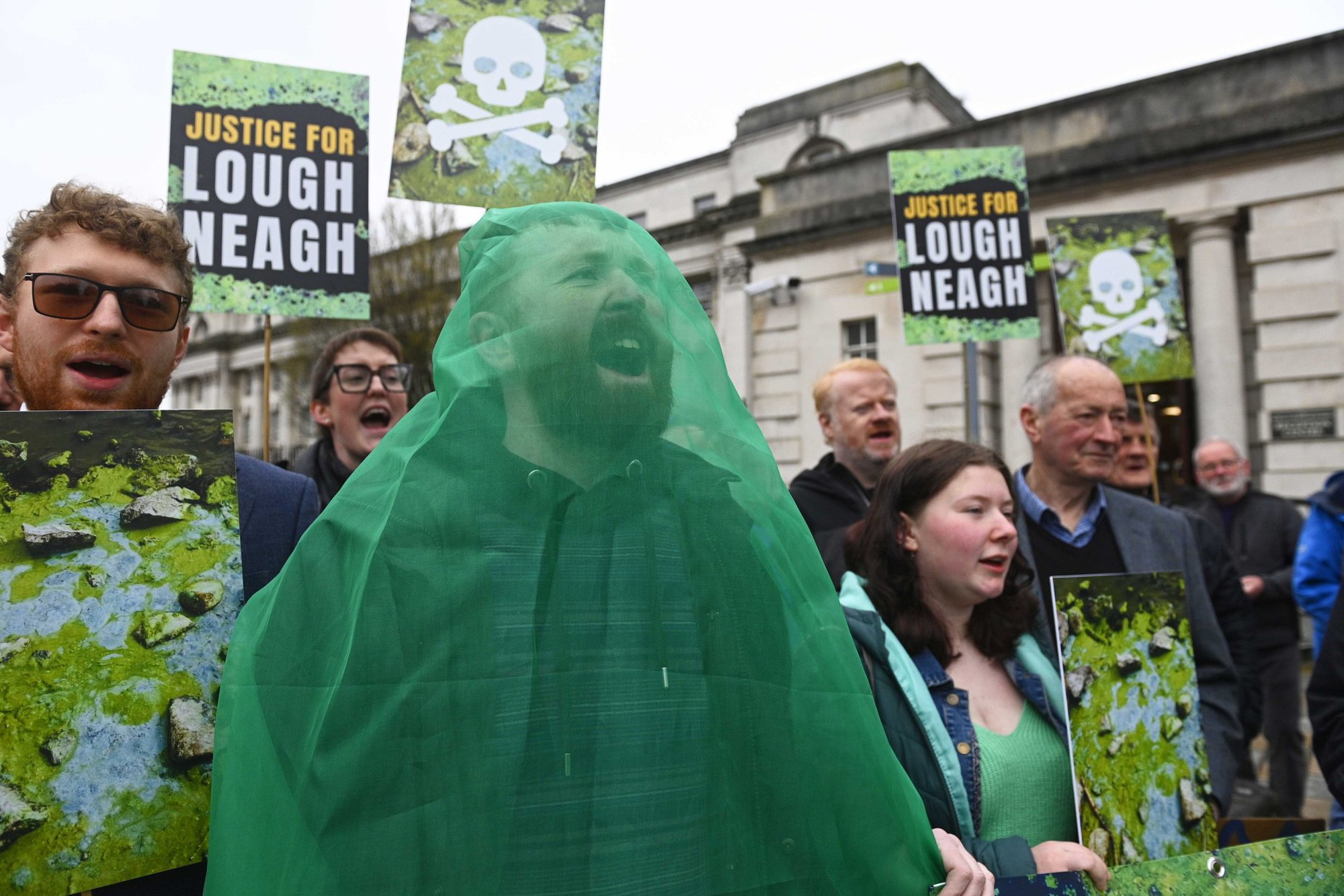
Following a hearing held at the High Court in Cardiff on Thursday 19 October, River Action has been granted consent to pursue its legal challenge against the Environment Agency (EA) over its failure to protect the River Wye from pollution.

In its case for judicial review of the Environment Agency’s enforcement of regulations, River Action has argued that by failing to prevent the spread of excessive levels of manure across agricultural land in the Wye River catchment, the EA has acted unlawfully by not enforcing the Farming Rules for Water.

River Action claims that had these critical environmental regulations been fully enforced by the EA, then the substantial increase in levels of phosphorus in the soil across the catchment (a major cause of the river’s algal blooms) could have been substantially mitigated.  The persistence of these algal blooms in recent years is one of the major causes of the severe ecological collapse of the river, much of which is designated a Special Area of Conservation (SAC).

A study by Lancaster University published in May 2022 found that the soils of the Wye are now significantly over-saturated with phosphorus (P), with 60-70% of the 3,000 tonnes of which enter the river every year coming from agriculture. The most significant contributor to this is widely known to be the rapid recent growth of the region’s intensive poultry industry.

River Action believe that this environmental crisis could have been seriously mitigated had theEA enforced existing environmental regulations.

Commenting, River Action’s Chairman and Founder Charles Watson said:

“We are delighted that we have now finally been granted permission to go to court, where we will vigorously make the case that a prime cause for the recent ecological collapse of theRiver Wye is the EA’s decision to slavishly follow DEFRA’s guidance to not enforce critical provisions of the 2018 Farming Rules for Water. These critically important regulations state that fertilisers and manures must not be spread on soils already over-saturated with excess nutrients. Tragically, due to the uncontrolled growth of what we believe to be the largest concentration of intensive poultry production in Europe, this is exactly what has been allowed to happen, with the horrific environmental consequences for the River Wye being all too plain to see”.

River Action is represented by Leigh Day environment team solicitor Ricardo Gama.

Katy Shorten joins River Action

Download PDF

We are delighted to welcome Katy Shorten as our Senior Development Coordinator to the River Action team. In our latest blog, we get to know more about Katy and the role that she will play to help rescue Britain’s rivers.

Q1. Tell us about yourself

Hello! 

I grew up in Cornwall, and after spending time living in other areas of the country, am pleased to have returned ‘home’. I have always loved being out in nature, especially in water and in any weather, and so I feel lucky to live where there is such an abundance of it. I have three brothers, and seven nieces and nephews, so there is usually something interesting to take part in, and get out and about. I started learning to play the flute and read music as an adult in my 30s, so get a mixture of happiness, frustration and peace from that, depending on my mood 🙂 

Q2. How did you become interested in river protection?

Just before the COVID pandemic I moved to Oxfordshire, and was starting a new life without knowing many people. During that time, and afterwards, the river became a real joy and salvation for me. I mostly walked, swam and canoed along the Thames, and developed an affinity for it and all it offers. Since moving back to Cornwall I have a deeper appreciation for the Tamar, which I now feel I took for granted growing up! I’ve started Cornish Gig Rowing and have met some wonderful people who equally share my passion. I find what is happening to our rivers distressing, and avoidable. I was drawn to River Action’s work to mobilise local communities, the public, Government, and industry to find solutions together, and believe we can make a difference. 

Q3. You have over 20 years of experience working in social care and homelessness.  What have you enjoyed most about this kind of work and what have been its biggest challenges? 

My time working in the homelessness and social care sectors has formed a strong value system in me, grounded in compassion, understanding, acceptance and hope. To have been witness to the experiences and situations of the most excluded people living in our society today is humbling. I hope to have played a small part in helping some people to lead the lives they want and aspire to, despite the challenges they face. I remain in awe and admiration of the people living and working across homelessness and social care systems, pulling together and absolutely doing their best with limited resources. So, I guess on a personal level what I have enjoyed the most is the partnerships and collaboration with amazing people, and the biggest challenge was not feeling able to do ‘enough’!

Q4. Tell us about your new role as Senior Development Coordinator at River Action...what can we expect to see from your role in 2023/4?

I’m really excited to be starting at River Action when there is so much focus and momentum behind the movement. My role at River Action will be to help ensure; our strategy stays up to date and relevant, we continue to understand the impact we are making so that we remain agile and responsive to where we can make the biggest difference, and that we have the funds available to keep supporting local communities to rescue their rivers.   

Q5. In your opinion, what is further needed/what needs to change in order to rescue Britain’s rivers?

The health of our environment and our rivers is directly related to the health of us as individuals, communities and broader humanity. Without healthy rivers our food and water supply is being affected, not to mention limiting the wellbeing effects of being out in nature and something bigger than ourselves. For me placing the natural environment and the health of our rivers front and centre of all decision making feels like the biggest change we could make. In order to this we need information and evidence out there in the public domain, and a groundswell of public opinion to support effective decisions and action – whether that is macro decisions the Government takes on how it spends our taxes, how industry decides to invest in natural solutions to waste and pollution, or individual consumer choices. River Action’s approach to doing this by blending support for ‘bottom up’ individual and community activity with a ‘top down’ call to action for Government and industry, will mean our rivers become a priority consideration behind all decision making. 

From Activism to Action: Cleaning Britain’s Waterways

Download PDF

The Blue Earth Summit returned to Bristol for its third year in October, bringing together a community of business professionals looking to make a positive impact and affect change at their place of work.

This year, we saw River Action’s founder and Chairman, Charles Watson, take to the centre stage to interview United Utilities’ new CEO,  Lou Beardmore, about the horrific pollution issues caused by the UK’s water industry and what she believes are the solutions to clean Britain’s waterways.

River Action joins campaigners in protest to demand more action to protect nature

Download PDF

On Thursday 28th September, more than 40 of the UK’s conservation organisations came together to protest at the Government’s failure to address the deepening crisis in nature, laid bare in the devastating State of Nature Report.

Organised by wildlife TV presenter and conservationist Chris Packham, the demonstrations saw the UK’s leading conservation and wildlife charities, scientists, ecologists and wildlife experts unite in protest outside DEFRA offices to demand the UK Government to take more action for nature.

The newly-formed ‘Restore Nature Now’ movement states: “We are birdwatchers, ramblers, ecologists, pond dippers, river-swimmers, ramblers, no-mow-mayers, anglers, scientists, butterfly counters, spring-watchers, gardeners, rewilders, conservationists. We are ordinary people taking action in extraordinary times”.

Chris Packham said: 

“This is beyond an ‘Attack on Nature’ in the UK. Our wildlife is being annihilated. Our wild places and wildlife are not ‘dying’- they are being killed. Those responsible for killing nature are getting away with it. Those responsible for protecting nature are failing. We are taking our demand ‘Restore Nature Now’ direct to the government department decision-makers responsible for failing nature in this country.” 

River Action’s CEO, James Wallace, said:

“Our river ecosystems are on the brink of collapse, polluted by sewage, manure, chemicals and plastics. On the current trajectory, only 4% will be in good ecological condition by 2027, missing our pre Brexit targets of 100%. Globally rare chalk streams are smothered in algal sludge, preventing rare species like brown trout from reproducing. Rivers like the Wye have turned into filthy ditches for factory farms, while the wildlife in the River Thames is snuffed out by sewage.

“The dreadful state of the UK’s nature is an international disgrace and an existential risk to our economy. Without hedgerow habitats we have no insects. Without pollinators we have no food. Without healthy rivers we have no drinking water. And without water we have no industry, shops or hospitals. With the next election looming, we implore all parties and voters to back policies that will Restore Nature Now!”

Rescue Our Rivers: Petition hand-in to No.10 Downing Street

Download PDF

On September 21st, we visited No.10 with Team Water UK to hand over the ‘Rescue our Rivers’ petition to parliament. 

With over 106,000 of your signatures, we are sending a very clear message: – the public will be putting water quality as a TOP voting issue ahead of the election.

A huge thank you to all who signed, shared and supported our petition, calling for all political parties to save our rivers and waterways before it’s too late.

River Action’s CEO, James Wallace, outside No.10 Downing Street with the ‘Rescue our Rivers’ petition.
Between 12 – 21 September 2023, Tim Wakefield and Ben Covey swam, paddled and rowed 227km of the River Thames to raise awareness of the plight of our waterways and carry the Rescue Our Rivers petition to No.10 Downing Street.

Erica Popplewell joins River Action

Download PDF

We are thrilled to welcome Erica Popplewell as our Campaigns Manager, whilst Amy Slack is on maternity leave.  While we will all miss Amy, we are very lucky to welcome Erica to the River Action team.

In our latest blog, we get to know more about Erica and the role that she will play to help rescue Britain’s rivers.

Tell us about yourself…

Hi I’m Erica Popplewell, I’ve just started as Campaigns Manager at Rivers Action.  I have worked in the environmental sector for most of my career and love being part of making change happen.  

Outside of work I have two young children who keep me busy and like to take on various sporting challenges, I’m doing the two mile Serpentine swim in London later this month. 

What first sparked your interest in river protection?

I have a long standing interest in the environment, my education and working life have reflected this.  The health of our rivers are a totemic issue that you can see in your local communities and landscapes.  As a campaigner I love working on such a live and tangible issue, its exciting to see it gaining real political and media traction at the moment.  As a keen wild swimmer I am happy to be working on an issue that makes my swim safer. 

You have worked in the environmental sector for over a decade, including roles in Defra, the National Trust and the CPRE  – The Countryside Charity.  In your experience, what are the biggest changes you have seen towards protecting the environment?

The biggest change I have seen has been climate change moving from being an abstract/future issue to a current issue. Climate change is affecting the UK now, we only have to look at the increasing weather extremes as evidence.  This has made it a big political issue but the solution are long term and difficult to deliver in economically constrained times.Brexit has created a huge challenge to protecting the environment, some of our best laws for protection of river, coasts and nature came from EU regulations and we have a fight on our hands to preserve these.

You were previously the Head of Rural Affairs at CPRE.  Tell us about the organisation and the role that it plays in campaigning for a sustainable future for the UK’s countryside.

 CPRE, the countryside charity works for a thriving, beautiful countryside for everyone. As a charity it has been campaigning for more than 90 years and has a local branch in every county of England.  It campaigns at a local level on local housing issues and challenges plans for inappropriate development.  At a national level it campaigns for a stronger planning system, and energy and public transport systems that work for the countryside. 

 Tell us about your role as RA campaigns manager.  What can we expect to see from your role in the coming months?

It is such an exciting time to be joining River Action,  the need for a strong voice to rescue Britain’s rivers has never been more urgent.  I am looking forward to working with the team as we deliver our petition to rescue Britain River to Parliament and the main political parties and then continue the conversation with the political parties at their autumn party conferences for the first time. Looking further ahead there are Local and Mayoral elections in May and a general election at some point in 2024, we want river to be part of the debate. I look forward to working with our local community groups partners and supporting their inspiring campaigning work saving their local rivers. 

What has been the most exciting campaign to work on?

I have always really enjoyed campaigning around a local or general election as its the time politicians are most in listening mode and there are so many exciting opportunities to work with local groups to create a local conversation about the issues local people care about. The outcomes of campaigning work like commitments made by political parties or a relationship built with a new local councillor or MP can last for years and be real instruments for change. 

 And finally, in your opinion, what needs to change in order to rescue Britain’s rivers?

 I don’t think the scale of the crisis is well understood by the public, business or political leaders. Citizen science work by River Action and our partners is changing this but there’s still a lot we don’t know.Greater understanding will build public outrage and a stronger voice for change that businesses and  political leaders can’t ignore.  We know the solutions; better farming and business practice and stronger regulation and enforcement, they just need to happen!


Introducing Tim and Ben, the dynamic Duo @teamwateruk!

Download PDF

Between the 12th and 21st of September, local community groups, supporters and campaigners will be joining us along the River Thames to demand action from the government and all political leaders to urgently address river pollution. 

To raise awareness of the high levels of pollution in UK rivers, we will be cheering on Tim Wakefield and Ben Covey, who are taking to the River Thames for ten days of swimming, rowing and stand up paddle boarding (SUP). On their expedition, Tim and Ben will help raise awareness of the plight of our waterways and promote the hand-in of our ‘Rescue our Rivers’ petition to Parliament.

The end of the expedition coincides with the ‘hand in’ of our petition, signed by almost 90,000 people, backing the Charter for Rivers that calls up on political leaders to protect and restore our rivers by 2030. 

How to get involved

We would love to get as many people involved as possible and we’re really looking forward to sharing Tim and Ben’s journey. Do follow @teamwateruk for updates on when and where you can join them on the river each day. Dates include:

If you have any questions about how you can get involved, please email our Campaigns Coordinator, Harri Rose, at harri@riveractionuk.com. We hope to see many of you there soon!

About Ben Covey 

From an early age Ben has been drawn to the water and has loved exploring our coasts and rivers. As a family now living in landlocked Berkshire, the River Thames is his go to destination for a water fix. Paddleboarding, swimming, and occasionally boating too. His wife grew up on the north coast of Cornwall and he heads down there whenever he can. There the weather and tides shape the holidays, dictating the activity for the day: kitesurfing a firm favorite when it’s windy and paddleboarding & swimming when the sea is calm.  When Ben and Tim decided to journey down the Thames they wanted to partner with a charity that are dedicated to raising awareness of the disastrous impact that pollution is having on our rivers and River Action UK’s Rescue our Rivers campaign was a perfect match. Ben has a strong track record in taking on challenges to raise awareness and funds for important causes. He has cycled from John O Groats to Lands End, walked the 4 Peaks, was a member of the team that holds the Guinness World Record for the most kitesurfers in a mile and with Tim crossed the English Channel by paddleboard to raise money for the RNLI. On the Thames he has completed the Great River Race three times. He hopes that the Thames Pollution Awareness Expedition will take him to parts of the river he has not yet explored whilst making a difference to the future health of our rivers.

About Tim Wakefield 

Tim has lived within a stone’s throw of the River Thames all his life. His first memories are feeding the ducks in the river by Richmond Bridge and since then he has learned to sail on the river, enjoyed swimming in the upper reaches, once successfully eskimo rolled a canoe near Westminster, tried on many occasions to beat the world record for stone skimming, loved racing up and down the river in summer rowing regattas, tried repeatedly and unsuccessfully to catch fish, jumped into the river off bridges and rope swings and most recently spent many happy hours SUPping with the swans. He is currently a member of Goring Thames Sailing Club. Like Ben, Tim has been involved in a number of expeditions to raise awareness and funds for important causes, including swimming across the Solent in support of Kingston Hospital, SUPping across the Channel in support of the RNLI and skiing up mountains with the Everest in the Alps team in support of the Brain Tumour charity. 

Drinking Water Supplies on Brink of Collapse Due to Water Company Underinvestment

Download PDF

New investigative work carried out by Greenpeace Unearthed has revealed that across many regions of the UK, the security of our water supply came close to collapse during last year’s summer drought.

In order to keep water supplies flowing, a number of water companies were openly admitting that they would have no option to ride roughshod over environmental protection regulations in order to keep supplies running. – We saw Yorkshire Water actually end up implementing such a plan last year, disregarding Special Area of Conservation regulations in place on a number of rivers to keep water supplies flowing.  One of the most shocking revelations shows that to maintain water supply to no less than over 160,000 people, Southern Water’s emergency drought plans involved raiding the precious chalk aquifers of the Rivers Test and Itchen, putting the salmon population in these rivers at risk of extinction.

Worse still, the investigations found that had it not been for this summer’s recent unprecedented wet July experienced across most of the nation, we could have seen plans could have already been implemented to provide various areas of the UK (such as in South West Water’s catchment) with bottled water as a result of severe shortages of clean drinking water.

The blight on our rivers and beaches caused by the pollution spewing out of our failing sewage system has been commanding front page headlines over recent months. However, the years of under-investment in the security of our water supply is the other direct consequence of the impact of the privatisation of our water industry. Whilst shareholders were happily stripping tens of billions of pounds of dividends out of our water companies (whilst saddling them with huge debt burdens in order to double down on these obscene financial returns) not one new reservoir was built in England in the years since water privatisation. This is despite population growth of over 30% in some UK regions creating huge stress on an antiquated system, which leaks a third of its water each day due to decades of poor maintenance and negligible investment. 

Commenting in the Unearthed report River Action’s Chair and Founder Charles Watson is quoted: 


“It’s extraordinary what these documents reveal – the country dodged a bullet. It looks like the system was about to crash in some places. The situation last year also has a knock-on effect – if we had another summer like that, I think we would have been looking at a national calamity.

There has been a complete failure to invest in, and create a decent regulatory system, for what is the most essential service the public can expect. How have these companies been able to take on huge levels of debt and distribute huge dividends to shareholders to only then come within a hair’s breadth of having water supplies shut down?

The environmental consequences of some of the water companies’ plans could have been horrendous. Protected areas were in danger of being compromised and the issue with Southern Water could have had direct consequences on the salmon migration. The company was trying to take water from these precious chalk streams because they failed to invest in creating a sustainable business.”

For the full story, check out Unearthed and The Times.

Noble Foods left with its pants down after Avara Food commitments.

Download PDF

ACTION AT LAST?

Last week we saw possibly the first tangible action being taken by a polluter to save the River Wye. Avara Foods, the regions largest poultry producer confirmed to it’s farming partners in the region that poultry manure from its supply chain will no longer be sold as fertiliser within the Wye catchment. This is a significant step forward in campaign to Save the Wye and is thanks to the considerable and consistent pressure put on polluting producers by local and national campaign groups, including River Action. BUT, we have questions for Avara on its plans:

Where will the manure go instead? It’s vital that we don’t simply see the pollution problem passed onto other catchments.

What will Avara do to clean up its sh*t? It’s great to see that Avara might not be contributing the the further destruction of the River Wye, but what’s it going to do to clean up the mess already caused. The Wye is on the brink of collapse and needs urgent action to undo the damage already caused.

NOBLE FOODS CAUGHT WITH ITS PANTS DOWN

And now we’ve seen an admission of guilt from the top polluter of the Wye, it leaves other large scale producers caught squarely with their pants down, continuing to defecate into one of the UK’s most loved rivers. So we’ve written to the CEO of the UK’s largest egg producer, Noble Food demanding urgent clarification of what actions it is taking to mitigate pollution emissions from its supply chain in the catchment of the River Wye.

We’ve asked Noble Foods to:

  • Clarify what comparable mitigation plan is Noble Foods implementing across its supply chain to that announced by Avara Foods and by when will this plan be implemented.
  • Explain what on-going environmental assurance standards Noble Foods will be demanding of its supply chain.
  • Publish the assessments and recommendations made by the Wye and Usk Foundation, following the statement on Noble Foods’ website that the Wye and Usk Foundation has been engaged to “assess our supply farms and put mitigation measures in place that reduce the impact of farming on the water environment such as limiting phosphate run-off”.

It is now imperative that other major poultry suppliers active in the Wye Region, starting with Noble Foods, follow Avara’s lead and clarify their own plans to end the pollution blight that their business practices have inflicted on what is one of the UK’s most iconic and ecologically important rivers.

Charles Watson, River Actions Founder and Chair says:

“Given that even the largest poultry producer in the Wye Catchment is now openly admitting to the role the intensive poultry industry has played in the severe pollution of this magnificent river, it seems extraordinary that Noble Foods (the region’s second largest poultry-based agri-business) has yet to publish any credible plan to remove its chicken litter from the Wye Catchment. Also, Noble Foods faces even greater environmental responsibilities given that, as a free-range egg producer, the need to mitigate nutrient run-off from the open ranges of its supplier farms poses an even greater environmental challenge than those faced by the broiler sheds that comprise Avara’s supply chain. Nothing but the full disclosure that we have demanded in our letter to Noble Foods will suffice”

Privacy Overview

This website uses cookies so that we can provide you with the best user experience possible. Cookie information is stored in your browser and performs functions such as recognising you when you return to our website and helping our team to understand which sections of the website you find most interesting and useful.