New Campaigns Manager joins River Action

Download PDF
We are absolutely delighted to welcome Amy Slack as our Campaigns Manager at River Action.  In our latest blog, we get an insight into her life, interests, and the role that she will play to help rescue Britain’s rivers.

Tell us about yourself…

Hello! I’m Amy! I’m a Bristolian who’s now living in beautiful Cornwall. I’m super lucky to live within walking distance of the ocean. I love to swim in the sea (yes, I’m one of those mad people who will take a plunge in the sea in the depth of winter!). Living in Cornwall it’s obligatory to surf which I do pretty badly but I love it – there is nothing quite like the feeling of catching and riding that perfect wave! My partner Geoff is also in the process of renovating his small 16ft boat which we are hoping we’ll finally get in the water this spring after 2 years of restoration work!, so I’m hoping we’ll be exploring the waterways around Falmouth by boat in 2023! I’m also a super keen cyclist so I can often be found riding around the backroads or on bikepacking adventures.

How did you become interested in ocean/ river protection?

I’ve always been a bit of a waterbaby from holidays in Devon and Cornwall as a child to becoming a sailing instructor in my twenties. I hold the ocean in awe. From the towering underwater kelp forests and carpets of seagrass to the sticky rockpool anemones and glistening blue waves, our watery worlds are inspiringly beautiful. But it’s been blindingly obvious to me all my life that we are fast destroying the natural world around us. Growing up in the 90’s, the impacts of climate change were only just entering public consciousness and the more I learnt and understood what we were doing to our planet, the more I wanted to try and change the direction in which we are headed. I studied my masters degree at the amazing Centre for Alternative Technology with guest lecturers like the inspirational George Monbiot, signed all the petitions I came across, went on massive climate marches in London and donated to charities when I could, all of which fueled my determination to work in the environmental sector. From working for the Isles of Scilly Area of Natural Beauty Team (AONB), local authority recycling and environmental services, independent environment consultancies and environmental NGO’s, my whole working life has been about protecting and restoring our natural world. But it’s seeing the dire state of rivers and oceans around the world that I’ve found so shocking – and this is so often ignored by the mainstream. From plastic pollution smothering shorelines in the Philippines to the brown sewage sludge clogging chalk streams in east England, it’s these experiences that have driven me to campaign for the protection and restoration of rivers and seas.  

You used to work at Surfers Against Sewage as Head of Campaigns & Policy … Tell us about the charity and your work there?

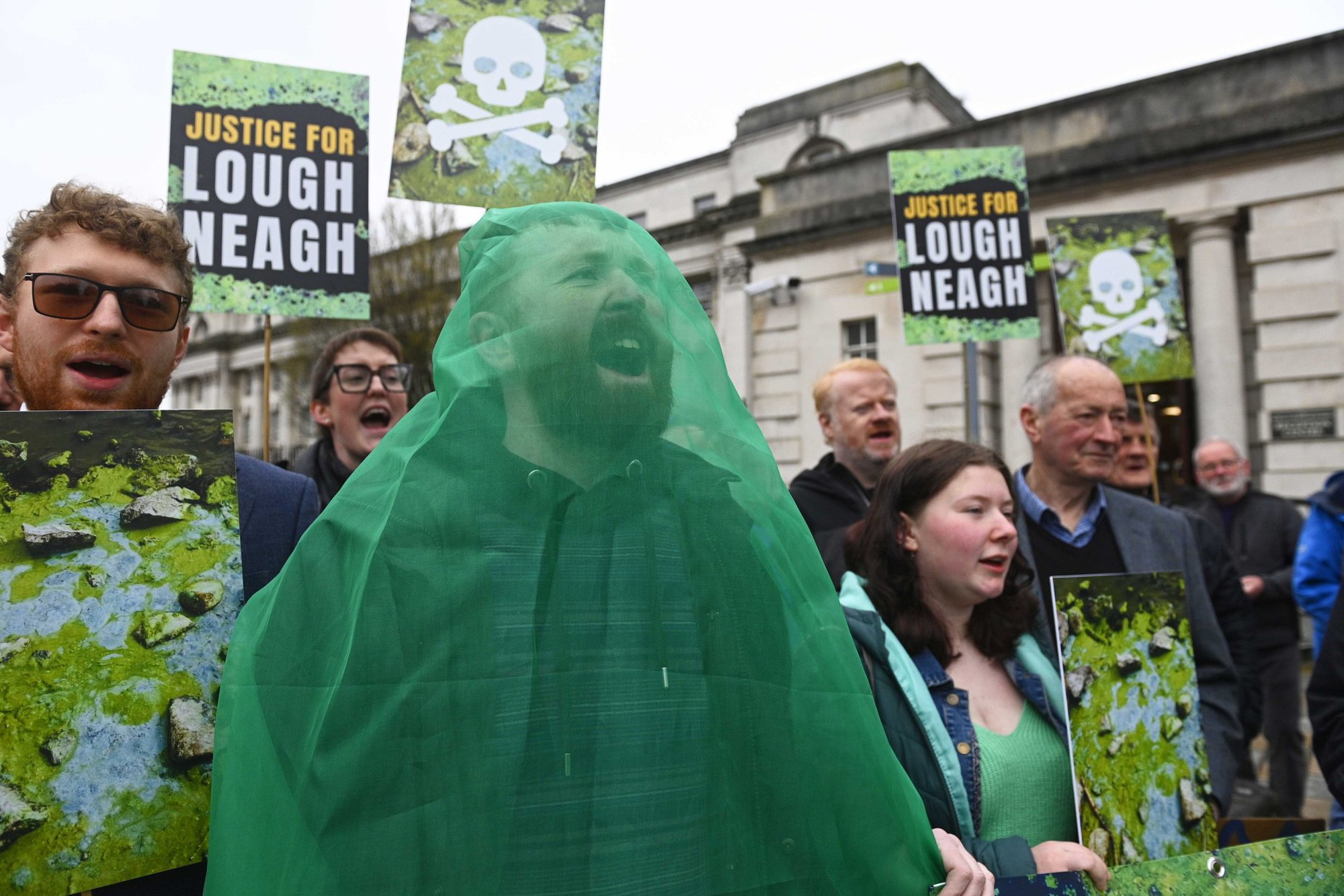
SAS started out in the 90’s as a single issue grassroots campaign group. A small group of surfers in Cornwall were tired of getting sick from sewage when they went surfing. The UK was known as ‘the dirty man of Europe’ with abysmal sewerage infrastructure which meant that sewage was unashamedly being pumped straight into rivers and seas. It was pretty common to encounter ‘floaters’ when heading out for a surf or swim. The original maverick SAS campaigners took to the streets in their wetsuits and gas masks brandishing their surfboards demanding change. They highlighted the shocking state of UK waterways and exposed polluting industries, even becoming shareholders in some water companies at one point to force change from the inside. Their actions contributed to EU legislation that led to huge changes in water treatment and the state of our coastal waterways. 

But now we are facing a second wave of sewage pollution. Over 90% of sewage outflows pump sewage directly into rivers with 86% of rivers failing to meet ‘good ecological status’ and spiraling further and further into decline. And we are still getting just as sick from sewage now as we did in the 90’s. Rivers are the blue arteries of the country feeding directly into the ocean. The health of the ocean depends on healthy rivers. Today, SAS is about more than surfers and more than sewage, campaigning for a thriving ocean and thriving people. But sewage pollution and water quality are a core part of its DNA and the charity continues to be one of the leading voices driving action to clean up rivers and seas.

I’ve had the immense privilege of building and leading the Campaigns & Policy team at SAS for the last four years. I’ve overseen public campaigns and political advocacy on water quality, plastic pollution, ocean & climate and ocean recovery. I’ve organised protests and mass paddle-outs, held plastic polluters to account through the citizen science brand audit, co-ordinated impactful campaign films, led public stunts, directed and written campaign reports (most notably the four annual water quality reports), supported MP’s in drafting legislation and bills, hosted parliamentary events to influence policy, and driven the development of the Safer Seas & Rivers Service for the last four years. I’m particularly proud to have worked with colleagues at other organisations as part of the #EndSewagePollution coalition that has been responsible for driving the huge public, political and media awareness of the sewage pollution scandal over the last year and driving amendments in the Environment Act. It’s been an honor to be able to work with an amazing team to have so much impact, particularly considering it’s still quite a small organisation of around 30 people.

Tell us about your new role as RA campaigns manager.  What can we expect to see from your role in 2023?

I’ve been on the Advisory Board for the last year so have got to know Charles and James well and supported various campaigns so I’m super excited to be joining the River Action team. Our rivers are in such a dire state that we have to act fast if we have any hope of reversing their decline. I’ll be working closely with Charles and James to set out our political advocacy strategy, defining our calls on government and industry, particularly in the run up to the local and general elections. We’ll continue to call out polluters and expose the supply chains complicit in the destruction of rivers. We’ll be digging deep into the specific issues faced at river catchment level and supporting community groups to gather evidence and also hold polluters to account for destruction of local environments. Our campaigns will reflect the urgency in which we need to act and we have ambitious plans. I’ll be looking to grow the campaigns team to help drive our impact so keep your eyes peeled! 

You can expect us to be collaborative, straight talking, audacious and ambitious sprinkled with a little fun and humour.  

In your opinion, what needs to change in order to rescue Britain’s rivers?

I would be lying if I didn’t say that we need a huge amount to change across all parts of society, business and government. But over the last few years, it’s become increasingly apparent that change is driven from grassroots communities. It’s ordinary people doing extraordinary things that’s forcing the government and industry to act to reverse their damaging impact on the environment. We need to empower local communities to enable them to drive change, to feel able to make a difference. When we rise up together we have enormous power and impact. That’s what we hope to support at River Action – to enable and support communities by give people the tools and knowledge they need to create change fast.

New Communications Coordinator joins River Action

Download PDF
Following the news of River Action’s expansion, we are pleased to welcome Molly Allen as our new Communications Coordinator. In our latest blog, we get an insight into her life, interests, and the role that she will play to help rescue Britain’s rivers.

Tell us about yourself…

I have always had a deep fascination with the natural world – especially for the wild and most remote places. I grew up in south Devon, where I spent most of my time feeding this curiosity through literature, art, and watching (many!) wildlife documentaries.  I studied English at the University of Exeter and, during my second year, I was offered a job to work as a guide for an expedition organisation in British Columbia, Canada.  Since then, I have been primarily working in the expedition sector, leading tours and projects across Iceland and western Canada.  

Last year, I moved back to the UK, where I currently split my time between London and Devon. When not inside, you will usually find me trail running, hiking or kayaking (quite badly!). 

How did you become interested in river protection?

I’m fascinated by rivers. They’re dynamic and mysterious, and they’re home to an incredible array of wildlife. 

When first stepping into the environmental sector, I was surprised by how little attention our freshwater environments get compared to other habitats, such as tropical forests or coral reefs.  I think what freshwater conservation needs now is for the level of support to be brought into line with what you’ve got for tigers, pandas, orangutans and all the other species and habitats that get most of the attention, and I believe that River Action will play a key part in this. I am very excited to be part of the team, and I look forward to playing an active part in protecting and restoring our rivers for the benefit of communities and wildlife.

Tell us about your new role as Communications Coordinator

In a nutshell, I am responsible for planning and coordinating the communications of River Action’s campaigns.  It is a varied role, which I love, and it includes responsibilities that range from empowering local communities to protect their rivers to advocating for change in national policy and industry practice.  Our campaigns will reflect the urgency with which we need to act and we have ambitious plans. So watch this space!

In your opinion, what needs to change in order to rescue Britain’s rivers?

Our rivers are arguably our most important natural features. Not only are their fragile ecosystems home to hundreds of species of flora and fauna, but they have also been crucial for the growth of our towns and cities and provide fresh water for drinking and farming.  To put it simply, without our rivers, we simply could not survive.  Yet, the state of our rivers and waterways is disgraceful.  In order to enable change, we need everyone to understand that protecting these freshwater habitats and their wildlife is ultimately in their own interest too.

Furthermore, with regulators for rivers in the UK hugely underfunded and understaffed, citizen science’s roles in local communities are fundamental to our campaigns. They are our ‘eyes on the water’, able to see and report both great and subtle changes to the overall environment.  There is a real need for local communities to hold polluting industries and failed government regulators to account and clean up their mess. We are focusing on empowering local communities by giving them the knowledge and tools that will enable them to collect detailed information about our waterways and drive the change that our rivers so desperately need. 

River Action welcomes new Campaigns Manager

Download PDF

Following the recent news of River Action expansion, we are pleased to welcome onboard our new team member Amy Slack as Campaigns Manager. Amy’s appointment strengthens our team considerably as we endeavour to rescue more rivers.

As Campaigns Manager, Amy will be working closely with James Wallace, CEO, Charles Watson, Founder, and the broader team. Her expertise and experience in campaigning will provide valuable insights as she leads the development and delivery of River Actions campaigns. With Amy’s guidance, we will make greater strides in rescuing more of Britain’s rivers through targeting river polluting industries and increasing pressure on the UK Government.

Amy joins us from Surfers Against Sewage (SAS) where she led the Campaigns & Policy team for four years – working alongside other activists and campaigners. At SAS, Amy played a key and varied role – from exposing the extent of the sewage scandal, holding polluters to account, demanding urgent government action, and leading SAS’s public actions, protests and paddle outs!      

Amy Slack, River Action Campaigns Manager says:

“I’m super excited to be joining the inspiring River Action Team as Campaigns Manager. Having been part of the River Action Advisory Board for the last year, it’s been an honour to have supported the organisation’s growth, providing advice and guidance where I can. Now, I look forward to helping the team to #stopriverpollution for good.”


James Wallace, River Action CEO says:

“When we drafted the new Campaigns Manager job description we had one person in mind: Amy Slack. Imagine our surprise when she applied! Just as she has proven with Surfers Against Sewage, Amy will bring unique insight to River Action’s urgent mission, helping ensure that clean rivers are at the top of every politician, voter, business leader and consumer’s priorities. There is nothing more important than water security, and we are blessed to have Amy join our team of positive disruptors.”


New CEO joins River Action mission

Download PDF
We recently announced River Action’s expansion plans and appointment of James Wallace, former Chief Executive of the Beaver Trust, as CEO. Here, we get an insight into the life of our new CEO , the future of River Action and how we plan to continue rescuing Britain’s rivers. 

Tell us about your early life…

In 1972, the year of my birth, wildlife was still relatively abundant and our climate was stable, although starting to show signs of a wobble. Butterflies clouded hedgerows, rivers ran clear and full of rising trout, starlings murmurated in their thousands. Supermarkets didn’t exist. Fossil-fuel powered agribusiness was constrained to the USA. 11 million fewer people were crammed on our small islands. Politicians had yet to privatise the water industry, putting profits ahead of people and the planet. Maggie Thatcher hadn’t told us “There’s no such thing as society.”

Right from the womb, I was always dissatisfied with the hierarchical order of things, the learning by rote, the parroting of lies from a dead empire, the “I’m better than you”, the quest for wealth, and the drive for growth in this fragile finite world. I was sent to boarding schools which ruined me, despite my parents good intentions. I didn’t fit in and fought the system, rejecting the “kill it, cut it up and put it under a microscope” reductionistic scientific methodology and the exploit and extract economy. 

Unsurprisingly, I was ejected kicking and screaming from my college without A Levels and told I was beyond help. Armed with a mohican, leathers and screw-you attitude, I polluted my veins with drugs and lived on the streets and lurked in dark corners of crumbling squats. 

Full of self-loathing, convinced that I was the problem, and hatred of this greedy world, I eventually saw that I’m not alone and that something could be done if only I could see the individual wood from the communal trees, and started a journey of recovery, of myself, of communities and of nature.

What have been the highlights of your career so far?

In 1994, I blagged my way on to an Archaeology BSc degree and studied the rise and fall of civilisations – little did I realise how relevant that would be today – and the iniquitous relationship between humans and the rest of nature. An accidental five-year corporate career demonstrated the abject and inherent lack of responsibility of businesses driven by shareholder value, and I left having tried to introduce a neophyte version of CSR in the late 90’s. My suggestions to the senior management team fell on deaf ears so I hit the road to social and environmental enlightenment.

I went back to school in 2002, and fitted in. This time I learned about how the world really works: Schumacher College awarded me a Distinction (now that was a surprise!) in my Masters in Holistic Science having studied with extraordinary teachers like Jane Goodall, James Lovelock, Teddy Goldsmith, Vandana Shiva, and Satish Kumar. So I started on a mission to use natural systems thinking to solve human-made problems. Over the past 20 years, I have helped set up and lead enterprises trying to realign society – which does exist – with the planet that feeds, waters and houses us – which won’t exist for much longer if we don’t stop behaving like a virulent planetary coronavirus. There’s only so much sweating that Gaia will do before we are washed into the plastic- and turd-filled seas.

These start-ups included climate communications (Susten8), renewable energy (Renpro), green regeneration (Ecocities), ecotourism (Canopy & Stars) and cleantech financing (The Research Exchange). Some succeeded, some flopped. More recently, I co-founded a marine exploration charity in 2015 (Nekton Foundation), helped grow a tropical conservation charity (Blue Ventures) and co-founded a river restoration charity (Beaver Trust) in 2019. All the time, coming closer to home, as I realised we spend more time and effort saving snow leopards in the Himalayas than saving wild cats in Britain.

You used to be CEO of the Beaver Trust. Tell us about the charity and the importance of river restoration…

Beavers are ecosystem engineers, with the power to transform whole landscapes from desertified agricultural wastelands into verdant ecological sponges, soaking up and storing floodwaters, releasing them slowly in drought. Their wetlands pack more biodiversity pound per beavery bucked tooth than your average forest and having co-evolved with species like salmon, crested newts, willow tits, barbastelle bats and otters, they are everyone’s friends, including humans, creating habitats and food for thousands of species.

Our agrarian civilisation evolved on the banks of rivers and in the midst of beaver wetlands; we even mimicked their homes made of sticks, stones and mud, and replicated their water managing dams and canals; although to the opposite effect – beavers save water, humans rush it off to the sea, having liberally dosed it with a cocktail of economic effluent.

Beaver Trust has helped ensure the native Eurasian beaver is protected and returning to Britain once again, working with amazing NGOs like the Wildlife Trusts to restore the species and support communities including farmers and anglers to live alongside these dynamic and sometimes challenging neighbours. 

Perhaps our biggest success, was the launch of Woodlands for Water, a £15 million farm payment scheme to incentivise landowners to set aside river buffers, providing space for rivers to breathe life back into the land. We launched it last year with Defra, National Trust, Woodland Trust and Rivers Trust. Although we were the obvious minnows in the pond, we played an essential role in galvanising support, pushing bold targets and ensuring the programme is scalable.

Why do you love rivers and how did you become involved in river protection?

I learned a lot about the challenges facing rivers in our country at Beaver Trust and how to engage otherwise divergent interests in respectful and urgent dialogue to form a consensus on what we can do collectively. Like the blood in my adolescent veins, all our rivers – our life support system – are polluted, some are close to ecological collapse. Water security will be the biggest challenge to our climate-broken communities over coming years and we need to harness natural systems while simultaneously holding to account the polluters, and their crony enablers in government.

Having grown up on the banks of the Rivers Pang and Kennet, two once-idyllic chalk streams, and learned to fly-fish for trout, I have a deeply ingrained affinity with all things wet and wild. I’m the grandson of farmers who tended the land in Herefordshire, Pembrokeshire, Shropshire and further afield in Kenya, Australia and New Zealand. Farming is very much in my blood, and what I see in this dreadful dichotomy between the unbridled industrialised rape of the land and the sensitive agroecological ways of regenerative farming breaks my heart. There is no excuse for the continued rampage on nature under the banner of food security and productivity. It is a lie spun by powerful interests that must be exposed and stopped.

Likewise the defecation in our rivers by privatised water companies – companies owned by foreign investors who have indebted assets and paid out £billions in dividends – is scandalous, and expedited by our national government. This is not accidental. The current libertarian political system is based upon deregulation and low taxes, which not only allows but encourages large agricultural, food and water companies to exploit and pollute with impunity. The likelihood of being detected and prosecuted by our defanged Environment Agency is a business risk so low that it is laughable. Why? Well how would you monitor and police 200,000km of rivers if you had lost 70% of your budget in the past 10 years?

Despite what some will tell you, the writhing death of our rivers lies at the feet of our government and the very political decisions of the HM Treasury.

Tell us about your new role as River Action CEO and what needs to change to save UK rivers?

The move to River Action was organic. I joined our inspiring Founder and Chair, Charles Watson, with a few others in 2021 to help him set up our first campaign on the River Wye and then became a trustee that summer. When we discussed the need to grow River Action and my wish to mobilise all the contacts, goodwill and expertise gathered recently from working in river restoration it was the obvious next step for me. There is nothing more important than water security to me as a father of children inheriting the omnishambles we have created. Everyone may not feel they need beavers in their life, but even billionaires and Prime Ministers – sometimes embodied in the same person – need clean water.

Charles has demonstrated clearly the need for an independent organisation, working for the common good and empowered to engage with all stakeholders with a sense of urgency. By never accepting funding from polluting industries or failing governments we can never be accused of greenwash or prevented from bearing our teeth if needed. 

I am delighted to be working with incredible organisations like the Rivers Trust movement who so ably generate the evidence of pollution, over abstraction and other pressures on rivers and wildlife we need, while restoring habitats with thousands of boots in the water. 

River Action will play a companion role by undertaking some of the things that others may feel somewhat constrained from doing. We are free to campaign vocally to pressure industry to clean up its act and for the Government to be properly funded and resourced. We are free to convene and collaborate, acting as a nimble catalyst unencumbered by bureaucracy and weighty membership, and free to act directly using all means available, including deploying the full weight of the law to force those accountable for the destruction of our rivers to wipe after themselves.

What are the next steps for River Action?

I have drafted with colleagues an ambitious five-year strategy which, we hope, will give our rivers a chance to recover in time. Our approach is systemic, collaborative and locally-led. By developing high-impact campaigns, each one will act as a precedent that can be replicated across the nation and across different polluting industries. For example, by successfully undertaking a judicial review and associated public campaign in one catchment that demonstrates the law has been broken and holds the perpetrators accountable, we will assist other communities to follow suit. Collectively, these actions will pressure change at the nexus of power, by informing elections and encouraging the public to vote with their ecological conscience for river-friendly manifestos. Ultimately, we will see an increase in environmental budgets from the public coffers and our public servants doing their jobs.

Charles and I have spent much of the past few months raising funds, with our first employee Lauren Razek, and spreading the word with the help of Katie Schuster and our partners, Seahorse Environmental. We are now in the position to recruit employees and will soon be announcing key roles. Just as our organisation is a bit maverick and positively disruptive, we will be seeking out talented individuals from all sectors who can bring fresh insight and energy to our national rivers crisis.

Our Advisory Board, with our recently appointed Vice Chair, Feargal Sharkey, will continue to be our guiding lights and inject the wisdom we need to steer our mission forward, and bang the drums of change.

Perhaps most importantly, the communities that we serve will be instrumental in their own success. Our role is to empower local groups with advice, funding and practical solutions like citizen science; to take their evidence and stories and shout them from the rooftops; and then represent their needs to industry and government, advocating for rapid change. The passionate and mobilised people of Britain will be the ones who unleash the help our rivers so desperately need and I look forward to supporting each community in whatever way I can.

It is a privilege to be entrusted with this role and I look forward to working with everyone – from farmers, anglers, conservationists, teachers, swimmers and the media to developers, tourism operators, small businesses, lawyers, policy makers and rappers – to help rescue Britain’s rivers.


Check out the recent Insta Live with Marina Gibson in conversation with James Wallace.

Re-watch the Live here

River Action UK appoints Board of Trustees

Download PDF

River Action UK is delighted to announce that the following have been appointed to its Board of Trustees:

  • Marina Gibson
  • James Macpherson (Treasurer)
  • James Wallace
  • Charles Watson (Chair)


River Action is a UK Charitable Incorporated Organisation, which was registered with the Charities Commission in June 2021.

The trustees’ role will be to act both as River Action’s ‘guardians of purpose’, ensuring the charity acts within the goals outlined within its Foundation Constitution – as well as overseeing the regular governance processes of a UK registered charity.

Commenting on the announcement Charles Watson, Founder and Chairman at River Action said: “I am delighted to welcome our distinguished new Trustees to the Board of River Action. As we enter 2022, I look forward greatly to working with them all and benefitting from their advice and guidance as we renew our fight to save the UK’s rivers from the continuing onslaught of River Pollution.” 


Marina Gibson is a passionate angler and owner of The Northern Fishing School at Swinton Estate in North Yorkshire. She is also an ambassador for Orvis, Angling Trust and Atlantic Salmon Trust and Trustee for Cancer and Pisces Trust.


James Macpherson is Non-Executive Director at JPMorgan Global Growth & Income plc and as a highly senior executive in the UK asset management industry, has many years of experience in holding companies to account for their actions in the application of ESG standards.


James Wallace is an ecologist and archaeologist and spent twenty years setting up environmental organisations that catalyse landscape scale nature restoration in the climate emergency. He is moving on as founding-CEO of Beaver Trust to start a new organisation to promote regenerative agriculture and wildlife recovery.


To find out more about the River Action team, please head over to our About page.

Privacy Overview

This website uses cookies so that we can provide you with the best user experience possible. Cookie information is stored in your browser and performs functions such as recognising you when you return to our website and helping our team to understand which sections of the website you find most interesting and useful.