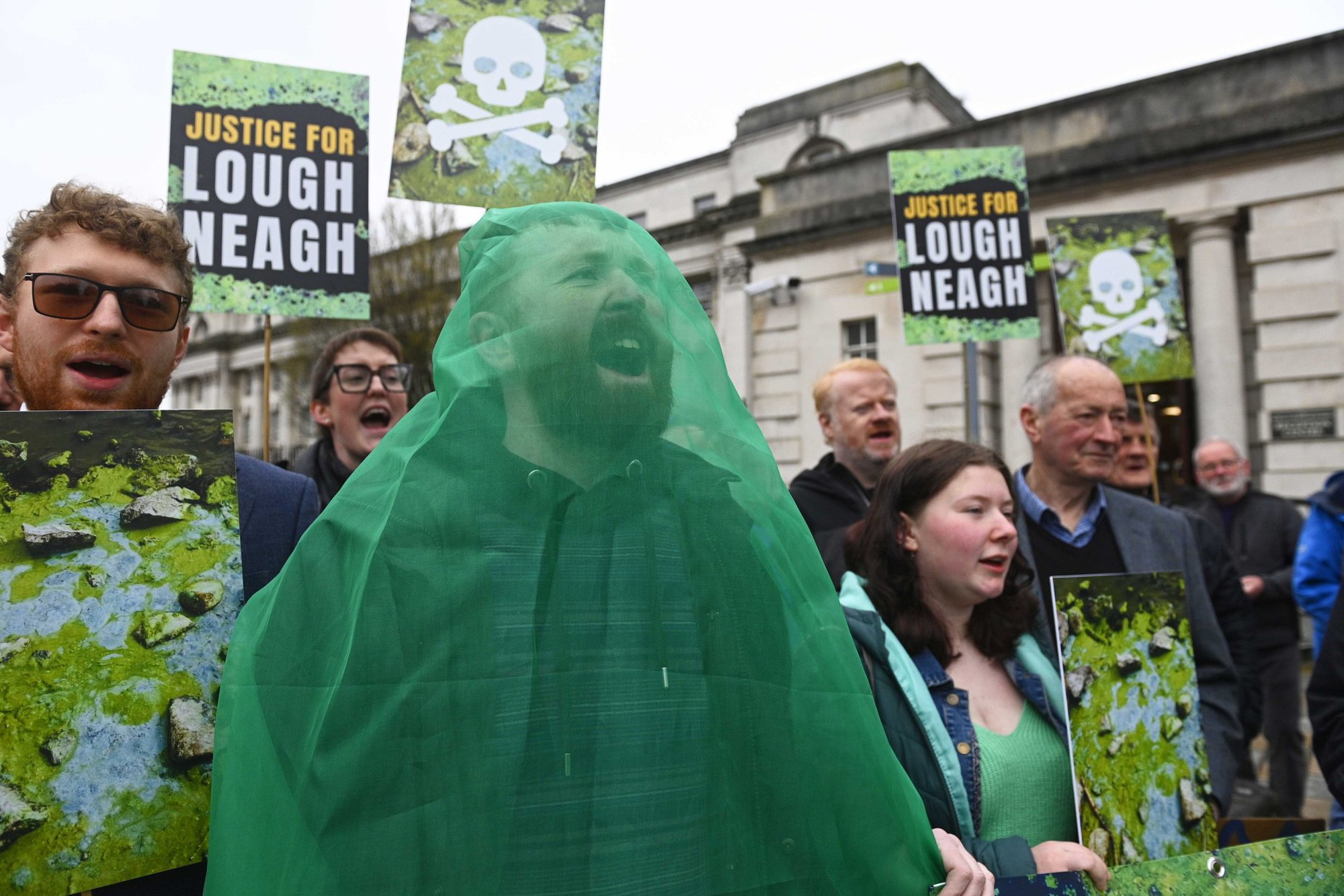
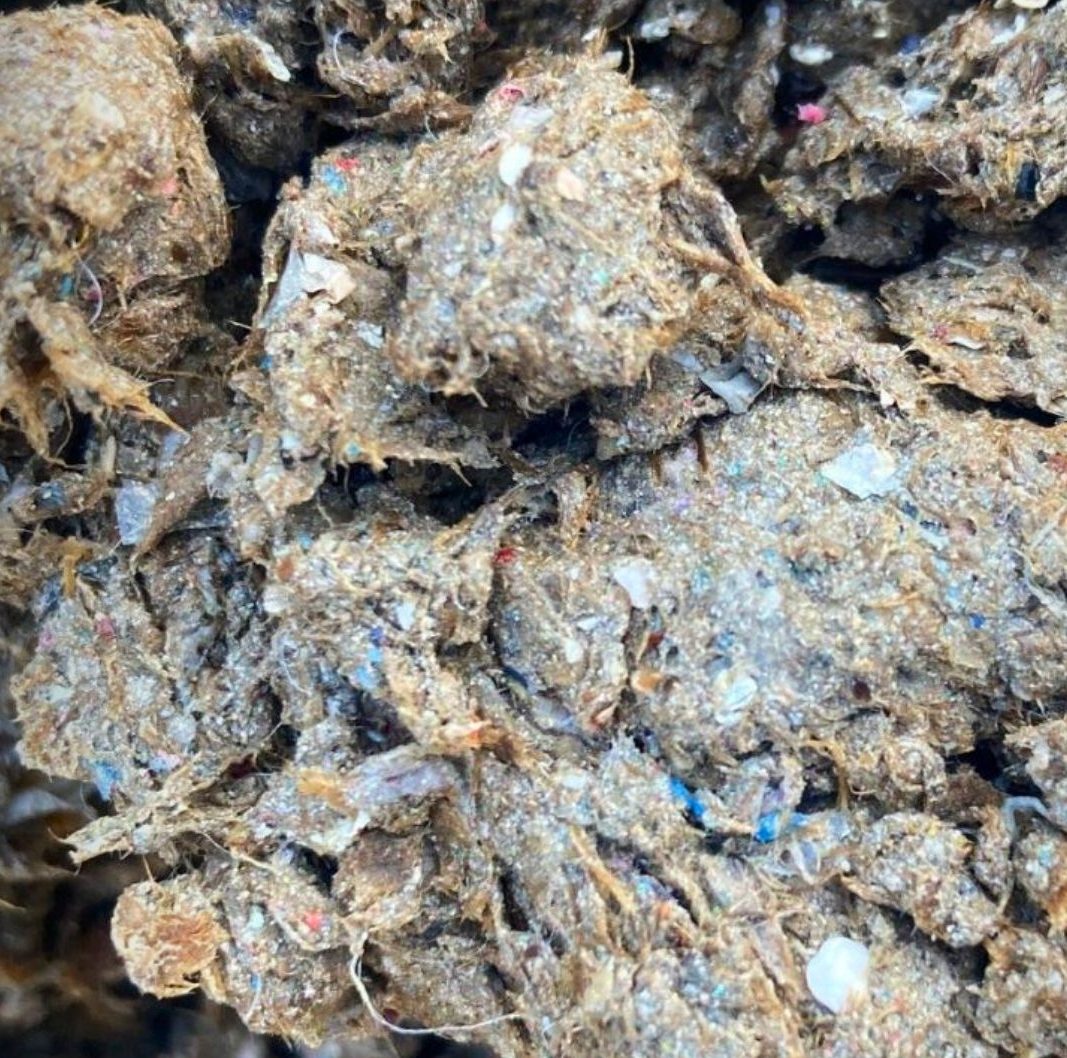
Press release: Happy Egg producer Noble Foods urged again to clean up its act and the River Wye

Happy Egg producer Noble Foods urged again to clean up its act and the River Wye

  • Campaign group River Action has again written to Noble Foods calling on the UK’s largest egg producer to commit urgently to a series of tangible actions to clean up the River Wye.
  • This is the second letter sent by the group to CEO Duncan Everett after his response to the group’s first letter appeared to confirm that basic assessments of the environmental impact of Noble Foods’ dozens of intensive poultry units were only just commencing, despite compelling evidence that the manure run-off from the poultry industry has played a major role in the ecological deterioration of the River Wye.


7thApril 2021: Campaign group River Action is again calling on the UK’s largest egg producer Noble Foods to take immediate action to address the significant environmental degradation caused to the River Wye by the intensive poultry industry in the area.  The letter is supported and signed by Chairman Charles Watson and the campaign’s advisory board of environmental experts and campaigners, including former Environment Minister Lord Benyon, Feargal Sharkey and George Monbiot.

River Action is currently campaigning for protection of the River Wye, 60% of which is in ecological crisis according to Natural Resources Wales. As the largest egg producer in the Wye region, River Action previously called on Noble Foods to answer critical questions regarding the damaging effect of this production on the river’s ecological health. In his response, CEO Duncan Everett, informed River Action that Noble Foods is working on ‘site visits gaining a greater insight and understanding of the issues faced on farms dealing with soil health, nutrient, and water management’and that they are also now working in close partnership with the Wye & Usk Foundation to consider how it addresses the major issue of nutrient run-off.

River Action welcomes this news from Noble Foods. However, the group has expressed major concerns as to, firstly, why these basic environmental assessments are only starting to take place now and, secondly, why these critical actions had not taken place before the construction of the Intensive Poultry Units.

Accordingly, River Action is calling as a matter of urgency for Noble Foods to:

  • Provide a time commitment of when site visits will be completed and publish a summary of findings and details of the plan to address the issue of nutrient run-off.
  • Publicly commit to a nutrient mitigation plan with an implementation timetable.
  • Commit to invest an appropriate and disclosed level of capital expenditure to implement measures to tackle nutrient run-off.
  • Publish an environmental code of standards that third-party producers must adhere to in order to be contracted as a Noble Foods supplier.
  • Publish a credible environmental policy statement on the Noble Foods website.

Commenting on the response from Noble Foods, campaign founder and Chairman Charles Watson said: “Whilst we appreciate the response from Noble Foods outlining its plans to address the major issue of nutrient run-off, it is surprising and concerning that a large producer such as Noble Foods doesn’t already have data on critical issues like nutrient and water management across its supply chain and raises the question of whether Noble Foods is operating without sufficient nutrient and water management systems currently in place. This basic monitoring work and mitigation plans should have been in place from the start of Noble’s work with the farms. Given the well documented ecological crisis facing the river Wye catchment, it is imperative that these systems are immediately implemented in current farms and from the outset in new farms.”

River Action Advisory Board member Richard Benyon said: “In his letter, Duncan Everett implies there is a collective responsibility to protect the environment. Whilst of course this is true, large businesses who have made huge financial gains from the destruction of the environment have a responsibility to clean up their mess and lead the industry and others in doing so. As this is the second letter River Action has now sent to Noble Foods, we hope to see some tangible actions put in place that are shared publicly as this is a matter of huge public interest in the Wye catchment and nationally.”


ENDS

About River Action

River Action is a new environmental campaigning organisation that aims to tackle river pollution resulting from UK food supply chains by placing direct pressure on major agricultural suppliers and producers. The group has formed in response to concerning evidence that reveals the declining state of many of the UK’s rivers, including data from the Environment Agency in 2020 that showed for the first time no river in England met quality tests for pollution.

The group was founded and is chaired by Charles Watson and is guided by an Advisory Board which currently comprises:

  • Richard Benyon
  • Ruth Chambers
  • Marina Gibson
  • Ben Goldsmith
  • Isabella Gornall
  • Dr Janina Gray
  • James Macpherson
  • Nick Measham
  • George Monbiot
  • Feargal Sharkey
  • James Wallace

River Action is currently in the process of registering as a Charitable Incorporated Organisation.

For further information and updates on River Action, please visit: www.riveractionuk.com

About the River Wye

The River Wye is the fifth longest river in the UK, passing through the Welsh borders before joining the Seven Estuary. It is widely acknowledged as one of the UK’s most iconic rivers, hosting a range of wildlife, including the Atlantic salmon. There has been a range of coverage documenting the River Wye’s decline and the impact poultry farms have on the increase in algal blooms:

  • According to the calculations of the Campaign to Protect Rural England (CPRE) Shropshire, as of July 2020, in the counties of Shropshire, Herefordshire and Powys there are 500 farms with a total of 1,420 intensive poultry units/sheds, containing over 44 million birds.
  • In a public statement, Wales Environment Link writes that sites producing 6,000,000 birds have been approved in the Wye catchment in the past five years alone. This is believed to have led to a two-fold increase of phosphate levels in the lower Wye in the past six years.
  • It was reported last summer in the UK national press that “Chicken excrement rich in phosphates and other chemicals gets spread on the ground around sheds and is being flushed into the river, causing deadly algal blooms to spread. And the problem is becoming increasingly severe as more and more free-range poultry farms are built near the 134-mile-long river. River plants such as ranunculus are being suffocated, oxygen is taken from the water, and the river’s brown trout, chubb and barbel are dying off”.
  • Campaign for the Protection of Rural Waleshas also said it is concerned by the impact on the Powys landscape of large poultry units.
  • A report by Natural Resources Wales published in December 2020 provides a comparison of phosphorus concentrations in the Wye against targets and indicates widespread failures, some of them large in magnitude. 14 water bodies passed their targets, 28 failed and three were unknown. The largest failures were the Wye near Newbridge, the Cammarch, Clettwr Brook, Mithil Brook, lower Irfon, Garth Dulas and the three water bodies in the Llynfi catchment.

Contact

For all press and media inquiries, please contact Amy Hammond at Seahorse Environmental – ahammond@seahorseenvironmental.co.uk.

Seaspiracy: Experts call salmon farming “biological nonsense”


Those of you who have watched Seaspiracy will likely still be reeling. If you haven’t, we guarantee you will be after intrepid activist Ali Tabrizi has taken you on his 90-minute whistle-stop tour of our oceans.

The documentary moves from plastic pollution plaguing beaches in the UK to Taiji in Japan, where swathes of dolphins and whales are being slaughtered annually. It connects outbreaks of Ebola to the trawlers plundering fish populations off the coast of West Africa; Somali piracy to commercial fishing in the Gulf of Aden; and exposes a perilous side of shrimp fishing in Thailand. Above all, it reveals the alarming global corruption that is allowing the commercial fishing industry to go unchecked.

Particularly damning is the documentary’s uncovering of the fish farming industry. Aquaculture is often touted as an eco-friendly way to feed the world, however, Seaspiracy tells another story, a story where fish farming is simply “wild fishing in disguise”.

The fish industry claims that for 1kg of farmed salmon only 1.2kg of feed is needed. However, according to Tabrizi’s investigations, there are significantly more fish going into the farms as feed, then will ever come out as food. The documenters travel to Scotland – one of the world’s leading producers of farmed salmon. Here they chronicle horrific sea lice infestations, a common reality of fish farming across the world, and highlight the staggering chemical and organic waste from these farms being pumped into rivers and oceans. Corin Smith, an industry whistle-blower and founder of Inside Scottish Salmon Feedlots, estimates that each farm produces organic waste equivalent to a town of 10,000 to 20,000 people.

Most alarmingly, the film estimates that we eat 2.7 trillion fish a year, that’s 5 million fish a minute, with around 50% of the world’s seafood coming from these farms.

This is all far cry from the sustainable food source fish farming is publicly promulgated as. A point reiterated by Sea Shepherd’s CEO and founder Captain Paul Watson when he notes “everything is now ‘sustainable’. It’s not sustainable – it’s just a marketing phrase, that’s all”.

It is hard not to be shocked at how multi-billion-dollar companies are controlling the global narrative on fish farms. Perhaps this is one of the key lessons from Seaspiracy, that things may not all be as they appear on the tin.


Press release: River Action announces the full line-up of its advisory board

New campaigning body challenging river polluters announces the full line-up of its advisory board


  • As the UK prepares for COP26, our rivers are being damaged continuously by pollution caused primarily by run-off of agricultural waste and raw sewage discharges.
  • Recent data has disclosed that no prosecutions or penalties have been issued for the hundreds of violations of the Farming Rules for Water since their introduction in 2018.
  • The launch of River Action in February this year marked another milestone in the intervention by civil society to address the shortcomings of the UK’s failing environmental regulatory system.


The creation of River Action’s Advisory Board creates a powerful weapon, which will play a major role in the coming campaigns against river polluters. With backgrounds in government, business, media, angling, science, communications and conservation, River Action’s board members bring a combined resource of hugely relevant experience and capabilities to tackle the abysmal state of the UK’s rivers.

The full membership of River Action’s Advisory Board comprises:

Richard Benyon – Former Environment Minister in the Coalition Government. He led initiatives such as the reform of fisheries policy in the EU and negotiated for the UK in international fora such as the UN’s Convention on Biological Diversity and the International Whaling Commission.

Francesca Carnibella – Senior Associate at the European Climate Foundation. Francesca works in the strategic communications team at the ECF where her work focuses on food, land-use and industrial animal agriculture. The ECF is a network of hundreds of organisations devoted to solving the climate crisis from every angle.

Ruth Chambers – Leader of the Greener UK coalition’s work on the Environment Bill and the setting up of the Office for Environmental Protection (the new environmental watchdog for England). Ruth is also a Trustee of the London Wildlife Trust.

Marina Gibson – Ambassador for Angling Trust, Atlantic Salmon Trust, Fishing for Schools and Orvis Fly Fishing. Marina is one of the best-known figures in the UK angling community, making a major contribution in expanding both the diversity of the sport and its awareness of its environmental responsibilities.

Ben Goldsmith – Ben is Chief Executive Officer of Menhaden Plc, a London-listed investment trust which invests in opportunities which are delivering or benefiting from the more efficient use of energy and other resources. He is on the board of Defra.

Isabella Gornall – Founder and Managing Director of Seahorse Environmental, a specialist environmental PR, lobbying and corporate reputational consultancy. Isabella was Policy Adviser to Zac Goldsmith MP where she helped shape his polices, led the development of policy proposals to Government and managed his international environmental campaigns.


Dr Janina Gray – Chief Scientist, Salmon and Trout Conservation – currently the UK’s only independent charity campaigning for wild fish and their environment. Janina is one of the UK’s leading scientists focussed on river conservation and leads in providing evidence to policy- makers to drive actions that ensure change happens.

James Macpherson – Former Deputy Chief Investment Officer of BlackRock’s Active Equity business managing assets of $280bn worldwide. James was the senior investor on BlackRock’s Global Environmental Social and Governance “ESG” Policy Group and was Chairman of the ESG Policy Group in Europe.

Nick Measham – Chief Executive, Salmon and Trout Conservation. Nick leads the UK’s leading independent charity campaigning for wild fish and their environment. He heads a dedicated team in providing the evidence to influence Governments and their agencies to protect wild fish and their waters.

George Monbiot – An award-winning writer and journalist well-known for his focus on environmental and political issues. He writes a weekly column for The Guardian and has published a number of books including Feral: Rewilding the Land, Sea and Human Life. George is carrying out a live investigative documentary into river pollution later this year.

Feargal Sharkey – A well-known environmental campaigner, focussing particularly on the state of rivers. Feargal has actively campaigned against the pollution of British rivers and the regulations of the water industry which impact British water resources. He has recently launched legal action against the government over the poor state of England’s rivers. As the lead vocalist of The Undertones, he has performed various roles supporting the UK’s commercial music industry.

James Wallace – Chief Executive of Beaver Trust, a charity helping communities find practical, scalable and financially viable ways to restore rivers and wildlife with beavers and their wetlands. Beaver Trust brings together stakeholders to develop and deliver nature-based solutions to protect rivers from pollution and help communities build climate resilience, such as the introduction of wildlife buffer zones between agriculture and water.


Commenting on today’s announcement, River Action’s Chairman, Charles Watson said:

“The enormity of the ecological challenges facing our rivers is quite terrifying. For year after year the discharge of untreated sewage and the run-off of nutrients from intensive agriculture, combined with impotent environmental regulation, has created a perfect storm for environmental degradation. Working in close partnership with multiple environmental organisations and activists across the country River Action is resolved to campaign tirelessly to save our rivers. With the creation and contribution of this extraordinary Advisory Board, the odds of us making a real impact have just multiplied”.


Download the full press release here.

River Action: In conversation with 3 Wyes Women…

Women around the world are changing the trajectory of environmentalism and conservation. Our planet is on a precipice and women are rising to meet global environmental challenges through collaboration and courage. While women bear an outsized burden of the climate crisis, recent research has shown that conservation projects achieve better results when they involved women in decision-making.

To mark International Women’s Day 2021, River Action spoke with three women who are leading the fight against river pollution in the Wye Valley. The birthplace of British tourism in the 18th Century – the Wye is heralded as the country’s most beautiful river. Last year, these women kayaked and walked the length of the river and chronicled their trip on social media. However, this was no ordinary sight-seeing excursion, their mission was instead to catalogue the death of Britain’s most beloved river.

They told us about their trip, their triumphs and challenges and their calls to action.

#3 Wyes Women…


When Morgan Schofield (left), Patricia Ronan (centre), and Jennie Hewitt (right) set off down the Wye in August 2020, they could not have known that their trip had initiated a sequence of events which would lead to the launch of River Action last month.

It was with great excitement that I got to meet the women behind this very catchy twitter hashtag. Apart from gender, there was one other thing that united them. A love of Herefordshire and, in particular, the River Wye.

“It means something different to us all” says Morgan. Morgan was born and raised on the Wye. She loves the river and has always been active in environmental causes. After some 10 years travelling to the far reaches of the globe, during which time she obtained an Environmental Science degree from The Open University, she returned home and tells me, “I never thought I’d say this, but I was so glad to be back”. Now working for Pedicargo, an innovative trade recycling start-up, Morgan explains that experience of kayaking the river was something she will never forget.  “I met Patricia when I had returned in 2018, she was part of the “Wye Ruin It” campaign to stop the Hereford bypass”.

Dr Patricia Ronan is originally from Wexford in Ireland, she has lived in London and many of the Home Counties and, like Morgan, has travelled all over the UK and the globe. She now lives on the river in Hereford. Patricia tells me she has many strings to her bow. This seems not to be an overstatement. A senior lecturer at London South Bank University, Patricia did a PhD focused on acupuncture for schizophrenia, she has researched, taught and worked in many areas, most recently on the impact of Tai Chi on patients with cystic fibrosis. “My knowledge is very far from conservation” says Patricia. I ask what environmental campaigns she has been engaged in before and she tells me, “I have been busy, so I haven’t really been able to do much. You work for a living, you rear a child, you are studying… you try to get a night’s sleep occasionally, you try!”.

This doesn’t seem to do her environmental work enough justice. I am told she was not just involved in but in fact spearheaded the successful local campaign to fight the Hereford Bypass. And, on a personal level, she tells me of her ongoing battles in day-to-day life, be it with the lack of bike racks at her local B&Q or, before the charge for plastic bags was introduced, challenging the Tesco’s check out staff when they offer her a plastic bag. “I tell them off, every time. They shouldn’t be offering these bags out – why aren’t they asking customers where their own bags are and castigating them for using so much plastic – it’s crazy!”

With the Wye running through her ward, Councillor Jennie Hewitt is endeavouring to combat river pollution. This has become a central part of her role. For Jennie, who has always cared about the environment, the threat to the Wye coincided with the beginning of her term as a local councillor.

“The environment we are living in is beautiful, yet underneath we know there exists a deadly threat of soils overburdened with phosphates and other damaging nutrients” she says. Jennie is part of Herefordshire Independents/Coalition and her ward is Golden Valley North where she has lived for over 30 years and taught art for many of them. Like Patricia and Morgan, she was concerned about the environmental damage the Hereford bypass would create. Her slogan is “don’t expect to see a change if you don’t make one”.

When we spoke, Jennie was busy preparing for a Hereford council meeting to support fellow councillor Toni Fagan in bringing a motion asking the executive to lobby 2 local MPs to better resource the county so it can deal with the problems related to climate change and managing the pollution caused principally by agricultural runoff. “We have a disaster going on in Hereford, it is a biological disaster, an ecological disaster and also an economical disaster – we have a moratorium on new building in the Lugg catchment because the lower part of the Wye is failing due to phosphate pollution”. She adds, “part of the reason I was elected, was my focus on the environment. Herefordians are devastated to see their beautiful river and its biodiversity under threat”.

When Patricia and Morgan asked Jennie if she wanted to join them on their trip down the Wye– it was her suggestion that it was turned into a campaign. “I said we should catalogue what has happened to the banks, the erosion, the impact of flooding and importantly, begin to understand what species are now actually left in the Wye catchment”.

Patricia, Morgan and Jennie are all grieving the river’s depleted ecosystem. Morgan explains that despite ostensible differences in their areas of work and age “the shared feeling is that we could see the Wye dying in front of us and we all cared about it”.

The death of the Wye…

“The river is dead” are the exact words Patricia uttered to her husband one morning last summer. “I swim the river most days in the summer, and one morning I noticed how clear the water was, like what you’d run out of the tap in the kitchen. No insects, not one! I swam around a kilometre down the river and saw no sign of life”. We now know the lifelessness Patricia reports was likely to be the result of a pollution spill at Afon Llynfi, a Wye tributary. To date, nobody has been held to account for this incident.

Their account of the river’s degradation continue. Morgan’s degree has given her a scientific understanding of the environmental deterioration.

“Again, and again, we documented cattle in the river, this is really bad! Cows should not have direct access to waterways to help minimise the amount of effluent being added to the river. Additionally, large, heavy animals can compact soils, squashing air pores out. When it rains – water, and whatever chemicals have been sprayed on the soil, run straight into the river, rather than being absorbed into the soil” she says. “On our journey we continued to see many worrying things that are adversely effecting the health of the river. Along huge stretches of the Wye we saw banks completely scoured of trees and plants. Vegetations stabilises the banks, helping to protect against flooding, soil erosion, slows the flow of surface run off, provides vital habitats for a variety of insects and animals and helps keep the water cool among others. It is all extremely worrying – if it continues the way it is, I am left with little doubt that we are going to see a loss of biodiversity along the river”.

The highway to nowhere…

When they set off in late August, the UK’s lockdown had eased, meaning there were plenty of visitors along their route.

“They should be standing there fighting off midges. It is beautiful! But what people don’t understand is the amount of wildlife that is missing. We have already lost a high percentage of birds and insects. If you speak to people locally, they will tell you about how drastically the bird population has declined. The river shouldn’t look like a swimming pool. These visitors think it is correct and perfect, it is not correct. It really shouldn’t be like this” says Patricia, who is a keen angler.

She continues…  “And there aren’t any fish! The salmon are not there anymore. There used to be a lot of salmon caught in the Wye. Estimations suggested there were 6-10,000 salmon a year. Now, you get around 300 salmon out of the river. It’s nuts! We kayaked through the main salmon fishing section in the lower course of the Wye during peak season in September and there were barely any anglers there at all and a lot of them there were struggling. If this river was in good condition – those anglers should have been shoulder to shoulder with their arms hanging off them from bringing salmon in. We were kayaking for 10-20 miles a day and we saw a handful of anglers. What does that tell you? If something isn’t done, we really are on the highway to nowhere”.

Jennie continues this tale of devastation. “One morning, we met a group of women who were walking. They told us that they had been walking the Wye and were part of a group of residents who feed the swans in Fownhope.  Since the algal bloom and the death of the water crowfoot, the swans were starving as it had killed off their source of food and almost all the cygnets had died. In fact, we saw barely any cygnets on our whole trip down the river and just two or three families with surviving cygnets.” Jennie explains to me that, with the death of the water-crowfoot along the river, cygnets, who feed on the weed and are held in its matt of vegetation from being dragged off downstream and being not yet strong enough to climb the banks like their parents, had no food and therefore starved.

What can be done…

All three women believe raising awareness is an important first step. “Our campaign definitely did highlight agricultural pollution issues. In fact, there are two different agricultural planning applications which have been stopped in the last few months, which I believe in former years would have gone through. Powys now is also actually starting to stop things going through and acknowledge there is a problem with the river” says Patricia.

Jennie believes that the agencies must step up to do something about the nutrients in the river. “We need a buffer zone along the river to stop livestock grazing, that would be a start. The Environment Agency recently applied to the Department for Environment, Food and Rural Affairs (DEFRA) for 100 more personnel in order to help enforcement and to monitor what’s going happening on the ground. They refused. The work can’t be done unless the resource is there!”

For Morgan, improved monitoring and enforcement is a necessity.  “More action and less finger pointing please! We need a more joined up approach – the regional councils and the Environmental Agency must work together to clear this up, we need quicker responses and penalties for pollution incidences”.

Jennie adds “I think accountability and blame need to be separated. The reason why farmers get tempted into intensive livestock units is because they are struggling with insecure economic futures. It’s difficult. As an interim measure there needs to be regulation around these units to ensure attenuation and proper run off. In my ward there is a fantastic planning application, for an attenuation pond on a big farm(not an intensive livestock unit), and the pond will sit at the confluence of the River Dore and the Pont y Weston. It will act as a filtration system and as part of a nature recovery network to encourage biodiversity. This attenuation pond has been devised for the local farm by the Wye and Usk FoundationIt just proves, we have the expertise, people who know what they are doing, farmers who want to do the right thing and the political will in the local Council to support them – we just need the funding! That’s what elected members will be calling for”.

Patricia agrees about not attributing blame to the farmers. She says many would love to farm in an environmentally friendly way, however, most say it is not financially viable. “I have spoken to many who have told me if the government supported them for 3 – 5 years to change farming methods, they would absolutely do it. There needs to be a major piece of government support to say – right you lot, we will help you to bridge that gap in income for the next 3 years while you switch your farming methods so that our soils are not washing into the rivers” says Patricia.

The role of women…

“The vast majority of people I meet through my environmental campaigning and volunteer work are women” Morgan says. “Historically women were the carers of the earth and the natural environment. Being involved in all this conservation work voluntarily and realising that it is women doing most of it – makes me want to preserve the natural, selfless nurturing traits that I think we should celebrate as womenkind. These should be encouraged and awarded”. She adds “it makes me angry at how sexism is still prevalent, we go through our lives without realising it, I am angry that the natural nurturing rights are being taken away. Women have a strong role to play in conservation – in fact, I think we are possibly the future for it.”

Patricia, who is saddened, that we still have such a thing as International Women’s Day tells me “the truth is that most of the decision to pollute or not to pollute are made by men: men are the majority in government, in public service leadership, in big company leadership and in farming.   However, this does not mean that it would be any better if women were in charge. For example, the president of the National Farmers’ Union (NFU) is a woman and they have led a campaign to reintroduce neonicotinoids for farming”.

Like Morgan she has noticed that women are leading the push for changes in environmental campaigning. “Women are in the majority of any groups I have seen locally certainly. Whilst they often push men into leadership roles (and this really needs to stop) it is the women who research and communicate and challenge relentlessly. It is the women who find the funding, organise the events and generate public awareness, much more so than men. Of course, there are some fantastic men who also do this. Women need to step forward more and more, take those leadership roles and really support each other. There are far too many bullies who use dreadful techniques to persuade the public that it is fine to carry on polluting when their real motive is profit. This is wrong” says Patricia.

What’s next for the 3 Wyes Women…

“Watch this space…” says Morgan. The trio agree they will be doing something as summer comes.

Jennie would love to take the trip again this year, “we need to see what has changed” adding, “this year of course, we will be sitting and watching and wondering, when the time of year comes again – will any of the weed or flowers have survived, will they appear? I think about the missing flowers all the time. There are two things that cross my mind. They will be like stars that fell from heaven if we do see them again, it makes me want to cry – the prospect of their return. On the other hand, if they do come back, people might turn around and say “we can do anything, the river can take it”. It’s a double edge sword”.

It is hard not to feel a sense of dread about the prospect of Jennie, Morgan and Patricia travelling the Wye again this summer. What if the flowers haven’t returned, what if there are no swans and what if there are even fewer fish?

Jennie, Morgan and Patricia’s trip down the Wye and their accompanying social media campaigning chronicling what they saw was followed closely by Charles Watson, River Action’s chairman. It was their tales of degradation that prompted Charles to launch River Action in February 2021. Our first campaign focused on the egg production industry in the River Wye catchment where growing evidence has suggested that a significant cause for environmental decline is the nutrient-rich run off of chicken excrement.


This article was written by Emma Hooper, River Action’s Campaigns Manager. 


River Action pledges its support for The Angling Trust’s Anglers Against Pollution campaign…

River Action pledges its support for The Angling Trust’s Anglers Against Pollution campaign…

At River Action we urge our supporters and friends to sign the Angling Trust’s Petition here as part of our unequivocal endorsement of the Anglers Against Pollution campaign.

It is estimated that freshwater anglers contribute an estimated £1.5 billion annually to the English economy, supporting up to 27,000 full-time equivalent jobs. A clean environment and un-polluted waters are essential for anglers. However, the UK’s waterways are in a sorry state, which is having a direct impact on the sport, with many anglers reporting significant environmental deterioration and devastating fish declines from pollution.

River pollution occurrences can obliterate fish stocks and remediation efforts to restore rivers can often take many years. Here are just a few examples of the horrific regular instances of this happening:

Wales Online, September 2020: Thousands of fish wiped out by pollution that has devastated River Llynfi

Devon Live, May 2020: Hundreds of fish killed in major pollution incident in East Devon

Wales Online, September 2019: The disgusting scale of man made pollution killing Wales’ rivers

Most alarmingly, many serious pollution incidents are not being adequately investigated or prosecuted. In February, the Guardian reported that the Environment Agency has documented 243 violations of the ‘farming rules for water’ since they came into effect in April 2018, however none of these violations have been prosecuted or fined.

The Angling Trust has been campaigning for cleaner waterways since 1948. The organisation has been doing essential work to raise awareness as to why clean rivers are so important. Through its campaign, Anglers Against Pollution, it seeks to give anglers a voice in the fight for a better future for our environment by holding the Government to account for its promises, its actions and its responsibilities.

“Avoidable pollution from careless agricultural practices or sewage discharges is damaging every river in the UK. Anglers are often the first to witness its devastating effects. Through the Anglers Against Pollution campaign The Angling Trust has launched a brilliant initiative to hold government to account on this critical issue. We look forward to working closely with them in this war to save our rivers” said River Action’s Chairman, Charles Watson.

River Action launched in February 2021 to apply direct pressure on the food industry and other polluters to take responsibility for the environmental integrity of their industrial processes and that of their various supply chains. Partnership and collaboration are essential to achieving climate and environmental targets. Please get in touch if you or your organisation would like to partner with us in our work to save the UK’s rivers.

Press release: Egg industry under pressure from new environmental campaign group to clean up rivers

Egg industry under pressure from new environmental campaign group to clean up rivers


New environmental campaigning group, River Action, launches today to push major agricultural producers to reduce their adverse environmental impact on the UK’s rivers. The group plans to apply direct pressure on major agricultural suppliers and producers to take responsibility for the environmental impact of their supply chains. The group is chaired by Charles Watson and has recruited an advisory board of environmental experts and campaigners, including former Environment Minister Lord Benyon, Ben Goldsmith, George Monbiot and Feargal Sharkey.

River Action’s initial focus is the egg production industry in the River Wye catchment. In recent years, the river has experienced a decline in ecological and chemical health and there is a growing body of evidence suggesting that a significant cause for this deterioration is nutrient-rich run off of chicken excrement from an increasing number of poultry farms around the headwaters of the Wye.

In its first intervention, the group has written directly to the CEO of the UK’s largest egg producer Noble Foods to request answers to a number of critical questions.

Read the full press release here.

Revealed: no penalties issued under ‘useless’ English farm pollution laws

No penalties issued under “useless” English farm pollution laws

Last week, the Guardian reported that campaigners have called legislation designed to reduce water pollution caused by agriculture in England “useless” as data reveals there have been no prosecutions or fines issued despite 243 documented violations since 2018.

Details of the Farming Rules for Water from April 2018 can be found here.

The rules were implemented to combat agricultural pollution. According to research, runoff from agriculture is the biggest single polluter of rivers, responsible for 40% of damage to waterways.

The Environment Agency said in a statement that while there had been no fines issued under the farming rules for water legislation and no prosecutions had taken place, its records showed that 14 warning letters had been issued.

Welsh council admits it should not have approved vast poultry farm

Welsh council admits it should not have approved vast poultry farm

A local authority has admitted it should not have granted planning permission for a vast broiler unit in the “poultry capital of Wales” after campaigners crowdfunded a judicial review.

Powys has become a focal point for opposition to the boom in intensive poultry units (IPUs) after freedom of information requests revealed the authority has approved more than 150 in the past five years.

Environmental campaigners say the explosion in IPUs in the county is linked to the deterioration of rivers in Wales.

The rise in poultry farms has been publicly linked by a variety of organisations to the increased severity of algal blooms.

According to the calculations of the Campaign to Protect Rural England (CPRE), Shropshire, as at July 2019, in the counties of Shropshire, Herefordshire and Powys there are 500 farms with a total of 1,420 intensive poultry units/sheds, containing over 44 million birds.

The Campaign to Protect Rural Wales produced a map (current as at 19 July 2020) that shows the number and location of the IPUs in the region, it can be accessed here.

Planning permission granted by Powys county council in September last year for two broiler sheds – with a combined capacity of 110,000 – at Llanshay Farm prompted Sustainable Food Knighton (SFK) to launch its campaign.  The group raised more than £5000 through CrowdJustice to fund the legal challenge.

This is not the first public demonstration against the proliferation of poultry farms in the region. Last year, a petition launched by Kate Bull called on Powys County Council to instate an immediate moratorium on planning permissions for new or extended poultry in units in the country.  The petition received over 75,000 signatures.

The campaign group said this week that the council had conceded the application should not have been approved.

This is an immense example of how pressure and combined effort from local groups can successfully overturn agricultural developments that threaten natural ecosystems.

Profit no longer the exclusive role of businesses: Larry Fink advocates for climate change disclosure

In his annual letter to fellow CEOs, Blackrock CEO Larry Fink concludes that the Environmental, Social, and Governance (ESG) movement is more relevant than ever and too big to ignore. Fink called on businesses to create and make public their plans for meeting climate objectives.

With 9 trillion under management, this statement has important implications for companies globally.

In recent years, more and more companies are embracing ESG principles as it is clear that policies are no longer a nice to have, but imperative to long-term success. For those who were not convinced, Covid-19 could be a major turning point for ESG investing as decision makers are forced to prioritise sustainability.  Fink’s January letters to CEOs in portfolio companies and to clients are widely watched, and therefore are a powerful means of encouragement to businesses to do better at operating sustainably.

This sentiment also presents an exciting opportunity for environmental campaigners, who for years have felt they have been fighting a losing battle against corporate polluters. Companies can no longer pay lip service to ESG and hide a statement away in a CSR report on their website. They need to be taking tangible action and also be making a reasonable effort to disclose what actions they are taking to mitigate the risks of environmental damage. Tolerance for environmental malpractice is at the lowest it has ever been and businesses who are not monitoring their supply chain adequately, will be under increasing scrutiny. This provides a powerful opportunity for environmental grass-roots activists to expose non-compliance and apply pressure on businesses which now has the opportunity to lead to real change.

Read Larry Fink’s full statement here.

‘Total failure’ on English river water quality

“All of the rivers, lakes and streams in England are polluted”, says the Environment Agency.


The figures released recently by the Environment Agency (EA) reveal that none of the river, lakes and streams are classed as in good health in England. The Governments’ target in its 25 Year Environment Plan for 75% of waterbodies in England to be in good condition ahead of 2027 is now widely viewed as all but unachievable.

Raw sewage spilling from thousands of storm overflows and fertiliser and manure flowing off farmland are among the main reasons for the poor quality of water in rivers. According to the data, England’s rivers and lakes are the least healthy in the UK, with waterbodies in Scotland at 65.7%, rivers in Wales at 46% and 31.3% of rivers in Northern Ireland classed in good health. In 2016, 97% of the surface water bodies passed the chemical pollution test. However, since then new substances have been added to the assessment list. Put simply, the new assessment is more sensitive and has revealed what many have suspected – that 100% of England’s rivers, lakes and waterways are polluted.

This new data come amidst reports that the EA is hamstrung by huge cuts to its budget and a reduction in its water monitoring regime. In a report released by civil society group Unchecked UK in 2019, it was revealed that EA funding fell by 63% between 2009 and 2019, staff numbers by 25%. This loss of capacity is has serious consequences for England’s rivers. In 2019, Greenpeace revealed that the EA’s water quality sampling and sampling points had fallen by nearly 50% since 2013. In 2013 the Agency took water quality samples at 10,797 sites and while that number gradually tapered off over the ensuing years, it dropped to just 5,796 sampling points in 2018 — nearly 40% less than the year before.

In a statement by the Rivers Trust’s Deputy Technical Director, Michelle Walker, says: “The latest assessment showing the sorry state of our rivers highlights the importance of environmental monitoring, and it is really worrying that the Environment Agency and Natural England monitoring budgets have been severely cut recently – how can we identify problems, target cost-effective solutions and monitor improvements if we don’t collect good quality data?”

“Shocking state of English rivers revealed as all of them fail pollution tests”, The Guardian, September 2020

“Every river and lake in England fails pollution test” The Times, September 2020

Privacy Overview

This website uses cookies so that we can provide you with the best user experience possible. Cookie information is stored in your browser and performs functions such as recognising you when you return to our website and helping our team to understand which sections of the website you find most interesting and useful.