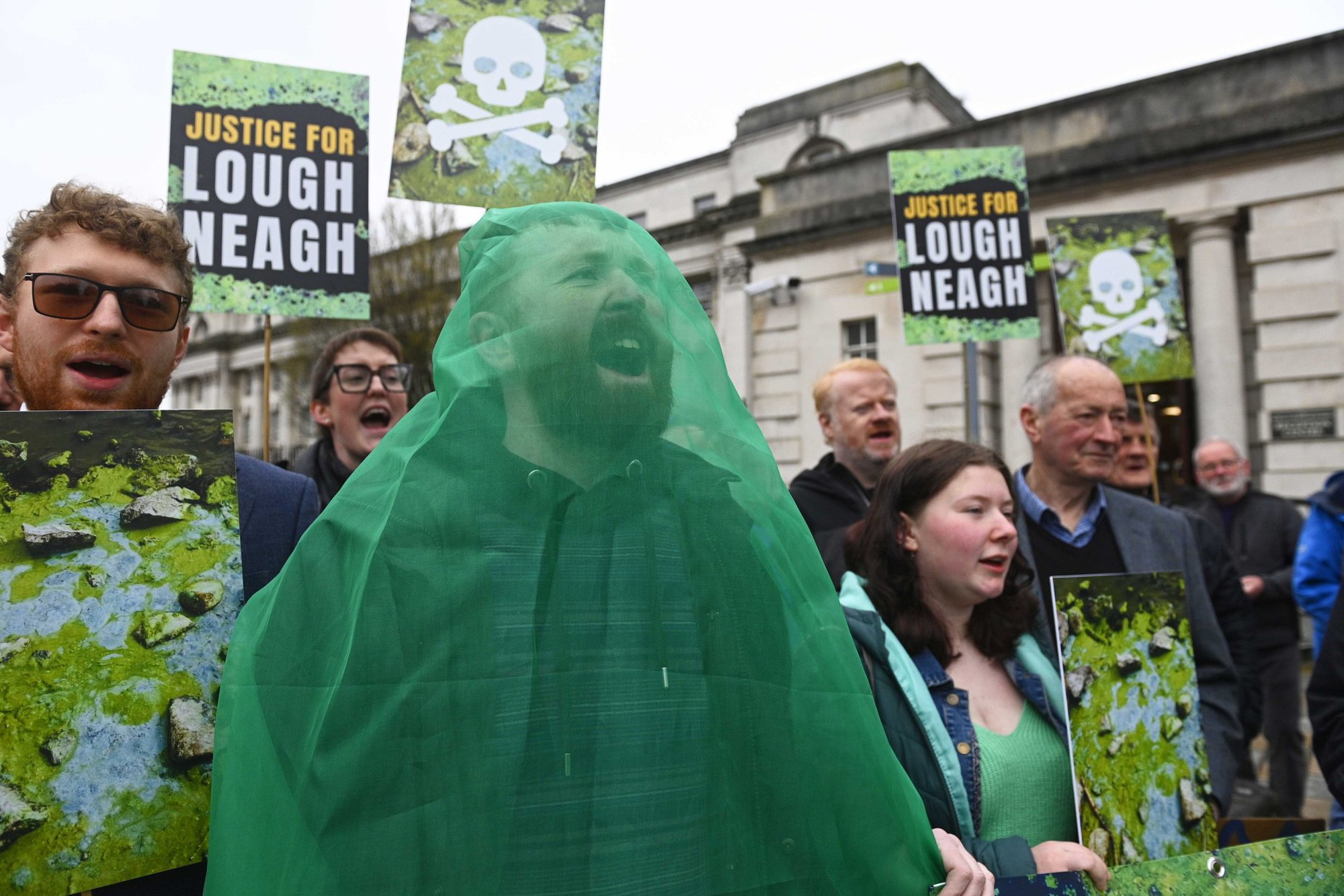
UK Youth for Nature writes for River Action on the problems facing our rivers and what can be done to save them…

It is the young people of today who are demanding greater action from governments to fight climate change and tackle environmental issues. Engaging youth in environmental protection not only creates direct impact on changing youth behaviours and attitudes but can influence country-wide change. UK Youth for Nature is the UK’s leading youth-led network calling on politicians and governments of the UK to take urgent action and tackle the loss of nature. Jazz Ghataora, a PhD student at the University of Bath is investigating methods to monitor and remove heavy metal pollutants from rivers and lakes.

Jazz has written for the River Action blog about the problems facing our rivers and what UK Youth for Nature is doing in 2021 to help save them!…

Rivers are an integral part of the UK landscape, with water systems offering refuge for countless UK residents as well as many of our beloved wildlife species, including kingfishers, otters and salmon. However, the health of many beloved rivers which were once a source of natural beauty is declining at an alarming rate because of pollution from variety of anthropogenic activities.

Given the nature of a variety of chemical pollutants, many of them persist in the environment for considerable amounts of time. Endocrine disruptors and even toxic heavy metals have the potential to wreak havoc on human health for decades if matters are not addressed.

“Clearly not enough is being done at an effective rate by both government and local water suppliers to mitigate these issues”.

Despite the introduction of the 2014 UK Water Act and river clean up initiatives to remediate rivers such as the metal-polluted River Nent, there is not enough action to prevent this pressing environmental crisis. This is exemplified in a 2017 study by the World Wildlife Fund which identified that over 80% of UK rivers had substandard ecological status and are ravaged by direct pollution from sewage release. The extent of this gradual decline of UK river quality over time was then further illustrated by a September 2020 report by the Guardian which subsequently revealed that no English river has achieved a good chemical status.

Clearly not enough is being done at an effective rate by both government and local water suppliers to mitigate these issues. The lack of political will power and cuts to environmental agency budgets are just a few examples of the neglect at the governmental level.

This year, UK Youth for Nature has been running its #DeadInTheWater campaign. We are aiming to raise awareness and to apply direct pressure on the governments of the UK to invest in better sewage infrastructure, properly enforce regulation against polluters, tackle pollution at source, particularly from water companies and intensive agriculture such as industrial poultry sheds and seek nature-based solutions in order to rectify this urgent environmental crisis.

By combining our voices and continuing to raise awareness, the natural beauty of the UK rivers, lakes and streams may once again become a familiar setting, providing refuge for local residents and encouraging natural wildlife to thrive in generations to come.

For more information about UKYFN, head to https://youthfornature.uk/to help support these campaigns and join our team.

We fully support the campaign work and aims of River Action UK.

Watch the UK Youth For Nature Dead in the water campaign video here.

Read the WWF report of UK river pollution by sewage here.

Writing to your representatives to ask them to support action on the river pollution crisis

If you were moved by the issues raised in the Rivercide documentary, or through River Action’s campaigns, please consider writing to your parliamentary representative to express your support and call on them to take action.

Please note that environmental protection is a devolved issue so if you live in England you should write to your local constituency MP and if you live in Wales, you should write to your Senedd Constituency Member.

Please find template letters below: 

England – template letter

You can find your MP and their contact details here. Please do consider personalising this template letter if you can, as that may have greater impact.

Dear …

I am writing to you as one of your constituents to urge you to stand up for our rivers in Parliament.

The state of our rivers is a crisis which can no longer be ignored. Every single river in England is now polluted beyond legal limits by human, agricultural and industrial waste.

In 2020 alone, water companies released untreated human sewage into our waterways on more than 400,000 occasions.

[Please do consider adding a local example or your own experience here]

A key part of the problem is the inability of our underfunded regulatory agencies to enforce standards and penalise polluters.

With government funding to England’s Environment Agency falling by more than 70% in the past decade, water quality monitoring has been slashed, each farm can now expect to be inspected just once every 263 years, and prosecutions of businesses for polluting rivers have fallen by 88% in the last decade.

As the UK prepares to host the global COP26 climate conference, its time for the government to tackle this vast environmental and public health threat on our doorstep.

I support River Action’s call for the Government to double the Environment Agency’s environmental protection budget so that it is properly equipped to tackle the river pollution crisis and am writing to ask you to do the same.

Kind regards

…. [Add your name and address so that your MP is able to verify you are a constituent]


Wales – template letter

You can find your constituency’s Senedd Member and their contact details here. Please do consider personalising this template letter if you can, as that may have greater impact.

Dear …

I am writing to you as one of your constituents to urge you to stand up for our rivers in the Senedd.

The state of our rivers is a crisis which can no longer be ignored. Widespread leakage and dumping of agricultural, industrial and human waste mean that 56% of rivers in Wales now fail to meet ‘good ecological status’ and over 60% of our protected rivers exceed phosphate pollution limits.

In 2020 alone, water companies released untreated human sewage into our waterways on more than 100,000 occasions from more than 2000 different sewage plants across the country.

[Please do consider adding a local example or your own experience here]

A key part of the problem is the inability of our underfunded regulatory agencies to enforce standards and penalise polluters: Natural Resources Wales has repeatedly had its budget cut and has warned the Welsh Government on numerous occasions that these cuts risk leaving it unable to deliver on demand for its services.

As the Senedd declares a nature emergency in Wales, it is time to prioritise tackling this vast environmental and public health threat on our doorstep.

I support River Action’s call for Welsh Government to double Natural Resources Wales’s environmental protection budget so that it is properly equipped to tackle the river pollution crisis and am writing to ask you to do the same.

Kind regards

…. [Add your name and address so that your Senedd Member is able to verify you are a constituent]

River Action urges Noble Foods to rethink its sustainability strategy as it fails to include river pollution as a key focus area…

Noble Foods has omitted river pollution from its recently identified 4 sustainability focus areas… prompting River Action to write again to the CEO. 

Having received no response from River Action’s last letter to Noble Foods’ CEO on 25th March, River Action’s Chairman has written again to Duncan Everett. This latest letter has been prompted by a talk given by Noble Foods’ agirculture director Graham Atkinson last month at the Alltech One Ideas conference. Atkinson outlined the company’s sustainability focus areas – none of which included any mention of river pollution and the mitigation of nutrient run-off.

The crisis in the Wye escalates each day. Phosphate levels have doubled in the past six years alone to the extent that the river has recently been described as a “wildlife death trap” which is reaching a point of no return. The primary cause of this destruction is now widely accepted to be nutrient-rich run-off of chicken excrement from intensive poultry units. As the the largest operator (by a wide margin) of egg-producing IPUs in the Wye catchment, the letter asks that Noble foods demonstrates leadership by publishing as a matter of urgency a nutrient management plan to mitigate phosphate run off from your IPUs. 

Read the full letter here. 

Sign the petition to restore funding to the UK’s environmental protection agencies

Don’t miss Rivercide on 14th July – read more here. 

We are stepping up our #GiveUsBackOurRivers campaign…

Our petition calling on government to properly fund environmental protection is rapidly building momentum. Thank you for helping us to exceed 35,000 signatures in our first week. We are fast approaching 40,000.

We know we cannot wait any longer, many of our rivers could soon be ecologically dead. Therefore, we are amplifying our message through the launch of a new ad campaign…

Please share these ads to your social media profiles and encourage your friends and family to participate as well.

The ads will be shared on River Action’s social media platforms and website over the coming 6 weeks.

Follow us to be notified when we release a new one! Twitter, Facebook and Instagram

And don’t forget to sign the petition !

Read this week’s article in the Daily Express on River Action’s ad campaign here.

Watch ITV’s report on the campaign here. 

Herefordshire’s council members unite in plea to MP George Eustice to save the Wye as algal blooms that wiped out miles of the River Wye’s ecology in 2020 return…

Desperate plea for help to Central Government to save one of Britain’s most-loved rivers  reveals that the County of Hereford only has 0.8 full time Environment Agency officer to combat the severe agricultural pollution of the Wye

In a devastating letter to George Eustice – the Secretary of State for the Environment and Rural Affairs – Herefordshire Council have raised alarm about the impact Intensive Poultry Units (IPUs) are having on the river Wye’s ecological status. The letter has been prompted in part by a moratorium imposed by Natural England on building in the Wye catchment on all new developments that cannot prove they are phosphate neutral. The moratorium was imposed due to the deteriorating state of the river and the requirements are such that developers cannot meet them, therefore no new building has been approved. The impact of this decision on local communities and their economies has been significant.

Councillors believe that the moratorium on building is futile given the contribution to river pollution of new house building is minute (less than 1%) compared to that of phosphate run-off from agriculture.

In fact, as the letter highlights it is agricultural practices, not building developments, that led to the river being described last year by the Daily Mail as “a putrid algae-ridden swamp”.  Around 70 miles of river lost the protected plant water crowfoot (Ranunculus) due to algal blooms and therefore fish and invertebrate life were impacted as river keepers reported widespread loss of cygnets from starvation. The letter explains that this environmental calamity is a direct result of the now very high number of a new IPUs in this valley.

A recent study on the impact of these IPUs by the Universities of Lancaster and Leeds has estimated an excess loading of 2000 tonnes of phosphate per annum in the catchment. That is equivalent to 1.5m tonnes of farmyard manure being spread, over and above the crop requirements every year – an incredibly high number.

To date, Herefordshire has so far received no support from Government to deal with the problem. Described as an “unprecedented disaster” occurring in the Wye, Council members through this letter have escalated matters and called on government to take immediate action – with an initial ask of at least £3.9m to begin to tackle the problem.

With the funding, the councillors have called for the speedy delivery of phosphate reduction measure including reduced fertiliser spreading, reduced pathways for run off, increased soil structure and organic materials and increased field margins. Critically they also highlight the need for increased and more effective monitoring, noting “Without a shadow of a doubt, we need a sturdy regulatory floor with a full commitment to enforcing existing regulations to achieve bringing the watercourse back into compliance”.

Currently, the Environment Agency has only 4 officers to do all regulatory work across the whole of the West Midlands, which equates to 0.8 of an officer for Herefordshire.

We hope that this letter will prompt decisive action at the highest level of government and result in additional emergency funding for agencies to ensure improved monitoring and enforcement along both sides of the border.  River Action will be monitoring the response and outcome closely.

River Action campaign group launches public petition calling for urgent action from governments on river pollution crisis

  • River Action issues call for a doubling of budgets to address collapsing environmental protection in England and Wales and tackle the escalating river pollution crisis.
  • Campaign launch follows revelation that England’s Environment Agency had total budget in 2019/2020 of just £0.32 million to inspect over 120,000 farms, equating to just 0.65 staff in each of the country’s 14 areas.
  • With every river in England now polluted beyond legal limits, the group calls on the UK and Welsh Governments ahead of COP26 to tackle the “ecological and public health crisis on our doorstep”.

3rd June 2021: Campaign group River Action today announces a new campaign to address the declining state of our rivers amidst a dramatic weakening and de-funding of the regulatory agencies tasked with protecting them. The group has launched a public petition calling on the UK and Welsh Governments to double immediately the environmental protection budgets allocated to their respective regulatory agencies, the Environment Agency and Natural Resources Wales, in order to tackle the escalating river pollution crisis.

The petition highlights that “agricultural pollution of rivers is rampant with farms almost never inspected, water quality rarely tested and water companies pumping raw sewage into rivers with impunity”. Recent data shows that every single English river is now polluted beyond legal limits by human, agricultural and industrial waste. Meanwhile, in Wales, 56% of rivers fail to meet ‘good ecological status’ and agricultural pollution incidents have averaged three per week for the past three years.

The petition attributes much of this crisis to the complete collapse of environmental protection across England and Wales as regulatory agencies have had their funding, staffing and resources cut, noting that “in summary, polluters can dump waste in rivers secure in the knowledge that they will be neither monitored, inspected nor prosecuted.”

In response to a Freedom of Information request, the Environment Agency revealed that its ‘Environment and Business’ budget which covers activities including agricultural regulations, waste crime and incident response fell from £117 million in 2010/11 to £40 million in 2020/21. Welsh equivalent Natural Resources Wales has likewise suffered harsh de-funding since its 2013 creation. These cuts have impacted activities to the extent, for example, that each farm in England can now expect just one inspection every 263 years. Indeed, a Freedom of Information request to the Environment Agency revealed that the 14 Area teams across England received a combined total of just £0.32 million from the overall Environment and Business Budget for agricultural enforcement in 2019/2020, equating to about 0.65 Full Time Equivalent (FTE) staff per Area to enforce these regulations.

Similarly, in England, court actions against river polluters fell from 235 in 2002 to just 3 last year; in Wales, there were prosecutions or civil sanctions for less than 1% of pollution incidents reported from 2013-2016.

George Monbiot, River Action Advisory Board member said: “Environmental protection is a devolved matter, but the same bleak picture emerges across both England and Wales: with environmental regulators dramatically weakened and defunded, and frontline staff numbers shockingly low, polluters are acting with impunity and the state of our rivers is declining drastically in front of our eyes. This is an ecological and public health crisis right on our doorstep and action is long overdue.”

In this context, River Action’s new campaign calls for immediate restoration of environmental protection budgets in both England and Wales in order to reinstate monitoring, compliance and enforcement capabilities. The group estimates the total cost per year to be in the region of £60 million[1], which it highlights is equivalent to “the cost of a quarter of a kilometre of HS2”.

This petition marks the launch of River Action’s second public campaign: the group is also campaigning for action from the intensive poultry industry in the River Wye catchment, notably the UK’s largest egg producer Noble Foods, to take urgent action to mitigate the pollution of that river resulting from their owned intensive poultry units and supply chains.

Charles Watson, founder and chair of River Action said: “Having watched the decline in the ecological state of iconic rivers such as the Wye with growing horror, we continue apply pressure on those companies making vast profits from polluting activities to take responsibility for their actions and clean up their acts. However, it is clear that as long as environmental regulators are not able to effectively monitor and protect our rivers, polluters will continue to dodge accountability, secure in the knowledge that they are highly unlikely ever to have to pay. Our rivers are dying. This is an urgent call to action for everyone who loves swimming in, fishing on, paddling down – or just walking alongside our rivers to get behind this campaign and demand action before it’s too late.”

Ruth Chambers, River Action Advisory Board member said: “While the UK seeks to demonstrate global environmental leadership by hosting the COP26 climate conference, we need to see urgent action on our own doorstep to tackle environmental crises like river pollution. People across England and Wales are demanding that their governments act now to protect rivers from being treated like sewers and rubbish dumps.”

Contact: For all press and media inquiries, please contact Amy Hammond at Seahorse Environmental – ahammond@seahorseenvironmental.co.uk.

Download the full release here.

-ENDS-

[1]Please note that this figure is based on the combination of information obtained through responses to Freedom of Information requests and River Action’s interpretation of publicly disclosed information from the EA and NRW. The figure comprises an informed best estimate of the combined EA and NRW 2020/21 environmental protection budgets and will be clarified further in due course on receipt of outstanding FOI requests. This campaign calls for a doubling of these current environmental protection budgets in order to restore capacity to pre-cut levels of 8-10 years ago, when data demonstrates monitoring and enforcement activity was significantly more effective (see, for example, Salmon and Trout Conservation’s recent report here) than its current levels.

River Action urges Noble Foods to invest vast Gü Puds sale profits into urgent action on farm pollution

  • Noble Foods announced today the sale of Gü Puds to Exponent 
  • Whilst the price was undisclosed industry sources believe it to be in the region of £150m
  • River Action has been calling on Noble Foods to address the degradation of the River Wye by the poultry industry
  • The campaigning group subsequently urges Noble to immediately reinvest a significant part of Gu Puds sale proceeds to implement urgent clean-up action


17 May 2021: River Action notes today’s news regarding the sale by Noble Foods of Gü Puds to Exponent.

Given the substantial cash profit that Noble Foods will realise from this transaction, River Action accordingly calls upon Noble Foods to reinvest with immediate effect a significant part of these proceeds to implement much-needed environmental mitigation measures to clean up the extensive nutrient pollution originating from its intensive poultry units (IPUs) in the Wye Valley.

Campaign group River Action has been calling on Noble Foods, the UK’s largest egg producer and owner of the UK’s No1 egg brand Happy Egg, to take immediate action to address the significant environmental degradation caused to the River Wye by the intensive poultry industry in the area. It is believed that there are over 100 IPUs in and around the River Wye catchment area – half of which are operated by Noble Foods. Each IPU holds at least 40,000 birds.

In a recent response to a letter from River Action, Noble Foods CEO Duncan Everett confirmed that the company was starting to assess the environmental impact of its IPUs and that of its supply chain and that a variety of mitigation measures to deal with pollution were now being considered.

Following today’s news of the sale of Gü Puds, River Action repeats the appeal it made to Noble Foods on 25th March, to undertake immediately the following unilateral actions:

  • Provide a time commitment of when IPU site assessments will be completed and publish a summary of findings and details of the plan to address the issue of nutrient run-off.
  • Publicly commit to a detailed nutrient mitigation plan with an implementation timetable.
  • Commit to invest an appropriate and disclosed level of capital expenditure to implement measures to tackle nutrient run-off.
  • Publish an environmental code of standards that third-party producers must adhere to in order to be contracted as a Noble Foods supplier.
  • Publish a credible environmental policy statement on the Noble Foods website.


Commenting, River Action Chairman Charles Watson said: “With this huge cash windfall in hand, Noble Foods now has absolutely no excuse not to do the right thing and embark upon an immediate investment programme to ensure each and every one of its intensive poultry units installs appropriate manure run-off mitigation systems, as River Action has been urging.”

“As the UK’s largest egg producer, Noble Foods must show leadership rather than hiding behind collective industry responsibility. In showing leadership, the company will be taking a decisive step in tackling what is clearly one of the greatest pollution scandals in this country.”

Contact: For all press and media inquiries, please contact Amy Hammond at Seahorse Environmental – ahammond@seahorseenvironmental.co.uk.

“Doing its job?” – Salmon & Trout Conservation release new report on the Environment Agency

Last week, Salmon & Trout Conservation (S&TC) published “Doing its job?” A report on the Environment Agency and its role protecting English rivers, lakes and streams.

Nick Measham, Chief Executive of S&TC said:

“The Environment Agency turned 25 years old this month but our rivers will not be celebrating. Despite a quarter of a century of its oversight, the freshwater aquatic environment is still heavily polluted, fragmented and we face a biodiversity crisis with many freshwater species in steep decline or, in the case of the Atlantic salmon, at risk of extinction. We are at a point when business as usual is no longer an option if we are to reverse wilful river damage and habitat destruction”.

S&TC has acknowledged that the agency had come under budget pressures, with funding slashed by about 60 per cent between 2008 and 2017.

Some headline findings from the report… 

Currently, the percentage of English rivers reaching good or better ecological status in England is only 14%. That situation has not improved over the last decade. In 2009, 22% of rivers in England had achieved good ecological status.

The EA itself has reported recently that: 

  • Over 10% of our freshwater and wetland species are threatened with extinction and two thirds are in decline.
  • 40% of water bodies are impacted by pollution from rural areas.
  • 16% of serious pollution incidents in England are attributed to the agriculture sector. 
  • In 2020, only 145 river water bodies are at good ecological status.

According to the report, the EA runs a hotline which “aims to provide the public with a way to complain about incidents they see”. However, the majority of complaints to the EA’s incident hotline are not acted upon, let alone result in sanction, and feedback is frequently not provided even when requested.

FOI data reported by Unearthed shows the teams tasked with responding to pollution incidents have seen their numbers decline by 15% since 2015.

The report finds, that despite agriculture being a major contributor to river pollution, farm visits fell from 905 in 2014 to 308 in 2019. Meaning every farm can expect an inspection only once every 263 years.

Read the full report here. 

ENDS report: Environmental groups welcome the creation of River Action

The UK’s leading environmental publication – the ENDS report – has covered our campaign to fight the desperate ecological state of the River Wye…

River Action is continuing to call on the UK’s largest egg producer Noble Foods to take immediate action to address the significant environmental degradation caused to the River Wye by the intensive poultry industry in the area.

In the publication’s latest article on River Action, Will Crisp speaks with leading environmental groups and conservationists who have reportedly welcomed the creation of the group – including Stuart Singleton-White, Head of Campaigns at the Angling Trust and Rhiannon Niven, a senior policy advisor at RSPB.

In a statement, Noble Foods said “protecting the environment is extremely important” for the company. However, just a week prior to the article, they published their Corporate Social Responsibility (CSR) report where there is not one mention of the run-off of chicken manure into the Wye – the number one environmental issue facing the company.  

River Action’s chairman Charles Watson states “it appears that regulators have almost given up on trying to curtail the damage being done by the poultry farms in this area.

“As things stand, large agribusinesses play a critical role in the supply chain. They have immense power over the smaller companies that they deal with and that is why we are targeting them first.”

Read the full article here.

ENDS report: Environmental groups welcome the creation of River Action

The UK’s leading environmental publication – the ENDS report – has covered our campaign to fight the desperate ecological state of the River Wye…

River Action is continuing to call on the UK’s largest egg producer Noble Foods to take immediate action to address the significant environmental degradation caused to the River Wye by the intensive poultry industry in the area.

In the publication’s latest article on River Action, Will Crisp speaks with leading environmental groups and conservationists who have reportedly welcomed the creation of the group – including Stuart Singleton-White, Head of Campaigns at the Angling Trust and Rhiannon Niven, a senior policy advisor at RSPB.

In a statement, Noble Foods said “protecting the environment is extremely important” for the company. However, just a week prior to the article, they published their Corporate Social Responsibility (CSR) report where there is not one mention of the run-off of chicken manure into the Wye – the number one environmental issue facing the company.  

River Action’s chairman Charles Watson states “it appears that regulators have almost given up on trying to curtail the damage being done by the poultry farms in this area.

“As things stand, large agribusinesses play a critical role in the supply chain. They have immense power over the smaller companies that they deal with and that is why we are targeting them first.”

Read the full article here.

Privacy Overview

This website uses cookies so that we can provide you with the best user experience possible. Cookie information is stored in your browser and performs functions such as recognising you when you return to our website and helping our team to understand which sections of the website you find most interesting and useful.