News
Thirteen councils, six months, zero formal investigations: River Action challenges local authority inaction on sewage pollution
Residents still waiting for action
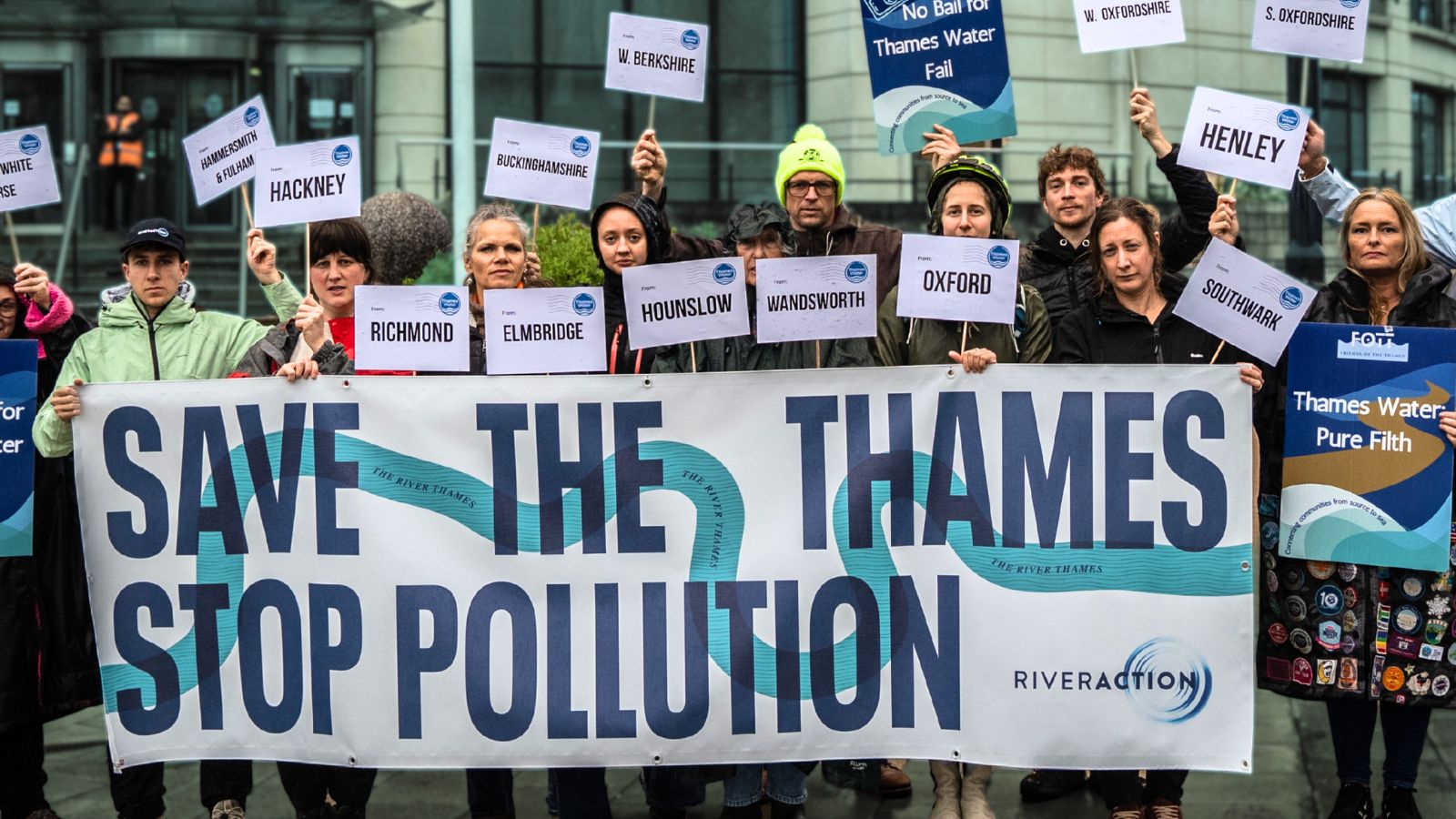
Six months after residents across the Thames catchment submitted complaints alleging that sewage pollution is causing a statutory nuisance, not a single local authority has opened a formal investigation.
The complaints were submitted to 13 councils under the Environmental Protection Act 1990, which places duties on local authorities to investigate potential statutory nuisances affecting residents’ use and enjoyment of their local area. In law, a “nuisance” is a state of affairs which is not something “objectively a normal person would find it reasonable to have to put up with”.
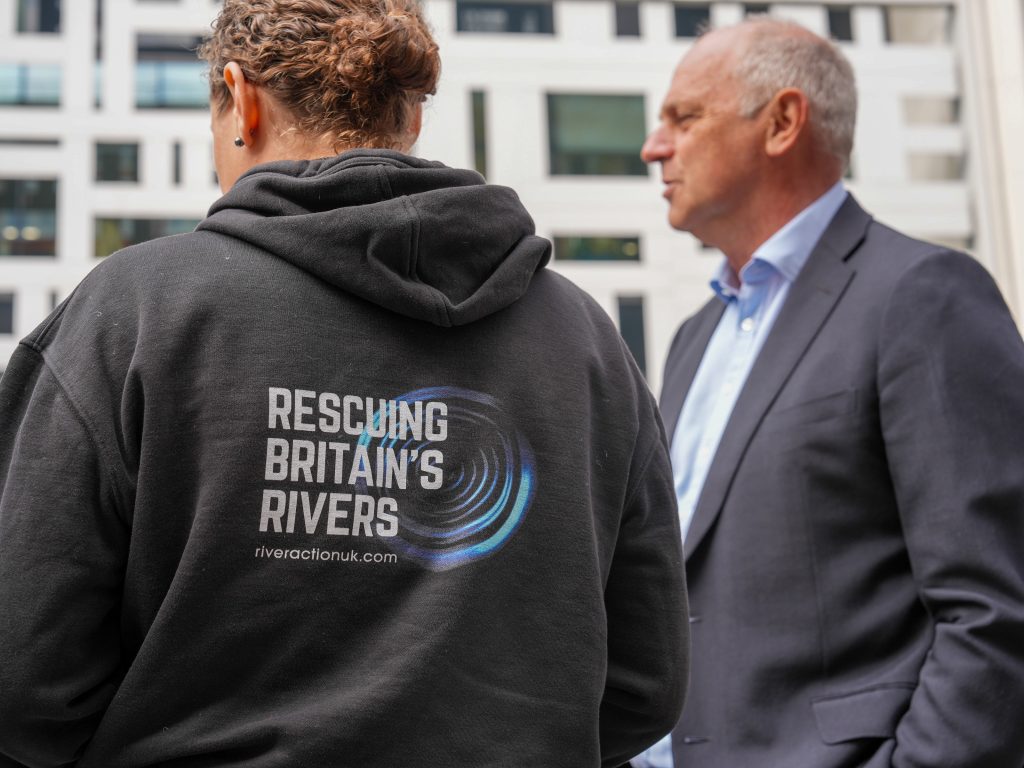
Among those who have submitted statutory nuisance complaints are five-time Olympic rowing champion Sir Steve Redgrave and Olympic rowing champion Imogen Grant MBE.
Sir Steve Redgrave submitted a complaint to Buckinghamshire Council, while Imogen Grant submitted a complaint to Wokingham Borough Council. Although both councils have engaged with the complaints, neither has said they have opened a formal investigation despite six months having passed since the complaints were made.
No investigations, despite a clear legal duty
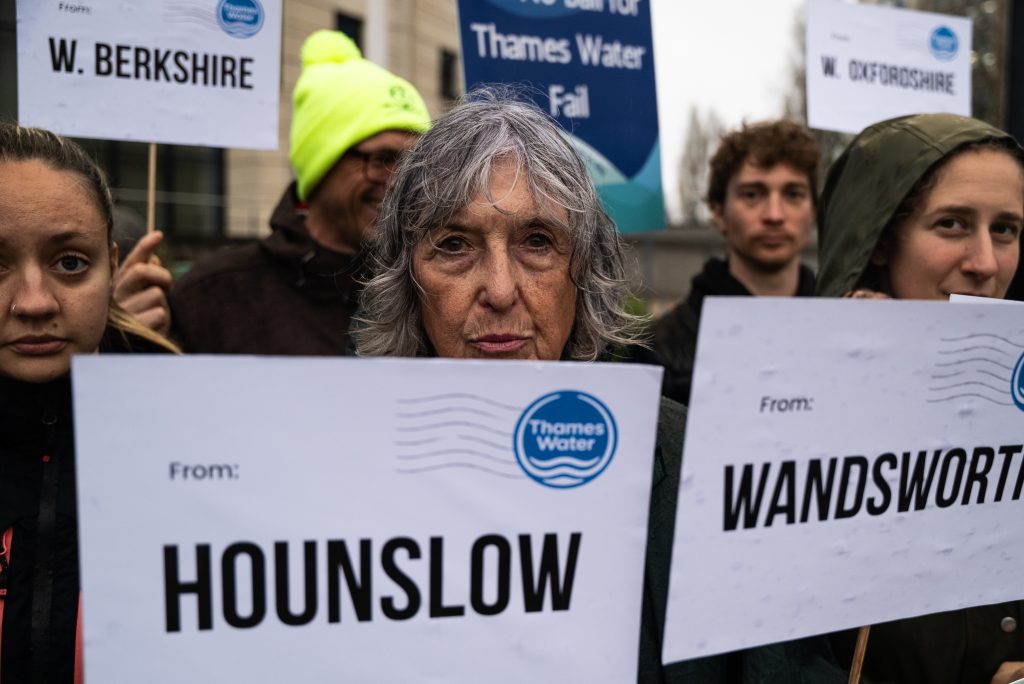
Of the 13 councils contacted:
- Four have refused to investigate.
- Three have agreed to consider whether an investigation is warranted.
- Six have yet to indicate that they will open an investigation.
- No council has said it has commenced a formal investigation.
The responses reveal a growing inconsistency in how local authorities are interpreting and applying their statutory duties in relation to sewage pollution, creating a postcode lottery for communities seeking protection from pollution affecting their local rivers.
Several local authorities have deflected to the Environment Agency. However, our expert legal advice says that the statutory nuisance regime operates alongside other regulatory regimes and so the fact that the Environment Agency has other important responsibilities for regulating water pollution does not remove the duty of local authorities to investigate complaints.
The law is clear that sewage pollution that is likely to cause injury to health or that interferes with people’s use or enjoyment of rivers or land can be a statutory nuisance. Where there is evidence indicating a statutory nuisance, local authorities have a duty to inspect their areas and investigate complaints. If satisfied that a statutory nuisance exists or is likely to happen again, they also have a further duty to serve an abatement notice – a legal order that would require Thames Water to stop causing the nuisance.
Independent analysis provides further evidence of statutory nuisance
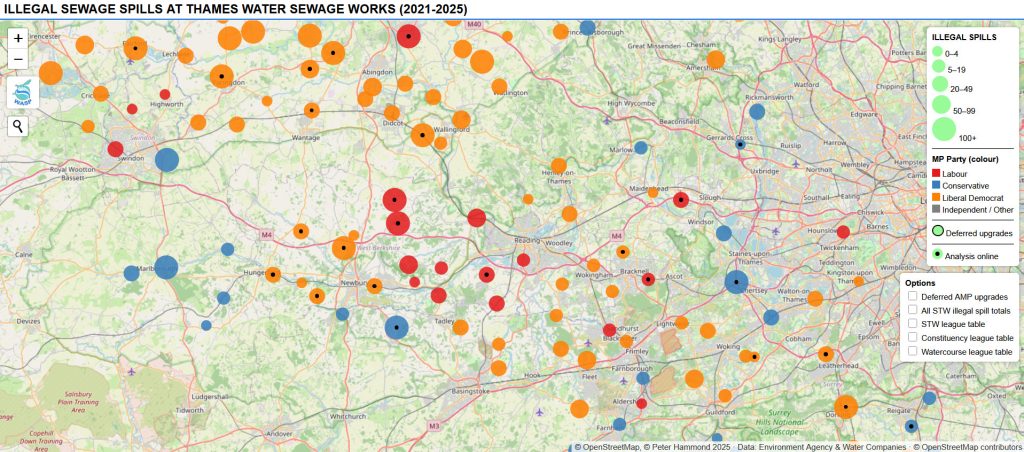
On 22 February 2026, Windrush Against Sewage Pollution (“WASP”) published a detailed report analysing sewage discharge data from 224 Thames Water sewage treatment works across the Thames Water region between 2021 and July 2025.
The report identifies each treatment works, the receiving watercourse into which it discharges, and the number of unlawful spills attributed to that site. It also highlights discharges that occurred during dry weather conditions and incidents where sewage was released before the treatment works had reached full operational capacity.
An accompanying interactive map allows users to examine individual sites and the number of unlawful discharges associated with each location.
Using this data, River Action in collaboration with the complainants, wrote letters to each local authority arguing that the evidence and repeated sewage dumping make the rivers “foul or polluted” enough to be considered a legal nuisance that is “prejudicial to health.” The findings in the WASP letters were directly related to the factual background of each original complaint.
Responses received from councils vary considerably.
Councils that have refused to investigate include Vale of White Horse District Council, West Berkshire District Council, Southwark Council and Wandsworth Borough Council.
In a letter dated 12 March 2026, Vale of White Horse District Council rejected a complaint on the basis that “pollution of controlled waters is specifically excluded from being classed as a statutory nuisance.”
In a letter dated 9 April 2026, West Berkshire Council refused to investigate a statutory nuisance complaint under the Environmental Protection Act (EPA), stating that, “The Council does not accept that major river systems such as the River Thames or the River Kennet fall within the meaning of “watercourse” and, “The Council does not accept that section 79(1) (h) of the EPA can be properly relied upon to extend the statutory nuisance regime to circumstances of this nature.”
Blake Ludwig, who lodged the statutory nuisance complaint with West Berkshire that can be seen in the video below, said:
“I am deeply disappointed that West Berkshire Council has refused to investigate my complaint. As a river user, I see the impact of sewage pollution first-hand, yet the council has chosen not to act. The council has a legal duty to investigate potential statutory nuisances. By refusing to do so, it is failing local residents, the environment and avoiding its responsibilities.”
Follow the evidence, follow the law
Several councils, including Vale of White Horse District Council, South Oxfordshire District Council, West Berkshire District Council, Wandsworth Borough Council and Hackney London Borough Council, have suggested that sewage pollution should instead be addressed through contaminated land legislation.
We dispute this interpretation; contaminated land legislation was designed primarily to address serious land contamination and has not generally been regarded as a framework for managing the routine condition of rivers. If sewage pollution is sufficiently serious to bring rivers within the contaminated land regime, that would raise important questions about local authorities’ own responsibilities to identify, investigate and address contaminated sites.
By contrast, Buckinghamshire Council, Elmbridge Borough Council and Hounslow Council have agreed to consider the complaints and assess whether formal investigations should be opened. We welcome this approach and encourage all the councils to open investigations in line with the law.
“Six months after residents submitted complaints, not one council has opened a formal investigation. Residents across the Thames catchment have followed the same process and raised concerns about sewage pollution affecting their local rivers. Yet communities are receiving very different responses depending on where they live.
Some councils have engaged constructively and are considering the evidence before them. Others have refused outright. This inconsistency is creating a postcode lottery in the application of environmental law. We are not asking councils to predetermine the outcome. We are simply asking them to do what the law requires: investigate complaints properly and reach their own conclusions based on the evidence.”
Erica Popplewell, Head of Engagement, River Action UK.

Action needed on Thames Water
The failure of all 13 councils to launch formal investigations into statutory nuisance complaints linked to sewage pollution, six months after they were submitted, raises serious questions about accountability across England’s water sector.
As the first step in reforming a system that is failing rivers, customers and local communities, we are calling on the Government to place Thames Water into the Special Administration Regime.
“Water companies must be brought under greater public control and held accountable to the communities they serve. Thames Water, a debt-laden serial polluter, is the obvious place to begin. Thames Water should be placed into Special Administration, stabilised in the public interest, and used as the starting point for wider reform of how water services are owned, managed and governed.”
Erica Popplewell, Head of Engagement, River Action UK.
Learn more about our River Thames campaign here.