Save Leagh Neagh: An unprecedented crisis deserves an unprecedented response
By Pádraig Mac Niocaill, Save Lough Neagh campaigner
The collapse of Ireland’s largest freshwater lake
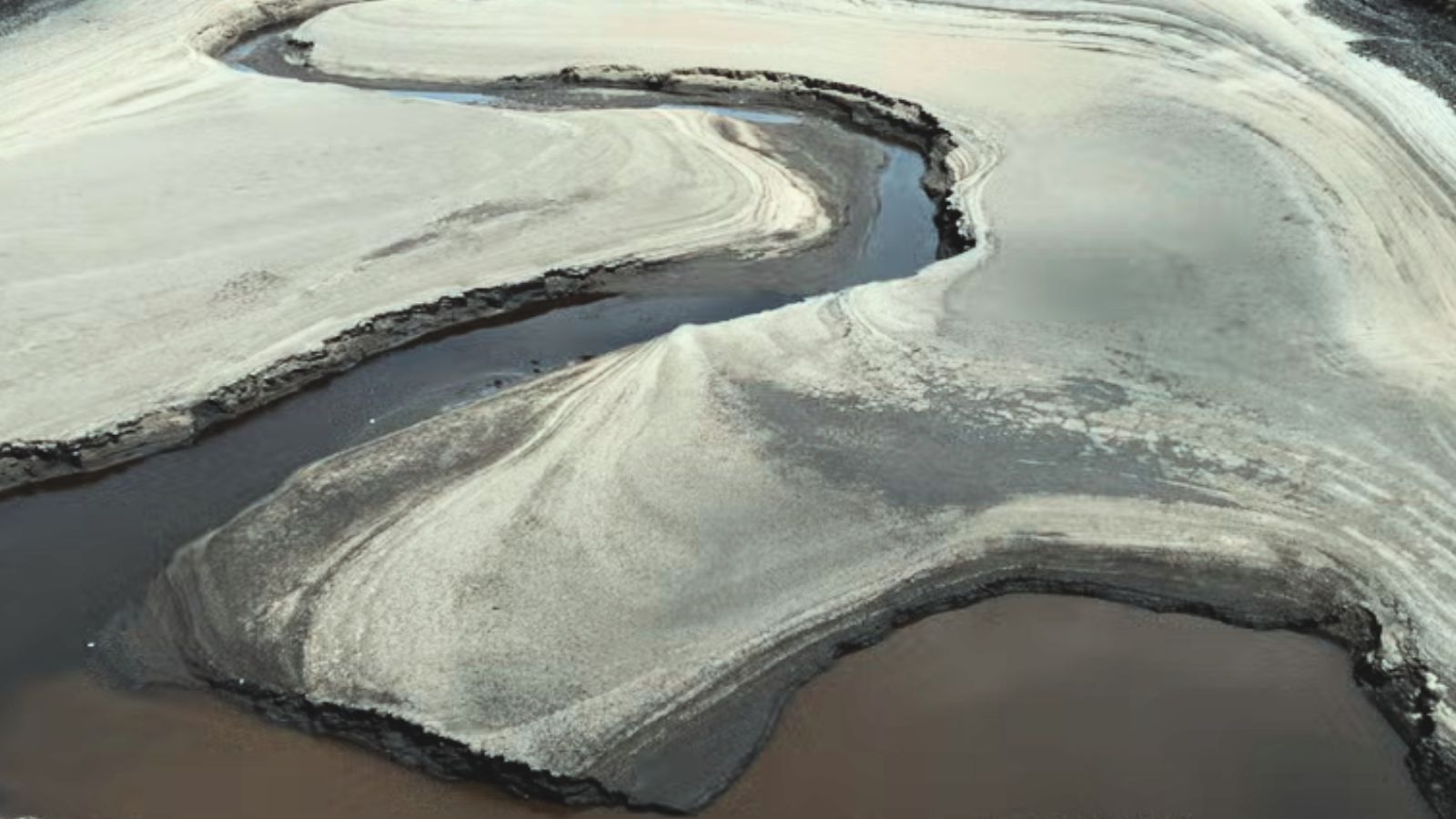
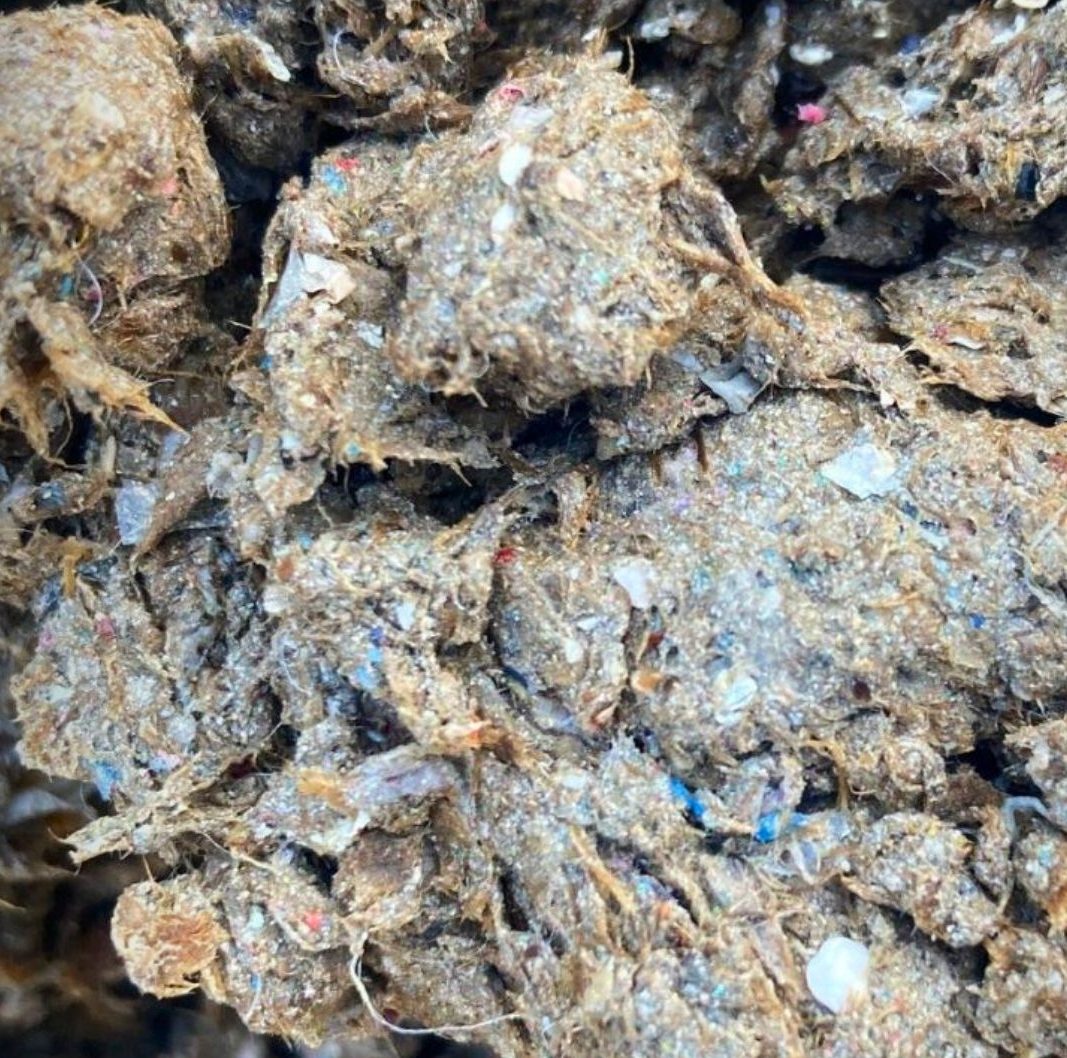
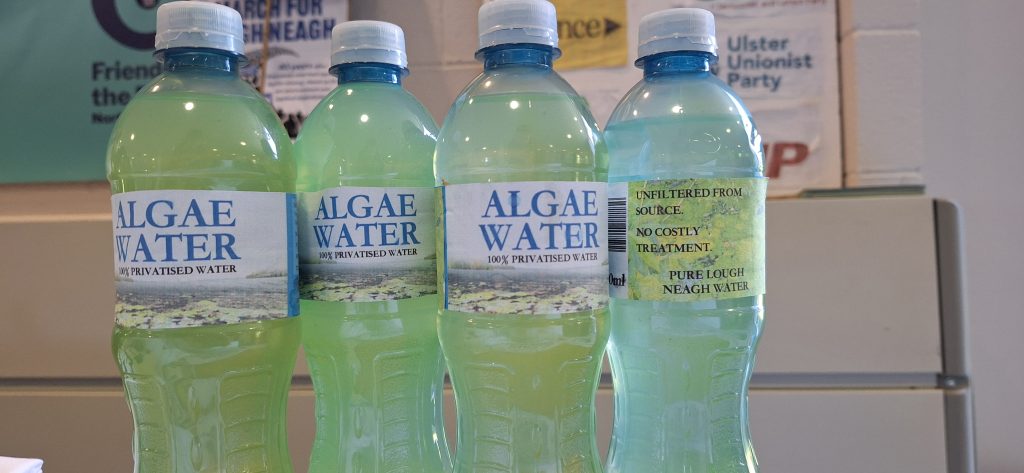
In the summer of 2023, Lough Neagh, the largest lake in Ireland and Britain, and one of the largest freshwater lakes in Europe, reached a tipping point. The water entered a phase of extreme eutrophication, when water is overly saturated with nutrients, leading to yearly spells where the Lough is coated in thick, toxic algal blooms.
For four years now, this cycle has repeated, with dead animals washing up along the shores, and the neon green algae visible from flights over the lough, and seen even from space. The taste of tap water has also been affected locally, with many locals not trusting the water, and health concerns proliferating far and wide. For those who can afford it, bottled water has become the only trusted drinking water supply.

Going for algae growth
Much debate has surrounded the primary reason for the Lough’s collapse. Going for Growth, a scheme in 2014, supported by the five main parties of Stormont, sought to supercharge the agri-food sector of the North, with no mind paid to the waste, is widely identified as being one of the main contributors.
Multi-billion pound agri-food companies that benefited from this scheme, convicted of environmental breaches receive barely a slap on the wrist. Sand dredging, of which the absentee landlord of the Lough, the Earl of Shaftesbury, still profits from every tonne dredged, has been highlighted as causing further harm to an already fragile ecosystem. And after decades of cuts, NI Water also dumps millions of tonnes of untreated sewage into our waterways.
On each of these causes and more, there is a major debate about which is the main one to blame, but the truth is, it is all of these things. The ecocide taking place at Lough Neagh is not a natural occurrence, it is a direct result of governance and political choices, as a resource to be exploited, not our home that provides 40% of the north with our drinking water.
Bloom of resistance
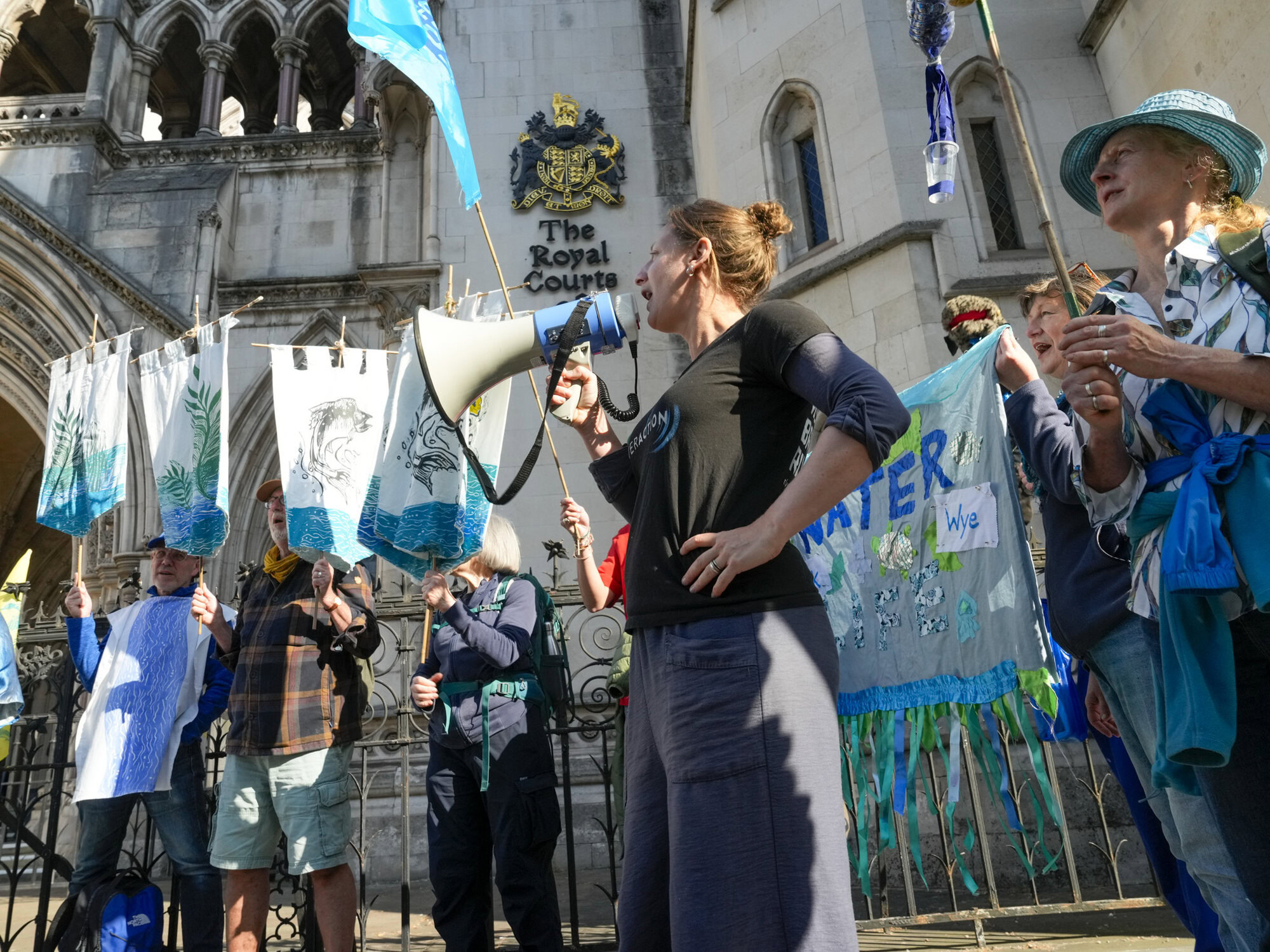
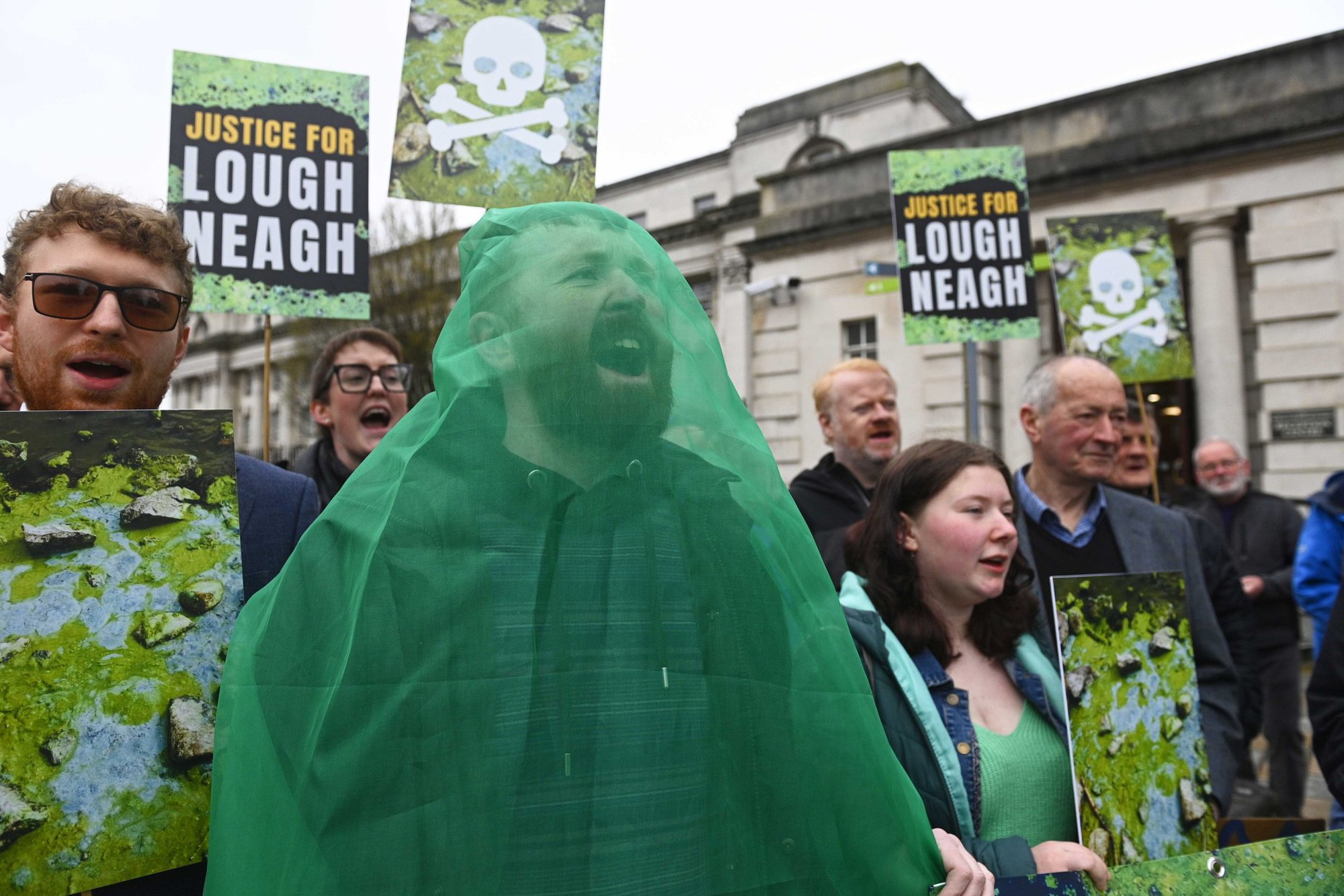
Since the algae blooms in 2023, the Save Lough Neagh campaign, a coalition of loughshore people affected by the crisis, fishermen, swimmers, environmental and political activists, have been rallying for change. Protests have taken place at each of the corners of the lough, Feargal Sharkey, a Derry-native, speaking at the Think Left conference in 2023, gave support to the first March for Lough Neagh, where hundreds marched to City Hall in Belfast, later followed by a a tie-in ‘March for Clean Water’ to coincide with the large London protest organised by River Action UK in November 2024.
Sustained pressure has caused the Earl of Shaftesbury to change his tune from “being treated like any other business‘, to ‘open to giving it away for free, though he still hasn’t fulfilled or given a timeline for the handover that would greatly address the deadlock the current approach to the crisis is calling out for.
The campaign calls for an end to the Going for Growth pollutive policy, an end to subsidies and rates relief to large polluters, an end to private ownership of the Lough by the Earl of Shaftesbury, a moratorium on factory farms and sand dredging, a well-funded water service, and Rights of Nature status for Lough Neagh.
The march for Lough Neagh
This February, signs of toxic algae appeared in spots around the shore, earlier than previous years. Leading to discussion about how to escalate the fight for the year ahead. There was appetite for a march for the Lough, at the Lough itself.
Fisherman and organiser with the Save Lough Neagh campaign, Declan Coney, had been on a massive anti-lignite march in 1986, where communities successfully mobilised along the western shore of Lough Neagh to defend the area from proposed lignite extraction by BP and Stormont.
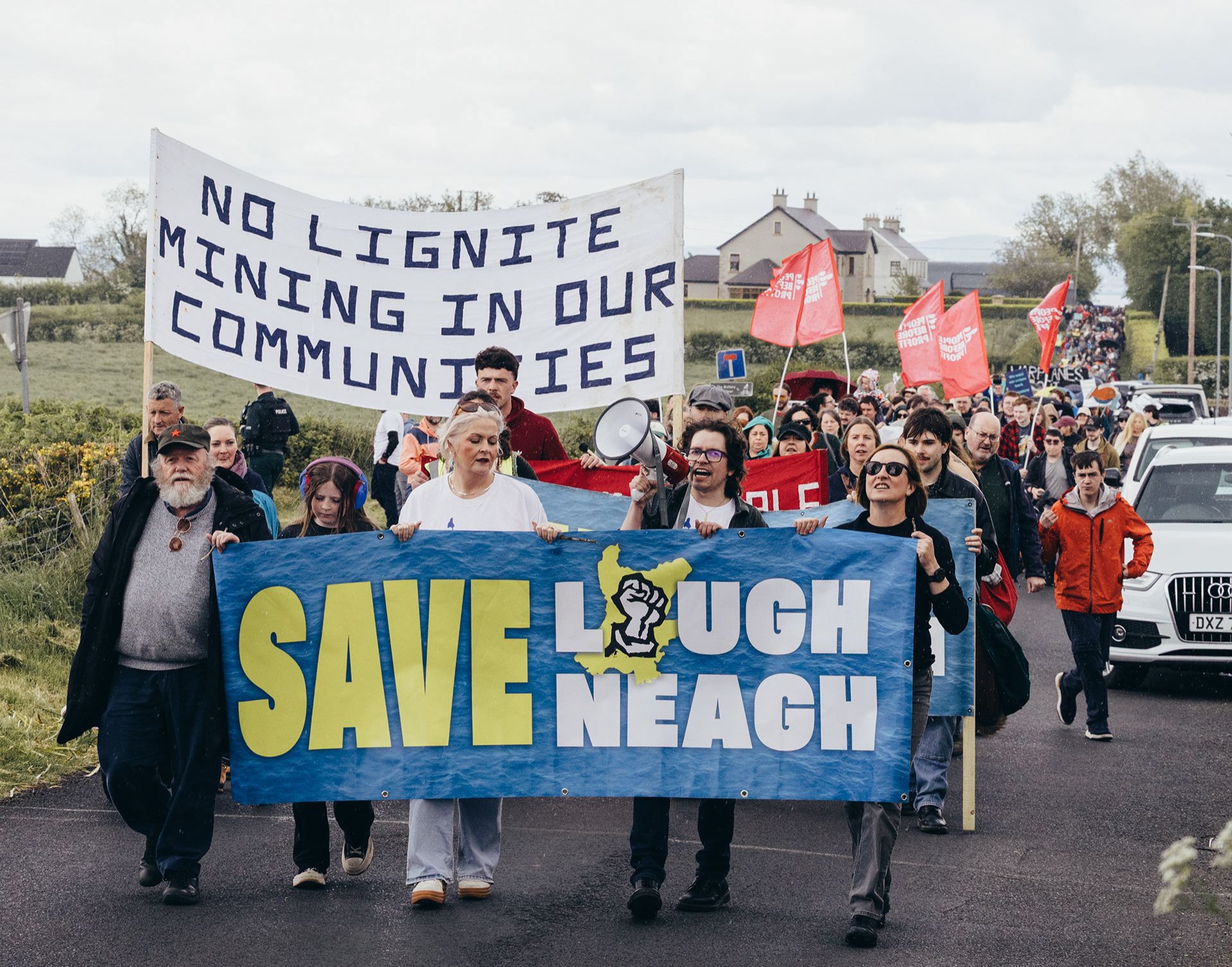
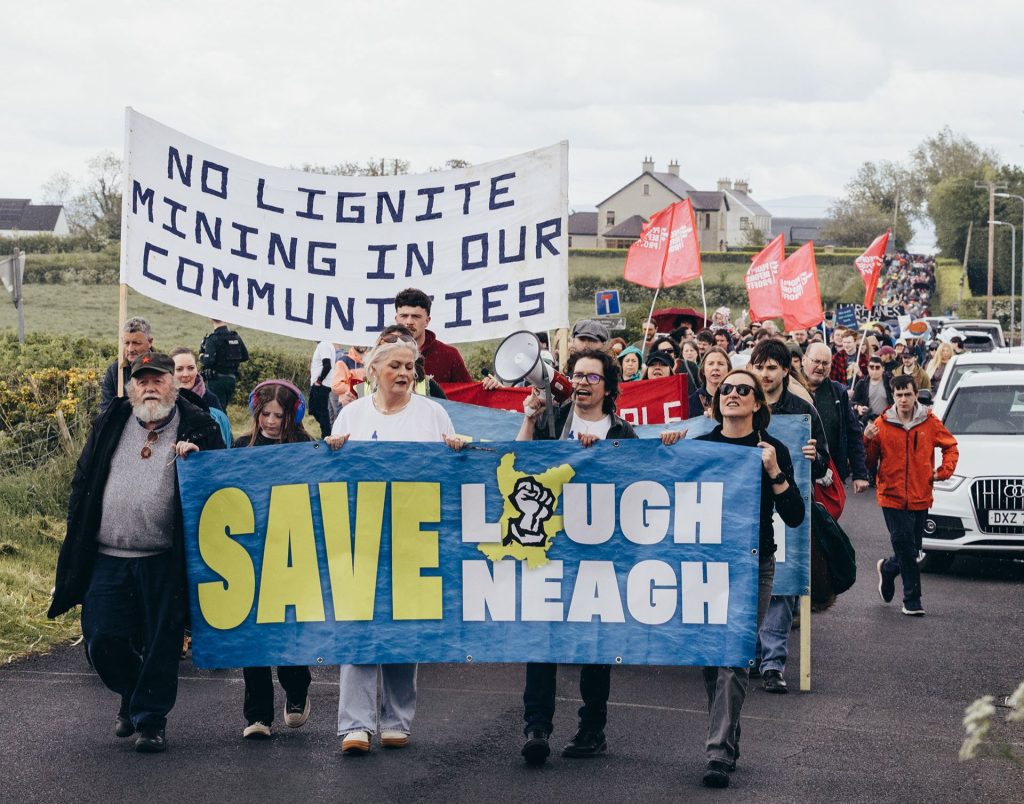
It was decided that a 40th anniversary march would take place on Sunday 17th May and retrace the steps of the 1986 Ardboe march to connect the issues of our current government’s complicity in the crisis at Lough Neagh today, as well as to connect the fight against extraction in the the Sperrins to the mining of sand in Lough Neagh, and to highlight the monumental success of people power in the past.
Ahead of the march, a Save Lough Neagh Film Festival & Conference was held on the southern shore in Lurgan, to bring environmental partners Friends of the Earth NI, The Gathering, Save Our Sperrins and many other groups together to unite around the issues, and build for the march.
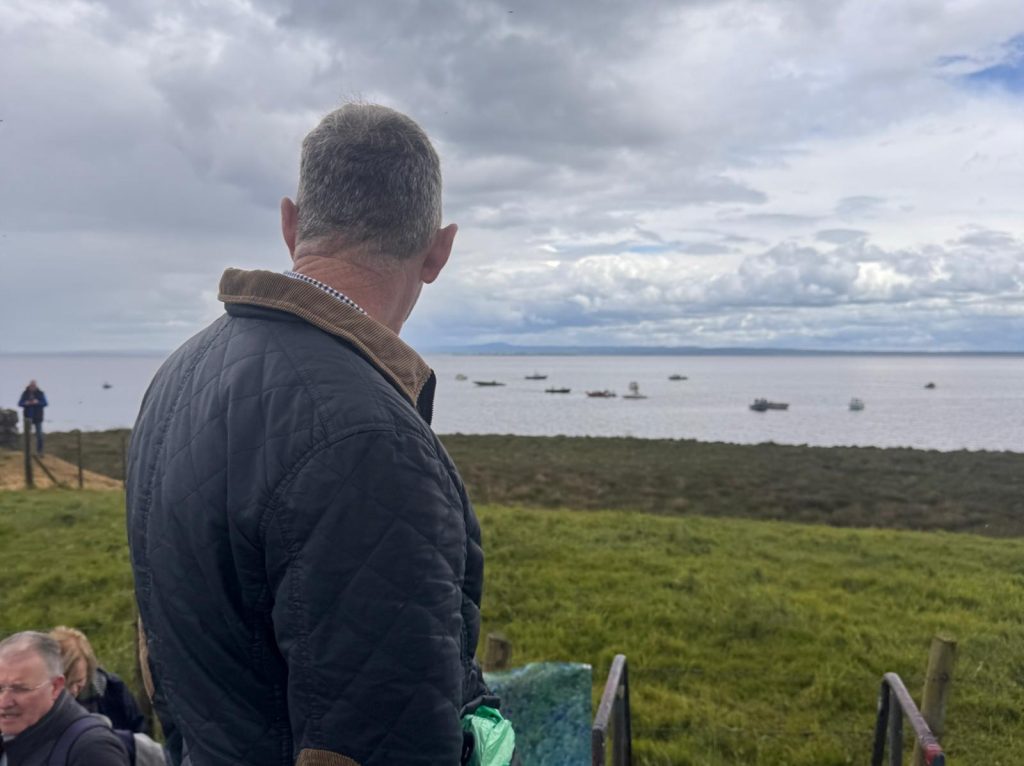
On the day of the march, locals counted over 2,000 at the start of the march, with many spectators from across the Lough and beyond, making it the largest mobilisation for the Lough yet. The March for Lough Neagh was also joined by a flotilla of dozens of boats along the route and a small farmer rally, echoing similar broad mobilisation in 1986. The 1986 anti-lignite march was fought to protect a single area from mining, but the crisis facing Lough Neagh today is deeply systemic.
Winning this fight will require an unprecedented coalition fighting everywhere from the courtrooms to the streets. The March for Lough Neagh proved that people will turn out to stand up for our environment and clean drinking water. Now, we must use that momentum as the foundation for a movement that fights to put the planet and all who live on it above profit.