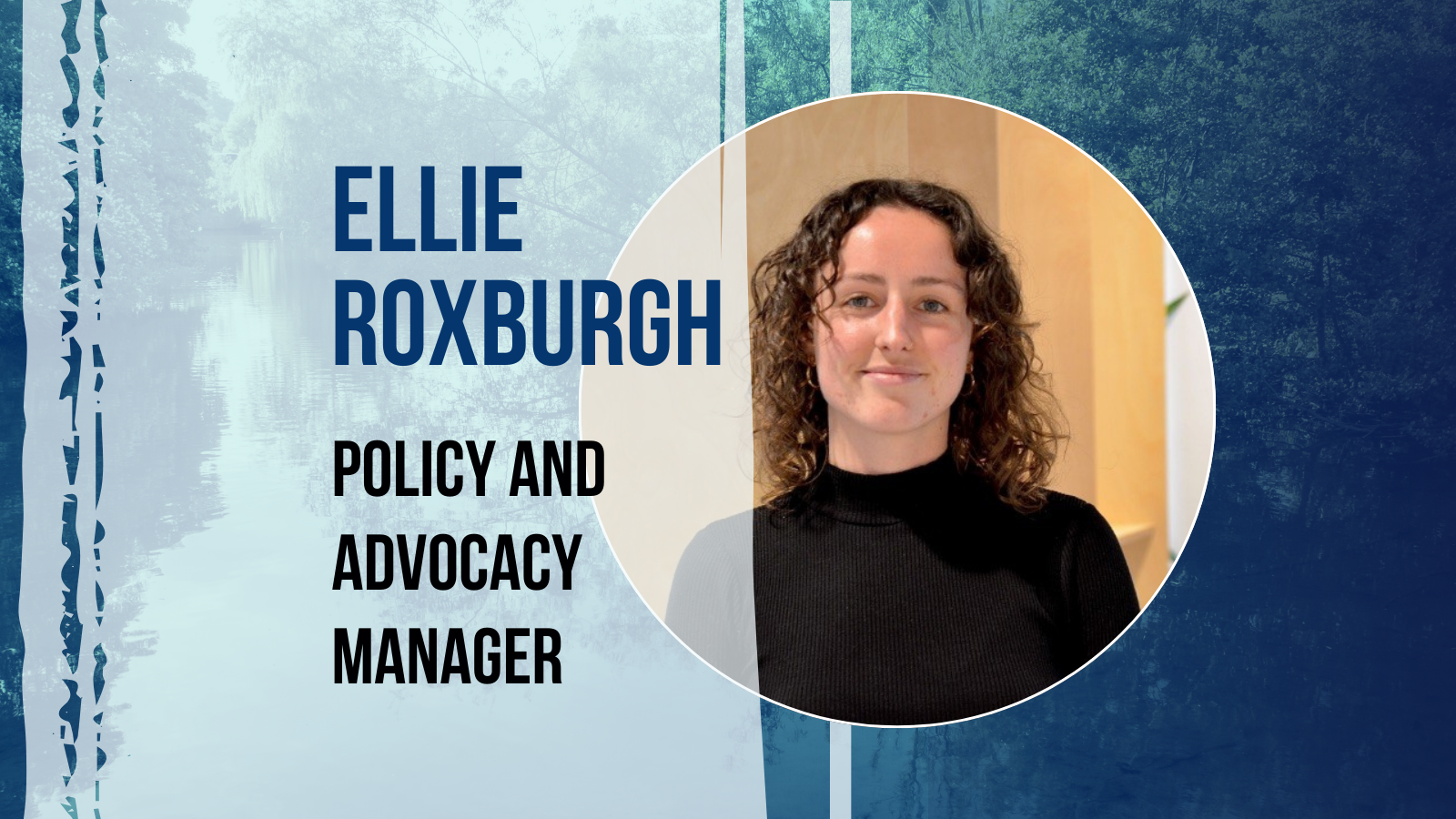
Meet Ellie Roxburgh, River Action’s new Policy and Advocacy Manager
Q1. Tell us about yourself
My name is Ellie, and I am the new Policy and Advocacy Manager at River Action! I am really excited to join such a dynamic and impactful organisation at such a critical time for water policy.
I have worked on environmental issues ranging from marine conservation, sustainable rice, nitrogen policy, and now rivers! This broad range of topics has equipped me with an understanding of how different sectors and practices impact water quality and the wider environment.
Q2. What first sparked your interest in protecting rivers and freshwater ecosystems?
I grew up in Kent, which is a very green environment yet we had little access to rivers for swimming. Now that I live in Bristol, I am spoiled for choice and cherish swimming in my local river throughout the summer.
Having worked previously for the Soil Association on nitrogen, I became increasingly aware of the impact of agriculture on rivers, lakes and seas. I learned about the appalling water crisis unfolding in this country, and the dirty money trail leading straight to the companies in charge of keeping our rivers running and our tap water clean.
Q3: You spent nearly three years at the Soil Association. What did your role there involve, and what did it teach you about the connection between soil health and the state of our rivers?
During my time at the Soil Association, I convened a coalition of eNGOs to advocate for greater ambition and more integrated government action on nitrogen. The group of farming, climate, health and nature organisations came together after learning about the pollution swapping risks from taking a siloed approach to nitrogen policy. We hosted the coalition at the Soil Association to ensure that farmers were always considered in any solutions that we put forward.
Nitrogen is used as a fertiliser for crops, either in synthetic form manufactured using fossil fuels, as livestock manure, or supplied through nitrogen-fixing crops like legumes. In the UK, fertiliser application rates are high, with only about half of fertilisers being taken up by the plant.
The rest is lost to the environment, either as air pollution, a greenhouse gas or leached through surface and groundwater to the rivers. Too much nitrogen in rivers leads to eutrophication, whereby the nitrogen (and phosphorus) spur growth of algae to the point that it blocks light out of the river, killing wildlife and plants under water.
Ways to reduce nitrogen leaching into rivers starts with the soil. Building soil health will mean more nitrogen is held in the soil and it won’t wash away in heavy rainfall. Applying the right fertilisers at the right time, in the right amount and in the right place will reduce losses and – importantly – massively increase farm profitability.
Q4: Tell us more about your position as secretary for the Society of Conservation Biology’s Impact Evaluation Working Group.
I am responsible for managing Volunteers and convening the Working Group. I joined the group after writing a paper on the impact of conservation organisations’ support for community governance of marine resources with the Journal (Society of Conservation Biology), and becoming interested in the use of impact evaluation in increasing effectiveness of conservation initiatives. With few resources to go round, and the biodiversity crisis deepening, it’s important that conservation projects and the communities they work with get the most bang for their buck.
Q5. Looking ahead to your new role as River Action’s Policy and Advocacy Manager, what will you be focusing on, and what can people expect to see from you in 2026?
Given my experience in agricultural water pollution, I will be steering the policy work in this direction. The government’s shown appetite to clean up England’s rivers, but so far, is falling short of any immediate impact on agricultural pollution. I see better agricultural management of nutrients as integral not only to cleaning up rivers, but also to restoring biodiversity, air quality and reducing contributions to climate change. I will be kicking off 2026 by sharing our agricultural water pollution strategy with key decision makers in government.
The other area that I see as needing more attention from the government is the issue of water scarcity. Demand for water is only going up, with much drier and heatwave-ridden summers and the sudden appearance of data centres, the government needs a plan to ensure there is enough water to go around. That must include managing water for public interest to ensure corporations cannot guzzle it all on infrastructure.
Q6. Finally, in your opinion, what is further needed/what needs to change to rescue Britain’s rivers?
Holding polluters to account, re-structuring water companies to be for public interest. There’s a really interesting example of the Oui in France, where the water company is a charity and they invested in supporting farmers in the catchment to convert to Organic farming in a bid to clean up the river before the Olympics. These farmers produce healthy and nutritious food without the use of synthetic fertilisers or pesticides, which is then supplied to schools in the local area.